

Why Gujō Hachiman is Japan's water town
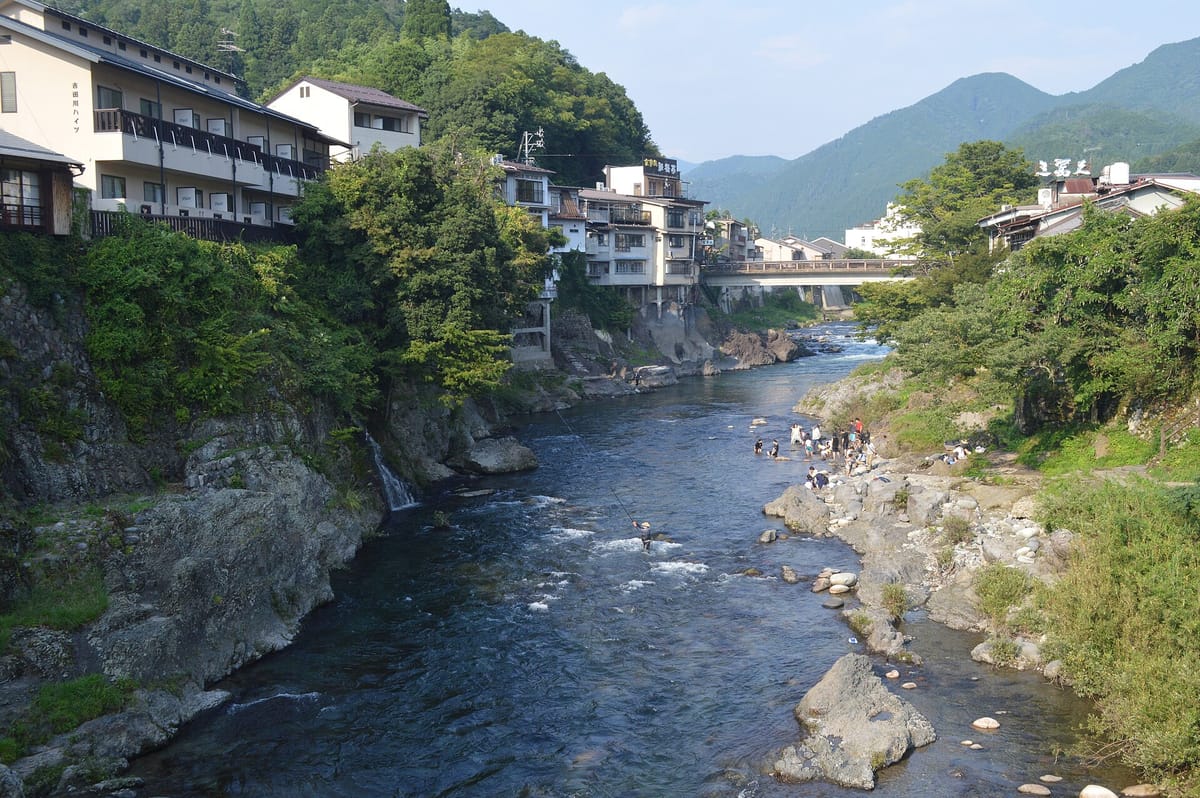
Gujō Hachiman, in Gujō City in central Gifu Prefecture, sits where three rivers, including the Yoshida and the Kodara, meet among the mountains of Oku-Mino. The tourism association calls it a castle town of clear streams and famous waters, and it is not an exaggeration. The Yoshida River, the largest tributary of the Nagara, is so clear that from the Miyagase bridge you can count the stones on the bottom, and houses of three and four storeys lean out over its banks.
In the 1660s the lord of the castle had a network of canals dug through the grid of streets to fight fire, after the town had burned twice. Those canals still run beside the houses today, and residents still use them, raising the water with wooden boards to wash things. Many homes keep a mizubune, a two- or three-part stone or wooden tank fed by a spring: the top basin for drinking and washing food, the next for washing dishes, and the last a pond where carp eat the leftovers. The national government has recognised the old centre of town as a preservation district for its historic buildings and waterways.
For a Japanese learner, Gujō Hachiman is a small, walkable town where people have time to talk. Ask about the water, the dance or the best place for soba, and you are likely to get a story rather than a one-word answer.
Getting there: highway bus or the Nagara River Railway
There are two ways in. The quicker one is a highway bus from Nagoya or Gifu along the Tōkai-Hokuriku Expressway. The buses stop at the Gujō Hachiman interchange, which the local taxi company says is about thirty minutes' walk from the centre. To avoid the walk, reserve the shared taxi that meets the buses and runs to Jōkamachi Plaza, the bus terminal in the old town; the booking opens a month ahead, and you pay a small flat fare on board.
The slower, prettier way is the Nagara River Railway, a one- or two-car local line that follows the Nagara River up from Mino-Ōta, where it meets the JR Takayama Line. Gujō-Hachiman Station, opened in 1929, has been restored to its original look and is a registered cultural property. Trains are infrequent and the station is outside the old centre, so check the timetable and plan the last stretch by local bus, taxi or on foot.
| Japanese | Romaji | Meaning |
|---|---|---|
| 郡上八幡行きの高速バスは予約が必要ですか。 | Gujō Hachiman yuki no kōsoku basu wa yoyaku ga hitsuyō desu ka. | Do I need to book the highway bus to Gujō Hachiman? |
| 城下町プラザまでタクシーを予約したいです。 | Jōkamachi Puraza made takushī o yoyaku shitai desu. | I would like to book the taxi to Jōkamachi Plaza. |
| 次の郡上八幡行きの電車は何時ですか。 | Tsugi no Gujō Hachiman yuki no densha wa nanji desu ka. | What time is the next train to Gujō Hachiman? |
| 駅から町の中心まで歩けますか。 | Eki kara machi no chūshin made arukemasu ka. | Can I walk from the station to the town centre? |
| 観光案内所はどこですか。 | Kankō annaisho wa doko desu ka. | Where is the tourist information centre? |
What you will see: springs, canals and a hilltop castle
The best way to see Gujō Hachiman is simply to walk. The old merchant streets of Shokunin-machi and Kajiya-machi, the craftsmen's and blacksmiths' quarters, are lined with wooden townhouses, each with a fire bucket hanging by the door, a tradition the tourism association links to the town's old fear of fire. Water runs along the edges of the streets, and small lanes lead down to the river.
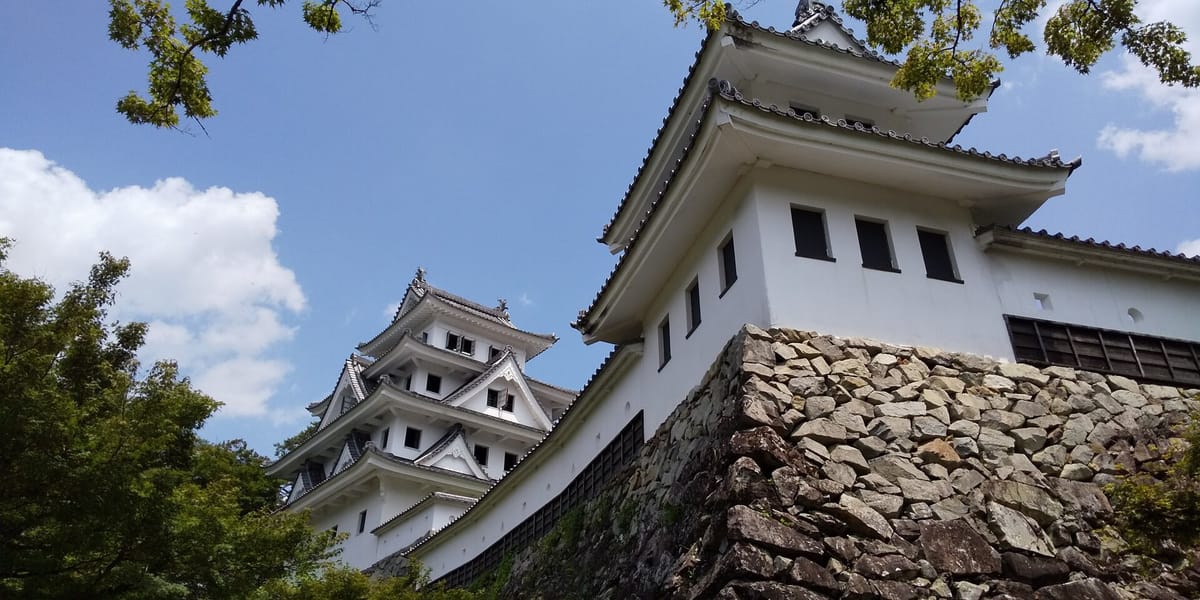
Above the town, Gujō Hachiman Castle stands on Mount Hachiman. The castle buildings were demolished in the Meiji era, leaving only the stone walls, and the present keep was built in wood in 1933, modelled on Ōgaki Castle. It is one of the oldest wooden reconstructed keeps in Japan, and the view from the top over the town and the valleys is the best in Gujō. From October to March, on some early mornings, the castle seems to float above a sea of cloud, a view photographers catch from the Horikoshi pass.
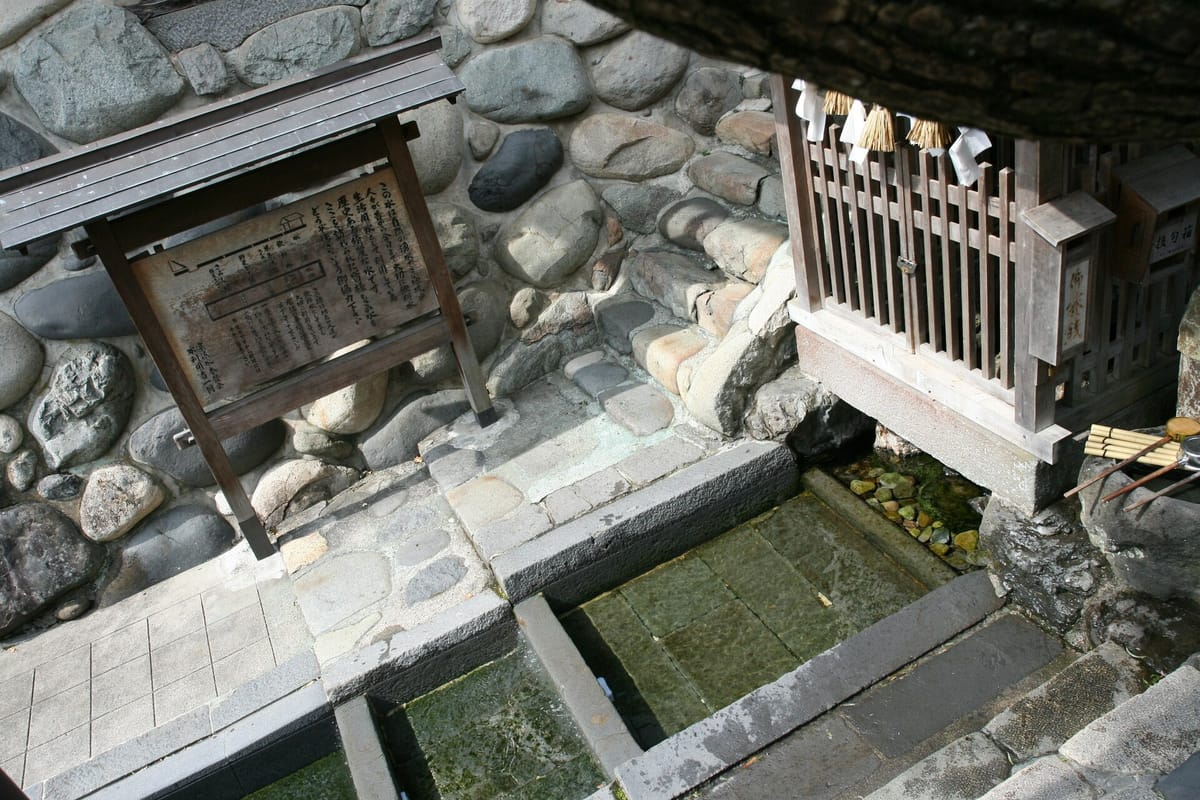
- Sōgisui: the spring by the Yoshida River where two poets said farewell in 1471, first on the list of Japan's one hundred remarkable waters.
- Igawa-komichi: a lane beside a clear canal full of carp and river fish, with old washing places.
- Yoshida River and the Miyagase-komichi: a riverside path with views of the clear water and the castle.
- Shinbashi: the bridge that local children jump from into the river, a rite of passage; the tourism association asks visitors not to try it casually.
- Gujō Hachiman Castle: the 1933 wooden keep on the hill, with a small entry fee and a panoramic view.
- Gujō Hachiman Hakurankan: a museum in the old town where you can see the Gujō Odori performed, even when there is no dance that night.
- Food sample workshops: Gujō Hachiman calls itself the birthplace of Japan's plastic food samples, and shops let you make your own, by reservation.
Words on the signs in Gujō Hachiman
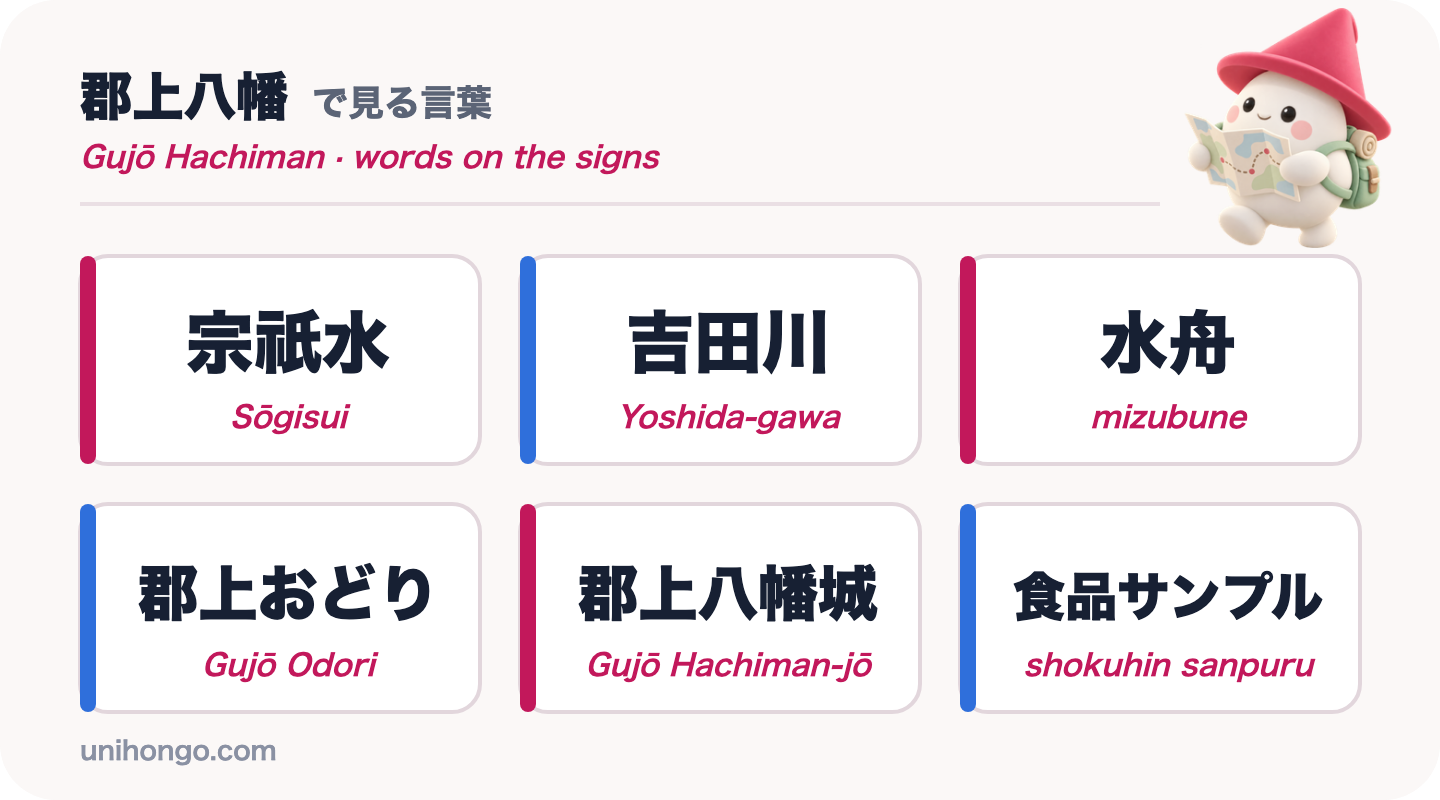
Water words fill the signs here. 水, mizu, water, appears in 宗祇水 and 水舟; 川, kawa, river, becomes gawa in names such as 吉田川; and 用水, yōsui, means an irrigation or town canal. 名水, meisui, famous water, marks the springs that are known for their quality.
Gujō Odori is usually written with hiragana, 郡上おどり, which is common for festival names because it looks softer and more welcoming than the kanji 踊り. On the dance nights, the schedule, 日程, and the venue, 会場, are the two words to look for on posters.
| Word | Reading | Meaning |
|---|---|---|
| 宗祇水 | Sōgisui | The town's famous spring |
| 吉田川 | Yoshida-gawa | Yoshida River |
| 水舟 | mizubune | Tiered spring-water tanks for drinking and washing |
| 用水 | yōsui | Town canal |
| 名水 | meisui | Famous water, a renowned spring |
| 郡上おどり | Gujō Odori | The summer dance of Gujō |
| 徹夜おどり | tetsuya odori | The all-night dances in mid-August |
| 郡上八幡城 | Gujō Hachiman-jō | Gujō Hachiman Castle |
| 食品サンプル | shokuhin sanpuru | Plastic food samples |
Japanese for joining the Gujō Odori
Each night the dance happens in one place, around a yagura, a raised stand where singers and musicians with shamisen, drums and flute perform. Dancers form a circle around it and move slowly round, repeating a short sequence. The tourism association says there are ten different dances, beginning with Kawasaki, the best-known, and including the lively Harukoma. Watch a round or two, then step into the circle behind someone who knows the moves and copy them.
Skilled visitors can even earn a certificate. On each dance night a set dance is announced, and members of the preservation society walk the circle and hand a wooden tag to anyone dancing it especially well, which is later exchanged for a certificate. The phrases below cover joining in, asking about the steps and buying geta.
| Japanese | Romaji | Meaning |
|---|---|---|
| 今夜のおどりの会場はどこですか。 | Kon'ya no odori no kaijō wa doko desu ka. | Where is tonight's dance? |
| 初めてですが、踊ってもいいですか。 | Hajimete desu ga, odotte mo ii desu ka. | It is my first time. May I dance? |
| この曲は何という踊りですか。 | Kono kyoku wa nan to iu odori desu ka. | What is this dance called? |
| もう一度ゆっくり見せてもらえますか。 | Mō ichido yukkuri misete moraemasu ka. | Could you show me once more, slowly? |
| 浴衣をレンタルできる店はありますか。 | Yukata o rentaru dekiru mise wa arimasu ka. | Is there a shop where I can rent a yukata? |
| 下駄を一足ください。 | Geta o issoku kudasai. | A pair of geta, please. |
| 鼻緒を選んでもいいですか。 | Hanao o erande mo ii desu ka. | May I choose the thong strap? |
Manners, seasons and practical tips
Gujō Hachiman's canals and springs are not museum pieces; people use them every day. The tourism association notes that residents have grown tired of being photographed at the old washing places, and asks visitors to be thoughtful.
- Do not wash your hands, feet or anything else in the drinking basin of a spring or mizubune; drink from the top basin with the ladle if one is provided.
- Ask before photographing people using the canals or washing places, and never walk into private yards to reach the water.
- Do not jump from the Shinbashi bridge. It is about twelve metres high, and the local children who do it learn the river over years.
- If you drive to the Horikoshi pass for the castle in the clouds, do not park on the road; the tourism association warns it is dangerous.
- Bring a yukata or rent one for dance nights, and expect crowds on the all-night dances in mid-August.
- Autumn colours around the castle and Jion-ji temple peak in November; the castle's maple festival starts at the beginning of the month.
Practise the visit before you go
On a summer evening, the question every visitor asks is where the dance is. Because the venue changes each night, locals will often point you to the printed schedule. The answer to the second question is the reason people love the Gujō Odori: of course, join the circle. Practise the four lines until you can say them without reading.
Then practise with someone who answers back. In Unihongo, choose the Seasonal Events topic and ask your AI Sensei to play a local on a dance night, or try the Find a Friend at a Festival mission to practise meeting up in the crowd. Saying the lines out loud before you go makes it much easier to step into the circle.
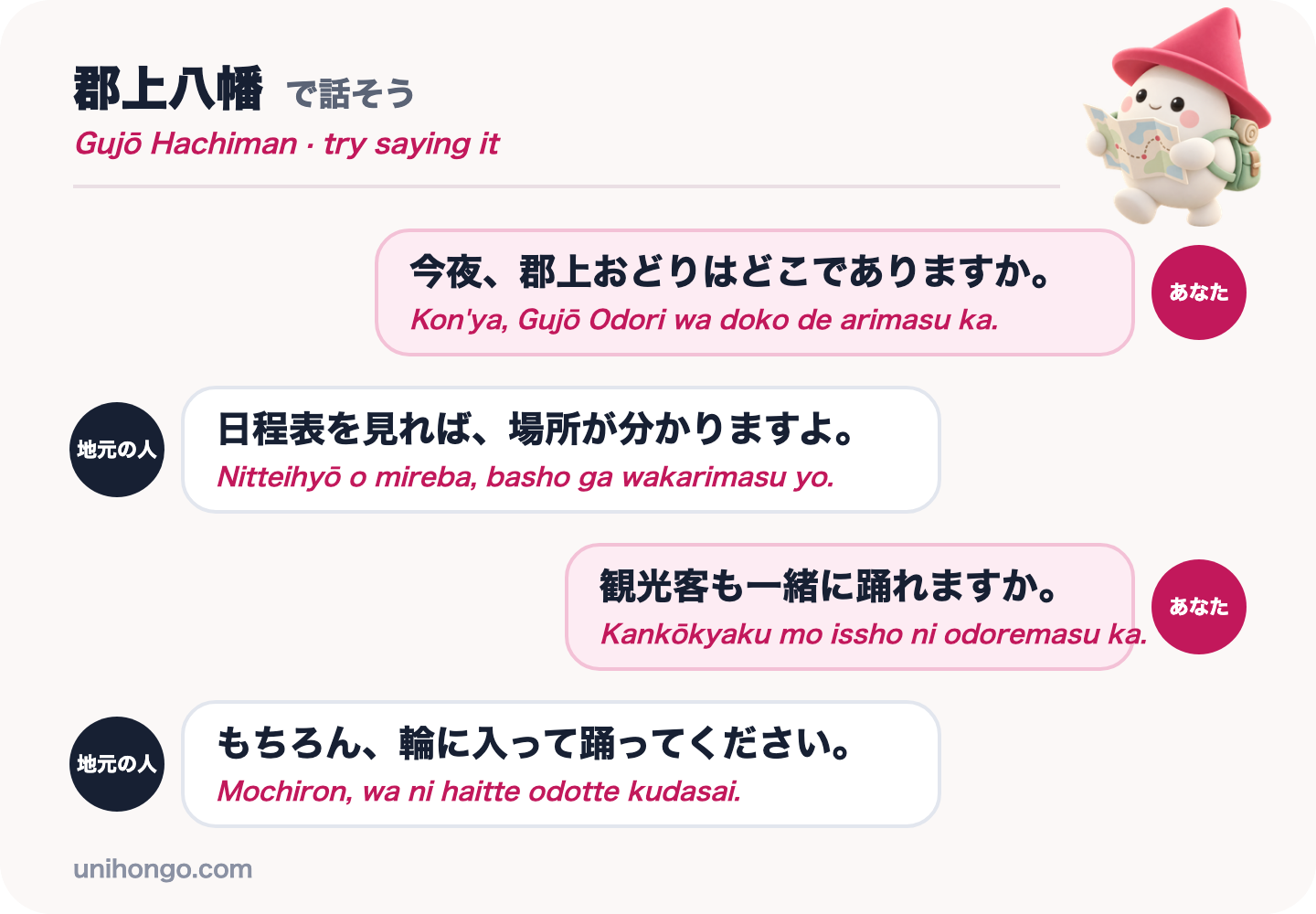
| Japanese | Romaji | Meaning |
|---|---|---|
| 今夜、郡上おどりはどこでありますか。 | Kon'ya, Gujō Odori wa doko de arimasu ka. | Where is the Gujō Odori tonight? |
| 日程表を見れば、場所が分かりますよ。 | Nitteihyō o mireba, basho ga wakarimasu yo. | If you look at the schedule, you will see the place. |
| 観光客も一緒に踊れますか。 | Kankōkyaku mo issho ni odoremasu ka. | Can tourists dance too? |
| もちろん、輪に入って踊ってください。 | Mochiron, wa ni haitte odotte kudasai. | Of course, join the circle and dance. |
Official information
The Gujō Hachiman Tourism Association publishes the Gujō Odori schedule, walking maps, information on the water town and the castle, and access advice, mostly in Japanese with an English walking map. Book the shared taxi from the highway bus stop through the local taxi company's site.