

Why Kuromon Market is called Osaka's kitchen
Osaka was the merchant capital of Edo-period Japan, famous as the nation's kitchen, tenka no daidokoro, because rice and goods from all over the country passed through its warehouses. Kuromon Market, which grew up in the Edo period, is where that reputation lives on at street level. Its nickname, Osaka no daidokoro, Osaka's kitchen, comes from the chefs and home cooks who have shopped here for generations.
The market is a covered arcade of about 580 metres with roughly 150 shops. Fishmongers make up much of it, and the market is known for seasonal specialities: pike conger, hamo, in summer and puffer fish, fugu, in winter. Between them are butchers, fruit shops selling perfect melons and strawberries, pickles, sweets, and, more and more, stalls that grill scallops, crab legs and wagyu skewers for you to eat on the spot.
For a learner, a market is where Japanese becomes physical: you point, you ask, you count, you listen for a price. The sentences are short, the staff are quick, and every item comes with its name written on a card in front of it.
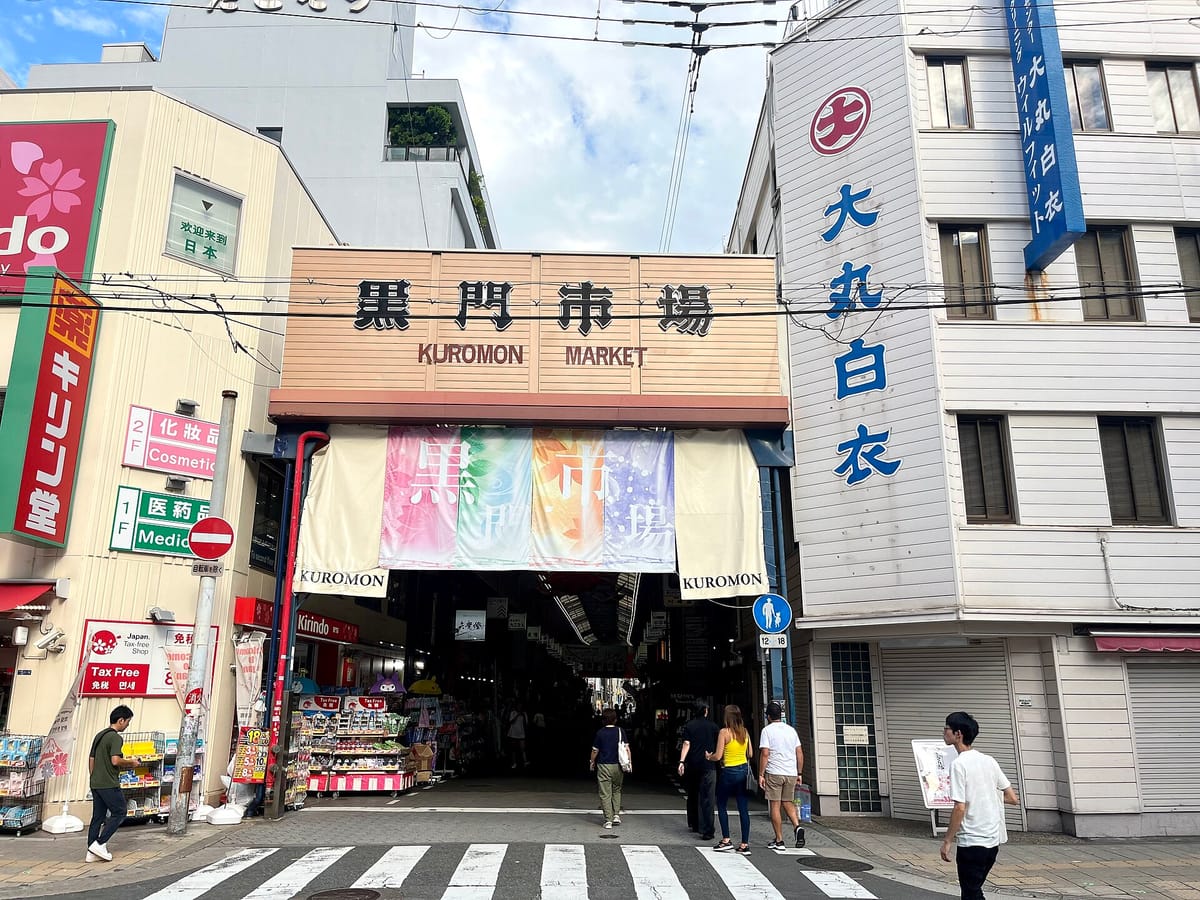
Getting there: Nippombashi and Namba
Nippombashi Station is the nearest. It is served by the Osaka Metro Sakaisuji and Sennichimae lines and by Kintetsu trains, and the market is a few minutes' walk from its exits, along Sakaisuji avenue. Signs in the station point to 黒門市場. Note the spelling: the station is written Nippombashi in English, but you will hear it pronounced Nipponbashi.
From Namba, walk east for about ten minutes; the route passes close to Dōtonbori and Sennichimae, so it is easy to combine the market in the morning with the canal at night. Remember that Osaka's Nipponbashi, 日本橋, is not Tokyo's Nihonbashi, though both are written with the same kanji.
| Japanese | Romaji | Meaning |
|---|---|---|
| 黒門市場はどの出口ですか。 | Kuromon Ichiba wa dono deguchi desu ka. | Which exit is for Kuromon Market? |
| 黒門市場まで歩いて行けますか。 | Kuromon Ichiba made aruite ikemasu ka. | Can I walk to Kuromon Market? |
| 日本橋駅はどちらですか。 | Nipponbashi-eki wa dochira desu ka. | Which way is Nippombashi Station? |
| 市場の案内所はどこですか。 | Ichiba no annaijo wa doko desu ka. | Where is the market information centre? |
| なんばへはどう行けばいいですか。 | Namba e wa dō ikeba ii desu ka. | How do I get to Namba? |
What to eat in Kuromon Market
Walk the whole length once before you buy. The best stalls are not always the loudest, and seeing what each one sells helps you pick. Seafood is the star: scallops grilled in their shells with butter and soy sauce, crab legs, oysters, sea urchin, tuna sashimi and sushi. Many stalls also sell tamagoyaki, a sweet rolled omelette, and grilled eel.
Beyond fish, look for wagyu beef skewers, fresh fruit cut into cups, strawberry daifuku and other wagashi sweets, and Osaka snacks such as takoyaki. Prices for luxury seafood vary widely, so read the card first; if it says 時価, jika, the price depends on the day's market and you should ask.
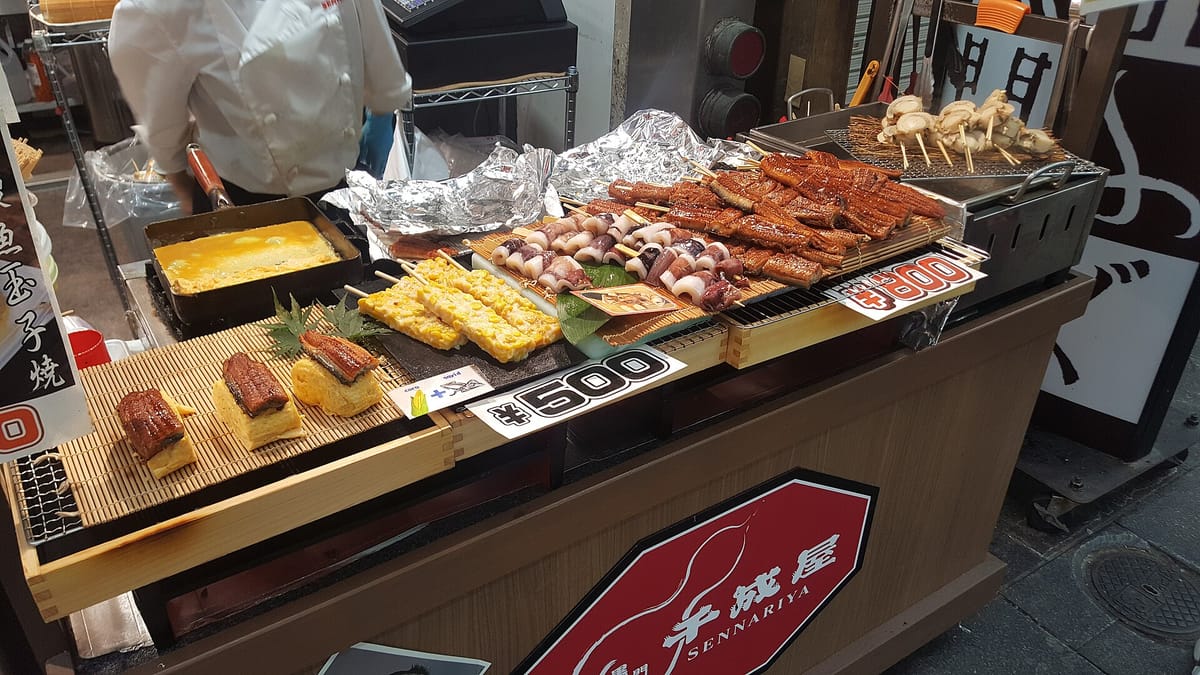
- Hotate: scallops, often grilled in the shell with butter and soy sauce.
- Kani: crab, especially the long legs of king crab and snow crab.
- Uni: sea urchin, sold in small wooden trays or on top of rice.
- Maguro: tuna, as sashimi, sushi or in rice bowls.
- Tamagoyaki: sweet rolled omelette, a classic market snack.
- Wagyu skewers: Japanese beef grilled to order.
- Fruit: cut melon, strawberries and seasonal fruit in cups.
Words on the price cards and signs
Market signs are short and practical. 鮮魚, sengyo, fresh fish, hangs over the fishmongers. 旬, shun, marks what is in season, and markets take it seriously: shun is when a food tastes best. 国産, kokusan, domestic, tells you something was produced in Japan, and the card may name the region too, such as 北海道産, Hokkaidō-san, from Hokkaidō.
When you need a seat, look for 休憩所, kyūkeijo, rest area. The market's information centre has one, with tables where you can eat what you have bought.
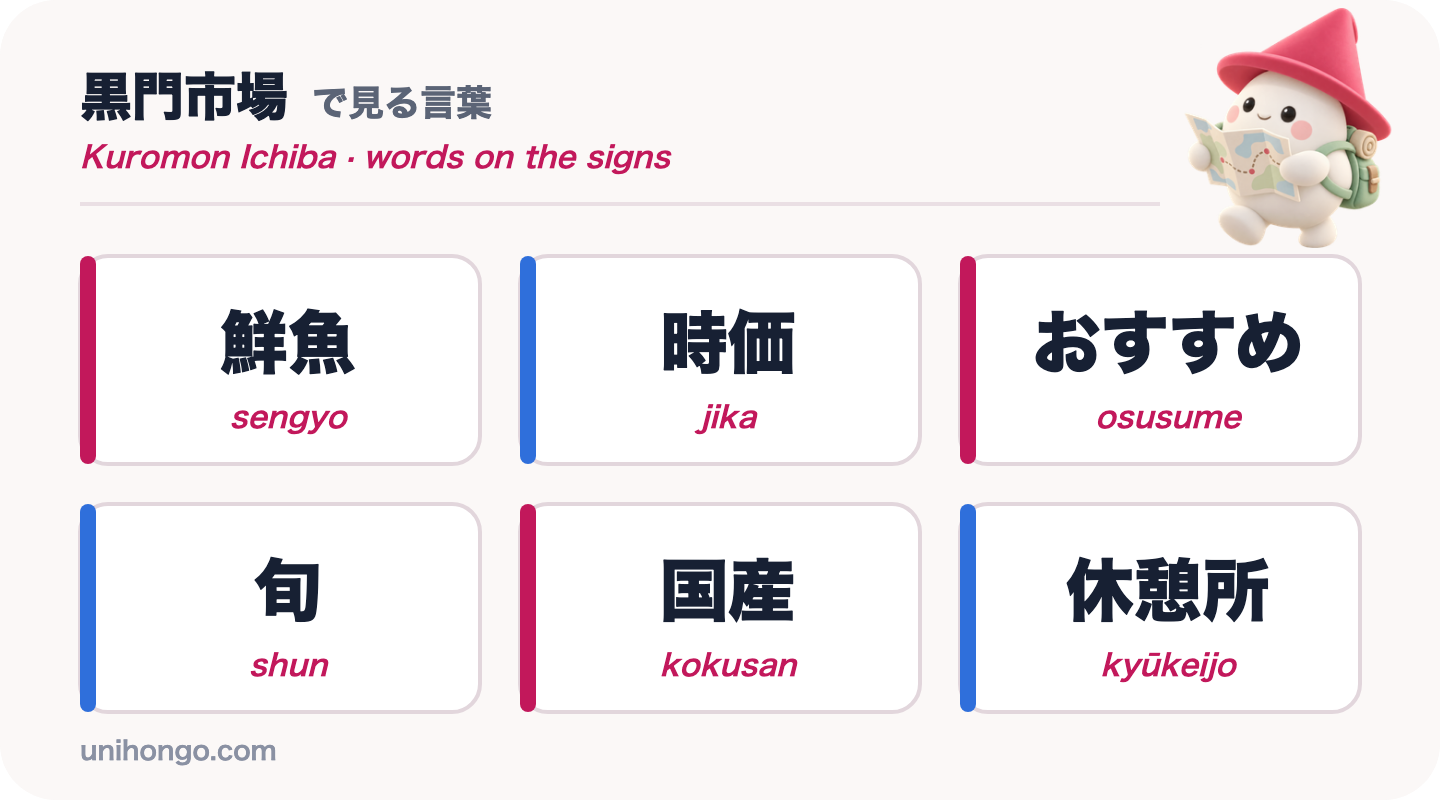
| Word | Reading | Meaning |
|---|---|---|
| 黒門市場 | Kuromon Ichiba | Kuromon Market |
| 鮮魚 | sengyo | Fresh fish |
| 時価 | jika | Market price, ask the stall |
| おすすめ | osusume | Recommended |
| 旬 | shun | In season, at its best |
| 国産 | kokusan | Produced in Japan |
| 産 | san | From, after a place name |
| 休憩所 | kyūkeijo | Rest area |
| 食べ歩き | tabearuki | Eating while strolling from stall to stall |
Japanese for buying and eating at a stall
At Kuromon the key questions are whether you can eat something there and whether it can be cooked. Much of the fish on display is sold for home cooking, and only some of it is ready to eat. Stalls that cook for you usually say so with pictures or a counter; if you are not sure, ask.
The phrases below are polite standard Japanese. You may hear stallholders use Osaka dialect in reply: nanbo, how much, for ikura, and ōkini, thank you, for arigatō gozaimasu. You do not need to answer in dialect; understanding it is enough.
| Japanese | Romaji | Meaning |
|---|---|---|
| これは何ですか。 | Kore wa nan desu ka. | What is this? |
| これは生で食べられますか。 | Kore wa nama de taberaremasu ka. | Can this be eaten raw? |
| 焼いてもらえますか。 | Yaite moraemasu ka. | Could you grill it for me? |
| ひとつだけでもいいですか。 | Hitotsu dake demo ii desu ka. | Is it all right to buy just one? |
| 今日のおすすめは何ですか。 | Kyō no osusume wa nan desu ka. | What do you recommend today? |
| これ、なんぼ? | Kore, nanbo? | How much is this? (Kansai dialect; standard: kore wa ikura desu ka) |
| ゴミはどこに捨てればいいですか。 | Gomi wa doko ni sutereba ii desu ka. | Where should I throw away the rubbish? |
Etiquette, timing and practical tips
Kuromon is a working market as well as a food street, and a few habits keep you welcome.
- Eat at the stall or in the rest area; do not walk through the crowd with food and sauce.
- Do not touch fish or fruit on display unless the stall invites you to; point instead.
- Ask before photographing a stall up close, and step aside so customers can buy.
- Return trays and skewers to the stall or use the sorted bins at the information centre.
- Come in the morning or at lunchtime; many stalls close in the early evening and some close on Sundays and holidays.
- Carry some cash: many stalls take cards and IC payments now, but not all.
Practise the stall conversation before you go
This is the pattern for most cooked seafood at Kuromon: point, ask whether you can eat it there, accept the offer to grill it, and wait. Yakimashō ka means shall I grill it?, a polite offer, and yaketara yobimasu ne means I'll call you when it's done.
Then practise with a partner. In Unihongo, choose the Shopping topic and ask your AI Sensei to play a fishmonger at Kuromon Market, speaking at natural speed and adding a little Osaka dialect. Afterwards, the Japanese Cuisine topic is a good place to describe what you ate. Speaking the lines aloud once is what makes them come out at the stall.
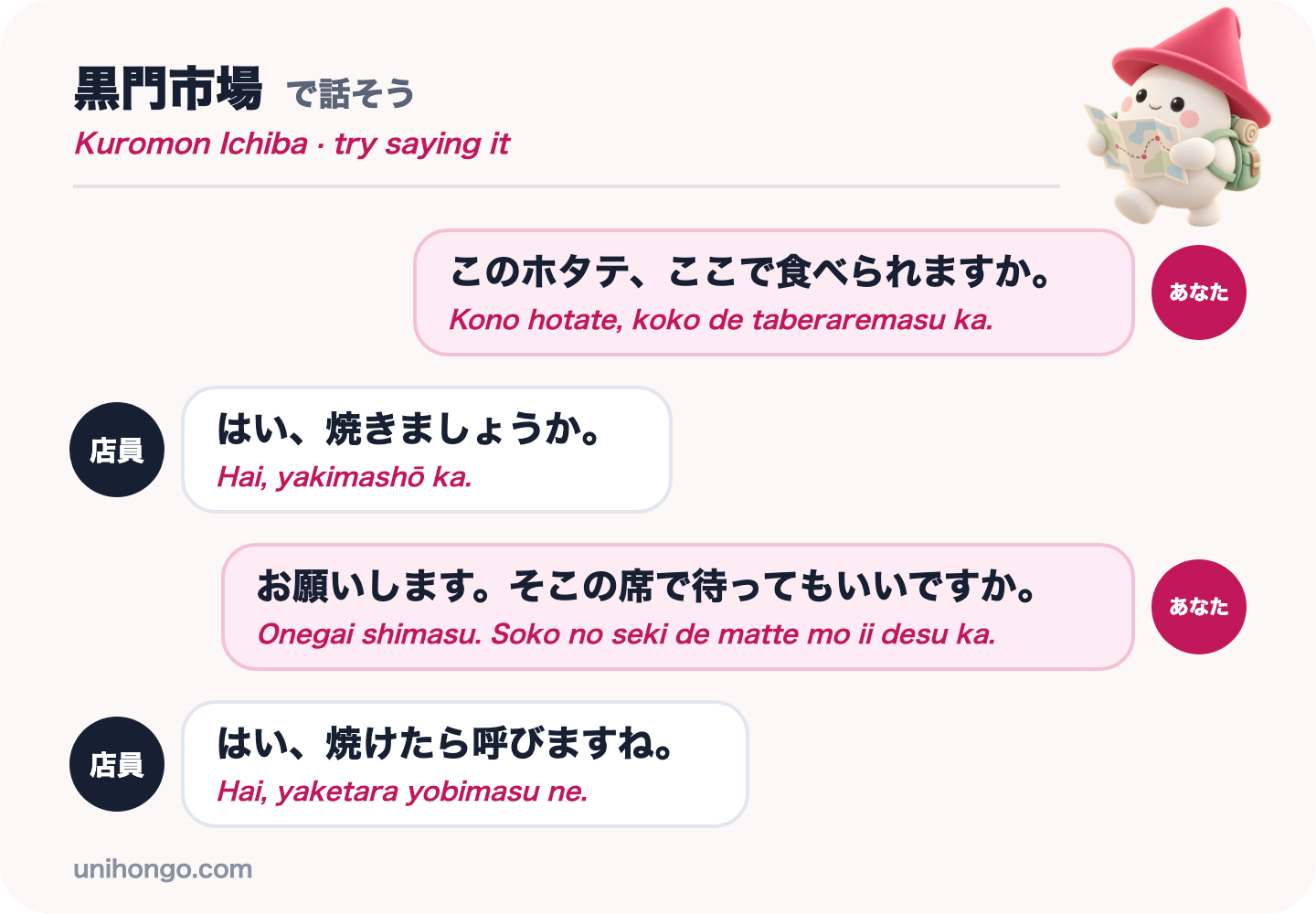
| Japanese | Romaji | Meaning |
|---|---|---|
| このホタテ、ここで食べられますか。 | Kono hotate, koko de taberaremasu ka. | Can I eat this scallop here? |
| はい、焼きましょうか。 | Hai, yakimashō ka. | Yes. Shall I grill it for you? |
| お願いします。そこの席で待ってもいいですか。 | Onegai shimasu. Soko no seki de matte mo ii desu ka. | Yes, please. May I wait at those seats? |
| はい、焼けたら呼びますね。 | Hai, yaketara yobimasu ne. | Sure, I'll call you when it's ready. |
Official information
The market's own website lists its shops, the information centre and access, in English. Shop hours and closing days vary, so check it before you go.