

Why Sado Island is worth the crossing
Sado sits in the Sea of Japan west of Niigata, shaped like two mountain ranges joined by a flat plain of rice fields. In the Middle Ages it was the island of exile: the retired emperor Juntoku, the monk Nichiren and the Noh master Zeami were all sent here. From 1601 the Aikawa gold and silver mine made it one of the treasure houses of the Tokugawa shogunate, and mining continued until 1989.
In 2024 UNESCO inscribed the Sado Island Gold Mines as a World Heritage Site, covering the Nishimikawa placer gold mine and the Aikawa-Tsurushi gold and silver mine. The inscription followed discussion of the island's wartime history, and an exhibition in the Aikawa area now covers the lives of the miners, including workers from the Korean Peninsula during the Second World War.
For a learner, Sado is the opposite of Kyoto. There are few English signs away from the main sights and few other foreign travellers, so the island rewards people who can ask a bus driver where to get off or tell a boat woman they want to have a go at rowing. People are unhurried and used to explaining their island.
Getting there: the jetfoil to Ryōtsu and getting around the island
Sado Kisen runs the ferries. The main route is from Niigata Port to Ryōtsu, Ryōtsu-kō, on the island's east coast: the jetfoil takes about an hour and seven minutes, the car ferry about two and a half hours. The Niigata terminal is a short bus or taxi ride from Niigata Station, which is two hours or so from Tokyo on the Jōetsu Shinkansen. A second car ferry runs from Naoetsu to Ogi in the south, useful if you are coming from the Hokuriku side.
On the island, local buses link Ryōtsu with Sawata, Aikawa and Ogi, but services are infrequent and, as the island's tourism site warns, IC cards are not accepted, so carry coins and small notes. A rental car is the easiest way to see the coast; cars can be picked up near Ryōtsu port. Bicycles can be rented at the tourist information centres in Aikawa and Ogi.
| Japanese | Romaji | Meaning |
|---|---|---|
| 両津まで、乗船券を一枚お願いします。 | Ryōtsu made, jōsenken o ichimai onegai shimasu. | One ferry ticket to Ryōtsu, please. |
| ジェットフォイルはまだ席がありますか。 | Jettofoiru wa mada seki ga arimasu ka. | Are there still seats on the jetfoil? |
| 乗り場はどこですか。 | Noriba wa doko desu ka. | Where do I board? |
| このバスは相川に行きますか。 | Kono basu wa Aikawa ni ikimasu ka. | Does this bus go to Aikawa? |
| 佐渡金山に着いたら教えてください。 | Sado Kinzan ni tsuitara oshiete kudasai. | Please tell me when we reach the gold mine. |
| 帰りの最終便は何時ですか。 | Kaeri no saishūbin wa nanji desu ka. | What time is the last boat back? |
Gold mine tunnels, tub boats and Shukunegi: what you will see
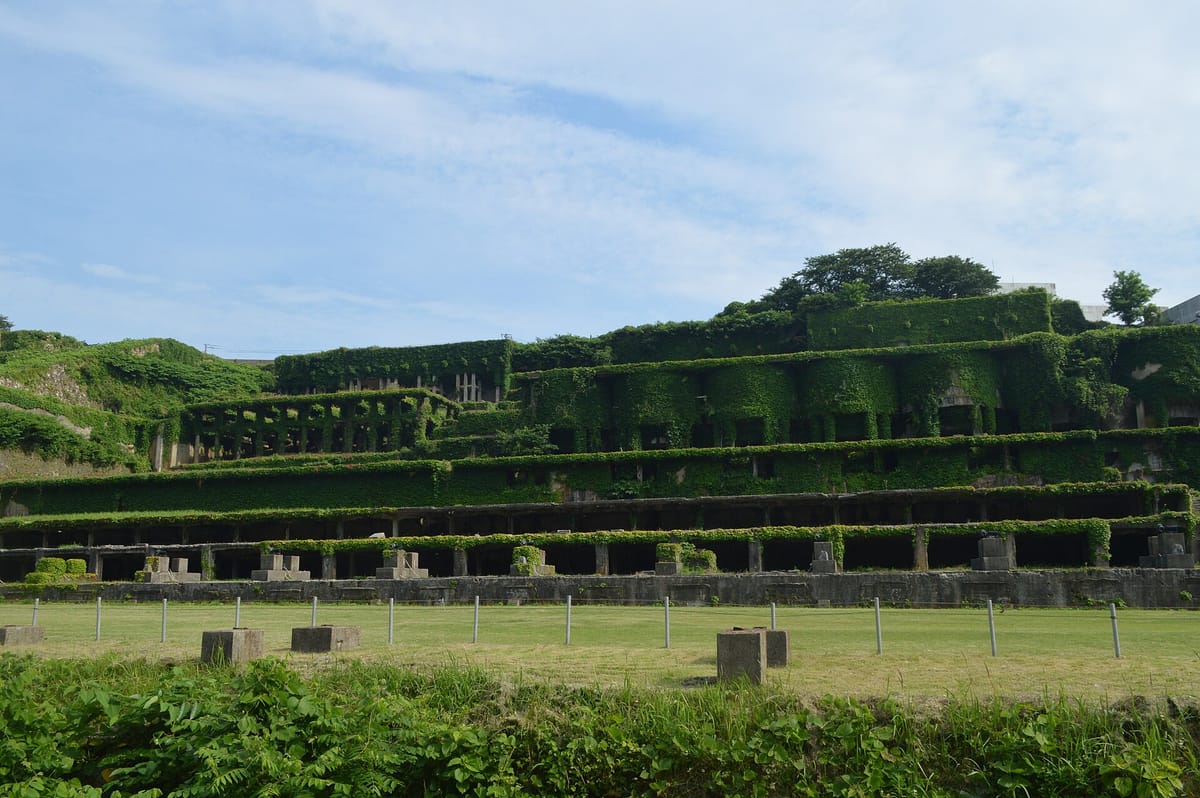
Most visitors split Sado into two days. In the west, around Aikawa, is the gold mine: the Sado Kinzan visitor site, where you walk through old tunnels, and above it Dōyū no Wareto, the peak that was split in two by centuries of digging. Down the hill are the Kitazawa Flotation Plant ruins, concrete terraces now wrapped in green, where gold and silver ore was processed in the twentieth century.
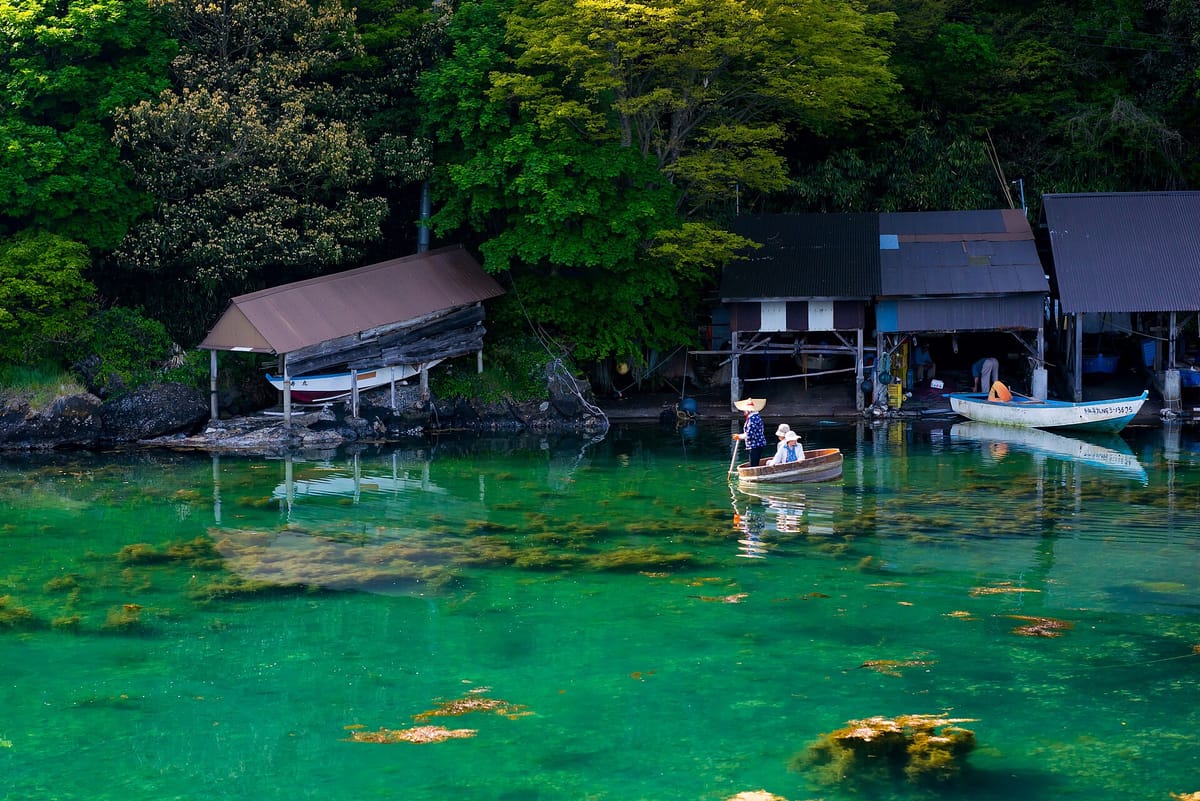
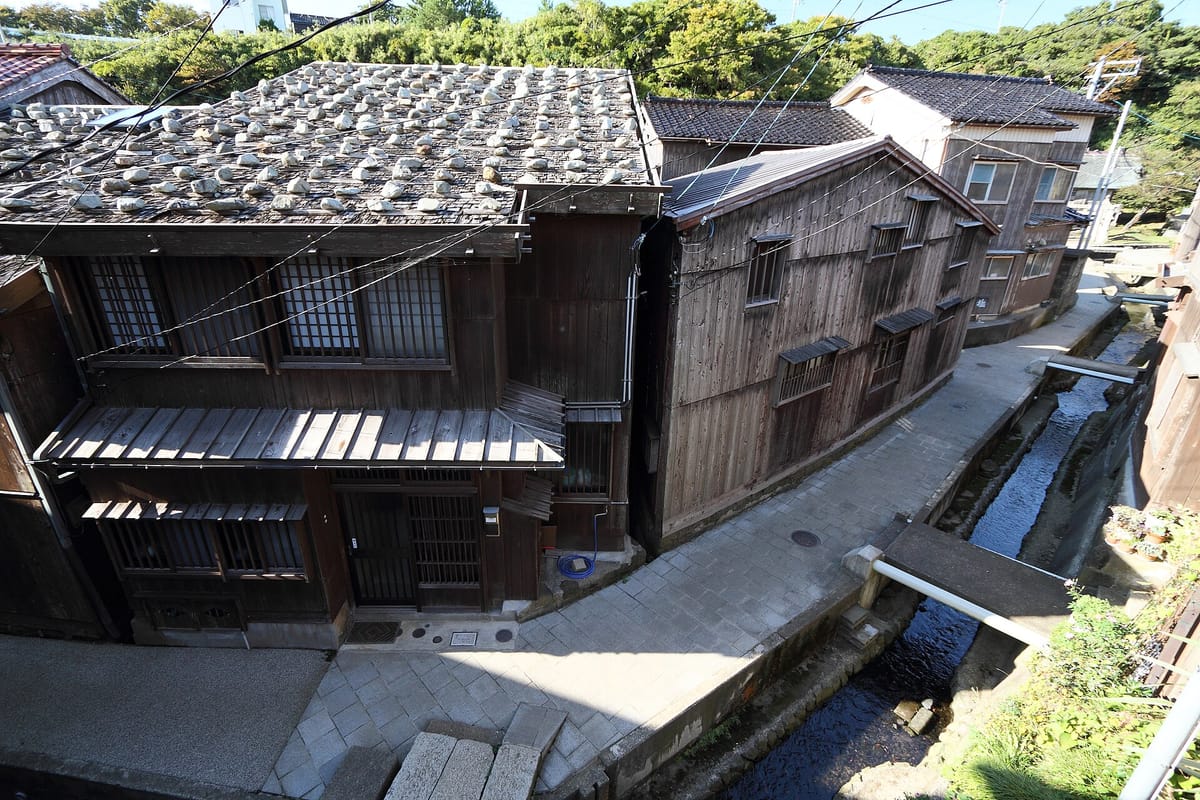
In the south, around Ogi, the island turns to the sea. Tarai-bune, round tub boats, still float in the harbour at Ogi and in the clear, rocky cove of Yajima-Kyōjima, and a few minutes away is Shukunegi, a village of tall, tightly packed wooden houses built by shipwrights and merchants in the days when the port traded along the coast.
- Sado Kinzan: the gold mine site in Aikawa, with a basic course through two tunnels and bookable guided tours.
- Dōyū no Wareto: the mountain cut in half by open mining, the symbol of the mine.
- Kitazawa Flotation Plant ruins: the terraced remains of the ore-processing plant.
- Ogi harbour: short tub boat rides in the port.
- Yajima-Kyōjima: a cove of small islands and red bridges, with tub boat rides on clear water.
- Shukunegi: a preserved village of wooden houses and narrow stone lanes.
- Toki no Mori Kōen: a park where you can see the crested ibis, once extinct in the wild in Japan and now reintroduced on Sado.
Words on the signs at the port and the mine
The ferry terminal is a good first reading test. The ticket is a 乗船券, jōsenken, the boarding area is the 乗り場, noriba, and the destination board shows 両津 for Ryōtsu, 新潟 for Niigata and 小木 for Ogi. At the mine, the key word is 坑道, kōdō, a mine tunnel, which appears in the names of each course.
Many place names on Sado use a small set of kanji you will quickly learn: 港 for port, 島 for island and 金 for gold. The table below gathers the words from the ferry to the tub boats.
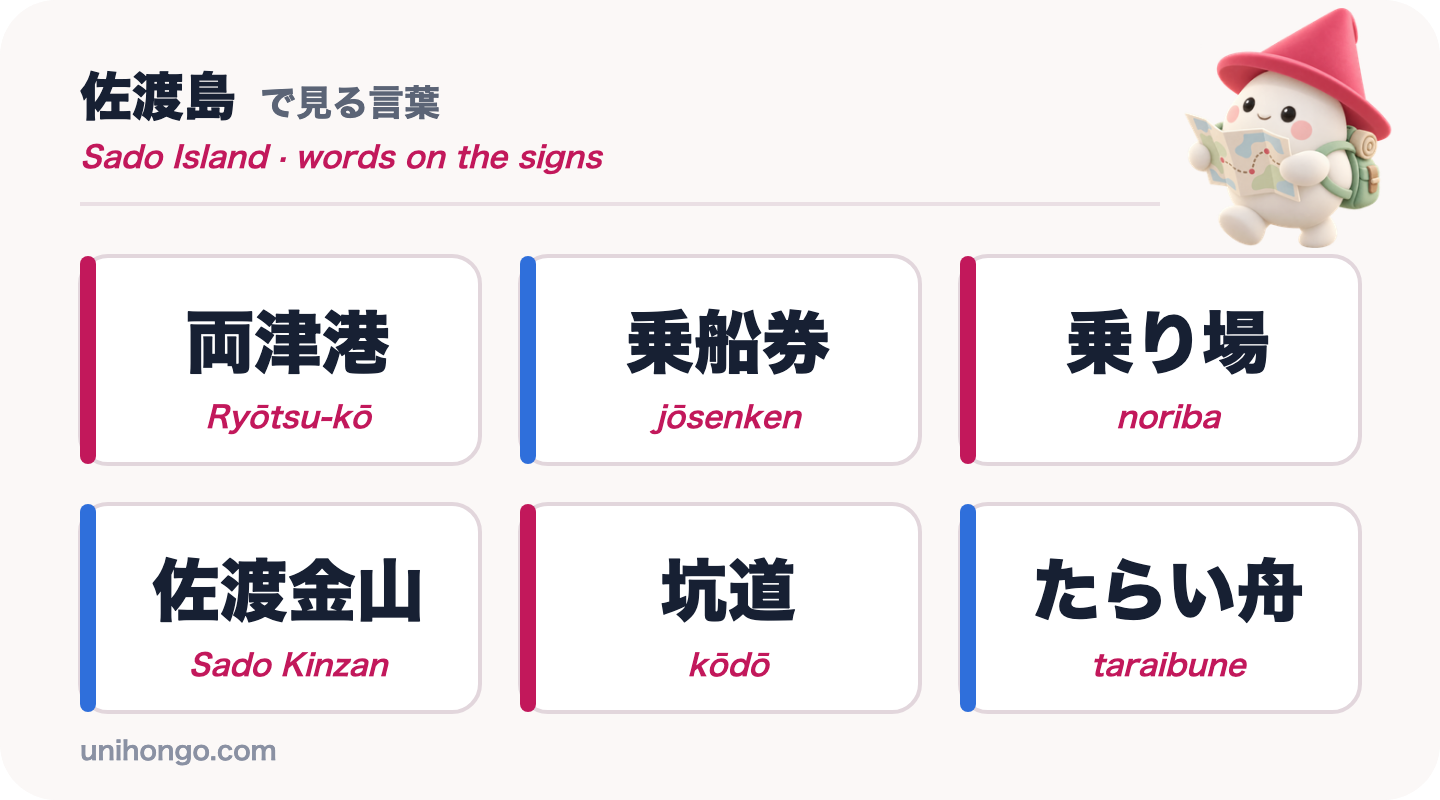
| Word | Reading | Meaning |
|---|---|---|
| 両津港 | Ryōtsu-kō | Ryōtsu port, where most ferries arrive |
| 小木港 | Ogi-kō | Ogi port in the south |
| 乗船券 | jōsenken | Ferry ticket |
| 乗り場 | noriba | Boarding point |
| 佐渡金山 | Sado Kinzan | The Sado gold mine |
| 坑道 | kōdō | Mine tunnel |
| 道遊の割戸 | Dōyū no Wareto | The split mountain above the mine |
| たらい舟 | taraibune | Round tub boat |
| 宿根木 | Shukunegi | The old wooden village near Ogi |
Japanese for the tub boats and the mine tunnels
A tub boat ride is short and friendly. You buy a ticket at the landing, step into the tub where you are told, and sit low in the middle while the boat woman sculls with one oar from the edge. Most will let you try rowing yourself, which is harder than it looks: the tub spins more easily than it moves forward.
In the mine tunnels the talk is about the route and photos. The basic course follows a marked path, and staff at the entrance can tell you which tunnel to start with and how long it takes.
| Japanese | Romaji | Meaning |
|---|---|---|
| たらい舟の乗り場はどこですか。 | Taraibune no noriba wa doko desu ka. | Where do the tub boats leave from? |
| 二人お願いします。 | Futari onegai shimasu. | Two people, please. |
| どこに座ればいいですか。 | Doko ni suwareba ii desu ka. | Where should I sit? |
| こぐのは難しいですね。 | Kogu no wa muzukashii desu ne. | Rowing is hard, isn't it? |
| 坑道の中は寒いですか。 | Kōdō no naka wa samui desu ka. | Is it cold inside the tunnel? |
| どちらのコースから回ればいいですか。 | Dochira no kōsu kara mawareba ii desu ka. | Which course should I go round first? |
| 中で写真を撮ってもいいですか。 | Naka de shashin o totte mo ii desu ka. | May I take photos inside? |
Practical tips for an island trip
Sado is easy once you accept its pace. Plan around the boats and the buses rather than trying to see everything.
- Book the jetfoil ahead at busy times, and check the sailing status on the morning of travel; rough seas in winter can cancel sailings.
- Carry cash for buses and small shops, since IC cards are not accepted on island buses.
- Bring a light jacket for the mine tunnels, which stay cool even in summer.
- Stay on the island at least one night; day trips from Niigata leave little time after the crossings.
- Keep your voice down in Shukunegi: the houses are lived in, and the lanes are narrow.
- Try the island's seafood and local sake, and book early if your visit falls in the Earth Celebration week in August.
Practise the tub boat ride before you go
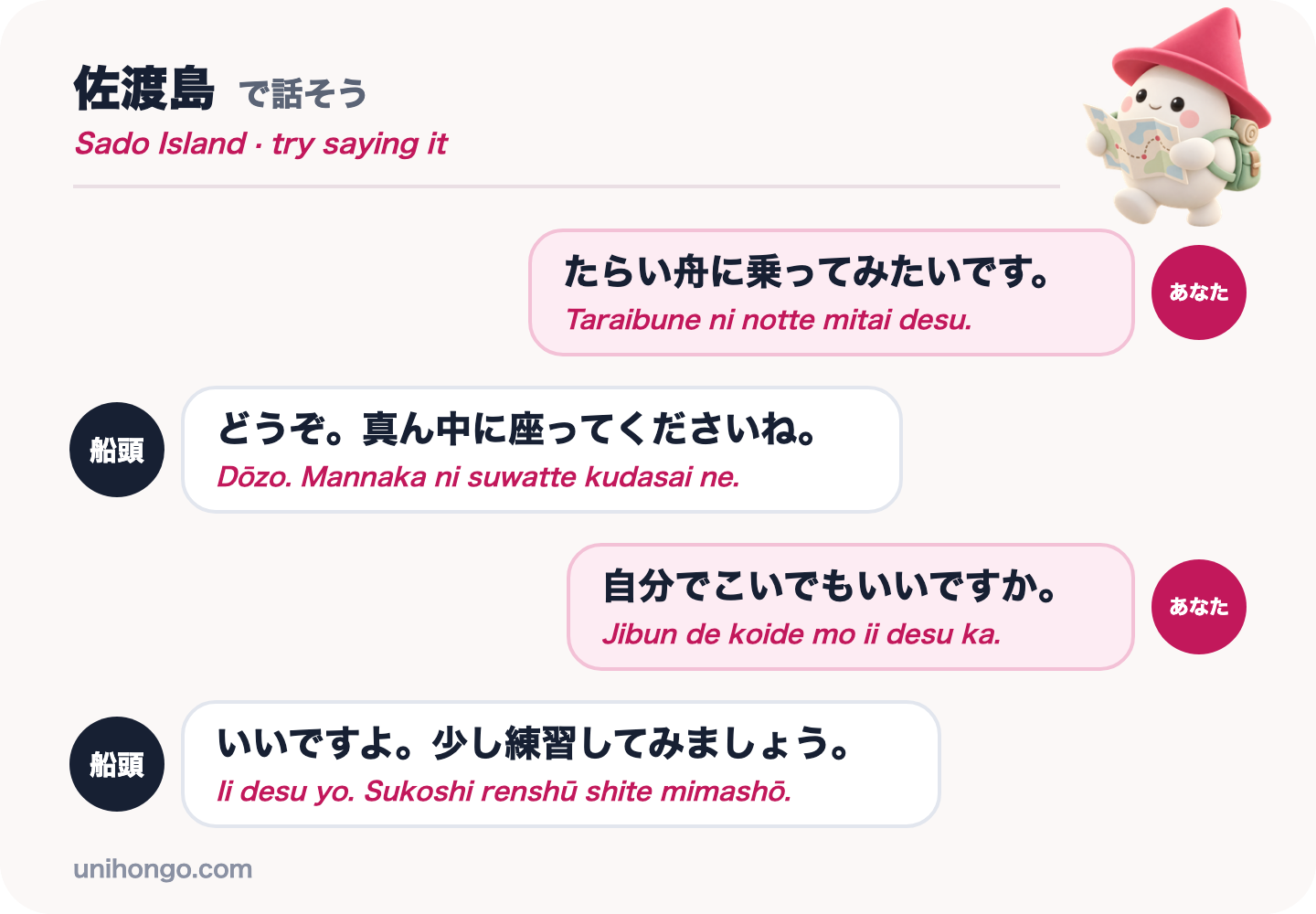
The -te mitai pattern, notte mitai, I would like to try riding, is the most useful structure you can take to Sado. It turns any verb into I would like to have a go, and it sounds eager rather than demanding. Practise the four lines below until you can say them without reading, and listen for mannaka, the middle, in the reply.
Then practise with a partner. In Unihongo, choose the Sightseeing topic and ask your AI Sensei to play a tub boat rower in Ogi, or choose Directions to rehearse catching the bus from Ryōtsu to the gold mine. Saying the lines out loud once is what makes them easy on the water.
| Japanese | Romaji | Meaning |
|---|---|---|
| たらい舟に乗ってみたいです。 | Taraibune ni notte mitai desu. | I would like to try riding a tub boat. |
| どうぞ。真ん中に座ってくださいね。 | Dōzo. Mannaka ni suwatte kudasai ne. | Go ahead. Please sit in the middle. |
| 自分でこいでもいいですか。 | Jibun de koide mo ii desu ka. | May I try rowing myself? |
| いいですよ。少し練習してみましょう。 | Ii desu yo. Sukoshi renshū shite mimashō. | Sure. Let's practise a little. |
Official information
Ferry timetables, fares and reservations are on the Sado Kisen website, and sailings can change with the weather. The Sado tourism site covers buses, rental cars and events, and the gold mine site lists its courses and which ones need booking.