

Why Minoo Park is Osaka's favourite nature walk
Minoo is where Osaka goes for fresh air. The city of Minoo sits on the northern edge of the Osaka plain, and behind it the hills of the Meiji no Mori Minoo Quasi-National Park rise straight up, covered in mixed forest. Minoo Park, run by Osaka Prefecture, follows the valley of the Minoo River from the edge of town up to Minoo Ōtaki, a 33-metre waterfall listed among Japan's hundred best.
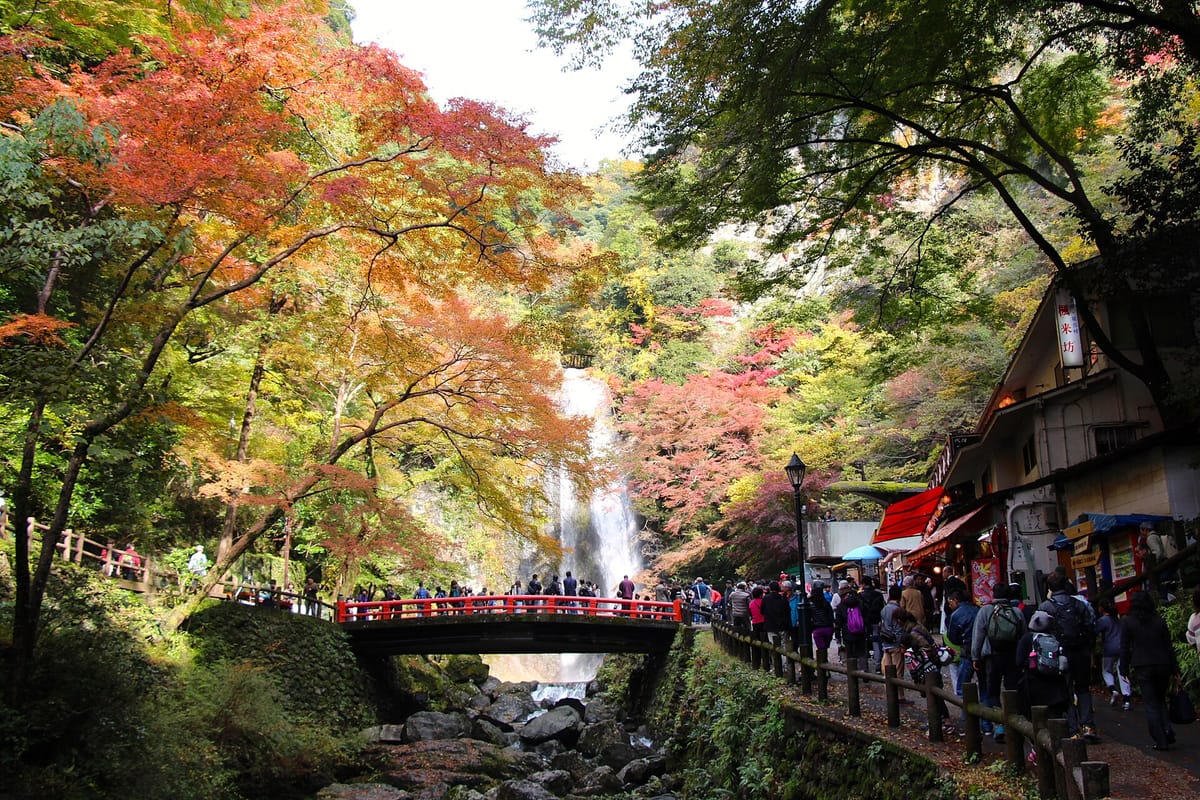
The attraction is how easy it is. You step off a suburban train, walk a few minutes past souvenir shops, and within a quarter of an hour you are beside a rushing stream under maples and cedars, with old inns on stilts over the water. The takimichi, the waterfall road, is paved and closed to cars, and the walk to the falls is a gentle climb suitable for families. In autumn, when the maples turn, it becomes one of the most popular leaf-viewing spots in Kansai.
For a Japanese learner, Minoo mixes nature vocabulary with the relaxed Kansai Japanese of shopkeepers selling snacks. You may hear ōkini, the old Kansai word for thanks, and the chatty tone of Osaka, and you can practise ordering food in a setting where everyone is on holiday.
Getting there: Hankyu Minoo Station
From Osaka-Umeda, take the Hankyu Takarazuka Line to Ishibashi Handai-mae and change to the short Minoo Line for the last few stops to Minoo, the terminus. The trip takes around half an hour. Alternatively, the Kita-Osaka Kyūkō extension of the Midōsuji subway line runs to Minoh-Kayano, from where Hankyu buses go to Hankyu Minoo Station.
From Minoo Station, walk straight up the street through the shops for about five minutes to the park entrance at Ichi-no-hashi, the first bridge. The Minoo tourist information centre is by the station, with maps of the trail and the latest notices about closures after heavy rain.
| Japanese | Romaji | Meaning |
|---|---|---|
| 箕面まで一枚お願いします。 | Minoo made ichimai onegai shimasu. | One ticket to Minoo, please. |
| 石橋阪大前で乗り換えですか。 | Ishibashi Handai-mae de norikae desu ka. | Do I change at Ishibashi Handai-mae? |
| 箕面大滝はどちらですか。 | Minoo Ōtaki wa dochira desu ka. | Which way is Minoo Falls? |
| 滝まで歩いてどのくらいですか。 | Taki made aruite dono kurai desu ka. | How long is it to the falls on foot? |
| 今日は滝道を通れますか。 | Kyō wa takimichi o tōremasu ka. | Is the waterfall path open today? |
Along the takimichi: Ryūan-ji, the insect museum and the falls
The path starts at Ichi-no-hashi and follows the river all the way. After fifteen or twenty minutes you reach the Minoo Park Insect Museum, with a butterfly house and displays of the insects that live in the park, a good stop with children. A little further up, Ryūan-ji is an old mountain temple with a vermilion gate and halls on both sides of the river. The Minoo tourism association calls it the birthplace of the Japanese lottery: its traditional draw of lucky tickets, the Minoo-tomi, is still held each year, and it is a popular place to pray for luck.
Beyond Ryūan-ji the path narrows between cliffs and the sound of the water gets louder. A last turn brings you to Minoo Ōtaki, falling 33 metres into a pool below a red bridge. Benches and a few shops face the falls, and in autumn the whole scene is framed by maples. You can return the way you came, or continue up past the falls on hiking trails into the forest if you have maps and time.
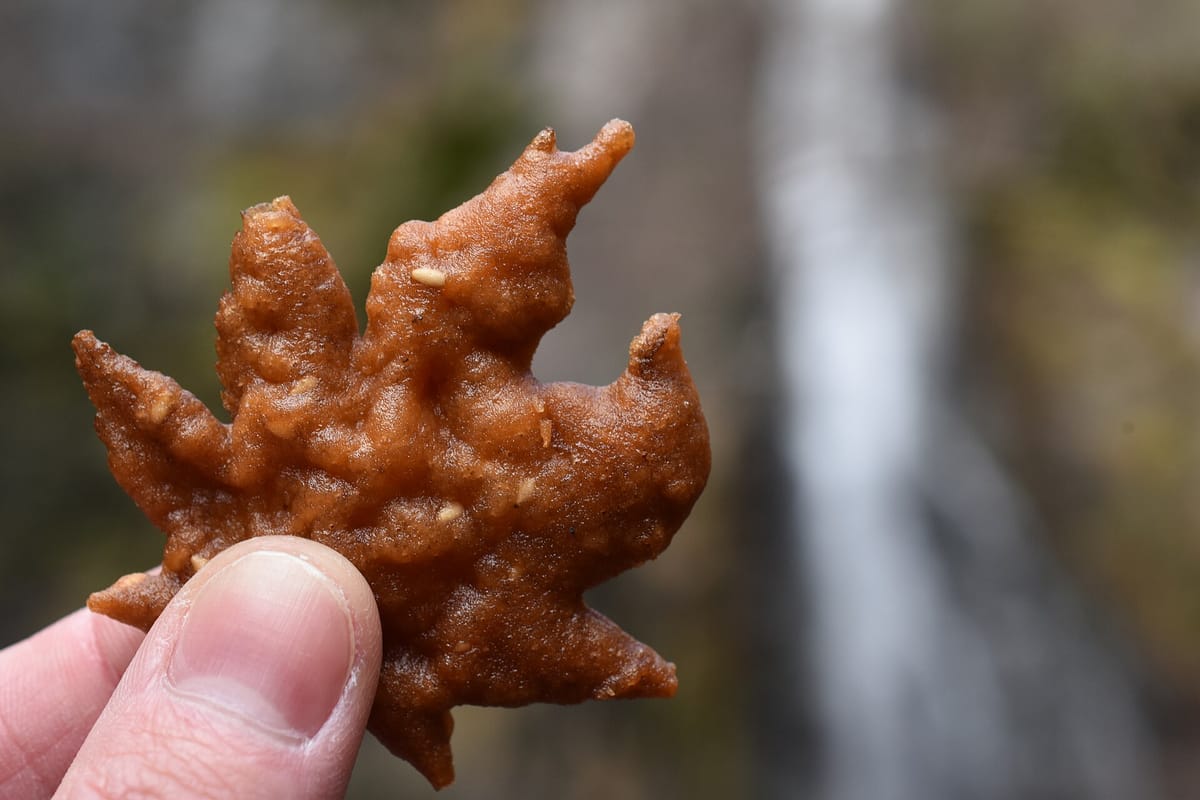
The shops along the lower path and around the station sell Minoo's snacks: momiji tempura, maple leaves in sweet batter, as well as yuzu products and local craft beer. The Minoo hills are home to wild monkeys, so keep food inside your bag while you walk.
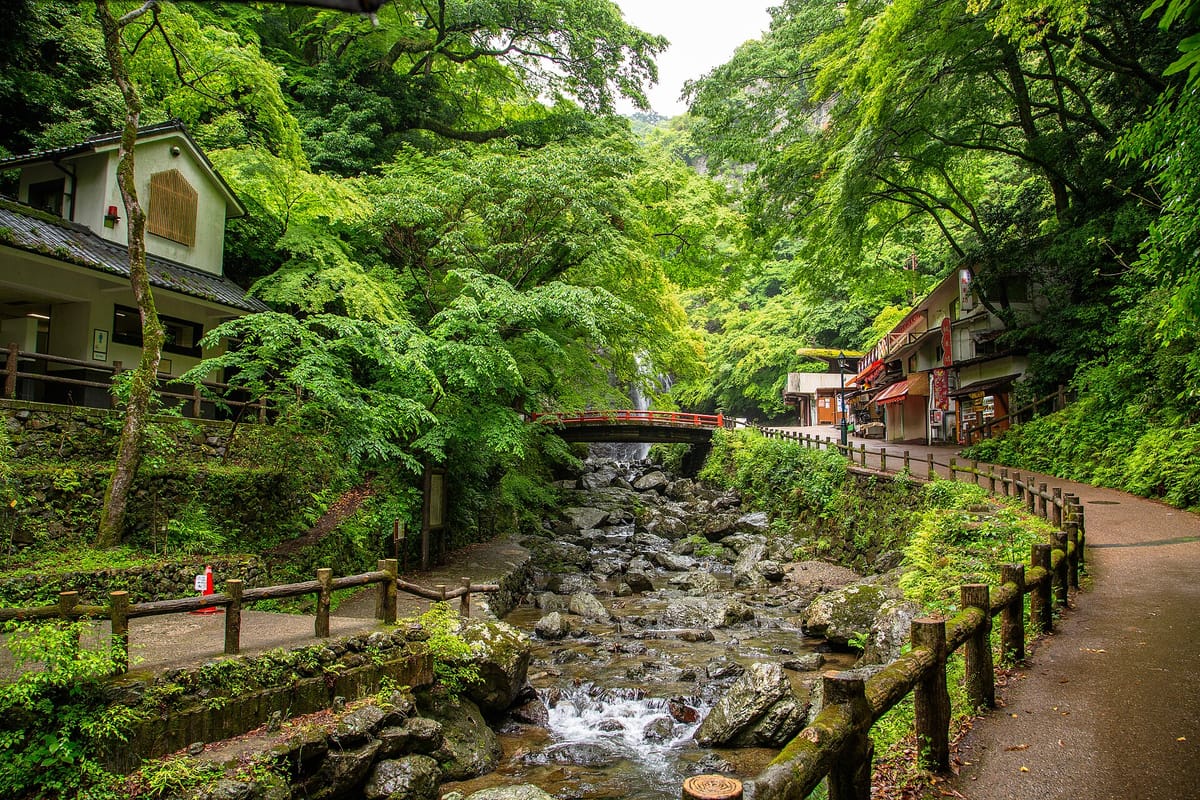
- Ichi-no-hashi: the first bridge and park entrance, five minutes from the station.
- Minoo Park Insect Museum: butterflies and insects of the park.
- Ryūan-ji: the temple known as the birthplace of the Japanese lottery.
- Takimichi: the paved waterfall path beside the river.
- Minoo Ōtaki: the 33-metre waterfall at the end of the path.
- Momiji tempura shops: fried maple leaves, fresh from the pan.
Words on the signs at Minoo Park
Signposts along the takimichi give the distance to the falls in metres and the direction of the station. The old kanji 瀧 appears in the temple's name, while the falls are written with the modern 滝; both are taki, waterfall.
Look out for the notices about the monkeys, which use the word 餌, esa, animal feed. 餌やり禁止 means no feeding, and it is taken seriously here.
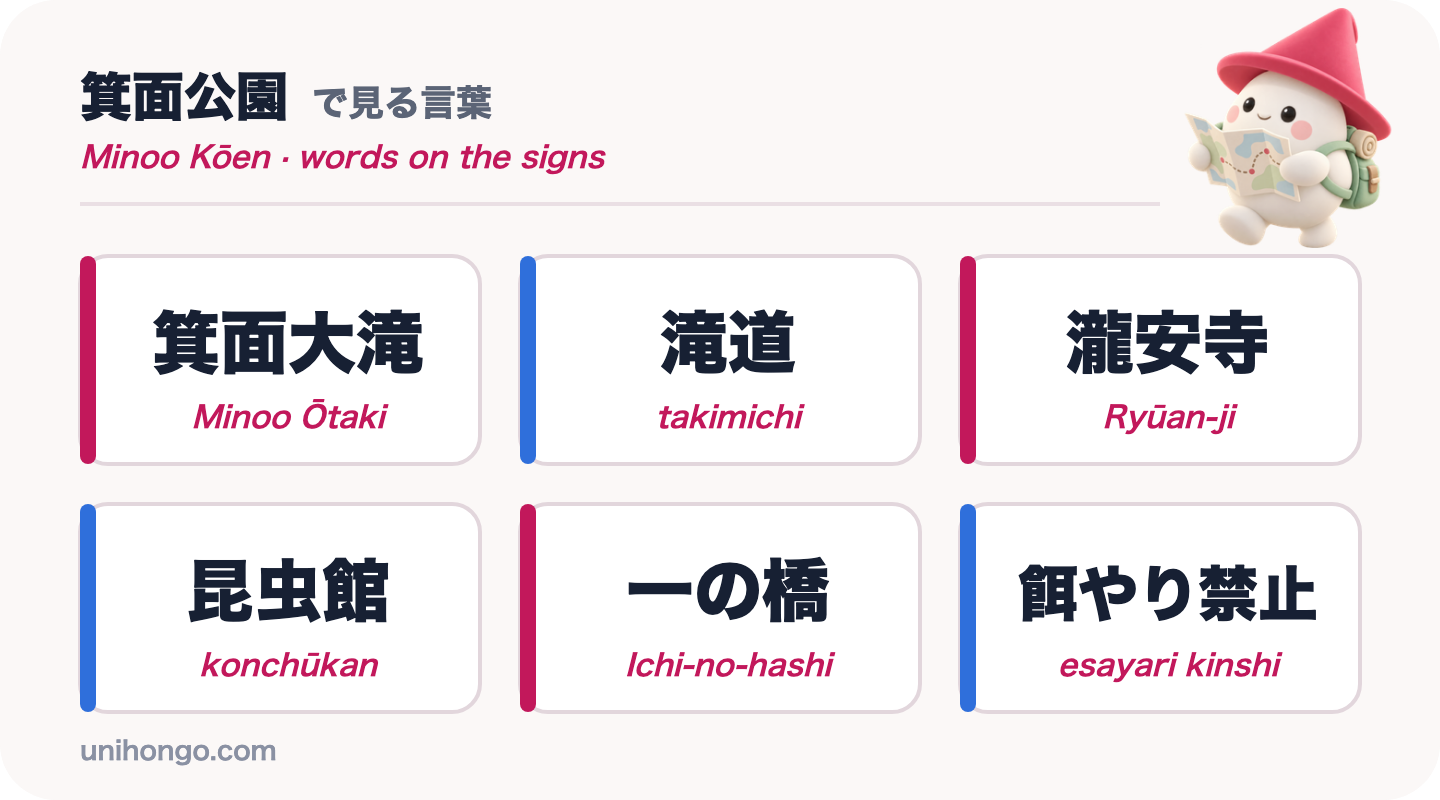
| Word | Reading | Meaning |
|---|---|---|
| 箕面大滝 | Minoo Ōtaki | Minoo Falls |
| 滝道 | takimichi | The waterfall path |
| 瀧安寺 | Ryūan-ji | Temple on the path, birthplace of the lottery |
| 昆虫館 | konchūkan | Insect museum |
| 一の橋 | Ichi-no-hashi | The first bridge, the park entrance |
| 餌やり禁止 | esayari kinshi | No feeding animals |
| 通行止め | tsūkōdome | Path closed |
| もみじの天ぷら | momiji no tenpura | Maple leaf tempura |
| 紅葉 | kōyō | Autumn leaves |
| 落石注意 | rakuseki chūi | Beware of falling rocks |
Japanese for momiji tempura and other snacks
Momiji tempura is sold in bags of different sizes at shops along the lower path and around the station, often fried in front of you. Staff frequently offer a free taste, shishoku, and the counters for bags, fukuro, are easy: hitofukuro, one bag, and futafukuro, two bags. It makes a light, sweet souvenir that travels well.
Other Minoo snacks include yuzu, the local citrus, in sweets and drinks, and Minoo's own craft beer. When ordering, point and use kore, this, if you forget the name.
| Japanese | Romaji | Meaning |
|---|---|---|
| もみじの天ぷらを一袋ください。 | Momiji no tenpura o hitofukuro kudasai. | One bag of maple leaf tempura, please. |
| 試食してもいいですか。 | Shishoku shite mo ii desu ka. | May I try a sample? |
| 小さい袋はありますか。 | Chiisai fukuro wa arimasu ka. | Do you have a smaller bag? |
| どのくらい日持ちしますか。 | Dono kurai himochi shimasu ka. | How long does it keep? |
| ゆずのお菓子はどれですか。 | Yuzu no okashi wa dore desu ka. | Which are the yuzu sweets? |
| 揚げたてはありますか。 | Agetate wa arimasu ka. | Do you have freshly fried ones? |
Etiquette, timing and practical tips
Minoo is easy, but it is a real forest valley, and the park posts a few firm rules.
- Do not feed the monkeys, and keep food in a closed bag on the path; eating in front of them invites trouble.
- Take your rubbish home: bins are few, and litter attracts animals.
- Drones are prohibited throughout the park, and tripods may be restricted on busy days.
- Barbecues and fires are not allowed anywhere in the park, and fishing in the river is prohibited.
- Go early on autumn weekends; by midday the path to the falls is shoulder to shoulder.
- Check the park's notices after heavy rain: sections of the path can close for repairs.
- Wear shoes with grip; the path is paved but can be slippery near the falls.
Practise the snack shop Japanese before you go
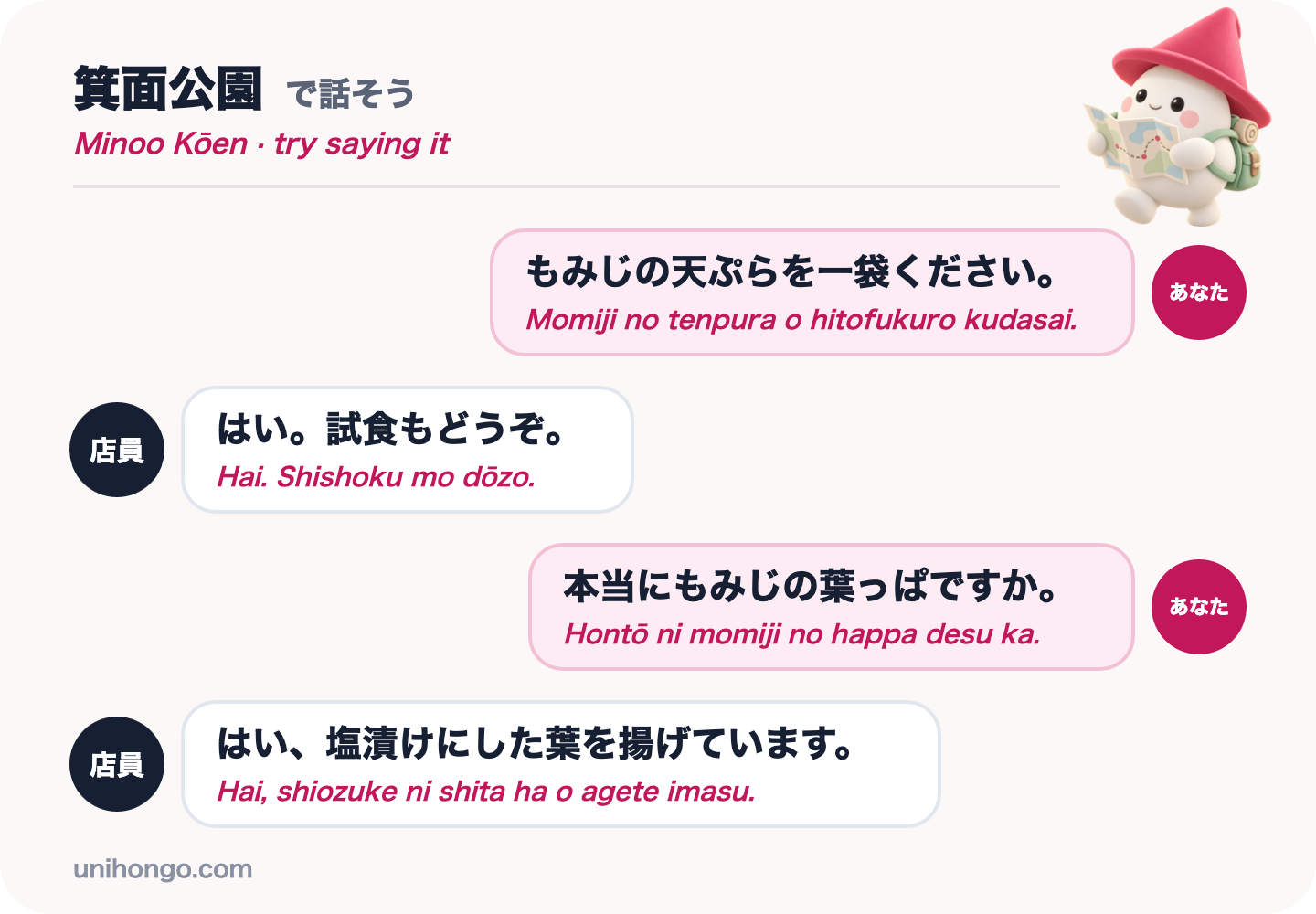
The conversation everyone has in Minoo is at a momiji tempura counter. You ask for a bag, the shopkeeper offers you a taste, and you ask the obvious question: is it really a maple leaf? Practise the four lines below until you can say them without reading.
Then practise with a partner who answers back. In Unihongo, choose the Festival Food topic and ask your AI Sensei to play a snack seller on the Minoo trail, or choose Seasonal Events to talk about the autumn leaves. Saying the lines once before the trip makes them come out easily at the counter.
| Japanese | Romaji | Meaning |
|---|---|---|
| もみじの天ぷらを一袋ください。 | Momiji no tenpura o hitofukuro kudasai. | One bag of maple leaf tempura, please. |
| はい。試食もどうぞ。 | Hai. Shishoku mo dōzo. | Sure. Please try a sample too. |
| 本当にもみじの葉っぱですか。 | Hontō ni momiji no happa desu ka. | Is it really a maple leaf? |
| はい、塩漬けにした葉を揚げています。 | Hai, shiozuke ni shita ha o agete imasu. | Yes, we fry leaves that have been preserved in salt. |
Official information
Minoo Park, managed for Osaka Prefecture, publishes access information, path closures, the insect museum's hours and events such as illuminations of the falls. The Minoo tourism association covers the town's temples, food and seasonal events. Check both before you go, particularly after heavy rain and in the autumn leaf season.