

Why Matsuyama Castle is worth the climb
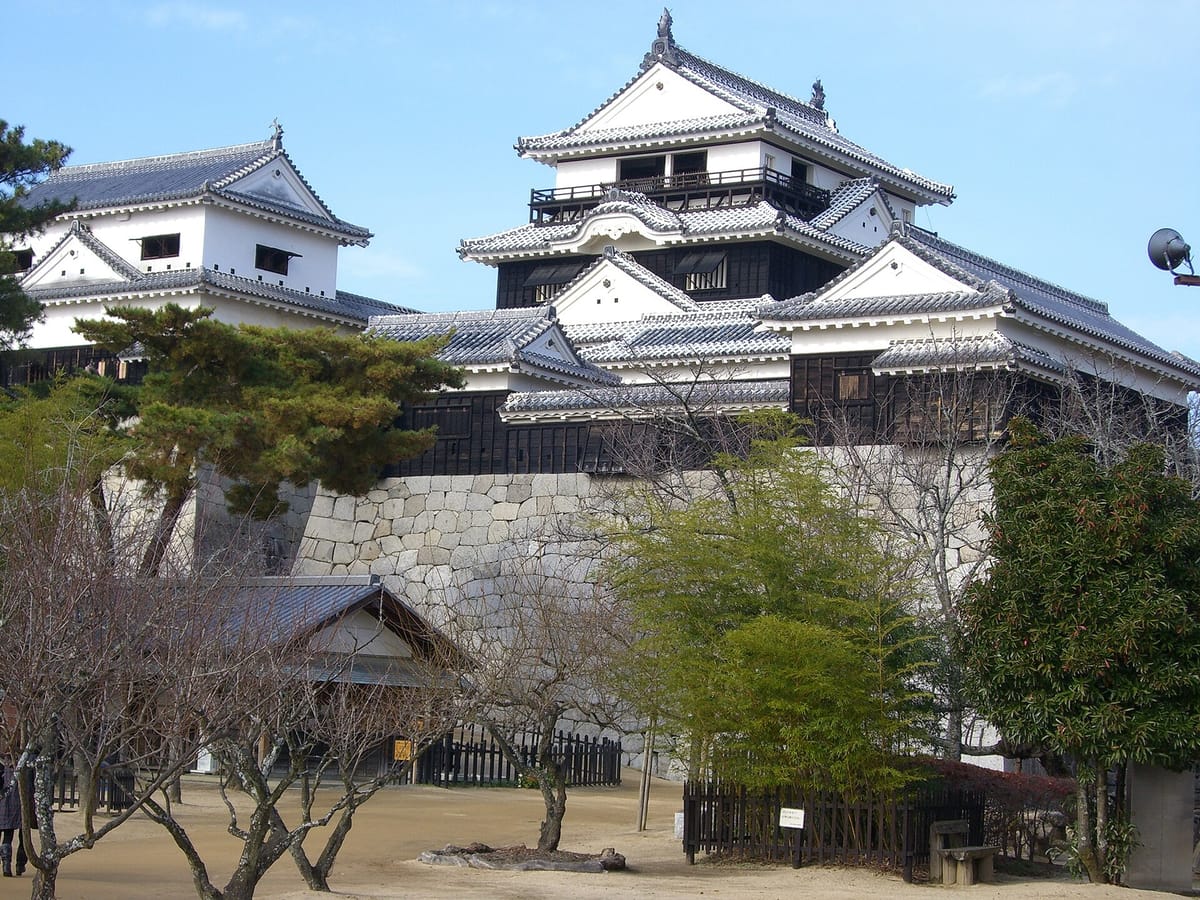
Most of the castle keeps you see in Japan today are concrete reconstructions from the twentieth century. Matsuyama's is not. Katō Yoshiaki, a general who fought for Tokugawa Ieyasu, began building a castle on Katsuyama in 1602, and the town of Matsuyama grew around it. An earlier keep was destroyed by lightning in the late eighteenth century, and the one that stands now was completed in the 1850s, just before Japan opened to the West. It is one of only twelve genzon tenshu, original keeps, left in the country.
What makes the visit special is the layout. The keep is not a lone tower but part of a tight complex of turrets, walls and corridors, connected so that attackers who broke through one gate would be trapped under fire from several sides. Walking the path up to it, through a series of gates that twist and turn, you feel the defensive design in your legs.
For a Japanese learner, a castle is also a vocabulary lesson. The same words repeat on every signboard: 天守, keep, 本丸, main enclosure, 門, gate, 櫓, turret. Learn a handful and you can follow the explanations and the route without the English panels.
Getting there: the tram, the ropeway and the chairlift
From JR Matsuyama Station, take the Iyotetsu city tram towards the city centre and get off at Ōkaidō, about ten minutes away. Walk east along Ropeway Street, a shopping street lined with cafés, to Tōun-guchi Station at the foot of the hill. From Dōgo Onsen the tram runs directly to Ōkaidō too, so it is easy to combine the castle and the hot spring in one day.
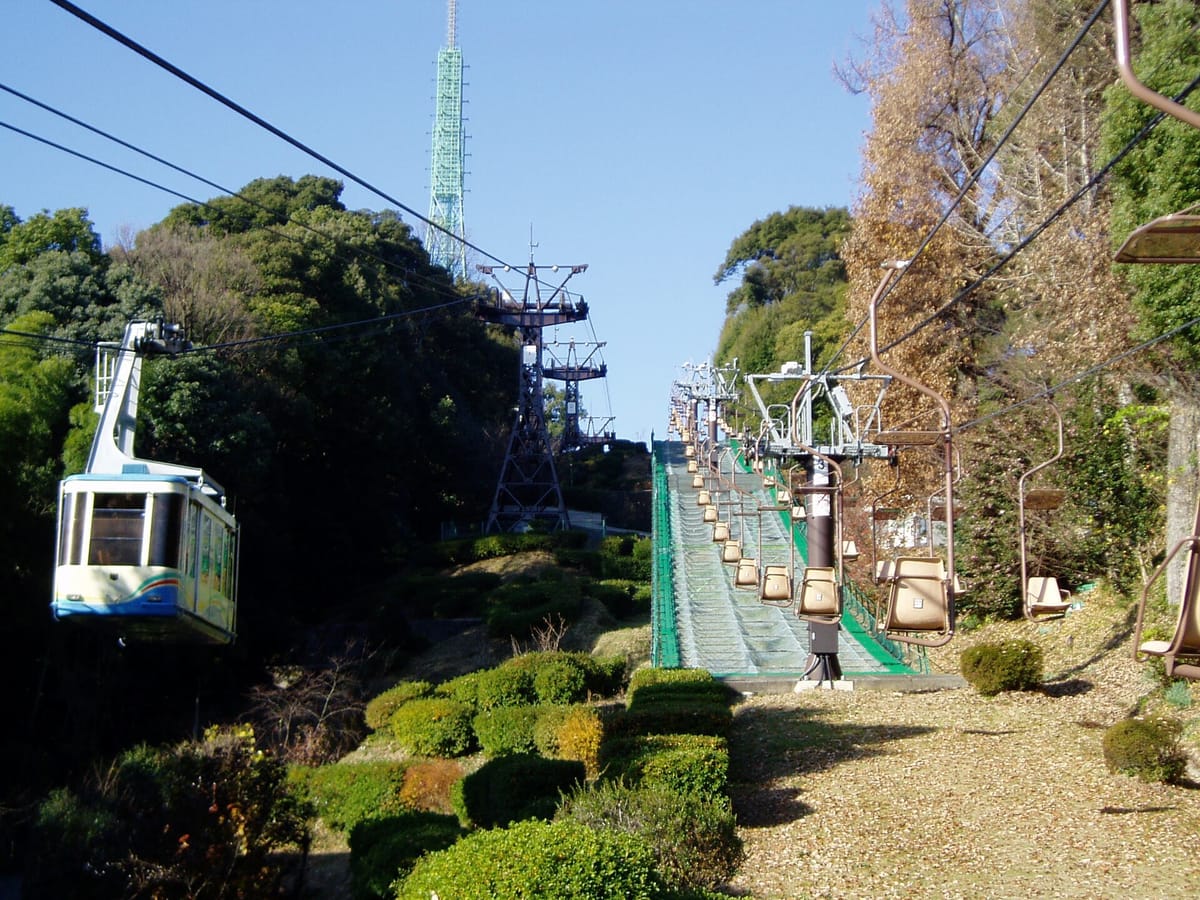
At Tōun-guchi you choose between the ropeway, a small enclosed car, and the chairlift, a line of open single seats that glide up through the trees. They run side by side, and a return ticket covers either one in each direction. From the top station it is a walk of around ten minutes uphill to the Honmaru, the main enclosure, with the keep at its far end.
If you prefer to walk, several paths, tojōdō, lead up from different sides of the hill, including routes behind the prefectural office, from the Kuromon gate and from Furumachi. They take around twenty to thirty minutes and are steep in places. Check the official notices before choosing one, because individual paths are sometimes closed for works or after heavy rain.
| Japanese | Romaji | Meaning |
|---|---|---|
| 大街道で降りたいんですが。 | Ōkaidō de oritai n desu ga. | I'd like to get off at Ōkaidō. |
| ロープウェイ乗り場はどこですか。 | Rōpuwei noriba wa doko desu ka. | Where does the ropeway leave from? |
| リフトは一人ずつ乗りますか。 | Rifuto wa hitori zutsu norimasu ka. | Do you ride the chairlift one at a time? |
| 片道券もありますか。 | Katamichiken mo arimasu ka. | Do you also have one-way tickets? |
| 歩いて登る道はどこですか。 | Aruite noboru michi wa doko desu ka. | Where is the path to walk up? |
Gates, turrets and the keep: what you will see
From the top station the path climbs past towering stone walls, ishigaki, to the Honmaru, a wide plateau on the summit with views across the city to the Seto Inland Sea. The grounds of the Honmaru are free to walk around; you buy a ticket only to enter the keep and its connected buildings.
Inside the keep you take off your shoes and carry them in a bag, then climb steep wooden stairs past displays of armour, weapons and documents from the castle's history. The top floor looks out in every direction over Matsuyama. On the way down, look at the thick wooden beams and the small openings in the walls, from which defenders could fire or drop stones.
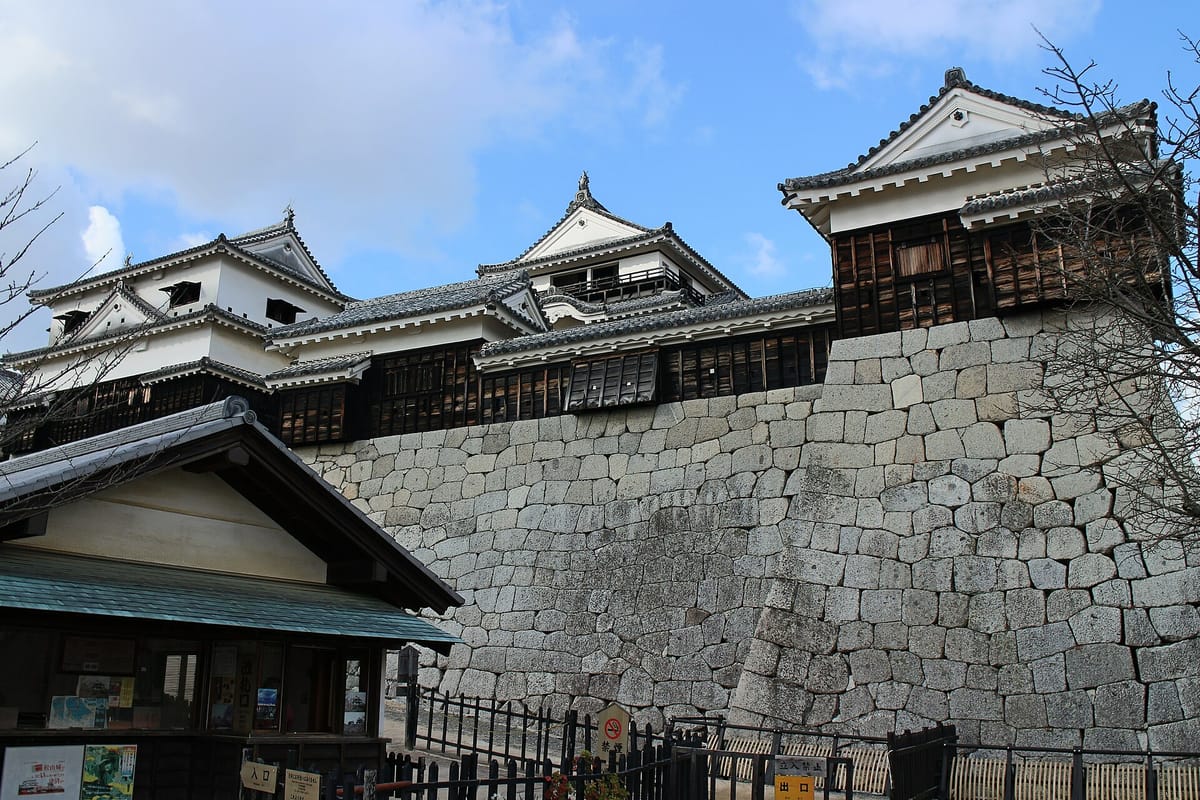
- Tenshu (天守): the main keep, rebuilt in the 1850s, with three storeys above its base.
- Honmaru (本丸): the summit enclosure around the keep, a wide open space with city views.
- Ishigaki (石垣): the high, curving stone walls, among the most impressive in Japan.
- Tonashi-mon (戸無門): a gate without doors, one of several gates on the way up.
- Tsutsui-mon (筒井門): a heavily defended gate designed to trap attackers in a small courtyard.
- Yagura (櫓): the turrets along the walls, several of them original.
- Ninomaru Shiseki Teien (二之丸史跡庭園): the Ninomaru Historic Garden at the foot of the hill, laid out on the site of the former Ninomaru residence.
Words on the signs: keep, walls and paths
Castle signs mix practical words, like ropeway, ticket and toilet, with old architectural terms. The table below covers the ones you will meet most often between the ropeway station and the top floor of the keep.
| Word | Reading | Meaning |
|---|---|---|
| 天守 | tenshu | Castle keep, the main tower |
| 現存天守 | genzon tenshu | Surviving original keep |
| 本丸 | honmaru | Main enclosure on the summit |
| 石垣 | ishigaki | Stone walls |
| 櫓 | yagura | Turret |
| ロープウェイ | rōpuwei | Ropeway, cable car |
| リフト | rifuto | Chairlift |
| 登城道 | tojōdō | Path up to the castle |
| 足元注意 | ashimoto chūi | Watch your step |
Japanese for tickets, lifts and the keep
There are two ticket points: the ropeway and chairlift office at Tōun-guchi Station, and the keep's entrance at the top. At both, a short, polite request is all you need. Return tickets are ōfukuken and one-way tickets are katamichiken.
Inside the keep, attendants will show you where to leave your shoes and may remind you about the steep stairs. Listen for kutsu o nuide kudasai, please take off your shoes, and ki o tsukete kudasai, please be careful.
| Japanese | Romaji | Meaning |
|---|---|---|
| 大人二枚、往復でお願いします。 | Otona nimai, ōfuku de onegai shimasu. | Two adults, return, please. |
| 帰りはロープウェイでもいいですか。 | Kaeri wa rōpuwei demo ii desu ka. | Is it OK to come down by ropeway? |
| 天守の入場券はどこで買えますか。 | Tenshu no nyūjōken wa doko de kaemasu ka. | Where can I buy a ticket for the keep? |
| 靴はどこに入れればいいですか。 | Kutsu wa doko ni irereba ii desu ka. | Where should I put my shoes? |
| ここは写真を撮ってもいいですか。 | Koko wa shashin o totte mo ii desu ka. | Is it OK to take photos here? |
| 二之丸庭園へはどう行けばいいですか。 | Ninomaru Teien e wa dō ikeba ii desu ka. | How do I get to the Ninomaru Garden? |
Etiquette, timing and practical tips
Matsuyama Castle is an easy visit, but the stairs in the keep and the paths on the hill reward a little preparation.
- Wear shoes that are easy to take off and on; you remove them inside the keep.
- Hold the handrails on the steep wooden stairs in the keep, and let people coming down pass on the narrow sections.
- On the chairlift, keep bags on your lap and do not lean or swing; skip it in strong wind or rain.
- Go in the morning on busy spring and autumn weekends; the queue for the lifts grows by midday.
- Cherry blossom season, usually around early April, turns the Honmaru into a picnic ground; expect crowds and plan for it.
- Check the official site for the last ropeway and keep entry times, which change with the seasons.
- Combine the castle with Dōgo Onsen: castle in the morning or afternoon, a bath in the evening.
Practise the ropeway window before you go
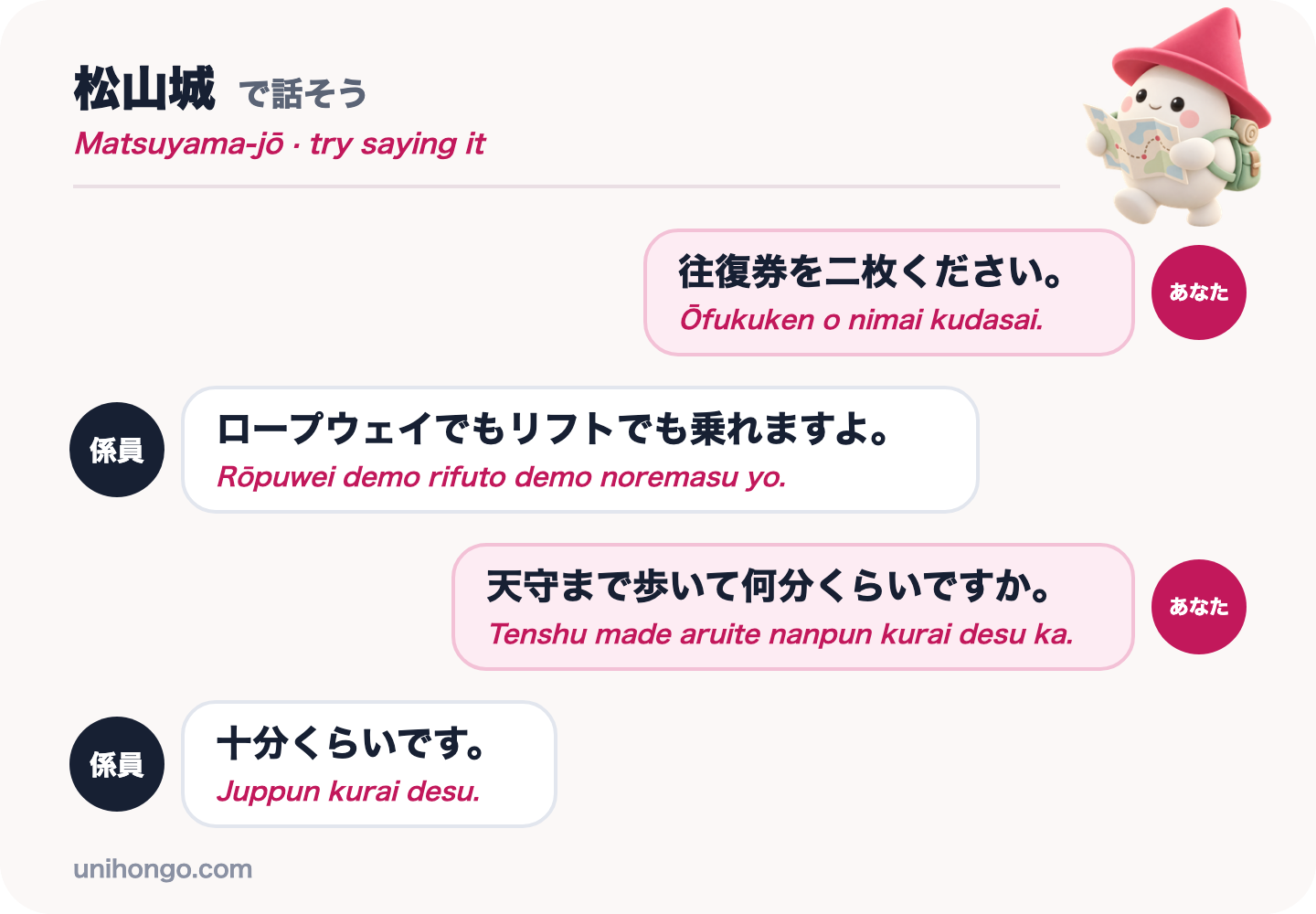
The key conversation happens at the ticket window at Tōun-guchi. You buy your tickets, the attendant tells you your options, and you check how far you still have to walk. Notice demo ... demo, either ... or, in the staff member's line: it is a useful pattern whenever there is a choice.
Say the four lines aloud until your side is smooth. Then open Unihongo, choose the Sightseeing topic and ask your AI Sensei to be the attendant, perhaps adding news that the chairlift has stopped because of the wind. Handling that change of plan in Japanese is excellent practice.
| Japanese | Romaji | Meaning |
|---|---|---|
| 往復券を二枚ください。 | Ōfukuken o nimai kudasai. | Two return tickets, please. |
| ロープウェイでもリフトでも乗れますよ。 | Rōpuwei demo rifuto demo noremasu yo. | You can ride either the ropeway or the chairlift. |
| 天守まで歩いて何分くらいですか。 | Tenshu made aruite nanpun kurai desu ka. | About how many minutes' walk is it to the keep? |
| 十分くらいです。 | Juppun kurai desu. | About ten minutes. |
Official information
Opening hours, the last lift times, closing days and any path closures are published on the official Matsuyama Castle site. Check the notices before you go, particularly after heavy rain.