

Why Nagasaki is worth the journey
Nagasaki's story is unlike any other Japanese city's. From 1641 to 1859, when Japan restricted foreign contact, the Dutch East India Company's trading post on the small artificial island of Dejima was the only place where Europeans were allowed to trade. Western science, medicine and goods entered Japan through here. When the ports opened in 1859, merchants from Britain and elsewhere built houses on the hills of Minami-Yamate, and the Scottish trader Thomas Glover helped shape Japan's modern shipbuilding and mining industries.
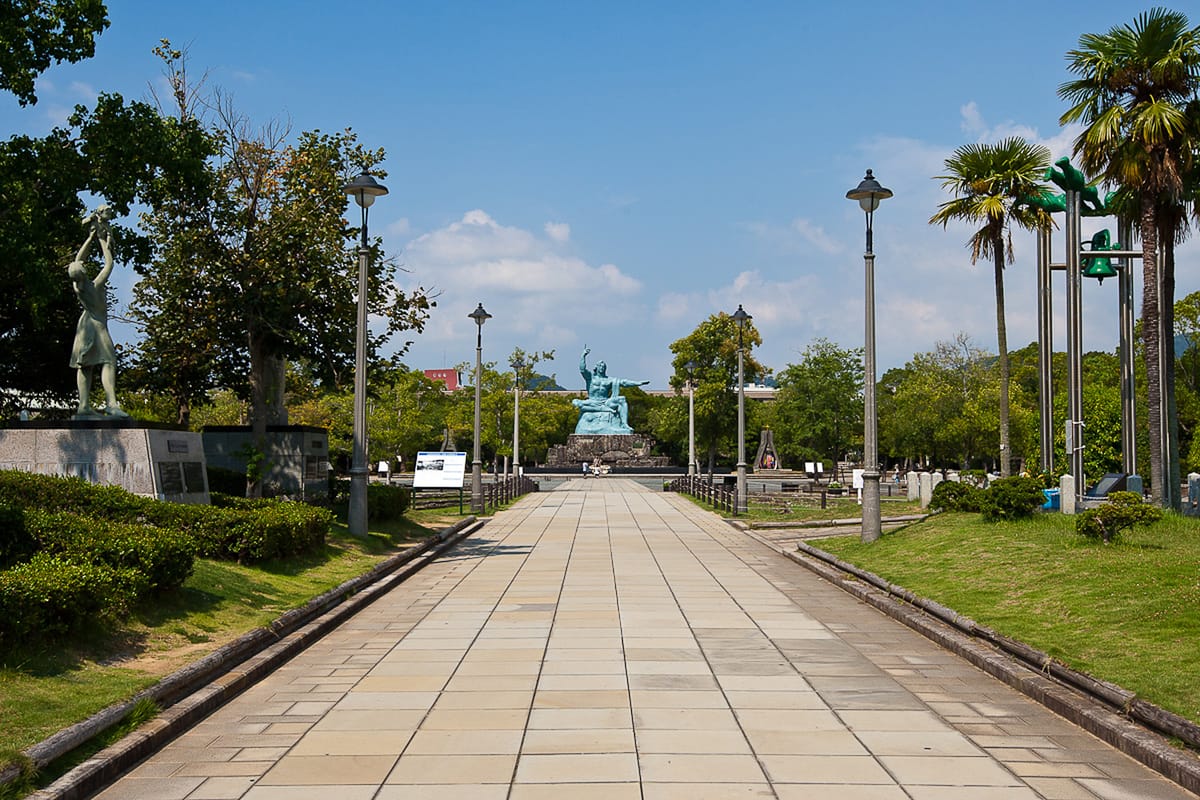
On 9 August 1945 an atomic bomb exploded above the Urakami district in the north of the city. The Peace Park, the hypocentre monument and the Atomic Bomb Museum stand on and near the site. Every year on 9 August the city holds a peace ceremony here, and the mayor reads a peace declaration.
For a learner, Nagasaki is a gentle place to practise. The tram drivers, museum staff and people at the stops are used to visitors, and the words you need for a day on the tram are few and repeat constantly.
Getting around by tram
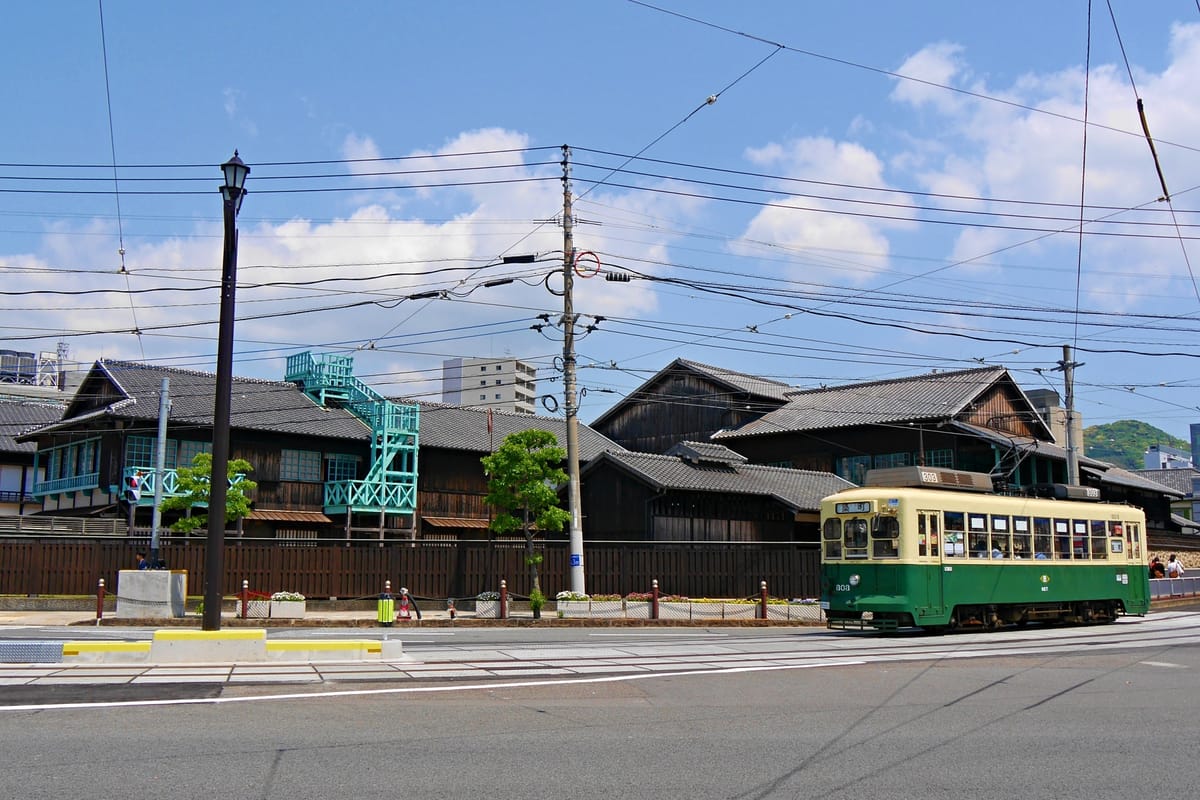
Nagasaki's trams, run by the Nagasaki Electric Tramway, are called densha or, affectionately, chin-chin densha. The stops are called dentei. The fare is one flat amount for any distance, which makes them easy: board at the rear, find a seat, and pay at the front as you get off, with coins or an IC card. Change machines are on board.
From Nagasaki Station, trams run north to the Heiwa Kōen stop for the Peace Park and the Genbaku Shiryōkan stop for the museum, and south to Dejima. For Glover Garden, get off at the Ōura Tenshudō stop, which may mean one change on the way; route numbers and colours are shown on the front of each tram and on the maps at the stops. Walking from Dejima to the foot of Glover Garden takes around twenty to thirty minutes along the harbour.
| Japanese | Romaji | Meaning |
|---|---|---|
| すみません、この電車は平和公園に行きますか。 | Sumimasen, kono densha wa Heiwa Kōen ni ikimasu ka. | Excuse me, does this tram go to the Peace Park? |
| グラバー園は、どこで降りればいいですか。 | Gurabā-en wa, doko de orireba ii desu ka. | Where should I get off for Glover Garden? |
| 乗り換えは必要ですか。 | Norikae wa hitsuyō desu ka. | Do I need to change? |
| 運賃は降りるときに払いますか。 | Unchin wa oriru toki ni haraimasu ka. | Do I pay the fare when I get off? |
| 千円札を両替できますか。 | Sen'en satsu o ryōgae dekimasu ka. | Can I change a thousand-yen note? |
| 次は出島ですか。 | Tsugi wa Dejima desu ka. | Is the next stop Dejima? |
The Peace Park, Dejima and Glover Garden
Start in the north. The Peace Park is dominated by the Peace Statue, a bronze figure nearly ten metres tall by the sculptor Kitamura Seibō. His raised right hand points to the threat of nuclear weapons, his outstretched left hand stands for peace, and his closed eyes pray for the victims. At the other end of the park, the Fountain of Peace remembers the people who died searching for water, and carries a poem by a girl who survived. South of the park, a black monument marks the hypocentre, and the Atomic Bomb Museum tells the story of the bombing and its aftermath through objects, photographs and testimony. Allow at least an hour and a half for the museum.
Dejima, on the other side of the city, was a fan-shaped island built in 1636. The city has been restoring it building by building, and the reconstructed warehouses, the Chief Factor's residence and the sea wall now show how the Dutch lived and traded around 1820.
Glover Garden, on the hill of Minami-Yamate, gathers nine Western-style buildings from the Meiji era, three of them Important Cultural Properties. The Former Glover House, completed in 1863, is the oldest surviving Western-style wooden building in Japan and part of the World Heritage listing for Japan's Meiji industrial revolution. An inclined lift and escalators help with the slope, and the views over the harbour are the best in the city.
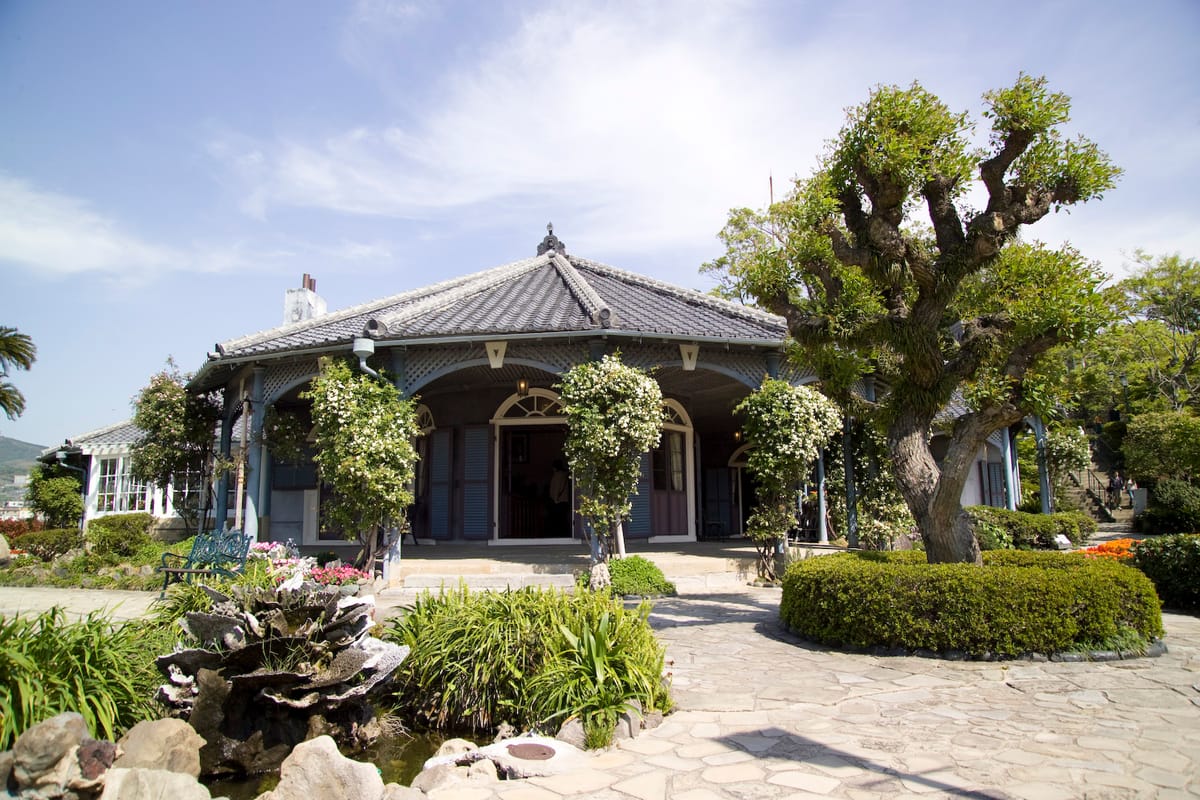
- Peace Park: the Peace Statue and the Fountain of Peace; free, open at all times.
- Hypocentre Park: the monument marking the point below the explosion.
- Nagasaki Atomic Bomb Museum: exhibits on the bombing and nuclear weapons; small entry fee.
- Dejima: the restored Dutch trading post; ticketed, with some rooms furnished as they were.
- Glover Garden: merchant houses and gardens overlooking the harbour; ticketed.
- Ōura Church: a National Treasure just below Glover Garden, part of the World Heritage listing for the hidden Christian sites.
Words on the signs and tram stops
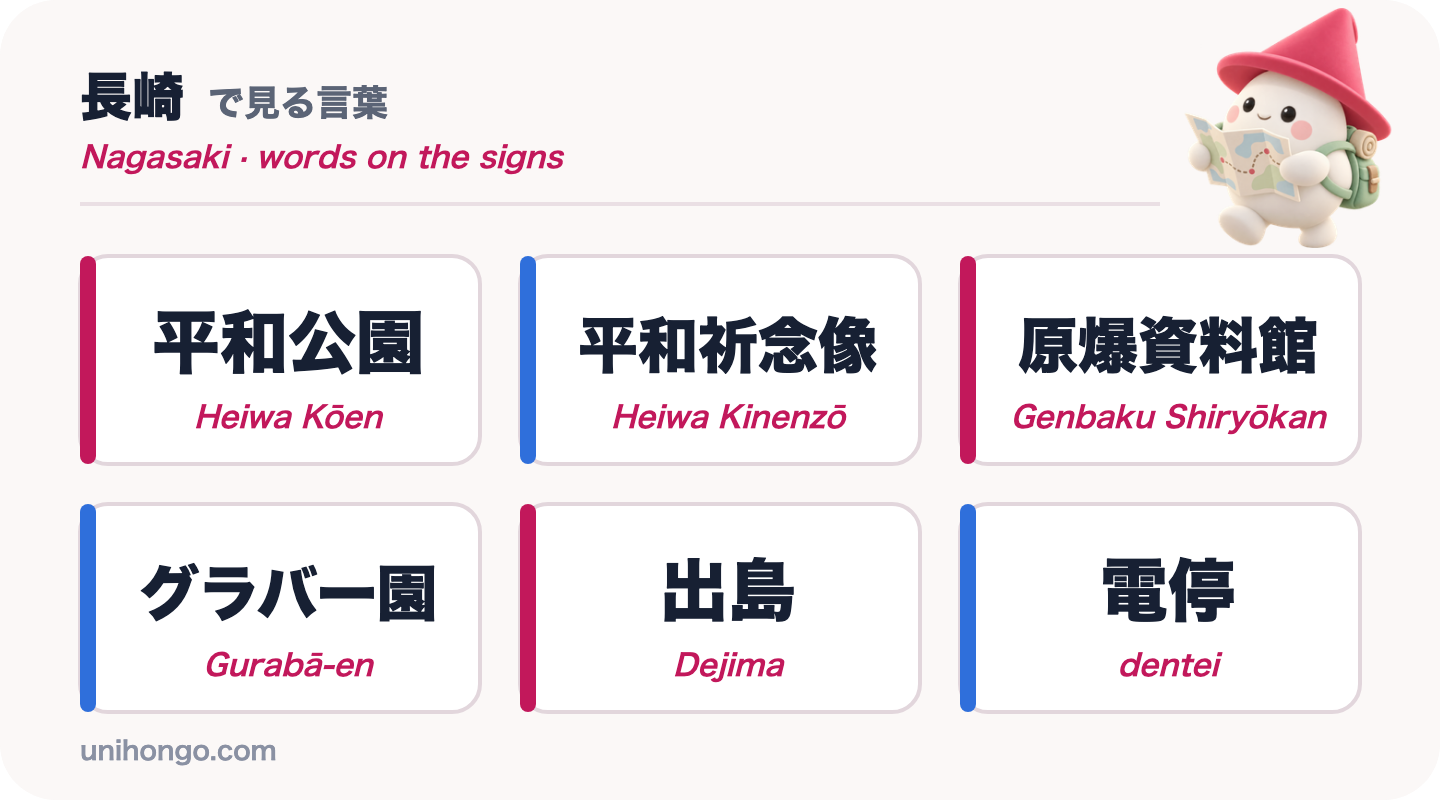
Tram stops and museum signs show Japanese first, often with English beneath. Learning the Japanese names helps you catch the stop announcements on the tram and read the route maps at a glance.
| Word | Reading | Meaning |
|---|---|---|
| 平和公園 | Heiwa Kōen | Peace Park, and the name of its tram stop |
| 平和祈念像 | Heiwa Kinenzō | The Peace Statue, literally statue praying for peace |
| 原爆資料館 | Genbaku Shiryōkan | Atomic Bomb Museum, also a tram stop |
| グラバー園 | Gurabā-en | Glover Garden |
| 出島 | Dejima | The former Dutch trading island |
| 電停 | dentei | Tram stop |
| 大浦天主堂 | Ōura Tenshudō | Ōura Church, and the stop for Glover Garden |
| 爆心地 | bakushinchi | Hypocentre of the explosion |
| 入館料 | nyūkanryō | Entry fee for a museum |
Japanese for tickets and museums
Dejima, Glover Garden and the Atomic Bomb Museum each sell tickets at the entrance, and the conversation is simple. Staff may offer an audio guide or a pamphlet in English, and at the museum there are lockers for bags.
| Japanese | Romaji | Meaning |
|---|---|---|
| 大人一枚お願いします。 | Otona ichimai onegai shimasu. | One adult ticket, please. |
| 英語のパンフレットはありますか。 | Eigo no panfuretto wa arimasu ka. | Do you have a pamphlet in English? |
| 音声ガイドを借りられますか。 | Onsei gaido o kariraremasu ka. | Can I borrow an audio guide? |
| 荷物を預けるところはありますか。 | Nimotsu o azukeru tokoro wa arimasu ka. | Is there somewhere to leave my bag? |
| 中で写真を撮ってもいいですか。 | Naka de shashin o totte mo ii desu ka. | May I take photos inside? |
| 見学にどのくらい時間がかかりますか。 | Kengaku ni dono kurai jikan ga kakarimasu ka. | How long does a visit take? |
Etiquette at the memorials and practical tips
The Peace Park and the hypocentre are places of mourning as well as sightseeing. Many visitors are school groups and survivors' families, and paper crane offerings are left at the monuments.
- Keep your voice low at the Peace Statue, the hypocentre monument and in the museum.
- Do not climb on monuments or pose playfully for photos in front of them.
- Paper cranes, orizuru, are left as offerings for peace; look but do not touch them.
- Glover Garden is on a steep hill: wear comfortable shoes and use the inclined lift if you need it.
- Carry coins or an IC card for the tram. Buying a one-day tram pass can make sense if you plan many rides.
- Try Nagasaki food between sights: champon noodles, sara udon and castella sponge cake.
Practise the tram ride before you go
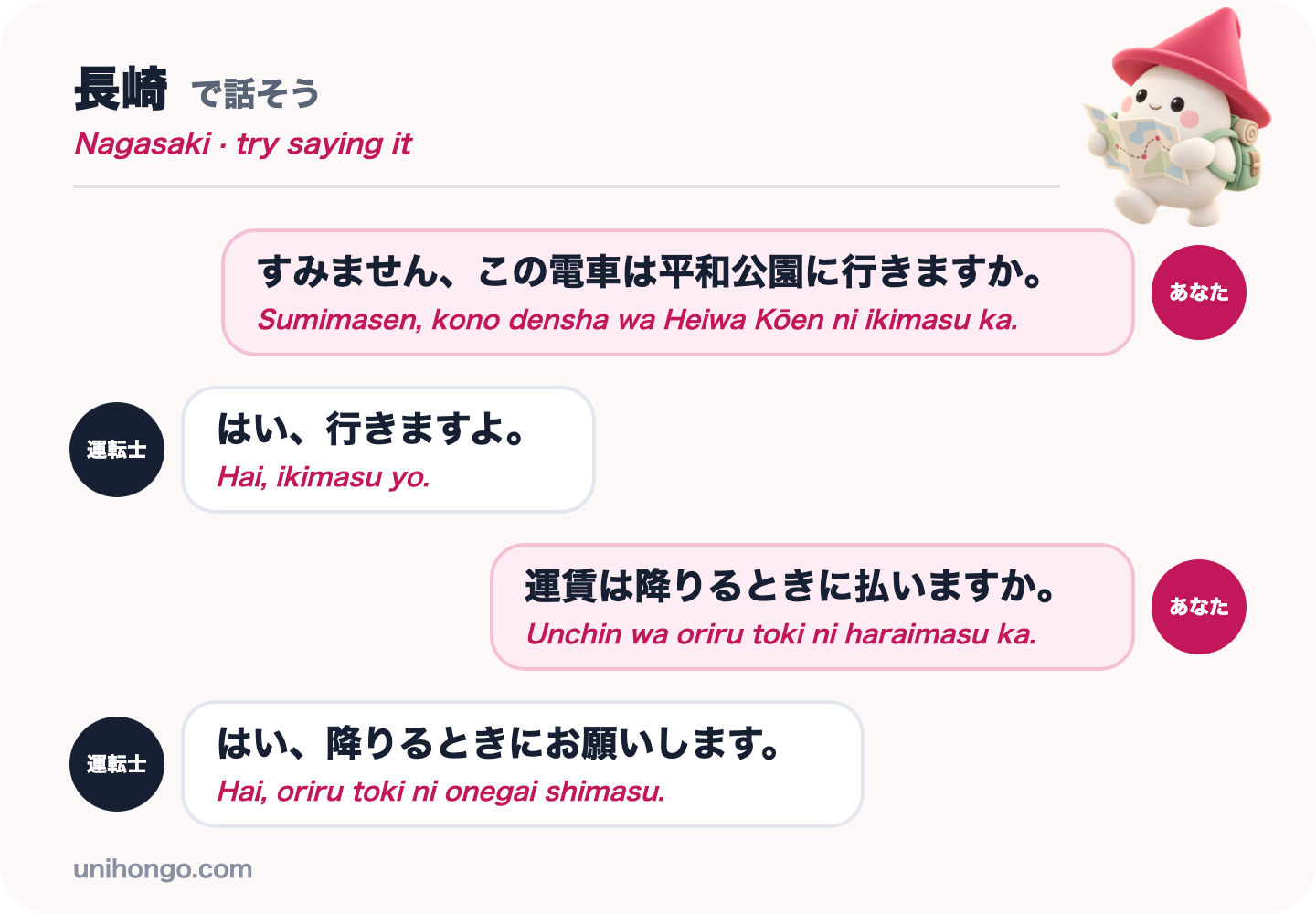
The two questions you are most likely to ask on the tram are where it goes and how to pay. Drivers answer briefly, often with a nod and hai, and point at the fare box. Practise the four lines below until you can say them as you step on.
Then practise with a partner who answers back. In Unihongo, choose the Directions topic and ask your AI Sensei to play a Nagasaki tram driver, or try the Ask the Way to the Station mission for asking a passer-by. If you want to rehearse the museum ticket desk, the Sightseeing topic works well too.
| Japanese | Romaji | Meaning |
|---|---|---|
| すみません、この電車は平和公園に行きますか。 | Sumimasen, kono densha wa Heiwa Kōen ni ikimasu ka. | Excuse me, does this tram go to the Peace Park? |
| はい、行きますよ。 | Hai, ikimasu yo. | Yes, it does. |
| 運賃は降りるときに払いますか。 | Unchin wa oriru toki ni haraimasu ka. | Do I pay the fare when I get off? |
| はい、降りるときにお願いします。 | Hai, oriru toki ni onegai shimasu. | Yes, please pay when you get off. |
Official information
Hours, ticket prices and any restoration work change through the year. Check the official sites for Dejima and Glover Garden, and the national tourism site for the Peace Park, before you go.