

Why Hōryū-ji is worth the trip from Nara
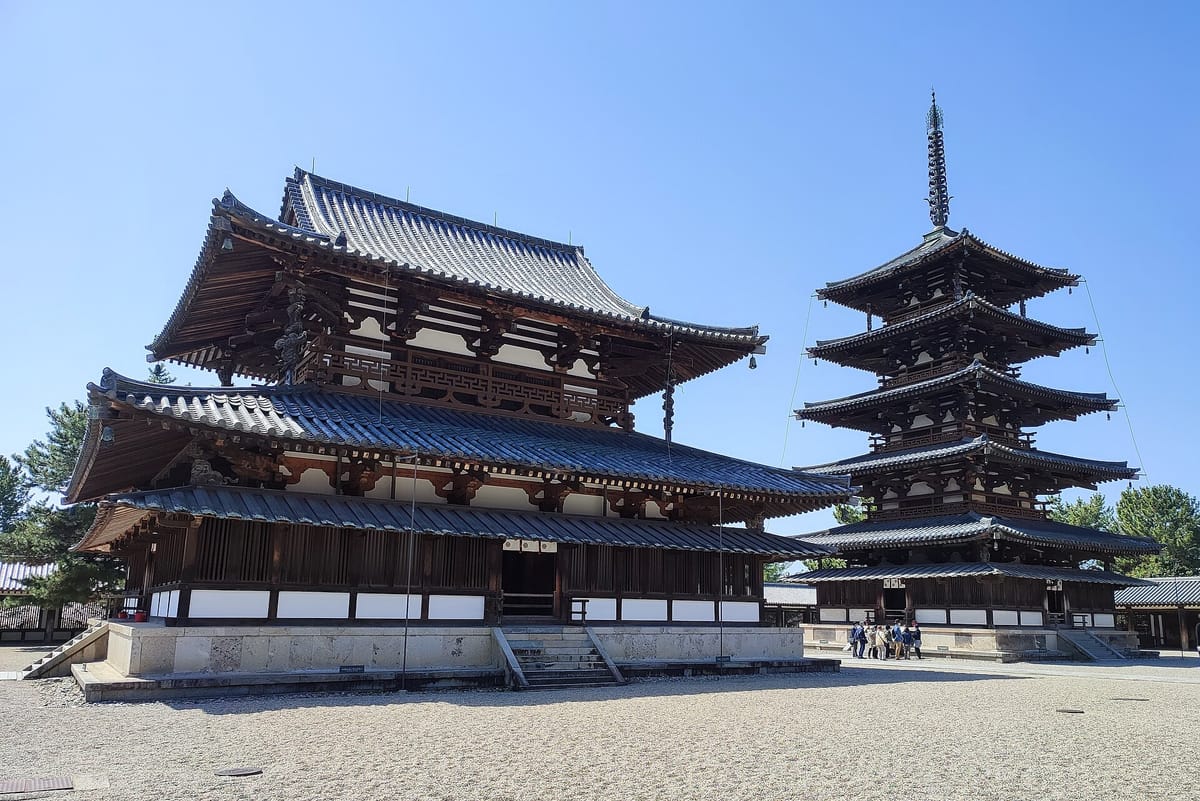
Hōryū-ji was founded in 607 by Prince Shōtoku, the regent remembered as the great early patron of Buddhism in Japan. According to the Nihon Shoki chronicle, the first buildings burned in 670, and the temple was rebuilt in the decades that followed. What stands in the western precinct today, the Kondō and the five-storey pagoda, is widely recognised as the oldest wooden architecture in the world. Tree-ring dating of the pagoda's central pillar gave a felling date of 594.
The temple is packed with treasures, more than 180 of them designated National Treasures, from the bronze Shaka triad in the Kondō to the slender Kudara Kannon and the Tamamushi shrine in the Daihōzōin. In 1993, the Buddhist monuments of the Hōryū-ji area became Japan's very first UNESCO World Heritage Site.
Hōryū-ji is also calm. It lies in Ikaruga, a small town of fields and old houses, and even on a busy day you can stand alone in the corner of the cloister and look at a building that has been there for thirteen centuries.
Getting there: JR Hōryūji Station and the buses
The easiest way is by train. JR Hōryūji Station, Hōryūji-eki, is on the JR Yamatoji Line, which runs between Nara and Osaka's Tennōji and JR Namba. Local trains stop there; check that yours is not a rapid service that skips the station. From the station, the temple says it is about 20 minutes on foot, along a quiet road north, or you can take a bus to the Hōryūji Sandō stop at the start of the approach.
There are other options. Buses from JR Ōji Station's north exit and from Kintetsu Tsutsui Station go to the Hōryūji-mae stop, and buses from central Nara also run to Hōryū-ji, slower than the train but direct. Whichever you take, the approach ends at the Nandaimon, the great south gate, lined with pine trees.
| Japanese | Romaji | Meaning |
|---|---|---|
| 法隆寺駅に止まりますか。 | Hōryūji-eki ni tomarimasu ka. | Does this stop at Hōryūji Station? |
| 法隆寺行きのバスはどこから出ますか。 | Hōryūji-yuki no basu wa doko kara demasu ka. | Where does the bus to Hōryū-ji leave from? |
| 法隆寺参道で降ります。 | Hōryūji Sandō de orimasu. | I'm getting off at Hōryūji Sandō. |
| ここから歩いて何分くらいですか。 | Koko kara aruite nanpun kurai desu ka. | About how many minutes on foot from here? |
| 帰りの電車は何分おきですか。 | Kaeri no densha wa nanpun oki desu ka. | How often do the trains back run? |
What one ticket shows you: the three areas of Hōryū-ji
The common ticket covers three areas, which you visit in a line from west to east. First is the Saiin garan, the western precinct, where you enter the cloister beside the Chūmon and walk around the Kondō and the pagoda. Look up at the pagoda's roofs, which get smaller towards the top, and at the swelling entasis of the cloister's wooden pillars.
Next, to the east, is the Daihōzōin, a modern treasure hall where many of the temple's finest statues are displayed. Finally, a long lane between earthen walls leads to the Tōin garan, the eastern precinct, built on the site of Prince Shōtoku's palace, with the octagonal Yumedono at its centre. Next door, Chūgū-ji, a nunnery with a famous wooden statue of the bodhisattva Miroku, has its own separate entry.
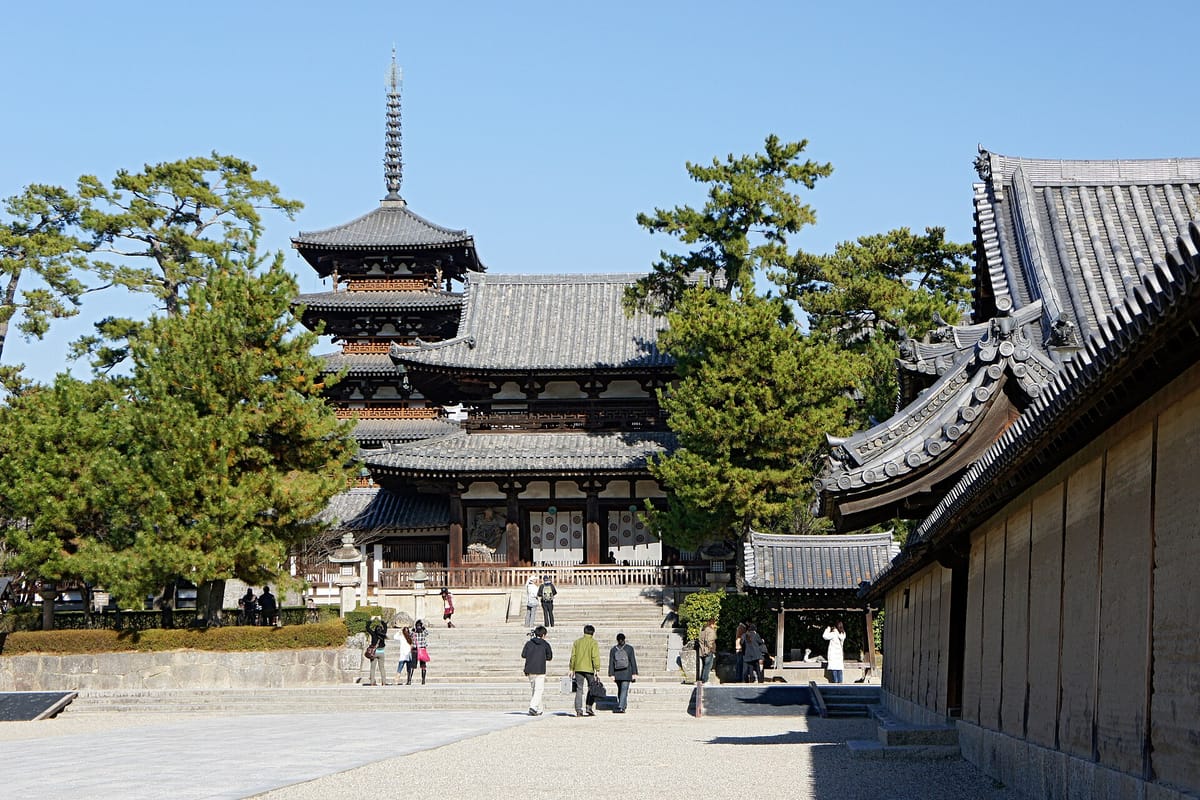
- Nandaimon: the great south gate at the end of the pine-lined approach.
- Chūmon: the middle gate of the western precinct, guarded by two Niō statues.
- Kondō: the golden hall, home of the Shaka triad.
- Gojūnotō: the five-storey pagoda, about 32 metres tall.
- Daikōdō: the great lecture hall at the back of the cloister.
- Daihōzōin: the treasure hall, with the Kudara Kannon and the Tamamushi shrine.
- Yumedono: the octagonal Hall of Dreams in the eastern precinct.
Words on the signs at Hōryū-ji
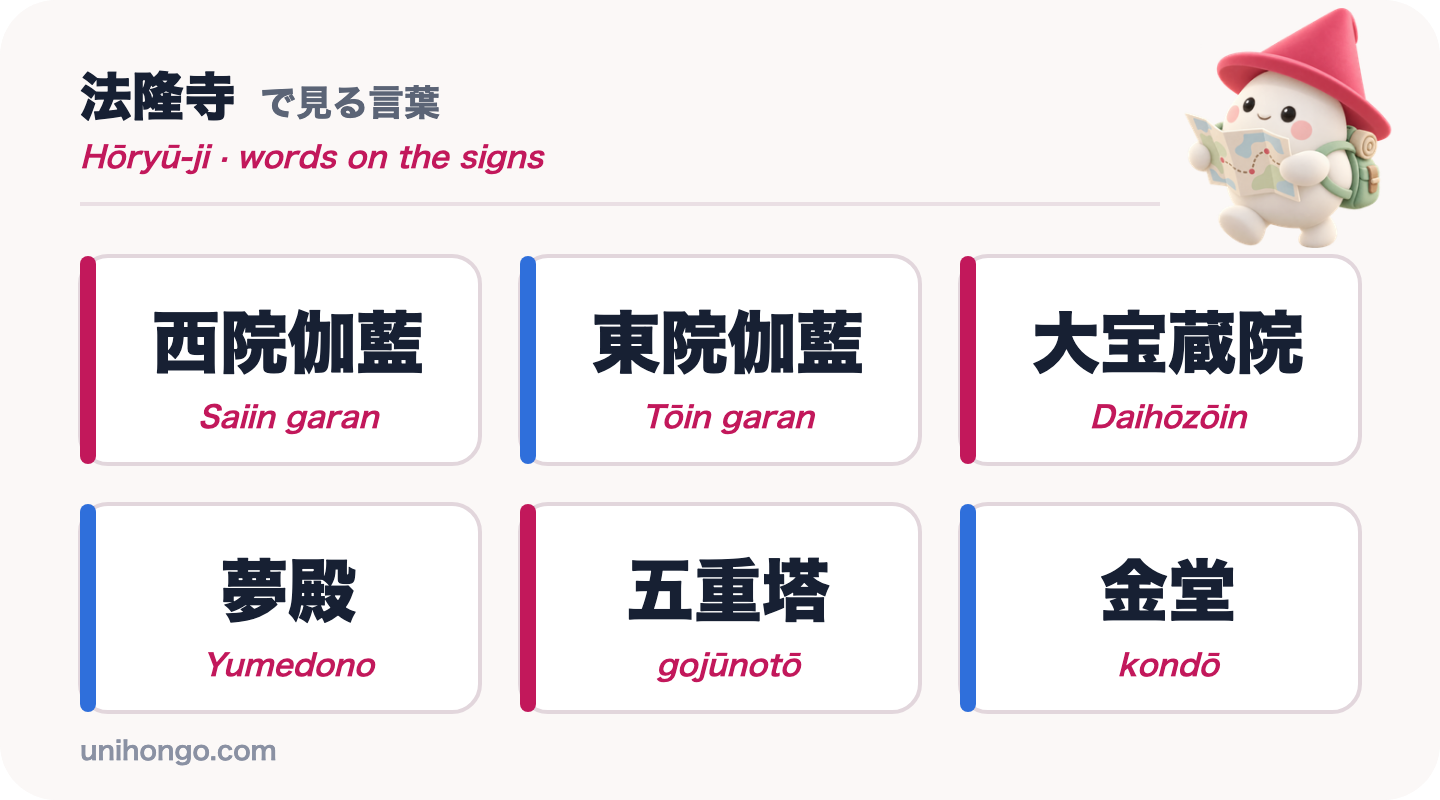
Hōryū-ji's signs divide the temple into areas rather than single halls, so learn the word garan early. 西 is west and 東 is east: 西院伽藍 and 東院伽藍 are the western and eastern precincts. Temple ticket offices call the fee 拝観料, haikanryō, and the ticket itself 拝観券, haikanken.
Numbers help too. 五重塔 is literally five-layered tower, the word for any five-storey pagoda in Japan, and 金堂 is golden hall, the name given to the main image hall at the oldest temples.
| Word | Reading | Meaning |
|---|---|---|
| 西院伽藍 | Saiin garan | Western precinct, with the Kondō and pagoda |
| 東院伽藍 | Tōin garan | Eastern precinct, around the Yumedono |
| 大宝蔵院 | Daihōzōin | The treasure hall |
| 夢殿 | Yumedono | The octagonal Hall of Dreams |
| 五重塔 | gojūnotō | Five-storey pagoda |
| 金堂 | kondō | Golden hall, the main image hall |
| 中門 | chūmon | Middle gate |
| 拝観券 | haikanken | Admission ticket |
| 秘仏 | hibutsu | Hidden Buddha, shown only at special openings |
| 特別開扉 | tokubetsu kaihi | Special opening of a hall's doors |
Japanese at the ticket office: tickets, cash and the Yumedono
The ticket office is at the entrance to the western precinct. The temple states that admission is paid in cash only and that tickets cannot be refunded, so have yen ready before you queue. There are ATMs at convenience stores near the station and along the approach, but not inside the temple.
Keep your ticket after the western precinct: you will show it again at the Daihōzōin and at the eastern precinct. The temple's published rules also restrict sketching, photography and filming in its grounds, and photos are not allowed inside the halls, so follow the signs and ask before taking pictures.
| Japanese | Romaji | Meaning |
|---|---|---|
| 大人一枚お願いします。 | Otona ichimai onegai shimasu. | One adult, please. |
| この券で全部見られますか。 | Kono ken de zenbu miraremasu ka. | Can I see everything with this ticket? |
| 現金だけですか。 | Genkin dake desu ka. | Is it cash only? |
| 近くにATMはありますか。 | Chikaku ni ATM wa arimasu ka. | Is there an ATM nearby? |
| 夢殿の秘仏は今見られますか。 | Yumedono no hibutsu wa ima miraremasu ka. | Can I see the Yumedono's hidden Buddha now? |
| 大宝蔵院はどちらですか。 | Daihōzōin wa dochira desu ka. | Which way is the Daihōzōin? |
Etiquette, timing and practical tips
Hōryū-ji is the head temple of the Shōtoku school of Buddhism and a place of prayer as well as a museum of architecture.
- Bring cash for the ticket and for Chūgū-ji if you plan to visit it too.
- Remove your hat inside the halls and keep your voice down.
- Do not touch the wooden pillars or statues; they are thirteen centuries old.
- Check the season: the Yumedono's hidden Kannon is shown only in spring and autumn.
- Go early or late on weekdays. School groups often visit in the middle of the day.
- The temple closes earlier in winter than in summer; check the official hours before planning an afternoon visit.
Practise the visit before you go
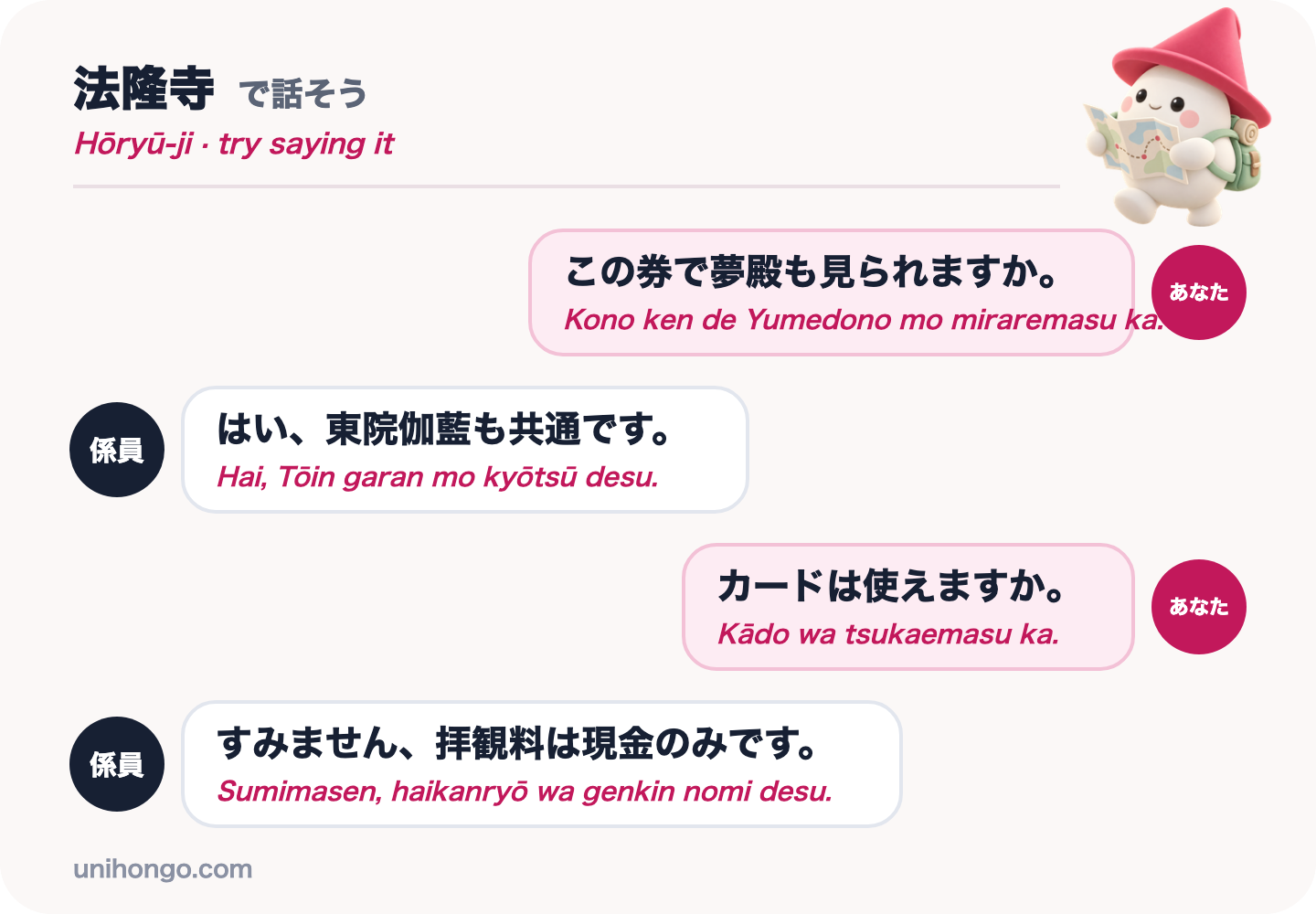
Your main conversation at Hōryū-ji will be at the ticket window, and the most useful question is what the ticket includes. The second is how to pay. Practise the four lines below until you can say them without reading.
Then practise with a partner who answers back. In Unihongo, choose the Sightseeing topic and ask your AI Sensei to play the ticket attendant, then a local at Hōryūji Station who tells you which bus goes to the temple.
| Japanese | Romaji | Meaning |
|---|---|---|
| この券で夢殿も見られますか。 | Kono ken de Yumedono mo miraremasu ka. | Can I see the Yumedono with this ticket too? |
| はい、東院伽藍も共通です。 | Hai, Tōin garan mo kyōtsū desu. | Yes, it covers the eastern precinct too. |
| カードは使えますか。 | Kādo wa tsukaemasu ka. | Can I use a card? |
| すみません、拝観料は現金のみです。 | Sumimasen, haikanryō wa genkin nomi desu. | Sorry, admission is cash only. |
Official information
Hōryū-ji publishes its opening hours, admission rules, special openings and access directions on its website, in Japanese with an English version. Hours change twice a year, so check before you set off.