

Why Yamadera is worth the climb
Risshaku-ji was founded in 860, and the temple honours the monk Jikaku Daishi, Ennin, as its founder. Its full name, Hōjusan Risshaku-ji, means the temple of standing stones on Jewel Mountain, and the rock is everywhere: the halls sit on ledges and outcrops of pale volcanic stone, and the path twists between boulders carved with small niches and inscriptions. Locals and visitors alike simply call it Yamadera, the mountain temple.
At the foot of the mountain stands the Konponchūdō, the main hall. The present building was rebuilt in 1356 by Shiba Kaneyori, the first lord of Yamagata Castle, and it is said to be the oldest building made of beech wood in Japan. Inside burns a lamp said to have been kept alight since the temple's founding. From here the stone stairway climbs through cedars to the halls above.
For a learner, Yamadera is the place where a famous poem meets the landscape it describes. Standing on the steps in summer, with cicadas in the trees and the rock all around, you can hear exactly what Bashō meant.
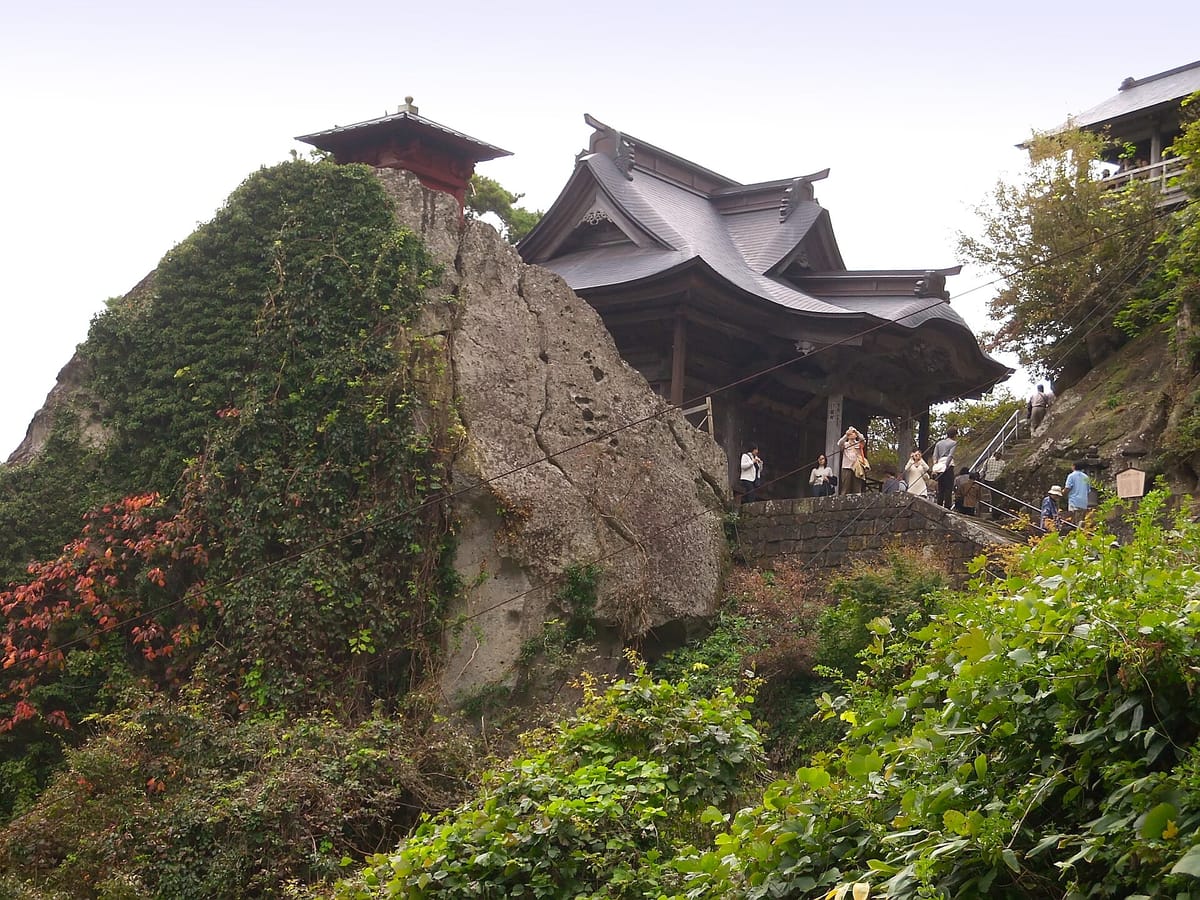
Getting there: the Senzan Line to Yamadera Station
Yamadera Station is on the JR Senzan Line, which runs between Yamagata and Sendai through the mountains. From Yamagata Station it is about twenty minutes; from Sendai, about an hour. Trains run roughly once an hour, and the line is single-track in places, so check both directions before you set out.
From the station, cross the bridge over the river and walk about five minutes to the foot of the temple, where the Konponchūdō stands. The ticket gate for the climb, the Sanmon, is a short walk beyond. There are souvenir shops and noodle restaurants along the road. Leave big bags at your hotel or in a locker in Yamagata or Sendai if you can: you will not want them on the steps.
| Japanese | Romaji | Meaning |
|---|---|---|
| 山寺駅に行きたいんですが、仙山線は何番線ですか。 | Yamadera-eki ni ikitai n desu ga, Senzan-sen wa nanbansen desu ka. | I want to go to Yamadera Station. Which platform is the Senzan Line? |
| 次の山形行きは何時ですか。 | Tsugi no Yamagata-iki wa nanji desu ka. | What time is the next train to Yamagata? |
| 登山口はどちらですか。 | Tozanguchi wa dochira desu ka. | Which way is the start of the climb? |
| コインロッカーはありますか。 | Koin rokkā wa arimasu ka. | Are there coin lockers? |
| 入山料はどこで払いますか。 | Nyūzanryō wa doko de haraimasu ka. | Where do I pay the entry fee for the mountain? |
From the Sanmon to the Okunoin: what you will see
The climb starts at the Sanmon, the mountain gate, where you pay the entry fee. The steps rise steadily through tall cedars, past stone lanterns and statues, to the Semizuka, the mound where Bashō's poem is said to lie buried. Higher up, the path passes under the Niōmon, a gate built in the nineteenth century with two guardian kings, and then opens out onto the upper terraces.
At the top, the Okunoin, the inner sanctuary, marks the end of the stairway. The real highlight is a short detour on the way: the Godaidō, a wooden hall from the early eighteenth century built out over the cliff like a balcony. Step onto its veranda and the whole valley opens up below you, the village, the river, the railway line, and the mountains beyond.
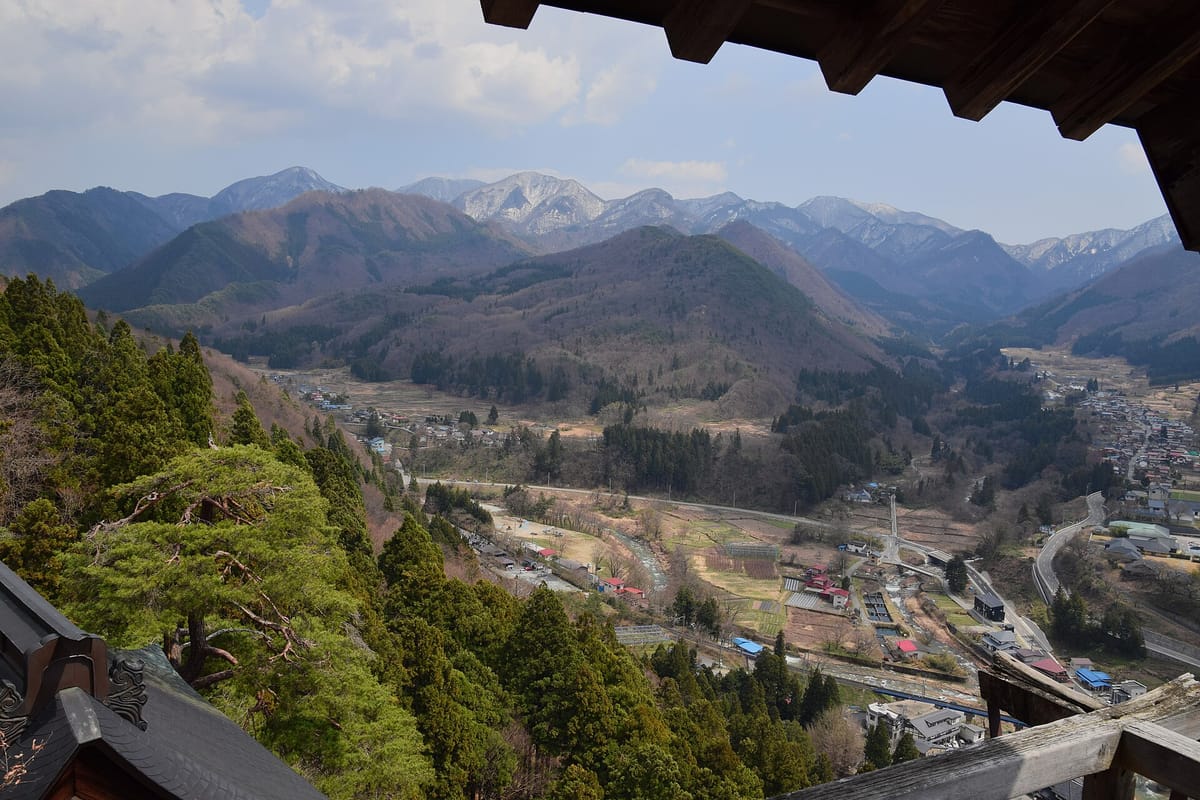
- Konponchūdō: the main hall at the foot, rebuilt in 1356 of beech wood, with its ever-burning lamp.
- Sanmon: the mountain gate where the paid climb begins.
- Semizuka: the cicada mound, linked to Bashō's haiku.
- Niōmon: the nineteenth-century gate with two guardian kings, framed by rock.
- Kaisandō and Nōkyōdō: the founder's hall and the small red sutra hall on its rock.
- Godaidō: the hall built over the cliff, with the best view of the valley.
- Okunoin: the inner sanctuary at the top of the steps.
Words on the signs at Yamadera
The signposts at Yamadera are mostly the names of halls and gates, in the order you meet them, so they double as a progress bar for your climb. Look for 門, mon, gate, 堂, dō, hall, and 院, in, a temple building or sub-temple.
The trickiest name is the one on your ticket: 立石寺. Its standard reading is Risshaku-ji, but you will also see it written in romaji as Risshakuji. On station signs and bus stops, the place is simply 山寺.
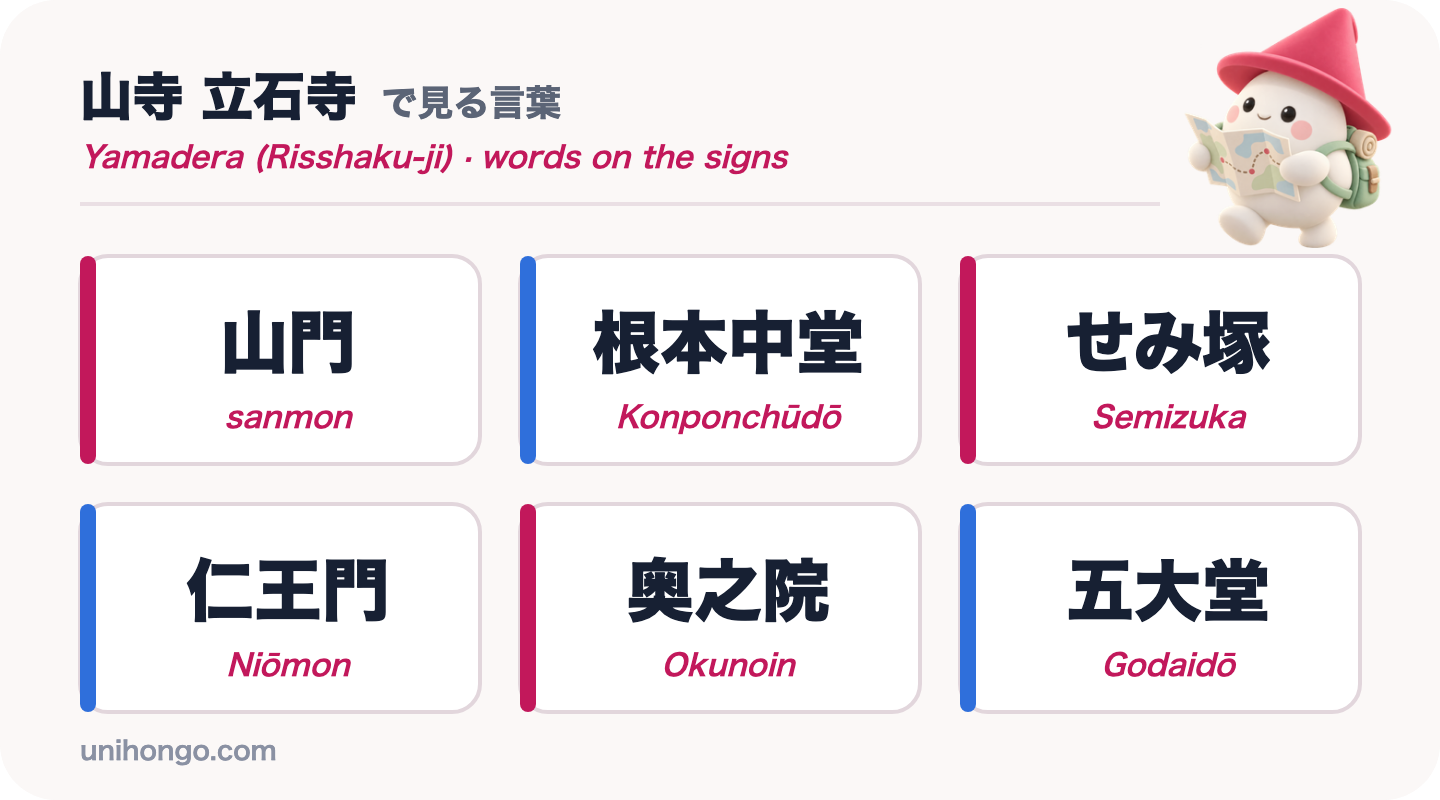
| Word | Reading | Meaning |
|---|---|---|
| 山寺 | Yamadera | Mountain temple, the everyday name |
| 立石寺 | Risshaku-ji | The temple's formal name |
| 根本中堂 | Konponchūdō | The main hall at the foot of the mountain |
| 山門 | sanmon | Mountain gate, where the climb begins |
| せみ塚 | Semizuka | The cicada mound linked to Bashō |
| 仁王門 | Niōmon | Gate of the two guardian kings |
| 奥之院 | Okunoin | Inner sanctuary at the top |
| 五大堂 | Godaidō | The hall over the cliff with the view |
| 宝物殿 | hōmotsuden | Treasure hall |
Japanese for the climb, the view and the goshuin
On the steps, the natural conversation is about distance and effort. People coming down will often encourage you with mō sukoshi, just a little more, or ganbatte, keep going. Counting steps uses the counter -dan, a step or tier: ichidan, nidan, and so on, with nandan for how many.
At the top, the halls sell charms and write goshuin, and the Godaidō is where people stop to rest and look. The phrases below cover the climb, the halls and the way back down.
| Japanese | Romaji | Meaning |
|---|---|---|
| あと何段くらいですか。 | Ato nandan kurai desu ka. | About how many more steps? |
| 五大堂はこの道でいいですか。 | Godaidō wa kono michi de ii desu ka. | Is this the way to the Godaidō? |
| ここから山形の方が見えますか。 | Koko kara Yamagata no hō ga miemasu ka. | Can you see towards Yamagata from here? |
| 御朱印はどこでいただけますか。 | Goshuin wa doko de itadakemasu ka. | Where can I receive a goshuin? |
| 帰りは同じ道を下りますか。 | Kaeri wa onaji michi o orimasu ka. | Do I go back down the same way? |
| ちょっと休憩してもいいですか。 | Chotto kyūkei shite mo ii desu ka. | Can we take a short break? |
Etiquette, seasons and timing
Yamadera is a working temple and a narrow path, and a few habits make the climb better for everyone.
- Keep to one side on the steps, and step aside on the wider landings to let people pass.
- Travel light: the steps are steep and narrow in places, and there is nowhere to put a suitcase on the way up.
- Speak quietly near the halls, and follow the notices; drones are banned over the whole temple area.
- Summer brings cicadas and fresh green, autumn brings maples, and winter brings snow and shorter hours.
- Start early. The last climbs of the day are hurried, and hours end earlier from December to March.
- Take water in summer; the climb is short but humid under the trees.
Practise the climb before you go
Halfway up the 1,015 steps, almost everyone wants to know how many are left. Practise the four lines below until you can say them without reading, and listen for the number and the counter in the answer: nihyakudan, two hundred steps.
Then practise with a partner who answers back. In Unihongo, choose the Sightseeing topic and ask your AI Sensei to play a local walker on the Yamadera steps, or use the Directions topic to rehearse finding the station and the start of the climb. Speaking the lines once before you go is what makes them easy on the mountain.
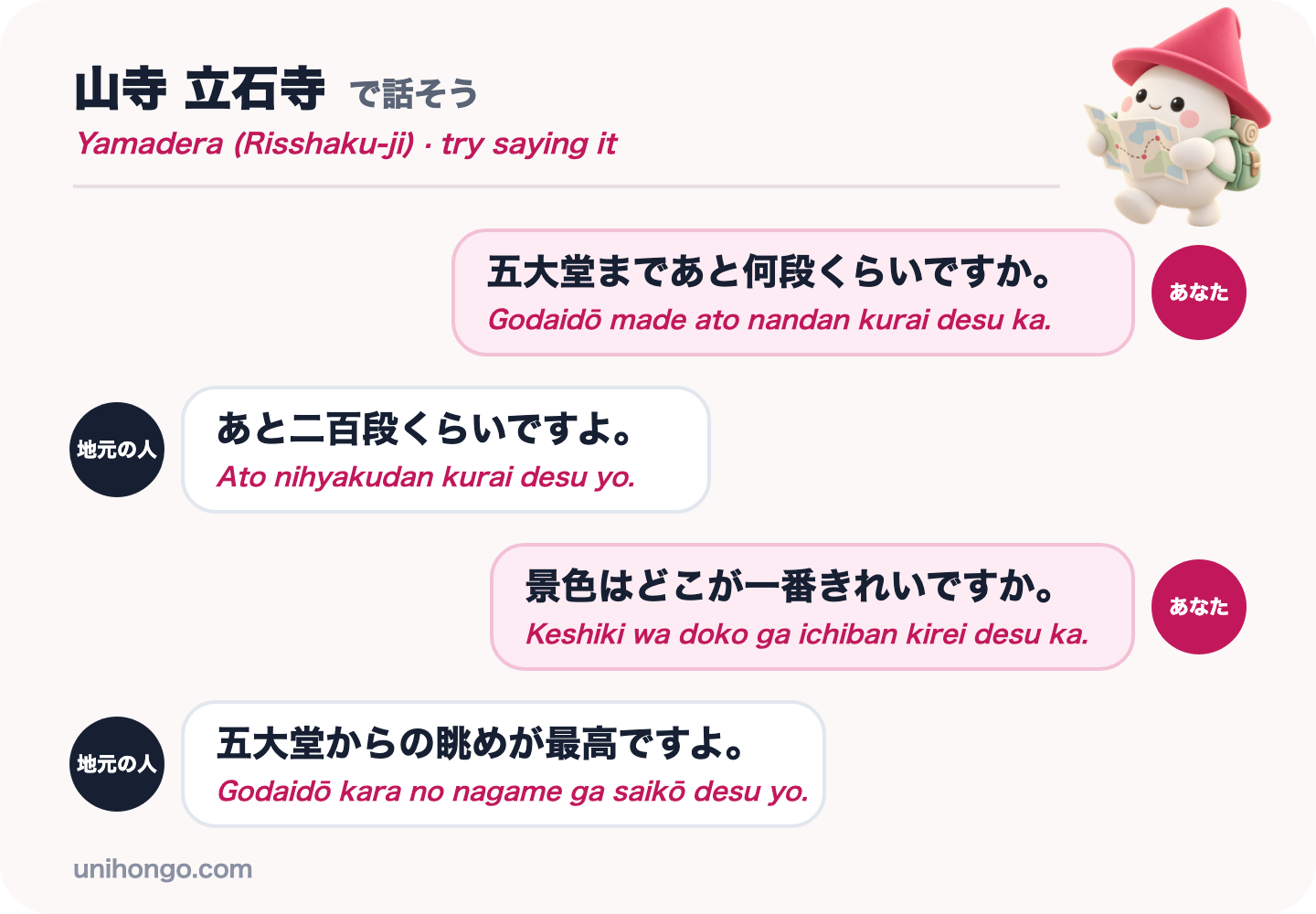
| Japanese | Romaji | Meaning |
|---|---|---|
| 五大堂まであと何段くらいですか。 | Godaidō made ato nandan kurai desu ka. | About how many more steps to the Godaidō? |
| あと二百段くらいですよ。 | Ato nihyakudan kurai desu yo. | About two hundred more. |
| 景色はどこが一番きれいですか。 | Keshiki wa doko ga ichiban kirei desu ka. | Where is the view most beautiful? |
| 五大堂からの眺めが最高ですよ。 | Godaidō kara no nagame ga saikō desu yo. | The view from the Godaidō is the best. |
Official information
Risshaku-ji publishes its fees, hours and notices, such as the April 2025 fee revision and the drone ban, on its official site, and the Yamadera tourism association offers guided tours in English. Check both before you go.