

Why Tokyo Tower is still worth the trip
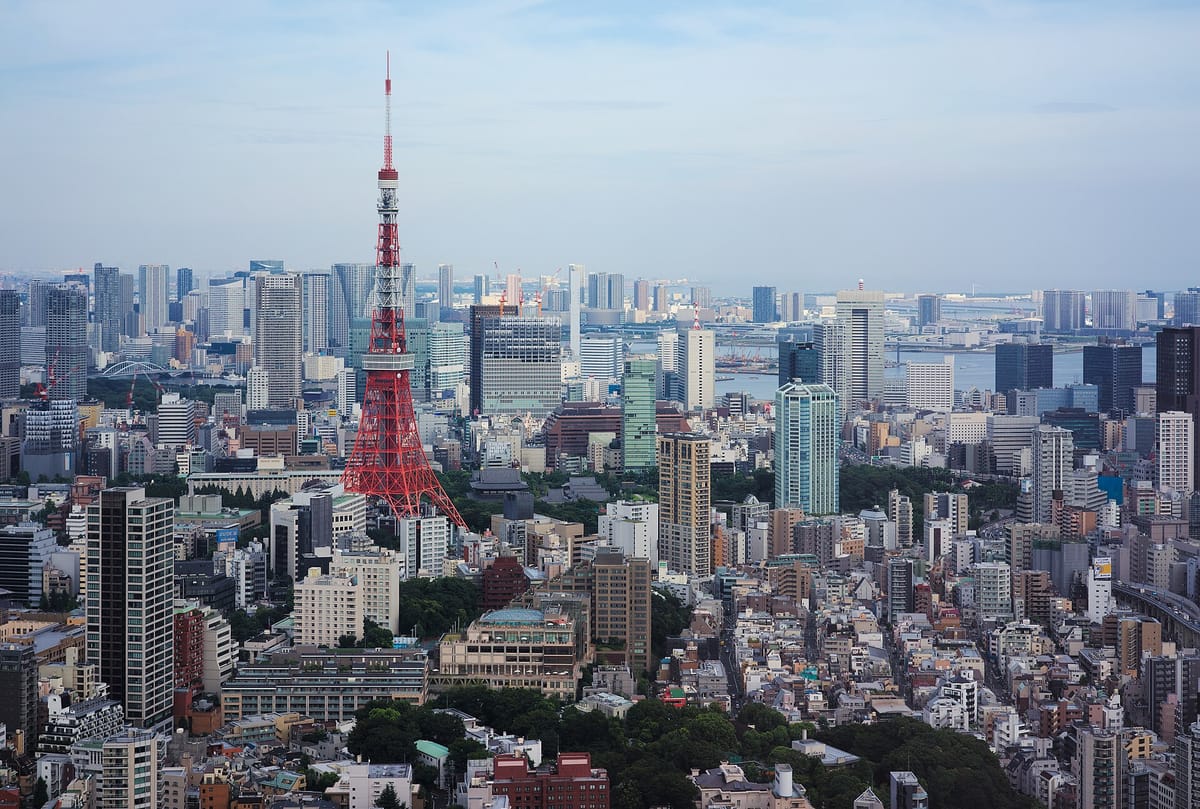
Tokyo Tower was completed in 1958, when Japan was rebuilding after the war, and it quickly became a symbol of that recovery. At 333 metres it was taller than the Eiffel Tower that inspired it, and it remained the tallest structure in Japan until Tokyo Skytree was built. Its colours are not decorative: white and international orange are the colours required for tall structures near flight paths.
What makes it worth visiting today is how close it is to everything. The Main Deck, at 150 metres, looks across at the towers of Roppongi, Shinjuku and the bay rather than down from far above, and the lookdown windows set in the floor show the roof of FootTown directly below. At night the tower is lit in warm orange or in multicoloured designs, and it is one of the most photographed sights in the city.
For a learner, the tower is a small, friendly world of katakana. Mein Dekki, Toppu Dekki, erebētā and chiketto are all English words in Japanese clothing, and reading them is quick practice before you tackle kanji-heavy signs elsewhere.
Getting there: Akabanebashi, Kamiyachō and Onarimon
No station sits directly under the tower, but several are within a short walk. Akabanebashi Station on the Toei Ōedo Line is the closest, about five minutes on foot. Kamiyachō Station on the Tokyo Metro Hibiya Line and Onarimon Station on the Toei Mita Line are each around five to ten minutes away, and Shiba-kōen Station, also on the Mita Line, is similar. From JR Hamamatsuchō Station on the Yamanote Line, or Daimon Station on the Asakusa and Ōedo lines, the walk takes about fifteen to twenty minutes and passes through Zōjō-ji and Shiba Park.
The walk from Daimon is the most rewarding: along the avenue to Zōjō-ji's red gate, through the temple grounds, and out the back with the tower directly ahead. Once there, the entrance and ticket counters are in FootTown, the building at the tower's base.
| Japanese | Romaji | Meaning |
|---|---|---|
| 東京タワーに一番近い駅はどこですか。 | Tōkyō Tawā ni ichiban chikai eki wa doko desu ka. | Which is the closest station to Tokyo Tower? |
| 赤羽橋駅から歩いて何分くらいですか。 | Akabanebashi-eki kara aruite nanpun kurai desu ka. | About how many minutes' walk from Akabanebashi Station? |
| 増上寺を通って行けますか。 | Zōjō-ji o tōtte ikemasu ka. | Can I go through Zōjō-ji? |
| チケット売り場はどこですか。 | Chiketto uriba wa doko desu ka. | Where is the ticket office? |
| 東京タワーは何番出口が近いですか。 | Tōkyō Tawā wa nanban deguchi ga chikai desu ka. | Which exit number is closest to Tokyo Tower? |
Main Deck, Top Deck and the temple at the tower's foot
The Main Deck, メインデッキ, has two floors at around 150 metres, with a café, a shop, a small shrine and the lookdown windows where you can stand on glass above the ground. The Top Deck, トップデッキ, at 250 metres, is visited on the Top Deck Tour, a timed visit with a separate lift and a glass-and-mirror interior designed to make the city lights feel close.
On days when it is open, the Open-Air Stair, 外階段, climbs roughly 600 steps up the tower's legs from the roof of FootTown to the Main Deck, with the steel structure all around you. Climbers receive a small certificate at the top. At the tower's base, FootTown has shops, restaurants and exhibition space. Next door, Zōjō-ji, the Tokugawa shoguns' family temple, has a huge main hall, a massive early seventeenth-century gate and rows of small stone jizō statues in knitted caps.
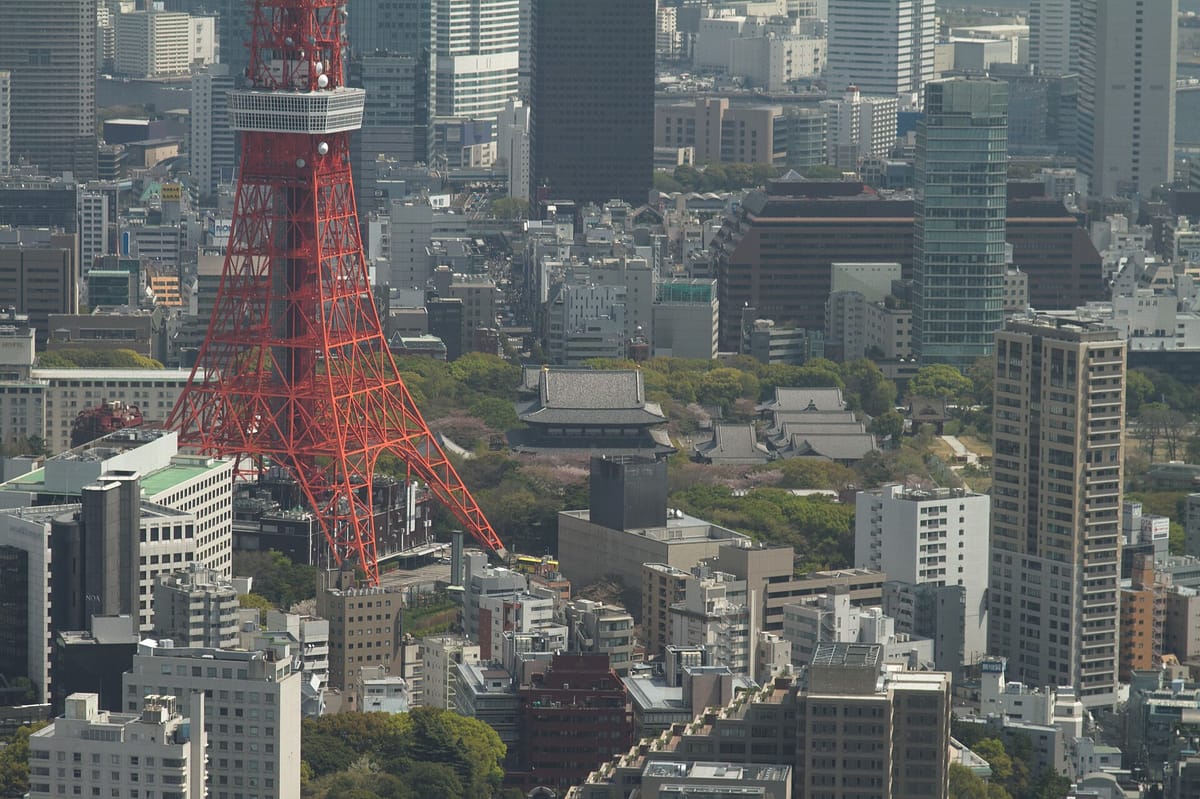
- Mein Dekki (メインデッキ): the Main Deck at 150 metres, with lookdown windows.
- Toppu Dekki (トップデッキ): the Top Deck at 250 metres, by timed tour.
- Soto-kaidan (外階段): the outdoor staircase of about 600 steps.
- Futto Taun (フットタウン): FootTown, the building at the base.
- Zōjō-ji (増上寺): the great temple beside the tower.
- Shiba-kōen (芝公園): the park around the tower and the temple.
The words on the signs
Tokyo Tower's own names are mostly katakana, so this is a good place to practise reading it quickly. The neighbourhood signs are kanji: 寺 for the temple, 公園 for the park, and 展望台, tenbōdai, the ordinary word for an observation deck that you will see at towers, hills and castles all over Japan.
Around the tower, small signs point you to the lifts, the stairs and the queue. The words in the table cover almost all of them.
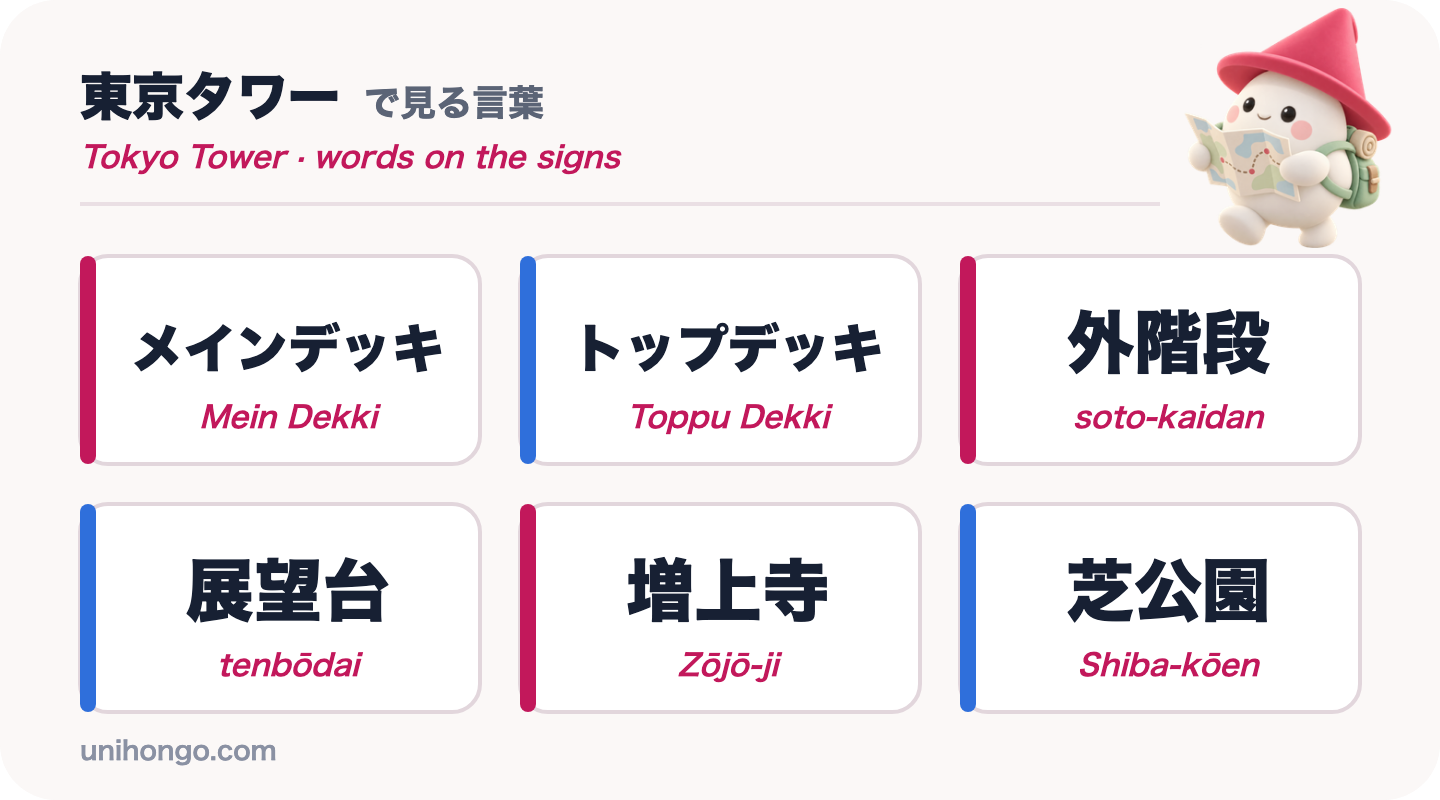
| Word | Reading | Meaning |
|---|---|---|
| メインデッキ | Mein Dekki | Main Deck, 150 metres |
| トップデッキ | Toppu Dekki | Top Deck, 250 metres |
| 外階段 | soto-kaidan | Outdoor staircase |
| 展望台 | tenbōdai | Observation deck |
| 増上寺 | Zōjō-ji | The temple beside the tower |
| 芝公園 | Shiba-kōen | Shiba Park |
| チケット売り場 | chiketto uriba | Ticket office |
| 入口 | iriguchi | Entrance |
| 本日 | honjitsu | Today, on notices |
Japanese for tickets, lifts and stairs
At the counter, say which deck and how many tickets. Tickets are counted with mai: ichimai, nimai, sanmai. If you want to climb, ask whether the stairs are open today, and staff will tell you which ticket to buy.
On the decks, the most useful questions are about what you can see. Point and ask ano tatemono wa nan desu ka, what is that building, and staff or the signs by the windows will name it.
| Japanese | Romaji | Meaning |
|---|---|---|
| メインデッキのチケットを大人二枚ください。 | Mein Dekki no chiketto o otona nimai kudasai. | Two adult tickets for the Main Deck, please. |
| 今日は外階段は開いていますか。 | Kyō wa soto-kaidan wa aite imasu ka. | Are the outdoor stairs open today? |
| トップデッキツアーの予約をしています。 | Toppu Dekki tsuā no yoyaku o shite imasu. | I have a booking for the Top Deck Tour. |
| あの建物は何ですか。 | Ano tatemono wa nan desu ka. | What is that building? |
| スカイツリーはどちらに見えますか。 | Sukaitsurī wa dochira ni miemasu ka. | In which direction can I see the Skytree? |
| 帰りはエレベーターで降りられますか。 | Kaeri wa erebētā de oriraremasu ka. | Can I go down by lift on the way back? |
Timing and practical tips
Tokyo Tower is open from morning until late at night, which makes it one of the easiest towers to fit into a busy day.
- Go at dusk to see the city in daylight and then lit up, and stay to see the tower's own lighting from Shiba Park.
- Book the Top Deck Tour in advance for evenings and weekends; slots are limited.
- Wear comfortable shoes for the stairs, and check the official site for the days they operate.
- Walk through Zōjō-ji on the way in or out; its grounds are free and open early.
- Combine the tower with Roppongi or Shiba Park, both within walking distance.
- On clear winter days, Mount Fuji can be seen to the south-west from the upper decks.
Practise the visit before you go
The dialogue below is the one you are most likely to have at the counter. The attendant's question, dochira ni shimasu ka, which will you choose, comes up whenever there is an option, and the answer can be as short as the word you want plus de onegai shimasu.
Then practise with a partner who answers back. In Unihongo, choose the Sightseeing topic and ask your AI Sensei to play a ticket attendant at Tokyo Tower, or choose Directions to rehearse the walk from the station. Hearing the questions once at natural speed makes the real counter much easier.
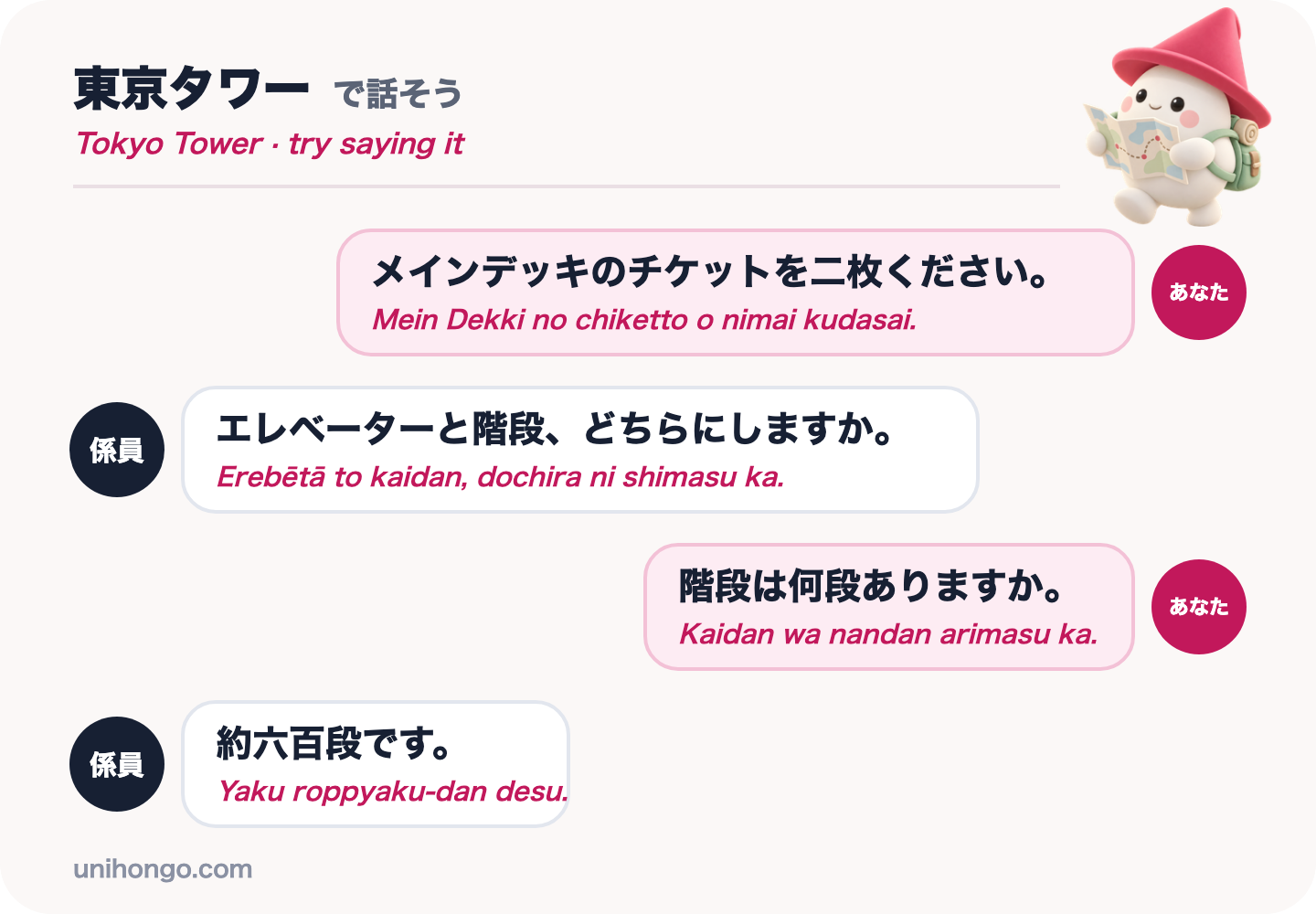
| Japanese | Romaji | Meaning |
|---|---|---|
| メインデッキのチケットを二枚ください。 | Mein Dekki no chiketto o nimai kudasai. | Two tickets for the Main Deck, please. |
| エレベーターと階段、どちらにしますか。 | Erebētā to kaidan, dochira ni shimasu ka. | Lift or stairs, which would you like? |
| 階段は何段ありますか。 | Kaidan wa nandan arimasu ka. | How many steps are there? |
| 約六百段です。 | Yaku roppyaku-dan desu. | About six hundred. |
Official information
The tower publishes its ticket types, the Top Deck Tour booking, the days the outdoor staircase runs and its lighting schedule. Check before you go, especially if you want to climb or book the Top Deck.