

Walking in and getting a seat
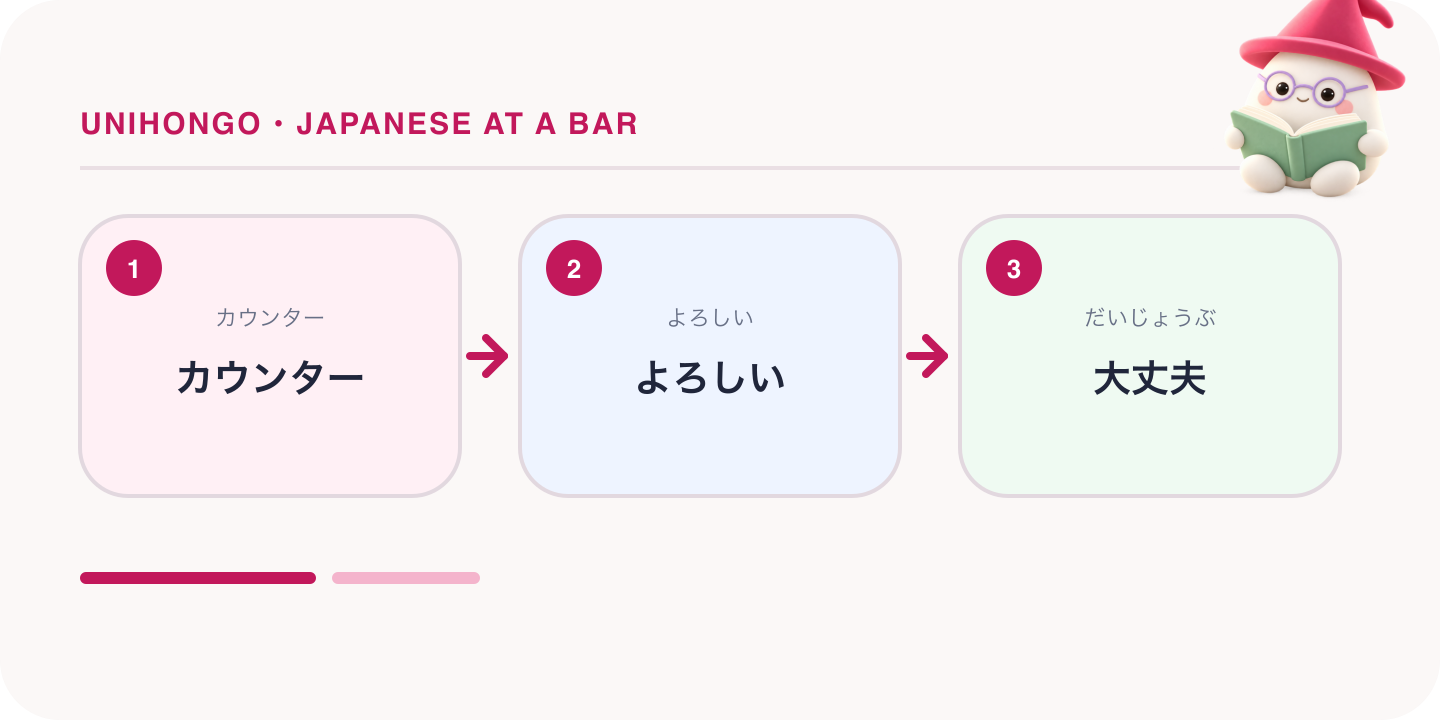
As you enter, staff will call out irasshaimase and then ask how many people are in your group, usually with nanmei-sama desu ka. Hold up fingers and say the number with -mei or -nin: hitori, futari, sannin. At small bars, the question may be whether you mind sitting at the counter, kauntā.
Some bars, especially tiny ones in older nightlife areas, are regulars-only or have a cover system, and a few have signs saying they do not admit newcomers. If you are unsure, it is fine to ask about the system before sitting down. In busy nightlife districts, avoid following street touts, kyakuhiki, who approach you on the pavement; choosing a place yourself is safer.
| Japanese | Romaji | Meaning |
|---|---|---|
| 何名様ですか。 | Nanmei-sama desu ka. | How many people? |
| 一人です。 | Hitori desu. | Just one. |
| カウンターでもよろしいですか。 | Kauntā demo yoroshii desu ka. | Is the counter all right? |
| はい、大丈夫です。 | Hai, daijōbu desu. | Yes, that's fine. |
| チャージはありますか。 | Chāji wa arimasu ka. | Is there a cover charge? |
| 禁煙ですか。 | Kin'en desu ka. | Is it non-smoking? |
Otōshi, seat charges and service charges
Soon after you sit down at an izakaya or some bars, a small dish may appear that you did not order. This is the otōshi, called tsukidashi in Kansai. It is part of the Japanese bar system rather than a gift, and it appears on the bill as a per-person charge. It might be pickles, a small salad, simmered vegetables or something more elaborate.
Bars often use other charges instead of or as well as otōshi. Chāji or sekiryō is a seat or cover charge; sābisu-ryō is a service charge, usually a percentage; and some hotel bars add both. These charges vary a great deal between places, which is why it is sensible to ask about the system at a bar you do not know. Asking is not rude; it is simply clarifying.
| Word | Reading | Meaning |
|---|---|---|
| お通し | otōshi | Small starter served automatically, charged per person |
| 突き出し | tsukidashi | Kansai word for otōshi |
| チャージ | chāji | Cover charge |
| 席料 | sekiryō | Seat charge |
| サービス料 | sābisu-ryō | Service charge |
| 税込 | zeikomi | Tax included |
| 飲み放題 | nomihōdai | All you can drink for a set time |
If you want to ask about the otōshi, say kore wa otōshi desu ka, is this the otōshi? Whether you can decline it depends on the place; many treat it as the seat charge, so it is usually easiest to accept it and enjoy it.
Ordering drinks
Getting attention is simple: raise a hand and say sumimasen. At a counter, catching the bartender's eye is enough. Order with the drink name and onegai shimasu, or with kudasai. If you are with others, the first round often starts with beer so the group can toast quickly, a habit captured in the phrase toriaezu bīru, beer for starters.
Ask for a recommendation with osusume wa nan desu ka. At whisky and cocktail bars, the bartender, often called masutā, may ask what flavours you like, such as amai, sweet; sappari, refreshing; or karakuchi, dry. You can control strength with koime, stronger, and usume, weaker, or ask about the alcohol content, dosū.
| Japanese | Romaji | Meaning |
|---|---|---|
| すみません、注文お願いします。 | Sumimasen, chūmon onegai shimasu. | Excuse me, I'd like to order. |
| とりあえず生ビールください。 | Toriaezu nama bīru kudasai. | A draught beer to start, please. |
| おすすめは何ですか。 | Osusume wa nan desu ka. | What do you recommend? |
| さっぱりしたのが飲みたいです。 | Sappari shita no ga nomitai desu. | I'd like something refreshing. |
| ハイボールを濃いめでお願いします。 | Haibōru o koime de onegai shimasu. | A strong highball, please. |
| 薄めにしてもらえますか。 | Usume ni shite moraemasu ka. | Could you make it weaker? |
| 同じのをもう一杯ください。 | Onaji no o mō ippai kudasai. | The same again, please. |
| お水をもらえますか。 | O-mizu o moraemasu ka. | Could I have some water? |
Whisky, shōchū and sake: how drinks are served
The words that confuse visitors most are the serving styles, because they apply to several spirits. Haibōru is whisky with soda; if you want another spirit with soda, add -sōda-wari, for example shōchū no sōda-wari. Mizuwari is with water and ice, oyuwari is with hot water, popular for shōchū in winter, and rokku is over ice. Sutorēto is neat, and a cheisā is a glass of water on the side.
Sake has its own temperature words. Hiya traditionally means room temperature, although many people now use it for chilled sake; reishu means chilled; and kan means warmed, from nurukan, lukewarm, to atsukan, hot. Not every sake is served warm, so ask the staff which temperature suits the one you choose.
| Order | Reading | What you get |
|---|---|---|
| ハイボール | haibōru | Whisky with soda and ice |
| 水割り | mizuwari | Spirit with water and ice |
| お湯割り | oyuwari | Spirit with hot water |
| ソーダ割り | sōda-wari | Spirit with soda |
| ロック | rokku | On the rocks |
| ストレート | sutorēto | Neat |
| チェイサー | cheisā | Water on the side |
| ダブル | daburu | Double measure |
| 冷酒 | reishu | Chilled sake |
| 熱燗 | atsukan | Hot sake |
| ぬる燗 | nurukan | Lukewarm sake |
Drink words on the menu
Menus in Japanese bars and izakaya group drinks by type. Beer comes as nama, draught, or bin, bottled. Sawā and chūhai are fruit-flavoured drinks usually made with shōchū and soda, and lemon sawā is a classic. Umeshu is plum liqueur, often served on the rocks or with soda.
If you are not drinking alcohol, look for sofuto dorinku, soft drinks, or non-arukōru, alcohol-free drinks. Ūroncha, oolong tea, is the standard choice for non-drinkers at izakaya, and saying so is completely normal.
| Menu word | Reading | Meaning |
|---|---|---|
| 生ビール | nama bīru | Draught beer |
| 瓶ビール | bin bīru | Bottled beer |
| 中ジョッキ | chū jokki | Medium beer mug |
| サワー | sawā | Shōchū and soda with flavouring |
| チューハイ | chūhai | Shōchū highball |
| 梅酒 | umeshu | Plum liqueur |
| 日本酒 | nihonshu | Sake |
| 焼酎 | shōchū | Distilled spirit |
| ウーロン茶 | ūroncha | Oolong tea |
| ノンアルコール | non-arukōru | Alcohol-free |
Standing bars and bar etiquette
Tachinomi, standing bars, are small, cheap and quick. Many use kyasshu on deribarī, cash on delivery: you pay when each drink or dish arrives, sometimes by putting coins in a tray or basket on the counter, and the bartender takes the money as they serve. Others run a tab like any bar. Look at what the regulars do or ask the staff.
General bar etiquette is simple. Wait for everyone to have a drink before drinking, then toast with kanpai. In a group, people often top up each other's glasses rather than their own. At quiet bars, keep your voice down and avoid taking photos of other customers. Do not bring your own drinks, and if you are feeling unwell, stop and ask for water.
| Japanese | Romaji | Meaning |
|---|---|---|
| キャッシュオンですか。 | Kyasshu on desu ka. | Is it pay-as-you-order? |
| ここで払えばいいですか。 | Koko de haraeba ii desu ka. | Should I pay here? |
| 乾杯! | Kanpai! | Cheers! |
| どうぞ、注ぎますよ。 | Dōzo, tsugimasu yo. | Here, let me pour for you. |
| もう大丈夫です、ありがとうございます。 | Mō daijōbu desu, arigatō gozaimasu. | I'm fine now, thank you. |
Last order, the bill and paying
Before closing, staff announce rasuto ōdā, last order, often with a set phrase asking if you would like anything else. After that, you can finish your drink but not order more. At nomihōdai, all-you-can-drink deals, last order comes before the end of the time limit.
To pay, say o-kaikei onegai shimasu, or make a small cross with your index fingers, a gesture staff will recognise. At many izakaya you pay at the register by the door; at small bars, the bartender brings the bill to you. Splitting the bill, warikan, is normally done among the group. Some places can take separate payments, betsubetsu, and some cannot, so ask. Card and cashless payment are common but not universal, especially at small bars, so carry some cash.
| Japanese | Romaji | Meaning |
|---|---|---|
| ラストオーダーになりますが、ご注文はよろしいですか。 | Rasuto ōdā ni narimasu ga, go-chūmon wa yoroshii desu ka. | It's last order. Would you like anything else? |
| もう大丈夫です。 | Mō daijōbu desu. | We're fine, thanks. |
| お会計お願いします。 | O-kaikei onegai shimasu. | The bill, please. |
| カードは使えますか。 | Kādo wa tsukaemasu ka. | Can I use a card? |
| 別々に払えますか。 | Betsubetsu ni haraemasu ka. | Can we pay separately? |
| ごちそうさまでした。 | Gochisōsama deshita. | Thank you for the drinks and food. |
When something goes wrong
The most common problems are a wrong drink, a bill that looks higher than expected, or having had too much. For a wrong drink, a polite sentence is enough. For the bill, ask to see the breakdown, meisai, and ask what an unfamiliar line is; it is often the otōshi or a seat charge you did not notice. Staying calm and specific is always more effective than arguing.
If a bill seems seriously wrong, especially after being brought in by a tout, you can contact the police at a kōban, a police box. Hopefully you will never need to, but knowing that it is an option makes it easier to stay calm.
| Japanese | Romaji | Meaning |
|---|---|---|
| これ、頼んだものと違うと思います。 | Kore, tanonda mono to chigau to omoimasu. | I think this isn't what I ordered. |
| 明細を見せてもらえますか。 | Meisai o misete moraemasu ka. | Could I see the breakdown? |
| この料金は何ですか。 | Kono ryōkin wa nan desu ka. | What is this charge? |
| ちょっと飲みすぎました。 | Chotto nomisugimashita. | I've had a bit too much. |
| タクシーを呼んでもらえますか。 | Takushī o yonde moraemasu ka. | Could you call me a taxi? |