

Why the Aso caldera is worth the trip
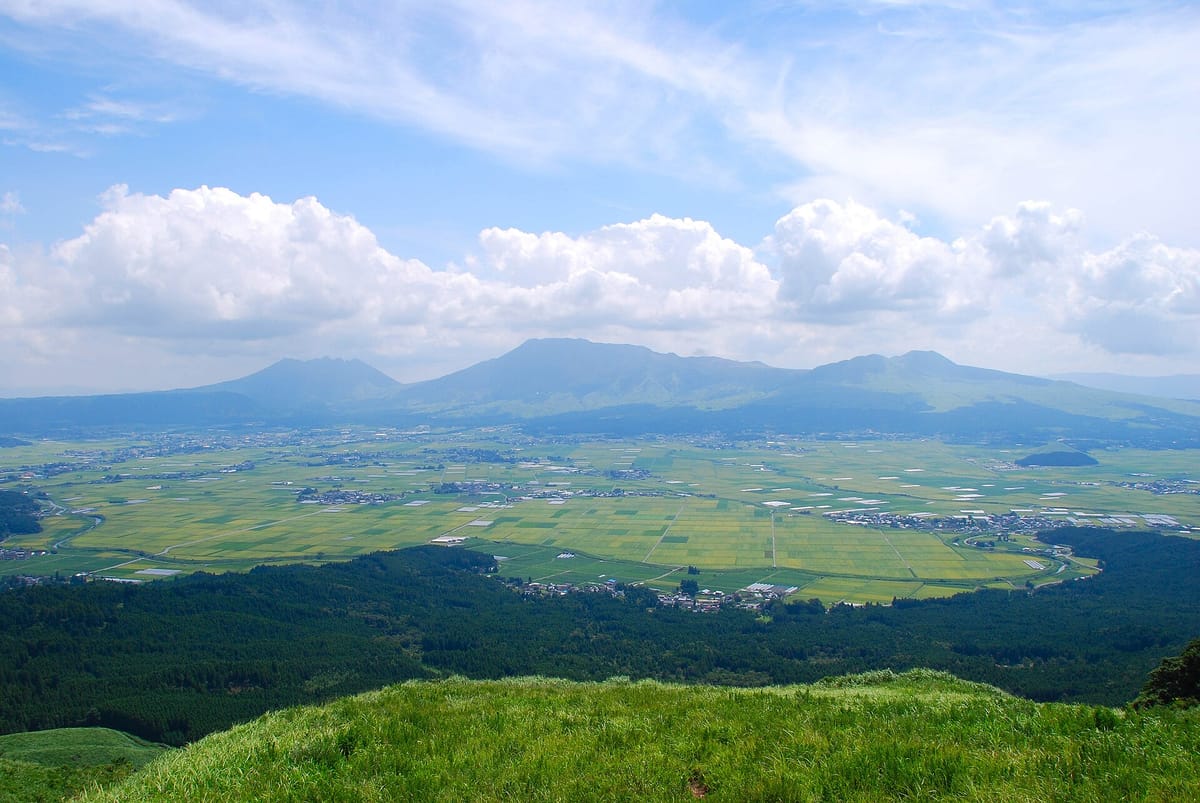
The caldera was formed by enormous eruptions tens of thousands of years ago, which emptied the magma chamber and left a vast bowl. It measures up to about twenty-five kilometres from north to south, with a rim more than a hundred kilometres around. Today its floor is green farmland, with the town of Aso, railway lines and hot spring villages, while the central group of peaks, the Aso Gogaku or Five Peaks of Aso, rises from the middle.
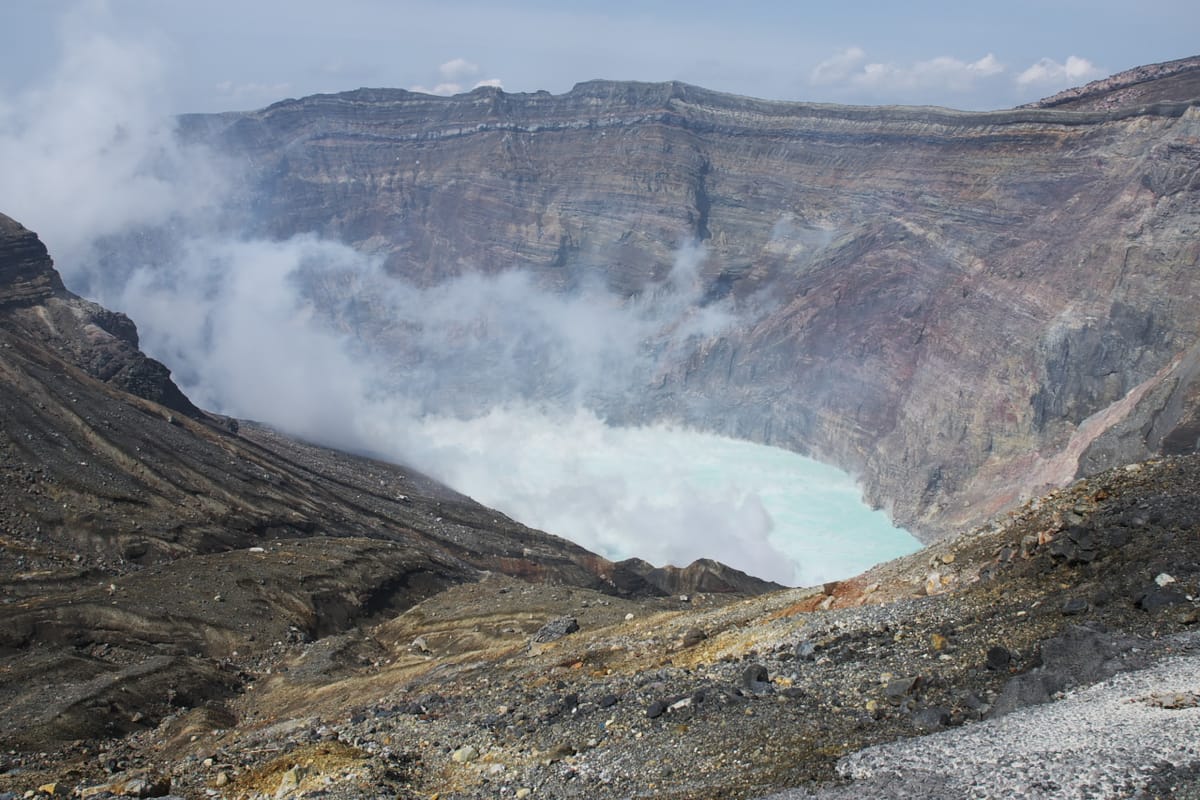
Nakadake, one of the five, is still active. When conditions allow, visitors can look into its first crater, a steaming pit with a turquoise lake at the bottom. Access is controlled by the Japan Meteorological Agency's volcanic alert level, and it closes whenever gas or activity rises.
In 2026 the crater has been closed for most of the year. The alert level was raised to 3 in mid-August and lowered to 2 on 1 September, and a no-entry zone of about one kilometre around the crater remains. That still leaves the grasslands, viewpoints and shrines that make Aso one of the most beautiful landscapes in Kyushu.
Getting there: JR Hōhi Line and buses
From Kumamoto Station, take the JR Hōhi Main Line east to Aso Station. The line climbs onto the caldera floor through a series of switchbacks and takes around an hour and a quarter to an hour and a half. The line was cut by the 2016 earthquakes and fully reopened in 2020.
From Aso Station, buses run up the mountain past Komezuka to Kusasenri and the Aso Volcano Museum, and on to the summit terminal, Asosanjō Terminal, when the road is open. Services are not frequent, so check the timetable at the station. Many visitors rent a car in Kumamoto or Aso, which makes it easy to add the Daikanbō viewpoint on the northern rim and Aso Shrine near Miyaji Station.
| Japanese | Romaji | Meaning |
|---|---|---|
| 阿蘇駅までの切符をください。 | Aso-eki made no kippu o kudasai. | A ticket to Aso Station, please. |
| 草千里行きのバスはどこから出ますか。 | Kusasenri-yuki no basu wa doko kara demasu ka. | Where does the bus for Kusasenri leave from? |
| 次のバスは何時ですか。 | Tsugi no basu wa nanji desu ka. | What time is the next bus? |
| 帰りの最終バスは何時ですか。 | Kaeri no saishū basu wa nanji desu ka. | What time is the last bus back? |
| 大観峰へは車で何分くらいですか。 | Daikanbō e wa kuruma de nanpun kurai desu ka. | About how many minutes to Daikanbō by car? |
Kusasenri, Daikanbō and what you can see
Kusasenri, 草千里ヶ浜, is a wide grassy plain in an old crater, with a pond in the middle and the smoking cone of Nakadake behind it when the air is clear. Horses graze there, and horse rides are offered in the warmer months. The Aso Volcano Museum, across the road, explains the volcano and has shown live camera images from the crater.
Daikanbō, on the northern rim of the caldera, is the classic viewpoint: from there you see the whole caldera floor and the central peaks, which some say look like the Buddha lying down. On cool mornings in autumn the caldera can fill with a sea of cloud, unkai.
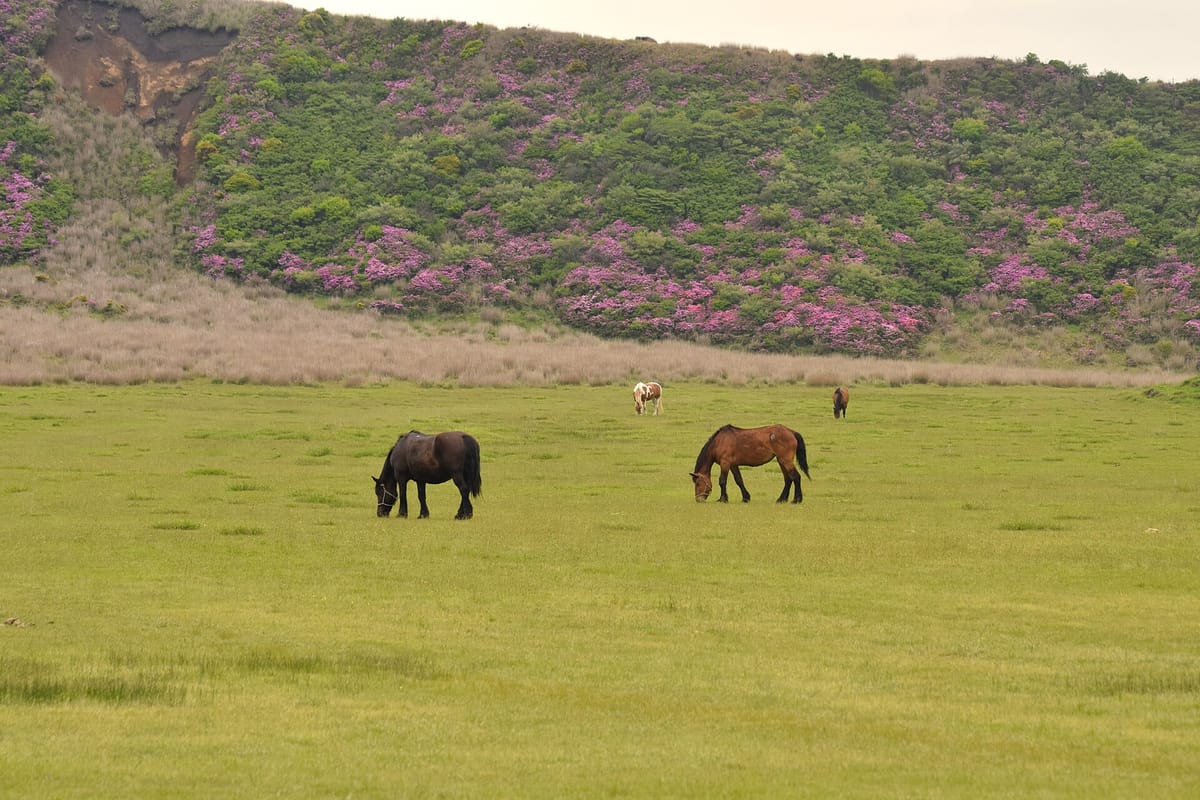
- Kusasenri: grassland, pond and horse rides, with the Aso Volcano Museum beside it.
- Komezuka: a small, perfectly shaped grassy cone by the road up; view it from the roadside, as climbing it is not allowed.
- Daikanbō: the viewpoint on the northern rim over the whole caldera.
- Aso Shrine: one of the oldest shrines in Kyushu, near Miyaji Station; its great tower gate, toppled in 2016, has been rebuilt.
- Nakadake crater: the active crater, closed within about one kilometre while the restrictions continue.
- Hot springs: Uchinomaki and other onsen towns inside the caldera.
Volcano warnings and the words on the signs
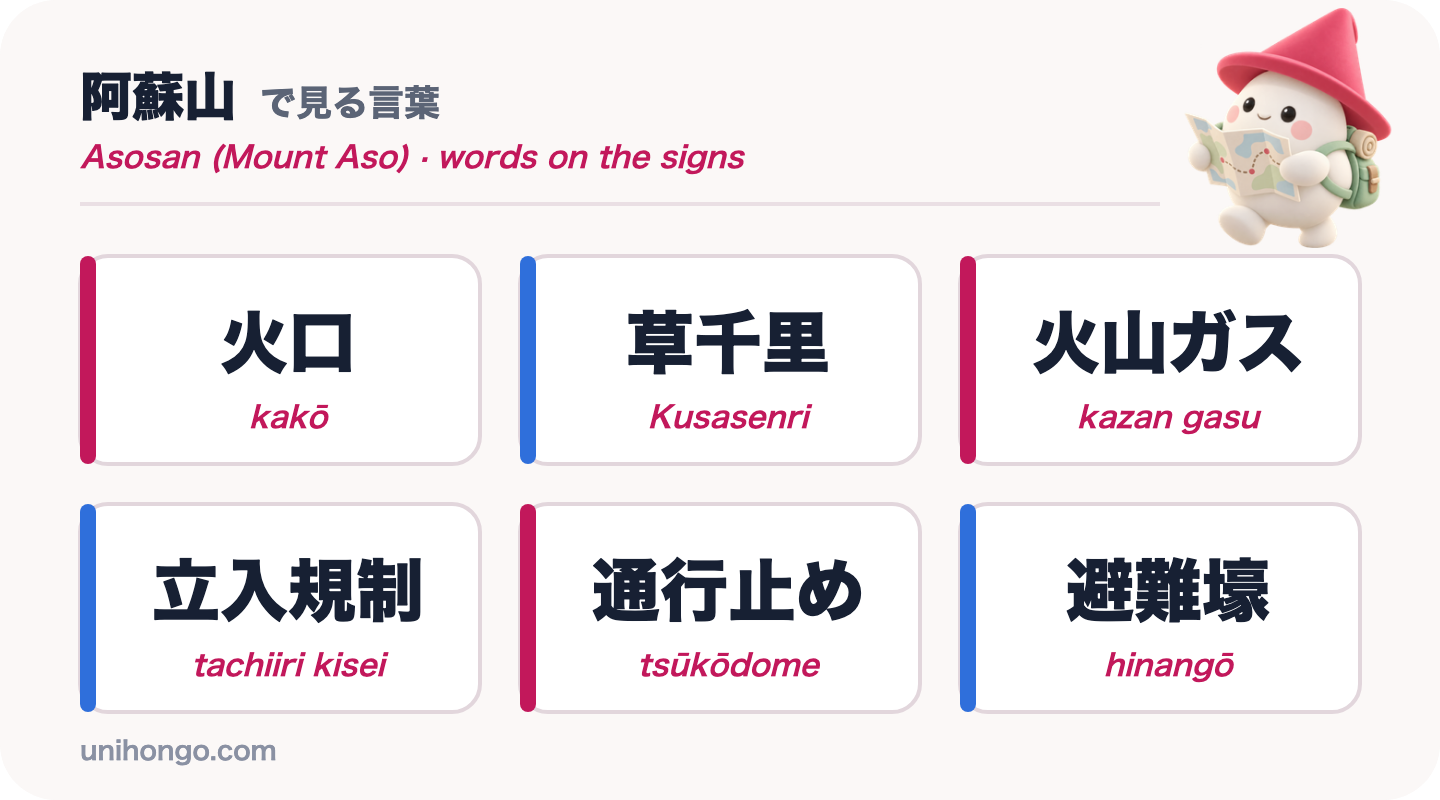
Around the volcano, the most important signs are warnings. Road closures and restrictions are posted at the bottom of the mountain and on the approach road, often only in Japanese, and the concrete shelters around the crater are labelled for emergencies.
| Word | Reading | Meaning |
|---|---|---|
| 火口 | kakō | Crater |
| 草千里 | Kusasenri | The grassy plain below Nakadake |
| 火山ガス | kazan gasu | Volcanic gas |
| 立入規制 | tachiiri kisei | Entry restriction |
| 通行止め | tsūkōdome | Road closed |
| 避難壕 | hinangō | Shelter from volcanic bombs |
| 噴火警戒レベル | funka keikai reberu | Volcanic alert level |
| 規制中 | kiseichū | Restrictions in force |
| 中岳 | Nakadake | The active central peak |
Japanese for checking the crater and staying safe
At Aso, the question to ask is not how to get to the crater but whether you can. Staff at the museum, the bus terminal and the tourist offices will know the day's situation. The key verb is ikemasu, can go, and its negative ikemasen, which you will hear often this year.
| Japanese | Romaji | Meaning |
|---|---|---|
| 今日は火口まで行けますか。 | Kyō wa kakō made ikemasu ka. | Can I go up to the crater today? |
| 今は規制中で行けません。 | Ima wa kiseichū de ikemasen. | Restrictions are in force now, so you can't go. |
| 噴火警戒レベルはいくつですか。 | Funka keikai reberu wa ikutsu desu ka. | What is the volcanic alert level? |
| いつ頃、規制が解除されますか。 | Itsu goro, kisei ga kaijo saremasu ka. | Around when will the restrictions be lifted? |
| 草千里は見られますか。 | Kusasenri wa miraremasu ka. | Can we see Kusasenri? |
| ぜんそくがあるんですが、大丈夫ですか。 | Zensoku ga aru n desu ga, daijōbu desu ka. | I have asthma. Is it all right for me? |
Safety, timing and practical tips
Aso is a living volcano, and the rules exist for good reasons. Even when the crater is open, the area around it can close at short notice.
- Check the Aso Volcano Disaster Prevention Council's site on the morning of your visit for the alert level and the areas open.
- Follow closures and staff instructions without exception, and never go past a closed barrier.
- If you have asthma, bronchitis or heart problems, stay away from the crater area when it is open.
- Bring layers: Kusasenri is over a thousand metres up and much cooler and windier than Kumamoto.
- Clouds often cover the peaks by afternoon; go early for the clearest views.
- Plan your bus times carefully or rent a car, as services on the mountain are limited.
Practise the visit before you go
Whatever the alert level, this is the conversation you will have at the station, the bus terminal or the museum. Practise the four lines below until you can say them without reading, and listen for kiseichū, restrictions in force, and daijōbu, it's fine, in the replies.
Then practise with a partner who answers back. In Unihongo, choose the Sightseeing topic and ask your AI Sensei to play a visitor centre staff member at Aso, sometimes saying the crater is open and sometimes closed. The Travel Emergency topic is useful for practising questions about health and safety.
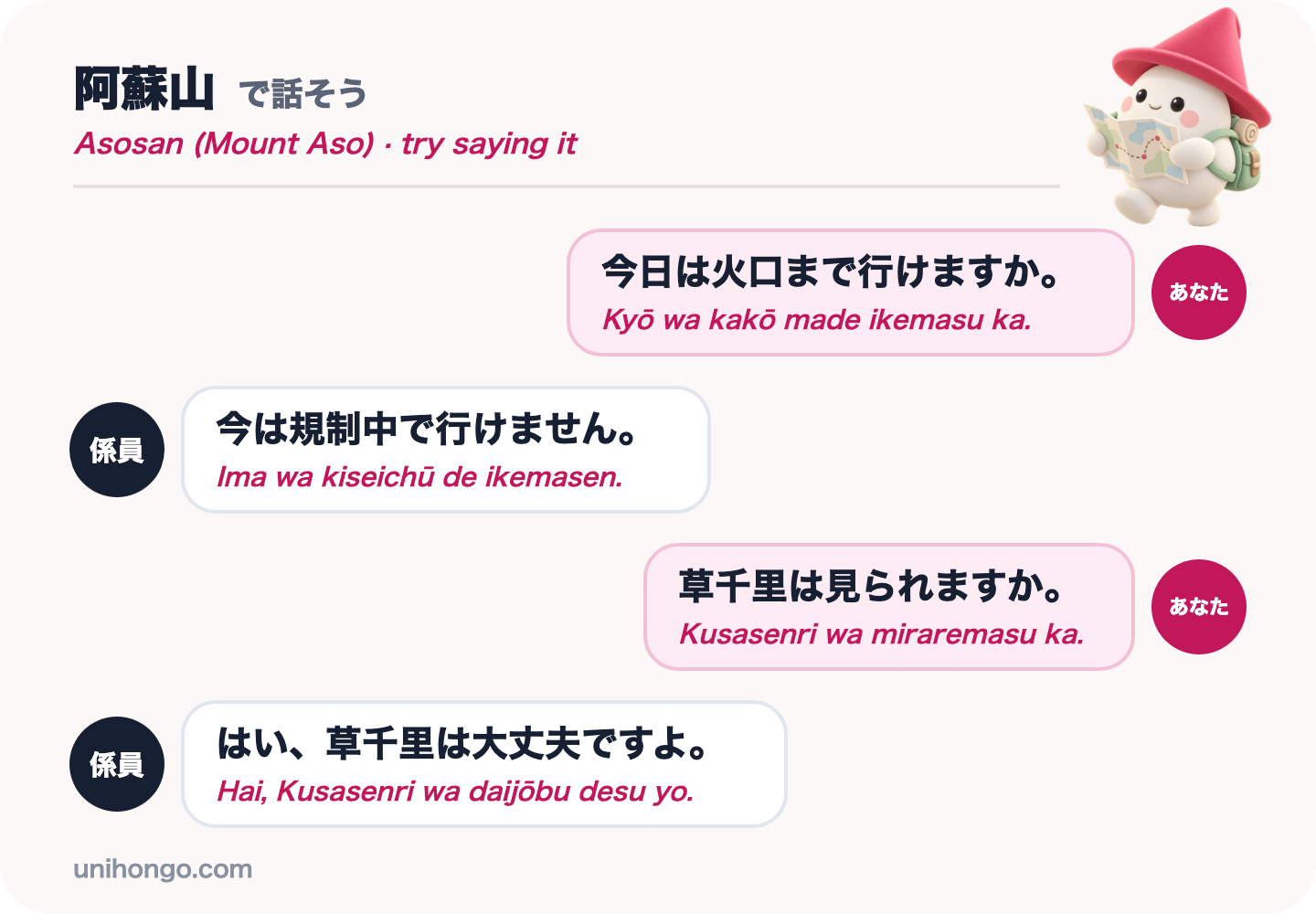
| Japanese | Romaji | Meaning |
|---|---|---|
| 今日は火口まで行けますか。 | Kyō wa kakō made ikemasu ka. | Can I go up to the crater today? |
| 今は規制中で行けません。 | Ima wa kiseichū de ikemasen. | Restrictions are in force now, so you can't go. |
| 草千里は見られますか。 | Kusasenri wa miraremasu ka. | Can we see Kusasenri? |
| はい、草千里は大丈夫ですよ。 | Hai, Kusasenri wa daijōbu desu yo. | Yes, Kusasenri is fine. |
Official information
The Aso Volcano Disaster Prevention Council publishes the current alert level and access restrictions around Nakadake, updated whenever the situation changes. Check it on the day, together with the Kumamoto Prefecture tourism site for the wider area.