

Why Nakano Broadway is worth the trip west
When it opened in 1966, Nakano Broadway was a showpiece of Japan's high-growth years: shops on the lower floors, private apartments above and, in its early days, a rooftop garden and swimming pool. The building still looks much as it did then, with its narrow corridors, terrazzo floors and old-fashioned signs, which makes it a favourite example of Shōwa-era architecture.
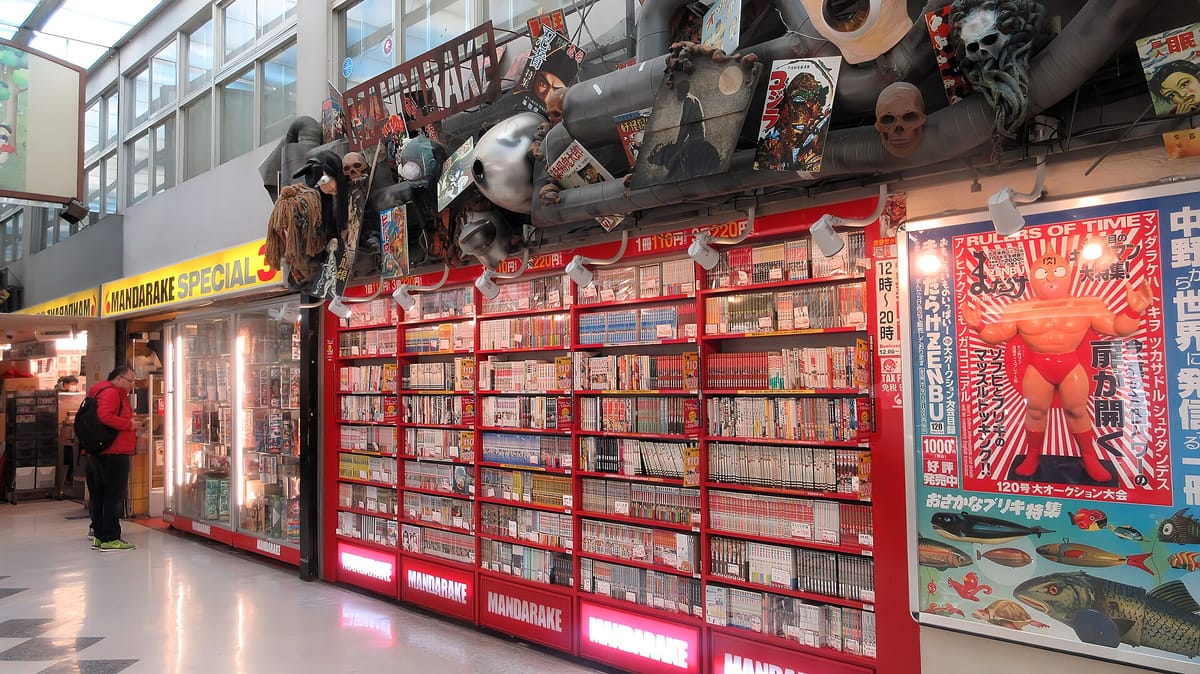
The shops changed around it. In 1980 Mandarake opened a second-hand manga shop here, and because the units in the building are owned by individual shopkeepers, small dealers could afford to follow. Today Mandarake runs many separate shops across the upper floors, each devoted to a single subject, such as cosplay, trading cards, dōjinshi, vintage toys or animation cels, and dozens of independent shops fill the gaps between them.
For a Japanese learner, the building is a lesson in collector vocabulary. Every price tag says whether the item is new or used, boxed or unboxed, and every glass case is a reason to ask a polite question. The shop staff are experts, and they are used to foreign customers who know exactly what they are looking for.
Getting there: Nakano Station and the Sun Mall
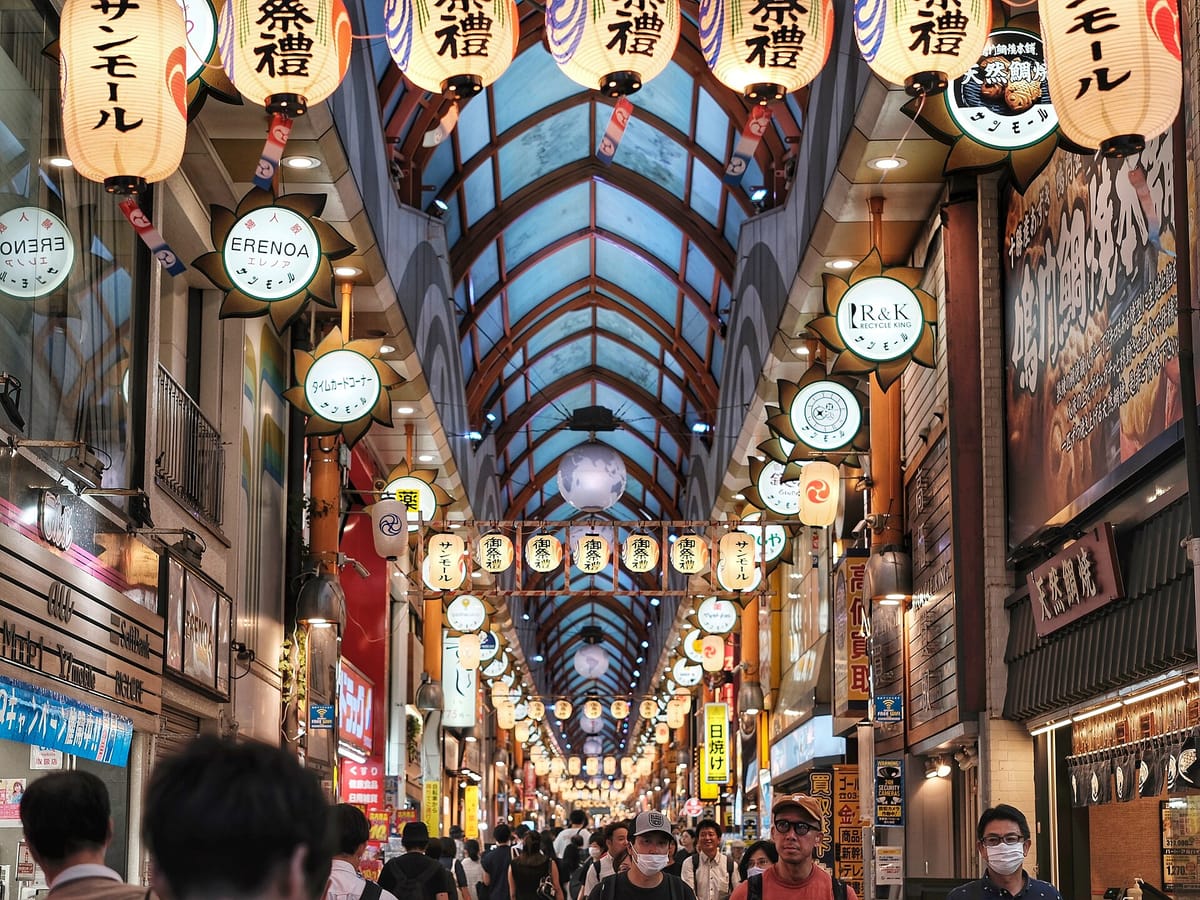
Nakano Station is on the JR Chūō Line, about five minutes from Shinjuku, and is also served by the JR Chūō-Sōbu Line and the Tokyo Metro Tōzai Line. Leave by the north exit, kitaguchi, and cross the small square in front of the station. The covered shopping street straight ahead is Nakano Sun Mall, about 225 metres long; walk to the far end and Nakano Broadway begins where the arcade stops.
The whole walk takes around five minutes. The side streets that branch off the Sun Mall are full of small restaurants and izakaya, which makes Nakano a good place to stay for dinner after shopping.
| Japanese | Romaji | Meaning |
|---|---|---|
| 中野駅は新宿から何駅ですか。 | Nakano-eki wa Shinjuku kara nan'eki desu ka. | How many stops is Nakano Station from Shinjuku? |
| 北口はどちらですか。 | Kitaguchi wa dochira desu ka. | Which way is the north exit? |
| 中野ブロードウェイはどちらですか。 | Nakano Burōdowei wa dochira desu ka. | Which way is Nakano Broadway? |
| このサンモールをまっすぐ行けばいいですか。 | Kono Sanmōru o massugu ikeba ii desu ka. | Do I just go straight along this Sun Mall? |
| まんだらけは何階ですか。 | Mandarake wa nankai desu ka. | Which floor is Mandarake on? |
What you will find on each floor
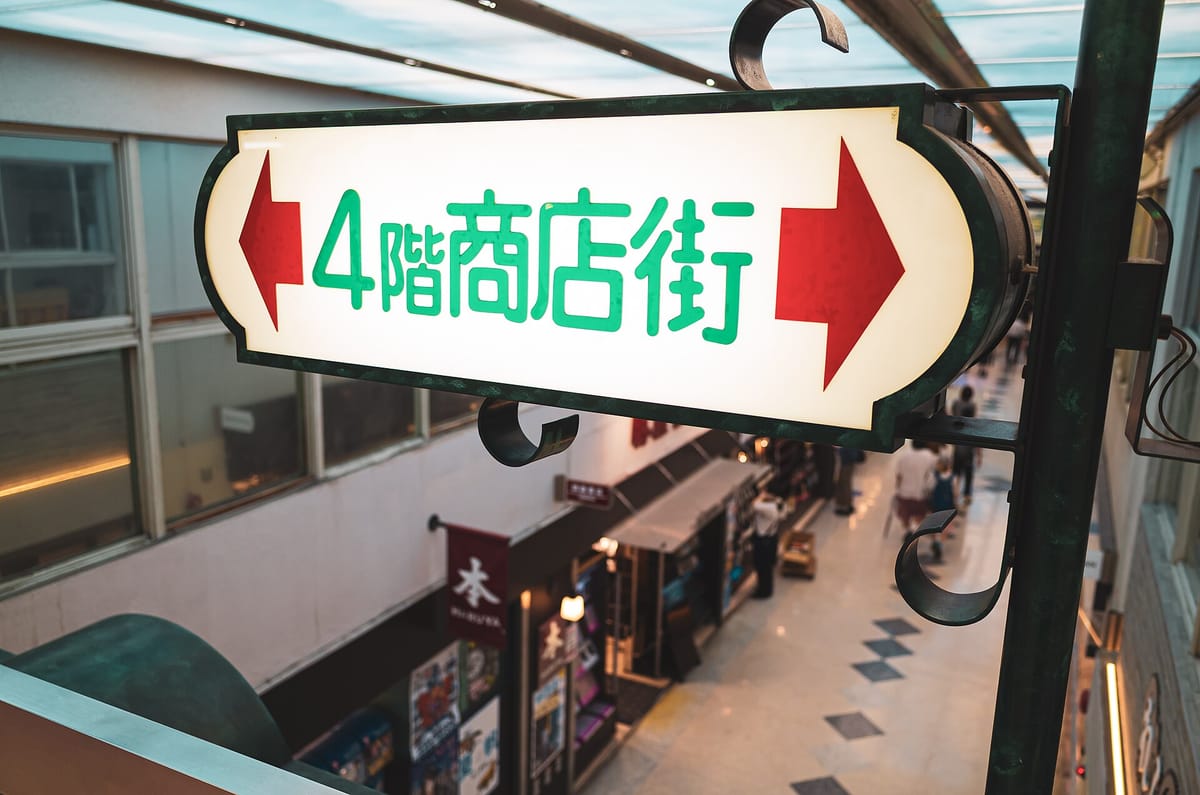
Nakano Broadway has shops from the basement to the fourth floor, with apartments above. The layout is confusing at first, with stairs and escalators in odd places and corridors that seem to end suddenly, so check the floor directory boards as you go, or look at the floor map on the official website before you arrive.
Most visitors go straight upstairs, but the lower floors are part of the building's character, and the basement is a real neighbourhood market.
- Basement: a food market used by local shoppers, with fish, meat, vegetables and sweets, and a stand known for very tall, many-layered soft-serve ice cream.
- First floor: clothes, shoes, second-hand goods, watches and a card shop, plus the main escalator up.
- Second floor: dense rows of collectors' shops, including many Mandarake branches for figures, cosplay, idol goods and cards.
- Third floor: the Mandarake main shop for manga and books, more specialist branches, and shops linked to the artist Takashi Murakami's company, Kaikai Kiki.
- Fourth floor: vintage toys, retro games, animation goods and more Mandarake branches.
- Watches and cameras: several dealers across the building sell used luxury watches and film cameras, a speciality that surprises many visitors.
Words on the shop signs and price tags
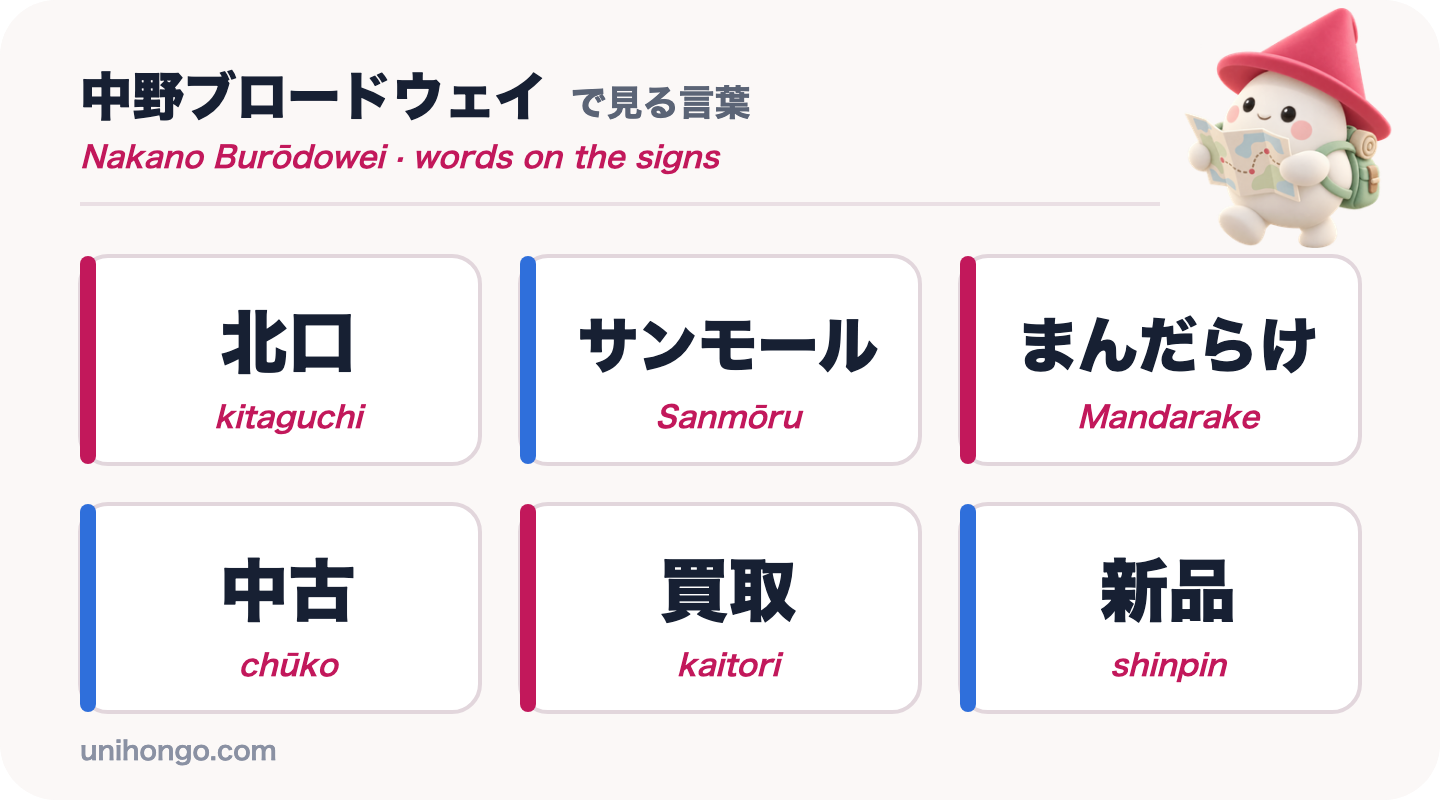
Mandarake writes its name in hiragana, まんだらけ, and many of its branches have playful kanji or katakana names of their own, so read the smaller sign under the logo to see what each one sells. On price tags, 中古, chūko, means used and 新品, shinpin, means new. 未開封, mikaifū, unopened, and 箱なし, hako nashi, without box, tell you what condition to expect.
You will also see 買取, kaitori, all over the building. It means that the shop buys goods from customers, and it marks the counter where locals bring their collections to sell. It is not where you pay for your own purchases.
| Word | Reading | Meaning |
|---|---|---|
| 北口 | kitaguchi | North exit of Nakano Station |
| サンモール | Sanmōru | Sun Mall, the covered arcade to the building |
| まんだらけ | Mandarake | The second-hand collectibles chain |
| 中古 | chūko | Second-hand, used |
| 新品 | shinpin | New |
| 買取 | kaitori | We buy, the counter for selling items |
| 未開封 | mikaifū | Unopened |
| 箱なし | hako nashi | Without box |
| 税込 | zeikomi | Tax included in the price |
| 撮影禁止 | satsuei kinshi | No photography |
Japanese for buying collectibles
The best items at Nakano Broadway are kept in locked glass cases, and staff will take them out for you if you ask. Condition matters, so shops describe it carefully: jōtai is condition, bihin means excellent condition, kizu is a scratch or damage, and setsumeisho is the instruction leaflet that collectors want included.
Some shops offer tax-free shopping for visitors who show their passport, and many accept cards, but smaller shops may be cash only. Asking before you queue at the till saves an awkward moment.
| Japanese | Romaji | Meaning |
|---|---|---|
| このショーケースの中を見せてもらえますか。 | Kono shōkēsu no naka o misete moraemasu ka. | Could you show me what's in this glass case? |
| これは新品ですか、中古ですか。 | Kore wa shinpin desu ka, chūko desu ka. | Is this new or second-hand? |
| 状態はどうですか。 | Jōtai wa dō desu ka. | What condition is it in? |
| 傷はありますか。 | Kizu wa arimasu ka. | Is there any damage? |
| 説明書は付いていますか。 | Setsumeisho wa tsuite imasu ka. | Does it come with the instructions? |
| 免税でお願いできますか。 | Menzei de onegai dekimasu ka. | Can I buy it tax-free? |
| カードは使えますか。 | Kādo wa tsukaemasu ka. | Can I pay by card? |
| 少し考えます。 | Sukoshi kangaemasu. | I'll think about it a little. |
Etiquette, timing and practical tips
Nakano Broadway's shops are small and full of fragile, valuable stock, so a little care goes a long way.
- Come after lunch. The collectors' shops usually open around midday, and the building is quietest on weekday afternoons.
- Ask before you photograph inside a shop, and never photograph other customers.
- Do not open boxes or packaging yourself; ask the staff to help.
- Take off a large backpack or carry it in front of you in the narrow aisles, where it is easy to knock things off shelves.
- Bring your passport if you hope to shop tax-free, and some cash for smaller shops.
- Allow more time than you expect. The corridors loop back on themselves, and it is easy to spend two hours or more once you start browsing.
Practise the collector's conversation before you go
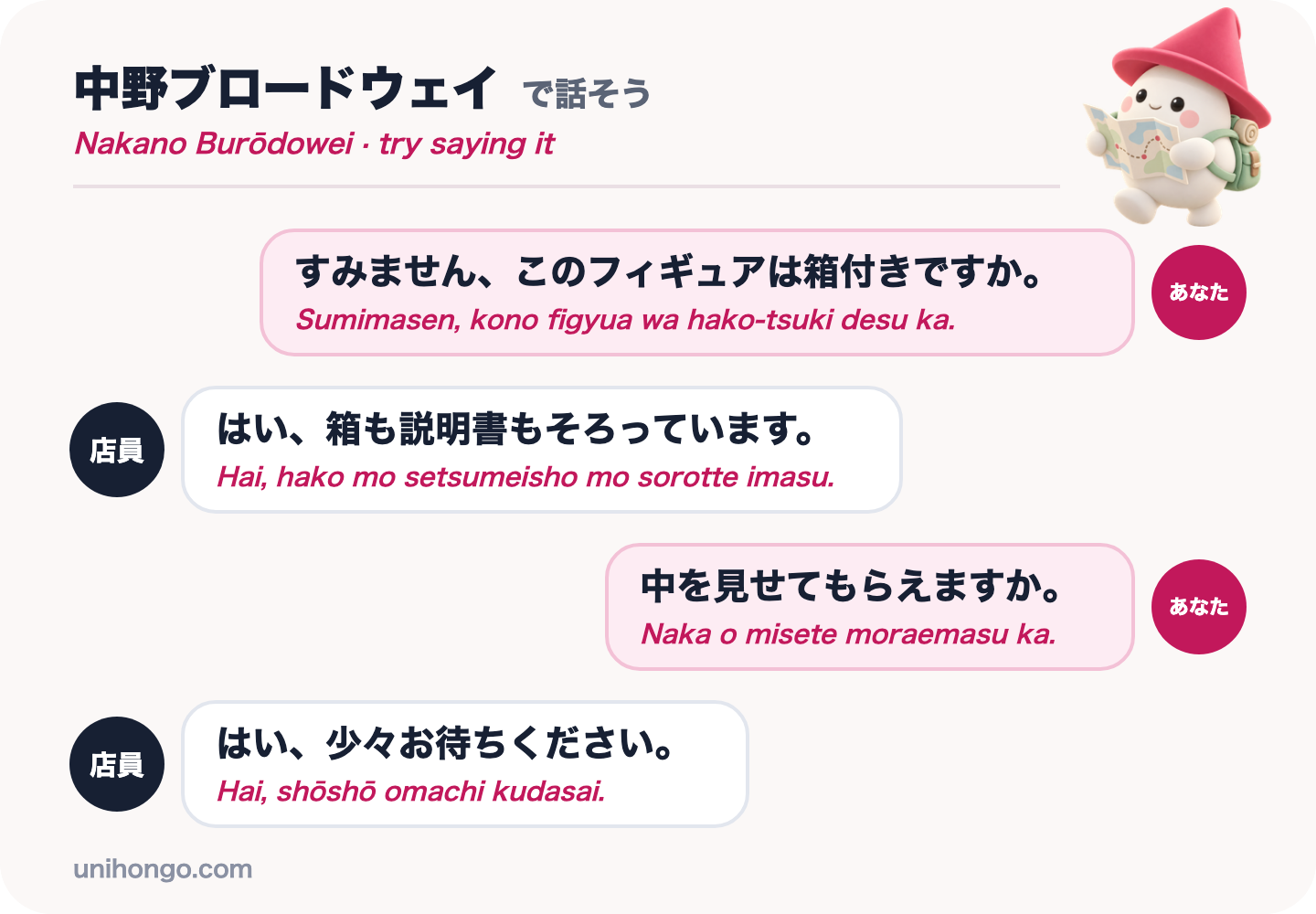
The conversation you are most likely to have is at the glass case: is it complete, and can I look inside the box? The clerk's reply uses sorotte imasu, is all there, which is the word collectors want to hear, and the polite shōshō omachi kudasai, please wait a moment, while the case is unlocked.
Practise these four lines aloud until they feel easy, then rehearse with a partner who answers back. In Unihongo, choose the Shopping topic and ask your AI Sensei to play the clerk at a Nakano Broadway collectors' shop, then try the Convenience Store Checkout mission to practise paying and answering questions at the till.
| Japanese | Romaji | Meaning |
|---|---|---|
| すみません、このフィギュアは箱付きですか。 | Sumimasen, kono figyua wa hako-tsuki desu ka. | Excuse me, does this figure come with its box? |
| はい、箱も説明書もそろっています。 | Hai, hako mo setsumeisho mo sorotte imasu. | Yes, it has both the box and the instructions. |
| 中を見せてもらえますか。 | Naka o misete moraemasu ka. | Could I see inside the box? |
| はい、少々お待ちください。 | Hai, shōshō omachi kudasai. | Certainly, please wait a moment. |
Official information
Nakano Broadway's official website, in Japanese, has a floor map and a directory of shops by floor and category. Mandarake publishes the location and floor guide for its Nakano shops. Shops set their own hours and days off, so check the ones you most want to visit.