

Why Kobe is worth a day of its own
Kobe feels different from Osaka and Kyoto. The city is a narrow strip between the Rokkō mountains and Osaka Bay, so the mountains are always behind you and the sea is always in front. When the port opened to foreign trade in 1868, merchants from Europe, America and China settled here, and their influence still shapes the city: Western houses on the hill, a Chinatown near the harbour, bakeries and coffee shops everywhere.
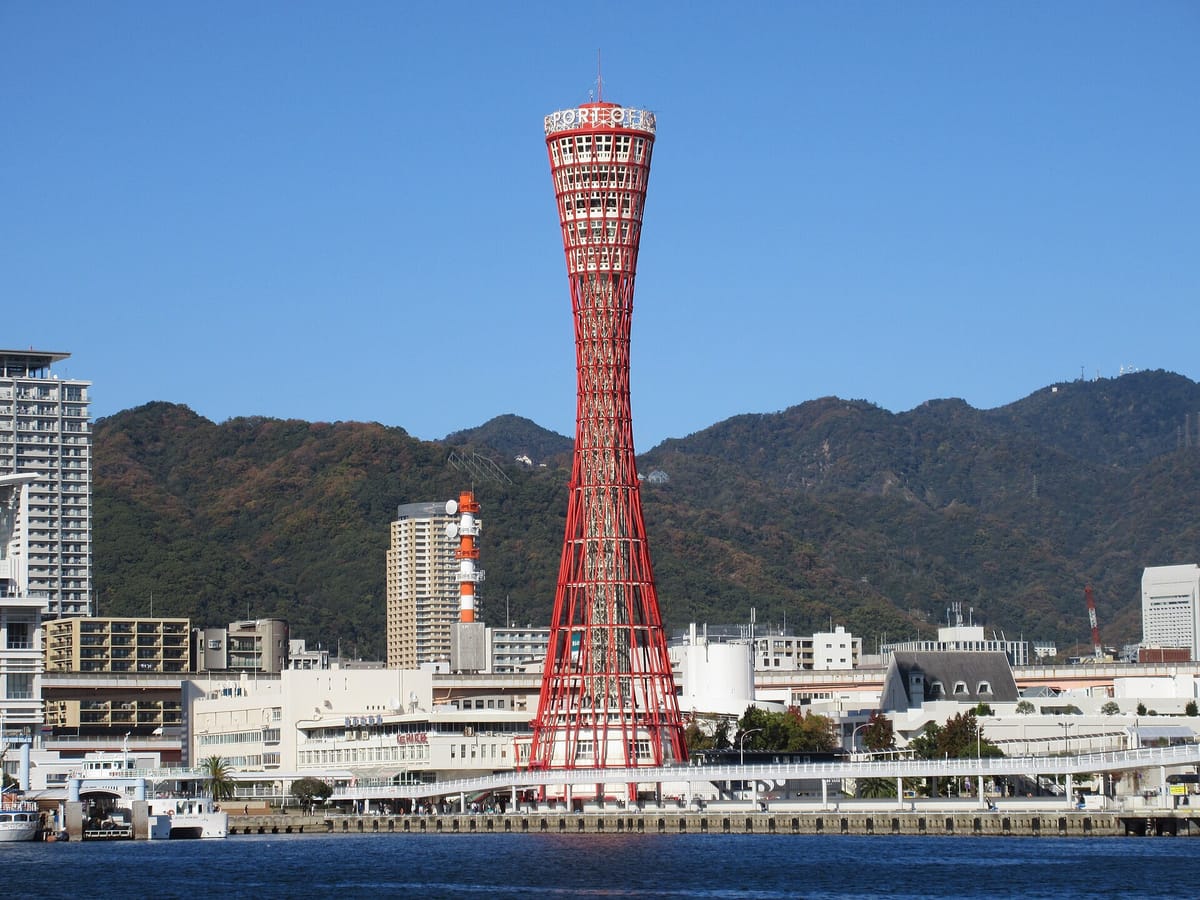
In 1995 the Great Hanshin earthquake devastated Kobe, killing more than six thousand people across the region. The city rebuilt, and part of the damaged waterfront has been kept as a memorial in Meriken Park. Next to it, Harborland and the red Kobe Port Tower show the lively harbour city Kobe has become.
For a learner, Kobe is a friendly place to practise: the city is compact and walkable, people are used to visitors, and street food in Nankinmachi means plenty of small, easy exchanges in Japanese.
Getting there: Sannomiya, Motomachi, Kobe and Shin-Kobe
Sannomiya is Kobe's hub. JR Sannomiya, Hankyū and Hanshin Kobe-Sannomiya, the subway and the Port Liner all meet here, and JR Special Rapid trains from Osaka Station take about twenty minutes. From Sannomiya, Kitano is about fifteen minutes' walk uphill to the north, along the sloping street called Kitano-zaka.
Motomachi, one stop west on JR, is closest to Nankinmachi, which is about five minutes south of the station. Harborland is next to JR Kobe Station, one stop further, or Harborland Station on the subway's Kaigan Line. Meriken Park and the Port Tower lie between Nankinmachi and Harborland, so you can walk the whole route downhill from Kitano to the sea. Shinkansen passengers arrive at Shin-Kobe, which is only a short walk from Kitano.
| Japanese | Romaji | Meaning |
|---|---|---|
| 三宮までの切符をください。 | Sannomiya made no kippu o kudasai. | A ticket to Sannomiya, please. |
| 北野異人館へはどう行けばいいですか。 | Kitano Ijinkan e wa dō ikeba ii desu ka. | How do I get to the Kitano foreign houses? |
| 南京町は元町駅から近いですか。 | Nankinmachi wa Motomachi-eki kara chikai desu ka. | Is Nankinmachi near Motomachi Station? |
| ハーバーランドまで歩けますか。 | Hābārando made arukemasu ka. | Can I walk to Harborland? |
| 新快速は三宮に止まりますか。 | Shinkaisoku wa Sannomiya ni tomarimasu ka. | Does the Special Rapid stop at Sannomiya? |
Kitano, Nankinmachi and Harborland: what you will see
Start high in Kitano, the hillside district of ijinkan, houses of foreigners. The Weathercock House, Kazamidori no Yakata, is a red-brick mansion built in 1909 for the German merchant Gottfried Thomas and named for the iron weathercock on its spire; it is an Important Cultural Property. Next to it, the pale green Moegi House was built in 1903 as the home of Hunter Sharp, the American consul-general. Other houses, several run as small museums, line the steep lanes around them.
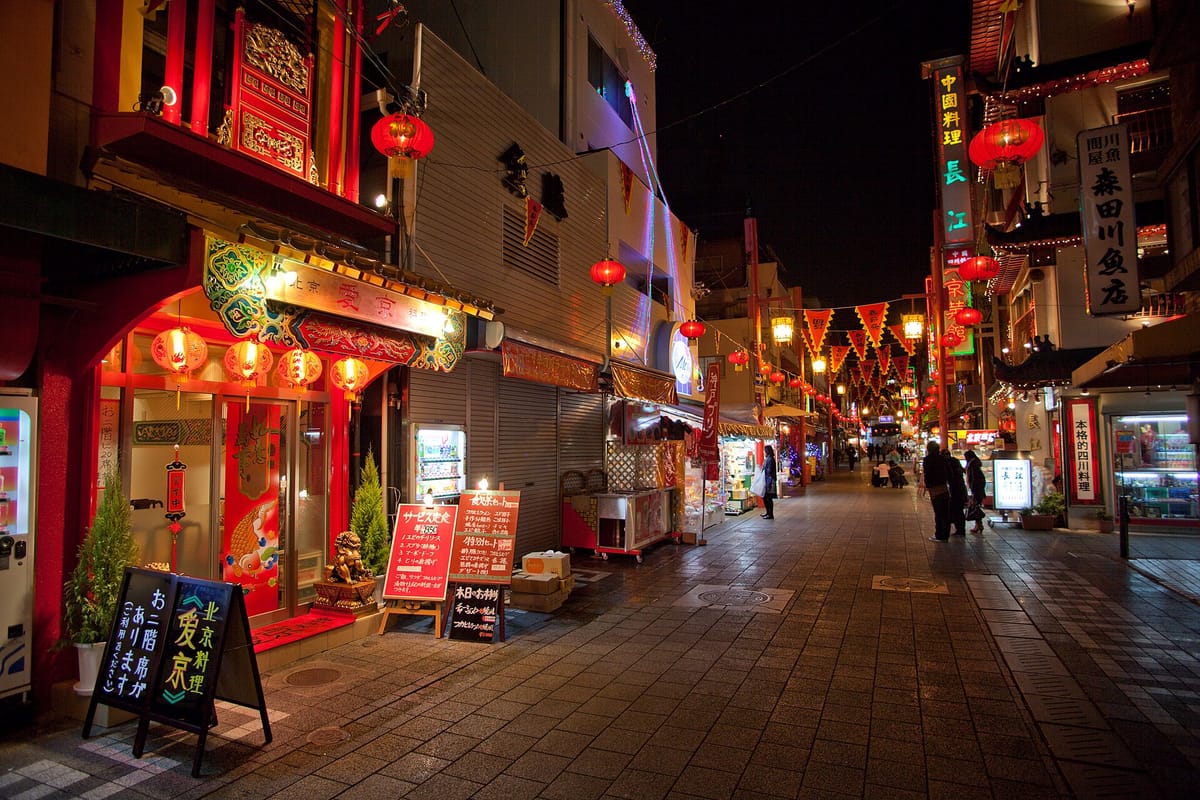
Walk down to Nankinmachi, Kobe's Chinatown, entered from the east through the Chōanmon gate. Its two short main streets are packed with stalls selling steamed buns, dumplings, Peking duck wraps and sesame balls. Then continue south to Meriken Park for the Port Tower and the earthquake memorial, and west along the water to Harborland, with the umie and Mosaic shopping centres, a Ferris wheel and restored brick warehouses.
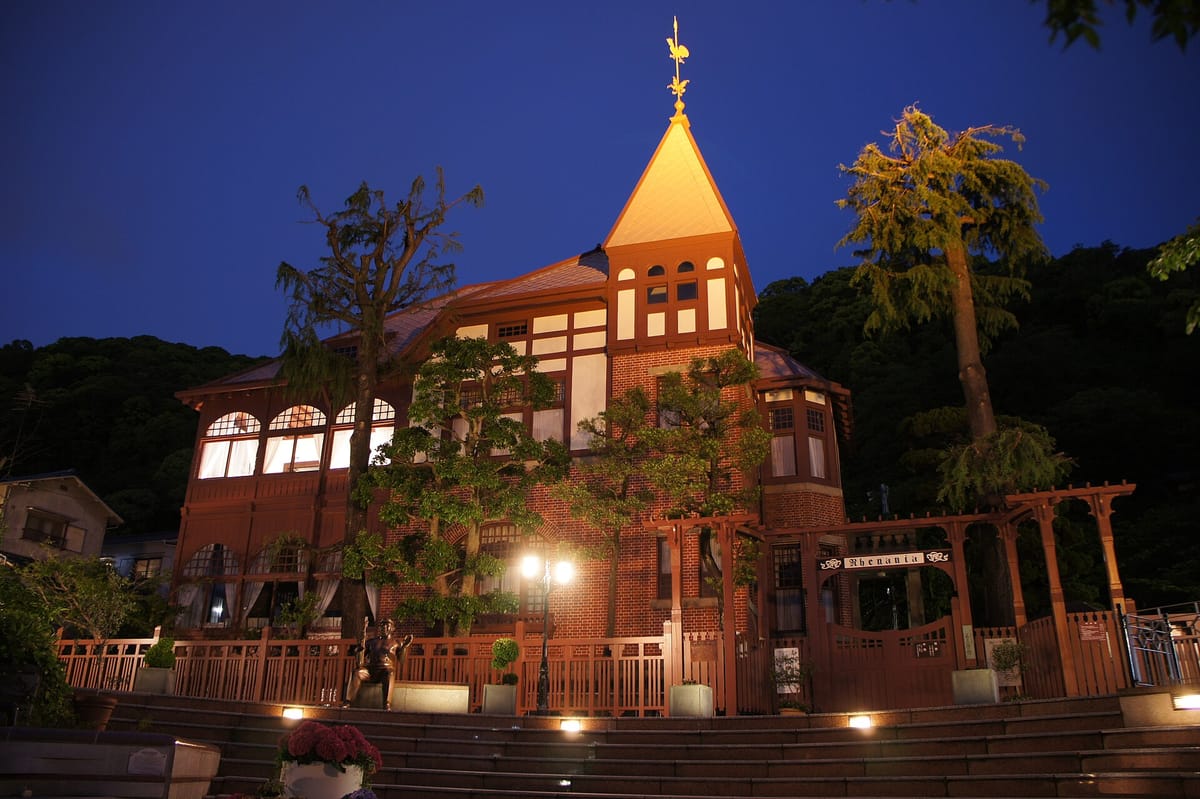
- Kazamidori no Yakata: the Weathercock House, Kitano's symbol.
- Moegi no Yakata: the Moegi House, a pale green wooden mansion next door.
- Kitano-zaka: the sloping street from Sannomiya up to the ijinkan.
- Nankinmachi: Kobe's Chinatown, with the Chōanmon gate at its east end.
- Meriken Park: Kobe Port Tower, the Maritime Museum and the Port of Kobe Earthquake Memorial Park.
- Harborland: umie, Mosaic, the Ferris wheel and the Renga Sōko brick warehouses.
- Kobe beef: book ahead if you want a teppanyaki dinner in Sannomiya or Motomachi.
Words on the signs
異人館, ijinkan, is a word you will mostly meet in Kobe and a few other port cities. 異人, ijin, is an old word for a foreigner, and 館, kan, a large building or hall. The same 館 appears in 風見鶏の館, the Weathercock House, where it is read yakata, mansion.
In Nankinmachi, menu signs mix Japanese and Chinese words. Look for 豚まん, butaman, pork bun; 小籠包, shōronpō, soup dumplings; and 焼き小籠包, yaki-shōronpō, pan-fried soup dumplings.
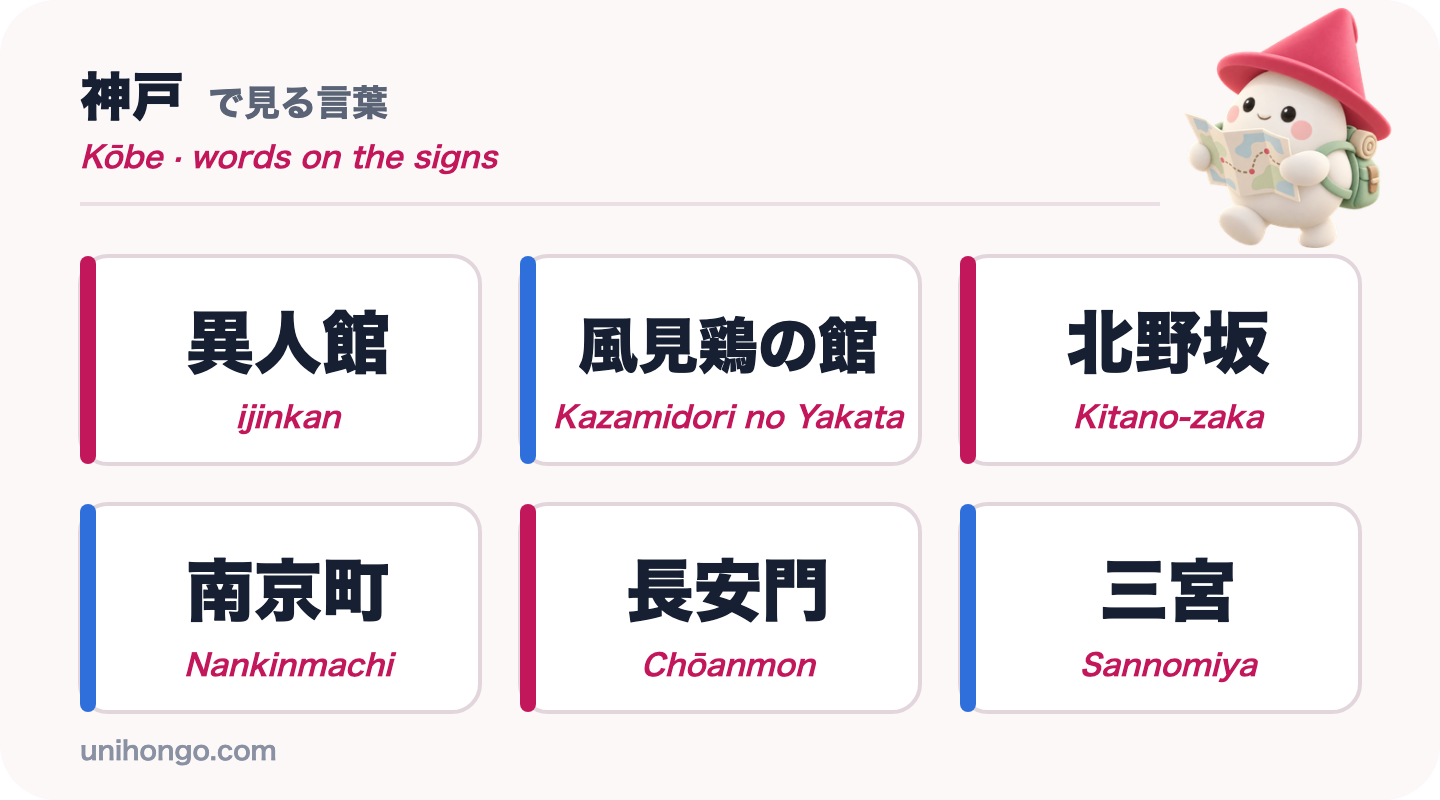
| Word | Reading | Meaning |
|---|---|---|
| 異人館 | ijinkan | Houses built for foreign residents |
| 風見鶏の館 | Kazamidori no Yakata | The Weathercock House |
| 北野坂 | Kitano-zaka | The sloping street up to Kitano |
| 南京町 | Nankinmachi | Kobe's Chinatown |
| 長安門 | Chōanmon | The east gate of Nankinmachi |
| 三宮 | Sannomiya | Kobe's central station district |
| 豚まん | butaman | Steamed pork bun |
| 小籠包 | shōronpō | Soup dumplings |
| 持ち帰り | mochikaeri | Takeaway |
Japanese for Nankinmachi's street food
Nankinmachi is made for grazing: stalls sell single items, and you can try three or four things for lunch. The pattern is always the same: say what you want, how many, then kudasai. Numbers of buns use the everyday counter tsu: hitotsu, futatsu, mittsu. Staff will usually ask whether you are eating there or taking it away.
At busy stalls, join the queue and have your order ready. Many stalls provide a small space to stand and eat; if not, move to one of the resting spots rather than eating while walking through the crowd. You may hear a little Kansai or Kobe speech from stallholders, but they will understand standard Japanese perfectly.
| Japanese | Romaji | Meaning |
|---|---|---|
| 豚まんを三つください。 | Butaman o mittsu kudasai. | Three pork buns, please. |
| 焼き小籠包はありますか。 | Yaki-shōronpō wa arimasu ka. | Do you have pan-fried soup dumplings? |
| いちばん人気なのはどれですか。 | Ichiban ninki na no wa dore desu ka. | Which is the most popular? |
| ここで食べてもいいですか。 | Koko de tabete mo ii desu ka. | May I eat here? |
| からしをつけてください。 | Karashi o tsukete kudasai. | Please add some mustard. |
| 何しとん? | Nani shiton? | What are you up to? (Kobe dialect; standard: nani shite iru no?) |
Etiquette, timing and practical tips
Kobe is easy to explore on foot if you plan the route downhill.
- Start in Kitano in the morning and walk downhill to Nankinmachi for lunch and the harbour for sunset.
- Wear comfortable shoes: Kitano's lanes are steep.
- Inside the ijinkan, follow the signs about photos and do not touch the furniture.
- Eat at the stall or in a resting space in Nankinmachi, not while walking through the crowd.
- Nankinmachi is at its busiest at weekend lunchtimes and during Lunar New Year celebrations.
- At the Earthquake Memorial Park, keep your voice down and treat it as a memorial, not a photo prop.
Practise the pork bun stall before you go
This is the exchange you will have at almost every Nankinmachi stall. Listen for koko de tabemasu ka, will you eat here?, and answer with mochikaeri de, to take away, or hai, koko de, yes, here. Atsui uchi ni dōzo means enjoy them while they are hot.
Then practise with a partner. In Unihongo, choose the Festival Food topic and ask your AI Sensei to play a Nankinmachi stall worker, or choose the Directions topic to practise asking the way from Sannomiya to Kitano. Saying the lines aloud once makes the real stall easy.
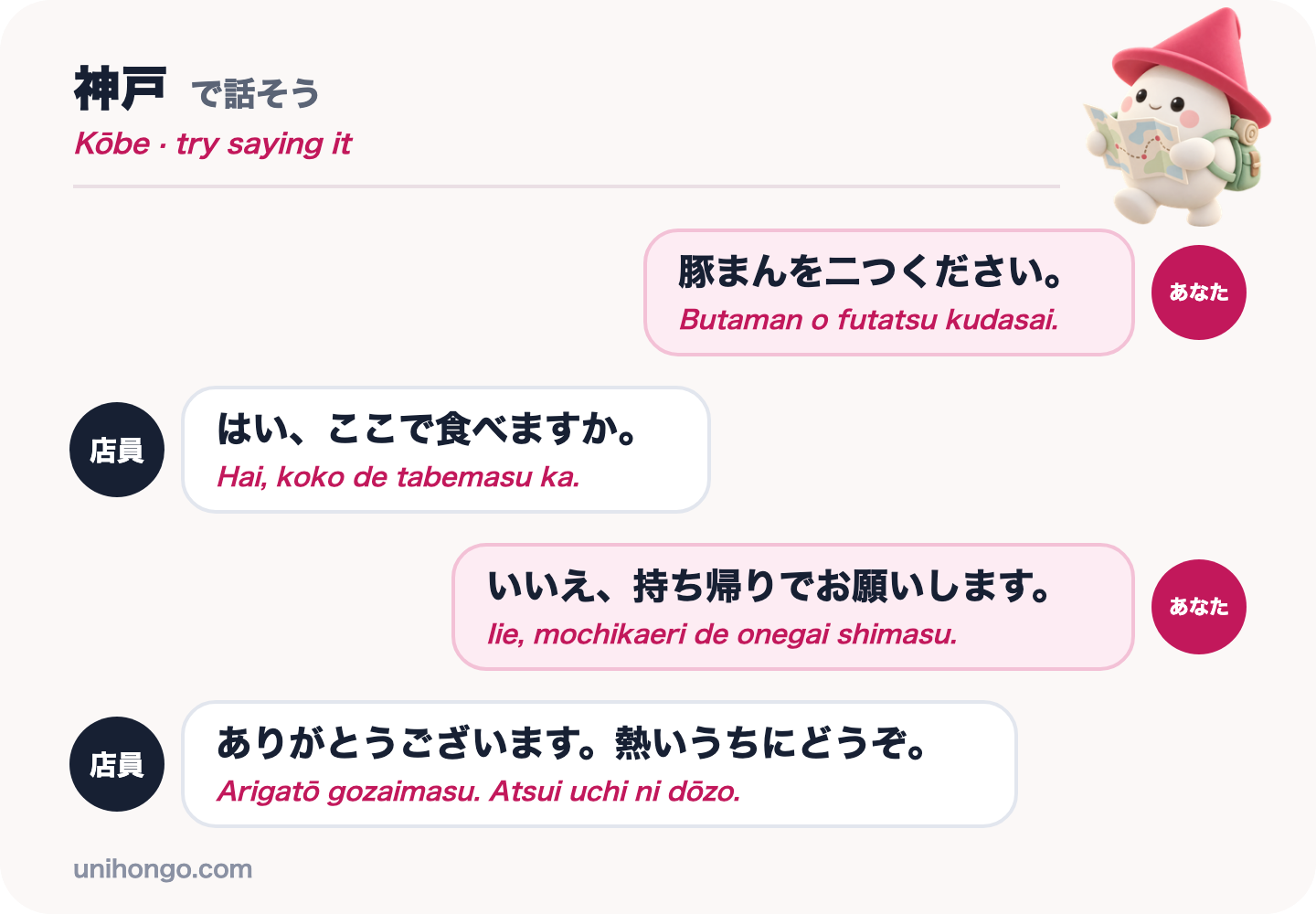
| Japanese | Romaji | Meaning |
|---|---|---|
| 豚まんを二つください。 | Butaman o futatsu kudasai. | Two pork buns, please. |
| はい、ここで食べますか。 | Hai, koko de tabemasu ka. | Sure. Will you eat them here? |
| いいえ、持ち帰りでお願いします。 | Iie, mochikaeri de onegai shimasu. | No, to take away, please. |
| ありがとうございます。熱いうちにどうぞ。 | Arigatō gozaimasu. Atsui uchi ni dōzo. | Thank you. Enjoy them while they're hot. |
Official information
Kobe's official tourism site covers Kitano, Nankinmachi, Harborland and Meriken Park, with current information on the ijinkan and events. The Port Tower's own site lists its floors and fees.