
Amakuchi, chūkara, karakuchi: the three heat words
Two of the three words share a pattern: a taste plus kuchi (口), mouth. Amakuchi is literally sweet mouth, and it means mild, the level made for children and for anyone who dislikes heat. Karakuchi is spicy mouth, hot. Chūkara, middle spicy, sits between them and is the default at most shops; notice that it has no kuchi.
The noun for heat itself is karasa (辛さ), from karai (辛い), spicy. When staff ask about karasa, they want one of these levels or a number.
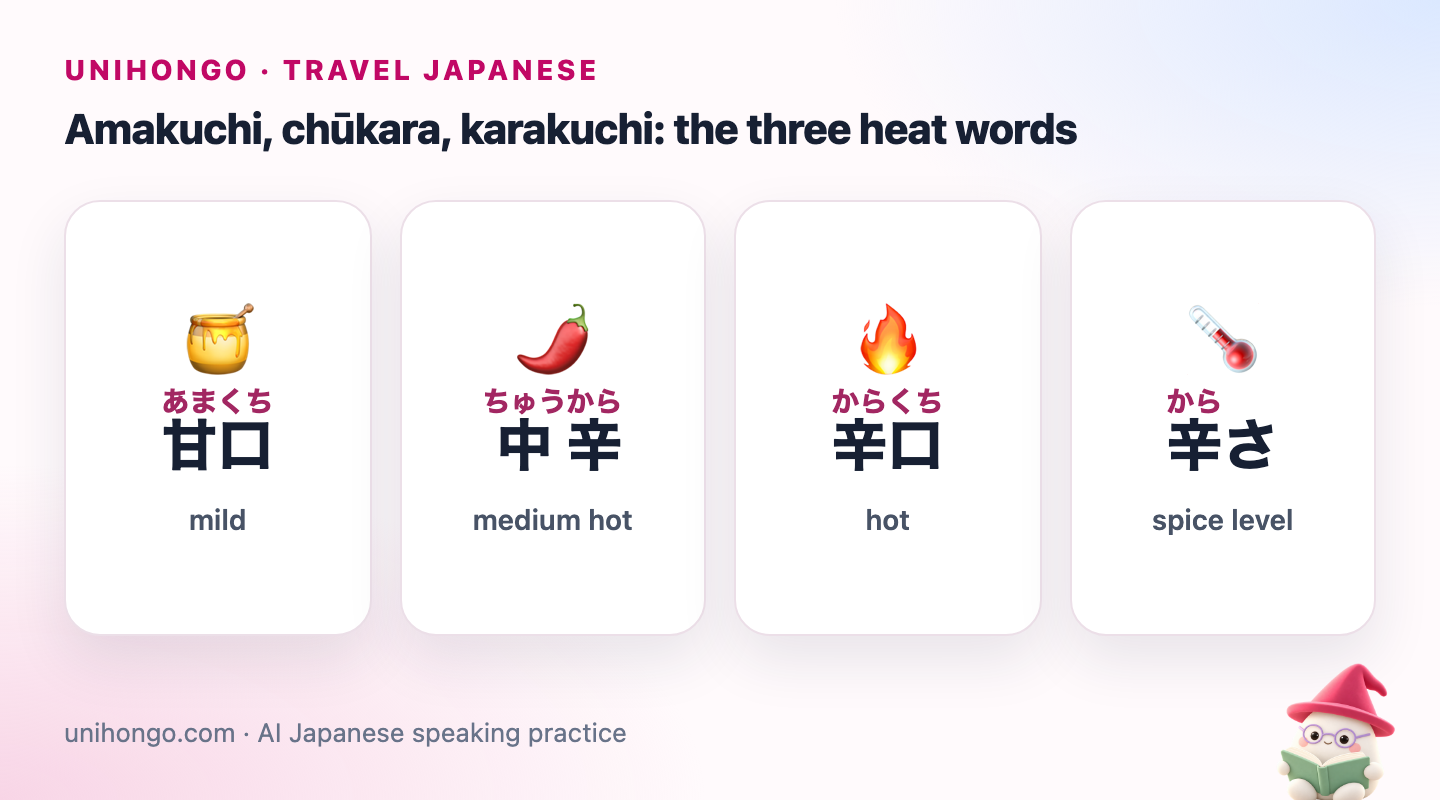
| Japanese | Romaji | Meaning |
|---|---|---|
| 甘口 | amakuchi | mild |
| 中辛 | chūkara | medium hot |
| 辛口 | karakuchi | hot |
| 辛さ | karasa | spice level |
| 辛い | karai | spicy, hot |
| 辛さ控えめ | karasa hikaeme | on the mild side |
Karakuchi also describes dry sake and dry beer, so on a drinks menu the word has nothing to do with chilli.
Numbered spice levels at chain shops
Curry chains go further than three words. They set a standard heat, often called futsū (普通), normal, and let you climb from there by number: ichi-kara (1辛), ni-kara (2辛), san-kara (3辛) and upward. The counter is kara, read after the number. Some chains also offer a milder step below the standard. The top levels are seriously hot, and some shops will only serve them to customers who have already finished a lower one.
The scale is not shared between companies. A three at one chain may be gentle at another, so on a first visit order futsū or ichi-kara and adjust next time. Many shops keep a shaker of spice powder on the table, which lets you raise the heat yourself.
| Japanese | Romaji | Meaning |
|---|---|---|
| 普通 | futsū | standard, regular |
| 1辛 | ichi-kara | level 1 heat |
| 2辛 | ni-kara | level 2 heat |
| 辛さは普通でお願いします。 | Karasa wa futsū de onegai shimasu. | Standard heat, please. |
| あまり辛くないのはどれですか。 | Amari karakunai no wa dore desu ka. | Which one is not very spicy? |
Rice: how much, and how to ask
Rice is the next choice. The phrase is gohan no ryō (ご飯の量), the amount of rice, though curry menus often write raisu (ライス), the word for rice served on a plate. The three sizes are sukuname (少なめ), a little less, futsū, regular, and ōmori (大盛り), large. Chains that take rice seriously list the weight in grams next to each size.
The sauce has its own word: rū (ルー), from roux. If you like plenty of sauce with your rice, some shops let you ask for more.
| Japanese | Romaji | Meaning |
|---|---|---|
| ご飯の量 | gohan no ryō | amount of rice |
| 少なめ | sukuname | a smaller amount |
| 大盛り | ōmori | large portion |
| ご飯少なめでお願いします。 | Gohan sukuname de onegai shimasu. | Less rice, please. |
| ルー多め | rū ōme | extra curry sauce |
Toppings and the pickles on the side
Toppings, toppingu (トッピング), turn plain curry into a named dish. Add a pork cutlet and it is katsu karē (カツカレー), the best-known combination in the country. Cheese melts into the sauce, spinach adds something green, and nattō, fermented soybeans, is a real and popular choice that surprises many visitors.
| Japanese | Romaji | Meaning |
|---|---|---|
| カツ | katsu | breaded pork cutlet |
| チーズ | chīzu | cheese |
| ほうれん草 | hōrensō | spinach |
| 納豆 | nattō | fermented soybeans |
| ゆで卵 | yudetamago | boiled egg |
| 福神漬け | fukujinzuke | sweet mixed vegetable pickle |
| らっきょう | rakkyō | pickled scallion bulbs |
The last two are not toppings you order. Fukujinzuke (福神漬け) is a sweet, crunchy mix of chopped pickled vegetables, often dyed red, and rakkyō (らっきょう) are small pickled scallion bulbs, sharp and sweet. They sit in pots on the table or come on the edge of the plate, and you help yourself.
The questions staff ask, in order
At a counter shop the order of questions rarely changes: the dish, then rice, then heat, then toppings. Each answer is a noun plus de, which marks your choice, and onegai shimasu to make it polite. Here is a full exchange.
| Japanese | Romaji | Meaning |
|---|---|---|
| ご注文はお決まりですか。 | Go-chūmon wa o-kimari desu ka. | Have you decided on your order? |
| カツカレーを一つお願いします。 | Katsu karē o hitotsu onegai shimasu. | One katsu curry, please. |
| ご飯の量は普通でよろしいですか。 | Gohan no ryō wa futsū de yoroshii desu ka. | Is a regular amount of rice all right? |
| 少なめでお願いします。 | Sukuname de onegai shimasu. | A little less, please. |
| 辛さはどうなさいますか。 | Karasa wa dō nasaimasu ka. | How spicy would you like it? |
| 中辛でお願いします。 | Chūkara de onegai shimasu. | Medium, please. |
| トッピングはいかがですか。 | Toppingu wa ikaga desu ka. | Would you like any toppings? |
| チーズをお願いします。 | Chīzu o onegai shimasu. | Cheese, please. |
| 以上です。 | Ijō desu. | That is everything. |
If you want nothing extra, kekkō desu (結構です), no thank you, or daijōbu desu closes the topping question politely. At shops with a ticket machine by the door, the same choices are buttons; you hand the ticket to staff, who may still ask about heat.
Soup curry in Sapporo
Sūpu karē (スープカレー) grew up in Sapporo and is a different dish. The curry is a thin, spicy broth, served in a bowl with large pieces of vegetable and often a whole chicken leg, and the rice comes on a separate plate. You take a spoonful of rice, dip it into the soup and eat.
Ordering usually has more steps than at an ordinary curry shop: choose the main ingredient, then the soup base if the shop offers several, then the heat by number, then the rice amount. The numbers often run higher than at curry chains, and each shop explains its own scale on the menu. The same grammar works: karasa wa san-ban de, heat number three, and gohan sukuname de.
Common slips with curry words
- Reading 辛い as tsurai. The same kanji is read tsurai, painful or tough, in other contexts; with food it is karai.
- Expecting karakuchi on a family menu to be fierce. It is hot by the standards of home-style curry. The high numbers at specialist chains are where real heat starts.
- Asking for kome. Kome (米) is uncooked rice. Cooked rice is gohan, or raisu on a curry menu.
- Dropping de. Chūkara onegai shimasu is understood, but chūkara de onegai shimasu is what people say.
- Waiting for chopsticks. Curry rice is eaten with a spoon, supūn, and that is all you will be given.