

Why Lake Kawaguchiko is the classic Fuji view
Lake Kawaguchiko, Kawaguchiko in Japanese (ko means lake), lies at about 830 metres on the northern side of Mount Fuji, and the mountain rises straight up from its southern shore. It is the second largest of the Fuji Five Lakes and by far the busiest, because the railway from Tokyo ends at its eastern tip and the hot spring hotels, museums and ropeway are all within a short bus ride.
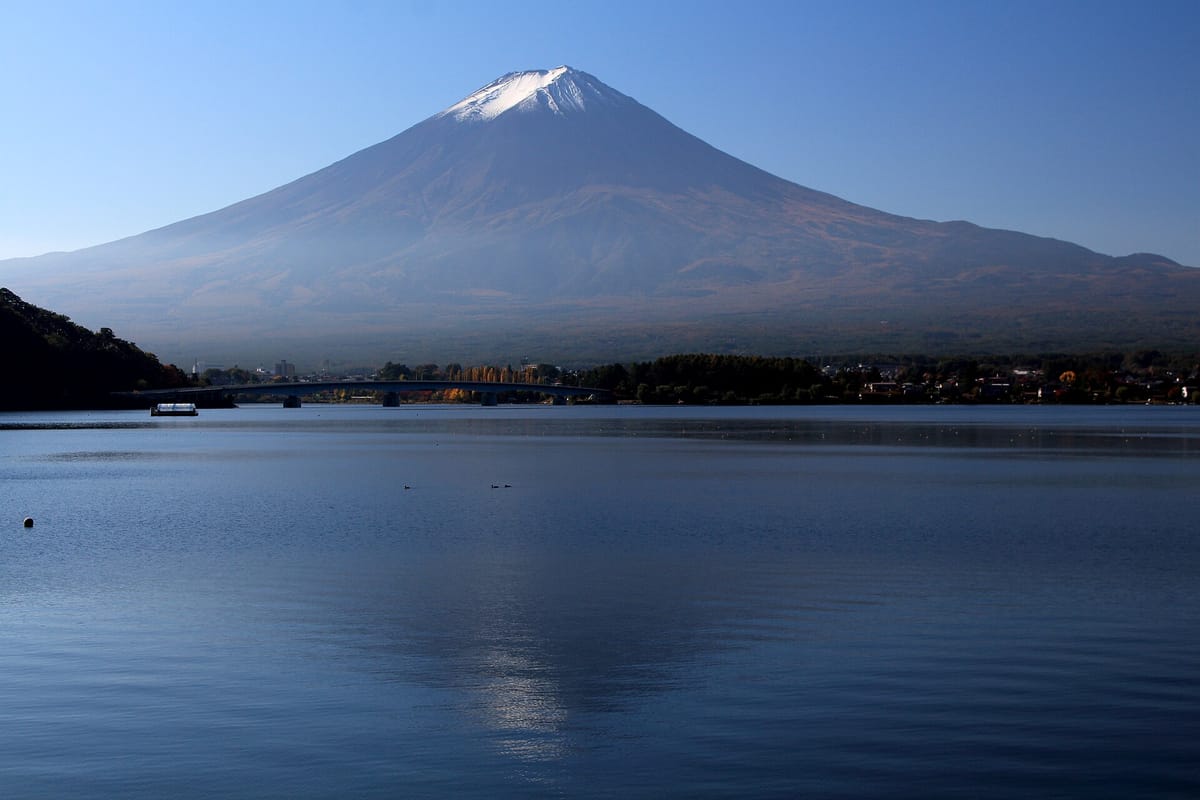
What makes it special is the angle. From the north shore you look across the water to the full, symmetrical cone of Fuji, and on still mornings the mountain is reflected in the lake, a sight called sakasa Fuji, upside-down Fuji. The area is part of the Fujisan World Heritage Site, and the lakes appear in woodblock prints and photographs that have made this the image of Japan for many people abroad.
It is also an easy place to practise travel Japanese. Almost everything you do involves a bus stop, a ticket counter or a rental shop, and the same few words, 周遊バス, のりば, 一日券, come up again and again.
Getting there: Kawaguchiko Station by train or bus
Kawaguchiko Station, Kawaguchiko-eki, is the terminus of the Fujikyū line, the railway that climbs from Ōtsuki on the JR Chūō Line to the foot of Fuji. The easiest train is the Fuji Excursion, Fuji Kaiyū in Japanese, a limited express that runs through from Shinjuku to Kawaguchiko without a change. Otherwise take a JR train to Ōtsuki and change to the Fujikyū line, which takes around an hour from there. One stop before the terminus is Fujisan Station in Fujiyoshida, the stop for the Chūreitō Pagoda area.
Highway buses from the Shinjuku Expressway Bus Terminal, Busta Shinjuku, and from Tokyo Station run to Kawaguchiko Station and often on to Fuji-Q Highland. Journey times are similar to the train, but traffic can add a lot at weekends. For both the train and the bus, reserve seats in advance for weekends, holidays and autumn.
| Japanese | Romaji | Meaning |
|---|---|---|
| 河口湖駅まで、指定席を一枚お願いします。 | Kawaguchiko-eki made, shiteiseki o ichimai onegai shimasu. | One reserved seat to Kawaguchiko Station, please. |
| 富士回遊は何番線から出ますか。 | Fuji Kaiyū wa nanbansen kara demasu ka. | Which platform does the Fuji Excursion leave from? |
| 大月で乗り換えですか。 | Ōtsuki de norikae desu ka. | Do I change at Ōtsuki? |
| 河口湖行きの高速バスのりばはどこですか。 | Kawaguchiko yuki no kōsoku basu noriba wa doko desu ka. | Where does the highway bus to Kawaguchiko leave from? |
| 帰りのバスも予約できますか。 | Kaeri no basu mo yoyaku dekimasu ka. | Can I book the bus back too? |
Around the lakes: ropeway, parks and the western lakes
The red loop bus follows the eastern and northern shores of Lake Kawaguchiko, past most of the sights. The green bus heads west to Lake Saiko, the Aokigahara forest and the lava caves, and the blue bus goes further to Lakes Shōjiko and Motosuko. With a day pass you can hop on and off all day.
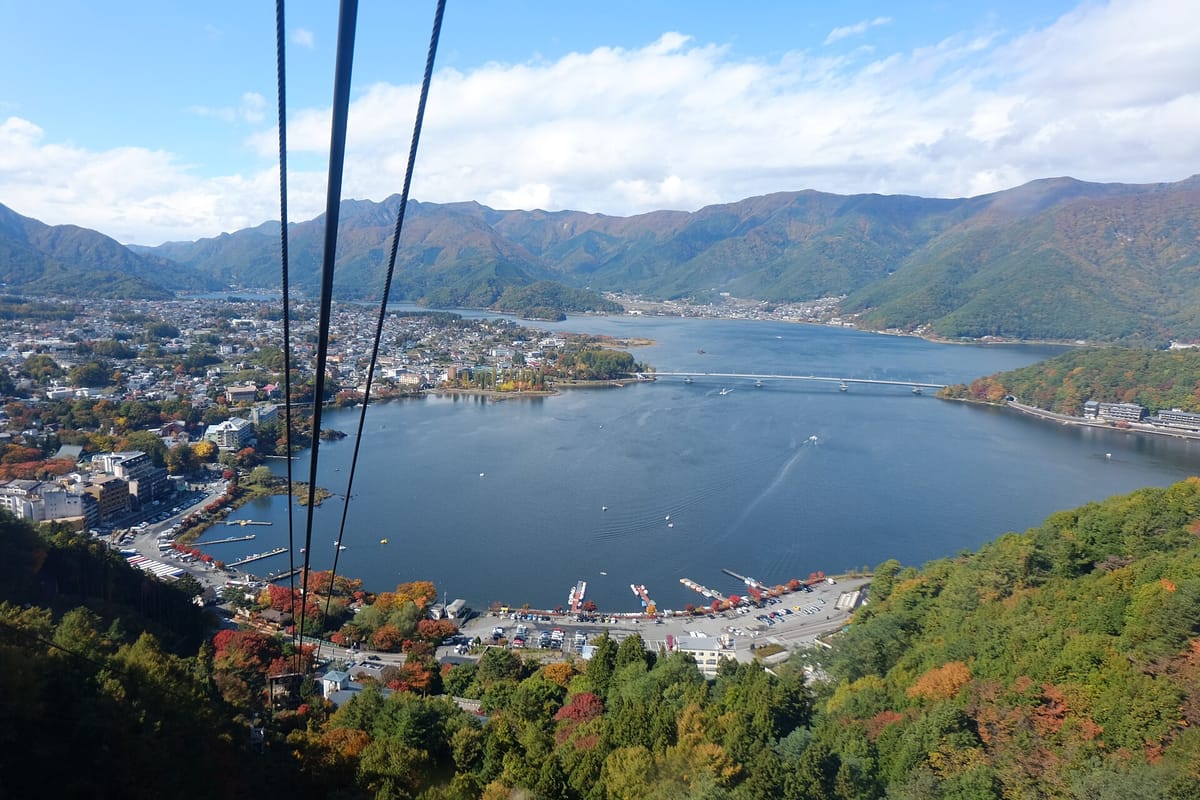
- Mt. Fuji Panoramic Ropeway (富士山パノラマロープウェイ): a short ride up Mount Tenjō to a viewpoint over the lake and Fuji. It is nicknamed Kachi Kachi Yama after a folk tale about a rabbit and a tanuki, and you will see statues of both at the top.
- Ōishi Park (大石公園): a free lakeside flower park on the north shore with one of the best lake-and-Fuji views; lavender in early summer, red kochia bushes in autumn.
- Itchiku Kubota Art Museum (久保田一竹美術館): kimono dyed by the artist Itchiku Kubota, including a series that turns a row of kimono into one landscape.
- Momiji Kairō (紅葉回廊): a maple-lined corridor on the north shore, lit up in the evenings during the autumn leaves festival.
- Sightseeing boat (遊覧船): a short cruise on the lake from the pier near the ropeway.
- Saiko Iyashi no Sato Nenba (西湖いやしの里根場): a rebuilt village of thatched-roof houses by Lake Saiko, now craft shops and small museums.
- Lake Motosuko (本栖湖): the westernmost, clearest lake, whose view of Fuji was printed on the back of the thousand-yen note before the 2024 redesign.
Words on the signs at the lake
Most signs you need at Kawaguchiko are about transport. のりば, noriba, is where you board, and it is often written in hiragana on bus stops and piers. 周遊バス, shūyū basu, marks the loop bus stops, and 遊覧船, yūransen, is the sightseeing boat. Rental shops near the station put up 貸自転車 or レンタサイクル for bicycles.
Place names follow a pattern too. 湖, ko, is lake, 公園, kōen, is park and 駅, eki, is station, so once you can read those three you can read half the bus stops.
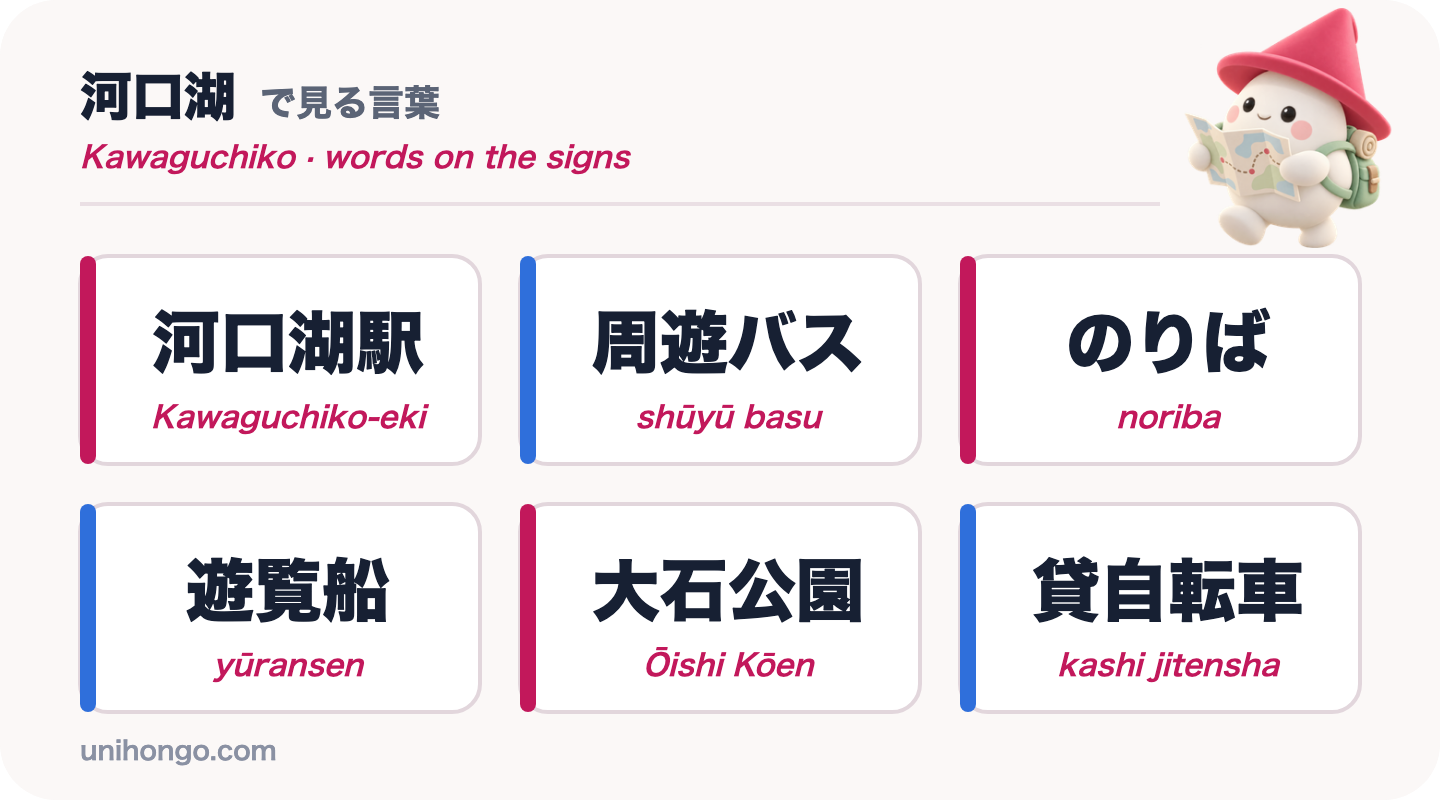
| Word | Reading | Meaning |
|---|---|---|
| 河口湖駅 | Kawaguchiko-eki | Kawaguchiko Station, the terminus |
| 周遊バス | shūyū basu | Sightseeing loop bus |
| のりば | noriba | Boarding point for buses or boats |
| 遊覧船 | yūransen | Sightseeing boat |
| 大石公園 | Ōishi Kōen | Ōishi Park on the north shore |
| 貸自転車 | kashi jitensha | Bicycles for rent |
| 一日券 | ichinichi-ken | One-day pass |
| 富士五湖 | Fuji Goko | The Fuji Five Lakes |
| 逆さ富士 | sakasa Fuji | Mount Fuji reflected upside down in the water |
Japanese for bus passes, bikes and boats
The loop bus passes are sold at the ticket counter at Kawaguchiko Station and through a mobile ticket, and they come in one- and two-day versions that also cover the buses to the western lakes. Keep the pass handy: you show it to the driver when you get off, and the driver will tell you if anything else is needed.
Bicycles are the other good way round Lake Kawaguchiko, especially along the flat north shore. Several shops near the station rent ordinary and electric-assist bikes by the hour or day. Ask about the return time, and whether you can leave the bike at another shop.
| Japanese | Romaji | Meaning |
|---|---|---|
| 周遊バスの二日券を二枚ください。 | Shūyū basu no futsuka-ken o nimai kudasai. | Two two-day loop bus passes, please. |
| この券で西湖にも行けますか。 | Kono ken de Saiko ni mo ikemasu ka. | Can I go to Lake Saiko with this pass too? |
| ロープウェイに行くには、どこで降りればいいですか。 | Rōpuwei ni iku ni wa, doko de orireba ii desu ka. | Where should I get off for the ropeway? |
| 電動自転車を一日借りたいです。 | Dendō jitensha o ichinichi karitai desu. | I'd like to rent an electric bike for the day. |
| 何時までに返せばいいですか。 | Nanji made ni kaeseba ii desu ka. | By what time should I bring it back? |
| 遊覧船の次の便は何時ですか。 | Yūransen no tsugi no bin wa nanji desu ka. | What time is the next sightseeing boat? |
Timing, weather and etiquette around the lakes
Fuji is a shy mountain. Plan your day around the morning, keep an indoor sight or an onsen in reserve for when it clouds over, and remember that Kawaguchiko is a town where people live and work as well as a view.
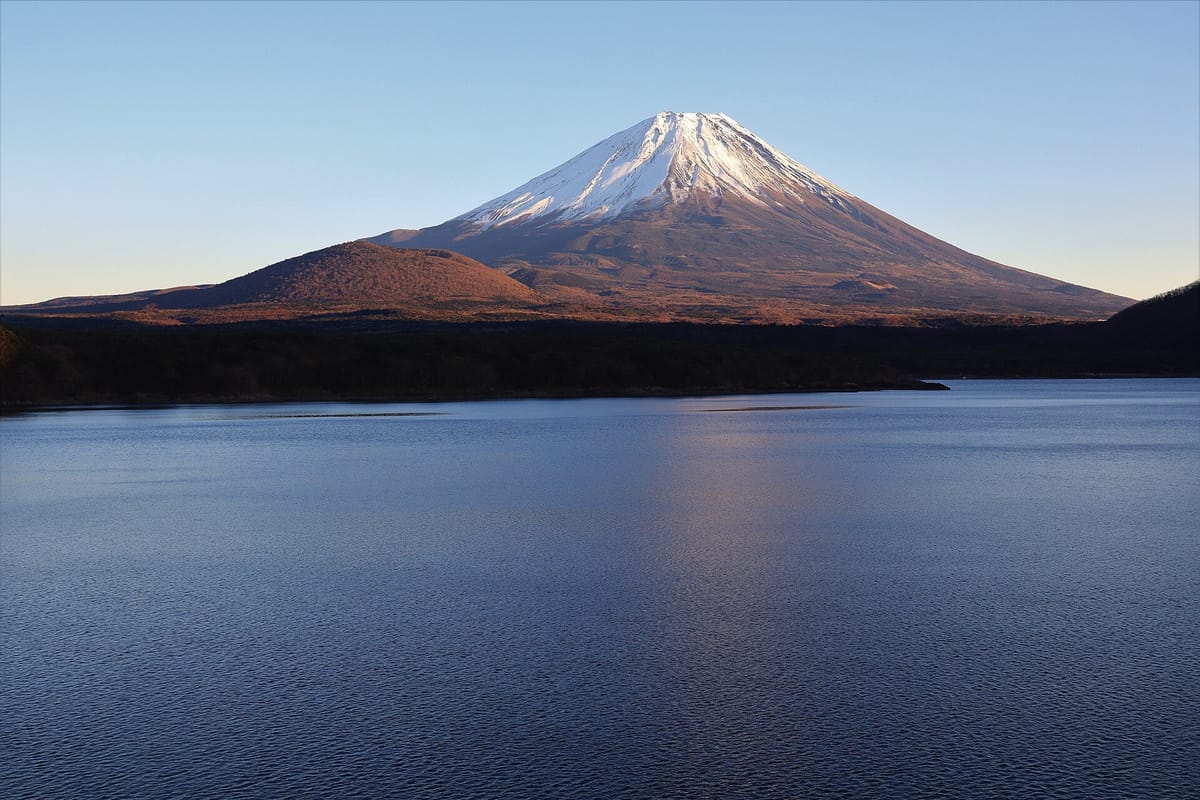
- Go early. Fuji is most often clear before mid-morning, and the loop buses fill up by late morning at weekends.
- Autumn leaves and the spring cherry blossoms bring the biggest crowds; weekdays in winter often have the clearest views and the fewest people.
- When taking photos, stay on the pavement, do not stand in the road or on private land, and keep entrances to shops and homes clear.
- Take your rubbish with you, as there are few public bins.
- In lakeside onsen, wash before you get in the bath and keep towels out of the water.
- It is colder here than in Tokyo, especially in the morning and evening, so bring a warm layer.
Practise the bus counter before you go
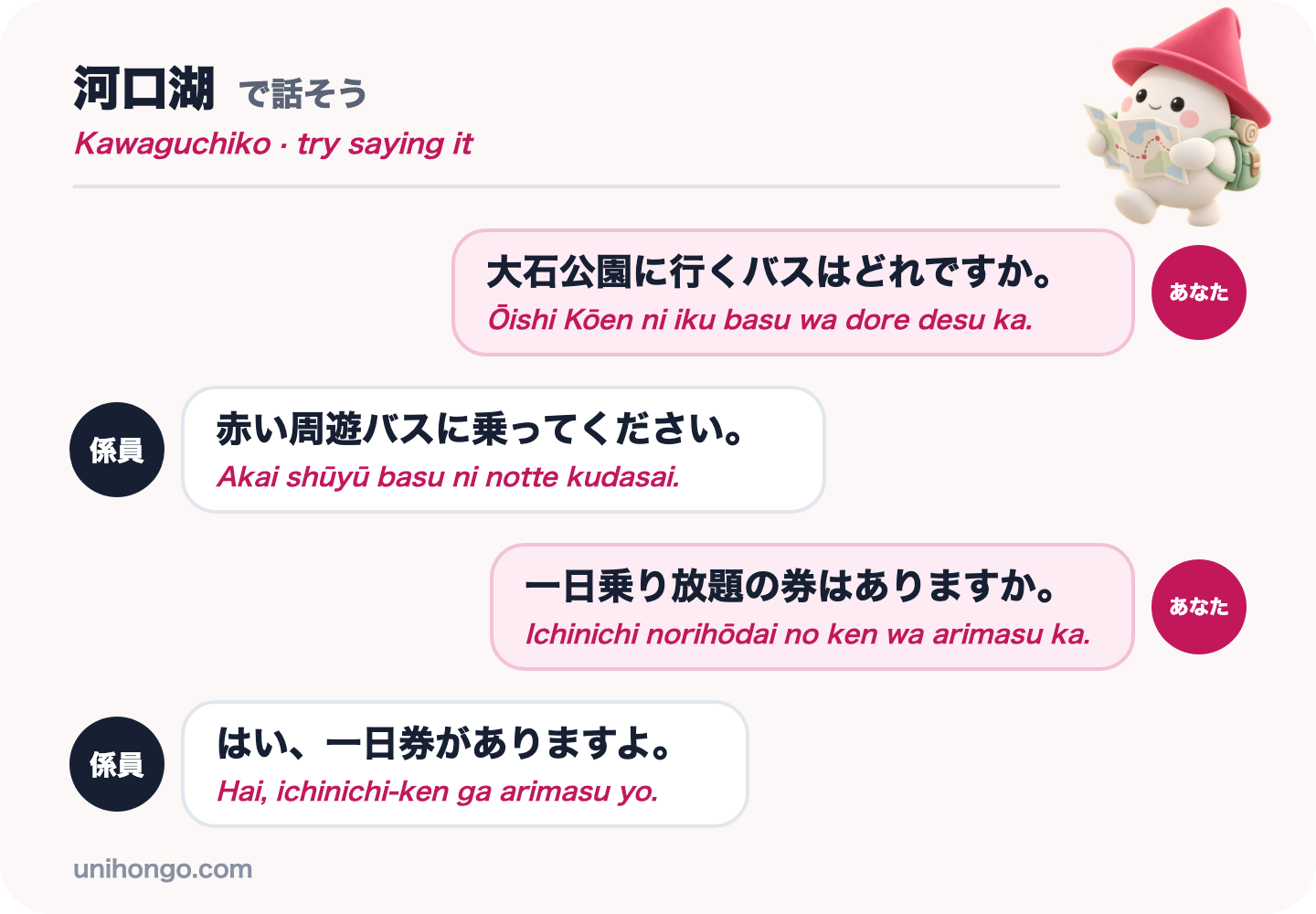
The first conversation of your visit will probably be at the bus counter outside Kawaguchiko Station. The staff answer the same questions all day, so they speak quickly and use colours and stop names rather than numbers. Listen for akai, red, midori, green, and aoi, blue.
Practise the four lines below until you can say them without reading. Then rehearse the scene out loud: in Unihongo, choose the Directions topic and ask your AI Sensei to play the counter staff, changing the destination each time.
| Japanese | Romaji | Meaning |
|---|---|---|
| 大石公園に行くバスはどれですか。 | Ōishi Kōen ni iku basu wa dore desu ka. | Which bus goes to Ōishi Park? |
| 赤い周遊バスに乗ってください。 | Akai shūyū basu ni notte kudasai. | Please take the red loop bus. |
| 一日乗り放題の券はありますか。 | Ichinichi norihōdai no ken wa arimasu ka. | Is there an unlimited-ride ticket for one day? |
| はい、一日券がありますよ。 | Hai, ichinichi-ken ga arimasu yo. | Yes, there is a one-day pass. |
Official information
Bus routes, pass prices, ropeway hours and festival dates change by season. Check the town's tourism site, the bus operator and the national tourism site before you go.