

Why Lake Tōya is worth a night
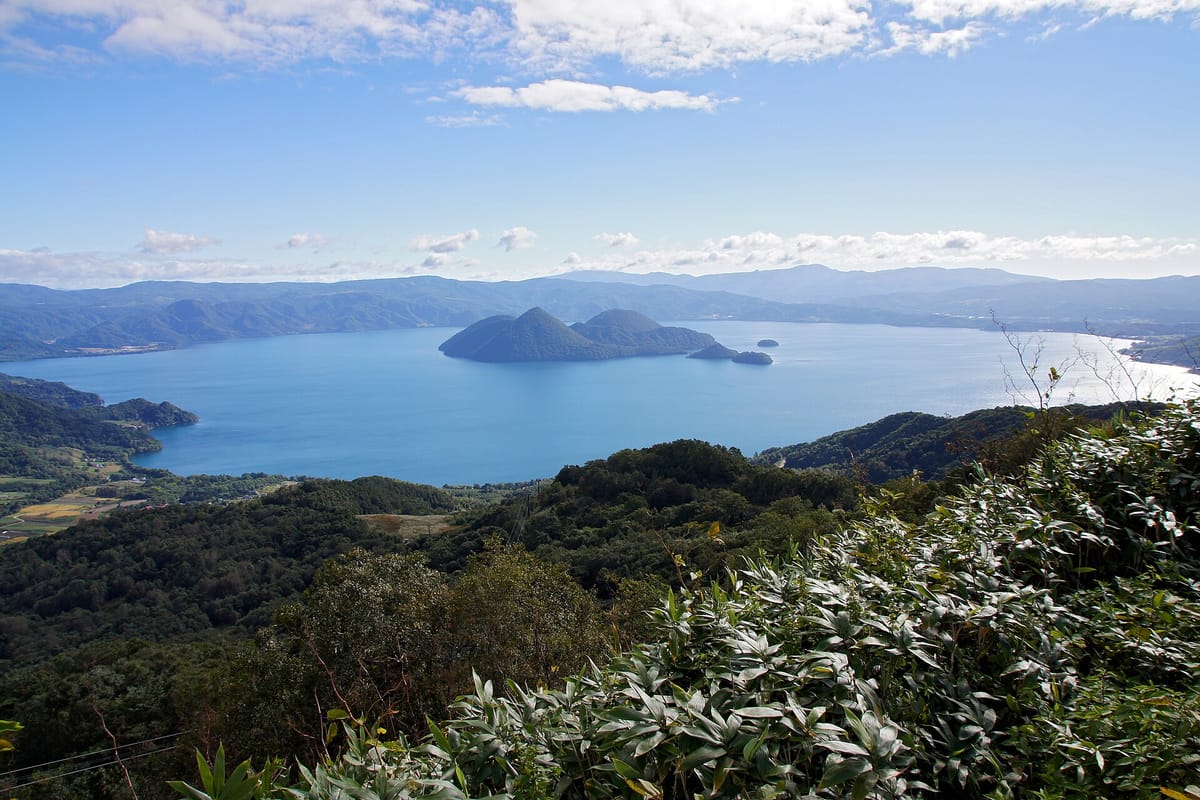
Lake Tōya is almost perfectly round, about ten kilometres across, and it is one of the largest caldera lakes in Japan. In its centre sit the Nakajima islands, covered in forest, and on its southern shore stand the volcanoes that still shape the landscape. Mount Usu has erupted repeatedly in modern times, most recently in 2000, when new craters opened close to the hot spring town. Next to it, Shōwa-shinzan pushed up out of farmland during the Second World War and is still steaming today.
The whole area is part of Shikotsu-Tōya National Park and the Tōya-Usu UNESCO Global Geopark, which means you can see volcanic history up close: walking trails lead past buildings and roads damaged in the 2000 eruption, left as they were as a lesson in living with a volcano. The lake also hosted the G8 Summit in 2008, at a hotel on the ridge above the water.
For most visitors, though, Tōya is about slowing down. Tōyako Onsen, the hot spring town on the southern shore, has hotels with lake-view baths, a lakeside promenade dotted with sculptures, and a nightly fireworks show from spring to autumn. It is a perfect overnight stop between Sapporo and Hakodate, and a friendly place to use Japanese at the boat pier, the ropeway and the hotel.
Getting there: Tōya Station and Tōyako Onsen
Tōya Station is on the JR line between Sapporo and Hakodate, served by the Hokuto limited express. From the station, local buses run to the Tōyako Onsen bus terminal in about twenty minutes. Direct buses also connect Sapporo and Tōyako Onsen, and some hotels run shuttles. By car, the town is about two hours from Sapporo and around an hour and a half from New Chitose Airport.
Within the area, buses run from Tōyako Onsen to the Usuzan Ropeway and Shōwa-shinzan in about fifteen minutes, and some continue to Tōya Station. The cruise boats leave from a pier in the middle of the hot spring town. A rental car or bicycle makes it easy to loop round the lake, which takes around an hour by car.
| Japanese | Romaji | Meaning |
|---|---|---|
| 洞爺湖温泉行きのバスはどこですか。 | Tōyako Onsen-yuki no basu wa doko desu ka. | Where is the bus to Tōyako Onsen? |
| 昭和新山へ行くバスはありますか。 | Shōwa-shinzan e iku basu wa arimasu ka. | Is there a bus to Shōwa-shinzan? |
| ロープウェイ乗り場までどのくらいですか。 | Rōpuwei noriba made dono kurai desu ka. | How far is it to the ropeway station? |
| 遊覧船の乗り場はどこですか。 | Yūransen no noriba wa doko desu ka. | Where does the sightseeing boat leave from? |
| 洞爺駅に戻るバスは何時ですか。 | Tōya-eki ni modoru basu wa nanji desu ka. | What time is the bus back to Tōya Station? |
The lake, Mount Usu and Shōwa-shinzan: what you will see
The lake cruise is the classic way to see Tōya from the water. Boats styled like small castles leave from Tōyako Onsen and circle towards the Nakajima islands. From about late April to the end of October they stop at Nakajima, where forest trails wind through woods home to Ezo deer; in winter the boats cruise without landing. Allow time on the island and check the time of the boat back.
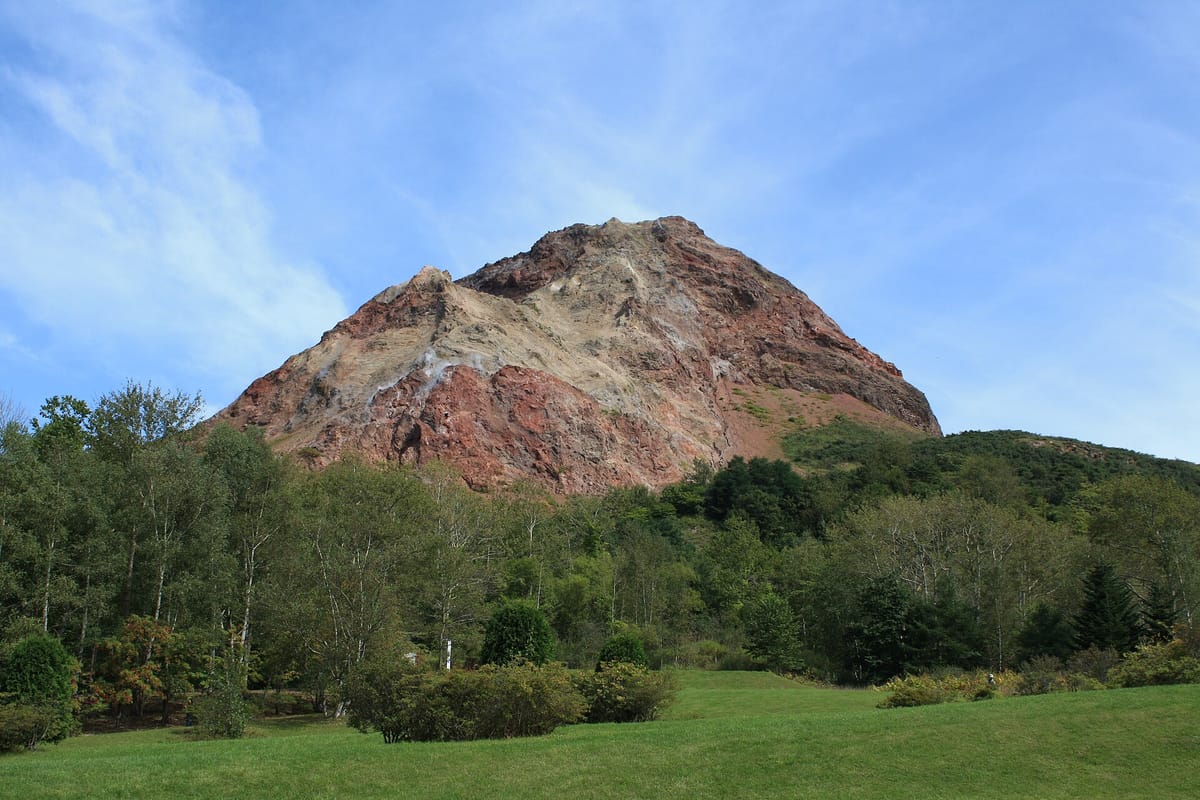
South of the lake, the Usuzan Ropeway climbs Mount Usu from beside Shōwa-shinzan. From the top, observation decks look out over Lake Tōya on one side and into the crater basin on the other, with the Pacific coast in the distance. At the foot of the ropeway, Shōwa-shinzan's red-brown dome rises above the car park. A local postmaster, Masao Mimatsu, recorded its growth from farmland during the war, and a statue of him stands nearby.
Closer to the hot spring town, walking trails through the 2000 eruption area pass craters, collapsed roads and damaged buildings left in place. These trails usually close in winter. In the evening, walk the lakeside promenade, find a spot, and wait for the fireworks.
- Lake cruise to Nakajima: landing on the island from about late April to the end of October.
- Usuzan Ropeway: to observation decks over the lake and the crater basin.
- Shōwa-shinzan: the steaming mountain that rose in the 1940s.
- 2000 eruption trails: craters and preserved damage near Tōyako Onsen, usually closed in winter.
- Tōyako Onsen: hot spring hotels, footbaths and the lakeside promenade.
- Tōyako Long-Run Fireworks: every night from late April to the end of October.
Signs around the lake
The name 洞爺湖 is read Tōyako: 湖, ko, means lake, and you will see it on every map and bus. Remember that in Japanese the lake word comes after the name, so Lake Tōya is Tōyako and Lake Tōya Hot Spring is 洞爺湖温泉, Tōyako Onsen.
The volcano names use 山, which is read zan or san in compounds and yama on its own. 有珠山 is Usuzan, Mount Usu, and 昭和新山 is Shōwa-shinzan. At the boat pier, look for 乗船券, jōsenken, boat ticket, and 乗り場, noriba, boarding place.
| Word | Reading | Meaning |
|---|---|---|
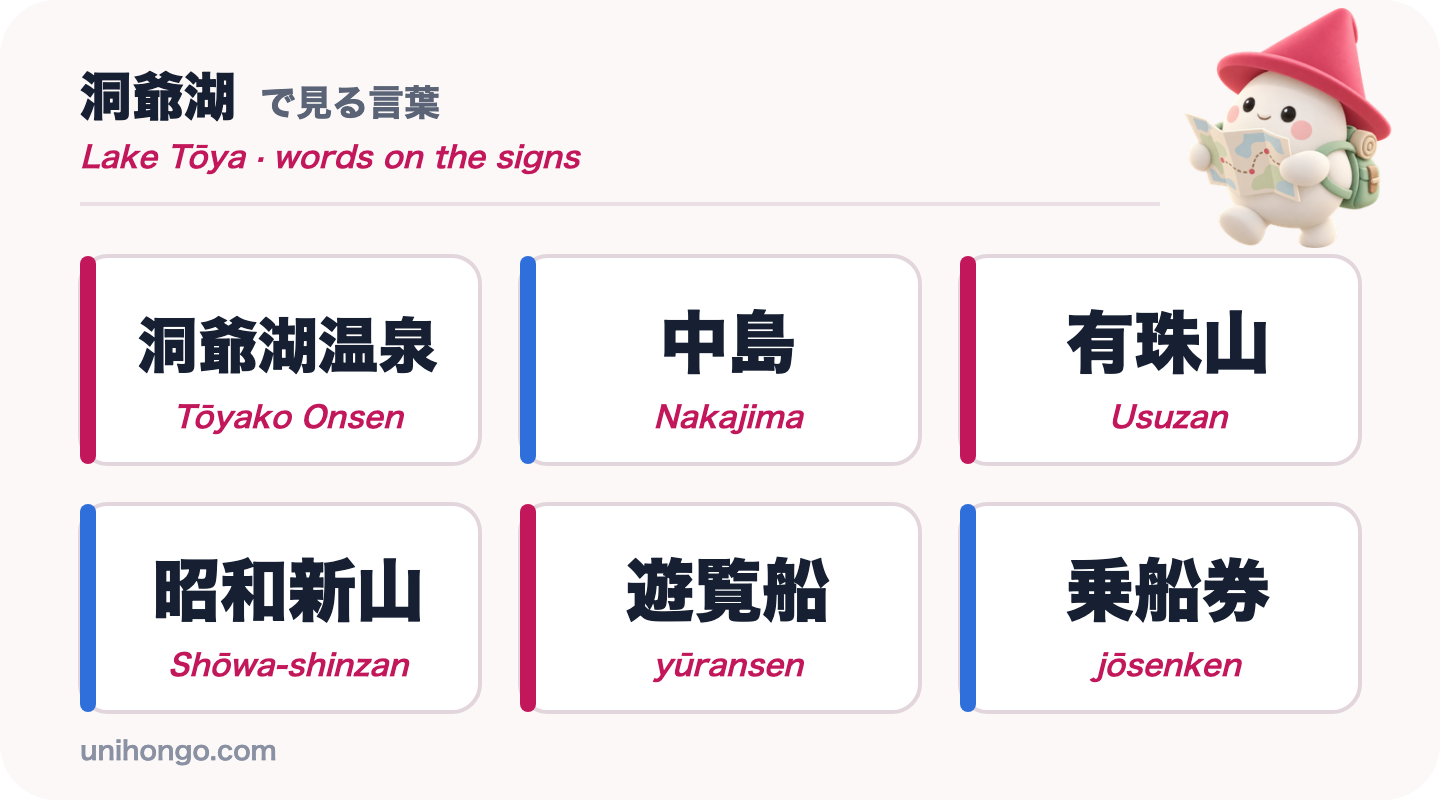
| 洞爺湖温泉 | Tōyako Onsen | The hot spring town on the lake |
| 中島 | Nakajima | The islands in the middle of the lake |
| 有珠山 | Usuzan | Mount Usu, the active volcano |
| 昭和新山 | Shōwa-shinzan | The new mountain of the Shōwa era |
| 遊覧船 | yūransen | Sightseeing boat |
| 乗船券 | jōsenken | Boat ticket |
| 展望台 | tenbōdai | Observation deck |
| 火口 | kakō | Volcanic crater |
| 花火 | hanabi | Fireworks |
Japanese for the lake cruise and the fireworks
Buying a cruise ticket is simple, but the questions that matter are about the island and the time: does this boat stop at Nakajima, how long can I stay, and when is the last boat back? The crew and ticket staff are used to these questions, and the timetable posted at the pier gives the answers in numbers you can read.
In the evening, the question changes to where to watch the fireworks. Hotel staff are the best people to ask, since many rooms and some baths face the lake.
| Japanese | Romaji | Meaning |
|---|---|---|
| 中島に上陸するコースの乗船券を二枚ください。 | Nakajima ni jōriku suru kōsu no jōsenken o nimai kudasai. | Two tickets for the cruise that lands at Nakajima, please. |
| 島にはどのくらいいられますか。 | Shima ni wa dono kurai iraremasu ka. | How long can we stay on the island? |
| 最終の船は何時ですか。 | Saishū no fune wa nanji desu ka. | What time is the last boat? |
| 花火はどこから見るのがいいですか。 | Hanabi wa doko kara miru no ga ii desu ka. | Where is a good place to watch the fireworks? |
| 今日は花火がありますか。 | Kyō wa hanabi ga arimasu ka. | Are there fireworks today? |
| 湖が見えるお風呂はありますか。 | Mizuumi ga mieru o-furo wa arimasu ka. | Is there a bath with a view of the lake? |
Seasons, volcano safety and practical tips
Lake Tōya is pleasant all year, but each season brings different options.
- Late April to October: fireworks every night, and cruises that land on Nakajima.
- Summer is mild and busy; book lake-view rooms early for weekends and holidays.
- Autumn colours usually peak around mid-October on the hills around the lake.
- Winter: the lake does not freeze, cruises run without landing, and some eruption trails are closed.
- Mount Usu is an active volcano; follow any warnings and trail closures posted by the town.
- Bring a light jacket for the evening fireworks, even in summer: it gets cool by the lake.
Practise the boat trip before you go
On the cruise, the key questions are whether you can get off at the island and how to get back. Practise the four lines below until you can say them without looking, and notice yorimasu ka, does it stop at, which you can use for any boat, bus or train.
Then practise with someone who answers back. In Unihongo, choose the Sightseeing topic and ask your AI Sensei to play a crew member on the Lake Tōya cruise, or choose Ryokan Stay to rehearse checking in at a lakeside hotel. Saying the lines once before you go makes the real exchange quick and easy.
| Japanese | Romaji | Meaning |
|---|---|---|
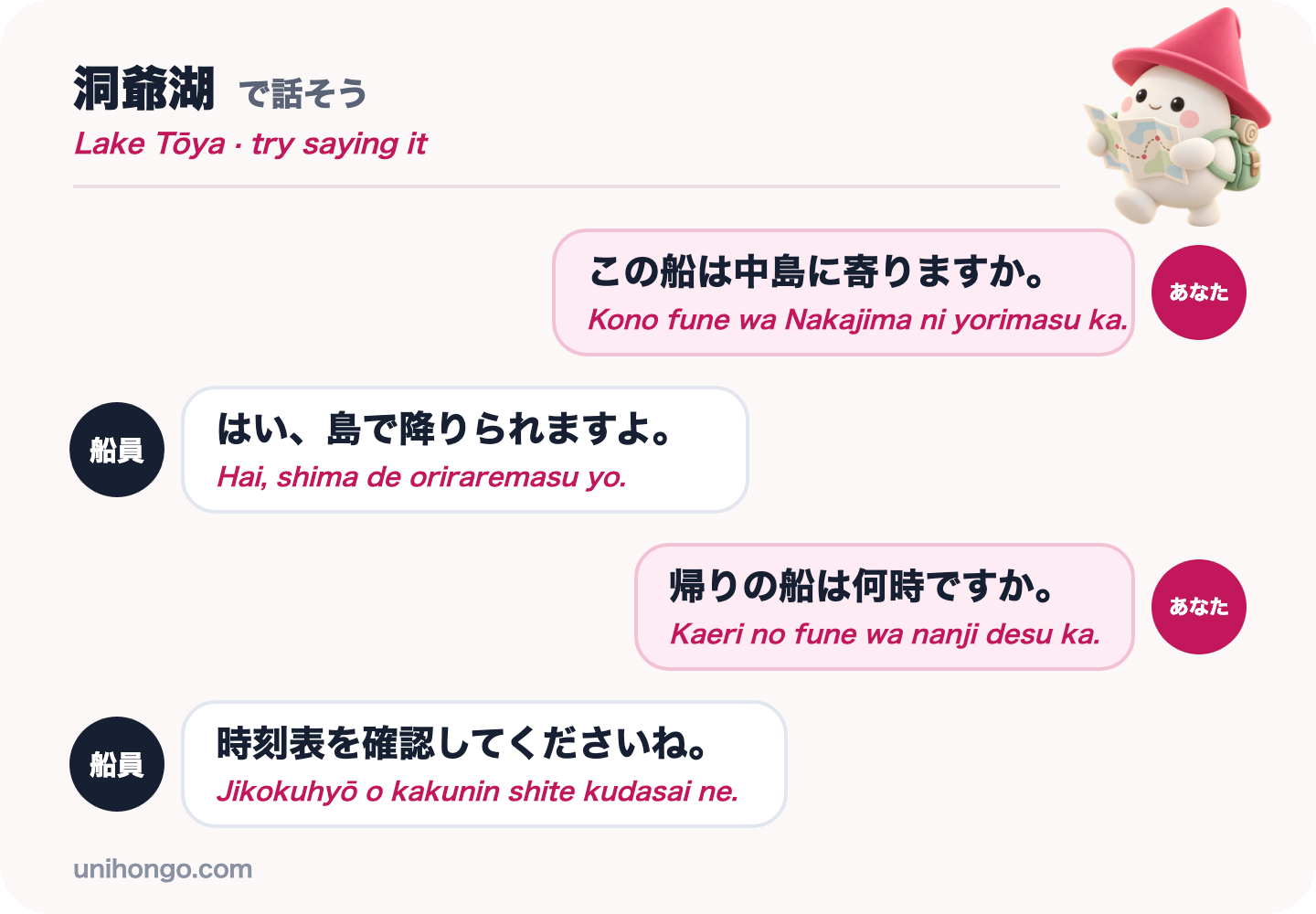
| この船は中島に寄りますか。 | Kono fune wa Nakajima ni yorimasu ka. | Does this boat stop at Nakajima? |
| はい、島で降りられますよ。 | Hai, shima de oriraremasu yo. | Yes, you can get off at the island. |
| 帰りの船は何時ですか。 | Kaeri no fune wa nanji desu ka. | What time is the boat back? |
| 時刻表を確認してくださいね。 | Jikokuhyō o kakunin shite kudasai ne. | Please check the timetable. |
Official information
Fireworks dates, cruise schedules, ropeway hours and trail closures change with the seasons. Check the hot spring tourist association, the cruise operator and the ropeway before you go.