

Buying tickets at the entrance
Tickets are sold at a ticket window, kippu uriba or chiketto uriba, or at a ticket machine. Entry is nyūen for a zoo and nyūkan for an aquarium, so the fee is nyūenryō or nyūkanryō. Prices are set by age band, such as adults, secondary school pupils and younger children, and very young children are often free. Age bands and prices differ between facilities, so read the board.
Many places also sell online tickets, and some sell tickets at convenience stores. If you plan to leave for lunch and come back, ask about re-entry, sainyūen or sainyūkan, before you go out; some facilities stamp your hand or ticket, and some do not allow it.
| Japanese | Romaji | Meaning |
|---|---|---|
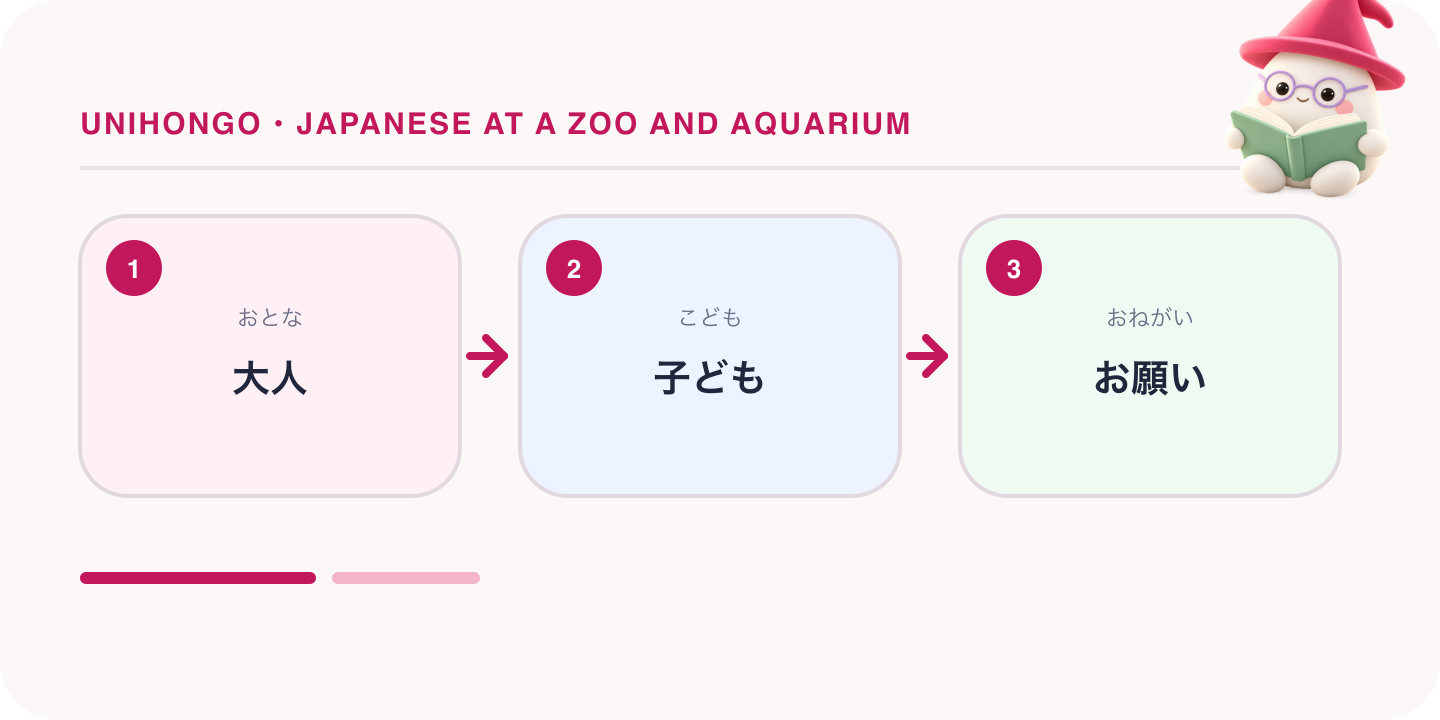
| 大人二枚と子ども一枚お願いします。 | Otona nimai to kodomo ichimai onegai shimasu. | Two adults and one child, please. |
| この子は何歳から料金がかかりますか。 | Kono ko wa nansai kara ryōkin ga kakarimasu ka. | From what age do children need to pay? |
| 再入園はできますか。 | Sainyūen wa dekimasu ka. | Can we come back in later? |
| 年間パスポートはありますか。 | Nenkan pasupōto wa arimasu ka. | Do you have an annual pass? |
| 園内マップをもらえますか。 | Ennai mappu o moraemasu ka. | Could I have a map of the zoo? |
| 閉園は何時ですか。 | Heien wa nanji desu ka. | What time does the zoo close? |
Feeding times, shows and talks
The best parts of a visit are usually scheduled. Near the entrance you will find a board or leaflet listing today's events, kyō no ibento, with times and places. Feeding is esa or esayari, and many zoos turn it into a short talk by a keeper, shiikuin, explaining the animal. Some call it mogumogu taimu; aquariums may write ogyo taimu for fish feeding.
Aquariums often have dolphin or sea lion shows, iruka shō and ashika shō, in an outdoor stadium. Seats near the front can be marked as a splash area, and the sign is serious: you may get soaked. Shows can be cancelled or changed for weather or the animals' condition, which is written as chūshi.
| Japanese | Romaji | Meaning |
|---|---|---|
| ペンギンのエサやりは何時からですか。 | Pengin no esayari wa nanji kara desu ka. | What time is the penguin feeding? |
| イルカショーはどこでやっていますか。 | Iruka shō wa doko de yatte imasu ka. | Where is the dolphin show held? |
| この席は濡れますか。 | Kono seki wa nuremasu ka. | Will we get wet in these seats? |
| 今日のショーは中止ですか。 | Kyō no shō wa chūshi desu ka. | Is today's show cancelled? |
| Japanese | Reading | Meaning |
|---|---|---|
| 本日のイベント | honjitsu no ibento | Today's events |
| エサの時間 | esa no jikan | Feeding time |
| もぐもぐタイム | mogumogu taimu | Feeding time (playful name) |
| 飼育員のお話 | shiikuin no ohanashi | Keeper talk |
| イルカショー | iruka shō | Dolphin show |
| アシカショー | ashika shō | Sea lion show |
| 水がかかる可能性があります | mizu ga kakaru kanōsei ga arimasu | You may get splashed |
| 中止 | chūshi | Cancelled |
| 整理券 | seiriken | Numbered ticket for limited events |
Animal words for zoo signs
Enclosure signs usually give the animal's name in katakana, which makes them easier to read than you might expect once you know the pattern. Animal names in scientific or formal use are often written in katakana even when they have kanji, so a lion is ライオン and a giraffe is キリン.
Many signs also show a status: an animal may be resting indoors, in its bedroom, or not on display that day. Kyūsokuchū means resting, and naishitsu means the indoor room.
| Animal | Reading | English |
|---|---|---|
| ライオン | raion | Lion |
| トラ | tora | Tiger |
| ゾウ | zō | Elephant |
| キリン | kirin | Giraffe |
| パンダ | panda | Panda |
| サル | saru | Monkey |
| ゴリラ | gorira | Gorilla |
| クマ | kuma | Bear |
| カバ | kaba | Hippopotamus |
| ウサギ | usagi | Rabbit |
| 展示休止中 | tenji kyūshichū | Not on display at the moment |
| 休息中 | kyūsokuchū | Resting |
Sea creature words for aquarium tanks
Aquarium labels follow the same katakana habit. Some creatures are famous favourites in Japan, such as the ōsanshōuo, the giant salamander, and the chinanago, garden eels, and jellyfish exhibits, kurage, are hugely popular. Touch pools, tacchi pūru or fureai kōnā, let children touch starfish or sea cucumbers under supervision, with their own rules about washing hands and handling gently.
| Japanese | Romaji | Meaning |
|---|---|---|
| 触ってもいいですか。 | Sawatte mo ii desu ka. | Is it all right to touch it? |
| 優しく触ってね。 | Yasashiku sawatte ne. | Touch it gently, OK? |
| 手洗い場はどこですか。 | Tearaiba wa doko desu ka. | Where can we wash our hands? |
| Creature | Reading | English |
|---|---|---|
| イルカ | iruka | Dolphin |
| アシカ | ashika | Sea lion |
| アザラシ | azarashi | Seal |
| ペンギン | pengin | Penguin |
| サメ | same | Shark |
| エイ | ei | Ray |
| クラゲ | kurage | Jellyfish |
| タコ | tako | Octopus |
| ヒトデ | hitode | Starfish |
| チンアナゴ | chinanago | Garden eel |
The rules on the signs
Rule signs at zoos and aquariums are short and polite, usually ending in kudasai, please. They are worth knowing, because staff do enforce them, and the reasons are mostly the animals' wellbeing: tapping the glass and flashes stress animals, and outside food can make them ill.
Keep an eye out for signs about restricted areas and drones, and for facilities where strollers are not allowed on certain paths or stairs.
| Sign | Reading | Meaning |
|---|---|---|
| ガラスをたたかないでください | garasu o tatakanaide kudasai | Please do not tap the glass |
| フラッシュ撮影禁止 | furasshu satsuei kinshi | No flash photography |
| 撮影禁止 | satsuei kinshi | No photography |
| エサを与えないでください | esa o ataenaide kudasai | Please do not feed the animals |
| 柵を越えないでください | saku o koenaide kudasai | Please do not climb over the fence |
| 手を入れないでください | te o irenaide kudasai | Do not put your hands inside |
| 立入禁止 | tachiiri kinshi | No entry |
| 順路 | junro | Suggested route |
Visiting with children
Japanese zoos and aquariums are built with families in mind. Many rent buggies, bebīkā, near the entrance, and have nursing rooms, junyūshitsu, and baby-changing tables, omutsu kōkandai. Maps usually mark these with pictograms, but it helps to be able to ask.
Children will hear their own words for animals, and Japanese parents often use cute forms: zō-san for an elephant, kirin-san for a giraffe. Hearing and repeating these is a gentle way for children to pick up Japanese too.
| Japanese | Romaji | Meaning |
|---|---|---|
| ベビーカーを借りられますか。 | Bebīkā o kariraremasu ka. | Can we rent a buggy? |
| 授乳室はどこですか。 | Junyūshitsu wa doko desu ka. | Where is the nursing room? |
| おむつ替えができる場所はありますか。 | Omutsukae ga dekiru basho wa arimasu ka. | Is there somewhere to change a nappy? |
| お弁当を食べられる場所はありますか。 | Obentō o taberareru basho wa arimasu ka. | Is there somewhere we can eat a packed lunch? |
| 見て、ゾウさんがいるよ。 | Mite, zō-san ga iru yo. | Look, there's an elephant. |
| もうすぐペンギンのごはんだよ。 | Mōsugu pengin no gohan da yo. | It's nearly the penguins' dinner time. |
When something goes wrong: lost children and lost items
Busy weekends and holidays make it easy for children to wander off. A lost child is maigo, and facilities usually have a place where lost children are looked after, often at the information desk, which may be called the maigo sentā. Go to the nearest staff member straight away and describe the child's age, clothes and name clearly.
For a lost bag, phone or ticket, ask at the information desk, infomēshon, and describe the item and where you last had it. If you realise after leaving, call the facility with the same description.
| Japanese | Romaji | Meaning |
|---|---|---|
| 子どもが迷子になりました。 | Kodomo ga maigo ni narimashita. | My child is lost. |
| 五歳の男の子で、青い帽子をかぶっています。 | Gosai no otoko no ko de, aoi bōshi o kabutte imasu. | He's a five-year-old boy wearing a blue hat. |
| 最後に見たのはペンギンのところです。 | Saigo ni mita no wa pengin no tokoro desu. | I last saw him by the penguins. |
| 迷子センターはどこですか。 | Maigo sentā wa doko desu ka. | Where is the lost-child centre? |
| 財布を落としてしまいました。 | Saifu o otoshite shimaimashita. | I've dropped my wallet. |
| 落とし物は届いていませんか。 | Otoshimono wa todoite imasen ka. | Has anything been handed in? |