

Why Shinjuku Gyoen is worth an afternoon
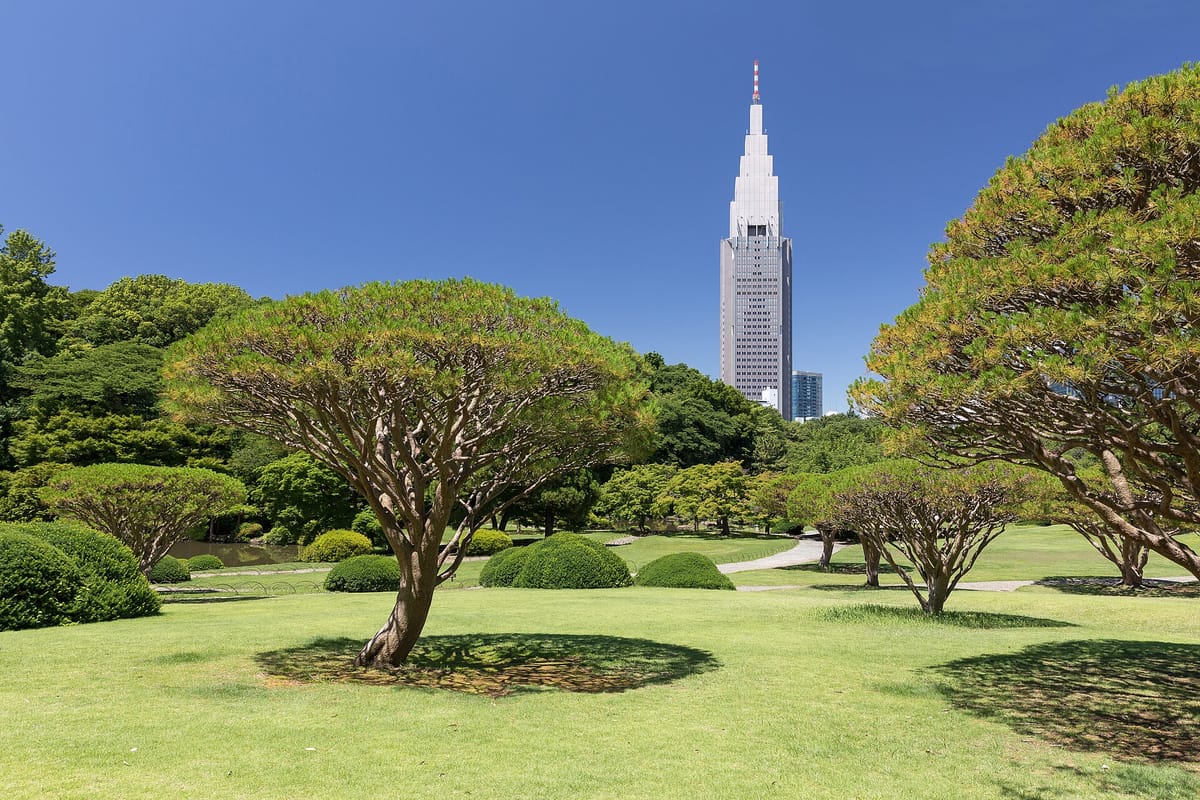
Most Tokyo parks are free and loose; Shinjuku Gyoen is neither, and that is its charm. It is a national garden run by the Ministry of the Environment, with an entry fee, gate hours, gardeners everywhere and rules that keep it quiet. The result is a place where office workers read on benches, families spread picnic sheets on huge lawns, and the skyscrapers of Shinjuku and the spire of the Docomo tower look like scenery painted behind the trees.
Its history explains its variety. In 1590 Tokugawa Ieyasu gave the land to the Naitō family, whose Edo residence had a garden here. After the Meiji Restoration it became an agricultural experiment station, then an imperial botanical garden, and between 1902 and 1906 it was redesigned to plans by Henri Martinet of the Versailles horticultural school. Air raids in 1945 destroyed most of it, but it was rebuilt to its 1906 layout and opened to the public as a national garden on 21 May 1949.
For a Japanese learner, it is a friendly place to start reading. The gates, the gardens and the facilities are all named in a handful of kanji that you will meet again in every park, zoo and temple in Japan: 門 for gate, 庭園 for garden, 園 for the grounds themselves.
Getting there: three gates and which station to use
Shinjuku Gyoen has three entrance gates, and choosing the right one saves a long walk round the outside wall. The Shinjuku Gate, Shinjuku-mon, on the north-west side, is about ten minutes on foot from the south exit of JR Shinjuku Station and about five minutes from Shinjuku-gyoemmae Station (exit 1) on the Tokyo Metro Marunouchi Line, or from Shinjuku-sanchōme Station on the Fukutoshin and Toei Shinjuku lines.
The Ōkido Gate, Ōkido-mon, on the east side, is about five minutes from exit 2 of Shinjuku-gyoemmae Station and is the closest gate to the greenhouse. The Sendagaya Gate, Sendagaya-mon, on the south side, is about five minutes from JR Sendagaya Station on the Chūō-Sōbu local line and from Kokuritsu-kyōgijō Station on the Toei Ōedo Line. You can enter by one gate and leave by another, which makes a pleasant walk through the garden from Shinjuku towards Sendagaya.
The station name is a good reading exercise: 新宿御苑前 is Shinjuku-gyoemmae, in front of Shinjuku Gyoen, with 前, mae, meaning in front of. You will see the same pattern in dozens of station names across Japan.
| Japanese | Romaji | Meaning |
|---|---|---|
| 新宿御苑に行きたいんですが、何番出口ですか。 | Shinjuku Gyoen ni ikitai n desu ga, nanban deguchi desu ka. | I want to go to Shinjuku Gyoen. Which exit number is it? |
| 新宿門はどちらですか。 | Shinjuku-mon wa dochira desu ka. | Which way is the Shinjuku Gate? |
| 大木戸門まで歩いて何分くらいですか。 | Ōkido-mon made aruite nanpun kurai desu ka. | About how many minutes' walk is it to the Ōkido Gate? |
| 丸ノ内線のホームはどこですか。 | Marunouchi-sen no hōmu wa doko desu ka. | Where is the Marunouchi Line platform? |
| 千駄ヶ谷門から出られますか。 | Sendagaya-mon kara deraremasu ka. | Can I leave by the Sendagaya Gate? |
What you will see: three gardens, a greenhouse and a Taiwanese pavilion
A relaxed loop of the whole garden takes about two hours, longer if you stop for tea. The garden is a little over three kilometres round, so you do not need to plan a route: follow the paths from lawn to pond and the three styles will come to you in turn.
The Western gardens lie in the north and the centre, and the Japanese garden in the south, strung along a chain of ponds. From the formal garden a long line of sight, the vista line designed by Martinet, runs straight across the landscape garden, and this is the view the garden is built around.
- Seikei-shiki teien, the French formal garden: symmetrical rose beds and eight rows of plane trees that turn gold in autumn.
- Fūkei-shiki teien, the English landscape garden: open lawns ringed by tulip trees, Himalayan cedars and cherry trees, the favourite picnic spot.
- Nihon teien, the Japanese traditional garden: a stroll garden round the Upper Pond, with stone lanterns, bridges and seasonal flowers.
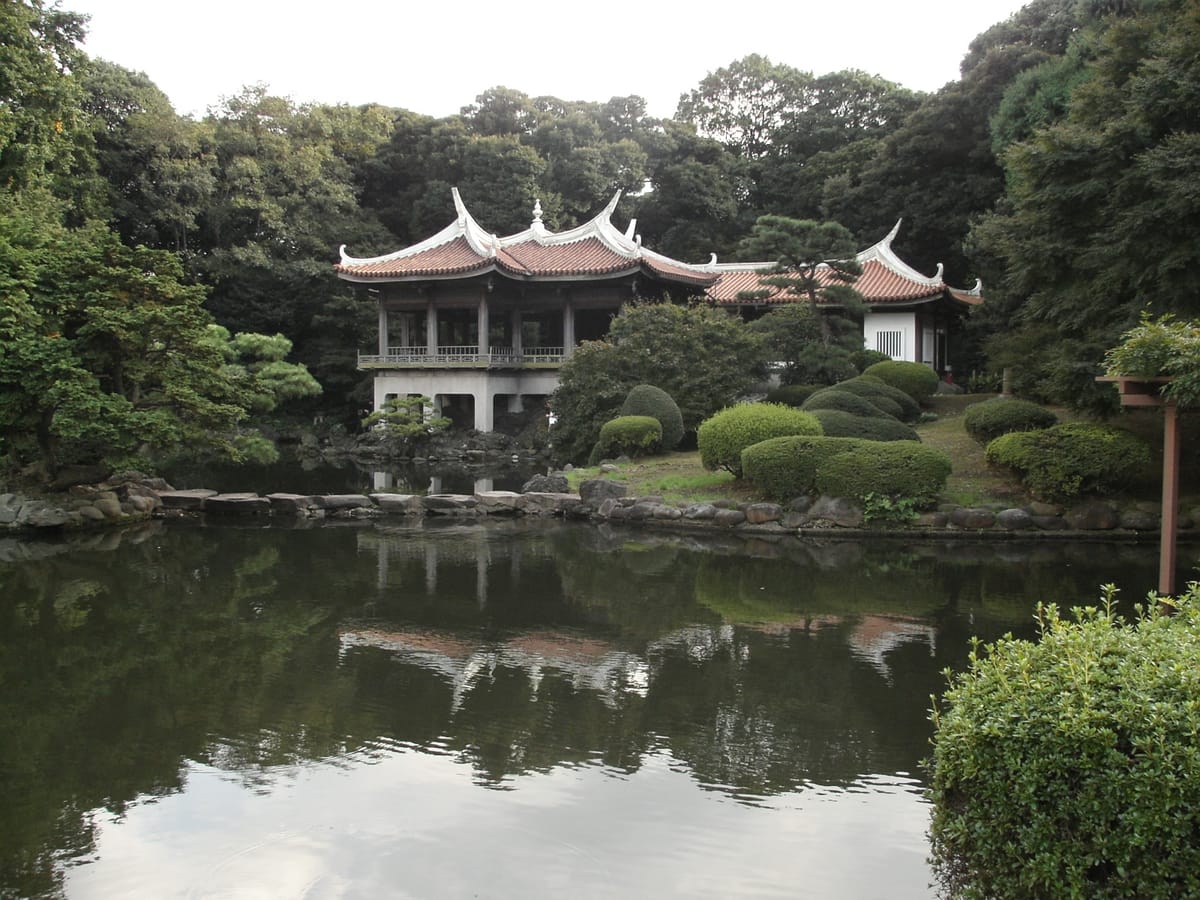
- Kyū-Goryōtei: a Taiwanese-style pavilion given in 1927 for the wedding of Crown Prince Hirohito, one of the few buildings to survive the 1945 air raids.
- Onshitsu, the greenhouse: a glass house near the Ōkido Gate with tropical and subtropical plants, Okinawan flora and endangered species.
- Kyū-Gokyūsho: the 1896 wooden rest house of the imperial family, now an Important Cultural Property.
- Shōtentei: a tea house in the Japanese garden, where you can sit with matcha and a Japanese sweet overlooking the water.
Gates, gardens and the words on the signs
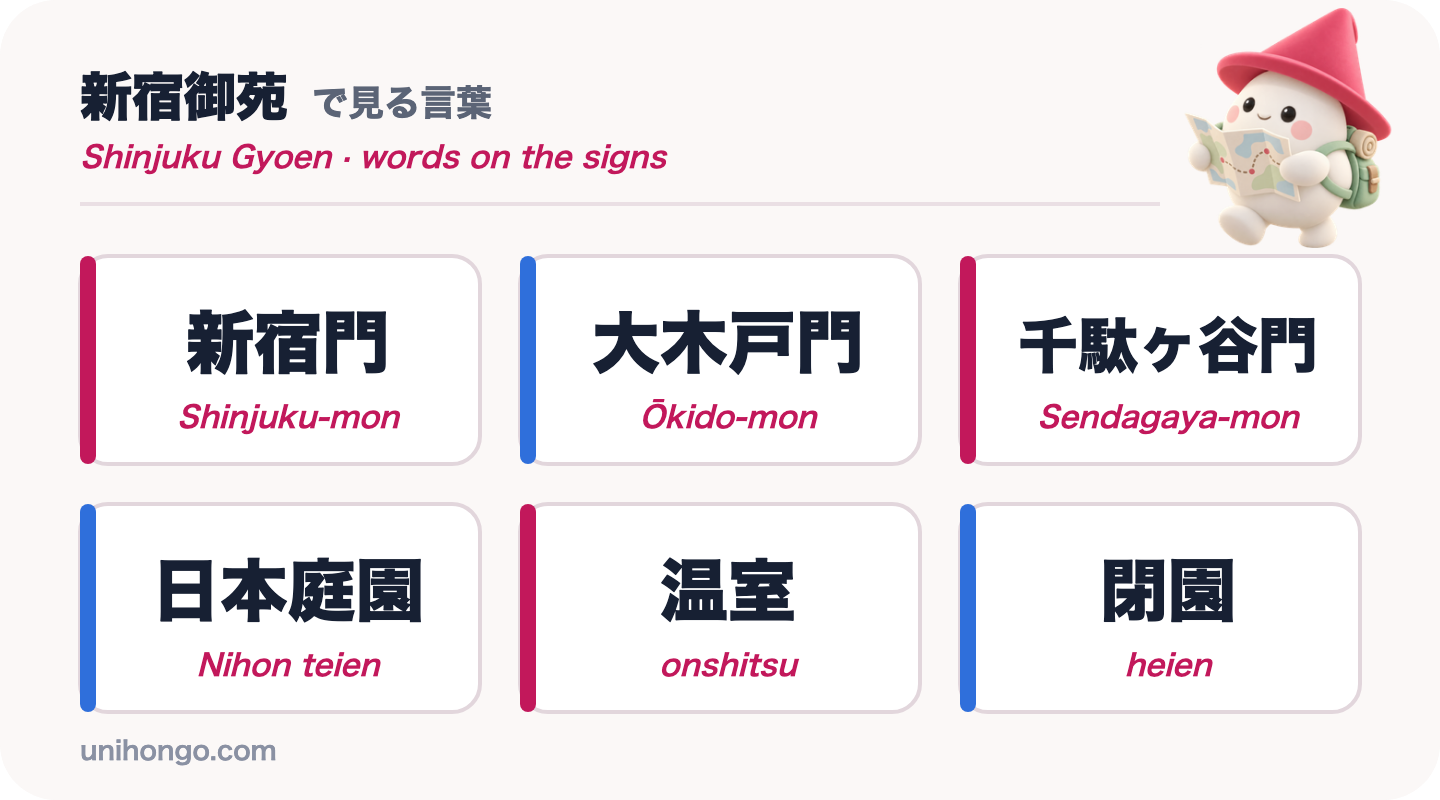
Signposts in Shinjuku Gyoen are bilingual, but the Japanese is short and worth reading. Every signpost points to one of the gates, 門, or one of the gardens, 庭園, and the facilities add a few more words: the greenhouse, the tea houses and the rest houses.
Pay particular attention to 閉園, heien, garden closing. Last entry is before closing time, and the greenhouse closes a little earlier than the garden, so do not leave it until the end of your visit.
| Word | Reading | Meaning |
|---|---|---|
| 新宿門 | Shinjuku-mon | Shinjuku Gate, nearest to Shinjuku Station |
| 大木戸門 | Ōkido-mon | Ōkido Gate, on the east side, near the greenhouse |
| 千駄ヶ谷門 | Sendagaya-mon | Sendagaya Gate, on the south side |
| 日本庭園 | Nihon teien | Japanese traditional garden |
| 風景式庭園 | fūkei-shiki teien | English landscape garden |
| 整形式庭園 | seikei-shiki teien | French formal garden |
| 温室 | onshitsu | Greenhouse |
| 旧御凉亭 | Kyū-Goryōtei | The Taiwanese-style pavilion by the pond |
| 入園券 | nyūenken | Admission ticket |
| 閉園 | heien | Closing of the garden |
Japanese at the gate: tickets, picnics and the lockers
At each gate there is a ticket counter and ticket gates, and the entry gates accept transport IC cards such as Suica and Pasmo. If you want to skip the queue in busy seasons, you can buy an e-ticket in advance and scan its QR code at the gate. Coin lockers sit next to each ticket office, which is handy if you are carrying shopping from Shinjuku.
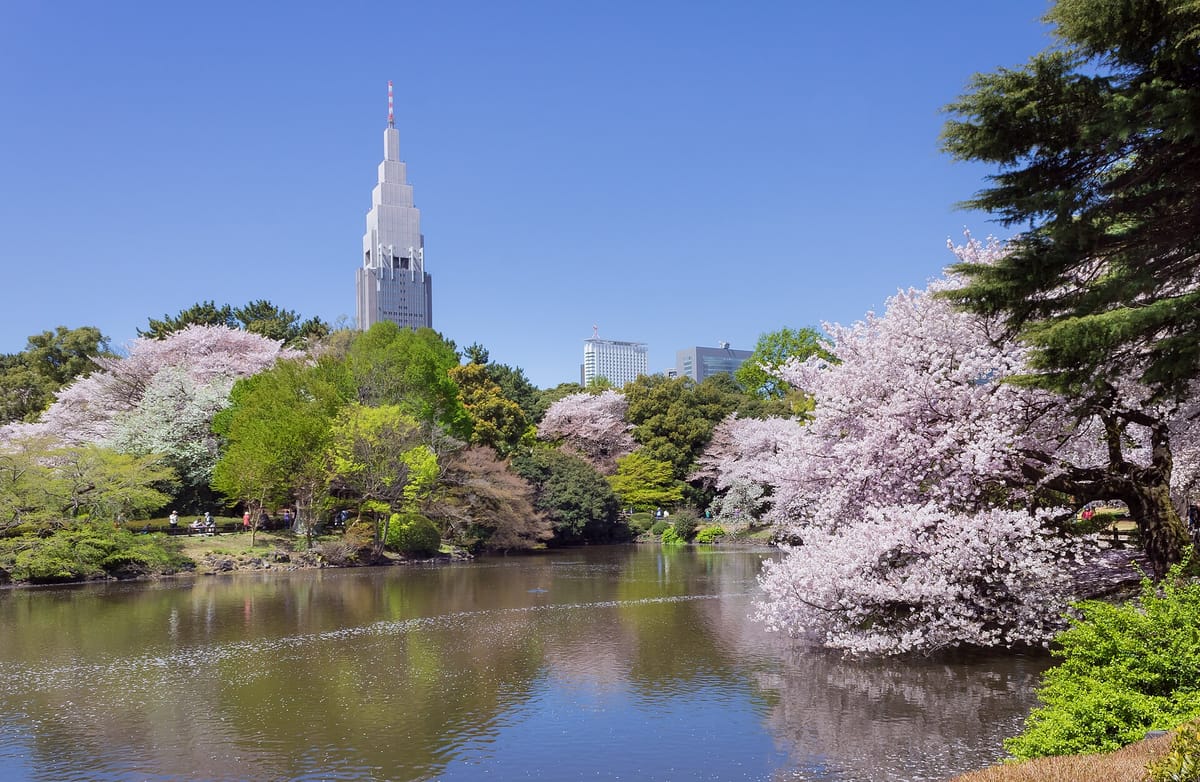
The garden's rules are the thing most visitors ask about. Food and soft drinks are welcome on the lawns, but you may not bring alcohol, play ball games, use a stove, or play music, and smoking is banned everywhere, including the car park. Around nine hundred cherry trees bloom in turn from February to late April, with the Somei Yoshino peaking in late March to early April and the double-flowered yaezakura around mid-April, so a spring visit can still find blossom after the famous peak has passed.
| Japanese | Romaji | Meaning |
|---|---|---|
| 大人一枚お願いします。 | Otona ichimai onegai shimasu. | One adult, please. |
| 交通系ICカードで払えますか。 | Kōtsūkei IC kādo de haraemasu ka. | Can I pay with a transport IC card? |
| 園内マップはありますか。 | Ennai mappu wa arimasu ka. | Do you have a map of the garden? |
| ここでお弁当を食べてもいいですか。 | Koko de o-bentō o tabete mo ii desu ka. | May I eat my lunch here? |
| コインロッカーはどこですか。 | Koin rokkā wa doko desu ka. | Where are the coin lockers? |
| 桜は今、咲いていますか。 | Sakura wa ima, saite imasu ka. | Are the cherry blossoms out now? |
| 日本庭園はどちらですか。 | Nihon teien wa dochira desu ka. | Which way is the Japanese garden? |
Etiquette, timing and practical tips
Shinjuku Gyoen works because people follow its rules, and staff will politely stop you if you do not. A few habits make a visit smoother.
- Check the closing days before you go: the garden is normally closed on Mondays, except in the cherry blossom and chrysanthemum seasons.
- Leave the beer for later. Alcohol is not allowed, even for a spring picnic.
- Keep off roped-off lawns and planted areas, and do not pick flowers, climb trees or feed the fish and birds.
- Take your rubbish with you or use the bins provided; household rubbish from outside may not be brought in.
- Do not spend all day holding one bench or one patch of lawn; the rules ask visitors to share the space.
- Come early on spring weekends. In peak cherry blossom season some busy days may need an advance reservation, so check the official news page.
- Jog only on the designated route, and not at all in the cherry blossom season.
Practise the visit before you go
The conversation you are most likely to have is with the staff at the gate or at an information board: is something open today, and how do you get there. The answers are short and full of direction words, massugu, straight on, migi, right, and hidari, left, so practise listening for them as much as saying your question.
Then practise with a partner who answers back. In Unihongo, choose the Sightseeing topic and ask your AI Sensei to play garden staff at the Shinjuku Gate, or choose the Directions topic to rehearse finding the right exit at Shinjuku-gyoemmae Station. Saying the lines aloud once before you arrive is what makes them come out at the gate.
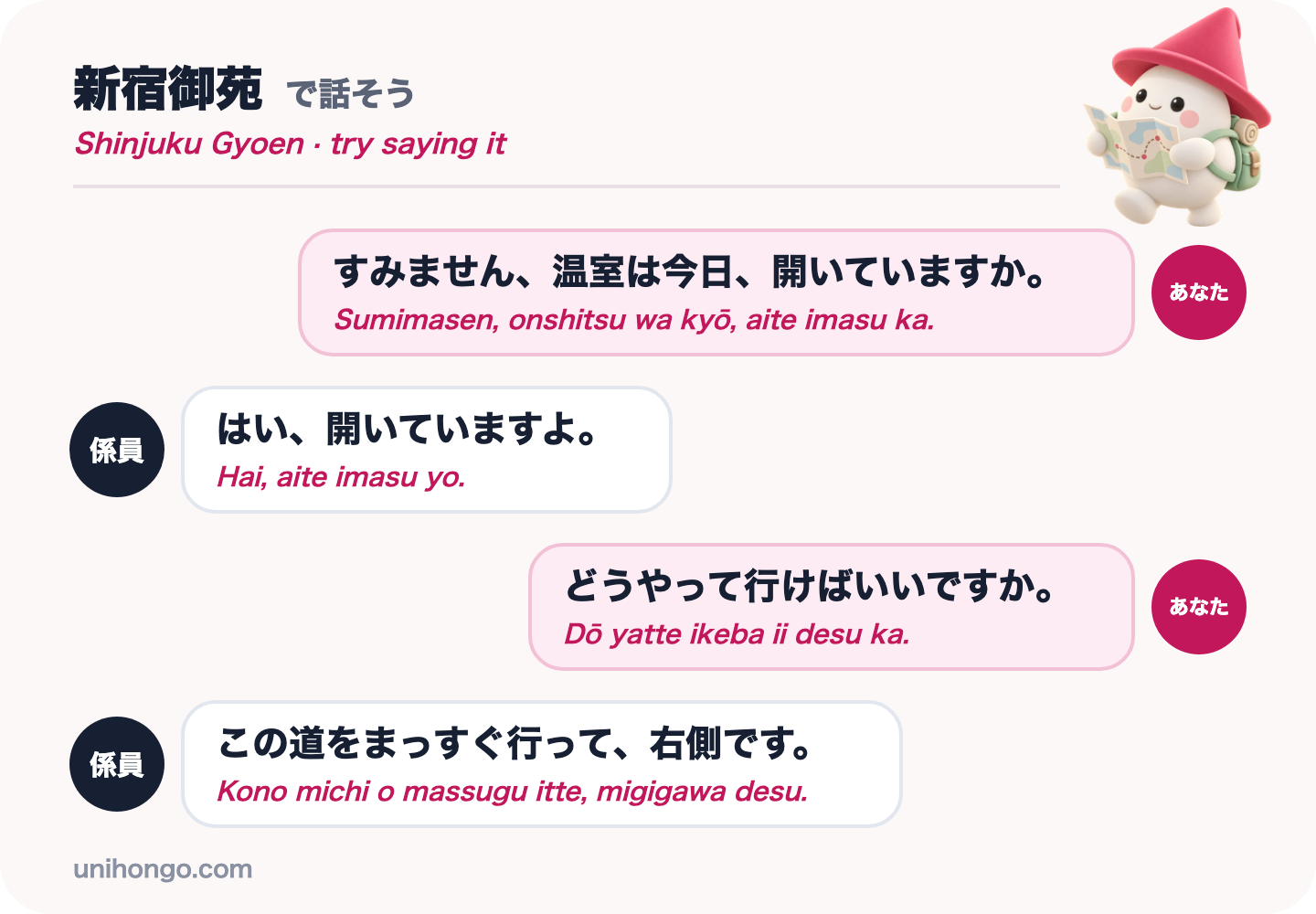
| Japanese | Romaji | Meaning |
|---|---|---|
| すみません、温室は今日、開いていますか。 | Sumimasen, onshitsu wa kyō, aite imasu ka. | Excuse me, is the greenhouse open today? |
| はい、開いていますよ。 | Hai, aite imasu yo. | Yes, it's open. |
| どうやって行けばいいですか。 | Dō yatte ikeba ii desu ka. | How do I get there? |
| この道をまっすぐ行って、右側です。 | Kono michi o massugu itte, migigawa desu. | Go straight along this path; it's on the right. |
Official information
Admission fees, seasonal opening hours, closing days and any reservation requirements in the cherry blossom season are published by the Ministry of the Environment on the garden's official site. Check before you go, especially in spring and early November.