

Why Miyako Island is worth the flight south
Miyako Island is a low, triangular island of coral limestone. It has no mountains, and the island is prone to drought and frequently struck by typhoons. Sugarcane fields cover much of the interior, and the coast is a chain of white beaches, coral shallows and limestone cliffs.
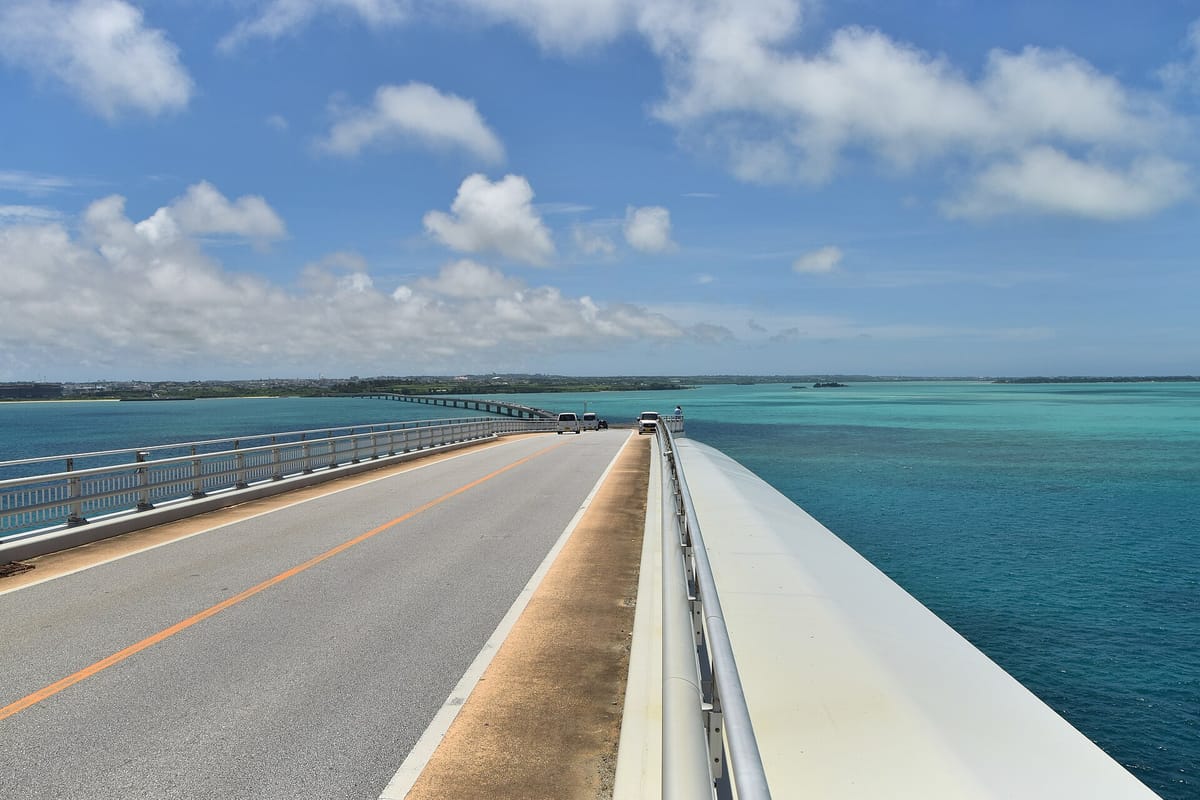
What sets Miyako apart from other Okinawan islands is how easy it is to explore. Three bridges join it to its neighbours: the Ikema Bridge to Ikema Island in the north, opened in 1992; the Kurima Bridge to Kurima Island in the south-west; and the Irabu Bridge, which opened in 2015 and leads to Irabu and Shimoji islands. In a single day you can drive over turquoise water to four islands.
The island also has a culture of its own, from the Paantu festival, in which mud-covered figures in masks smear mud on houses and people for good luck, to the otōri custom of passing round awamori at a gathering. Its language, Myākufutsu, is different from both standard Japanese and Okinawan, though everyone you meet will speak standard Japanese with you.
Getting there and getting around
Miyako has two airports. Miyako Airport, near the centre of the island, has flights from Naha of around 45 to 50 minutes and direct flights from mainland cities such as Tokyo, Osaka, Nagoya and Fukuoka. Shimojishima Airport, on Shimoji Island across the Irabu Bridge, reopened to scheduled passenger flights in 2019 and also handles some international routes; an airport bus links it with Miyako over the bridge.
Once you are on the island, rent a car. Rental offices meet flights at both airports, distances are short and roads are quiet. Buses exist but are infrequent and do not reach many beaches. Petrol stations are fewer on the smaller islands, and rental companies usually ask you to return the car with a full tank, so fill up in Hirara, the main town, before you head back.
| Japanese | Romaji | Meaning |
|---|---|---|
| 予約した車を受け取りに来ました。 | Yoyaku shita kuruma o uketori ni kimashita. | I have come to pick up the car I booked. |
| 保険は全部入っていますか。 | Hoken wa zenbu haitte imasu ka. | Is full insurance included? |
| ガソリンは満タンで返しますか。 | Gasorin wa mantan de kaeshimasu ka. | Should I return it with a full tank? |
| 空港の近くにガソリンスタンドはありますか。 | Kūkō no chikaku ni gasorin sutando wa arimasu ka. | Is there a petrol station near the airport? |
| 下地島空港へのバスはどこから乗りますか。 | Shimojishima Kūkō e no basu wa doko kara norimasu ka. | Where do I catch the bus to Shimojishima Airport? |
Beaches, capes and bridges to see
Most visitors split their time between the beaches and a loop round the capes and bridges. A road trip from Hirara round the island and across to Irabu and Shimoji fills a day comfortably, with stops to swim.
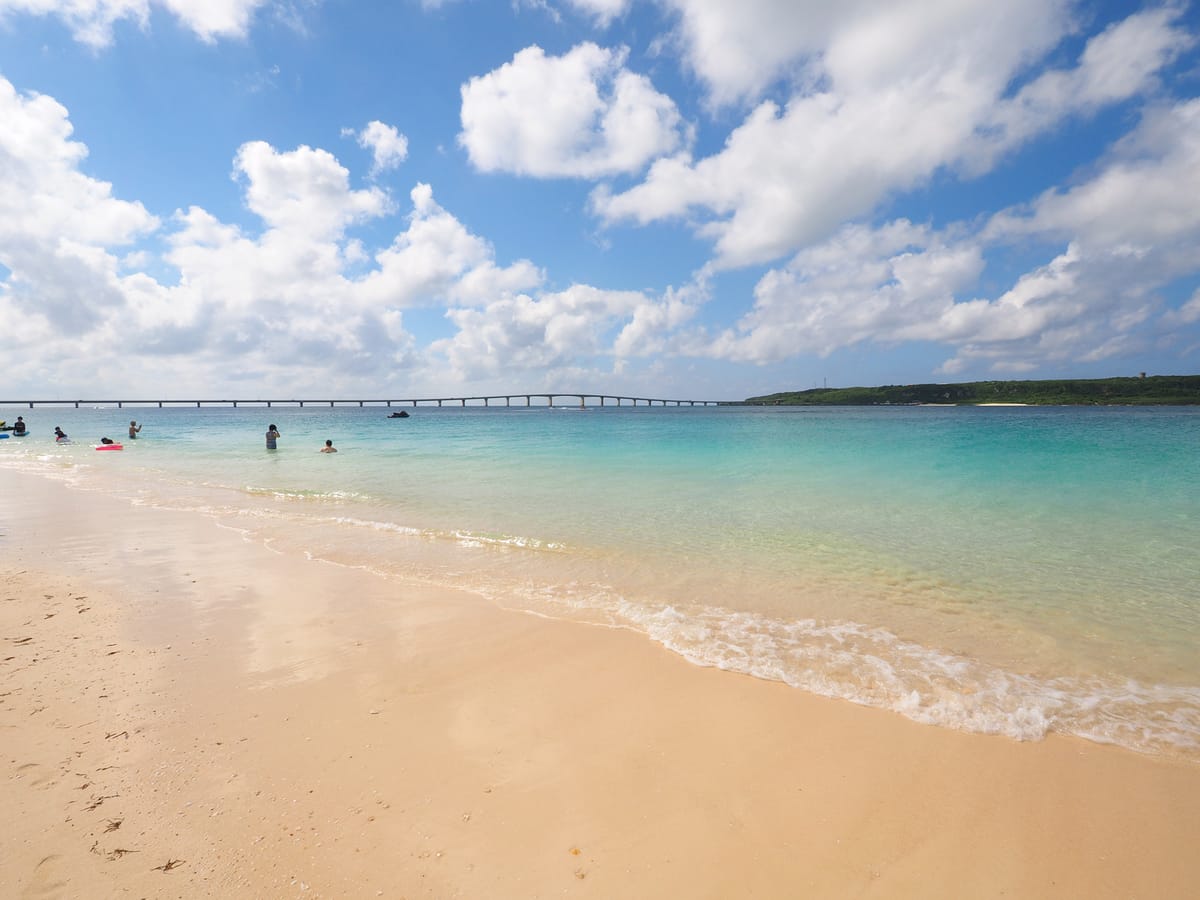
- Yonaha Maehama: a beach of fine white sand about seven kilometres long on the south-west coast, often listed among Japan's best beaches.
- Sunayama Beach: a small cove reached through a tunnel of trees and over a sand dune, known for its arch-shaped rock.
- Aragusuku Beach: shallow water popular for snorkelling, with tropical fish close to shore.
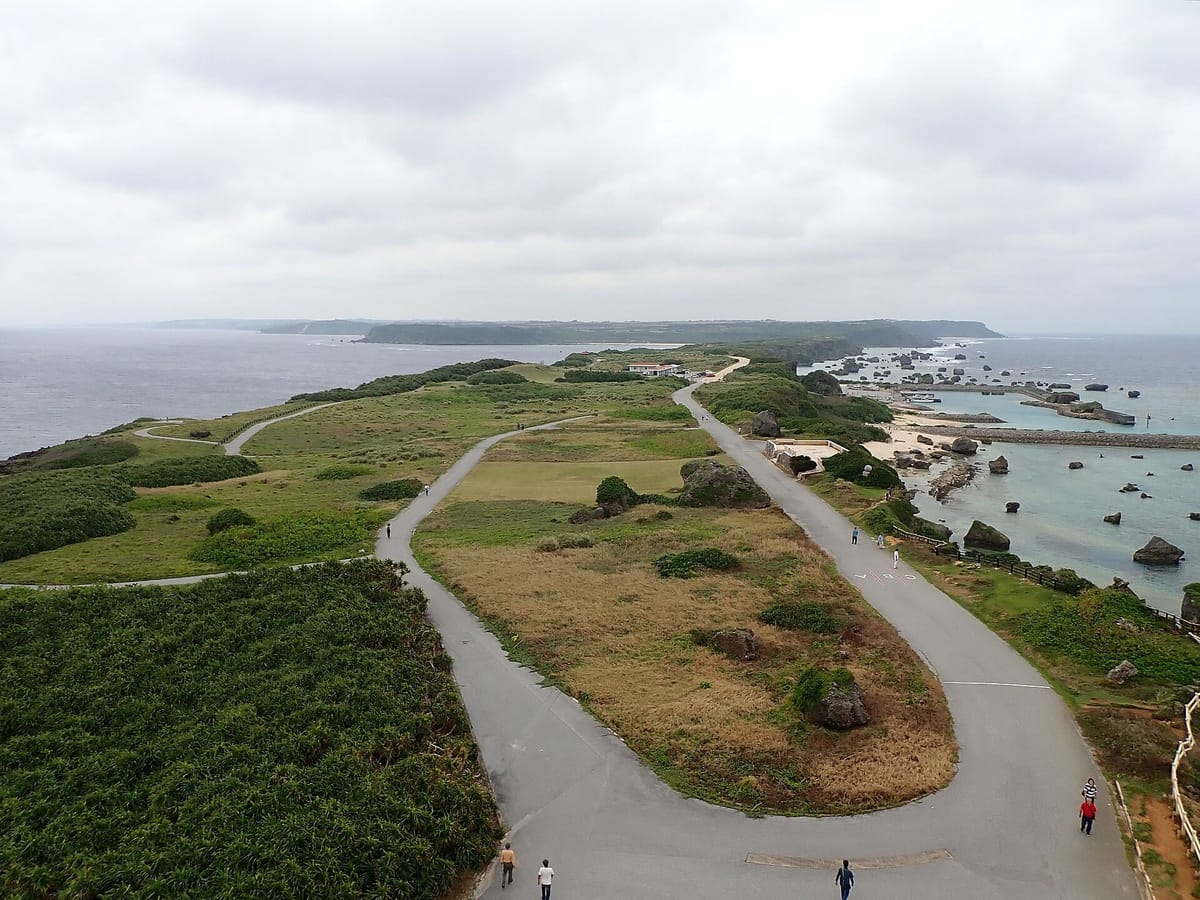
- Higashi-Hennazaki: a narrow cape about two kilometres long at the eastern tip, with a white lighthouse and rugged coast; it is a nationally designated Place of Scenic Beauty.
- Irabu Bridge: the 3,540-metre bridge to Irabu Island, best seen from the viewpoints at either end.
- Tōri-ike on Shimoji Island: two deep blue ponds connected to each other and the sea by underwater caves, viewed from a boardwalk.
- Ikema and Kurima bridges: shorter bridges to quieter islands with small beaches and cafés.
Words on the signs on Miyako Island
Road signs on Miyako are in Japanese and English, but beach notices are often in Japanese only, and these are the ones that matter. Yūei kinshi, no swimming, appears where currents are strong or there is no lifeguard, and some beaches have flags or boards about jellyfish, habu kurage, in summer.
Place names here are hard even for Japanese visitors, because they come from the Miyako language. Hennazaki, the cape, and Maehama are read in ways you would not guess from the kanji, so learn them as whole words.
| Word | Reading | Meaning |
|---|---|---|
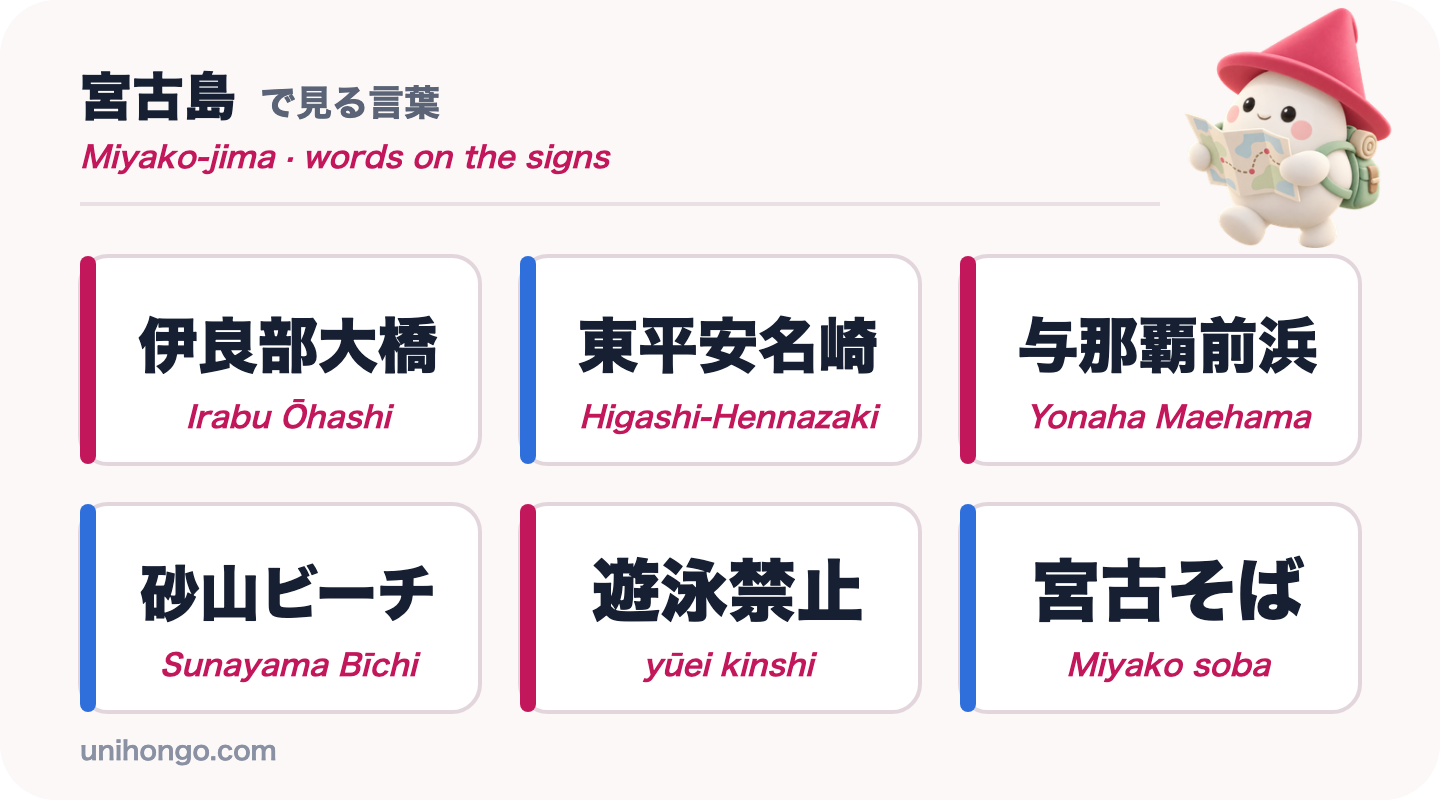
| 伊良部大橋 | Irabu Ōhashi | Irabu Bridge, Japan's longest toll-free bridge |
| 東平安名崎 | Higashi-Hennazaki | The cape at the eastern tip of the island |
| 与那覇前浜 | Yonaha Maehama | The long white beach in the south-west |
| 砂山ビーチ | Sunayama Bīchi | Sunayama Beach, with its rock arch |
| 遊泳禁止 | yūei kinshi | No swimming |
| 宮古そば | Miyako soba | Miyako-style noodle soup |
| 駐停車禁止 | chūteisha kinshi | No stopping or parking |
| ハブクラゲ | habu kurage | Box jellyfish found in Okinawan waters |
| 展望台 | tenbōdai | Viewpoint |
Japanese for snorkelling tours and island food
Miyako is a famous diving area, and dive shops and tour operators also run snorkelling tours to coral gardens and to see sea turtles, so you do not need a diving licence to enjoy the sea. Tours are usually booked by phone, online or at your hotel the day before, and they are called off when the sea is rough.
Back on land, try Miyako soba, the island's own style of noodle soup, Miyako beef, and in early summer the local mangoes. Small local restaurants are relaxed places to practise ordering.
| Japanese | Romaji | Meaning |
|---|---|---|
| 明日のシュノーケリングツアーを予約したいです。 | Ashita no shunōkeringu tsuā o yoyaku shitai desu. | I would like to book tomorrow's snorkelling tour. |
| 泳げなくても参加できますか。 | Oyogenakute mo sanka dekimasu ka. | Can I join even if I cannot swim well? |
| ウミガメは見られますか。 | Umigame wa miraremasu ka. | Will we be able to see sea turtles? |
| 天気が悪いときは中止ですか。 | Tenki ga warui toki wa chūshi desu ka. | Is it cancelled in bad weather? |
| 宮古そばを一つお願いします。 | Miyako soba o hitotsu onegai shimasu. | One Miyako soba, please. |
| マンゴーは今が旬ですか。 | Mangō wa ima ga shun desu ka. | Are mangoes in season now? |
Island etiquette, safety and practical tips
Miyako is relaxed and friendly, but the sea and the sun are strong. The city publishes first-aid guidance for stings from dangerous sea creatures, which tells you something about what to watch for.
- Swim at beaches with lifeguards and nets in summer, follow any yūei kinshi signs, and never swim alone or far out where currents are strong.
- Wear a rash guard and reef-safe sunscreen, and do not stand on or touch coral.
- Do not stop on the Irabu Bridge; use the car parks and viewpoints at each end.
- Typhoons can cancel flights and tours from summer to autumn, so build in a spare day.
- If you are invited to join an otōri round of awamori, you can sip rather than drain the glass; pace yourself.
- Respect the Paantu festival and other village rituals: watch from a distance unless locals invite you closer.
Practise the rental car conversation before you go
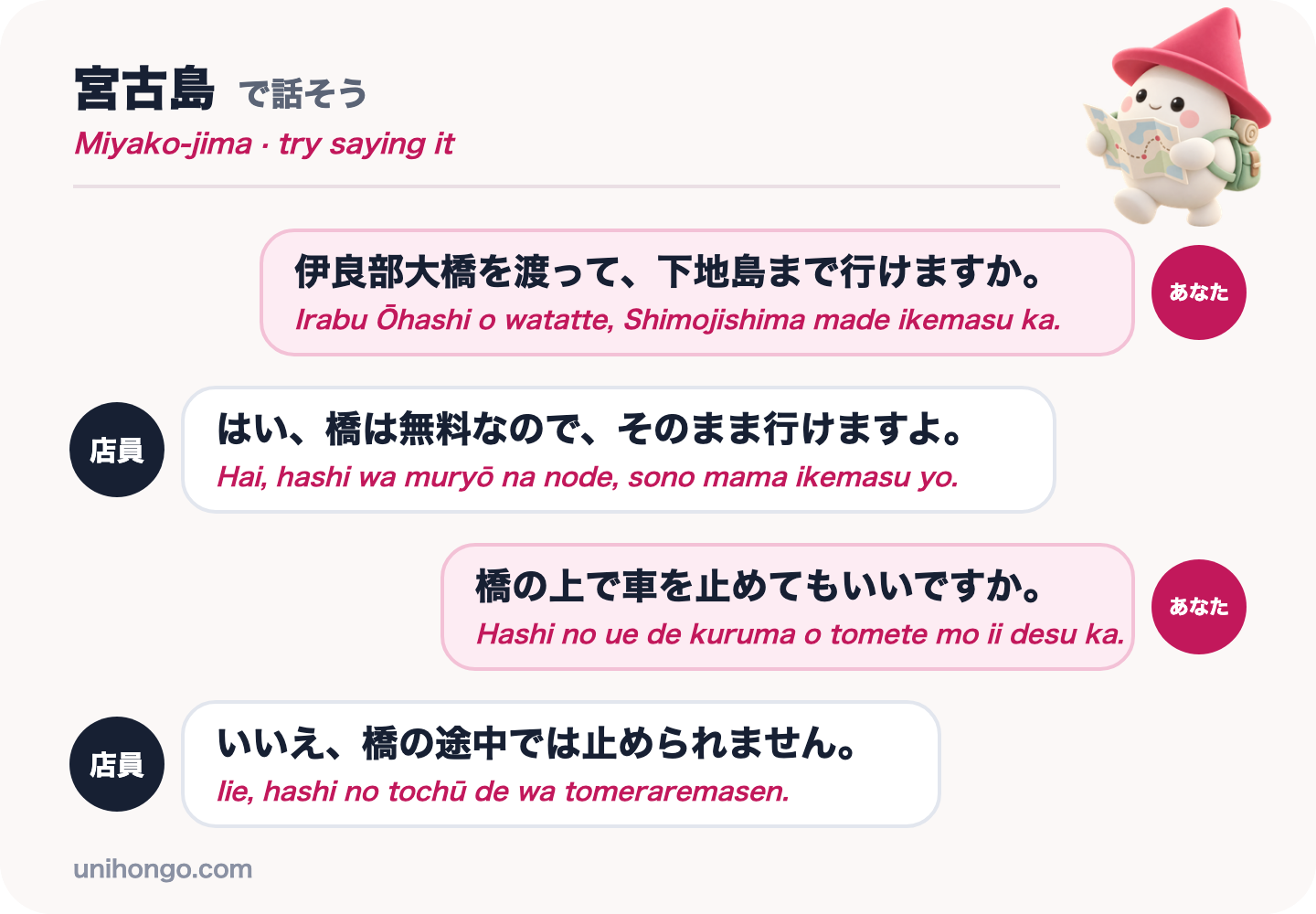
At the rental counter you will want to check where you can go and what the rules are. Practise the four lines below until you can say them without reading, and listen for muryō, free, and tomeraremasen, you cannot stop, in the replies.
Then practise with someone who answers back. In Unihongo, choose the Car Rental topic and ask your AI Sensei to play the rental staff, or try the Directions topic to ask the way to Sunayama Beach. Saying the lines once before you arrive is what makes them come out at the counter.
One more phrase to enjoy rather than use: the city's tourism page greets visitors in Myākufutsu, the Miyako language, with ずぅ~ずぅ~みゃーくずまんかい, which it gives in English as Let's go to Miyako Island. Treat it as a glimpse of the local language rather than something to say at the counter, where standard Japanese is what staff expect.
| Japanese | Romaji | Meaning |
|---|---|---|
| 伊良部大橋を渡って、下地島まで行けますか。 | Irabu Ōhashi o watatte, Shimojishima made ikemasu ka. | Can I cross the Irabu Bridge and go as far as Shimoji Island? |
| はい、橋は無料なので、そのまま行けますよ。 | Hai, hashi wa muryō na node, sono mama ikemasu yo. | Yes, the bridge is free, so you can drive straight over. |
| 橋の上で車を止めてもいいですか。 | Hashi no ue de kuruma o tomete mo ii desu ka. | May I stop the car on the bridge? |
| いいえ、橋の途中では止められません。 | Iie, hashi no tochū de wa tomeraremasen. | No, you cannot stop partway across the bridge. |
Official information
The official Okinawa tourism site has an overview of Miyako Island and how to get there, and Miyakojima City publishes tourist information, guide maps and first-aid advice for sea creature stings. Check them, and your airline, before you travel.