

Why Kaiyūkan is Osaka's best rainy-day trip
Kaiyūkan opened in 1990 in the Tempozan Harbor Village, a waterfront area at the mouth of the Aji River in the west of Osaka. The idea behind it is the Ring of Fire and the Ring of Life: the Pacific Ocean and the lands around it, from the forests of Japan to Antarctica, shown as one connected world. The building itself is hard to miss, with its glass roofs, red band and huge mosaic of fish on the outside wall.
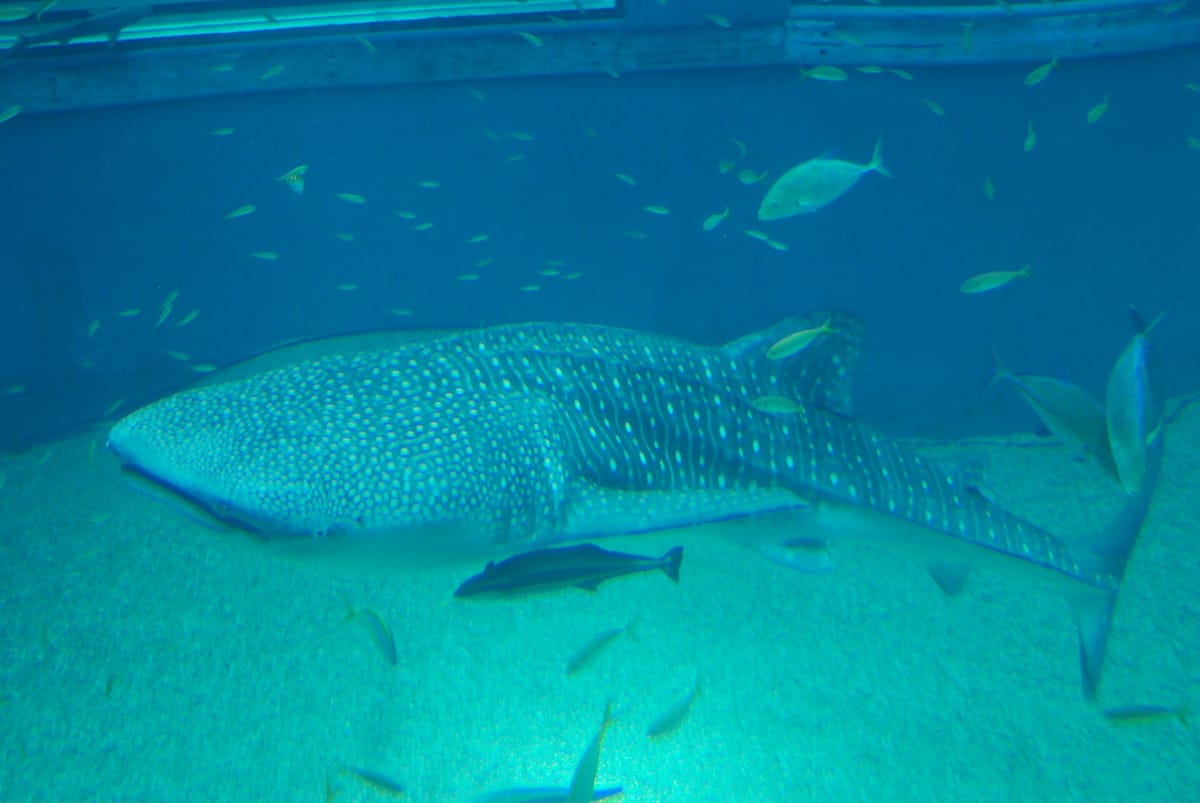
Inside, everything is arranged around one tank. The Taiheiyō, Pacific Ocean, tank is nine metres deep and holds a whale shark, the largest fish in the world, along with manta rays, sharks and shoals of smaller fish. Instead of walking past it once, you circle it for most of your visit, which is what makes Kaiyūkan different from other big aquariums.
It is also a very good place to practise reading. Every zone has a short name in kanji or katakana, often a place name you already know in English, such as パナマ湾, Panama Bay, or グレート・バリア・リーフ, the Great Barrier Reef. Reading the katakana names of animals is a quick way to build speed, and it rains less inside an aquarium than anywhere else in Osaka.
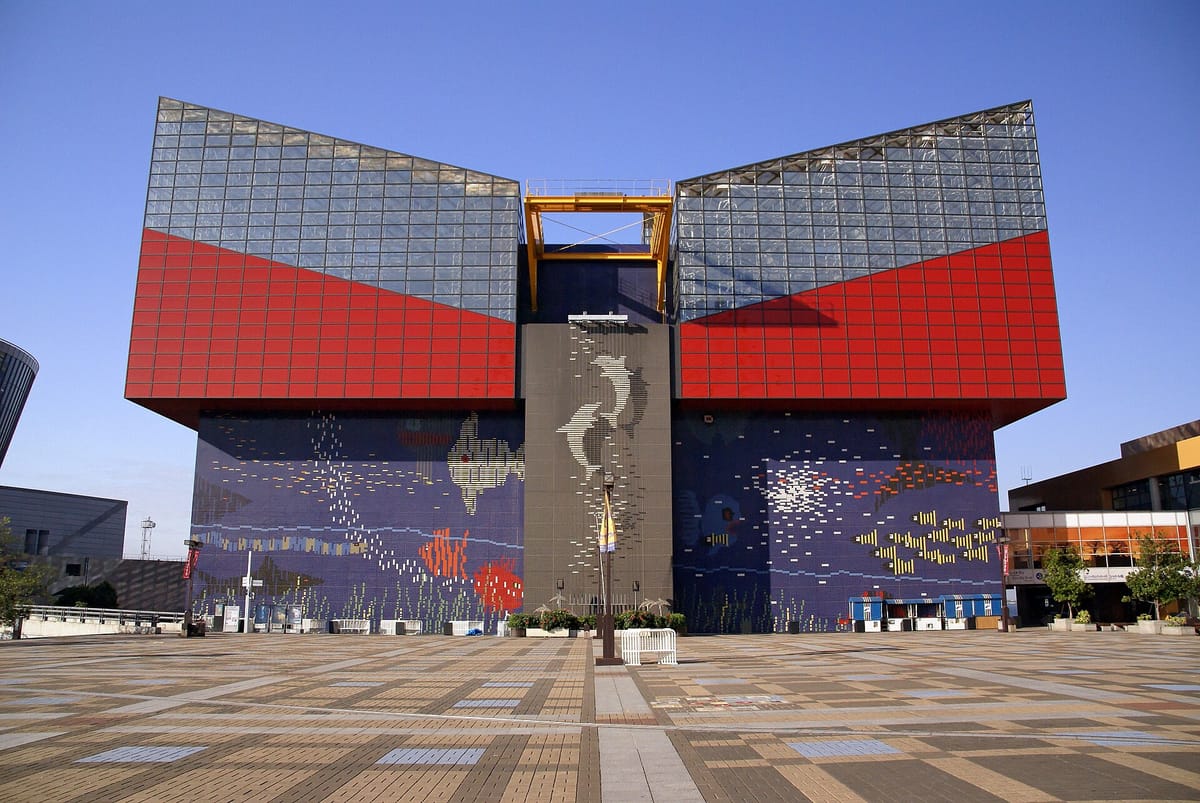
Getting there: the Chūō Line to Osakakō Station
The simplest route is the Osaka Metro Chūō Line to Osakakō Station, which the aquarium's own access page lists as the nearest station. Take Exit 1 and walk about five minutes towards the waterfront; the aquarium is at the end of the plaza with the big Ferris wheel beside it. From Osaka or Umeda, change from the JR or the Midōsuji Line to the Chūō Line at Hommachi; from Shin-Osaka, ride into Osaka first.
City buses also run to the Tempozan area, and the aquarium lists the Captain Line shuttle boat from Universal City, which lands at a pier next to Kaiyūkan. That boat makes it easy to pair the aquarium with Universal Studios Japan on the other side of the bay on a different day, or in the late afternoon.
| Japanese | Romaji | Meaning |
|---|---|---|
| 海遊館に行きたいんですが、何線に乗ればいいですか。 | Kaiyūkan ni ikitai n desu ga, nani-sen ni noreba ii desu ka. | I want to go to Kaiyūkan. Which line should I take? |
| 大阪港駅は何番出口ですか。 | Ōsakakō-eki wa nanban deguchi desu ka. | Which exit at Osakakō Station? |
| 中央線はどこで乗り換えますか。 | Chūō-sen wa doko de norikaemasu ka. | Where do I change to the Chūō Line? |
| 海遊館はこっちの方向で合っていますか。 | Kaiyūkan wa kotchi no hōkō de atte imasu ka. | Am I going the right way for Kaiyūkan? |
| キャプテンラインの乗り場はどこですか。 | Kyaputen Rain no noriba wa doko desu ka. | Where does the Captain Line boat leave from? |
The spiral route: from the Japanese forest to the jellyfish
After the ticket gate you pass through the Aqua Gate, a short tunnel of tropical fish, and ride escalators to the top of the building. The visit then runs downhill. You begin in Nihon no Mori, the Japanese forest, with a stream, a waterfall and small river creatures, and then follow a ramp that circles the Pacific Ocean tank, with the zones of the Pacific Rim arranged around the outside of the spiral.
Near the bottom the route leaves the big tank for a series of smaller galleries: Japanese deep-sea creatures, a gallery of jellyfish lit against black walls, and an Arctic area where you see the animals both on the ice and underwater. The aquarium's exhibition page showed the Aleutian Islands zone closed for renovation at the time of writing, so check the website if there is an animal you particularly want to see.
- Aqua Gate: the entrance tunnel of tropical fish.
- Nihon no Mori: the Japanese forest at the top, with river fish and small mammals.
- Monterey Bay: sea lions and seals in rocky pools.
- Antarctica: penguins on a snowy shore.
- Tasman Sea: Pacific white-sided dolphins.
- Taiheiyō: the Pacific Ocean tank with the whale shark and manta rays.
- Kurage Ginga: the jellyfish gallery, whose name means jellyfish galaxy.
- Arctic: a two-level zone showing life above and below the ice.
Words on the signs at Kaiyūkan
The signs at Kaiyūkan mix kanji zone names with katakana animal names. Zones are named after real places, so once you know that 湾 is bay and 海 is sea, many of them read themselves. Animal labels are mostly katakana, because Japanese biology writes species names that way, even for animals with an everyday kanji name.
The one kanji name worth learning before you go is 海月, jellyfish. It literally means sea moon and is usually read kurage, which is why the jellyfish gallery is called 海月銀河, jellyfish galaxy. The table below covers the words you will meet from the entrance to the exit.
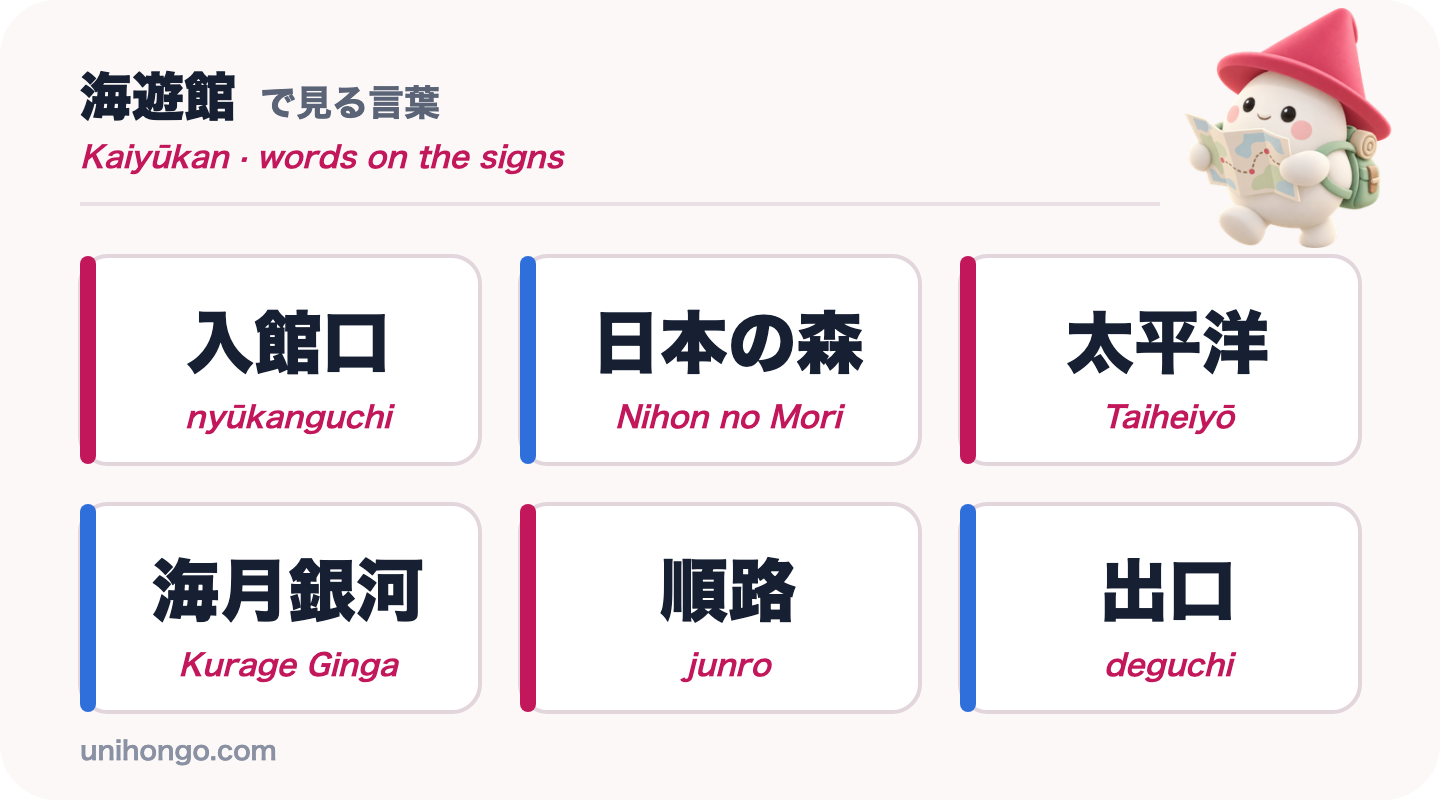
| Word | Reading | Meaning |
|---|---|---|
| 入館口 | nyūkanguchi | Entrance to the building |
| 日本の森 | Nihon no Mori | The Japanese forest zone at the top |
| 太平洋 | Taiheiyō | Pacific Ocean, the central tank |
| ジンベエザメ | jinbēzame | Whale shark |
| 海月銀河 | Kurage Ginga | The jellyfish gallery |
| 順路 | junro | The set route; follow the arrows |
| お食事タイム | o-shokuji taimu | Feeding time |
| 出口 | deguchi | Exit |
| 再入館 | sai-nyūkan | Re-entry, no longer allowed |
Japanese for tickets, lockers and feeding times
If you have an e-ticket, you show the QR code at the gate at your time slot. If not, you buy at the windows, where staff speak some English but are used to short Japanese requests. Coin lockers are available for bags, and staff can tell you where the day's feeding times and talks are posted.
Photography is generally fine, but flash disturbs the animals and reflects off the glass, so switch it off before you start. The phrases below cover the whole visit, from the ticket window to the question you are most likely to ask on the way down.
| Japanese | Romaji | Meaning |
|---|---|---|
| 大人二枚お願いします。 | Otona nimai onegai shimasu. | Two adult tickets, please. |
| 予約した時間より早く入れますか。 | Yoyaku shita jikan yori hayaku hairemasu ka. | Can I go in earlier than my booked time? |
| コインロッカーはどこですか。 | Koin rokkā wa doko desu ka. | Where are the coin lockers? |
| 今日のお食事タイムは何時ですか。 | Kyō no o-shokuji taimu wa nanji desu ka. | What time is feeding time today? |
| フラッシュなしなら写真を撮ってもいいですか。 | Furasshu nashi nara shashin o totte mo ii desu ka. | May I take photos without flash? |
| ベビーカーのままで回れますか。 | Bebīkā no mama de mawaremasu ka. | Can I go round with a pushchair? |
Timing, crowds and practical tips
Kaiyūkan is popular with families and school groups, and the ramps can feel crowded at peak times. A little planning makes a big difference.
- Book an e-ticket for an early slot on a weekday if you can; weekends and holidays are busiest.
- Since re-entry has ended, eat and use the shops at Tempozan Marketplace before or after your visit, not in the middle.
- Keep bags small or put them in a locker; the ramps are narrow at the glass.
- Turn off your flash and do not tap on the glass.
- Walk the spiral slowly: the whale shark moves around the tank, and you get several chances to see it close up.
- Check the official site for this season's hours and the feeding schedule before you set out.
Practise the visit before you go
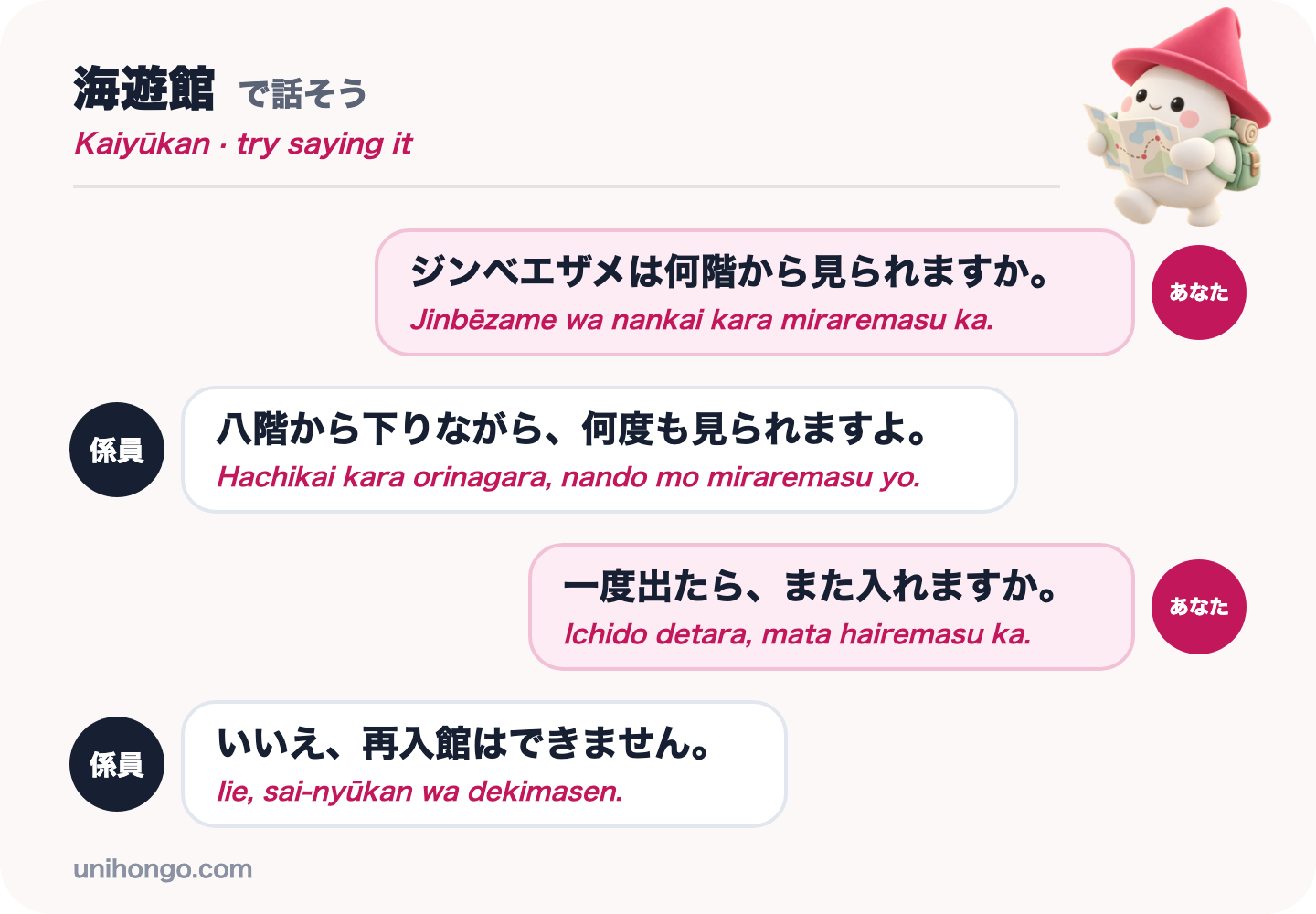
Two questions come up again and again at Kaiyūkan. The first is where to see the whale shark; the second is whether you can leave and come back. Practise the four lines below until you can say them without reading, and listen for hachikai, eighth floor, and dekimasen, cannot, in the answers.
Then practise with a partner who answers back. In Unihongo, choose the Sightseeing topic and ask your AI Sensei to play a staff member at the aquarium, or choose Train Tickets to rehearse the subway ride. Saying the lines once before you arrive is what makes them come out at the gate.
| Japanese | Romaji | Meaning |
|---|---|---|
| ジンベエザメは何階から見られますか。 | Jinbēzame wa nankai kara miraremasu ka. | From which floor can I see the whale shark? |
| 八階から下りながら、何度も見られますよ。 | Hachikai kara orinagara, nando mo miraremasu yo. | You can see it many times as you walk down from the eighth floor. |
| 一度出たら、また入れますか。 | Ichido detara, mata hairemasu ka. | Once I go out, can I come back in? |
| いいえ、再入館はできません。 | Iie, sai-nyūkan wa dekimasen. | No, re-entry is not possible. |
Official information
Kaiyūkan publishes its hours, closed days, e-ticket sales, feeding times and news on its website, including notices about zones under renovation. Check it before you go.