

Why Hakodate is worth the journey south
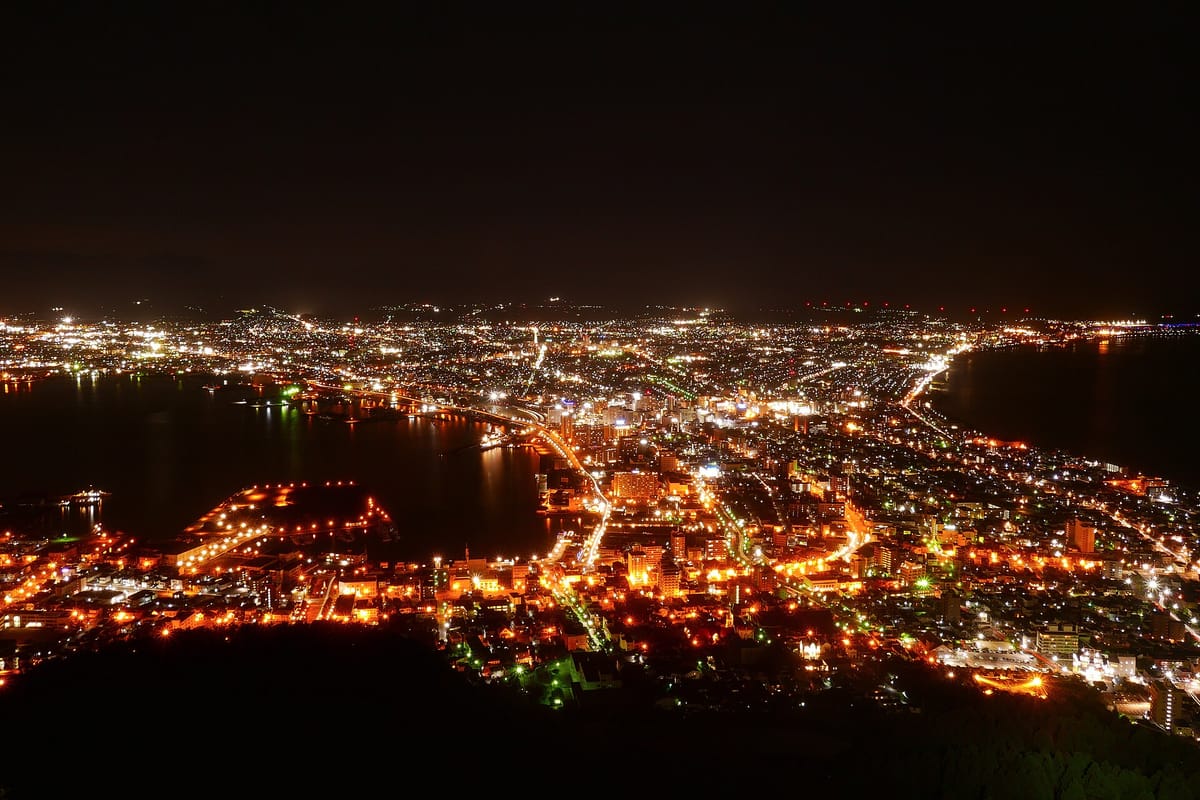
Hakodate sits where Hokkaido reaches towards Honshu across the Tsugaru Strait. The city spreads along a narrow neck of land that ends in Mount Hakodate, a 334-metre hill, so from the top you look down on a city pinched in the middle by the sea on both sides. The night view from here is counted among Japan's three great night views, alongside Mount Inasa in Nagasaki and Mount Rokkō in Kobe.
The city's history gives it a different feel from the rest of Hokkaido. Hakodate was among the first ports opened to foreign ships in 1859, and merchants, consuls and missionaries built houses and churches on the slopes of Motomachi below the mountain. A few years later the shogunate built Goryōkaku, a star-shaped fort in the European style, which became the last stronghold of the former shogunate's forces in the Boshin War until they surrendered in 1869.
Hakodate is also a city of food, famous for squid, sea urchin and crab, for its light salt-based shio ramen, and for its lively Morning Market beside the station. For a Japanese learner it is ideal: compact, served by trams that announce every stop, and full of counters where a short question gets you a long way.
Getting there and around: shinkansen, trams and the ropeway
The Hokkaido Shinkansen runs from Tokyo through the Seikan Tunnel to Shin-Hakodate-Hokuto Station, outside the city. From there the Hakodate Liner reaches JR Hakodate Station in around twenty minutes. From Sapporo, the Hokuto limited express takes around three and a half to four hours. Hakodate Airport, east of the centre, has buses to the station area.
Inside the city, the Hakodate City Tram, shiden, is the easiest way around. Trams run from the station area to Jūjigai and Suehirochō for Motomachi and the ropeway, and north-east to Goryōkaku-kōen-mae for the fort, around fifteen minutes' walk further on. You board at the back, take a numbered ticket if you are not using a card, and pay at the front when you get off. One-day passes for trams and city buses are sold, and are worth it if you ride several times.
For Mount Hakodate, the Mount Hakodate Ropeway leaves from Sanroku Station, a walk uphill from Jūjigai, and reaches the summit in about three minutes. It pauses every year for a statutory inspection period and in strong wind, so check its website on the day. From spring to autumn a climbing bus also runs from the bus terminal at Hakodate Station.
| Japanese | Romaji | Meaning |
|---|---|---|
| 函館山ロープウェイは、どの電停で降りればいいですか。 | Hakodate-yama Rōpuwei wa, dono dentei de orireba ii desu ka. | Which tram stop should I get off at for the Mount Hakodate Ropeway? |
| 五稜郭公園前まで行きますか。 | Goryōkaku-kōen-mae made ikimasu ka. | Does this go to Goryōkaku-kōen-mae? |
| 市電の一日乗車券をください。 | Shiden no ichinichi jōshaken o kudasai. | A one-day tram pass, please. |
| 朝市は駅から近いですか。 | Asaichi wa eki kara chikai desu ka. | Is the Morning Market near the station? |
| 今日はロープウェイが動いていますか。 | Kyō wa rōpuwei ga ugoite imasu ka. | Is the ropeway running today? |
Mount Hakodate, Motomachi and Goryōkaku: what you will see
Start the day early at the Hakodate Morning Market, Hakodate Asaichi, by JR Hakodate Station, where hundreds of stalls sell crab, scallops, salmon roe and dried seafood, and small restaurants serve seafood bowls for breakfast. At one market hall you can even hook a live squid from a tank and have it prepared as sashimi on the spot.
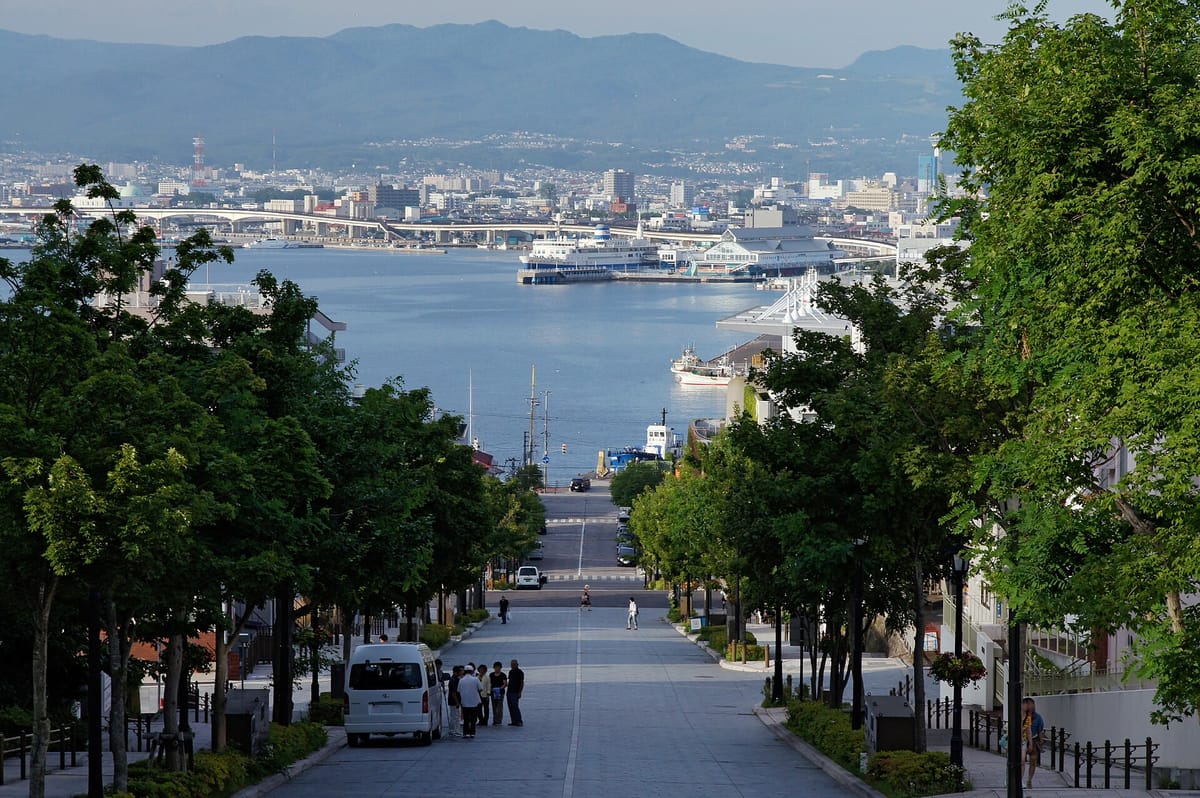
Next, head to the bay and the Kanemori Red Brick Warehouses, old trading warehouses now full of shops and restaurants, then climb into Motomachi. Its slopes are lined with historic buildings: the Old Public Hall of Hakodate Ward, the white Hakodate Orthodox Church and several other churches, all within a few minutes of each other. Hachiman-zaka, the straight slope that runs down to the harbour, is the classic photo spot.
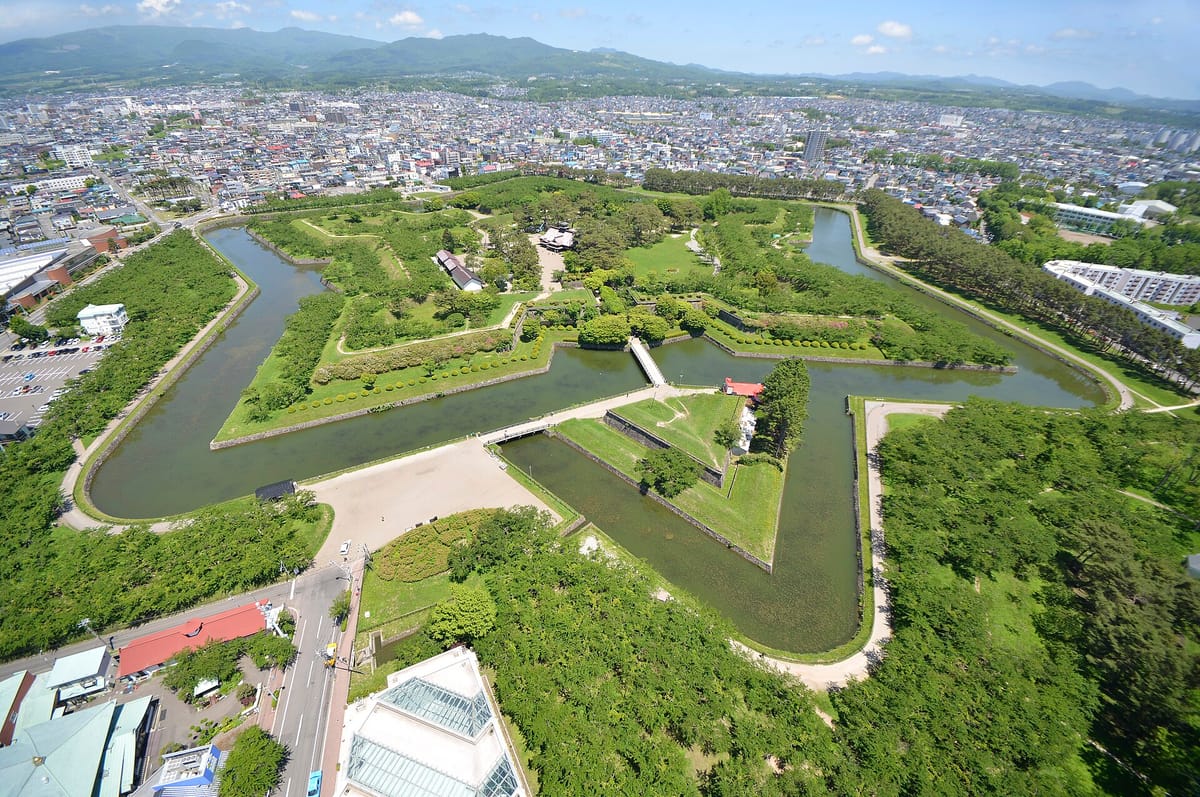
Goryōkaku, in the north-east of the city, is a five-pointed star of earth walls and moats completed in 1864. The grounds are a free park, planted with cherry trees that make it one of Hokkaido's best spring blossom spots. Inside stands the Hakodate Magistrate's Office, rebuilt in 2010 using traditional carpentry, and beside the park the 107-metre Goryōkaku Tower lets you look down on the star. Finish at the summit of Mount Hakodate as the sun goes down.
- Hakodate Asaichi: the Morning Market by JR Hakodate Station, best early in the day.
- Kanemori Red Brick Warehouses: shops and restaurants in old waterfront warehouses.
- Motomachi: the hillside district of churches, consulates and the Old Public Hall.
- Hachiman-zaka: the straight slope with the harbour view.
- Fort Goryōkaku: the star-shaped fort, free to enter, famous for cherry blossoms.
- Goryōkaku Tower: the observation tower beside the fort.
- Mount Hakodate: the night view from the 334-metre summit.
Words on Hakodate's signs
Hakodate's name is written 函館, a rare pair of kanji worth recognising: 函 means box and 館 means hall or building. The fort's name, 五稜郭, means five-pointed enclosure: 五 is five, 稜 is an edge or ridge, and 郭 an enclosure or walled area.
Motomachi's streets are named after their slopes, 坂, zaka, which you will see on small stone markers at the bottom of each hill. The table below covers the signs you will meet between the station, the market and the mountain.
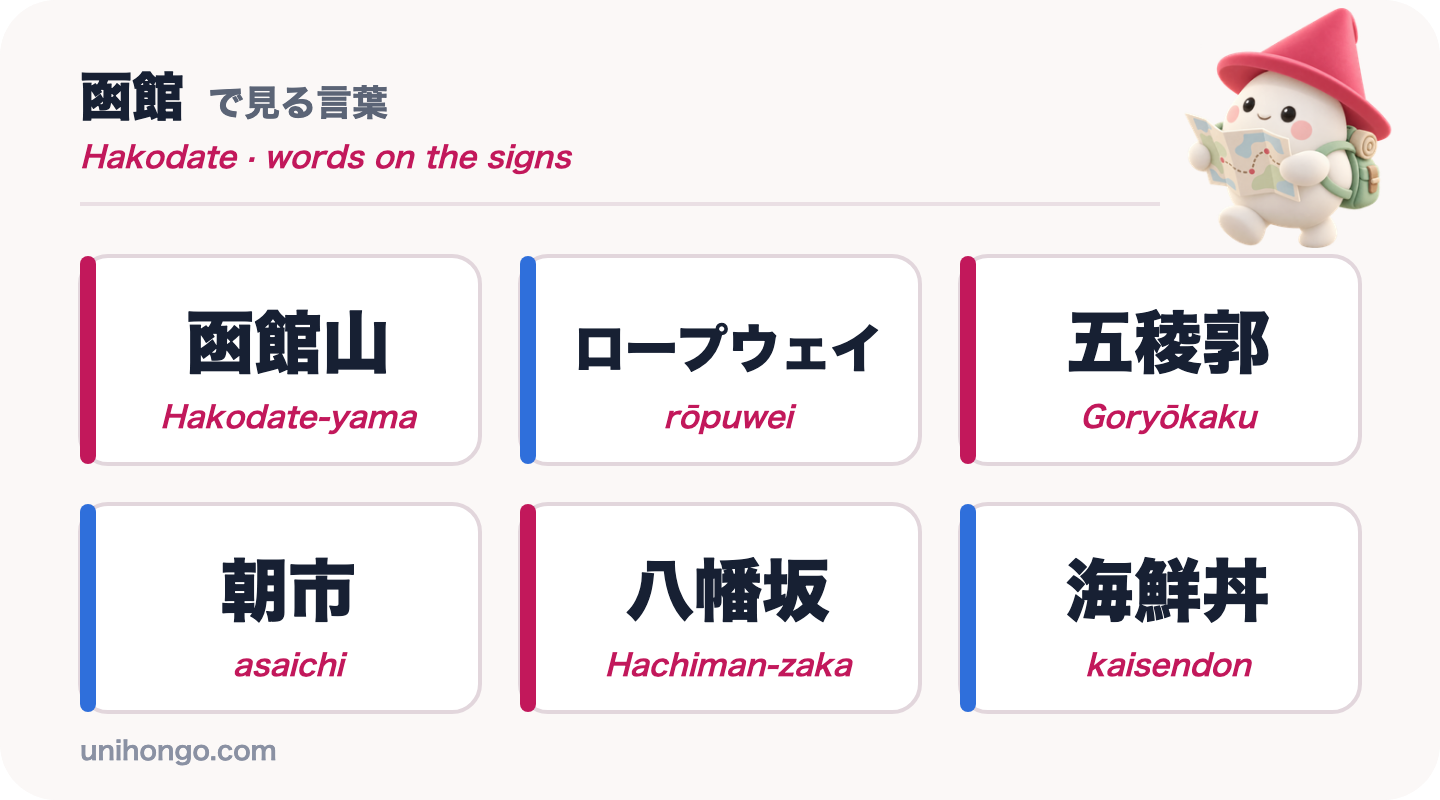
| Word | Reading | Meaning |
|---|---|---|
| 函館山 | Hakodate-yama | Mount Hakodate |
| ロープウェイ | rōpuwei | Ropeway, cable car |
| 山頂 | sanchō | Summit |
| 五稜郭 | Goryōkaku | The star-shaped fort |
| 朝市 | asaichi | Morning market |
| 元町 | Motomachi | The historic hillside district |
| 八幡坂 | Hachiman-zaka | The slope with the harbour view |
| 海鮮丼 | kaisendon | Seafood rice bowl |
| 電停 | dentei | Tram stop |
| 夜景 | yakei | Night view |
Japanese at the Morning Market: ordering a seafood bowl
Breakfast at the Morning Market is a Hakodate ritual. The small restaurants inside and around the market serve kaisendon, bowls of rice topped with sea urchin, salmon roe, crab, scallops, squid or a mix of all of them. Menus are usually on boards outside with photos, and staff standing at the door may call out to you. Some shops let you choose two or three toppings for a custom bowl.
Hakodate is proud of its squid, ika, which is caught in the surrounding waters. Freshly prepared squid sashimi is so fresh it is almost translucent. The phrases below take you from the door to the bill.
| Japanese | Romaji | Meaning |
|---|---|---|
| 二人ですが、入れますか。 | Futari desu ga, hairemasu ka. | There are two of us. Can we come in? |
| 海鮮丼の一番人気はどれですか。 | Kaisendon no ichiban ninki wa dore desu ka. | Which seafood bowl is the most popular? |
| ウニといくらの丼をください。 | Uni to ikura no donburi o kudasai. | A bowl with sea urchin and salmon roe, please. |
| 具を三つ選べますか。 | Gu o mittsu erabemasu ka. | Can I choose three toppings? |
| ご飯を少なめにできますか。 | Gohan o sukuname ni dekimasu ka. | Could I have less rice? |
| イカ刺しはありますか。 | Ika-sashi wa arimasu ka. | Do you have squid sashimi? |
| カードで払えますか。 | Kādo de haraemasu ka. | Can I pay by card? |
Timing, weather and practical tips
Hakodate rewards a bit of planning around the weather and the light.
- Go up Mount Hakodate before sunset and stay for the lights; the summit is busiest in the half hour after dark.
- Check the ropeway's live camera: sea fog can hide the city completely, especially in early summer.
- Visit the Morning Market early; many stalls and restaurants close by early afternoon.
- Walk Motomachi downhill from the ropeway area to the bay to save your legs.
- Late April to early May is cherry blossom season at Goryōkaku; winter brings illuminations around the bay area and at the fort.
- Churches in Motomachi are places of worship; keep quiet inside and follow any photo rules posted.
Practise the ropeway before you go
At the ropeway you need two things: the right ticket and the right time. Ōfukuken is a return ticket and katamichi a one-way ticket, and the answer to your timing question will come with the word shizunde, after the sun sets. Practise the four lines below until you can say them without looking.
Then practise with someone who answers back. In Unihongo, choose the Sightseeing topic and ask your AI Sensei to play the ticket staff at the Mount Hakodate Ropeway, or choose Train Tickets to rehearse the shinkansen and the Hakodate Liner. Saying the lines once before the trip makes the real exchange quick and easy.
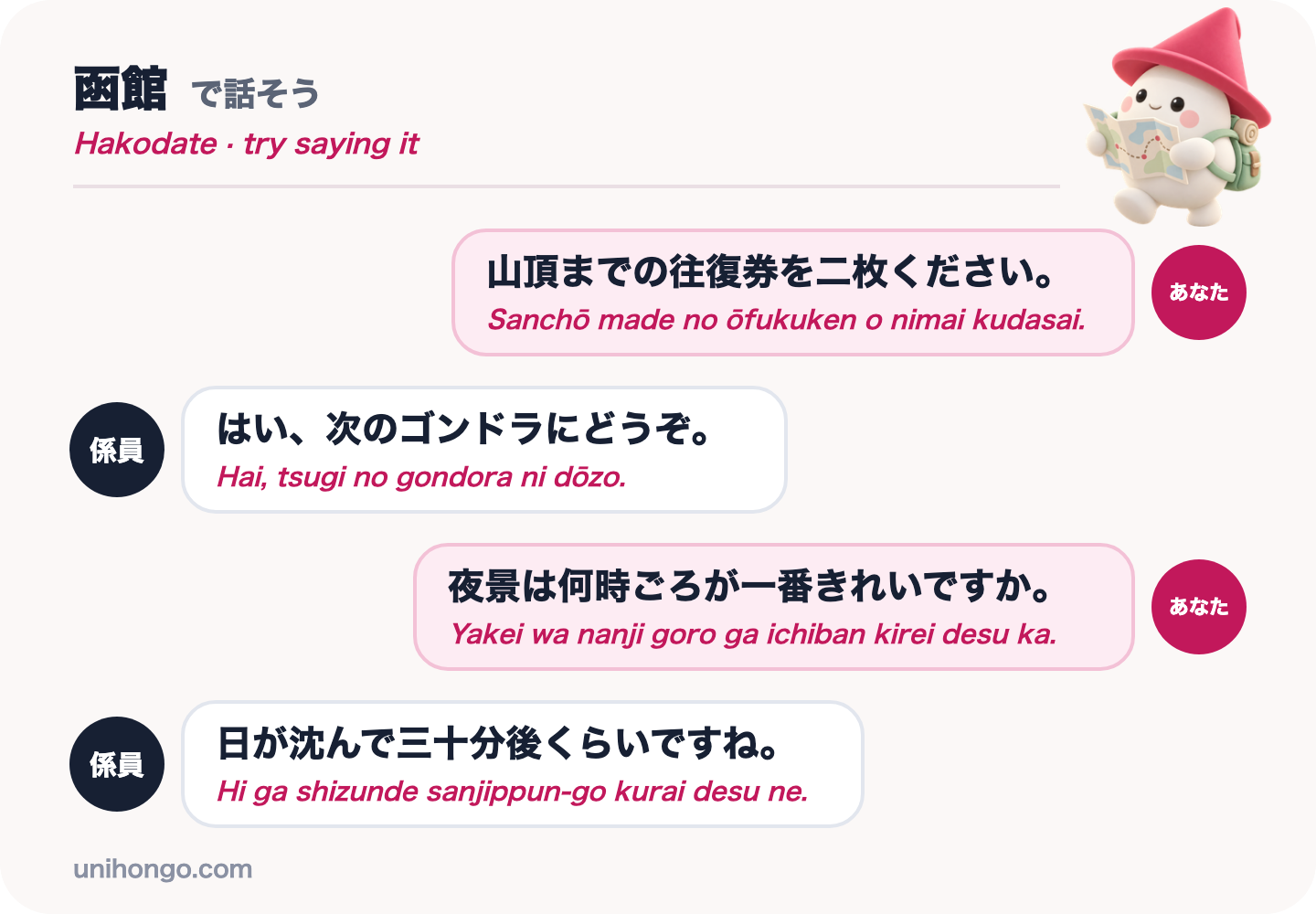
| Japanese | Romaji | Meaning |
|---|---|---|
| 山頂までの往復券を二枚ください。 | Sanchō made no ōfukuken o nimai kudasai. | Two return tickets to the summit, please. |
| はい、次のゴンドラにどうぞ。 | Hai, tsugi no gondora ni dōzo. | Here you are. Please board the next car. |
| 夜景は何時ごろが一番きれいですか。 | Yakei wa nanji goro ga ichiban kirei desu ka. | Around what time is the night view best? |
| 日が沈んで三十分後くらいですね。 | Hi ga shizunde sanjippun-go kurai desu ne. | About thirty minutes after the sun goes down. |
Official information
Ropeway operating status, road closures on Mount Hakodate and seasonal events change through the year. Check the ropeway's own website on the day you go, and the city's tourism site for access and events.