

At the bus stop: finding the right bus
A bus stop is a basu-tei, and at stations and terminals the stops are split into numbered boarding points called noriba. The timetable, jikokuhyō, is posted on the pole, often divided into weekdays, Saturdays and Sundays or holidays, so check which column applies to today. Timetables and route numbers vary by operator and change from time to time, so the pole or the operator's official site is always a better guide than an old blog post.
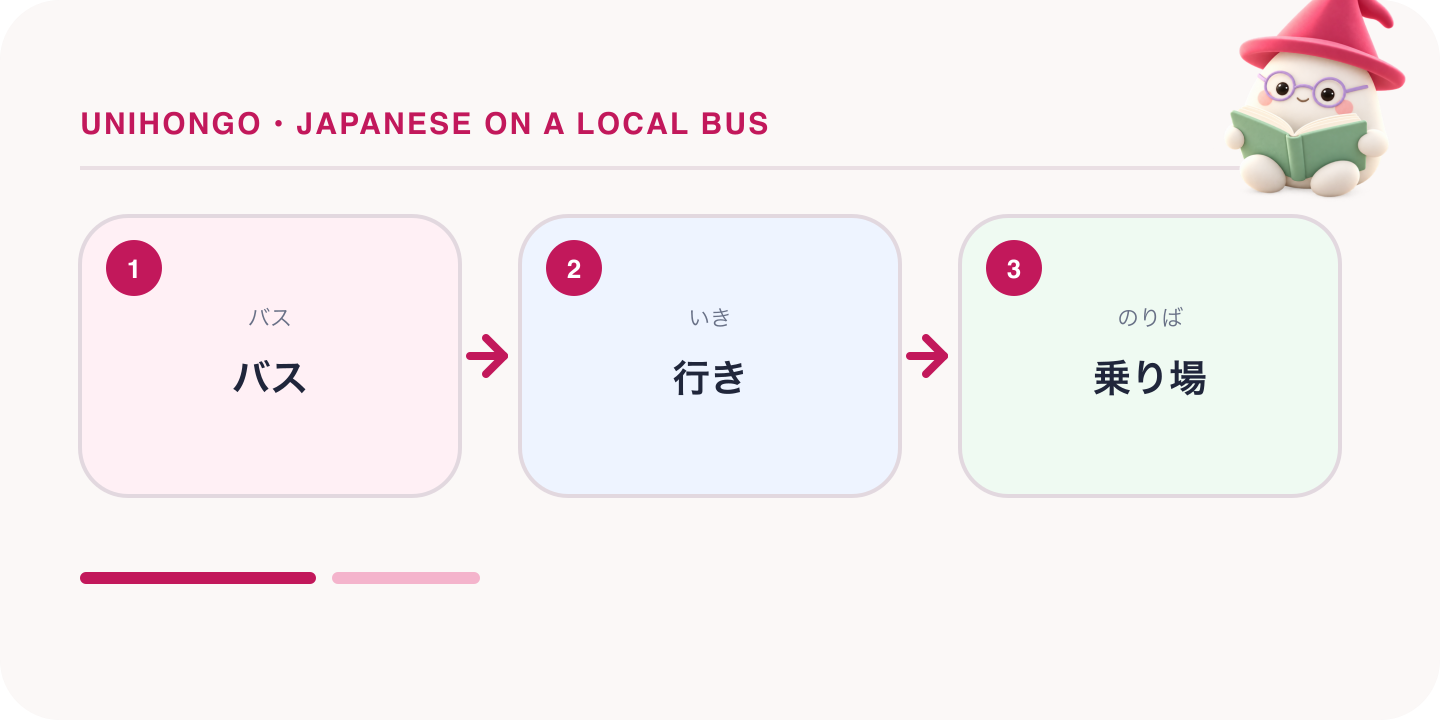
The front of the bus shows the route number, keitō, and the destination, ikisaki. Two buses with the same number can run in opposite directions, so read the destination as well. If you are not sure, the quickest check is to ask the driver through the open door before you get on.
| Japanese | Romaji | Meaning |
|---|---|---|
| このバスは清水寺に行きますか。 | Kono basu wa Kiyomizu-dera ni ikimasu ka. | Does this bus go to Kiyomizu Temple? |
| 駅行きのバスはどこから出ますか。 | Eki-yuki no basu wa doko kara demasu ka. | Where does the bus to the station leave from? |
| 何番乗り場ですか。 | Nanban noriba desu ka. | Which stop number is it? |
| 次のバスは何時ですか。 | Tsugi no basu wa nanji desu ka. | What time is the next bus? |
| 最終バスは何時ですか。 | Saishū basu wa nanji desu ka. | What time is the last bus? |
Signs and words on and around the bus
Before you board, a few words on the door, the side of the bus and the screen tell you how this particular bus works. Mae-nori means you board at the front; ushiro-nori or naka-nori means you board at the back or middle. Sakibarai means you pay first, and atobarai means you pay when you get off.
| Word | Reading | Meaning |
|---|---|---|
| バス停 | basu-tei | Bus stop |
| 乗り場 | noriba | Boarding point, stop number |
| 系統 | keitō | Route number |
| 行き先 | ikisaki | Destination |
| 前乗り | mae-nori | Board at the front |
| 後ろ乗り / 中乗り | ushiro-nori / naka-nori | Board at the back / middle |
| 先払い | sakibarai | Pay when boarding |
| 後払い | atobarai | Pay when getting off |
| 均一運賃 | kin'itsu unchin | Flat fare |
| 整理券 | seiriken | Numbered boarding ticket |
| 運賃表 | unchinhyō | Fare chart |
| 両替 | ryōgae | Change (breaking money) |
| 優先席 | yūsenseki | Priority seats |
Some screens scroll English and Japanese in turn, but smaller operators may show Japanese only. Recognising seiriken, unchinhyō and ryōgae is enough to get through most rides.
Boarding: flat fare or seiriken
On a flat-fare route, you usually board at the front, pay into the fare box or touch your IC card, and get off through the middle or back door. The fare is the same wherever you get off, and it is typically shown on the bus and at the stop.
On a distance-based route, you usually board at the back or middle. By the door there is a small machine that pushes out a seiriken, a numbered ticket, and an IC card reader. Take one or the other, not both: pull a ticket if you are paying cash, or touch your card if you are using one. Keep the ticket somewhere you can find it; you will need it at the end of the ride.
At the first stop on a route there may be no ticket at all, because the fare from the starting point is shown as a blank or a special number. If there is no ticket in the machine, do not worry: tell the driver where you got on when you pay.
| Japanese | Romaji | Meaning |
|---|---|---|
| 整理券をお取りください。 | Seiriken o o-tori kudasai. | Please take a numbered ticket. |
| ICカードをタッチしてください。 | Ai-shī kādo o tacchi shite kudasai. | Please touch your IC card. |
| 奥へお進みください。 | Oku e o-susumi kudasai. | Please move further inside. |
| 発車します。ご注意ください。 | Hassha shimasu. Go-chūi kudasai. | The bus is departing. Please be careful. |
| このカードは使えますか。 | Kono kādo wa tsukaemasu ka. | Can I use this card? |
Reading the fare chart
Above the driver is an electronic fare chart, the unchinhyō. It shows a grid of numbers, one for each boarding point along the route, and under each number the current fare from that point. As the bus moves on, the amounts go up. Find the number printed on your seiriken, and the figure under it is what you owe at this moment.
Fares are listed for adults, otona, and there is usually a separate lower fare for children, kodomo or shōni. Actual amounts depend on the operator and the distance, so there is no general figure to memorise; just read the chart before your stop so you have the right coins ready.
| On the chart | Reading | Meaning |
|---|---|---|
| 整理券番号 | seiriken bangō | Ticket number |
| 運賃 | unchin | Fare |
| 大人 | otona | Adult |
| 小児 / こども | shōni / kodomo | Child |
| 円 | en | Yen |
| 次は | tsugi wa | Next stop is |
Announcements and pressing the stop button
Before each stop a recorded voice announces its name, often followed by advertisements for nearby shops or clinics. The key pattern is tsugi wa, then the stop name. If it is your stop, press one of the stop buttons on the poles or walls. A chime sounds and a sign at the front lights up with tsugi tomarimasu, stopping next.
Japanese buses ask you to stay seated until the bus has fully stopped, and drivers often repeat it. Standing up early and walking to the front while the bus is moving is the most common thing new riders do wrong.
| Japanese | Romaji | Meaning |
|---|---|---|
| 次は、市役所前です。 | Tsugi wa, Shiyakusho-mae desu. | Next stop, City Hall. |
| お降りの方はボタンでお知らせください。 | O-ori no kata wa botan de o-shirase kudasai. | If you are getting off, please press the button. |
| 次、止まります。 | Tsugi, tomarimasu. | Stopping next. |
| バスが止まってから席をお立ちください。 | Basu ga tomatte kara seki o o-tachi kudasai. | Please stay seated until the bus stops. |
| お忘れ物のないようご注意ください。 | O-wasuremono no nai yō go-chūi kudasai. | Please take care not to leave anything behind. |
| 終点です。 | Shūten desu. | This is the last stop. |
Paying and getting off
At the front, next to the driver, is the fare box. On a seiriken route you drop in your ticket together with the exact fare. If you do not have the exact amount, use the change slot first: put in a coin or a thousand-yen note, collect the change, and then pay. Drivers generally do not give change by hand, and which notes the machine accepts varies, so carry coins where you can.
With an IC card, touch the reader by the fare box and the fare is deducted. If you board with a day pass, ichinichi jōshaken, show it to the driver as you get off, date side up. A quick arigatō gozaimashita as you leave is normal and appreciated.
| Japanese | Romaji | Meaning |
|---|---|---|
| 両替をお願いします。 | Ryōgae o onegai shimasu. | Could I get change, please? |
| 千円札は両替できますか。 | Sen-en satsu wa ryōgae dekimasu ka. | Can I change a thousand-yen note? |
| いくらですか。 | Ikura desu ka. | How much is it? |
| 一日乗車券です。 | Ichinichi jōshaken desu. | This is a day pass. |
| ここで降ります。 | Koko de orimasu. | I'm getting off here. |
| ありがとうございました。 | Arigatō gozaimashita. | Thank you. |
Bus etiquette in Japan
- Queue at the stop in the order people arrived and let passengers off before you board.
- Move inside, oku e, so people boarding after you can get on.
- Keep phone calls off the bus; set your phone to silent, called manā mōdo.
- Offer yūsenseki, priority seats, to older people, pregnant passengers, people with disabilities and people with small children.
- Take large suitcases on crowded city buses only when you must, and keep them out of the aisle.
- Stay seated until the bus stops, then walk to the front calmly; the driver will wait for you.
- Have your fare or card ready before your stop so you do not hold up the queue at the fare box.
When something goes wrong
Most problems on a bus are small and drivers deal with them every day. Say sumimasen, explain in a short sentence, and they will usually tell you what to do. If you lost your seiriken, tell the driver where you boarded; they may charge the fare from that stop or, on some routes, from the start of the line.
If your IC card does not have enough money, the reader will beep and show zandaka busoku, insufficient balance. Some buses let you top up at the fare box and others do not, so you may need to pay the difference in cash. If you missed your stop, press the button for the next one and walk back or catch a bus the other way.
| Japanese | Romaji | Meaning |
|---|---|---|
| すみません、整理券をなくしました。 | Sumimasen, seiriken o nakushimashita. | Excuse me, I lost my numbered ticket. |
| 駅前から乗りました。 | Ekimae kara norimashita. | I got on at the station. |
| 残高が足りません。 | Zandaka ga tarimasen. | My balance isn't enough. |
| ここでチャージできますか。 | Koko de chāji dekimasu ka. | Can I top up here? |
| 乗り過ごしてしまいました。 | Norisugoshite shimaimashita. | I missed my stop. |
| バスに傘を忘れました。 | Basu ni kasa o wasuremashita. | I left my umbrella on the bus. |
For something left behind, note the route number, the direction and the approximate time, then contact the operator's office. Those three details are what staff will ask for first.