

Why the Sapporo Snow Festival is worth a winter trip
The Sapporo Snow Festival is one of the largest winter events in Japan, and it has humble roots. In 1950, a few local high school students built snow statues in Ōdōri Park, the long green strip in the middle of the city. The idea caught on, the sculptures grew, and today teams spend weeks shaping snow into castles, temples, cartoon characters and famous buildings from around the world, some of them as wide as a small apartment block.
What makes it special is the scale and the setting. You walk block after block of Ōdōri Park between sculptures lit up against the night sky, with the Sapporo TV Tower glowing at the end, then take one subway stop south to see ice carvings glittering among the neon of Susukino. Hokkaido food stalls sell hot soup, grilled seafood and buttered potatoes along the way, and the smell of grilling follows you through the cold.
For a Japanese learner, the festival is a friendly immersion. Every sign repeats the same few words, every stall has a short menu on a board, and the staff in bright jackets are used to being asked the way. You will read, order and ask questions again and again in a single evening.
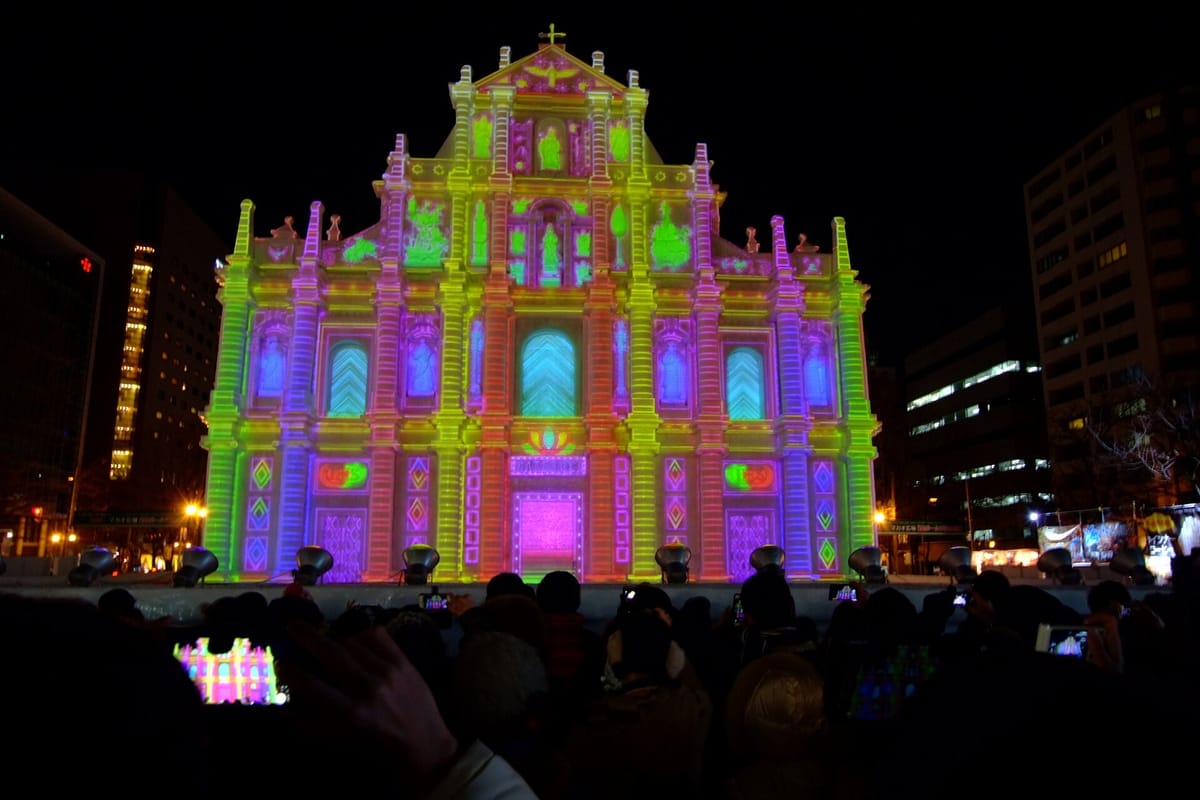
Getting there: Ōdōri, Susukino and Sakaemachi stations
The main site is Ōdōri Park in central Sapporo. Ōdōri Station, where the Namboku, Tōzai and Tōhō subway lines meet, sits under the park, and JR Sapporo Station is about ten minutes' walk north, or a warm walk through the Chi-Ka-Ho underground walkway. From New Chitose Airport, the JR Rapid Airport train reaches Sapporo Station in around forty minutes, though it is fuller than usual during festival week.
The Susukino site runs along the main street through Susukino, one stop south of Ōdōri on the Namboku Line, and is easy to walk to underground through the Pole Town arcade. The Tsudome site, at the Sapporo Community Dome, is in the north-east of the city: take the Tōhō Line to its terminus at Sakaemachi and walk about fifteen minutes, or use the shuttle buses that run during the festival.
| Japanese | Romaji | Meaning |
|---|---|---|
| 雪まつりの大通会場はどこですか。 | Yuki matsuri no Ōdōri kaijō wa doko desu ka. | Where is the Ōdōri site of the Snow Festival? |
| 栄町駅へ行くのは東豊線ですか。 | Sakaemachi-eki e iku no wa Tōhō-sen desu ka. | Is it the Tōhō Line to Sakaemachi Station? |
| つどーむ行きのシャトルバスはどこから出ますか。 | Tsudōmu-yuki no shatoru basu wa doko kara demasu ka. | Where does the shuttle bus to Tsudome leave from? |
| 地下を通ってすすきのまで行けますか。 | Chika o tōtte Susukino made ikemasu ka. | Can I get to Susukino underground? |
| 一番近い出口はどこですか。 | Ichiban chikai deguchi wa doko desu ka. | Where is the nearest exit? |
Ōdōri, Susukino and Tsudome: what you will see
Ōdōri Park is the heart of the festival. The park's blocks, counted as 1-chōme, 2-chōme and so on from east to west, each hold a different display, from the giant sculptures built as stages for evening shows to rows of smaller statues made by citizen teams and an international snow sculpture contest. Food and drink stalls line the park, and the sculptures are lit into the evening, when the site is at its most beautiful and most crowded.
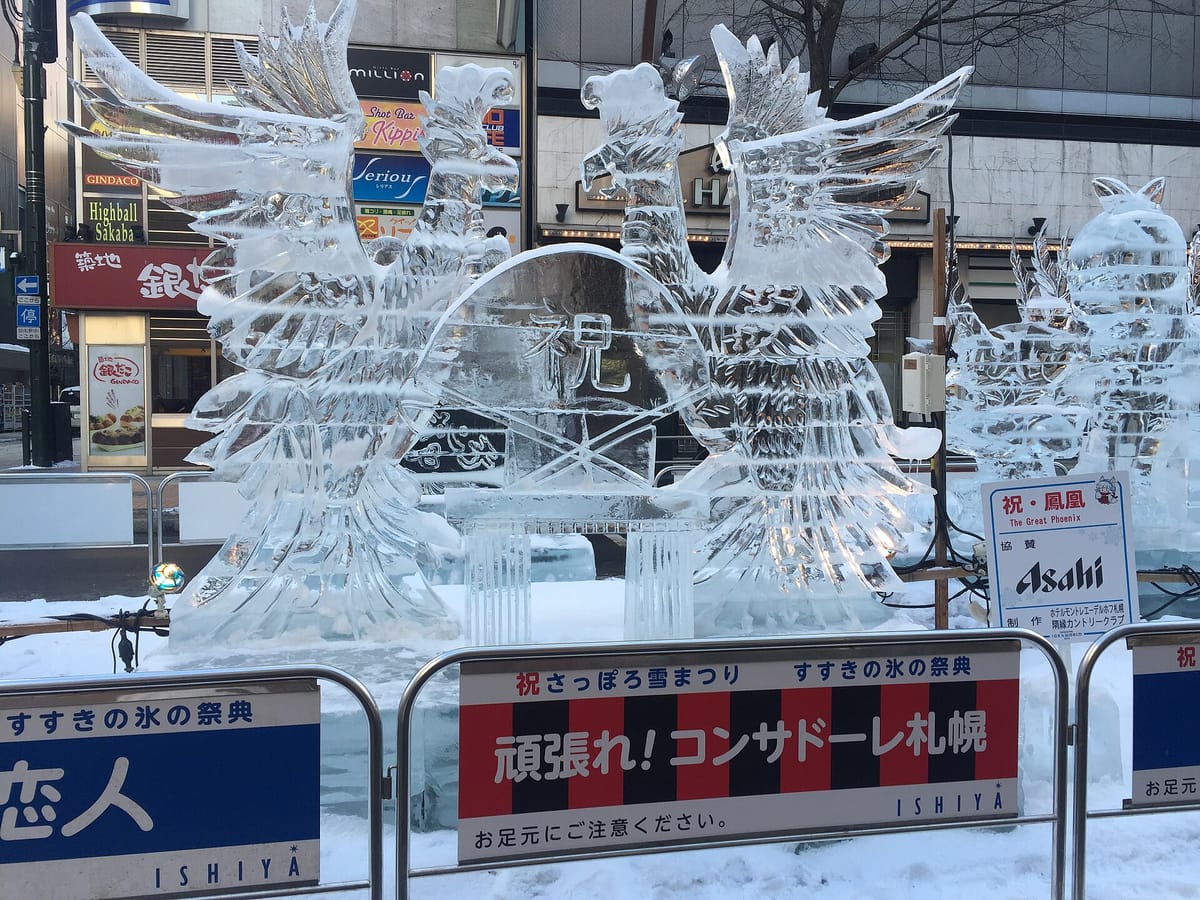
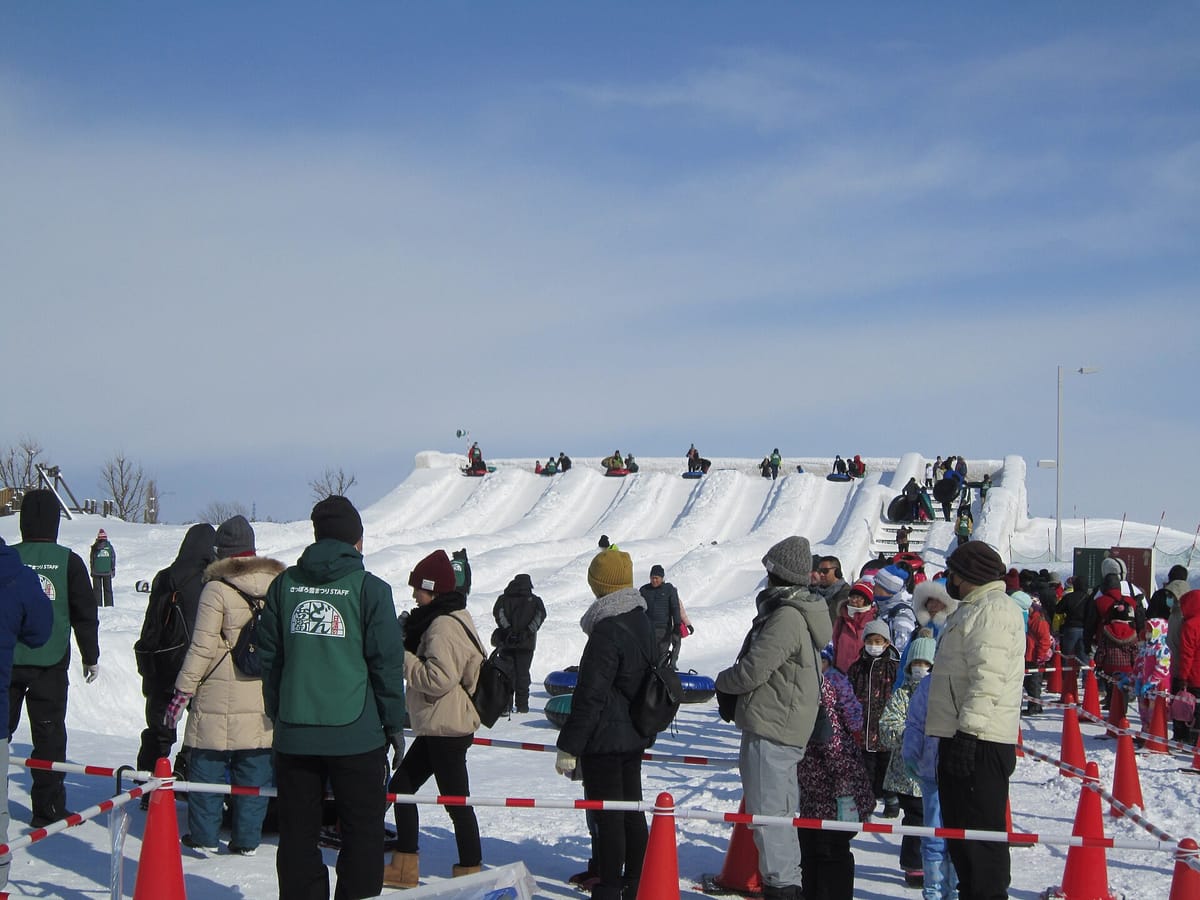
The Susukino site shows around a hundred ice sculptures along the main street, many sponsored by local shops and restaurants. Because it sits in the nightlife district, it pairs naturally with dinner and is lit until late. Tsudome is the site for children and anyone who wants to play: long snow slides, tube runs and snow rafting outside, and an indoor dome with food and a play area.
- Large snow sculptures in Ōdōri Park, used as backdrops for evening shows and projection mapping.
- The international snow sculpture contest, with teams from overseas carving in the park.
- Citizen snow statues, shimin setsuzō: smaller, often funny pieces by local groups.
- Food and drink stalls along the park with Hokkaido specialities.
- Ice sculptures, hyōzō, along the street at the Susukino site.
- Snow slides and tube runs at Tsudome, popular with families.
- The view over the lit park from the Sapporo TV Tower observation deck.
Festival signs and words to read
Festival signage is simple and repetitive, which makes it perfect reading practice. Each site name ends in 会場, kaijō, and each sculpture has a small board giving its title and the team that made it. The difference between 雪 and 氷 is worth learning first: 雪 is snow and 氷 is ice, so 雪像 is a snow sculpture and 氷像 an ice sculpture.
You will also see plenty of safety signs, because the ground is slippery everywhere. 足元注意, watch your step, appears on steps, slopes and exits, and 立入禁止, no entry, marks the barriers around sculptures still being built.
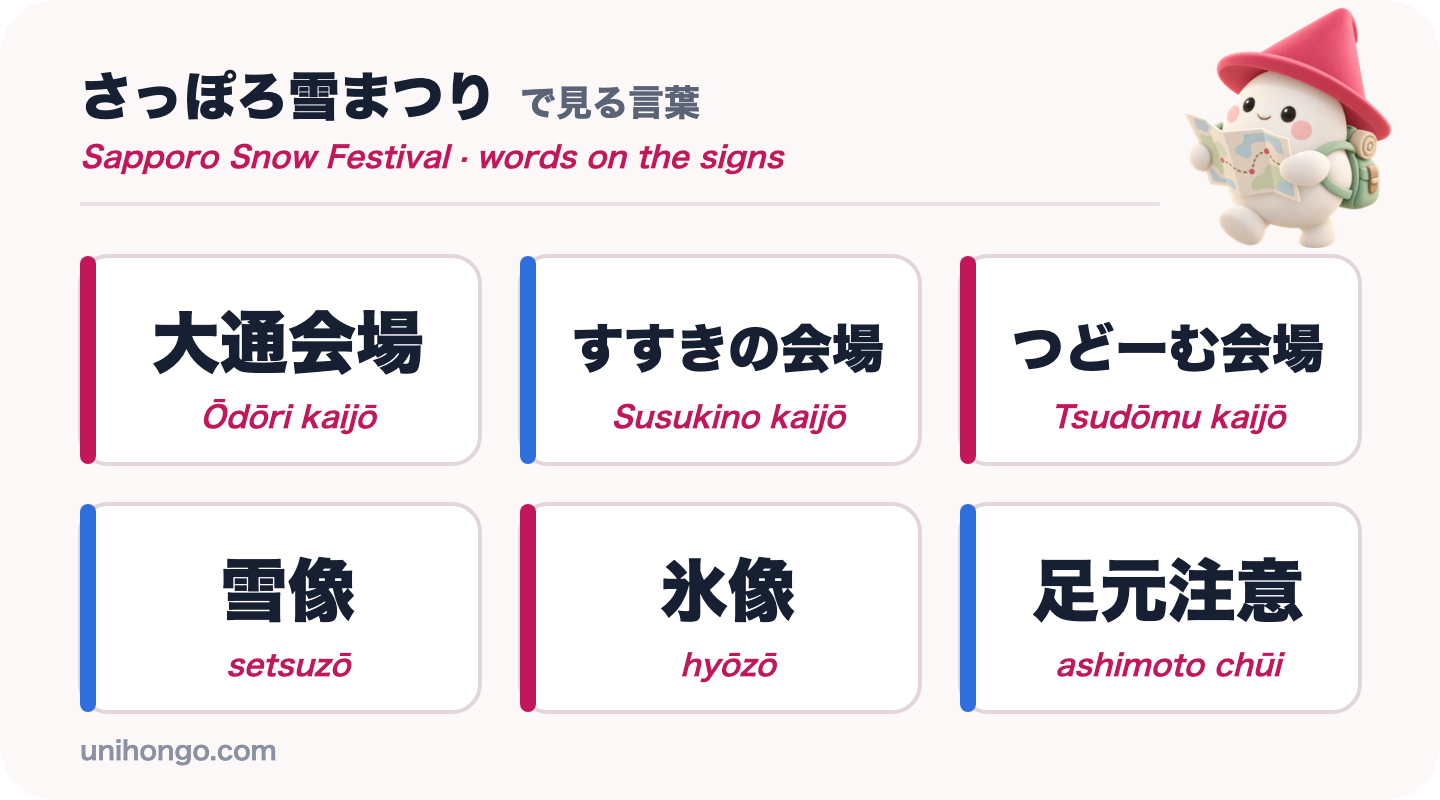
| Word | Reading | Meaning |
|---|---|---|
| 雪まつり | yuki matsuri | Snow festival |
| 大通会場 | Ōdōri kaijō | The Ōdōri Park festival site |
| すすきの会場 | Susukino kaijō | The Susukino ice sculpture site |
| つどーむ会場 | Tsudōmu kaijō | The Tsudome family site |
| 雪像 | setsuzō | Snow sculpture |
| 氷像 | hyōzō | Ice sculpture |
| 市民雪像 | shimin setsuzō | Snow statue made by local citizens |
| 足元注意 | ashimoto chūi | Watch your step |
| 立入禁止 | tachiiri kinshi | No entry |
| 案内所 | annaijo | Information booth |
Japanese at the food stalls: ordering something hot
The stalls, yatai, are half the fun of the festival. Expect Hokkaido favourites such as potatoes with butter, jaga batā, grilled scallops and corn, crab soup, ramen and jingisukan mutton, plus hot drinks and sweet treats. Menus are written on boards above the counter, often with pictures, and most stalls are happy with pointing plus a short phrase.
Queues can be long in the evening, so decide what you want while you wait. Many stalls accept IC cards or cash; having coins ready speeds things up. Eat standing near the stall or in the rest areas, and take your rubbish to the sorted bins provided.
| Japanese | Romaji | Meaning |
|---|---|---|
| じゃがバターを一つください。 | Jaga batā o hitotsu kudasai. | One potato with butter, please. |
| 温かい飲み物はありますか。 | Atatakai nomimono wa arimasu ka. | Do you have any hot drinks? |
| これは何ですか。 | Kore wa nan desu ka. | What is this? |
| 一番人気はどれですか。 | Ichiban ninki wa dore desu ka. | Which is the most popular? |
| ICカードで払えますか。 | IC kādo de haraemasu ka. | Can I pay with an IC card? |
| ゴミはどこに捨てればいいですか。 | Gomi wa doko ni sutereba ii desu ka. | Where should I throw away my rubbish? |
Staying warm, safe and on schedule
The festival is outdoors in midwinter, and a few habits make the difference between a magical evening and a miserable one.
- Dress in layers, with a hat, gloves, scarf and thick socks; warm-up breaks indoors help a lot.
- Wear boots with a good grip, or buy slip-on ice cleats sold in shops around the city.
- Walk with short steps and hold the handrails on stairs; the most slippery places are station entrances and crossings.
- Visit Ōdōri in daylight for detail and again after dark for the lighting; weekday evenings are calmer than weekends.
- Book accommodation and airport transfers early: festival week is the busiest time of year in the city.
- Do not touch or climb the sculptures, and keep behind the ropes around those still being built.
Practise the festival before you go
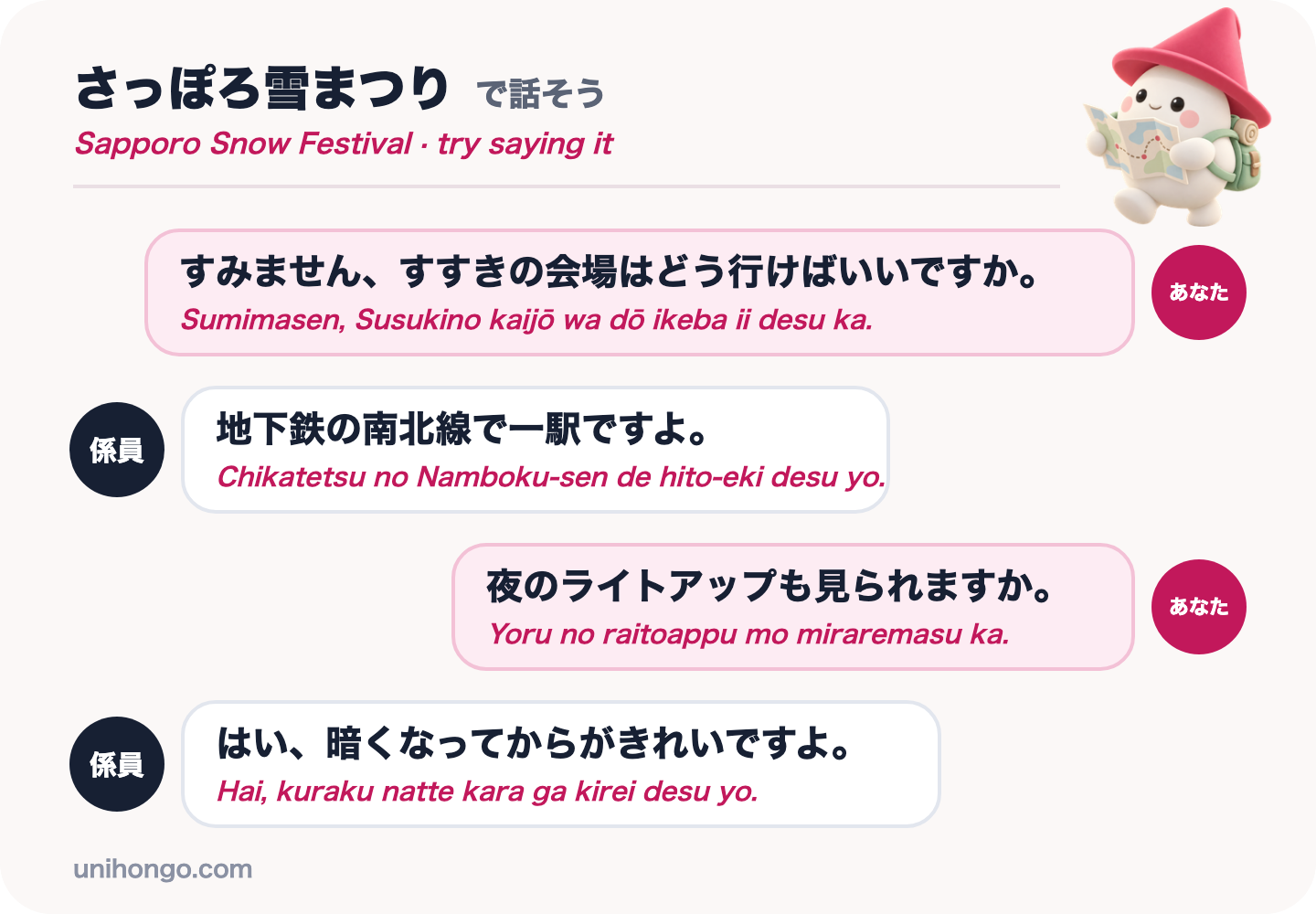
The questions you will ask most at the festival are about where things are and when they are best. The staff in festival jackets answer in short, clear sentences, often with a subway line or a number of stops. Practise the four lines below until you can say them without looking, and listen for hito-eki, one stop, and the line name in the reply.
Then practise with a partner who answers back. In Unihongo, pick the Festival Food or Seasonal Events topic and ask your AI Sensei to play festival staff or a stall keeper in Ōdōri Park, or try the Find a Friend at a Festival mission. Saying the lines aloud once before the trip makes them far easier to use with cold hands and a crowd around you.
| Japanese | Romaji | Meaning |
|---|---|---|
| すみません、すすきの会場はどう行けばいいですか。 | Sumimasen, Susukino kaijō wa dō ikeba ii desu ka. | Excuse me, how do I get to the Susukino site? |
| 地下鉄の南北線で一駅ですよ。 | Chikatetsu no Namboku-sen de hito-eki desu yo. | It's one stop on the Namboku Line subway. |
| 夜のライトアップも見られますか。 | Yoru no raitoappu mo miraremasu ka. | Can we see the lights in the evening too? |
| はい、暗くなってからがきれいですよ。 | Hai, kuraku natte kara ga kirei desu yo. | Yes, it's beautiful once it gets dark. |
Official information
Dates, lighting times, site maps, shuttle bus details and any changes caused by weather are published on the festival's official website, which also posts crowd and weather updates during the event. Check it shortly before you travel.