

Why the snow monkeys are worth the walk
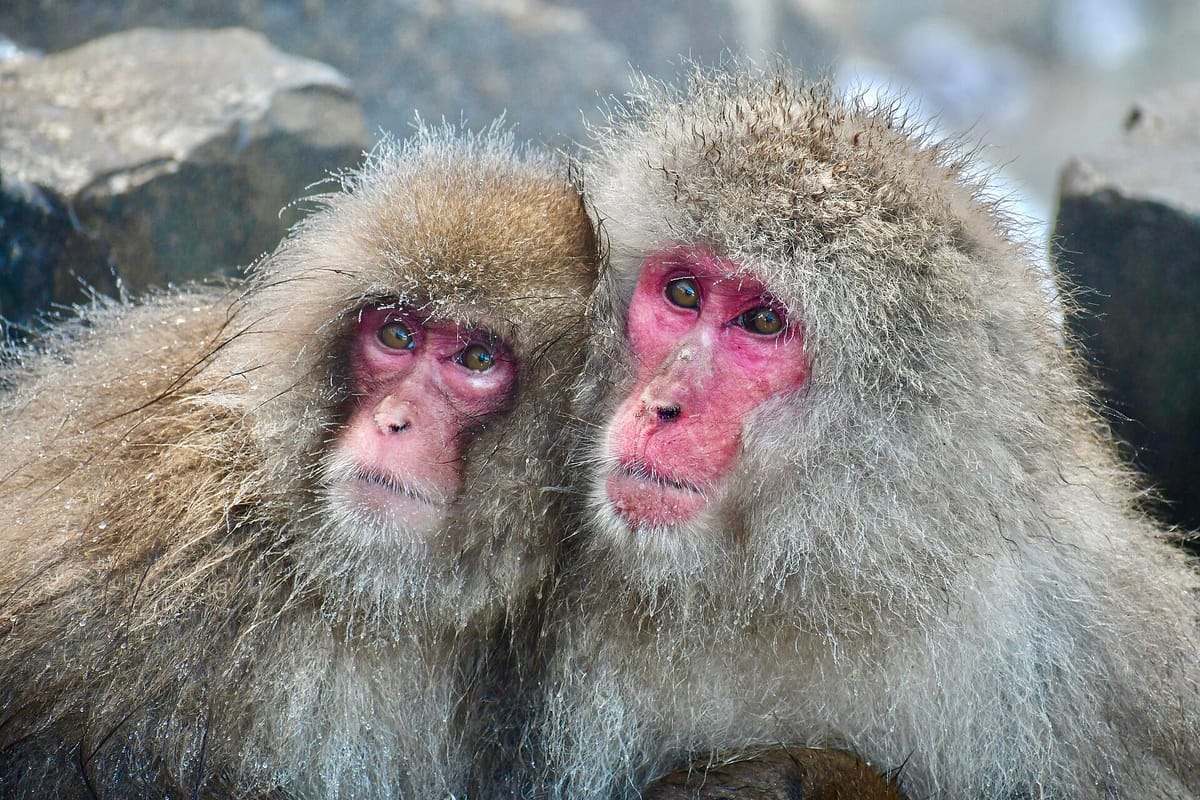
Japanese macaques live further north than any other monkey in the world, and at Jigokudani you see how they cope with a mountain winter. The troop spends the day on the rocks and slopes around the park, grooming, feeding and squabbling, and when it is cold some of them climb into a hot spring pool and sit with only their heads above the steam. Watching a monkey doze in the water while snow gathers on its fur is one of the most memorable wildlife sights in Japan.
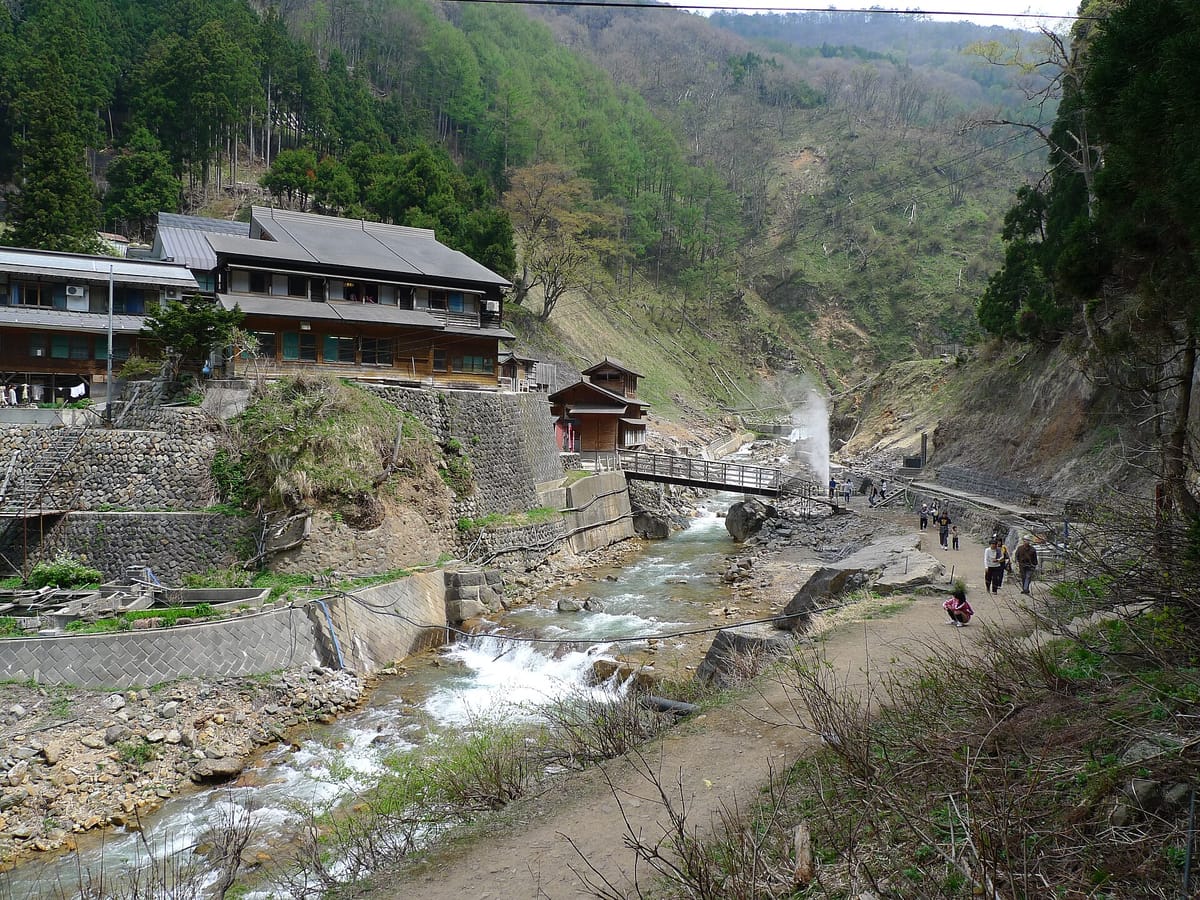
The park lies at about 850 metres in the valley of the Yokoyu River, in the town of Yamanouchi. It is not a zoo. There are no cages and the monkeys walk past visitors on the paths, which is exactly why the rules about distance and food matter so much.
For a Japanese learner, the trip also passes through two classic onsen towns, Yudanaka and Shibu, where you can practise the language of hot springs: the baths, the keys, the towels and the rules.
Getting there: Nagano, Yudanaka and the forest trail
Start at Nagano Station, about ninety minutes from Tokyo on the Hokuriku Shinkansen. The private Nagano Dentetsu railway, Nagaden, leaves from its own underground platforms at the station; take a limited express to the terminus, Yudanaka, about forty minutes. JR passes are not valid on Nagaden.
From Yudanaka Station, local buses run in about fifteen minutes to the Snow Monkey Park stop near Kanbayashi Onsen, where you start walking. Direct buses also run from Nagano Station, most often in winter. The trail from Kanbayashi Onsen to the park is about two kilometres through cedar forest, mostly flat with a few climbs and steps, and takes around thirty minutes. Drivers can use the free car park at Kanbayashi Onsen and walk the same trail.
| Japanese | Romaji | Meaning |
|---|---|---|
| 湯田中まで特急で一枚お願いします。 | Yudanaka made tokkyū de ichimai onegai shimasu. | One ticket to Yudanaka on the limited express, please. |
| 長電のホームはどこですか。 | Nagaden no hōmu wa doko desu ka. | Where is the Nagaden platform? |
| スノーモンキーパーク行きのバスはどれですか。 | Sunō Monkī Pāku yuki no basu wa dore desu ka. | Which bus goes to the Snow Monkey Park? |
| 野猿公苑まで歩いて何分ですか。 | Yaen-kōen made aruite nanpun desu ka. | How many minutes on foot to the monkey park? |
| 道は凍っていますか。 | Michi wa kōtte imasu ka. | Is the path icy? |
What you will see in Hell Valley
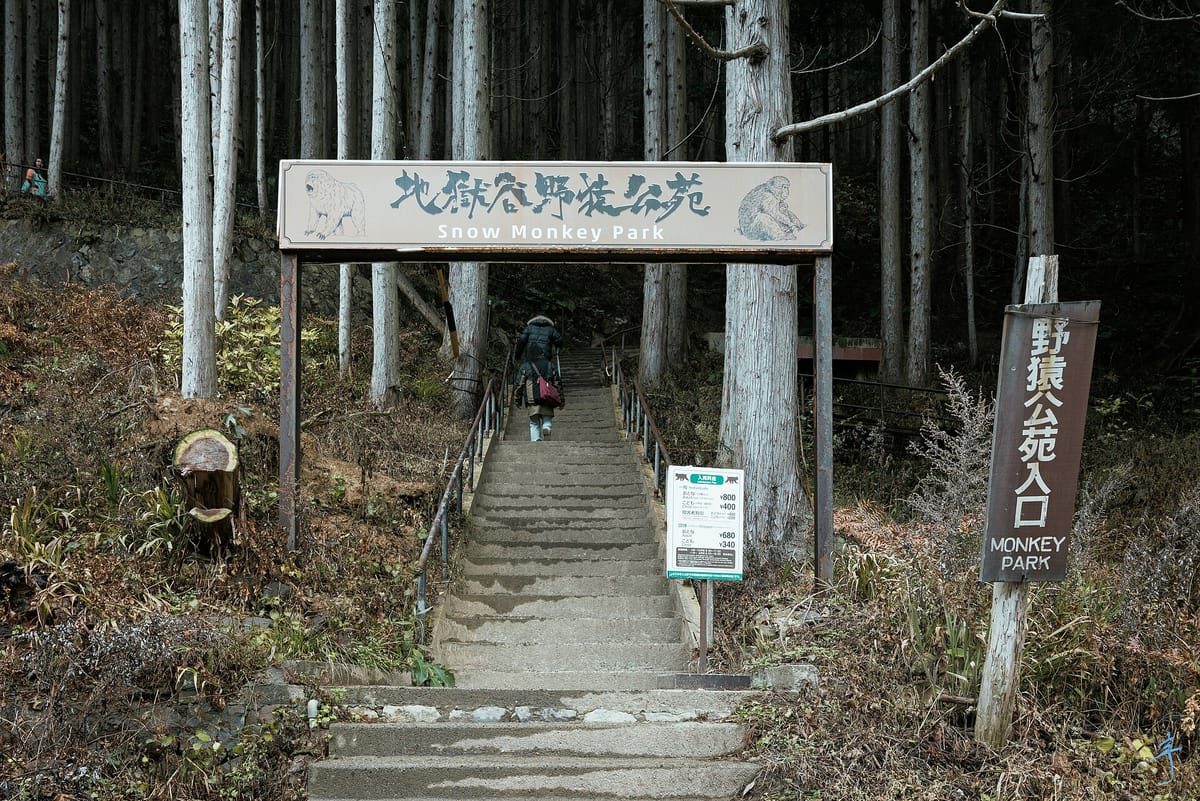
The trail ends at a steep flight of steps down to the valley floor, where the river runs between steaming rocks. The park's entrance building sits above the monkeys' pool, and beyond it the slope and riverbank are where the troop spends most of its time.
- The monkey pool: a hot spring bath built for the macaques, where they sit in the steam, mostly in the cold months.
- Nihonzaru (ニホンザル): Japanese macaques of all ages; in spring and early summer you may see new babies riding on their mothers' backs.
- Grooming, kezukuroi (毛づくろい): the monkeys spend hours picking through each other's fur, a key part of their social life.
- The geyser: a jet of boiling water and steam beside the river near the park, the source of the valley's name.
- Kōrakukan (後楽館): an old inn on the trail near the park, known for its outdoor baths.
- The forest trail: the walking path from Kanbayashi Onsen, lined with tall cedars and often deep in snow in winter.
Words on the signs from Yudanaka to the park
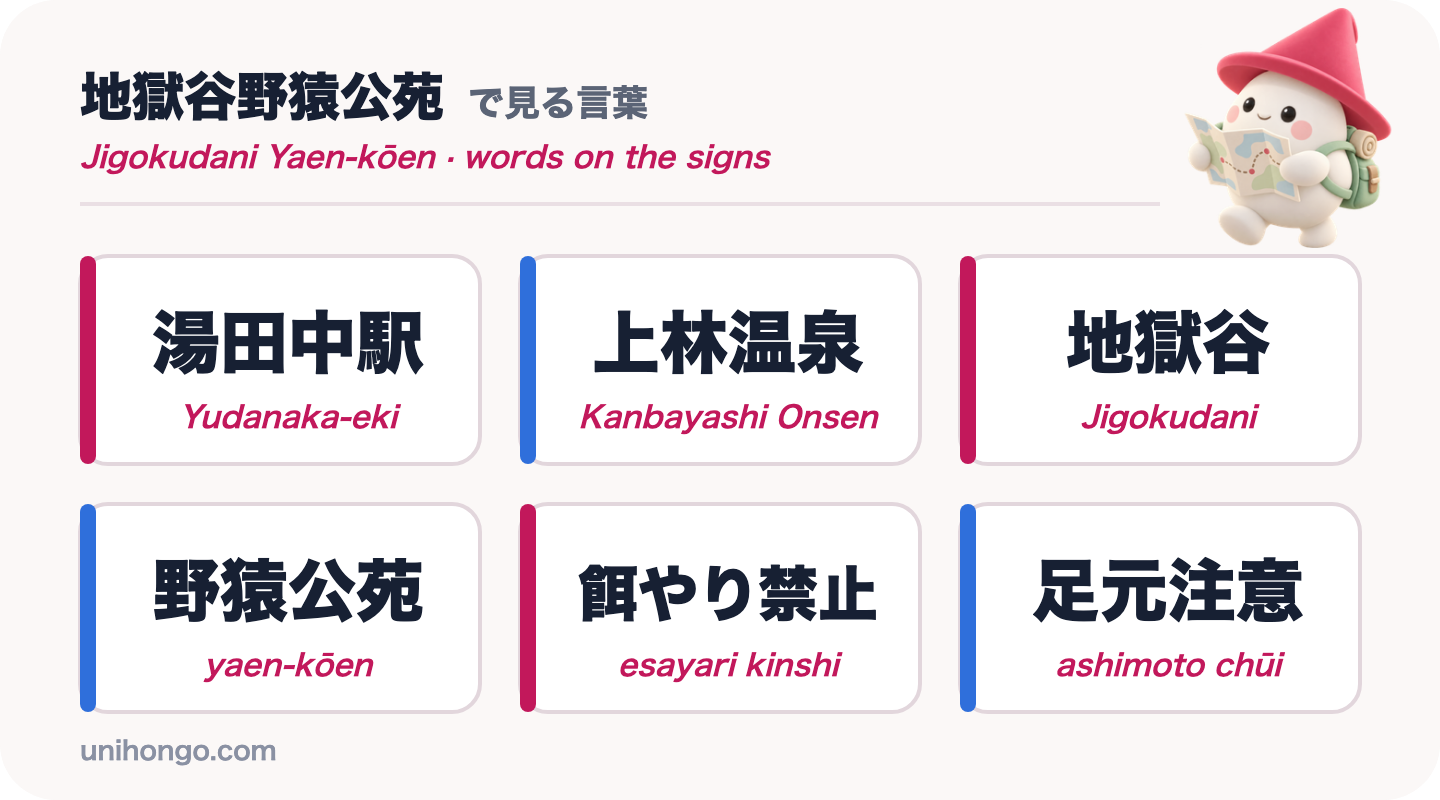
The signs on the route are mostly place names, and the most important signs at the park are rules. 餌やり禁止, esayari kinshi, means no feeding, and 足元注意, ashimoto chūi, watch your step, is posted on icy steps and slopes all winter.
Notice the kanji 猿, saru, monkey, in 野猿公苑. The park's name mixes an older, formal word for wild monkeys, yaen, with kōen, park, written with the character 苑, garden, instead of the more usual 園.
| Word | Reading | Meaning |
|---|---|---|
| 湯田中駅 | Yudanaka-eki | Yudanaka Station, end of the Nagaden line |
| 上林温泉 | Kanbayashi Onsen | Hot spring village at the start of the trail |
| 地獄谷 | Jigokudani | Hell Valley |
| 野猿公苑 | yaen-kōen | Wild monkey park |
| 餌やり禁止 | esayari kinshi | No feeding |
| 足元注意 | ashimoto chūi | Watch your step |
| 入口 | iriguchi | Entrance |
| 猿 | saru | Monkey |
Onsen Japanese for Yudanaka and Shibu
Most visitors combine the monkeys with a night in an onsen town. Shibu Onsen is a narrow lane of wooden inns with nine small public baths; most are reserved for guests staying in the town, who are given a key. Yudanaka, at the end of the railway, has larger hotels and some public baths open to day visitors. Either way, you will need a few phrases about the baths.
The rules are the same as everywhere in Japan: wash thoroughly at the taps before getting in, keep your small towel out of the water and tie up long hair. Some baths are very hot, so ease in slowly.
| Japanese | Romaji | Meaning |
|---|---|---|
| 外湯の鍵を貸していただけますか。 | Sotoyu no kagi o kashite itadakemasu ka. | Could I borrow the key for the public baths? |
| お風呂は何時まで入れますか。 | O-furo wa nanji made hairemasu ka. | Until what time can I use the bath? |
| 日帰りで入れるお風呂はありますか。 | Higaeri de haireru o-furo wa arimasu ka. | Is there a bath I can use as a day visitor? |
| タオルは借りられますか。 | Taoru wa kariraremasu ka. | Can I borrow a towel? |
| このお湯は熱いですか。 | Kono o-yu wa atsui desu ka. | Is this water hot? |
| 男湯はどちらですか。 | Otoko-yu wa dochira desu ka. | Which is the men's bath? |
Rules, etiquette and timing at the park
The monkeys are wild animals that tolerate people because people have always behaved around them. Keep it that way.
- Do not touch or feed the monkeys, and do not eat in the park. Keep all food and drink sealed in your bag.
- Do not stare into a monkey's eyes or crouch face to face with it; they can read it as a threat.
- Give monkeys room to pass on the paths, and step back if one comes towards you.
- Stay behind the edge of the pool; do not lean over the water for close-ups.
- Check the park's daily monkey report and weekly forecast before you set out.
- Winter weekends are busiest; weekday mornings are calmer.
- Allow at least half a day from Nagano, and longer if the trail is snowy.
Practise at the park entrance before you go
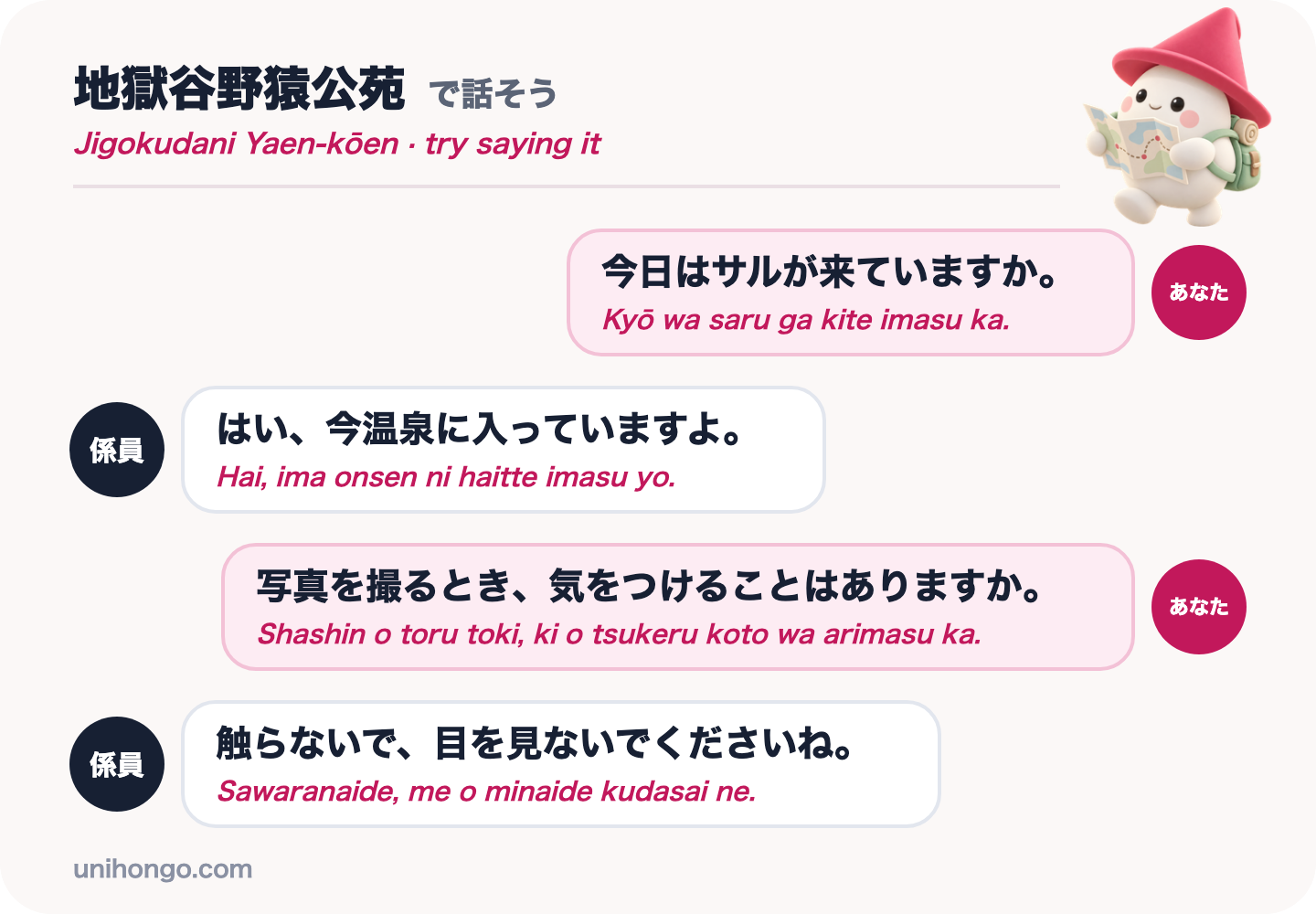
The first question everyone asks at the park is whether the monkeys have come today. Staff answer with kite imasu, they have come and are here, or kite imasen, they are not here. The second question, what to watch out for, gives you the two key rules in natural Japanese.
Practise the four lines below until you can say them without reading. Then rehearse with a partner who answers back: in Unihongo, choose the Sightseeing topic and ask your AI Sensei to play the park staff, and ask them sometimes to tell you the monkeys have not come, so you practise the negative.
| Japanese | Romaji | Meaning |
|---|---|---|
| 今日はサルが来ていますか。 | Kyō wa saru ga kite imasu ka. | Are the monkeys here today? |
| はい、今温泉に入っていますよ。 | Hai, ima onsen ni haitte imasu yo. | Yes, they're in the hot spring right now. |
| 写真を撮るとき、気をつけることはありますか。 | Shashin o toru toki, ki o tsukeru koto wa arimasu ka. | Is there anything I should be careful about when taking photos? |
| 触らないで、目を見ないでくださいね。 | Sawaranaide, me o minaide kudasai ne. | Please don't touch them or look them in the eye. |
Official information
Entry fees, online tickets, opening hours and the daily monkey report are published by the park. Check it on the morning of your visit, and look at the access page for the latest trail and bus information.