

Why Akihabara is worth an afternoon
After the Second World War, stalls selling radio parts gathered under the railway at Akihabara, and the area grew with each wave of Japanese technology: radios, then televisions and appliances, then computers and games. The name Denki-gai, Electric Town, is still painted on the station exit, and big electronics stores and small component shops remain.
From the 1990s, Akihabara also became the capital of otaku culture. Whole buildings are now given over to anime goods, manga, figures and trading cards, retro video game shops sell cartridges from every era, and game centres, capsule-toy halls and themed cafés fill the side streets. On a busy afternoon it feels like walking through the inside of a video game.
For a learner, Akihabara is a reading workout. Shops label everything, the price tags use a small set of repeated words, 新品, new; 中古, used; 免税, tax-free, and the staff are used to precise questions. Knowing the words means you can compare items and conditions on your own.
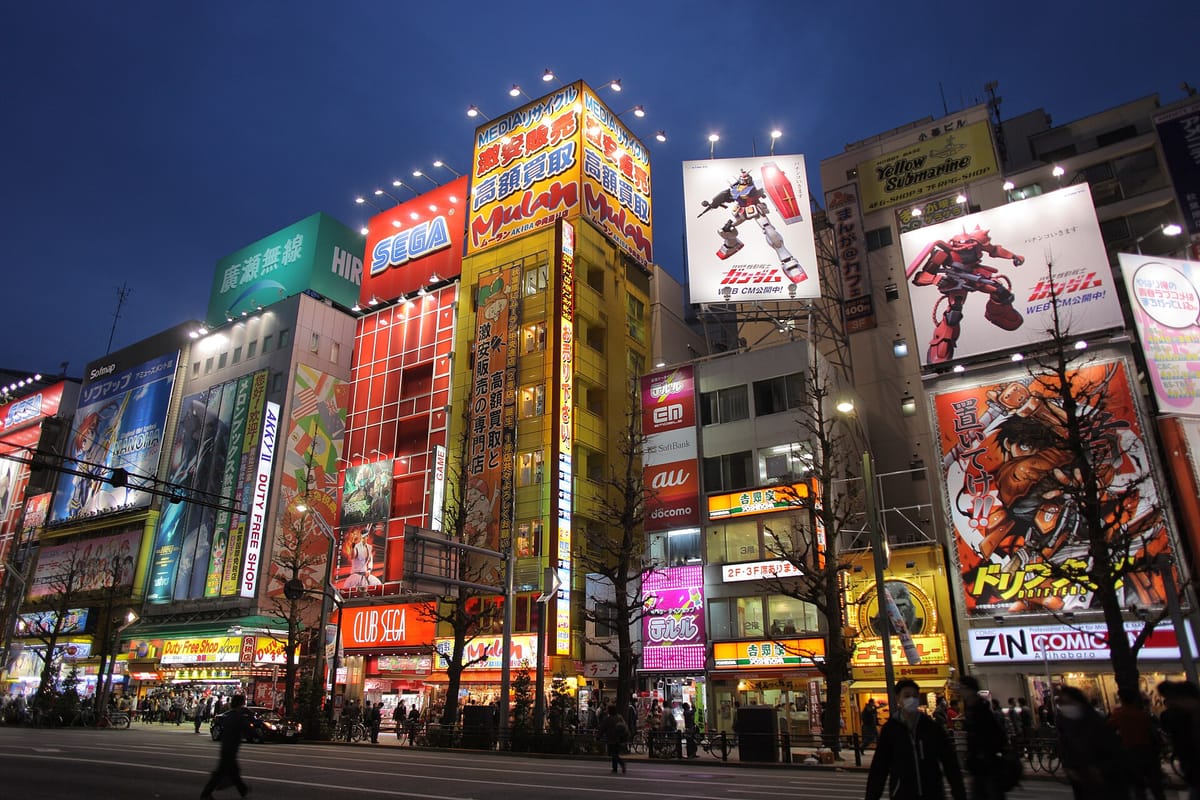
Getting there: the Electric Town exit
Akihabara Station is two stops north of Tokyo Station on the JR Yamanote and Keihin-Tōhoku lines, and is also on the JR Sōbu Line, the Tokyo Metro Hibiya Line and the Tsukuba Express. From the JR station, use the Electric Town exit, 電気街口, Denkigai-guchi, which comes out on the west side facing the main shops and Chūō-dōri. The big Yodobashi Camera store is on the east side, reached from the Shōwa-dōri exit.
Akihabara is also walkable from nearby areas. Kanda Myōjin, the shrine that watches over the district, is about ten minutes' walk north-west, and Ueno is a pleasant walk of about half an hour north along Chūō-dōri.
| Japanese | Romaji | Meaning |
|---|---|---|
| 電気街口はどちらですか。 | Denkigai-guchi wa dochira desu ka. | Which way is the Electric Town exit? |
| 中央通りはこの道ですか。 | Chūō-dōri wa kono michi desu ka. | Is this Chūō-dōri? |
| ヨドバシカメラはどう行けばいいですか。 | Yodobashi Kamera wa dō ikeba ii desu ka. | How do I get to Yodobashi Camera? |
| 神田明神まで歩いて何分くらいですか。 | Kanda Myōjin made aruite nanpun kurai desu ka. | About how many minutes on foot to Kanda Myōjin? |
| この近くにATMはありますか。 | Kono chikaku ni ATM wa arimasu ka. | Is there an ATM near here? |
Electronics, games, anime and a shrine
Start on Chūō-dōri, the main avenue, where the big shop buildings stand. Electronics chains sell cameras, headphones and appliances on many floors, with tax-free counters and international models. Behind them, narrow streets and old buildings such as Radio Kaikan hold specialist shops for figures, trading cards and collectibles, and the component stalls near the station still sell cables, switches and parts.
Game fans can spend hours in the retro game shops and the multi-floor game centres with crane games, rhythm games and purikura photo booths. Capsule-toy halls line whole walls with gachapon machines. For a change of pace, walk up to Kanda Myōjin, an old shrine that is the guardian of Akihabara and of the Kanda festival, and a favourite with fans because it appears in anime.
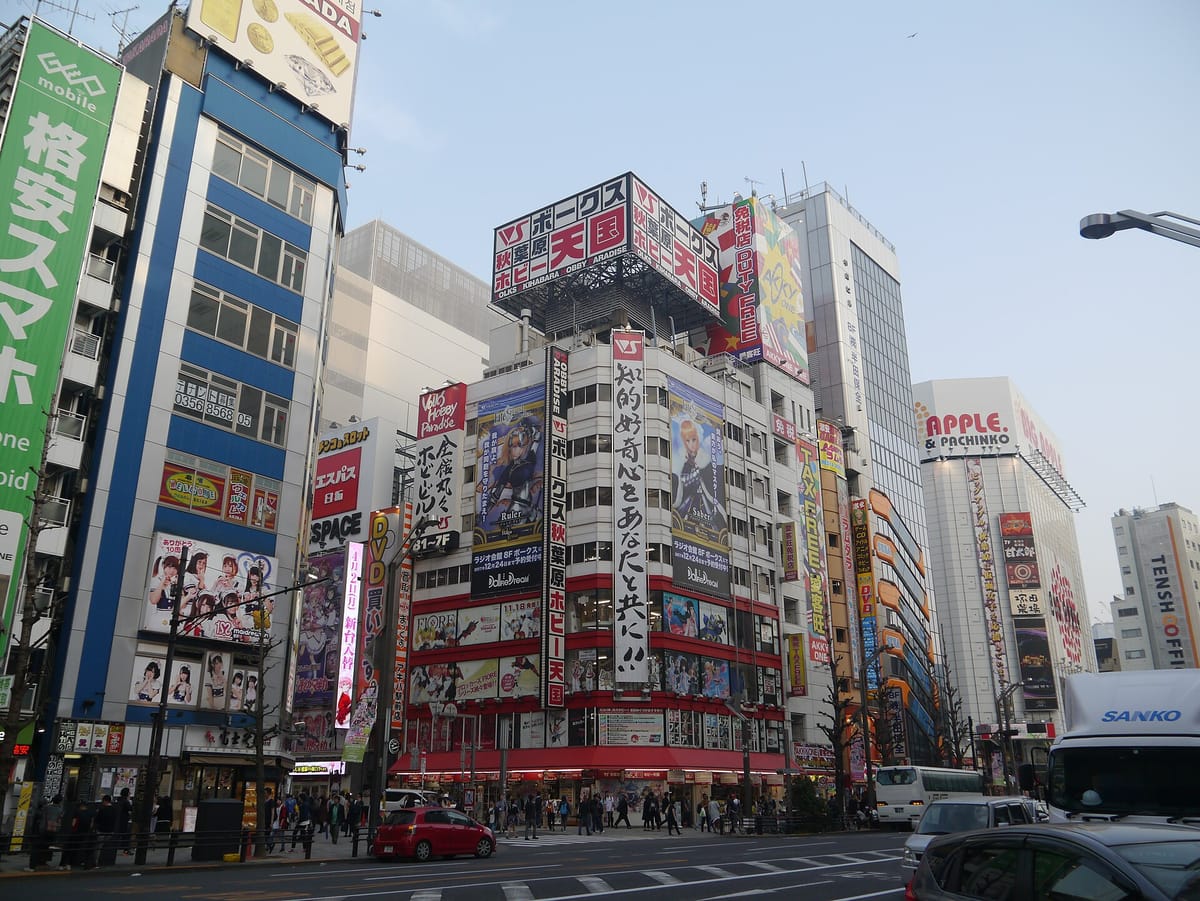
- Chūō-dōri (中央通り): the main avenue, a pedestrian street on Sunday afternoons.
- Denki-gai (電気街): the electronics district around the station.
- Radio Kaikan (ラジオ会館): a landmark building of collectibles shops.
- Gēmu sentā (ゲームセンター): game centres with crane and rhythm games.
- Gachapon (ガチャポン): capsule-toy machines, often hundreds in one shop.
- Meido kafe (メイドカフェ): maid cafés with their own rules and charges.
- Kanda Myōjin (神田明神): the district's guardian shrine, ten minutes away.
The words on price tags and signs
Akihabara's tags tell you the condition of an item in a word or two, and they are worth reading closely. 新品 is new and 中古 is used; 未開封, unopened, is new in its sealed box; 動作確認済み means it has been tested and works; and ジャンク, junk, means sold as is, untested, with no returns.
免税 on a sign means the shop handles tax-free sales for visitors. And 歩行者天国, pedestrian paradise, is the name for a street closed to cars, which you will see on Chūō-dōri on Sundays and on the Ginza avenue at weekends.
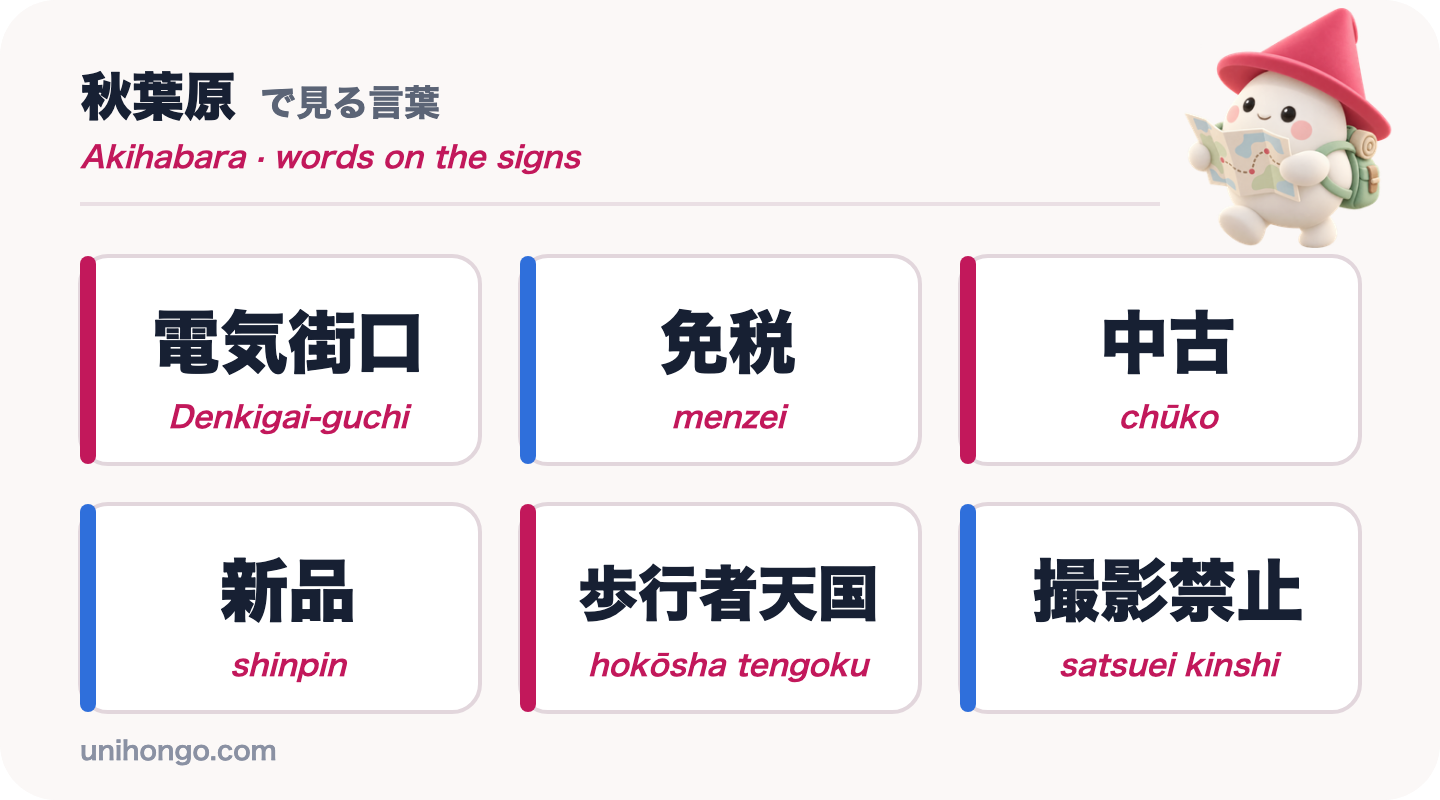
| Word | Reading | Meaning |
|---|---|---|
| 電気街口 | Denkigai-guchi | Electric Town exit of the station |
| 免税 | menzei | Tax-free |
| 新品 | shinpin | New |
| 中古 | chūko | Used, second-hand |
| 未開封 | mikaifū | Unopened, still sealed |
| 動作確認済み | dōsa kakunin-zumi | Tested and working |
| ジャンク | janku | Sold as is, untested |
| 歩行者天国 | hokōsha tengoku | Street closed to cars |
| 撮影禁止 | satsuei kinshi | No photography |
Japanese at the shop counter: tax-free and will it work?
For anything electronic, three questions matter: can I buy it tax-free, does it work overseas, and what does the warranty cover. Staff at the big stores answer these all day, and the answers are usually short: tsukaemasu, it works; kokunai dake, Japan only.
Japan's tax-free system is changing. Until 31 October 2026, eligible shops take the tax off at the till when you show your passport. From 1 November 2026, you pay the full price including tax, and the tax is refunded after customs checks at departure that the goods are leaving Japan. Under the new system, bring your purchases to the customs check at the airport before you check in your luggage. Either way, carry your passport, keep the goods and paperwork together, and ask at the counter how the shop handles it.
| Japanese | Romaji | Meaning |
|---|---|---|
| 免税でお願いします。 | Menzei de onegai shimasu. | Tax-free, please. |
| パスポートを見せればいいですか。 | Pasupōto o misereba ii desu ka. | Do I just show my passport? |
| 海外でも使えますか。 | Kaigai demo tsukaemasu ka. | Can I use it overseas? |
| 保証は海外でも有効ですか。 | Hoshō wa kaigai demo yūkō desu ka. | Is the warranty valid overseas? |
| 英語の設定はありますか。 | Eigo no settei wa arimasu ka. | Does it have an English setting? |
| 中古のものはありますか。 | Chūko no mono wa arimasu ka. | Do you have a used one? |
| これは動作確認済みですか。 | Kore wa dōsa kakunin-zumi desu ka. | Has this been tested? |
Shop, café and street etiquette
Akihabara is relaxed about almost everything except photos and personal space.
- Ask before taking photos inside shops, and respect 撮影禁止 signs; many shops ban photos of displays.
- Never photograph cosplayers, performers or maid café staff without permission.
- In maid cafés, read the rules and charges at the door; most have a seat charge, time limits and rules on photos.
- Keep your bag in front of you in crowded, narrow shops, and do not block the aisles.
- Come on a Sunday afternoon for the pedestrian street, or on a weekday for quieter shops.
- Check voltage, plug type, region settings and warranty before buying electronics to take home.
Practise the visit before you go
The dialogue below covers the two questions you should ask before buying any gadget in Akihabara. Listen for ga, but, in the last reply: it works, but the warranty is Japan only. Practise the four lines until you can say yours without reading.
Then practise with someone who answers back. In Unihongo, choose the Shopping topic and ask your AI Sensei to play a clerk in an Akihabara electronics store. Asking and hearing the answers once before you go makes the real counter much easier.
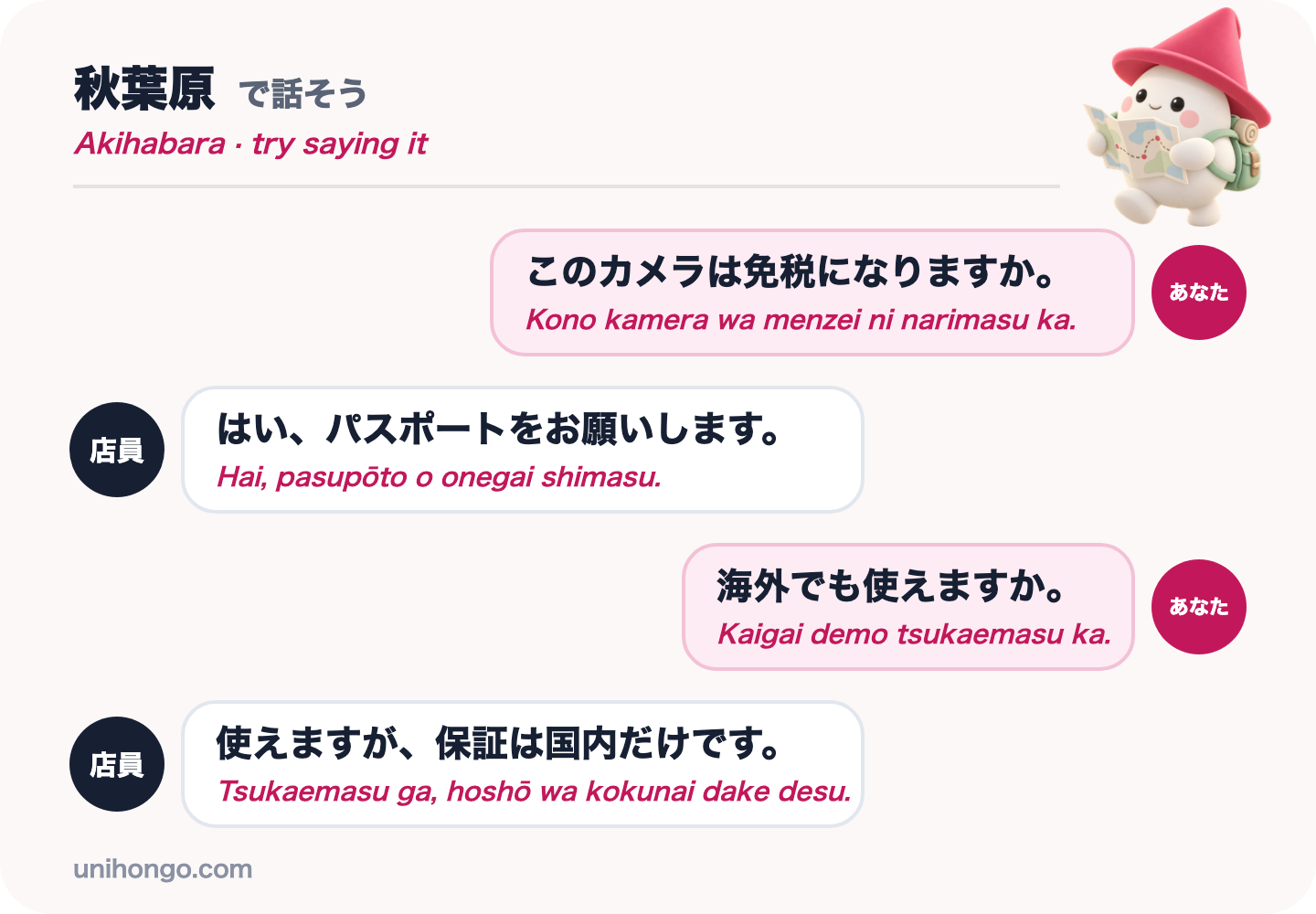
| Japanese | Romaji | Meaning |
|---|---|---|
| このカメラは免税になりますか。 | Kono kamera wa menzei ni narimasu ka. | Can I buy this camera tax-free? |
| はい、パスポートをお願いします。 | Hai, pasupōto o onegai shimasu. | Yes, your passport, please. |
| 海外でも使えますか。 | Kaigai demo tsukaemasu ka. | Can I use it overseas? |
| 使えますが、保証は国内だけです。 | Tsukaemasu ga, hoshō wa kokunai dake desu. | It works, but the warranty is for Japan only. |
Official information
The Tokyo tourism board covers Akihabara and its events, and the local shops' association publishes news about the district. Check the latest on tax-free shopping before you buy, as the system changes from November 2026.