

Why Taketomi's village is worth the short crossing
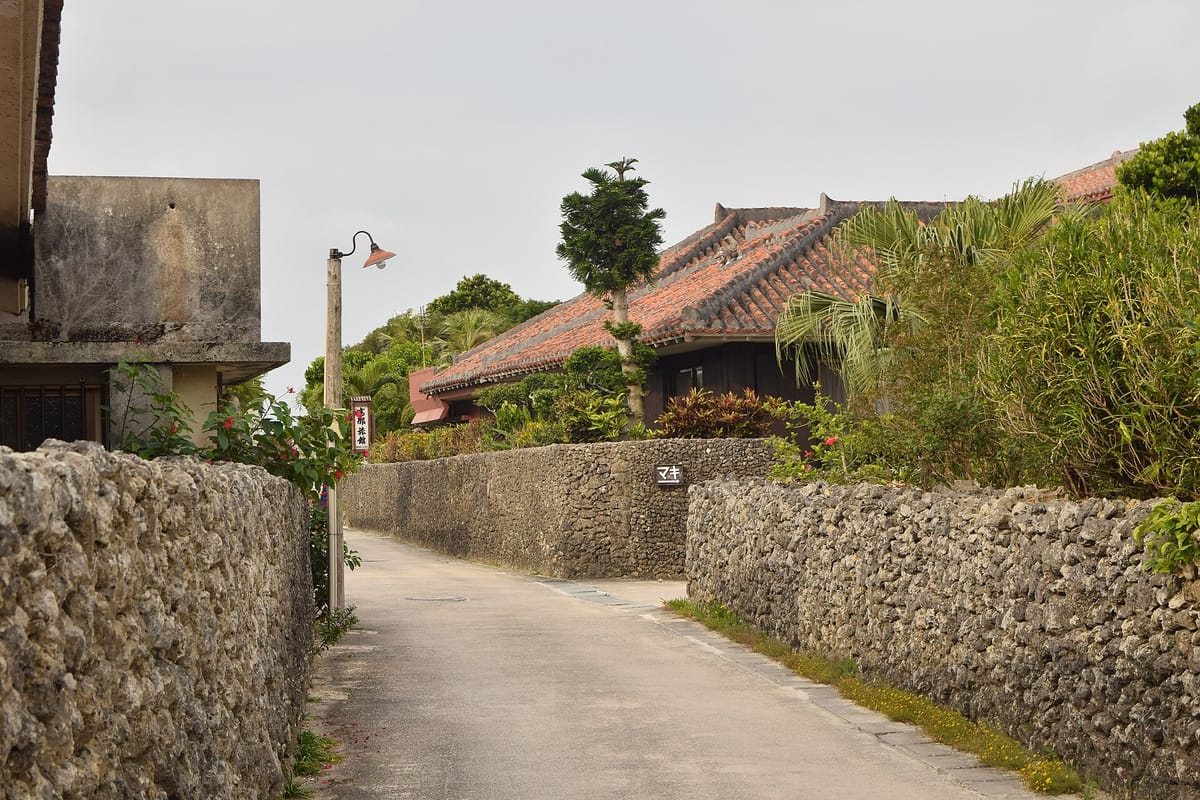
Taketomi is a compact, low island of coral origin about seven kilometres west of Ishigaki, ringed by the reefs of the Sekisei Lagoon. Coral is everywhere: in the walls around the houses, in the white sand of the lanes and on the beaches. The village in the middle of the island keeps the look of a traditional Ryukyu settlement, and the islanders work hard to keep it that way.
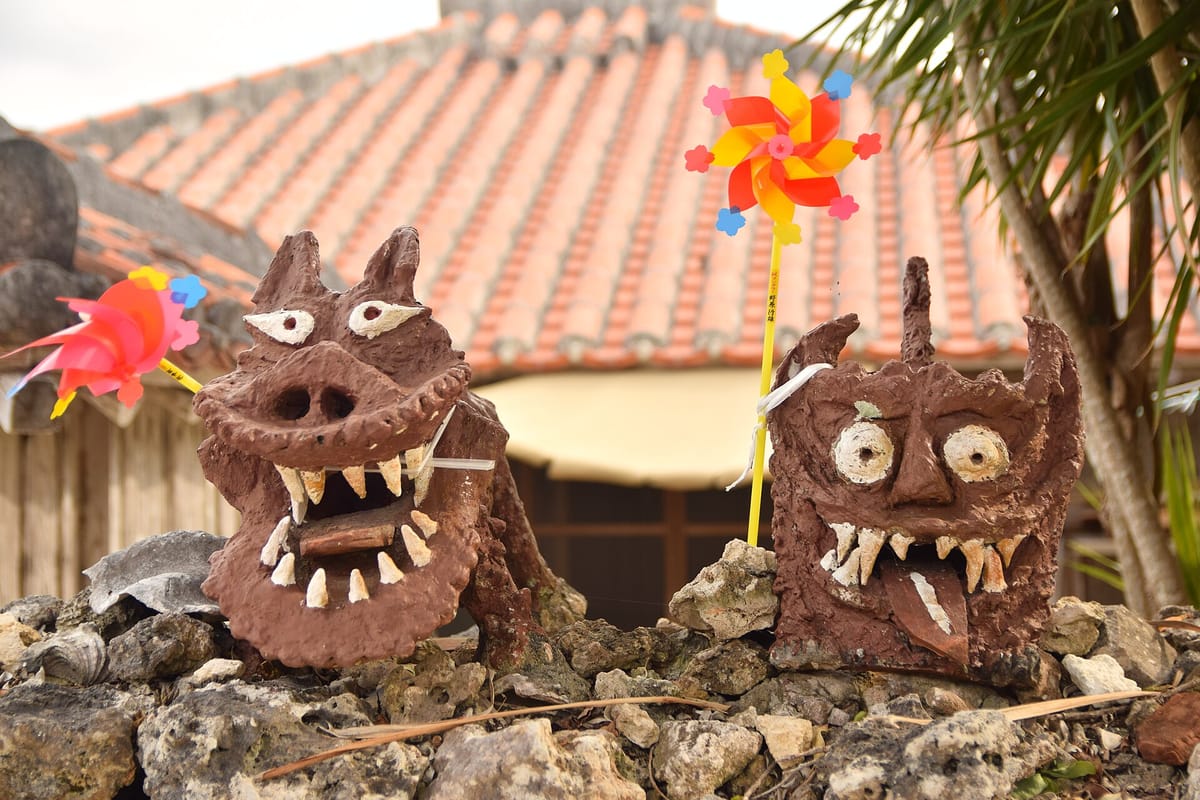
Walking the lanes is the main experience. Wooden houses sit behind coral walls and hedges of hibiscus and bougainvillea, their red tiles held down with white mortar and topped with shīsā, the guardian lion-dogs of Okinawa. The white sand lanes are swept by islanders, and the island's visitor centre stresses that the village, the lanes and even the famous beaches stay beautiful through the residents' own efforts.
Taketomi has its own variety of the Yaeyama language, called Tēdun-muni by islanders according to Japanese Wikipedia, and an old festival calendar to match: the Tanadui seed festival, held over two days in September of the lunisolar calendar, has around six hundred years of history. Everyone you meet will speak standard Japanese with you, and the short exchanges at the rental shops and cart stops are good, gentle practice.
Getting there: the ferry from Ishigaki
Boats to Taketomi leave from the Ishigaki Port Remote Islands Terminal in Ishigaki city. The official Okinawa tourism site says high-speed boats run every hour and take about ten minutes. Ferry companies have counters in the terminal; buy a return ticket, note the time of the last boat back, and keep the return half safe.
Taketomi asks visitors to pay a small island entry fee, nyūtōryō, which goes towards protecting the island. Near the port is the Taketomi Island visitor centre, Yugafu-kan, which is free to enter and a good first stop for maps and an introduction to the island. The village itself is about a fifteen-minute walk from the ferry terminal, and some bike rental shops meet the boats at the port.
| Japanese | Romaji | Meaning |
|---|---|---|
| 竹富島まで往復でお願いします。 | Taketomi-jima made ōfuku de onegai shimasu. | A return ticket to Taketomi Island, please. |
| 帰りの最終便は何時ですか。 | Kaeri no saishūbin wa nanji desu ka. | What time is the last boat back? |
| 入島料はどこで払いますか。 | Nyūtōryō wa doko de haraimasu ka. | Where do I pay the island entry fee? |
| 集落まで歩いて何分くらいですか。 | Shūraku made aruite nanpun kurai desu ka. | About how many minutes' walk is it to the village? |
| ゆがふ館はどこですか。 | Yugafu-kan wa doko desu ka. | Where is Yugafu-kan, the visitor centre? |
The village, the beaches and the buffalo carts
The island is small enough to cycle round in a few hours, and the flat sand lanes are made for slow riding. A walking route of about six kilometres, the Taketomi Island Natural Education Walking Path, starts at Yugafu-kan and passes through the village, the Folk Craft Museum and the western beaches.
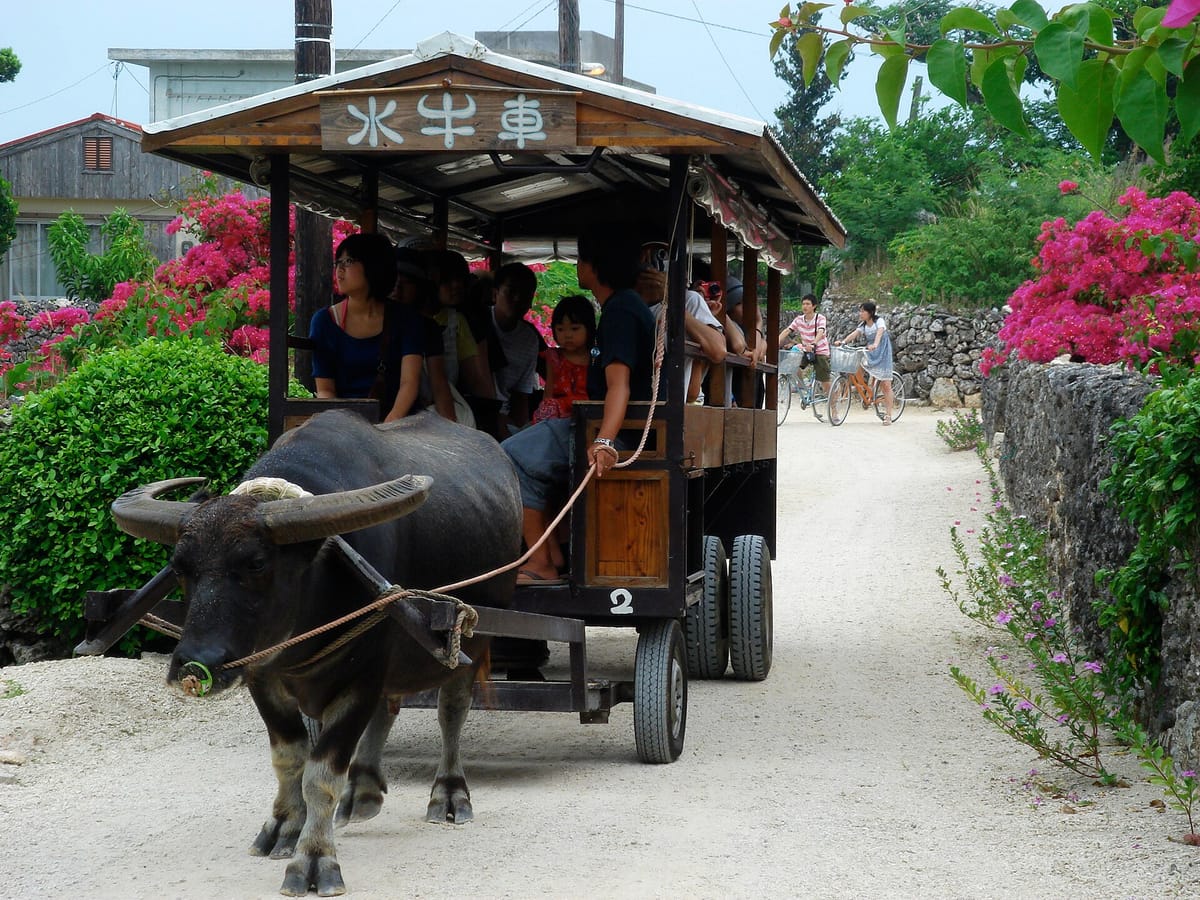
- The village: red-tiled houses, coral walls, shīsā on the roofs and white sand lanes.
- Water buffalo carts: slow rides round the village lanes, often with island songs on the sanshin.
- Kondoi Beach: soft white sand on the west coast, with toilets, changing rooms and a shallow sandbar that stretches far out.
- Kaiji Beach: famous for star sand; swimming is not allowed because of strong currents, and taking sand is prohibited.
- Nishi Pier: a long jetty about ten minutes' walk from Kondoi Beach, a popular place to watch the sunset.
- Taketomi Folk Craft Museum: demonstrations and displays of minsah, the striped and checked Yaeyama cloth once woven on the island.
- Yugafu-kan: the free visitor centre near the port, with exhibits on the island's life and festivals.
Words on the signs on Taketomi
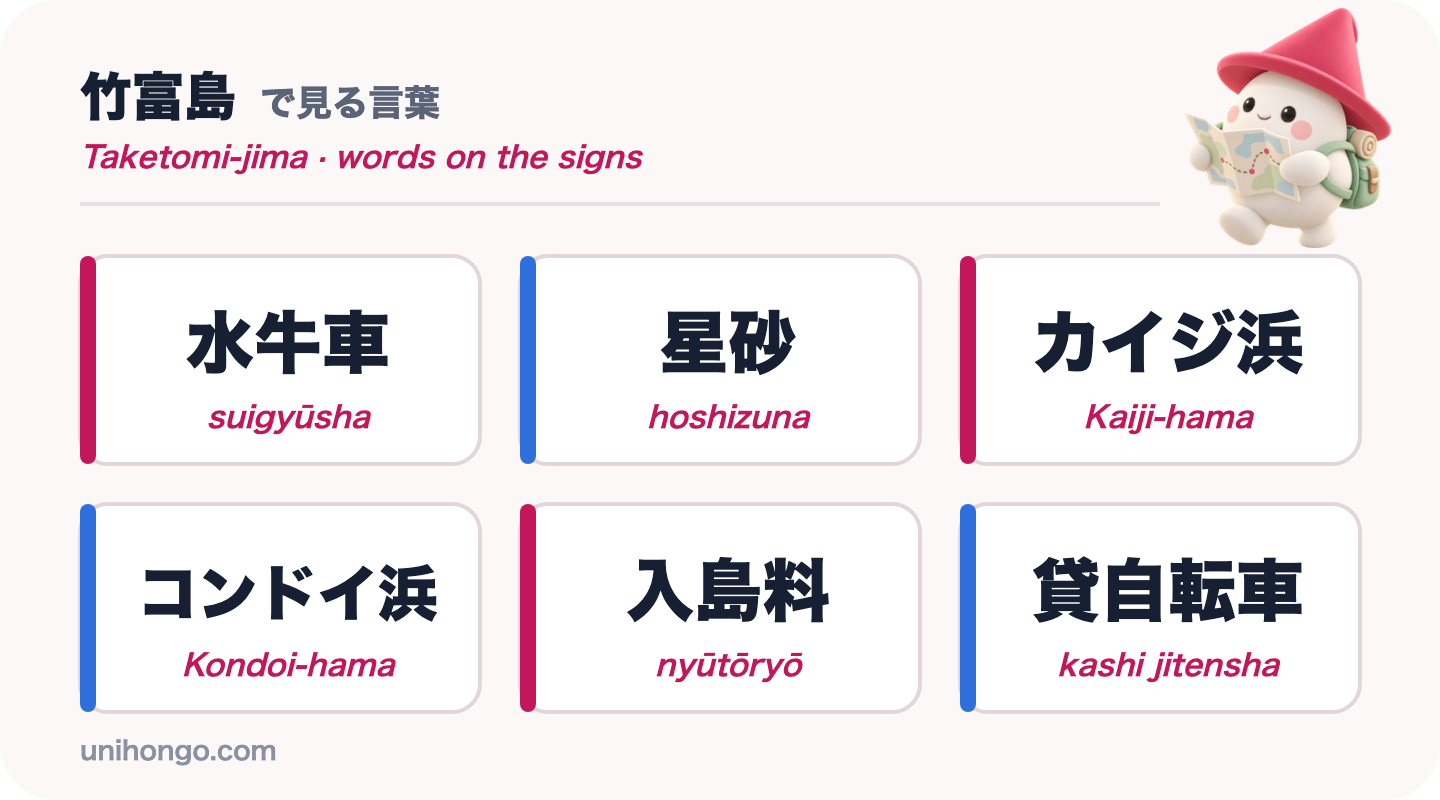
Signs on Taketomi are few and modest, in keeping with the village. Beach names use hama, beach, after a local name written in katakana: カイジ浜, コンドイ浜. Rental shops advertise kashi jitensha, bikes for rent, and cart operators use the word suigyūsha.
Some signs ask you to stay out of private gardens and courtyards. The houses in the village are people's homes, not a museum, even when the gates are open.
| Word | Reading | Meaning |
|---|---|---|
| 水牛車 | suigyūsha | Water buffalo cart |
| 星砂 | hoshizuna | Star sand |
| カイジ浜 | Kaiji-hama | Kaiji Beach, the star-sand beach |
| コンドイ浜 | Kondoi-hama | Kondoi Beach, for swimming |
| 入島料 | nyūtōryō | Island entry fee |
| 貸自転車 | kashi jitensha | Bicycles for rent |
| 集落 | shūraku | Village, settlement |
| 西桟橋 | Nishi Sanbashi | Nishi Pier, the sunset jetty |
| 持ち帰り禁止 | mochikaeri kinshi | Do not take away |
Japanese for bikes and the buffalo cart
Bike rental shops are at the port and in the village, and many meet the ferries. You will be asked how long you want the bike and given a simple map; listen for the return time. Buffalo cart operators in the village sell tickets at their own counters.
The phrases below cover renting, asking the way and joining a cart ride. Keep them short and polite; staff here deal with many day visitors and appreciate clear requests.
| Japanese | Romaji | Meaning |
|---|---|---|
| 自転車を借りたいです。 | Jitensha o karitai desu. | I would like to rent a bike. |
| 何時までに返せばいいですか。 | Nanji made ni kaeseba ii desu ka. | By what time should I return it? |
| コンドイ浜はどっちですか。 | Kondoi-hama wa dotchi desu ka. | Which way is Kondoi Beach? |
| 水牛車に乗りたいんですが、次は何時ですか。 | Suigyūsha ni noritai n desu ga, tsugi wa nanji desu ka. | I would like to ride the buffalo cart. When is the next one? |
| 写真を撮ってもいいですか。 | Shashin o totte mo ii desu ka. | May I take a photo? |
| 港まで送ってもらえますか。 | Minato made okutte moraemasu ka. | Could you take me back to the port? |
Village manners and practical tips
Taketomi is a living village, and its visitor centre asks every visitor to read its rules before sightseeing, so that the island and its visitors stay on good terms. Most of them come down to treating the village as someone's home.
- Pay the island entry fee, which helps protect the island.
- Stay out of private gardens and courtyards, and do not climb on coral walls for photos.
- Ride slowly in the village, give way to people on foot and to the buffalo carts, and park bikes where they do not block lanes.
- Cover up in the village; walk to and from the beaches in more than a swimsuit.
- Do not take star sand, coral or shells from the beaches.
- Take your rubbish back with you, and keep your voice down in the evening when visitors have gone.
- Check the last boat back to Ishigaki and leave time to return your bike before it.
Practise the bike rental conversation before you go
Renting a bike is the first thing most people do on Taketomi, and the staff often hand over a map with a few tips. Practise the four lines below until you can say them without reading, and listen for kochira, this way, and kinshi, prohibited, in the replies.
Then practise with someone who answers back. In Unihongo, choose the Sightseeing topic and ask your AI Sensei to play the staff at a bike rental shop on Taketomi, or pick the Cultural Etiquette topic to practise asking about village rules. Saying the lines once before you arrive is what makes them come out at the counter.
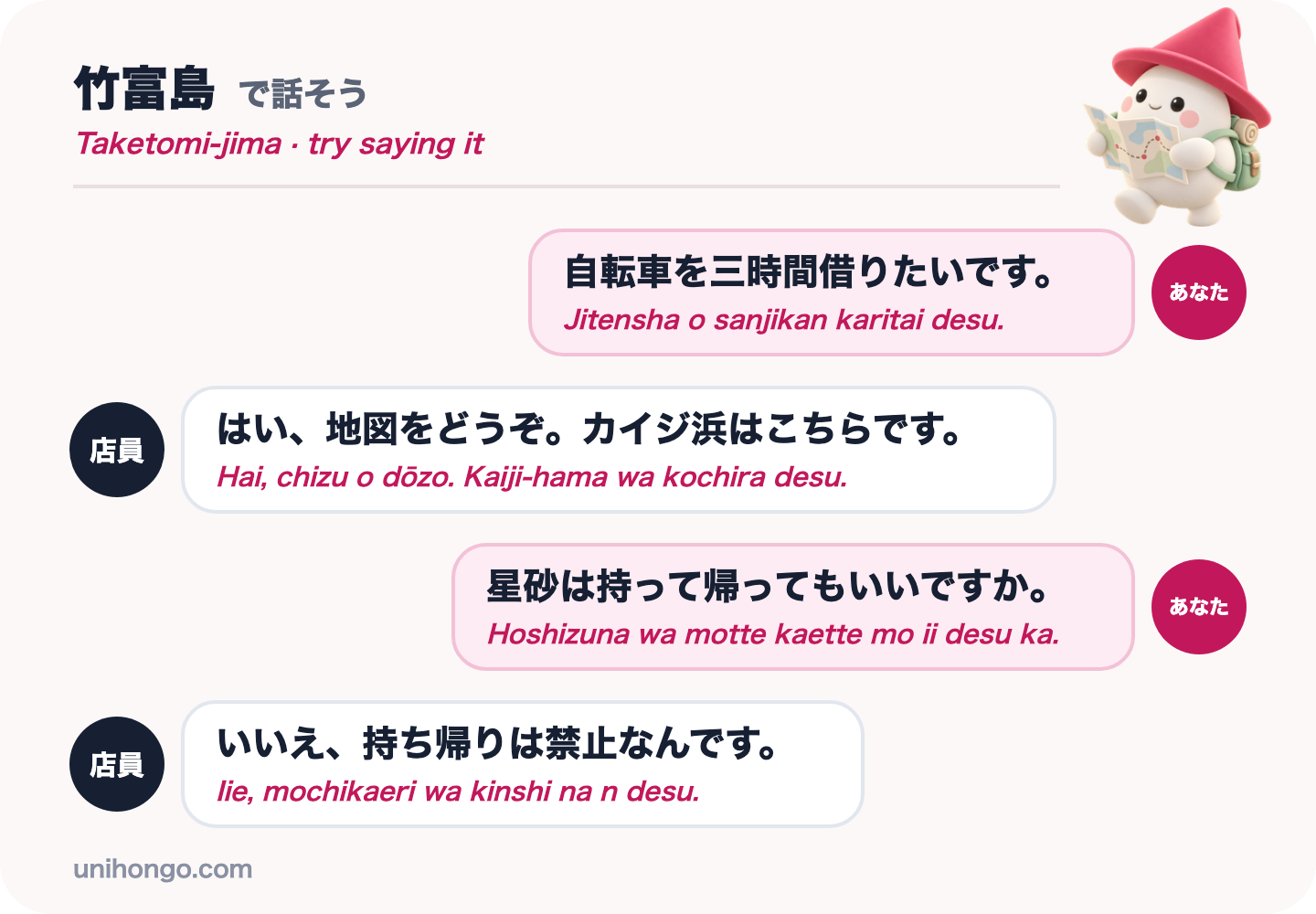
| Japanese | Romaji | Meaning |
|---|---|---|
| 自転車を三時間借りたいです。 | Jitensha o sanjikan karitai desu. | I would like to rent a bike for three hours. |
| はい、地図をどうぞ。カイジ浜はこちらです。 | Hai, chizu o dōzo. Kaiji-hama wa kochira desu. | Here is a map. Kaiji Beach is this way. |
| 星砂は持って帰ってもいいですか。 | Hoshizuna wa motte kaette mo ii desu ka. | May I take some star sand home? |
| いいえ、持ち帰りは禁止なんです。 | Iie, mochikaeri wa kinshi na n desu. | No, taking it away is prohibited. |
Official information
The Taketomi Town Tourism Association and the Yugafu-kan visitor centre publish information on the island, its manners and the entry fee, and the official Okinawa tourism site has an overview. Check ferry times and any typhoon notices on the day.