
Kissaten or kafe: what is the difference
Kissaten is written with kissa (喫茶), drinking tea, and ten (店), shop, though coffee is what it serves. The word calls up a particular place: dark wood, soft seats, a counter with a row of cups, and an owner who has made coffee the same way for decades. A kafe (カフェ) is the modern counterpart. The routines differ, and knowing which one you have walked into tells you what to do next.
| Point | Kissaten | Kafe |
|---|---|---|
| Ordering | Staff come to your table | Usually at the counter first |
| Paying | At the register when you leave, with the bill slip | Usually when you order |
| Coffee | Blend coffee, dripped or brewed in a siphon | Espresso drinks and seasonal specials |
| Food | Toast, sandwiches, spaghetti, pudding | Cakes and light lunches |
| Mood | Quiet and unchanged, with regular customers | Bright and newer |
You may also see junkissa (純喫茶), pure kissaten. The label began as a way to say that a shop served coffee and no alcohol, and today it signals the retro style people travel to find.
Four words that explain a kissaten
Learn these four and the visit makes sense: the place, the morning deal, the green drink in the display case, and the slip of paper you pay with.
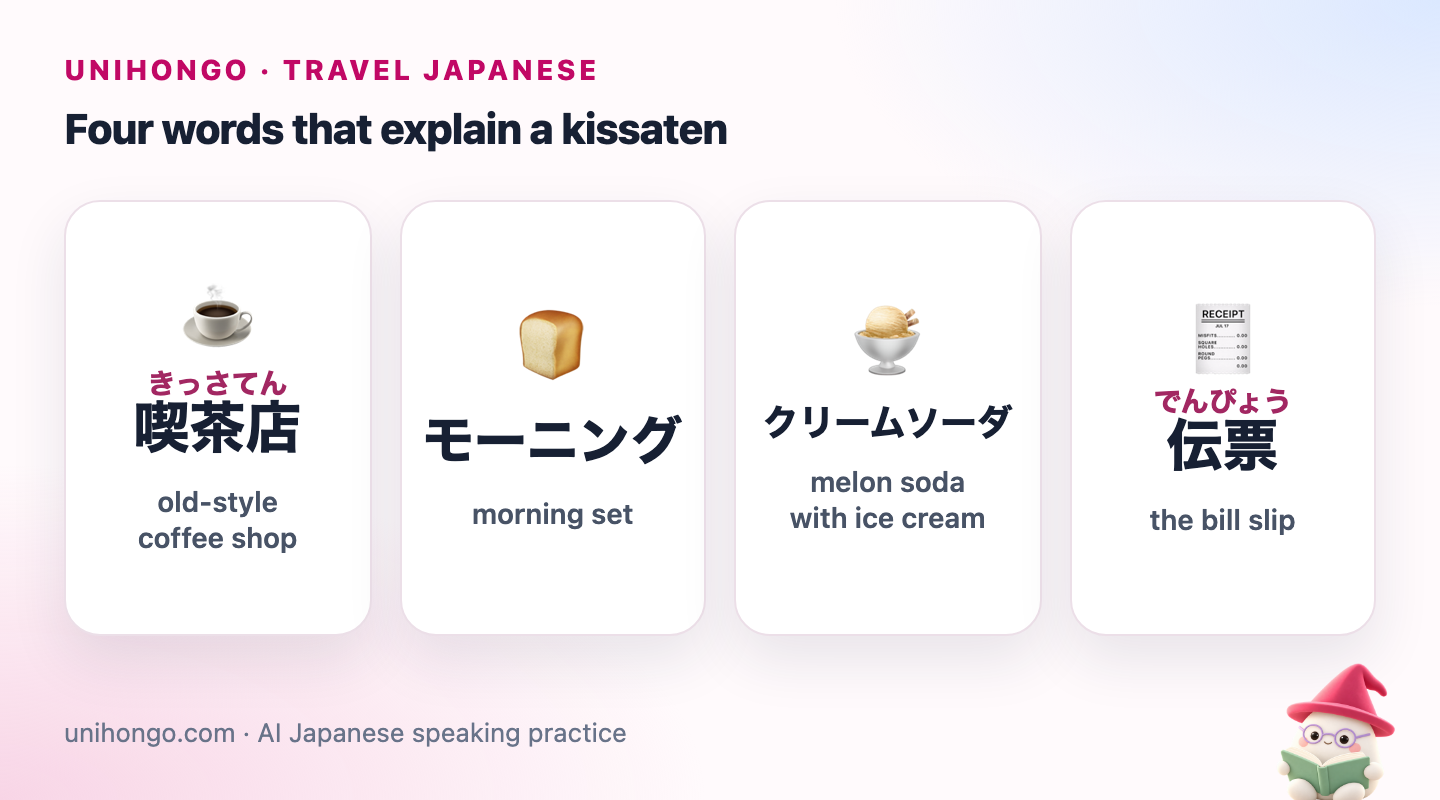
| Japanese | Romaji | Meaning |
|---|---|---|
| 喫茶店 | kissaten | old-style coffee shop |
| モーニング | mōningu | morning set |
| クリームソーダ | kurīmu sōda | melon soda with ice cream |
| 伝票 | denpyō | the bill slip |
| マスター | masutā | the owner behind the counter |
| 純喫茶 | junkissa | classic kissaten |
Coffee: burendo, amerikan, hotto, aisu
Kissaten coffee is ordered with two words, a type and a temperature. Burendo (ブレンド) is the house blend and the default. Amerikan (アメリカン) is a lighter, weaker coffee; it is not an espresso-based Americano. Then choose hotto (ホット), hot, or aisu (アイス), iced. Regulars shorten the whole order to hotto, which means one hot blend.
| Japanese | Romaji | Meaning |
|---|---|---|
| ブレンド | burendo | house blend coffee |
| アメリカン | amerikan | light, weak coffee |
| アイスコーヒー | aisu kōhī | iced coffee |
| ブレンドを一つお願いします。 | Burendo o hitotsu onegai shimasu. | One blend coffee, please. |
| ホットで。 | Hotto de. | Hot, please. |
| 砂糖とミルクはお使いですか。 | Satō to miruku wa o-tsukai desu ka. | Will you use sugar and milk? |
| ミルクだけお願いします。 | Miruku dake onegai shimasu. | Just milk, please. |
Mōningu: the morning set
Mōningu is short for mōningu sābisu (モーニングサービス), where sābisu carries its Japanese meaning of something given on the house. From opening until late morning, a drink order brings thick toast and a boiled egg, sometimes with a small salad, at the price of the drink or for a small supplement. The custom exists across Japan but is most famous in Nagoya and the surrounding Aichi region, where shops compete over how much they add. Nagoya is also the home of ogura tōsuto, toast spread with sweet red bean paste.
| Japanese | Romaji | Meaning |
|---|---|---|
| モーニングはまだやっていますか。 | Mōningu wa mada yatte imasu ka. | Are you still serving the morning set? |
| モーニングは何時までですか。 | Mōningu wa nanji made desu ka. | Until what time is the morning set? |
| 小倉トースト | ogura tōsuto | toast with sweet bean paste |
| お飲み物は何になさいますか。 | O-nomimono wa nani ni nasaimasu ka. | What would you like to drink? |
| ホットコーヒーでお願いします。 | Hotto kōhī de onegai shimasu. | Hot coffee, please. |
The food and sweets everyone orders
Kissaten food is a small cuisine of its own, fixed long ago and loved for staying the same. Naporitan is spaghetti fried with ketchup, onion, green pepper and sausage or ham; it was created in Japan and has nothing to do with Naples. Tamago sando is an egg sandwich on soft white bread, filled with egg salad or a thick warm omelette depending on the shop. Purin is a firm custard pudding with dark caramel, and kurīmu sōda is bright green melon soda with a scoop of vanilla ice cream on top.
| Japanese | Romaji | Meaning |
|---|---|---|
| ナポリタン | naporitan | ketchup spaghetti |
| たまごサンド | tamago sando | egg sandwich |
| プリン | purin | caramel custard pudding |
| ホットケーキ | hotto kēki | thick pancakes |
| ミックスジュース | mikkusu jūsu | blended fruit and milk drink |
From the door to the register: the visit in order
You seat yourself or are shown to a table, and water and a wet towel, oshibori, arrive without asking. Staff take the order at the table. When the food comes, a small slip is left face down on the table or in a holder: this is the denpyō (伝票), your bill. When you are ready to leave, carry it to the register by the door and pay there. There is no tipping, and gochisōsama deshita on the way out is the right goodbye.
| Japanese | Romaji | Meaning |
|---|---|---|
| お好きな席へどうぞ。 | O-suki na seki e dōzo. | Please sit wherever you like. |
| すみません、注文お願いします。 | Sumimasen, chūmon onegai shimasu. | Excuse me, I would like to order. |
| ナポリタンとブレンドをお願いします。 | Naporitan to burendo o onegai shimasu. | Naporitan and a blend coffee, please. |
| コーヒーは食後でよろしいですか。 | Kōhī wa shokugo de yoroshii desu ka. | Shall I bring the coffee after the meal? |
| 一緒でお願いします。 | Issho de onegai shimasu. | Together with the food, please. |
| ごゆっくりどうぞ。 | Goyukkuri dōzo. | Please take your time. |
Kitsuen and kin'en: smoking in kissaten
Kissaten were long tied to cigarettes, and this is one point where some still differ from other cafés. Since the rules on indoor smoking were tightened in 2020, most eating places are non-smoking, kin'en (禁煙). Some small, older kissaten are allowed to remain smoking shops, kitsuen (喫煙), and they post a sign at the entrance saying so; people under twenty may not enter. Check the door before you sit down, whichever you prefer.
| Japanese | Romaji | Meaning |
|---|---|---|
| 禁煙 | kin'en | no smoking |
| 喫煙可 | kitsuen ka | smoking allowed |
| 禁煙席はありますか。 | Kin'enseki wa arimasu ka. | Do you have non-smoking seats? |
| 全席喫煙可能です。 | Zenseki kitsuen kanō desu. | Smoking is allowed at every seat. |
The masutā behind the counter
The owner who stands behind the counter is the masutā (マスター), from the English word master, and regulars address him by that title, not by name. You do not need the word as a first-time visitor; sumimasen works. But if you sit at the counter and the masutā speaks to you, a few words are welcome: oishii desu about the coffee, or a question about the shop itself. Kono o-mise wa nannen-me desu ka, how many years has this shop been open, is one that most owners enjoy answering.