
The pot names on the menu, decoded
Nabe (鍋) is the pot and, by extension, the dish. The full words are nabe ryōri (鍋料理) or nabemono (鍋物), but menus just attach nabe to a name. Two famous pots break that pattern and have names of their own: shabu-shabu and sukiyaki.
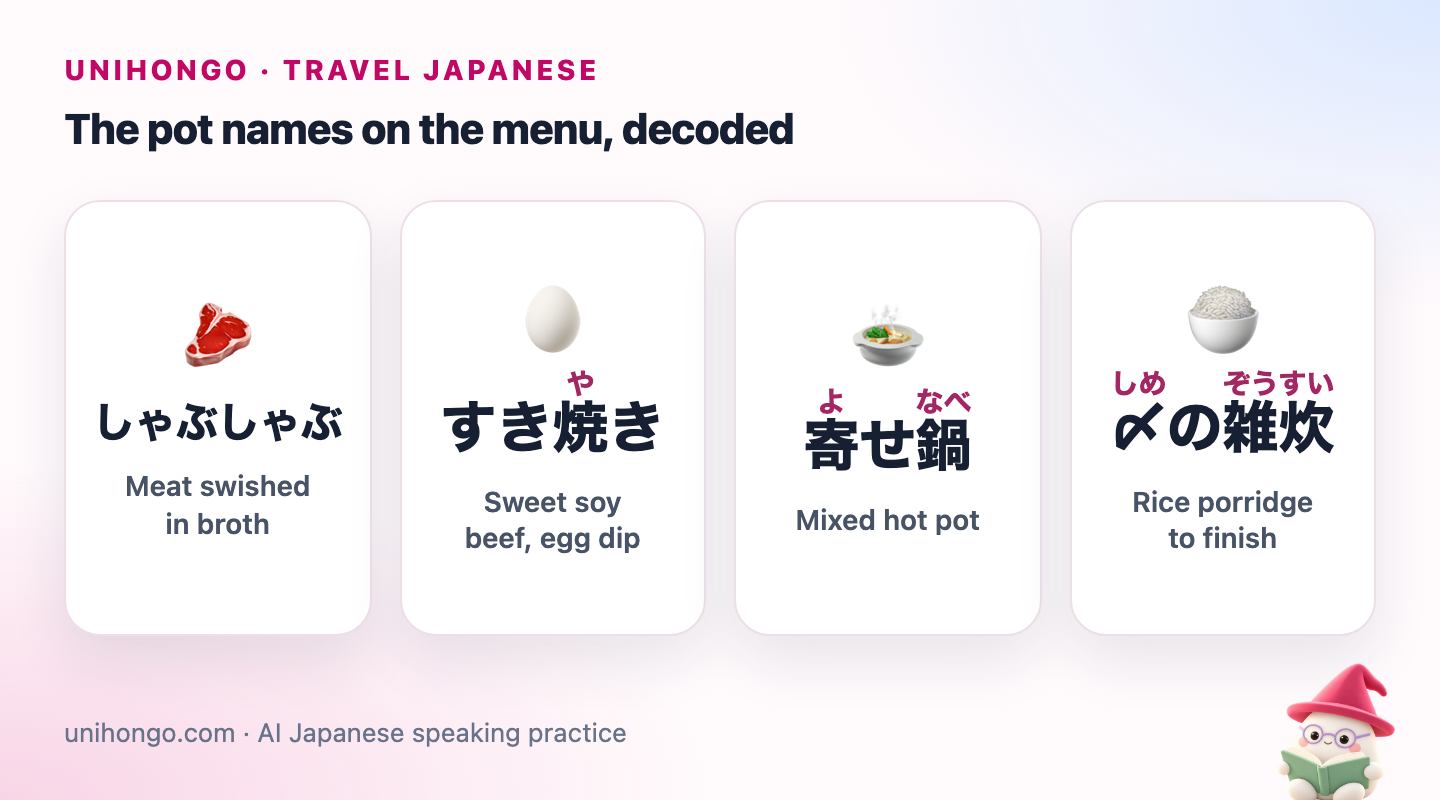
| Japanese | Romaji | Meaning |
|---|---|---|
| しゃぶしゃぶ | Shabu-shabu | Meat swished in broth |
| すき焼き | Sukiyaki | Sweet soy beef, egg dip |
| 寄せ鍋 | Yosenabe | Mixed hot pot |
| 〆の雑炊 | Shime no zōsui | Rice porridge to finish |
| もつ鍋 | Motsunabe | Offal hot pot with cabbage and garlic chives |
| ちゃんこ鍋 | Chankonabe | The sumo wrestlers' hot pot |
Yosenabe comes from yoseru, to gather: seafood, chicken, tofu and vegetables put together in a light broth. Motsunabe is beef or pork offal with cabbage and garlic chives, and is best known as a Fukuoka dish. Chankonabe is the hearty pot associated with sumo stables; restaurants serving it cluster around Ryōgoku, Tokyo's sumo district.
Shabu-shabu: swish, dip, repeat
The pot arrives holding little more than water and a strip of kelp. You pick up one thin slice of beef or pork with your chopsticks, swish it through the simmering broth until it changes colour, and dip it in sauce. The name is usually explained as the sound of that swishing.
Two dips come with it. Ponzu (ポン酢) is soy sauce sharpened with citrus, and gomadare (ごまだれ) is a creamy sesame sauce. A common habit is ponzu for vegetables and sesame for meat, but there is no rule. Vegetables and tofu go in first because they take longer; the meat is cooked a slice at a time.
| Japanese | Romaji | Meaning |
|---|---|---|
| しゃぶしゃぶを二人前お願いします。 | Shabu-shabu o ninin-mae onegai shimasu. | Shabu-shabu for two, please. |
| ポン酢 | Ponzu | Citrus soy dipping sauce |
| ごまだれ | Gomadare | Sesame dipping sauce |
| お肉を追加でお願いします。 | Oniku o tsuika de onegai shimasu. | More meat, please. |
Sukiyaki: warishita and the raw egg
Sukiyaki is cooked in a shallow iron pan, not a deep pot. The seasoning is warishita (割り下), a mixture of soy sauce, sugar, mirin and sake. Beef, leeks, tofu, shiitake and shirataki noodles simmer in it and come out dark and sweet.
The dip is nama tamago (生卵), a raw egg that you beat in your own small bowl. It cools each bite and rounds off the sweetness. Broadly speaking, Kantō-style restaurants simmer everything in ready-mixed warishita, while Kansai-style restaurants first sear the beef in the pan and season it directly with sugar and soy sauce. Many places blur the two.
| Japanese | Romaji | Meaning |
|---|---|---|
| 卵をもう一つください。 | Tamago o mō hitotsu kudasai. | One more egg, please. |
| 卵なしでお願いします。 | Tamago nashi de onegai shimasu. | Without the egg, please. |
Choosing the broth: the dashi question
At shabu-shabu chains and many nabe restaurants the first question is about the broth, dashi (だし). Some pots are divided down the middle so the table can pick two.
| Japanese | Romaji | Meaning |
|---|---|---|
| おだしはどちらになさいますか。 | Odashi wa dochira ni nasaimasu ka. | Staff: Which broth would you like? |
| 昆布だしでお願いします。 | Konbu dashi de onegai shimasu. | You: The kelp broth, please. |
| 豆乳だし | Tōnyū dashi | Soy milk broth |
| キムチ鍋 | Kimuchi nabe | Spicy kimchi hot pot |
| 辛くないのはどれですか。 | Karakunai no wa dore desu ka. | Which one is not spicy? |
At the table: heat, foam and timing
Once the burner is lit, the pot belongs to the table. Grey foam called aku (あく) rises as meat cooks, and removing it is aku-tori (あく取り); the small mesh ladle on the table is for that. The person who happily takes charge of all this is jokingly called the nabe bugyō (鍋奉行), the hot pot magistrate.
These are the lines you will actually need. They are polite, and fine with friends, colleagues or staff.
| Japanese | Romaji | Meaning |
|---|---|---|
| もう食べられますか。 | Mō taberaremasu ka. | Can we eat this yet? |
| 火を弱くしてください。 | Hi o yowaku shite kudasai. | Please turn the heat down. |
| 取り分けましょうか。 | Toriwakemashō ka. | Shall I serve you some? |
| あくを取りますね。 | Aku o torimasu ne. | I will skim the foam. |
| だしを足してもらえますか。 | Dashi o tashite moraemasu ka. | Could you add more broth? |
Toriwakeru means to divide food onto individual plates. Offering with toriwakemashō ka is a small kindness, and the natural reply is Arigatō gozaimasu, onegai shimasu. Each person eats from a torizara (取り皿), a small individual bowl.
Shime: the last course in the same pot
When only broth is left, it holds the flavour of everything cooked in it, and nobody wastes that. Shime, written 締め or with the single mark 〆, is the closing course: rice or noodles go into the pot. Zōsui (雑炊) is rice simmered in the broth and finished with beaten egg. Udon and rāmen noodles are the other standard choices, and motsunabe is often finished with thick chanpon noodles.
| Japanese | Romaji | Meaning |
|---|---|---|
| 〆は何になさいますか。 | Shime wa nani ni nasaimasu ka. | Staff: What would you like to finish with? |
| 雑炊でお願いします。 | Zōsui de onegai shimasu. | You: Rice porridge, please. |
| うどんでお願いします。 | Udon de onegai shimasu. | You: Udon, please. |
| もうお腹がいっぱいです。 | Mō onaka ga ippai desu. | I am already full. |
Which pot for which evening
| Romaji | Taste | Dip | Good to know |
|---|---|---|---|
| Shabu-shabu | Light and clean | Ponzu or sesame sauce | You cook each slice yourself |
| Sukiyaki | Sweet and rich | Beaten raw egg | Staff may cook the first round |
| Yosenabe | Mild broth with seafood and chicken | Often ponzu | A safe choice for mixed groups |
| Motsunabe | Garlicky and strong | None needed | Offal; a Fukuoka favourite |
| Chankonabe | Hearty, with many ingredients | None needed | Linked with sumo wrestlers |