

Why Kawagoe is called Little Edo
Kawagoe was a strategic castle town north of Edo, and the Tokugawa shoguns gave it to their most trusted lords. Goods flowed from here to the capital by river boat, and Edo fashions, festivals and food flowed back. The town became so like the capital in miniature that it was nicknamed Koedo, Little Edo, a name it now uses proudly on everything from buses to beer.
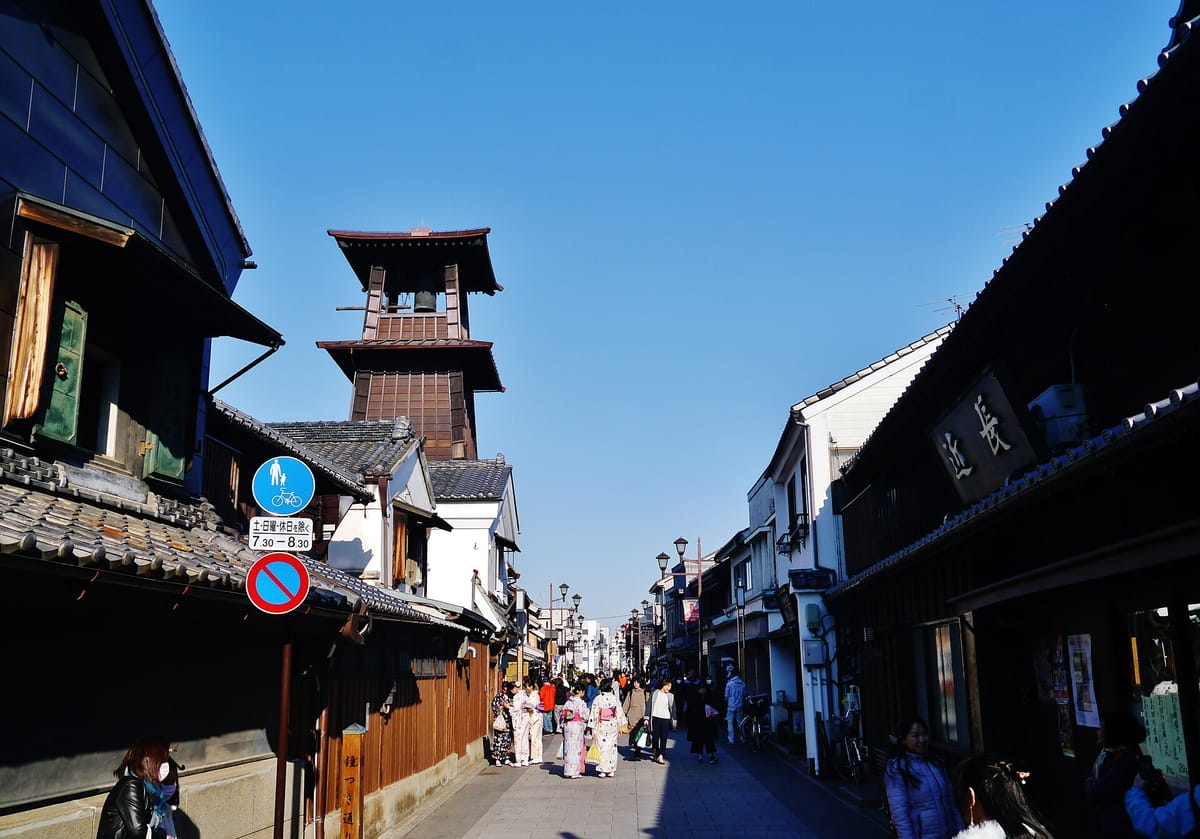
The look of the old town comes from kurazukuri, the storehouse style. Japanese towns were built of wood and burned easily, so wealthy merchants built their shops like storehouses, with walls of many layers of clay and plaster, heavy tiled roofs and thick shutters. After the great fire of 1893 destroyed much of Kawagoe, merchants rebuilt in this fireproof style, and a few hundred metres of these dark, solid buildings still line the main street.
For a learner, Kawagoe is a town of shops, and shops mean conversation. Staff are used to visitors asking what things are and offering tastes, and the small scale of the old town makes it easy to go back and forth, practising the same few phrases in one shop after another.
Getting there: Kawagoe, Kawagoe-shi and Hon-Kawagoe
Kawagoe has three stations, and which one you use depends on where you start. Tobu Tōjō Line trains from Ikebukuro stop at Kawagoe Station, Kawagoe-eki, and then Kawagoe-shi Station, in about 30 minutes by express. Kawagoe Station is also served by JR trains on the Saikyō and Kawagoe lines from Shinjuku via Ōmiya. The Seibu Shinjuku Line from Seibu-Shinjuku ends at Hon-Kawagoe, which is closest to the old town.
From Hon-Kawagoe, the kurazukuri street is about a 10 to 15 minute walk north along the main road, passing the Taishō Roman Yume-dōri, a street of early twentieth-century shopfronts. From Kawagoe Station add about ten minutes, or take one of the sightseeing loop buses that run from the station past the main sights; tourist passes that combine the train from Ikebukuro with local buses are sold for visitors.
| Japanese | Romaji | Meaning |
|---|---|---|
| 川越まで急行で何分くらいですか。 | Kawagoe made kyūkō de nanpun kurai desu ka. | About how many minutes to Kawagoe by express? |
| 本川越行きはどのホームですか。 | Hon-Kawagoe-yuki wa dono hōmu desu ka. | Which platform is the train to Hon-Kawagoe? |
| 蔵造りの町並みはどちらですか。 | Kurazukuri no machinami wa dochira desu ka. | Which way is the kurazukuri street? |
| 観光地を回るバスはありますか。 | Kankōchi o mawaru basu wa arimasu ka. | Is there a bus that goes round the sights? |
| 自転車を借りられるところはありますか。 | Jitensha o karirareru tokoro wa arimasu ka. | Is there somewhere I can rent a bicycle? |
The bell tower, Candy Alley, Kita-in and Hikawa Shrine: what you will see
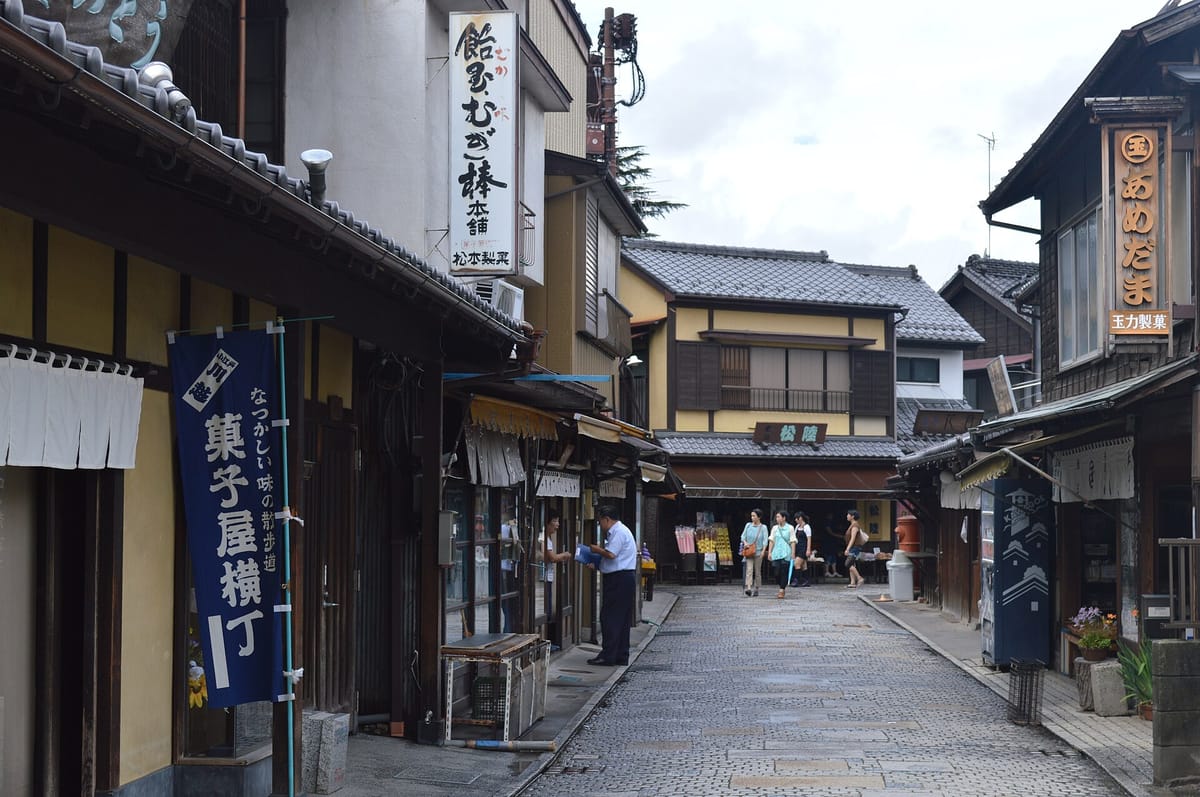
Just off the main street stands the Toki no Kane, the bell of time, a wooden tower that has told the hours in Kawagoe since the Edo period. The present tower was rebuilt in 1894 after the great fire, and its bell still rings four times a day. A short walk north, Kashiya Yokochō, the candy alley, is a stone-paved lane of small shops selling old-fashioned sweets: boiled candies, karintō, rice crackers and sweet potato treats. It boomed after the 1923 earthquake, when Tokyo's own sweet makers were destroyed, and around twenty shops remain.
Kita-in, a fifteen-minute walk south-east of the old town, is the head temple of the Tendai sect in the Kantō region. When it burned in 1638, the shogun Iemitsu had buildings from Edo Castle's palace moved here to rebuild it, and they are now the only surviving rooms of Edo Castle; one is said to be the room where Iemitsu was born. In a courtyard nearby, the Gohyaku Rakan are 540 stone statues of the Buddha's disciples, each with a different face, laughing, sleeping, whispering or scowling.
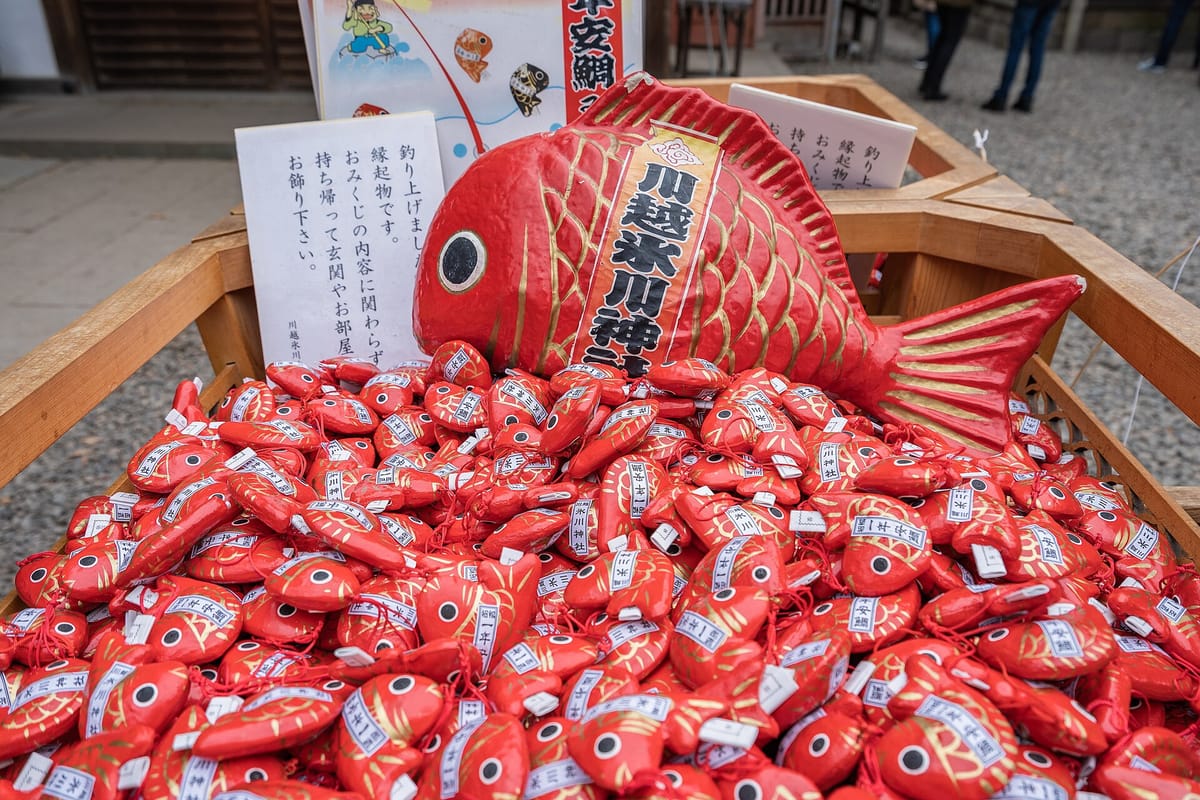
Kawagoe Hikawa Shrine, north-east of the old town, is known for matchmaking and good relationships. Its tai-mikuji are fortunes tucked inside small paper sea bream, which you fish out of a basket with a little rod, and in summer the grounds are hung with wind chimes. Honmaru Goten, the one remaining building of Kawagoe Castle, is a short walk away.
- Kurazukuri no Machinami: the main street of clay-walled merchant houses.
- Toki no Kane: the wooden bell tower that rings four times a day.
- Kashiya Yokochō: the candy alley of old-fashioned sweet shops.
- Kita-in: Edo Castle's surviving palace rooms and the 540 Gohyaku Rakan.
- Kawagoe Hikawa Shrine: tai-mikuji fortunes and summer wind chimes.
- Honmaru Goten: the palace building of Kawagoe Castle.
- Taishō Roman Yume-dōri: early twentieth-century shopfronts on the way from Hon-Kawagoe.
Words on the signs of Little Edo
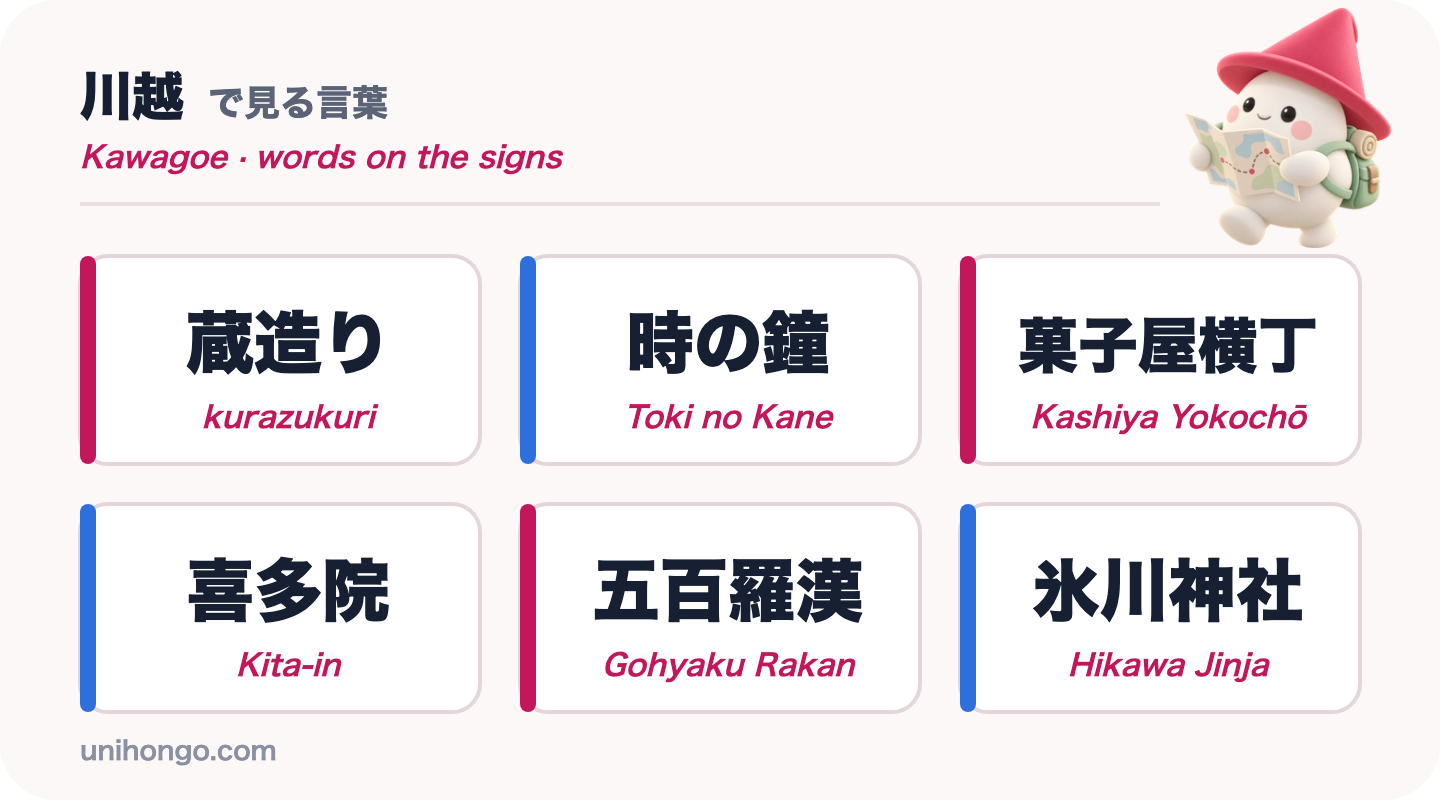
Kawagoe's signposts point between a handful of sights, and the words are easy to learn because they describe exactly what they name: 蔵 is a storehouse, 鐘 a bell, 菓子 sweets and 横丁 a side lane. Shops add their own vocabulary, above all for the local sweet potato.
The table below lists the words you will see on the signposts, the shopfronts and the temple gates.
| Word | Reading | Meaning |
|---|---|---|
| 小江戸 | Koedo | Little Edo, Kawagoe's nickname |
| 蔵造り | kurazukuri | Storehouse-style merchant buildings |
| 時の鐘 | Toki no Kane | The bell tower, literally the bell of time |
| 菓子屋横丁 | Kashiya Yokochō | Candy alley |
| 喜多院 | Kita-in | Temple with the Edo Castle rooms |
| 五百羅漢 | Gohyaku Rakan | The five hundred stone disciples |
| 氷川神社 | Hikawa Jinja | Kawagoe's main shrine |
| 本丸御殿 | Honmaru Goten | The castle palace building |
| さつまいも | satsumaimo | Sweet potato |
| 芋 | imo | Potato, on sweet potato shop signs |
| 試食 | shishoku | Free sample, tasting |
Japanese for shopping and sampling sweets
Kawagoe's shops sell sweets made to be given as well as eaten, so staff will often ask whether something is a gift, o-miyage, and whether you need a bag. Samples, shishoku, are common, but ask before you take one. Sweet potato appears everywhere: as crisps, candied chunks, soft-serve ice cream, cakes and even beer.
The other local food is eel, unagi, grilled and served over rice, a long-standing Kawagoe tradition. Popular eel restaurants have long queues at weekends, so arrive early or put your name down and walk around while you wait.
| Japanese | Romaji | Meaning |
|---|---|---|
| さつまいものお菓子はどれですか。 | Satsumaimo no okashi wa dore desu ka. | Which sweets are made with sweet potato? |
| これはいくらですか。 | Kore wa ikura desu ka. | How much is this? |
| お土産なので、ひとつずつ包んでもらえますか。 | O-miyage na node, hitotsu zutsu tsutsunde moraemasu ka. | They are gifts; could you wrap them one by one? |
| 日持ちはしますか。 | Himochi wa shimasu ka. | Will it keep for a while? |
| ここで食べてもいいですか。 | Koko de tabete mo ii desu ka. | May I eat it here? |
| 鯛みくじはどこにありますか。 | Tai-mikuji wa doko ni arimasu ka. | Where are the sea bream fortunes? |
| うなぎは何分くらい待ちますか。 | Unagi wa nanpun kurai machimasu ka. | About how long is the wait for eel? |
Manners, timing and practical tips
Kawagoe is a living town with traffic on its main street, and a little care keeps the day pleasant.
- The kurazukuri street carries cars and buses; keep to the narrow pavements and do not step into the road for photos.
- Eat snacks at the shop where you bought them rather than walking through crowds, and carry your rubbish with you.
- Many small shops in Candy Alley close one weekday a week, often Monday or Wednesday, and most close by early evening.
- Visit on a weekday if you can; weekends and holidays, especially around the October festival, are very busy.
- At Kita-in and Hikawa Shrine, keep voices low and follow the usual bow, clap and prayer at the shrine.
- Listen for the Toki no Kane at noon or three in the afternoon if you are nearby.
Practise the sweet shop conversation before you go
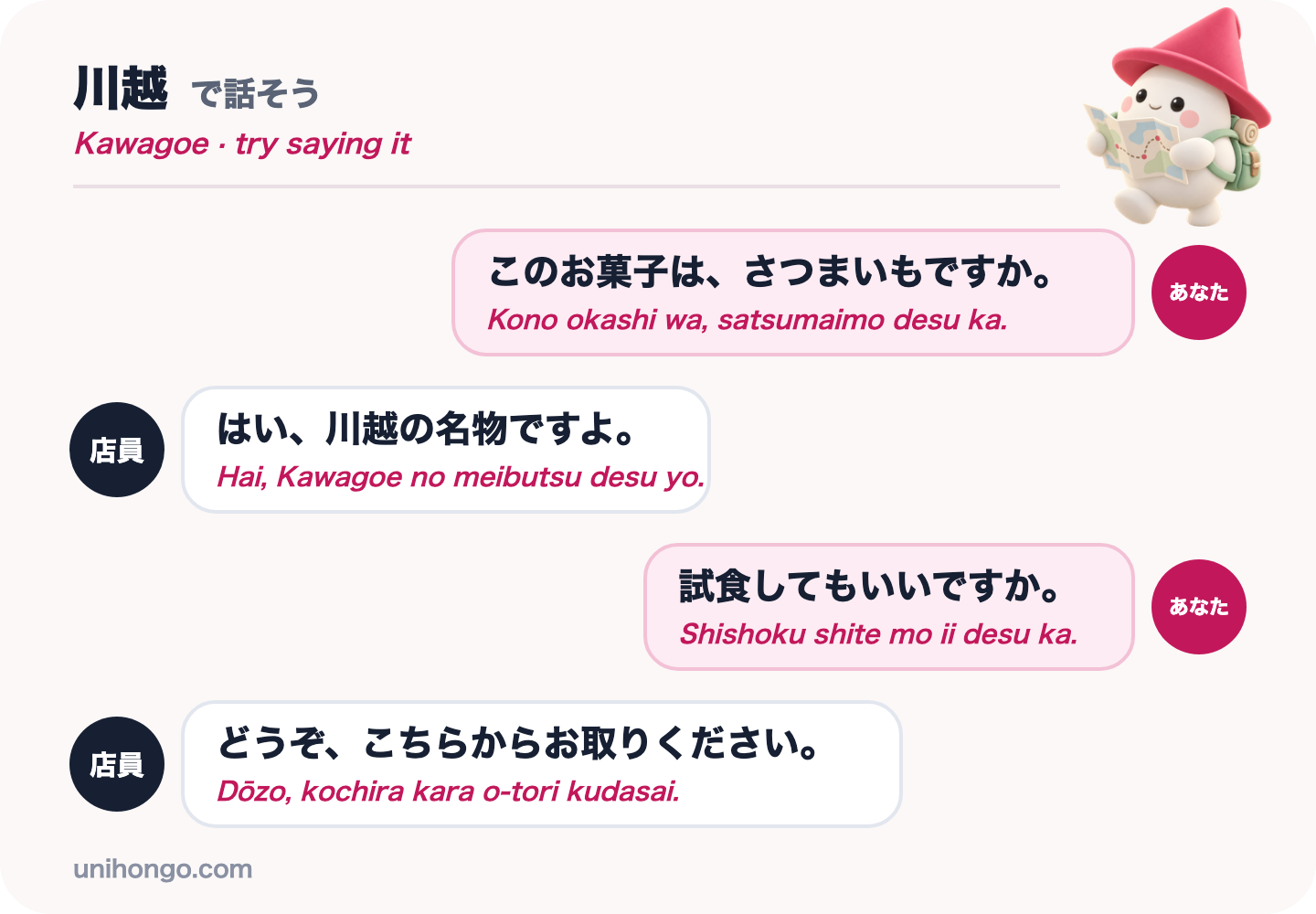
The typical Kawagoe exchange is short and friendly: you ask what something is, the shop assistant tells you it is a local speciality, meibutsu, and you ask to try it. Practise the four lines below until you can say them without looking, and notice the polite o-tori kudasai, please help yourself, which you will hear at tasting counters everywhere.
Then practise with a partner who answers. In Unihongo, choose the Shopping topic and ask your AI Sensei to play a shopkeeper in Candy Alley, or the Convenience Store Checkout mission for more counter practice. Saying the lines once before you travel makes the real conversation easy.
| Japanese | Romaji | Meaning |
|---|---|---|
| このお菓子は、さつまいもですか。 | Kono okashi wa, satsumaimo desu ka. | Is this sweet made with sweet potato? |
| はい、川越の名物ですよ。 | Hai, Kawagoe no meibutsu desu yo. | Yes, it is a Kawagoe speciality. |
| 試食してもいいですか。 | Shishoku shite mo ii desu ka. | May I try a sample? |
| どうぞ、こちらからお取りください。 | Dōzo, kochira kara o-tori kudasai. | Please, help yourself from here. |
Official information
Festival dates, events, museum closures and loop bus information are published by the Koedo Kawagoe Tourism Association. Kita-in and Hikawa Shrine publish their own opening times and seasonal events.