

Why Sakurajima is worth the crossing
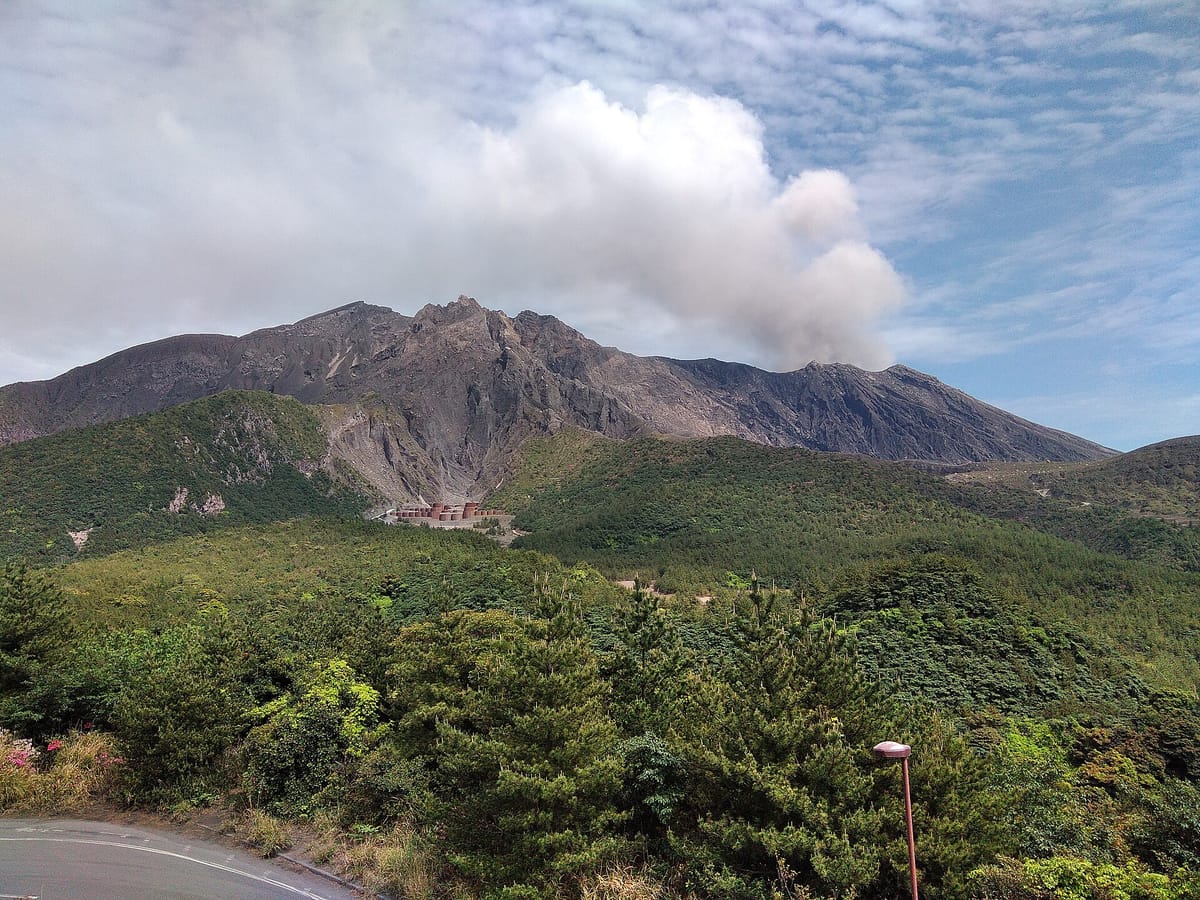
Sakurajima, literally cherry blossom island, is a stratovolcano in Kinkō Bay, the inlet that Kagoshima city looks across. It has three peaks: Kitadake in the north, at 1,117 metres the highest, then Nakadake and Minamidake. Minamidake and the Shōwa crater on its flank are the active ones, and small eruptions there happen so regularly that people in Kagoshima talk about them the way other cities talk about rain.
Despite the name, Sakurajima has not been an island since 1914. The Taishō eruption that year poured out so much lava that it filled the strait on the eastern side and joined Sakurajima to the Ōsumi Peninsula. The lava fields from that eruption, now slowly covered in black pines, are what you walk across at the Arimura observatory and along the shore trail near the port.
It is also one of the easiest volcanoes in the world to visit. There is no hike, no special permit and no tour you have to book: you buy nothing in advance, walk onto a public ferry, and fifteen minutes later you are on the slopes. For a Japanese learner it is a compact lesson in a small set of words you will not find in a textbook chapter on restaurants: lava, ash, shelter, observatory and no entry.
Getting there: the 24-hour Sakurajima Ferry
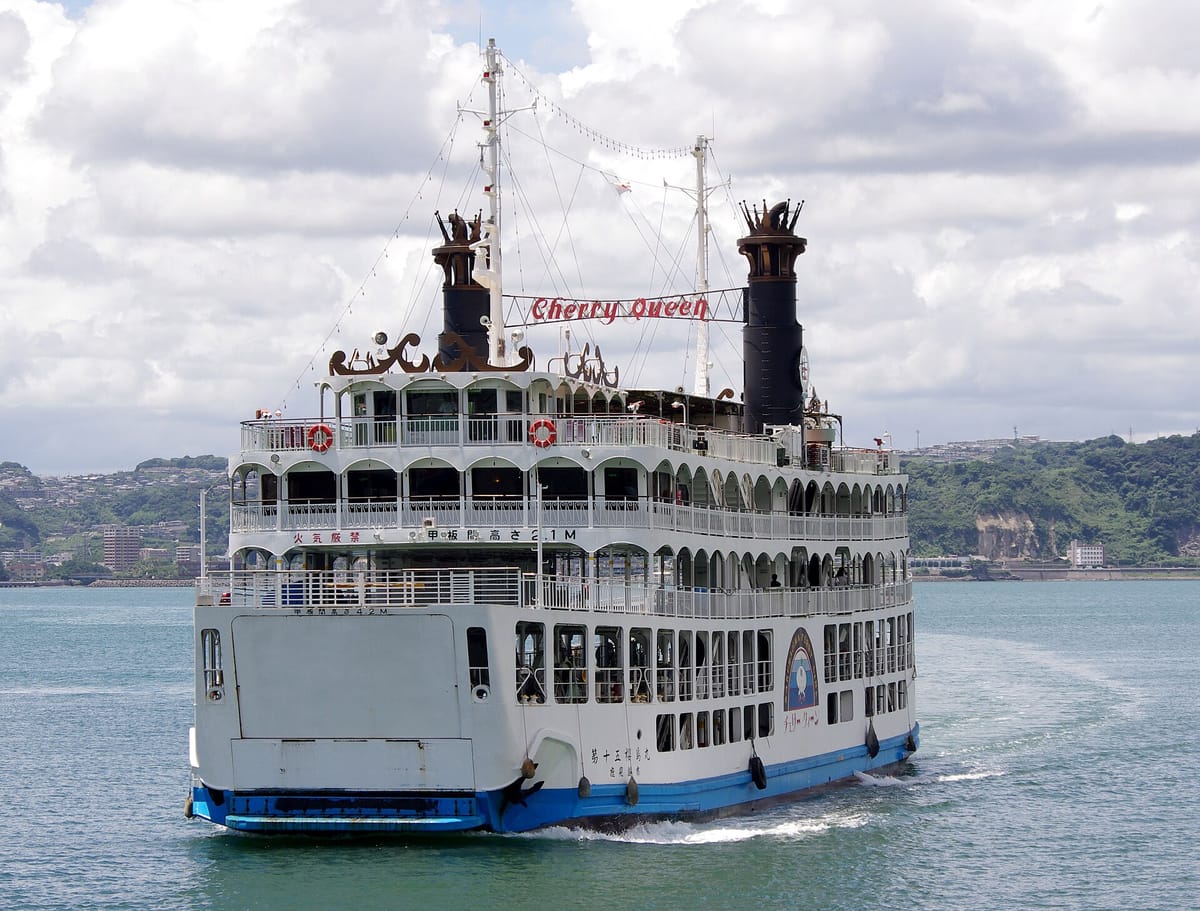
The Sakurajima Ferry, run by Kagoshima City, leaves from the ferry terminal on the city waterfront beside Kagoshima Aquarium and crosses about three and a half kilometres to Sakurajima Port, Sakurajima-kō. The crossing takes around fifteen minutes and the ferry runs 24 hours a day, with frequent departures in the daytime and fewer at night. You do not need a reservation; just follow the signs for passengers, not vehicles.
The payment system surprises first-time visitors. There is no ticket gate on the Kagoshima side: you board, cross, and pay at the gate when you get off at Sakurajima Port. On the way back you pay at Sakurajima Port again before boarding. Bring Japanese yen in cash. The Kagoshima tourism site says credit cards and national IC cards such as Suica are not accepted at the ferry, only certain local IC cards, and that there is no currency exchange on the island. A one-day city transport pass that covers the ferry, buses and trams is sold in Kagoshima; check the city's current passes before you go.
The short crossing is worth spending on deck. The volcano grows in front of you, and the ferry is known for its counter selling bowls of udon, which many locals eat on the way over. Once on the island, the Sakurajima Island View loop bus leaves from near the port and stops at the visitor centre, the lava trail and the Yunohira Observatory.
| Japanese | Romaji | Meaning |
|---|---|---|
| 桜島フェリーの乗り場はどこですか。 | Sakurajima ferī no noriba wa doko desu ka. | Where does the Sakurajima Ferry leave from? |
| 次の船は何時ですか。 | Tsugi no fune wa nanji desu ka. | What time is the next boat? |
| 料金は現金だけですか。 | Ryōkin wa genkin dake desu ka. | Is it cash only? |
| このバスは湯之平展望所に行きますか。 | Kono basu wa Yunohira tenbōsho ni ikimasu ka. | Does this bus go to the Yunohira Observatory? |
| 一日乗車券はどこで買えますか。 | Ichinichi jōshaken wa doko de kaemasu ka. | Where can I buy a one-day pass? |
Lava fields, viewpoints and the buried torii
The island is roughly round and a road runs all the way along the coast. Most visitors stay on the western side near the port, where everything is within walking or loop-bus distance, and add the eastern sights by car, taxi or bicycle. The visitor centre near the port rents bikes, and the flat stretch along the lava shore is pleasant to ride; the climb to Yunohira is steep, so most people take the bus up.
- Sakurajima Visitor Center: a small free museum near the port on the eruptions, the 1914 lava and life with the volcano, with a shop and bike rental.
- Yōgan Nagisa Park and foot bath: a free outdoor foot bath about one hundred metres long, with the volcano behind it.
- Yōgan Nagisa Trail: a walking path of about three kilometres through the Taishō lava field along the shore.
- Yunohira Observatory, Yunohira tenbōsho: at 373 metres on Kitadake, the highest point open to the public, with a view of the peaks on one side and Kagoshima city on the other.
- Arimura Lava Observatory: a raised path across the Taishō lava field on the south side, facing Minamidake.
- Kurokami buried torii, Kurokami maibotsu torii: a shrine gate buried by ash and pumice in 1914, with only its top still showing, kept as a record of the eruption.
Ash, shelters and the words on the signs
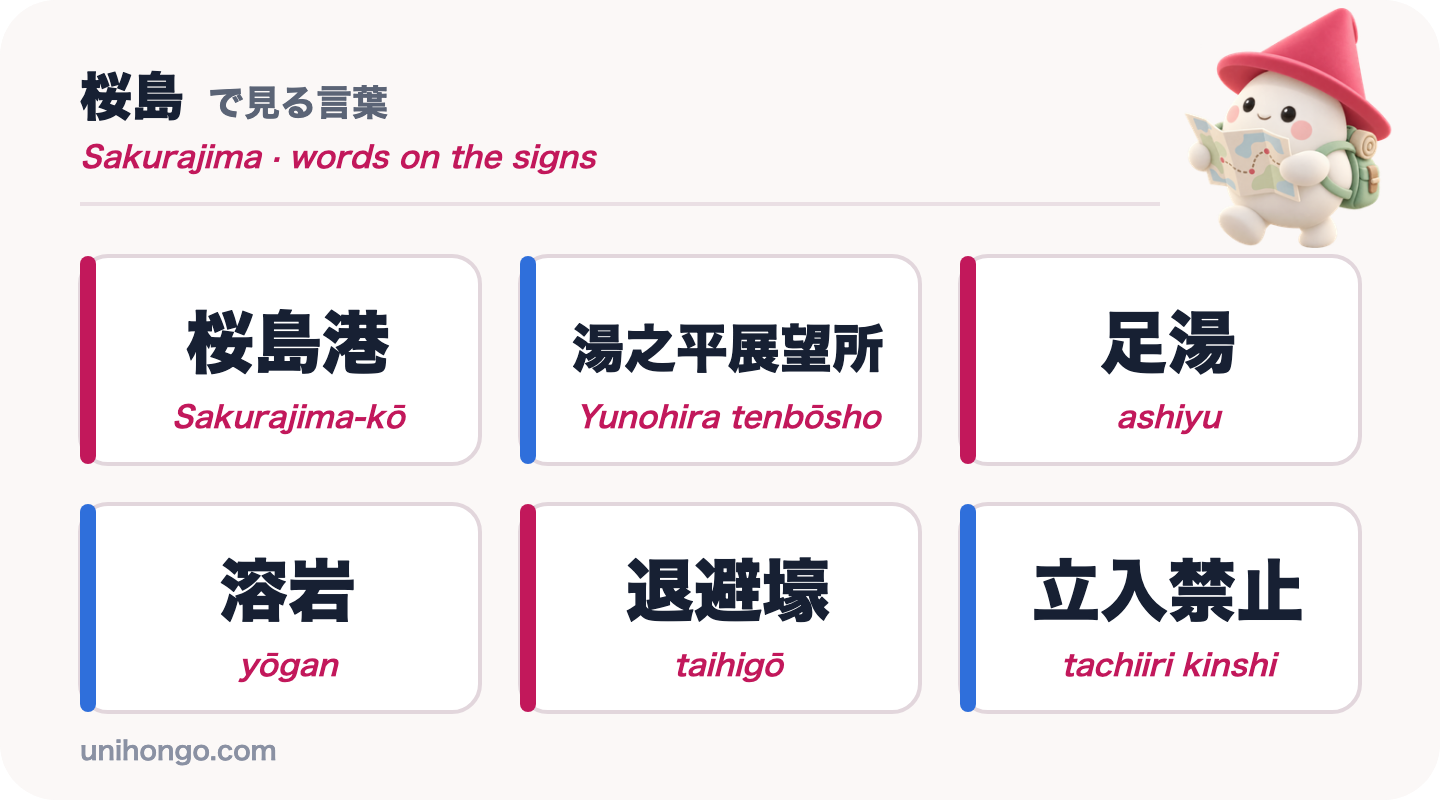
Drive or cycle round the island and you will notice small concrete bunkers beside the road and at bus stops. These are taihigō, evacuation shelters, built to protect people from falling rocks during an eruption. They are a normal part of the landscape here, like the covered drains that keep ash from blocking the gutters.
Ash, hai, is the thing visitors meet most. When the wind blows towards you it falls as a fine grey grit that gets into eyes and hair, and in Kagoshima city you may see special bags for collecting ash from gardens and roofs put out on collection day. The words for eruption, ash and lava turn up constantly in the museum, on the news and on the signs, so they are worth learning as a set.
| Word | Reading | Meaning |
|---|---|---|
| 桜島港 | Sakurajima-kō | Sakurajima Port, where the ferry arrives |
| 湯之平展望所 | Yunohira tenbōsho | Yunohira Observatory, the highest public viewpoint |
| 足湯 | ashiyu | Foot bath |
| 溶岩 | yōgan | Lava, as in the lava trail and lava fields |
| 退避壕 | taihigō | Concrete shelter from falling volcanic rocks |
| 立入禁止 | tachiiri kinshi | No entry |
| 噴火 | funka | Eruption |
| 降灰 | kōhai | Ash fall, used in forecasts |
| 火山灰 | kazanbai | Volcanic ash |
Japanese for the foot bath, the bus and the bike
Most of what you do on Sakurajima involves a short exchange with staff: at the rental counter, on the bus, or at the edge of the foot bath asking if there is somewhere to dry your feet. The foot bath is free and open-air, so bring a small towel; the water is warm rather than hot and locals sit for twenty minutes chatting.
At the bike rental counter you will usually be asked for identification and told when to return the bike. Listen for the time, followed by made ni, by, and for henkyaku, return. If the weather turns, rain and ash together make the roads slippery and gritty, so ask about the conditions before you ride far.
| Japanese | Romaji | Meaning |
|---|---|---|
| 自転車を借りたいんですが。 | Jitensha o karitai n desu ga. | I would like to rent a bicycle. |
| 何時までに返せばいいですか。 | Nanji made ni kaeseba ii desu ka. | By what time do I need to return it? |
| 足湯は無料ですか。 | Ashiyu wa muryō desu ka. | Is the foot bath free? |
| タオルはどこで買えますか。 | Taoru wa doko de kaemasu ka. | Where can I buy a towel? |
| 今日は灰が降りますか。 | Kyō wa hai ga furimasu ka. | Will ash fall today? |
| 有村溶岩展望所まで自転車で行けますか。 | Arimura yōgan tenbōsho made jitensha de ikemasu ka. | Can I get to the Arimura Lava Observatory by bike? |
| 噴火の音が聞こえました。 | Funka no oto ga kikoemashita. | I heard the eruption. |
Timing, ash and practical tips
Sakurajima is an easy trip in most weather, but the volcano and the wind shape the day. A little planning keeps the ash out of your eyes and your camera.
- Check the eruption alert level and any restrictions on the Japan Meteorological Agency or city sites on the day, and never go past a tachiiri kinshi sign.
- Look at the wind direction: ash falls on whichever side is downwind, which may be the city rather than the island.
- Bring sunglasses or glasses rather than contact lenses on ash days, and a cloth to wipe your camera lens.
- Carry cash in yen for the ferry, the bus and small shops; card payment is not everywhere on the island.
- The loop bus runs only in the daytime; check the last bus down from Yunohira before you go up.
- Try the local produce at the roadside stalls: Sakurajima is known for its giant daikon radishes and tiny komikan mandarins, each in its own season.
Practise the port conversation before you go
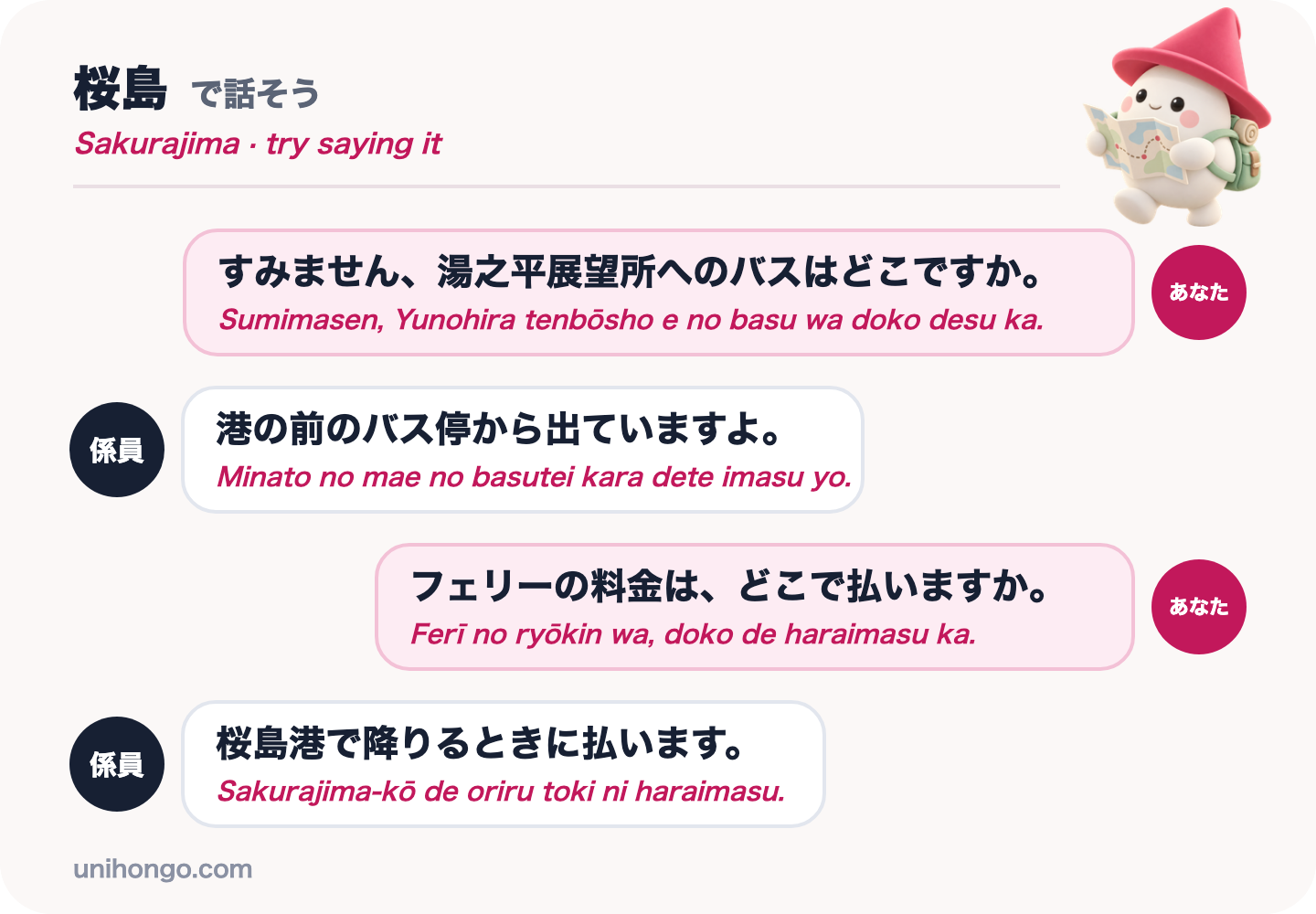
The first people you speak to on Sakurajima are usually the staff at the port. The two questions you need are where the bus leaves and how you pay, and the answers are short. Practise the four lines below until you can say them without reading, and listen for the key words in the replies: basutei, bus stop, and oriru toki, when you get off.
Then practise with someone who answers back. In Unihongo, choose the Directions topic and ask your AI Sensei to play the port staff, or pick the Sightseeing topic and describe the view from Yunohira. Saying the lines once before you arrive is what makes them come out on the day.
| Japanese | Romaji | Meaning |
|---|---|---|
| すみません、湯之平展望所へのバスはどこですか。 | Sumimasen, Yunohira tenbōsho e no basu wa doko desu ka. | Excuse me, where is the bus to the Yunohira Observatory? |
| 港の前のバス停から出ていますよ。 | Minato no mae no basutei kara dete imasu yo. | It leaves from the bus stop in front of the port. |
| フェリーの料金は、どこで払いますか。 | Ferī no ryōkin wa, doko de haraimasu ka. | Where do I pay the ferry fare? |
| 桜島港で降りるときに払います。 | Sakurajima-kō de oriru toki ni haraimasu. | You pay when you get off at Sakurajima Port. |
Official information
Ferry timetables, loop bus times and any closures linked to volcanic activity change, so check the official pages before you go. The Sakurajima Visitor Center site lists the viewpoints and facilities, and the Kagoshima tourism site explains the ferry and how to pay.