

Why Kumamoto Castle is worth visiting now
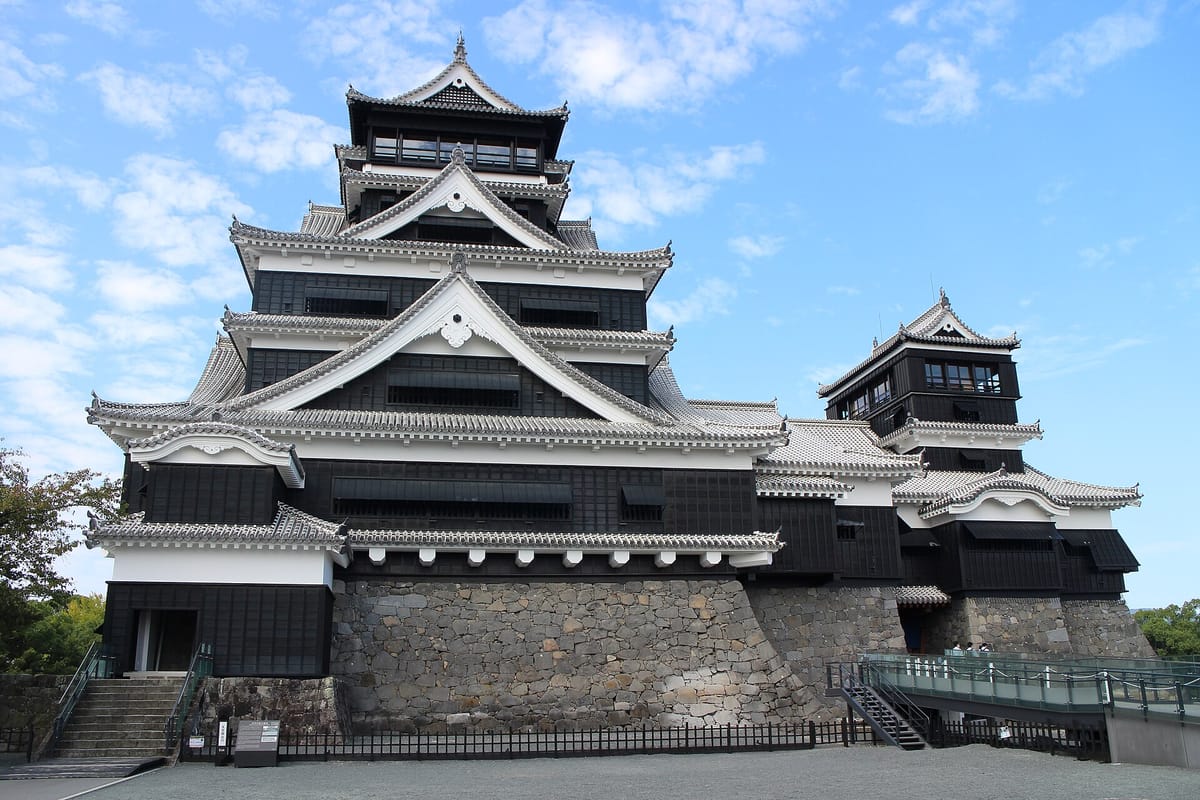
Katō Kiyomasa built Kumamoto Castle on Chausu hill and completed it in 1607. Its stone walls, ishigaki, are its signature: they start gently at the bottom and curve up until they are almost vertical, a style called musha-gaeshi, meant to throw back attackers. In 1877, during the Satsuma Rebellion, the castle withstood a siege, but a fire just before the fighting destroyed the keep and the palace. The keep you see today is a 1960 reconstruction in steel-reinforced concrete, faithful on the outside.
In April 2016, two powerful earthquakes struck Kumamoto. Roof tiles fell from the keep, turrets were damaged and stone walls collapsed across the grounds. The city began a restoration expected to last until around 2052. The keep was the first great milestone: its exterior was repaired and strengthened, and its interior reopened in 2021 as a new museum.
On 28 July 2026, another strong earthquake hit Kumamoto. Stone walls collapsed again in dozens of places, especially in the western part of the grounds, and the keep's interior finishes were damaged in places. After safety checks the castle reopened on 13 August 2026, with the keep and the elevated walkway open again. Visiting now means seeing a castle in the middle of a long recovery, and the care with which it is being rebuilt is part of the experience.
Getting there: Kumamoto City Tram
From JR Kumamoto Station, take the Kumamoto City Tram from the Kumamoto-eki-mae stop towards the city centre and get off at Kumamoto-jō/Shiyakusho-mae, the castle and city hall stop, about fifteen minutes. The fare is a flat amount paid when you get off, by cash or IC card. From the stop, signs lead up into the grounds.
The neighbouring Hanabatachō stop is the nearest for Sakuranobaba Jōsaien, a cluster of restaurants, souvenir shops and a history museum at the foot of the castle, where some visitors buy their tickets and begin the walk up. Walking from Kumamoto Station takes around thirty to forty-five minutes.
| Japanese | Romaji | Meaning |
|---|---|---|
| 熊本城に行きたいんですが、どの電車に乗ればいいですか。 | Kumamoto-jō ni ikitai n desu ga, dono densha ni noreba ii desu ka. | I want to go to Kumamoto Castle. Which tram should I take? |
| 熊本城・市役所前で降りればいいですか。 | Kumamoto-jō Shiyakusho-mae de orireba ii desu ka. | Should I get off at Kumamoto-jō/Shiyakusho-mae? |
| 天守閣への入口はどちらですか。 | Tenshukaku e no iriguchi wa dochira desu ka. | Which way is the entrance to the keep? |
| 城彩苑はどこですか。 | Jōsaien wa doko desu ka. | Where is Jōsaien? |
| ここから歩いて何分くらいですか。 | Koko kara aruite nanpun kurai desu ka. | About how many minutes on foot from here? |
The keep, the walkway and the stone walls
The route through the grounds is shaped by the repairs. A special elevated walkway, tokubetsu kengaku tsūro, runs above the damaged areas for several hundred metres, so you can look down at stones laid out in numbered rows, cranes at work and walls that are being rebuilt. Information boards explain what fell and how it is being put back.
The walkway leads to the keep. Inside, the museum tells the story of the castle from Katō Kiyomasa to the earthquakes, with models, armour and film, and the top floor looks out over the city to the mountains of Aso on a clear day. Some areas, such as the Honmaru Goten palace, have been closed during the repairs, and after July 2026 more of the grounds may be fenced off.
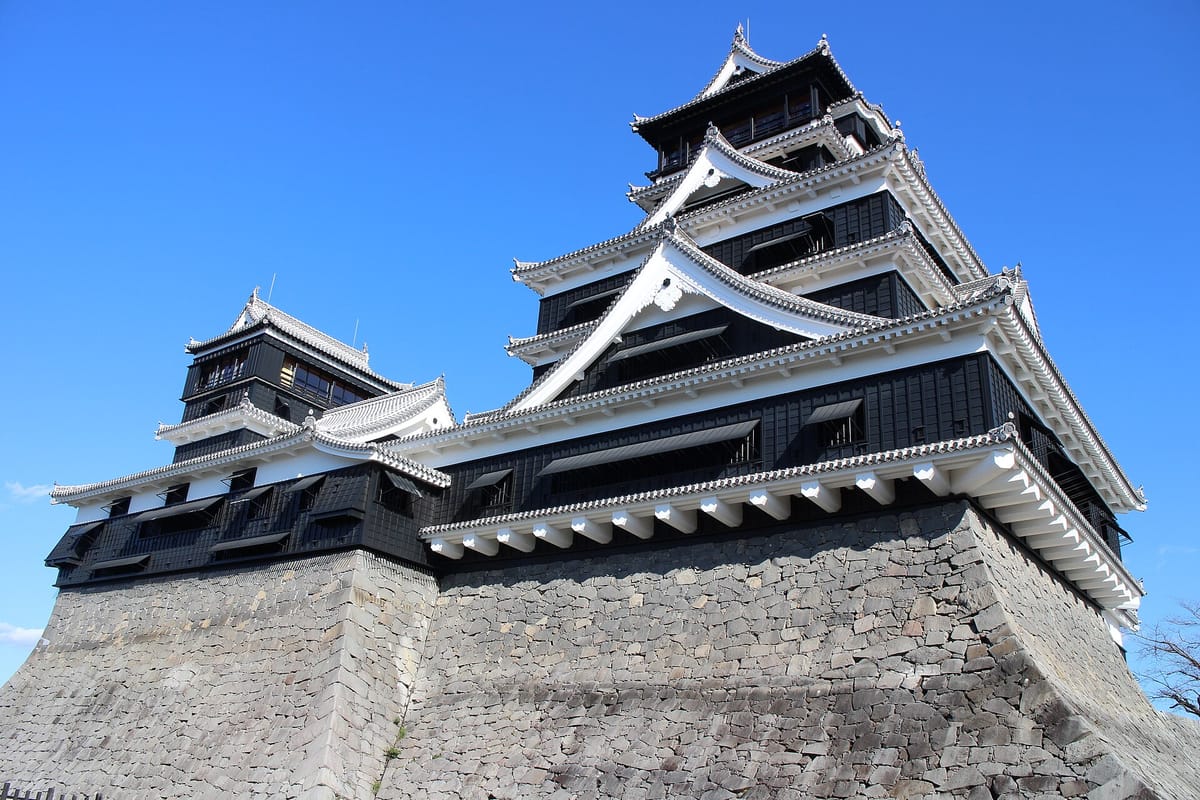
- Tenshukaku: the large and small keeps, with a museum inside and a view from the top floor.
- Tokubetsu kengaku tsūro: the elevated walkway through the repair areas.
- Ishigaki: the curving stone walls, with repairs visible at many points.
- Uto yagura: one of the castle's few original turrets, which survived the 1877 fire; it has been under repair.
- Sakuranobaba Jōsaien: food, souvenirs and a history exhibit at the foot of the castle.
- Katō Shrine: a small shrine dedicated to Katō Kiyomasa with a classic view of the keep; the stone walls near it were among those damaged in July 2026.
Words on the castle signs
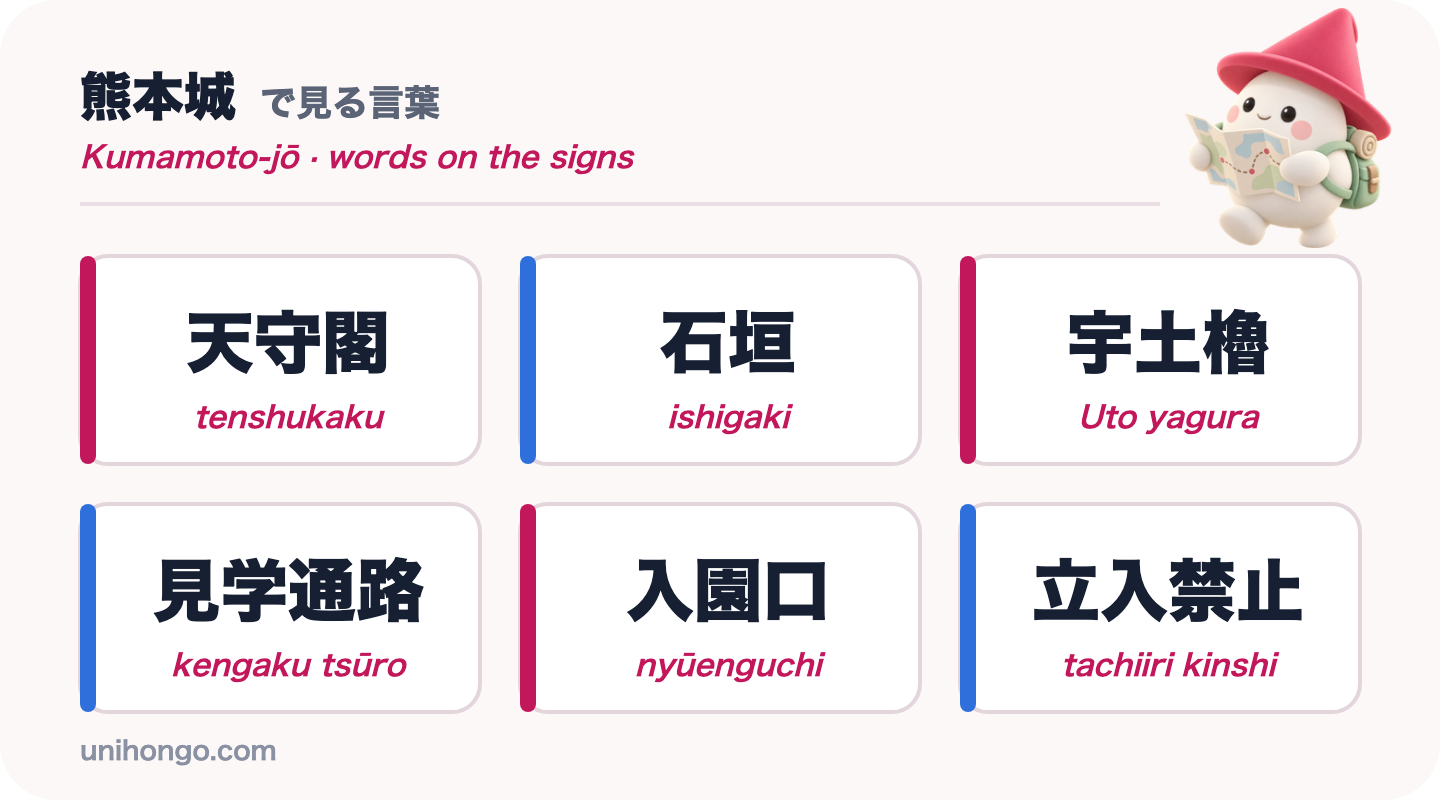
Castle signs use a vocabulary of their own: gates, turrets and walls each have a word, and the repair areas add a few more. Notices about closures are often only in Japanese, so the last word in the table below is one to recognise instantly.
| Word | Reading | Meaning |
|---|---|---|
| 天守閣 | tenshukaku | Main keep |
| 石垣 | ishigaki | Stone wall |
| 宇土櫓 | Uto yagura | Uto turret, an original turret |
| 見学通路 | kengaku tsūro | Visitor walkway |
| 入園口 | nyūenguchi | Entrance to the grounds |
| 立入禁止 | tachiiri kinshi | No entry |
| 武者返し | musha-gaeshi | Curving wall that repels warriors |
| 復旧工事 | fukkyū kōji | Restoration work |
| 本丸御殿 | Honmaru Goten | The palace in the inner enclosure |
Japanese for tickets and questions at the castle
Tickets are sold at the entrances and at Jōsaien, and staff will point you to the walkway and the keep. Because the open areas change with the repairs, asking is the best way to plan your route. Kaemasu ka, can I buy, and hairemasu ka, can I go in, are the two verbs you need.
| Japanese | Romaji | Meaning |
|---|---|---|
| 入場券はどこで買えますか。 | Nyūjōken wa doko de kaemasu ka. | Where can I buy a ticket? |
| 大人二枚お願いします。 | Otona nimai onegai shimasu. | Two adults, please. |
| 天守閣の中に入れますか。 | Tenshukaku no naka ni hairemasu ka. | Can I go inside the keep? |
| 今日見られないところはありますか。 | Kyō mirarenai tokoro wa arimasu ka. | Are there any areas we can't see today? |
| 宇土櫓は見られますか。 | Uto yagura wa miraremasu ka. | Can we see the Uto turret? |
| エレベーターはありますか。 | Erebētā wa arimasu ka. | Is there a lift? |
Etiquette and practical tips
Kumamoto Castle is both a sightseeing spot and a working construction site, and the city asks visitors to respect the repair areas.
- Stay on the marked routes and never cross fences or ropes around damaged walls.
- Do not touch or climb on stones laid out on the ground; each is numbered for reassembly.
- Check the official site before you go for the areas currently open, especially after aftershocks or heavy rain.
- Wear comfortable shoes; the grounds are large and there are slopes and steps up to the keep.
- Allow two to three hours for the walkway, the keep and Jōsaien.
- If you want to support the repairs, the city's Fukkō Jōshu donation scheme lets visitors contribute and be recorded as a restoration lord.
Practise the castle visit before you go
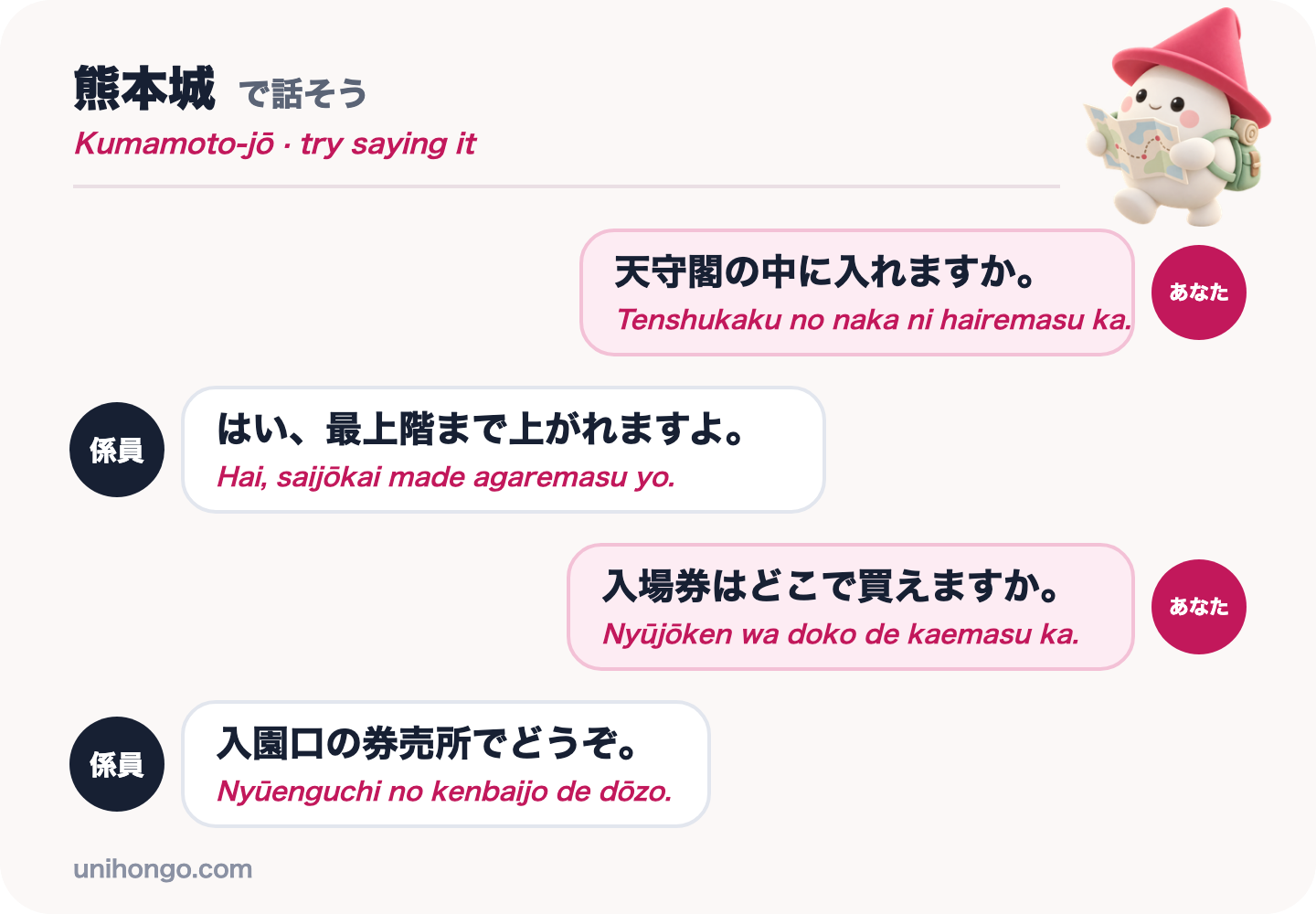
With repairs changing what is open, the first conversation at the castle is usually about access. Practise the four lines below until you can say them smoothly, and listen for the words saijōkai, top floor, and kenbaijo, ticket office, in the replies.
Then practise with a partner who answers back. In Unihongo, choose the Sightseeing topic and ask your AI Sensei to play a castle attendant who tells you which areas are closed today, or choose Directions to rehearse the tram from Kumamoto Station. The session report afterwards gives you the words you missed.
| Japanese | Romaji | Meaning |
|---|---|---|
| 天守閣の中に入れますか。 | Tenshukaku no naka ni hairemasu ka. | Can I go inside the keep? |
| はい、最上階まで上がれますよ。 | Hai, saijōkai made agaremasu yo. | Yes, you can go up to the top floor. |
| 入場券はどこで買えますか。 | Nyūjōken wa doko de kaemasu ka. | Where can I buy a ticket? |
| 入園口の券売所でどうぞ。 | Nyūenguchi no kenbaijo de dōzo. | Please use the ticket office at the entrance. |
Official information
The castle's official site posts notices about closures, repairs, events and ticket options, including any changes after aftershocks. Check it before you go.