

Why Okutama is Tokyo's wild side
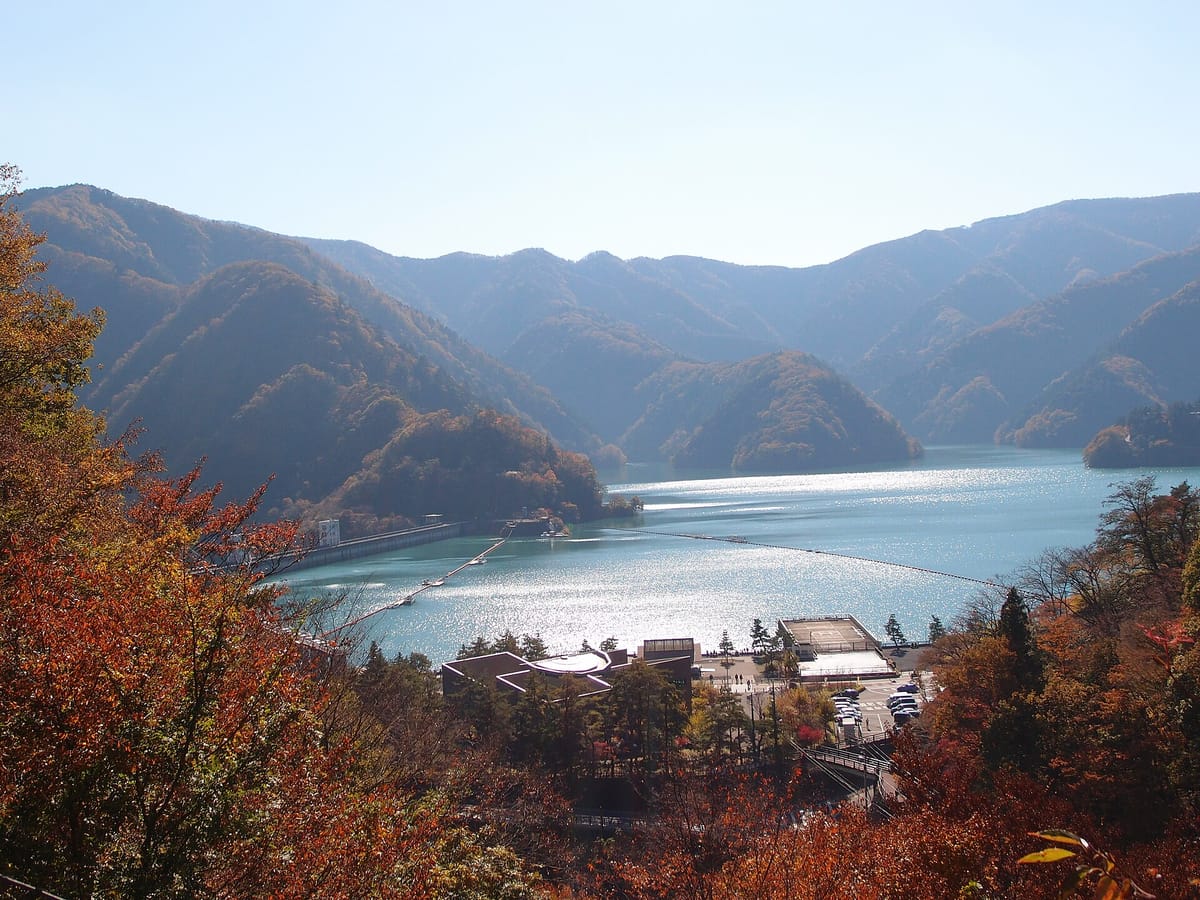
Okutama is a town, and an area, at the western tip of Tokyo Metropolis, inside the Chichibu-Tama-Kai National Park. Almost all of it is mountain and forest, cut by the upper Tama River and its side valleys. It includes Mount Kumotori, at 2,017 metres the highest peak in Tokyo, and Lake Okutama, the reservoir behind the Ogōchi Dam, which supplies about twenty per cent of the water used in the capital.
It is also a place where people still live and work in the mountains. Wasabi is grown in the clear streams, and a local variety of mountain trout, the Okutama yamame, appears on restaurant menus. Small shrines and stone statues line the old roads, and in the evening the valleys are quiet in a way that is hard to believe is still Tokyo.
For a learner, Okutama is an honest test. Signs are in Japanese first, buses are infrequent, and the difference between two bus stops can mean a walk of three minutes or twenty-five. A few clear questions at the bus stop or the visitor centre make the day go smoothly, and people are used to helping walkers from the city.
Getting there: the Ōme Line to Okutama Station
From Shinjuku, take the JR Chūō Line towards Tachikawa and Ōme, and change at Ōme to a local train on the JR Ōme Line for the last stretch up the valley to Okutama. Some Chūō Line trains run through to Ōme, and on weekends and holidays the Holiday Rapid Okutama, Horidē Kaisoku Okutama, runs from Shinjuku to Ōme; since the 2023 timetable change it no longer continues to Okutama except for occasional seasonal services. Allow roughly one and a half to two hours in total. IC cards work on the whole route and on the local buses.
Okutama Station is the end of the line. The Okutama Visitor Center, run by the Tokyo Metropolitan Government, is about two minutes' walk away and has trail maps, current closures and wildlife notices. Buses to Nippara, Lake Okutama and the trailheads leave from the stands in front of the station. The Hatonosu gorge is two stops back down the line at Hatonosu Station, about ten minutes' walk from the platform.
| Japanese | Romaji | Meaning |
|---|---|---|
| 奥多摩行きは何番線ですか。 | Okutama-yuki wa nanbansen desu ka. | Which platform is the train for Okutama? |
| 青梅で乗り換えですか。 | Ōme de norikae desu ka. | Do I change at Ōme? |
| 鳩ノ巣渓谷はどちらですか。 | Hatonosu Keikoku wa dochira desu ka. | Which way is the Hatonosu gorge? |
| 奥多摩湖行きのバスは何番乗り場ですか。 | Okutama-ko-yuki no basu wa nanban noriba desu ka. | Which stand is the bus for Lake Okutama? |
| 最終バスは何時ですか。 | Saishū basu wa nanji desu ka. | What time is the last bus? |
| 登山道の情報はありますか。 | Tozandō no jōhō wa arimasu ka. | Do you have information about the trails? |
What to see: the gorge, the cave, the lake and the old road
Most of Okutama's sights line up along the valley, so you can pick two or three and link them by train, bus and foot. The Hatonosu gorge, Hatonosu Keikoku, is a short stretch of the Tama River squeezed between cliffs and huge boulders, crossed by a suspension bridge; a riverside path leads upstream towards the Shiromaru Dam, whose fishway, about 330 metres long and said to be the longest in Japan, opens to visitors on selected days from spring to autumn.
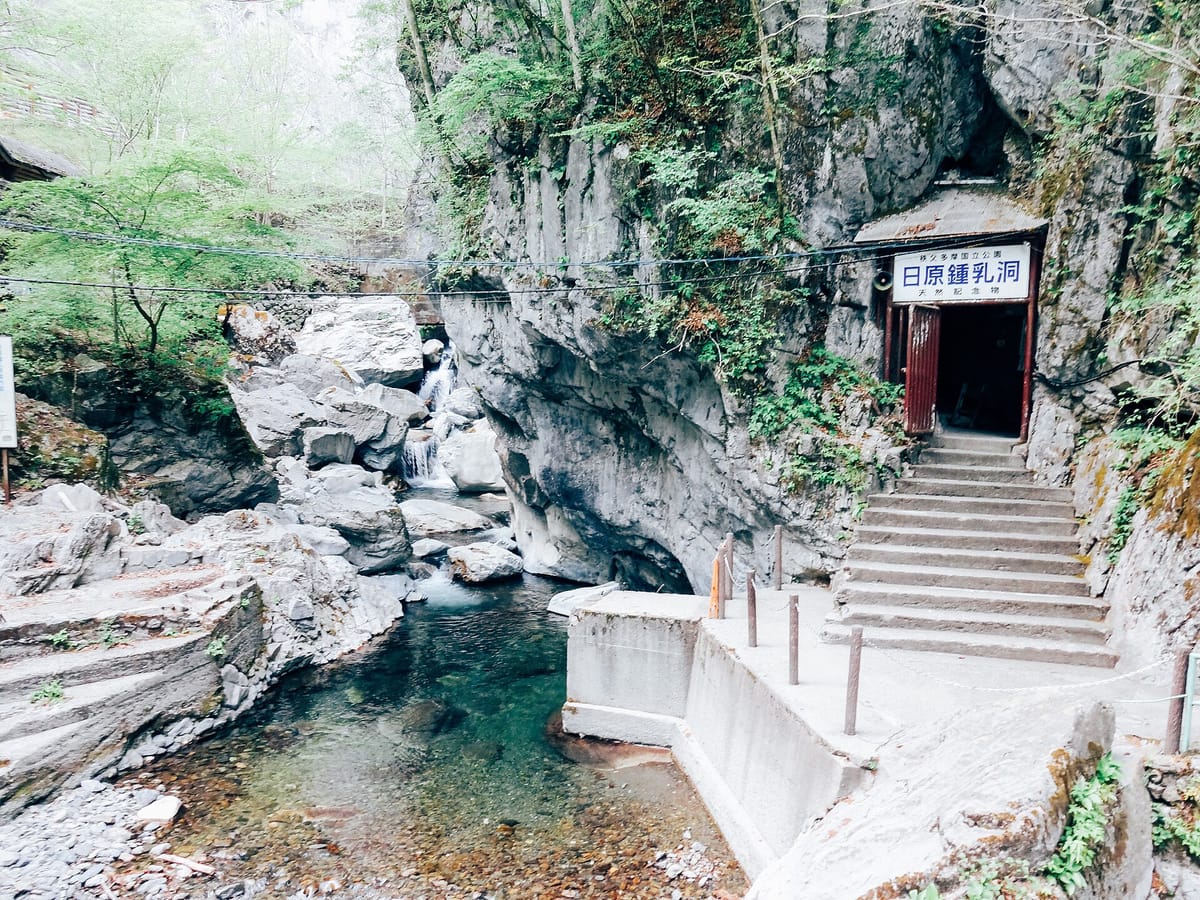
Nippara Limestone Cave, Nippara Shōnyūdō, is the largest cave system in the Kantō region, with passages about 1,270 metres long in total and a steady temperature of about 11°C. It was a training place for Shugendō mountain ascetics, and statues and names from that tradition remain inside. The visit takes around forty minutes along a path with steps and low ceilings, past formations such as the white-robed Kannon and chambers lit in changing colours. A small entry fee applies.
Lake Okutama, Okutama-ko, lies about twenty minutes by bus beyond the station. A visitor building beside the dam has a small free museum and a restaurant, and on calm days the floating bridges across the lake make a memorable walk when they are open. Walkers can also reach the lake on foot along the Okutama Mukashi-michi, the old road.
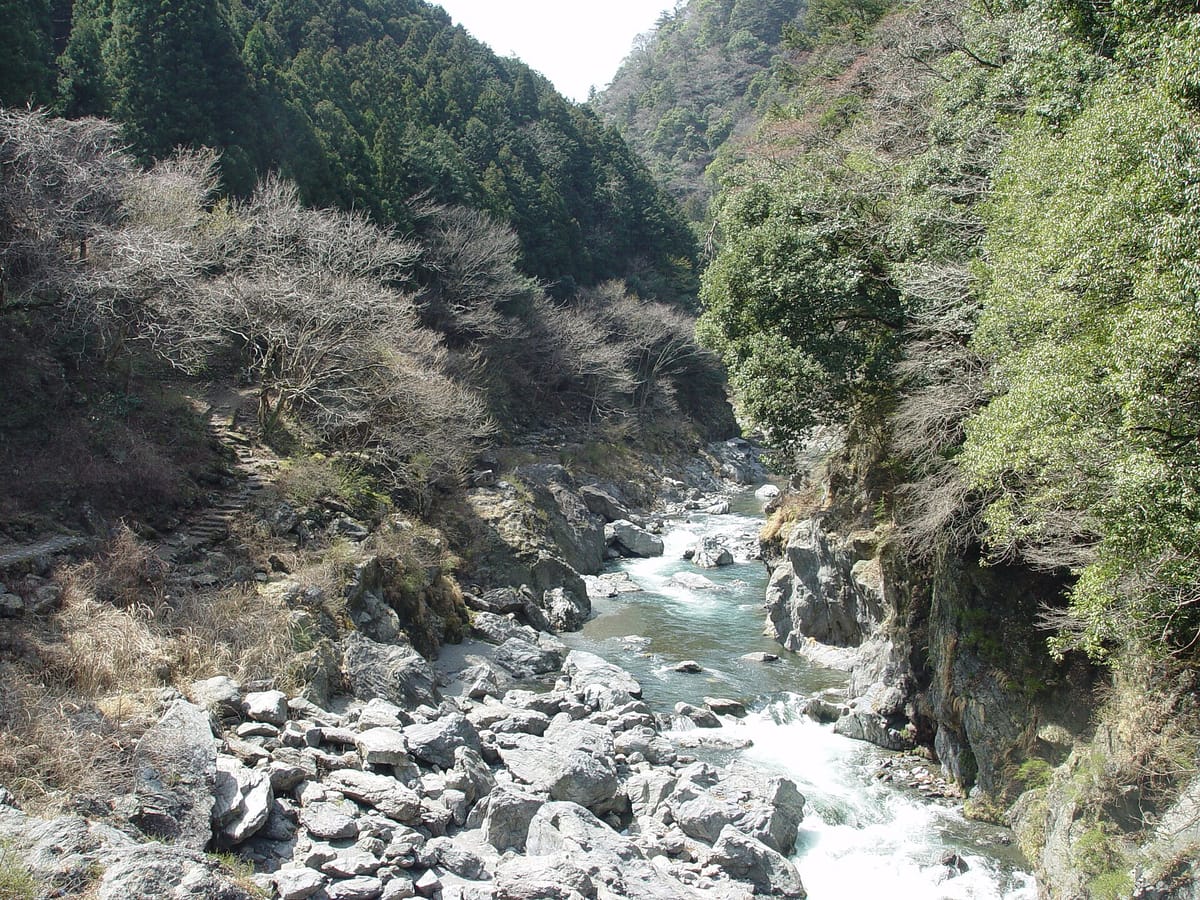
- Hatonosu Keikoku: the boulder gorge near Hatonosu Station, with a suspension bridge.
- Shiromaru Dam fishway: a long fish ladder open on selected days from spring to autumn.
- Nippara Shōnyūdō: the limestone cave, a Tokyo natural monument, by bus from the station.
- Okutama-ko and the Ogōchi Dam: the lake that supplies about a fifth of Tokyo's water.
- Okutama Mukashi-michi: an old road of about nine kilometres from the station to the lake, with suspension bridges and Edo-period roadside statues; allow about four hours.
- Mount Kawanori and Hyakuhiro no Taki: a mountain hike with a waterfall of about forty metres on the way.
- Moegi no Yu: a hot spring near the station with indoor and outdoor baths above the river.
Words on the signs in Okutama
Okutama's signs mix place names with the vocabulary of mountains and water. 渓谷, keikoku, is a gorge or ravine, and 湖, ko, at the end of a name means lake. The cave is a 鍾乳洞, shōnyūdō, literally a cave of stalactites. On the trails, 登山道, tozandō, is a mountain path, and you will often see it with 通行止め, tsūkōdome, closed, after landslides or rockfall work.
The sign every visitor photographs is 熊出没注意, kuma shutsubotsu chūi, beware of bears. Asiatic black bears live in these mountains, and the sign is a real warning rather than a joke: on quiet trails, walkers carry bells and make noise, and the visitor centre posts recent sightings.
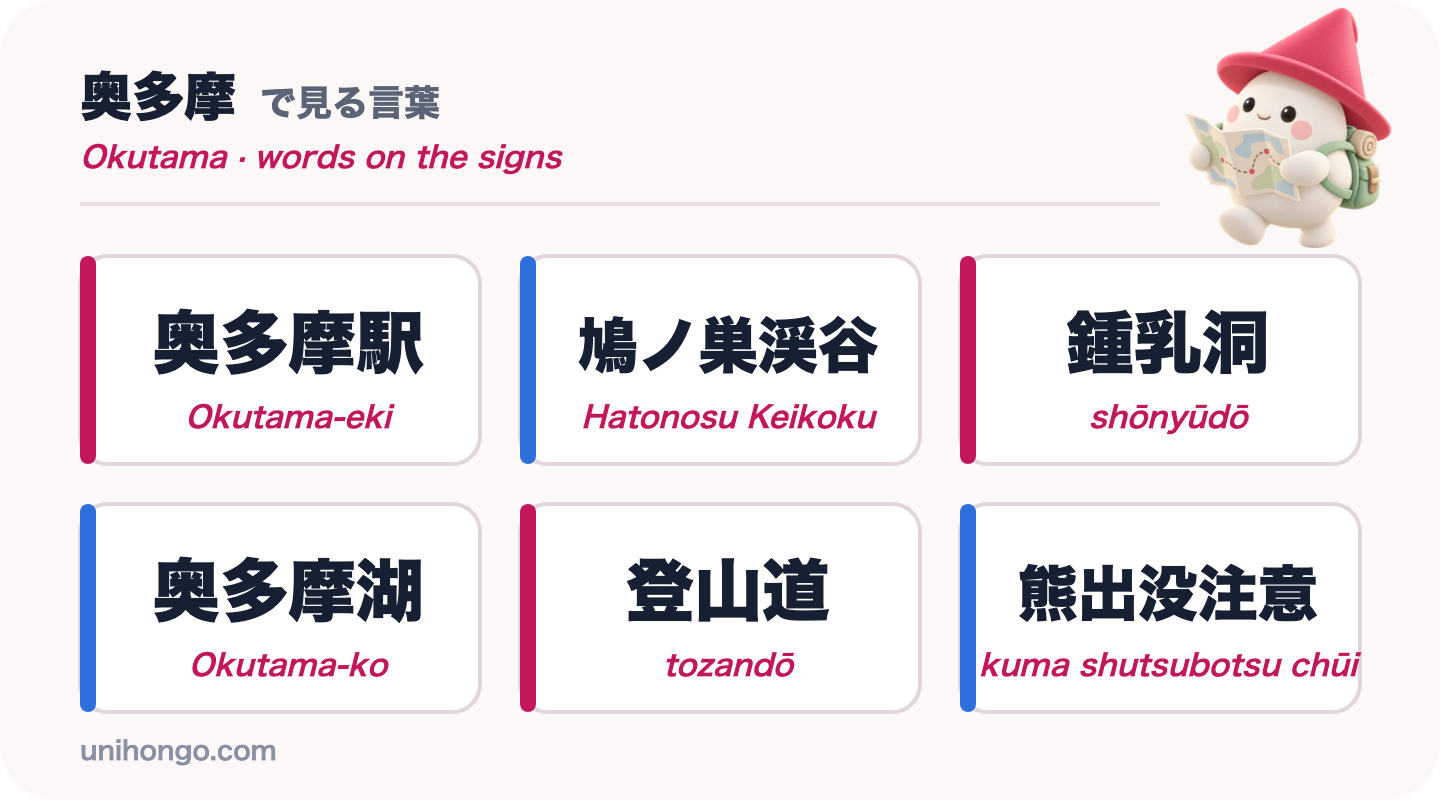
| Word | Reading | Meaning |
|---|---|---|
| 奥多摩駅 | Okutama-eki | Okutama Station, end of the Ōme Line |
| 鳩ノ巣渓谷 | Hatonosu Keikoku | The Hatonosu gorge |
| 鍾乳洞 | shōnyūdō | Limestone cave |
| 奥多摩湖 | Okutama-ko | Lake Okutama |
| 登山道 | tozandō | Mountain trail |
| 熊出没注意 | kuma shutsubotsu chūi | Beware of bears |
| 通行止め | tsūkōdome | Closed to traffic, road or path closed |
| 浮橋 | ukihashi | Floating bridge on Lake Okutama |
| 東日原 | Higashi-Nippara | Bus stop used for the cave at weekends |
Japanese for the mountain buses
Okutama's buses are operated by Nishi Tokyo Bus, and outside the main routes they may run only once an hour or less. You board at the back or middle door, touch your IC card or take a numbered ticket, and pay at the front when you get off. The key skill is checking where a bus actually goes today, because the cave route changes between weekdays and weekends, and knowing the time of the last bus back.
Drivers are used to hikers and cave visitors and will answer short, clear questions. Ask before you board rather than while the bus is moving, and have the stop name ready: 鍾乳洞, 東日原 or 奥多摩湖.
| Japanese | Romaji | Meaning |
|---|---|---|
| 鍾乳洞に行くバスはどれですか。 | Shōnyūdō ni iku basu wa dore desu ka. | Which bus goes to the cave? |
| 今日は鍾乳洞まで行きますか。 | Kyō wa shōnyūdō made ikimasu ka. | Does it go as far as the cave today? |
| 東日原に着いたら教えてください。 | Higashi-Nippara ni tsuitara oshiete kudasai. | Please tell me when we reach Higashi-Nippara. |
| 帰りのバスはどこから乗りますか。 | Kaeri no basu wa doko kara norimasu ka. | Where do I catch the bus back? |
| 奥多摩駅までいくらですか。 | Okutama-eki made ikura desu ka. | How much is it to Okutama Station? |
| 次で降ります。 | Tsugi de orimasu. | I'm getting off at the next stop. |
Safety, etiquette and timing in the mountains
Okutama feels close to the city, but it is real mountain country, and the weather, the buses and the daylight set the pace of the day.
- Start early. Buses are infrequent, and valleys lose the sun early in the afternoon, especially from autumn to winter.
- Check the last bus and train times before you walk away from the station, and keep a margin.
- Bring a layer for Nippara Cave, which stays at about 11°C even in summer, and shoes with grip for its wet steps.
- On trails, carry a bear bell or make noise, keep to the marked path and stay away from wasps in late summer and autumn.
- Check the Visitor Center or official notices for path closures and the floating bridges, which close when the lake is low.
- Autumn leaves in November and fresh green in May are the busiest times; weekdays are far quieter.
- At the hot spring, wash before you get in, keep towels out of the water and tie up long hair.
Practise the bus stop before you go
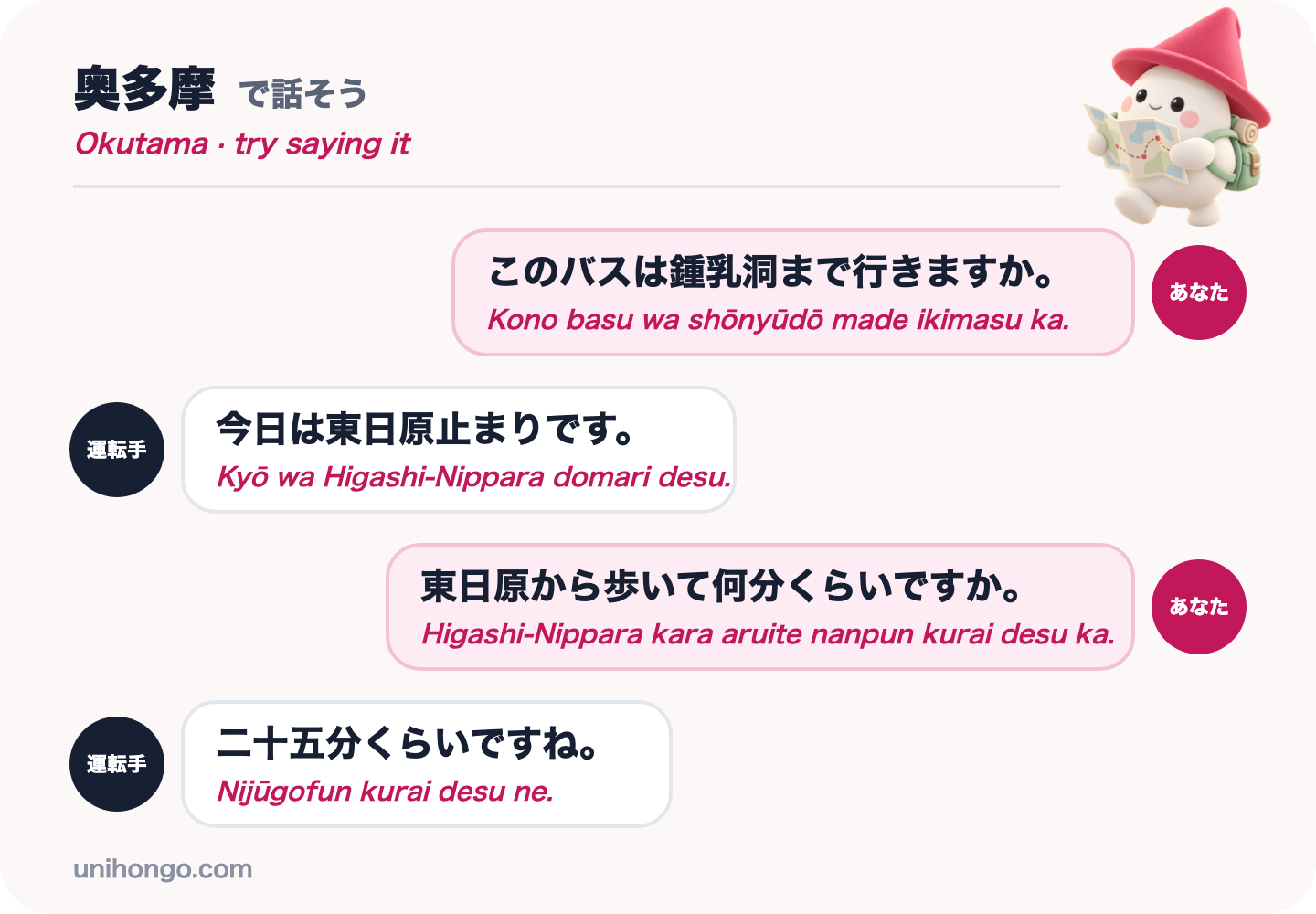
This short exchange is the one that saves your day in Okutama. At weekends the cave bus stops short at Higashi-Nippara, and if you know the word domari and can ask how long the walk is, you will not be caught out. Practise the four lines below until they come out without reading, and listen for the numbers in the answer.
Then practise with a partner who answers back. In Unihongo, choose the Directions topic and ask your AI Sensei to play the bus driver at Okutama Station, or try the Catch the Right Train mission to rehearse the change at Ōme. Saying the lines once before your trip is what makes them come out at the bus stop.
| Japanese | Romaji | Meaning |
|---|---|---|
| このバスは鍾乳洞まで行きますか。 | Kono basu wa shōnyūdō made ikimasu ka. | Does this bus go to the cave? |
| 今日は東日原止まりです。 | Kyō wa Higashi-Nippara domari desu. | Today it only goes as far as Higashi-Nippara. |
| 東日原から歩いて何分くらいですか。 | Higashi-Nippara kara aruite nanpun kurai desu ka. | About how many minutes is the walk from Higashi-Nippara? |
| 二十五分くらいですね。 | Nijūgofun kurai desu ne. | About twenty-five minutes. |
Official information
The Tokyo Metropolitan Government's nature park pages describe the Okutama sights, and the Ōme and Okutama tourism guide covers Nippara Limestone Cave access. Nishi Tokyo Bus posts notices about the floating bridges and bus changes. Check them, and the Visitor Center's notices, before you go.