

Why ride the Shimanami Kaidō
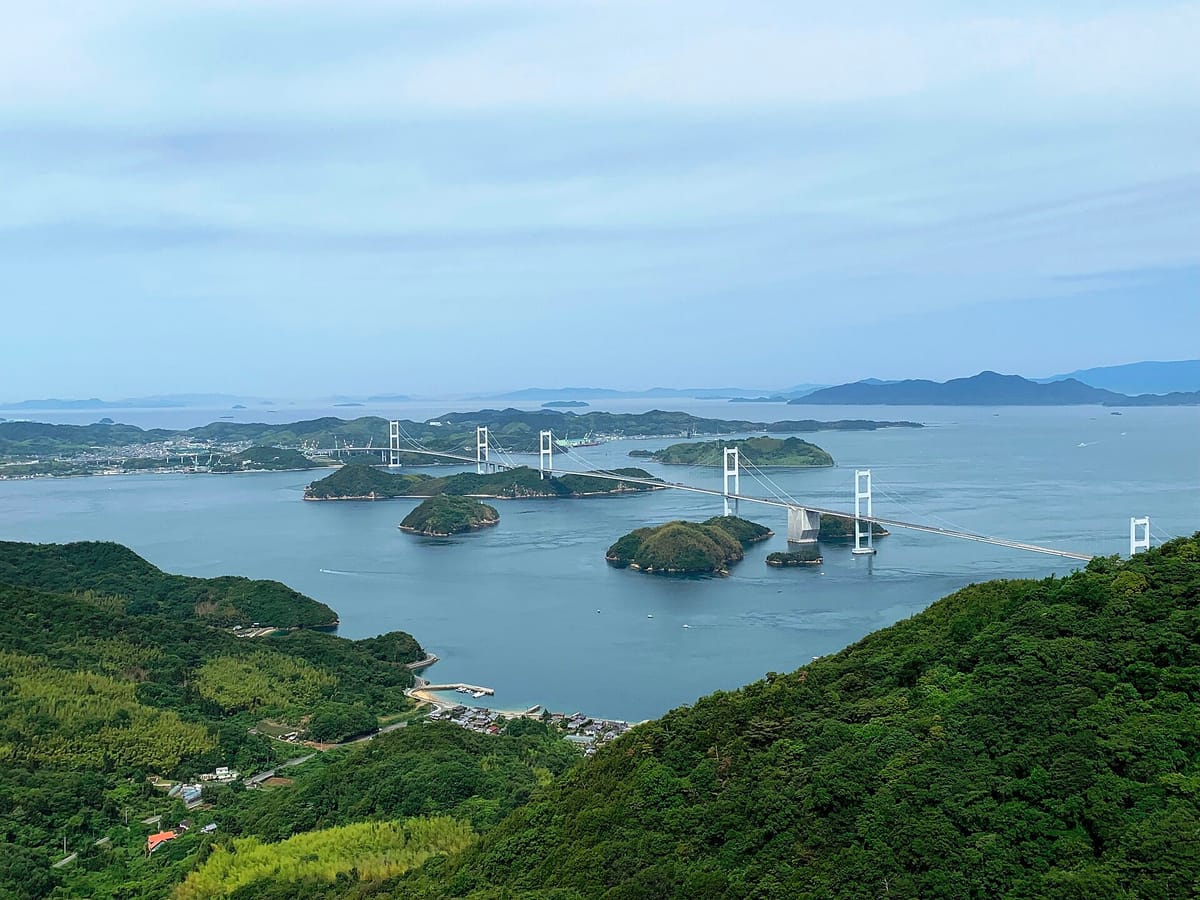
Shimanami means island waves, and kaidō means sea road, and the name describes the ride well. From the port town of Onomichi, the route crosses to Mukaishima and then follows a string of bridges over Innoshima, Ikuchijima, Ōmishima, Hakatajima and Ōshima before the final, spectacular crossing to Imabari on Shikoku. The expressway was built for cars, but it was designed with a separate path for bicycles and pedestrians, and today the Shimanami Kaidō is best known as a cycling route.
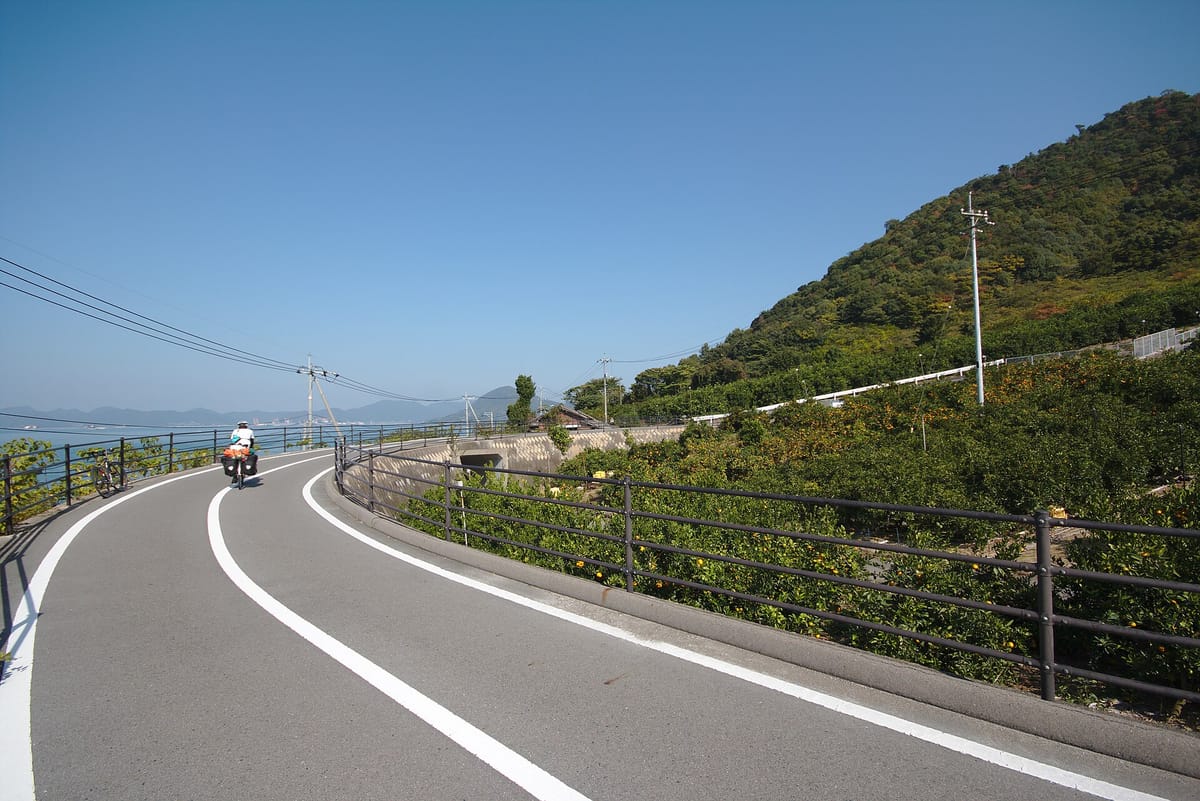
What makes it special is the mix of big engineering and small island life. One minute you are high above the sea on a suspension bridge; the next you are rolling past lemon groves, shipyards, temple gates and harbours where the only sound is a fishing boat's engine. The route is signed in Japanese and English, and a blue line painted on the road shows the recommended course, so it is easy to follow without a map.
For a Japanese learner, it is a rare chance to use the language in a relaxed, rural setting. You will talk to rental staff, ferry crews, café owners and people at rest stops, michi no eki, and the conversations are short and practical: where, how far, can I, is it OK.
Getting there: Onomichi Station and Imabari Station
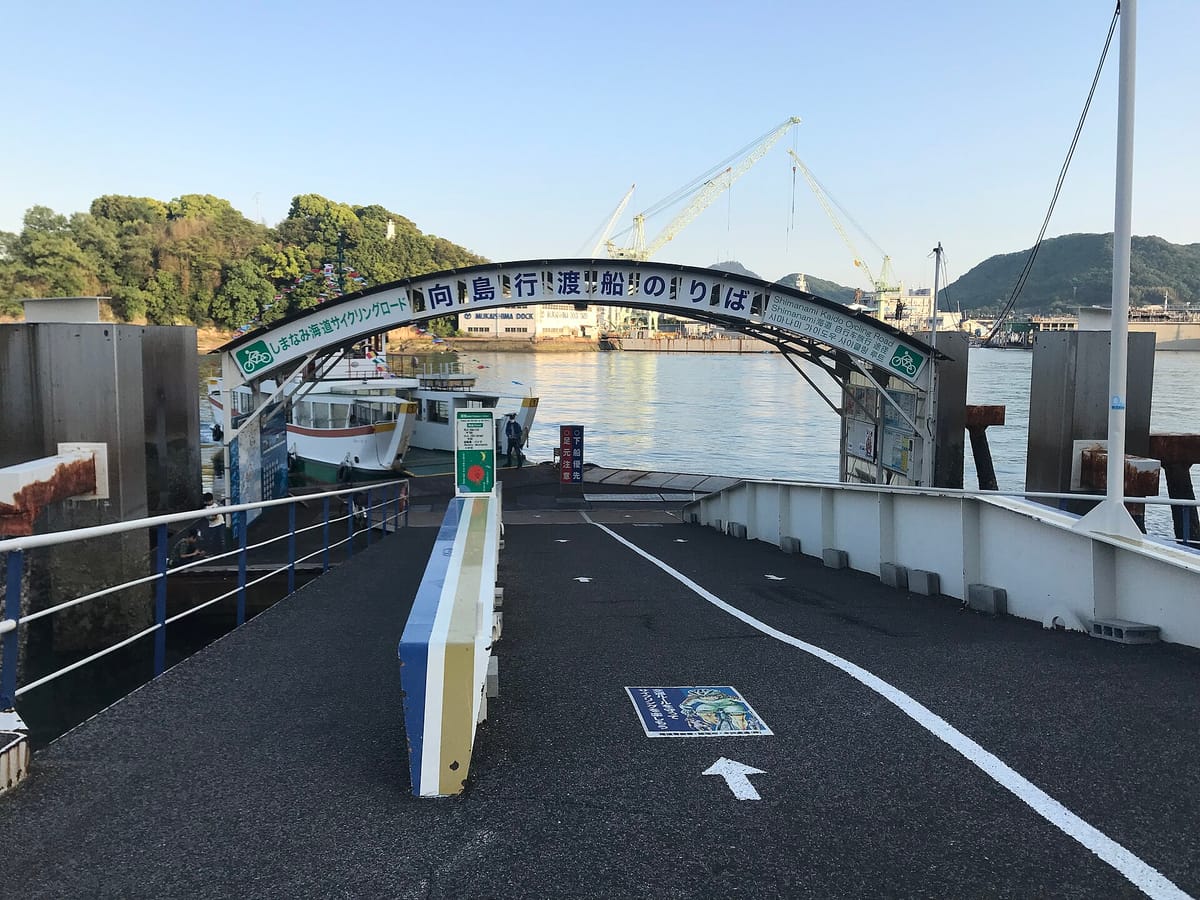
Most riders start in Onomichi. JR Onomichi Station is on the San'yō Main Line, reached from Fukuyama or Mihara, which are both shinkansen stops. The rental terminal is a short walk from the station near the port, and just in front of the station small ferries, tosen, carry you and your bike across the narrow channel to Mukaishima in a few minutes. There is no cycle path on the first bridge, so the ferry is the standard start.
From the Shikoku side, start at JR Imabari Station on the Yosan Line, reached from Matsuyama or Takamatsu. There is a rental terminal at the station, and another at Sunrise Itoyama near the foot of the Kurushima-Kaikyō Bridge. Starting in Imabari puts the biggest bridge at the beginning of your day, when your legs are fresh.
If you do not want to ride the whole way, express buses run along the expressway between the Honshū side and Imabari, and ferries link some of the islands, so you can cycle one section and ride back. Carrying a bike on a bus usually means packing it in a bag, rinkō bukuro, so rental bikes are easiest if you plan to return by bus.
| Japanese | Romaji | Meaning |
|---|---|---|
| 向島行きの渡船はどこから乗れますか。 | Mukaishima-yuki no tosen wa doko kara noremasu ka. | Where do I board the ferry to Mukaishima? |
| 自転車も一緒に乗れますか。 | Jitensha mo issho ni noremasu ka. | Can I take my bike on too? |
| レンタサイクルのターミナルはどこですか。 | Renta saikuru no tāminaru wa doko desu ka. | Where is the bike rental terminal? |
| 今治行きのバスはここから出ますか。 | Imabari-yuki no basu wa koko kara demasu ka. | Does the bus for Imabari leave from here? |
| 次の島まで何キロくらいですか。 | Tsugi no shima made nankiro kurai desu ka. | About how many kilometres to the next island? |
Islands, bridges and stops along the way
Each island has its own character, and the ride is much better if you plan a few stops rather than racing from bridge to bridge. The ramps up to the bridges are long but gentle, and the views from the top are the reward: the sea below, the next island ahead, and ships passing underneath.
- Mukaishima (向島): the first island, a short ferry ride from Onomichi, with quiet residential roads.
- Innoshima (因島): the island linked to the Murakami kaizoku, the sea clans once based around these straits; the Innoshima Suigun Castle museum tells their story.
- Ikuchijima (生口島): Setoda town, with the colourful temple Kōsan-ji, lemon groves and plenty of lemon sweets.
- Tatara Ōhashi (多々羅大橋): the elegant cable-stayed bridge between Ikuchijima and Ōmishima.
- Ōmishima (大三島): home to Ōyamazumi Jinja, an ancient shrine that holds a large collection of armour and swords offered by warriors.
- Hakatajima (伯方島): a small island long known for salt; look for salt ice cream at the rest stop.
- Ōshima (大島): the Kirōsan Observatory at the top of a steep hill gives the classic view over the final bridge.
- Kurushima-kaikyō Ōhashi (来島海峡大橋): the three linked suspension bridges, about four kilometres long, that carry you over a strait of fast tidal currents to Imabari.
Words on the signs: cycle paths, returns and closures
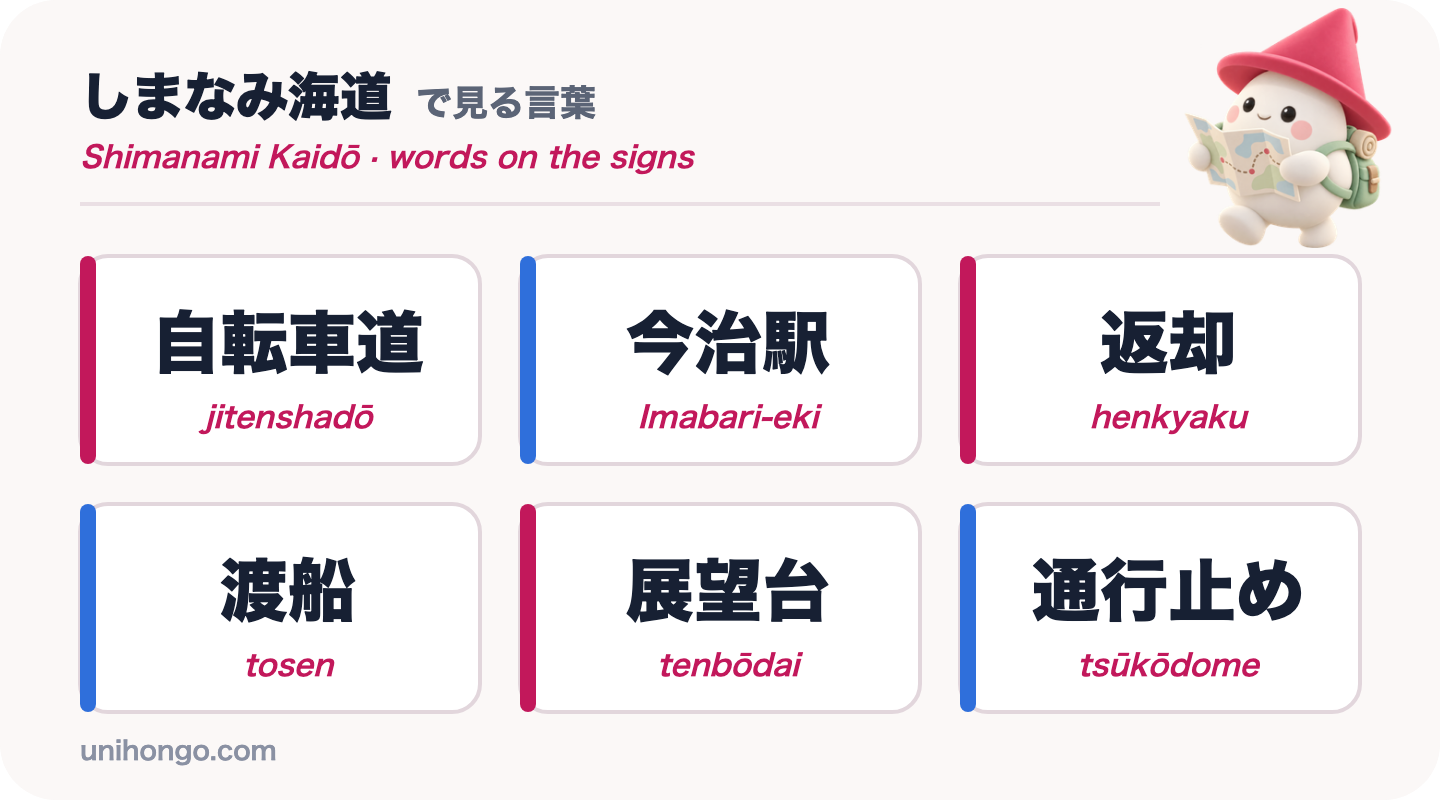
The signs on the route are bilingual at the main junctions, but smaller notices on the islands, at ferry piers and at rental counters are often in Japanese only. The words below cover most of what you need, including the notices that tell you a section is closed for works or high winds.
| Word | Reading | Meaning |
|---|---|---|
| 自転車道 | jitenshadō | Cycle path |
| 自転車歩行者道 | jitensha hokōshadō | Path shared by bicycles and pedestrians |
| 今治駅 | Imabari-eki | Imabari Station, the Shikoku end of the route |
| 返却 | henkyaku | Return of a rental |
| 乗り捨て | noritsute | One-way drop-off at another terminal |
| 渡船 | tosen | Small ferry across a channel |
| 展望台 | tenbōdai | Viewpoint, observation deck |
| 通行止め | tsūkōdome | Road closed |
| 押して歩いてください | oshite aruite kudasai | Please walk your bike |
Japanese for renting a bike and asking for help
The public rental system has about ten terminals along the route, with standard bikes, electric-assisted bikes and tandems. You fill in a form, show ID and pay at the counter, and staff will usually adjust the saddle for you. Private shops in Onomichi and Imabari rent road bikes and cross bikes, often with reservation and one-way options at extra cost.
Helmets are strongly encouraged: since 2023 Japanese law asks all cyclists to make an effort to wear one. If you get a puncture, the rental staff can help, so save the terminal's phone number before you set off.
| Japanese | Romaji | Meaning |
|---|---|---|
| 電動アシスト自転車はありますか。 | Dendō ashisuto jitensha wa arimasu ka. | Do you have electric-assisted bikes? |
| 一日借りたいです。 | Ichinichi karitai desu. | I'd like to rent one for the day. |
| サドルを少し高くしてもらえますか。 | Sadoru o sukoshi takaku shite moraemasu ka. | Could you raise the saddle a little? |
| 別のターミナルで返してもいいですか。 | Betsu no tāminaru de kaeshite mo ii desu ka. | Is it OK to return it at a different terminal? |
| パンクしてしまいました。 | Panku shite shimaimashita. | I've got a puncture. |
| 自転車を置く場所はありますか。 | Jitensha o oku basho wa arimasu ka. | Is there somewhere to park my bike? |
| この道で合っていますか。 | Kono michi de atte imasu ka. | Am I on the right road? |
Etiquette, timing and practical tips
The route passes through real towns and working harbours, and cyclists share many sections with local traffic. A few habits keep the ride safe and friendly.
- Ride on the left, in single file, and follow the blue line; it marks the recommended course, not a separate lane.
- Walk your bike where signs say oshite aruite kudasai, especially on shared paths near bridges and in town centres.
- Start early. Rental terminals close in the late afternoon, and you need time to return the bike before they do.
- Check the weather: strong wind on the bridges can be tiring or dangerous, and sections can close in storms.
- Carry water and sun protection. Shade is scarce on the bridges, and summer on the Inland Sea is very hot.
- Park your bike neatly at shops and shrines, never across a doorway or a narrow lane.
- Keep your voice down in villages and around Ōyamazumi Jinja, where people come to pray.
Practise the rental counter before you go
The one conversation that matters most on the Shimanami Kaidō happens before you pedal away. You want to know where you can return the bike and whether you can borrow a helmet, and the answers shape your whole day. Notice how the staff use o-kashi shite imasu, a humble, polite way of saying we lend them out.
Say the four lines aloud until your side is automatic. Then open Unihongo, choose the Sightseeing topic and ask your AI Sensei to play the rental terminal staff. Ask it to add a complication, such as a bike type that cannot be dropped off in Imabari, so you practise understanding a no as well as a yes.
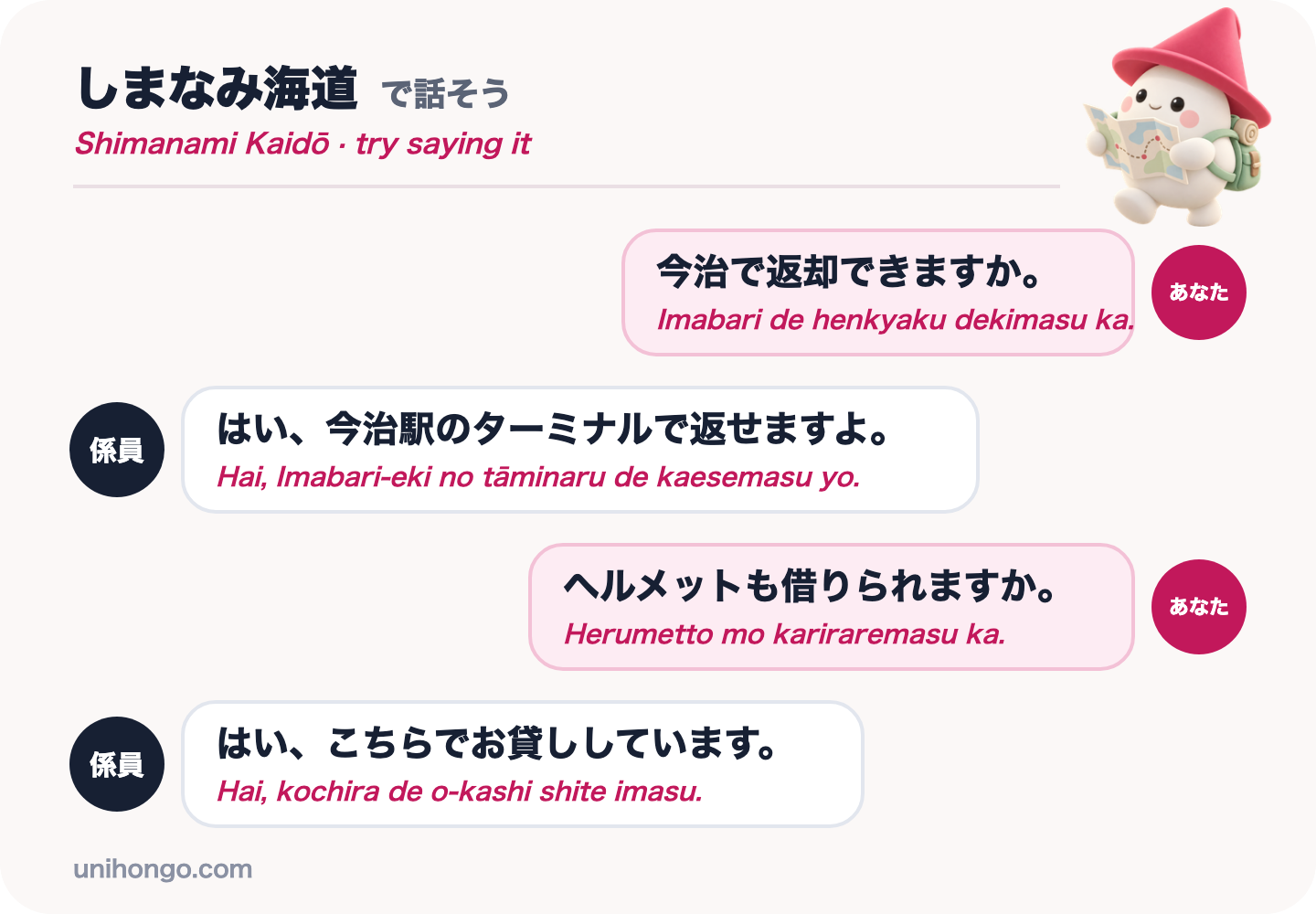
| Japanese | Romaji | Meaning |
|---|---|---|
| 今治で返却できますか。 | Imabari de henkyaku dekimasu ka. | Can I return it in Imabari? |
| はい、今治駅のターミナルで返せますよ。 | Hai, Imabari-eki no tāminaru de kaesemasu yo. | Yes, you can return it at the Imabari Station terminal. |
| ヘルメットも借りられますか。 | Herumetto mo kariraremasu ka. | Can I borrow a helmet too? |
| はい、こちらでお貸ししています。 | Hai, kochira de o-kashi shite imasu. | Yes, we lend them here. |
Official information
Rental conditions, terminal opening hours and bridge toll rules change from season to season. Check the official rental site and the national park page before you ride, and plan around the time your return terminal closes.