

Why Higashi Chaya is Kanazawa's most beautiful street
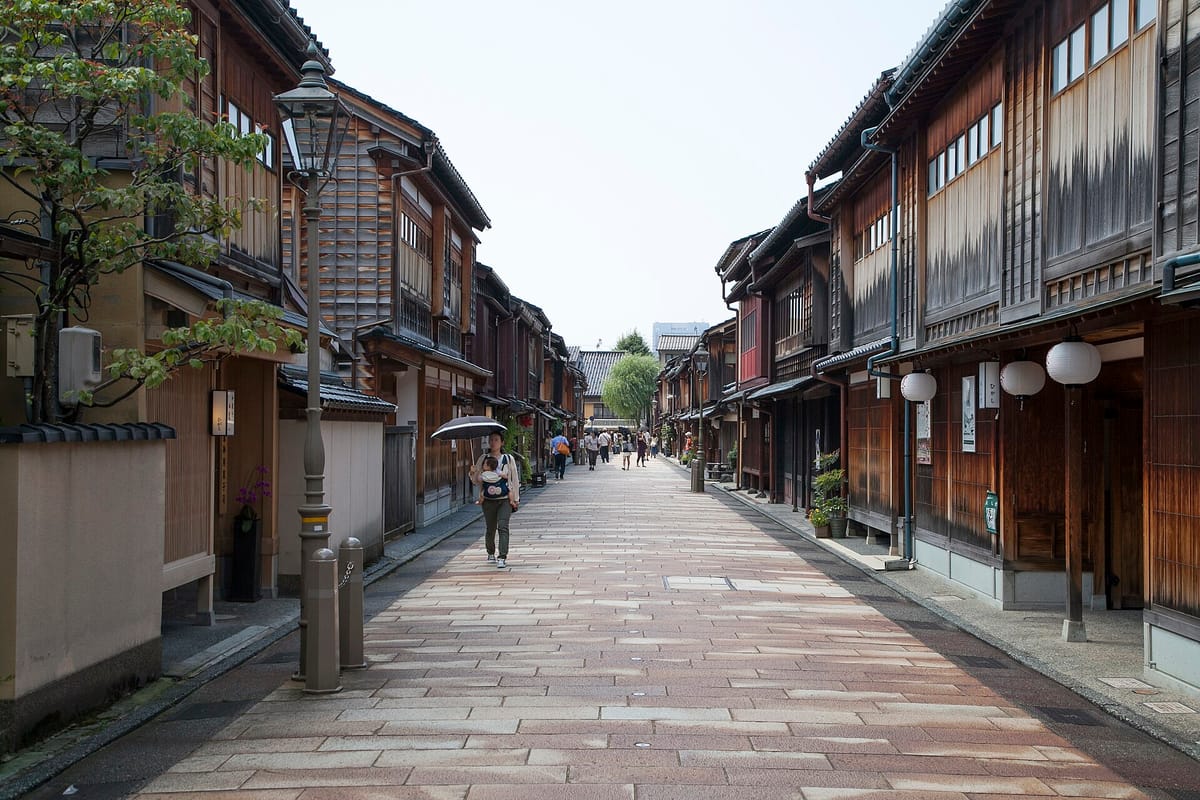
A chaya, or more formally ochaya, was an exclusive kind of teahouse where wealthy merchants and samurai were entertained by geisha, called geigi in Kanazawa, with song, dance and the shamisen. In 1820, the Kaga domain moved the teahouses scattered around Kanazawa into designated districts on the edge of the city. Higashi Chaya, on the east bank of the Asano River, was the largest, and it has survived almost intact.
The buildings are the draw. Chaya were among the few buildings allowed a full second storey in the Edo period, and their upper floors held the guest rooms where banquets took place. At street level, the fronts are covered in a fine wooden lattice called kimusuko, which lets people inside see out while keeping the street from seeing in. Together with Kazuemachi across the river and Gion in Kyoto, Higashi Chaya is one of very few teahouse districts whose historic buildings are protected as a group by the national government.
Today the street is a mix of museums, cafés, craft and gold leaf shops, and a few teahouses that still entertain guests at night. For a Japanese learner it is a pleasure to read: short signs, noren curtains with shop names, and some of the most polite, carefully spoken shop Japanese you will hear anywhere.
Getting there: the bus to Hashiba-chō
Higashi Chaya is about ten minutes by car from Kanazawa Station, and most visitors come by bus. From the East Exit of the station, take the Kanazawa Loop Bus, a Hokutetsu local bus or a West JR bus, and get off at Hashiba-chō. The loop bus takes around fifteen minutes. From the stop, cross the Asano River on the Asanogawa Ōhashi bridge and turn into the district, about five minutes on foot.
The small Kanazawa Flat Bus on the Zaimoku route stops at Asanogawa Ōhashi, a similar distance away. Kenroku-en and Kanazawa Castle are about twenty minutes' walk to the south, so many people combine them on the same day. The district has only small car parks, so public transport is easier.
| Japanese | Romaji | Meaning |
|---|---|---|
| ひがし茶屋街に行くバスはどれですか。 | Higashi Chaya-gai ni iku basu wa dore desu ka. | Which bus goes to Higashi Chaya-gai? |
| 橋場町で降りたいです。 | Hashiba-chō de oritai desu. | I would like to get off at Hashiba-chō. |
| ひがし茶屋街はどちらですか。 | Higashi Chaya-gai wa dochira desu ka. | Which way is Higashi Chaya-gai? |
| 主計町まで歩いて行けますか。 | Kazuemachi made aruite ikemasu ka. | Can I walk to Kazuemachi? |
| 兼六園までバスで行けますか。 | Kenroku-en made basu de ikemasu ka. | Can I get to Kenroku-en by bus? |
What you will see: teahouses, gold leaf and Kazuemachi
Two teahouses let you see how a chaya worked. Shima, built in 1820 when the district was founded, is a nationally designated Important Cultural Property, kept much as it was in the Edo period: the guest rooms and waiting room upstairs, the small courtyard, and displays of the instruments and utensils geisha used. A visit takes around fifteen minutes, and matcha with a sweet is served by the courtyard for an extra charge. Kaikaro, over two hundred years old and restored with a modern touch, has vermilion-lacquered stairs and a tea room with tatami woven with gold. It still operates as a teahouse and opens to visitors in the daytime.
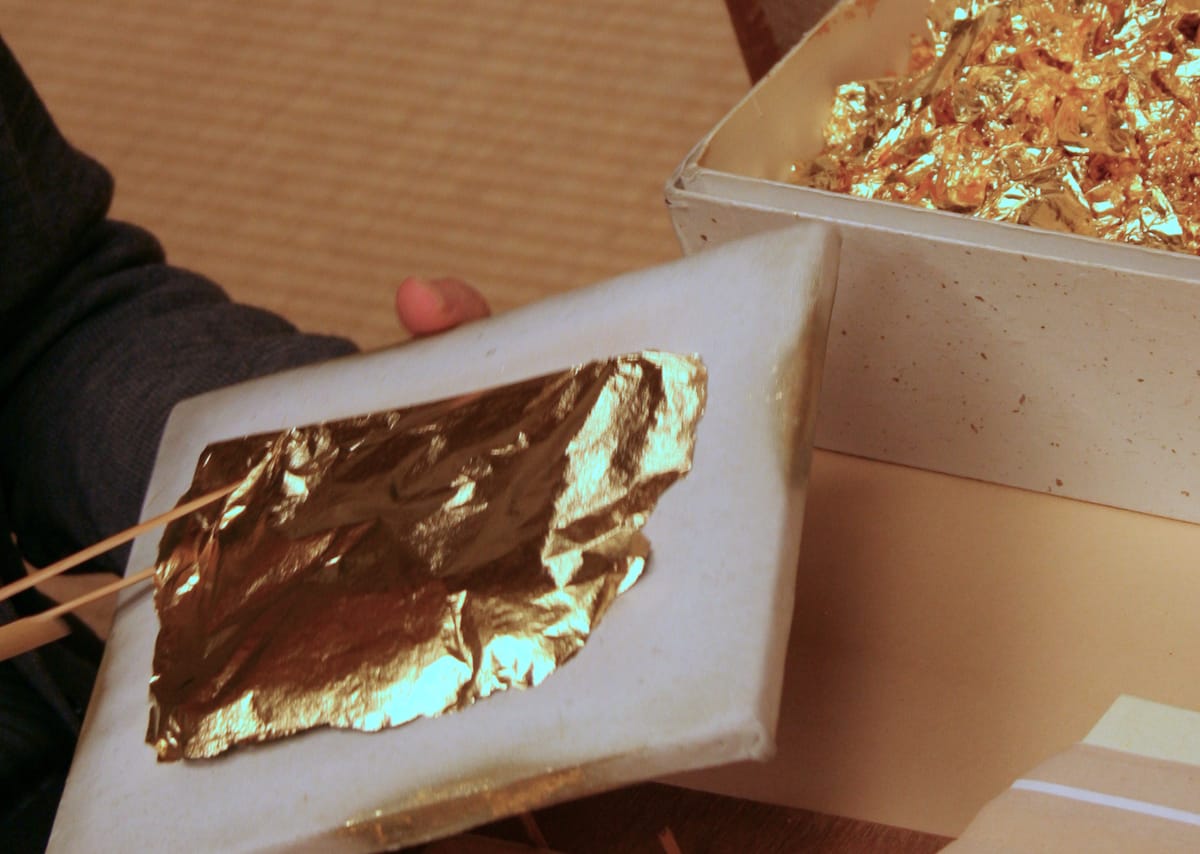
The other half of the visit is gold. Kanazawa makes nearly all of Japan's gold leaf, kinpaku, beaten so thin that it floats on a breath, and the district is full of shops selling everything from gilded lacquer to cosmetics and sweets decorated with it. Some let you watch artisans at work, and several run workshops where you apply gold leaf to a chopstick, mirror or box you take home.
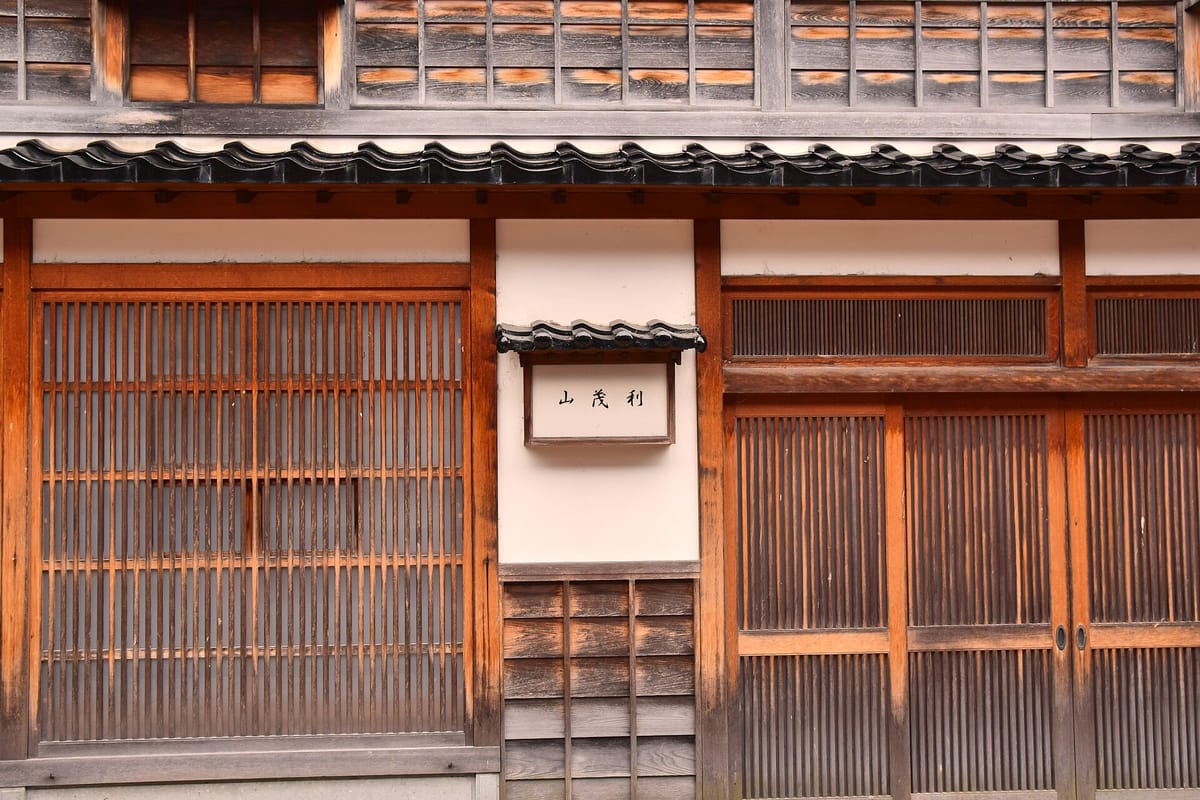
- Shima: the Edo-period teahouse museum, an Important Cultural Property.
- Kaikaro: a working teahouse that opens its rooms to daytime visitors, with tea for an extra charge.
- Hakuza: a gold leaf shop with a small traditional storehouse covered inside and out in gold leaf.
- Gold leaf workshops: offered by several shops, usually by reservation and taking about an hour.
- Kanazawa Yasue Gold Leaf Museum: a museum of gold leaf craft a few minutes' walk from the district.
- Kazuemachi: a smaller, quieter teahouse district just across the Asano River, with the Akari-zaka and Kuragari-zaka lanes.
- Utatsuyama temple area: a line of temples on the hill behind the district, good for a quiet walk.
Words on the teahouse signs
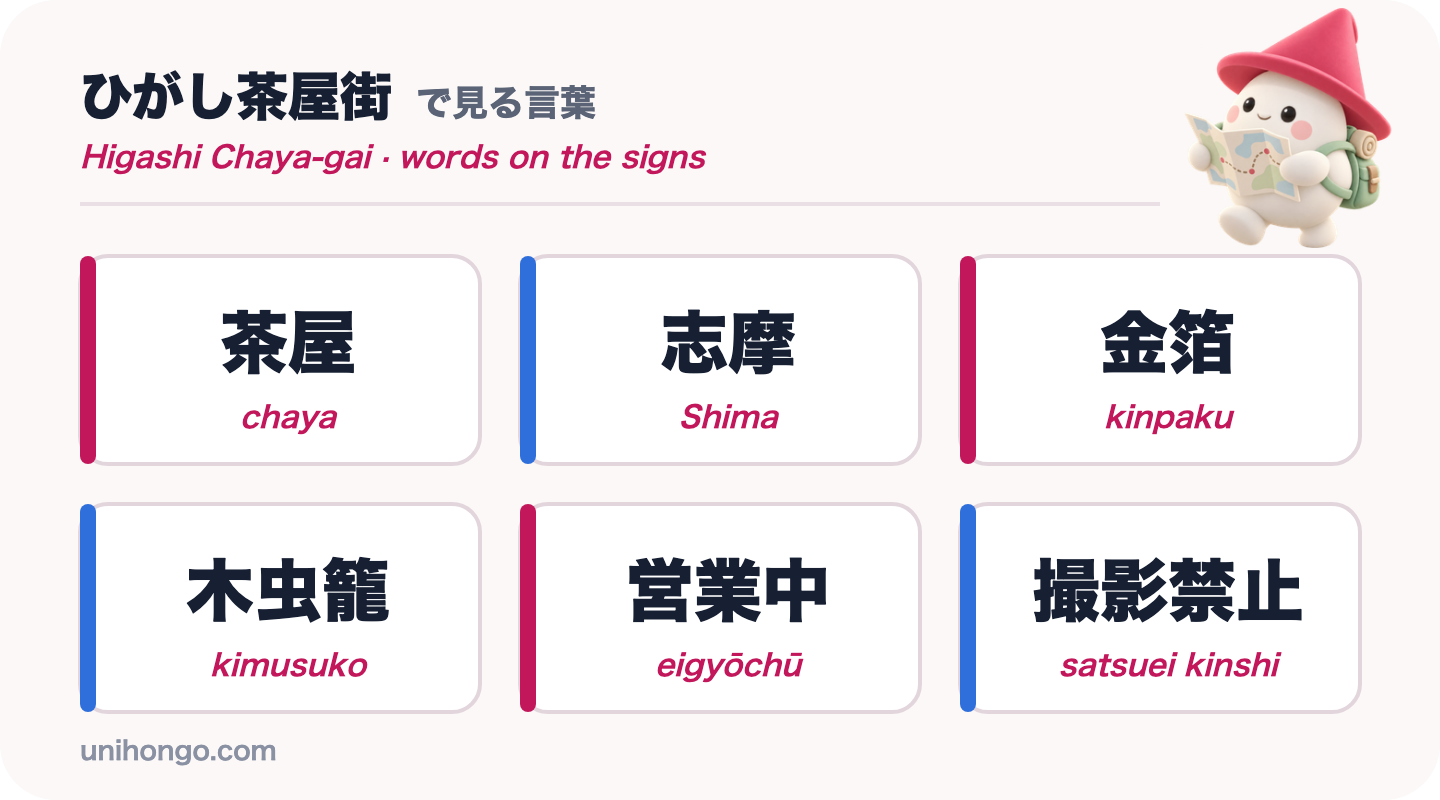
Most signs in Higashi Chaya are shop names on noren curtains and wooden boards, often in flowing calligraphy that is hard to read. The useful words are the practical ones on doors and windows: whether a shop is open, whether you can take photos inside, and what it sells. 金箔 is the one you will see most, on almost every other shopfront.
The district's name mixes scripts: higashi, east, is usually written in hiragana, ひがし, followed by the kanji 茶屋街, but you will also see it written with the kanji 東. Both are read the same way.
| Word | Reading | Meaning |
|---|---|---|
| 茶屋 | chaya | Teahouse where geisha entertain guests |
| 茶屋街 | chaya-gai | Teahouse district |
| 志摩 | Shima | The Edo-period teahouse museum |
| 金箔 | kinpaku | Gold leaf |
| 木虫籠 | kimusuko | Fine wooden lattice on teahouse fronts |
| 芸妓 | geigi | Geisha, the word used in Kanazawa |
| 営業中 | eigyōchū | Open for business |
| 準備中 | junbichū | Closed, preparing to open |
| 撮影禁止 | satsuei kinshi | No photography |
Japanese for teahouse tea and a gold leaf workshop
At Shima or Kaikaro you pay at the entrance, take off your shoes and climb the steep stairs to the guest rooms. Tea is ordered separately, so ask when you buy your ticket. The staff speak slowly and politely, and the words you hear most are o-matcha, powdered green tea, and o-kashi or namagashi, a fresh Japanese sweet made for the season.
Gold leaf workshops are the district's most popular activity, and most need a reservation. Staff explain the steps, how to cut the stencil, how to lift the leaf with bamboo tweezers and how not to breathe on it, and they are patient with beginners. It helps to know the words for booking, how long it takes and how many people, which is exactly what the phrases below cover.
| Japanese | Romaji | Meaning |
|---|---|---|
| 大人一人お願いします。 | Otona hitori onegai shimasu. | One adult, please. |
| お抹茶もいただけますか。 | O-matcha mo itadakemasu ka. | Could I also have matcha? |
| 二階も見学できますか。 | Nikai mo kengaku dekimasu ka. | Can I see the upstairs rooms too? |
| 金箔貼り体験をしたいです。 | Kinpaku-hari taiken o shitai desu. | I would like to try the gold leaf workshop. |
| 今日の午後は空いていますか。 | Kyō no gogo wa aite imasu ka. | Is there space this afternoon? |
| カードで払えますか。 | Kādo de haraemasu ka. | Can I pay by card? |
| これは食べられる金箔ですか。 | Kore wa taberareru kinpaku desu ka. | Is this edible gold leaf? |
| プレゼント用に包んでいただけますか。 | Purezento-yō ni tsutsunde itadakemasu ka. | Could you wrap it as a gift? |
Manners, timing and practical tips
Higashi Chaya is a tourist street by day, but it is also a place where people live and where geisha still work in the evening. A few habits keep the street pleasant for everyone.
- If you do see a geisha on her way to work, do not follow her, block her path or take photos without asking; she is working.
- Do not touch or lean on the wooden lattices, and do not open closed doors or step into entrances that are not shops.
- Look for 撮影禁止 before taking photos inside a shop or teahouse, and ask if you are unsure.
- Finish food and drink, including the famous gold-leaf soft-serve ice cream, by the shop where you bought it rather than walking along the street with it.
- Come early for photos of the empty street, or late in the afternoon when the lamps come on; many shops close in the late afternoon or early evening.
- Cross the river to Kazuemachi afterwards. It is smaller, quieter and especially lovely at dusk.
Practise the visit before you go
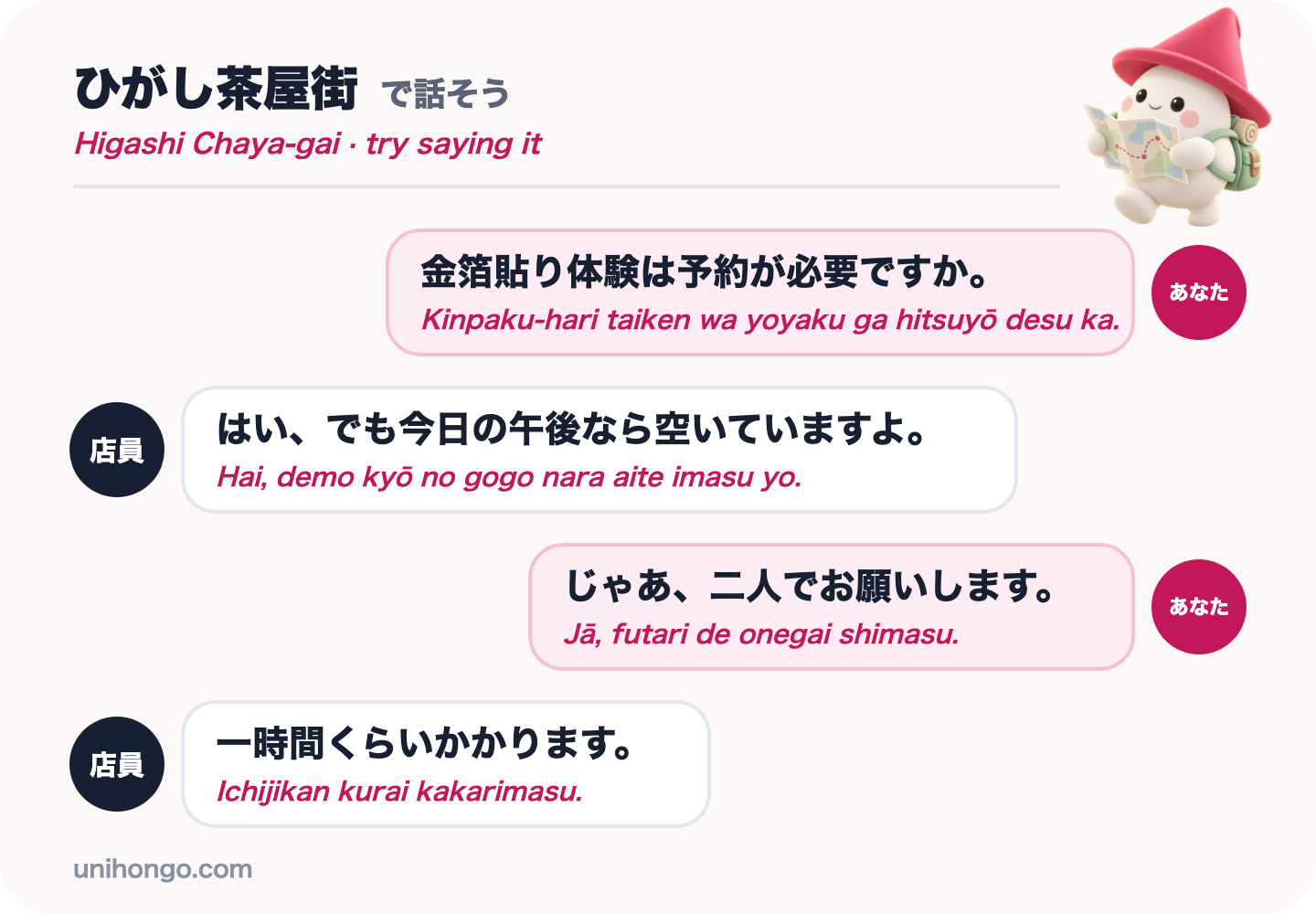
The conversation you are most likely to have in Higashi Chaya is booking a gold leaf workshop at the counter. The clerk's answer will usually include a time and a but: yes, a booking is needed, but there is space this afternoon. Practise the four lines until you can say them smoothly, and listen for gogo, afternoon, and the time in the reply.
Then practise with someone who answers back. In Unihongo, choose the Shopping topic and ask your AI Sensei to play the clerk at a gold leaf shop, or choose Café to rehearse ordering matcha and a sweet in a teahouse. Saying the lines aloud once before the trip makes them far easier to use on the day.
| Japanese | Romaji | Meaning |
|---|---|---|
| 金箔貼り体験は予約が必要ですか。 | Kinpaku-hari taiken wa yoyaku ga hitsuyō desu ka. | Do I need a reservation for the gold leaf workshop? |
| はい、でも今日の午後なら空いていますよ。 | Hai, demo kyō no gogo nara aite imasu yo. | Yes, but there is space this afternoon. |
| じゃあ、二人でお願いします。 | Jā, futari de onegai shimasu. | In that case, two people, please. |
| 一時間くらいかかります。 | Ichijikan kurai kakarimasu. | It takes about an hour. |
Official information
The official Kanazawa tourism site lists access, the teahouses, gold leaf shops and the geisha performance dates for the three teahouse districts. Check the pages for Shima and Kaikaro for current hours and closing days before you go.