
Shokuyoku no aki and the idea of shun
Japanese gives autumn several titles: the autumn of reading, the autumn of sport, the autumn of art. The favourite is shokuyoku no aki, the autumn of appetite. The heat is over, the rice has been harvested, and fish, nuts, mushrooms and fruit all arrive together.
The key word is shun (旬), the peak season of a food. Advertising sums up the whole season as aki no mikaku (秋の味覚), the tastes of autumn, and you will see that phrase on posters from September.
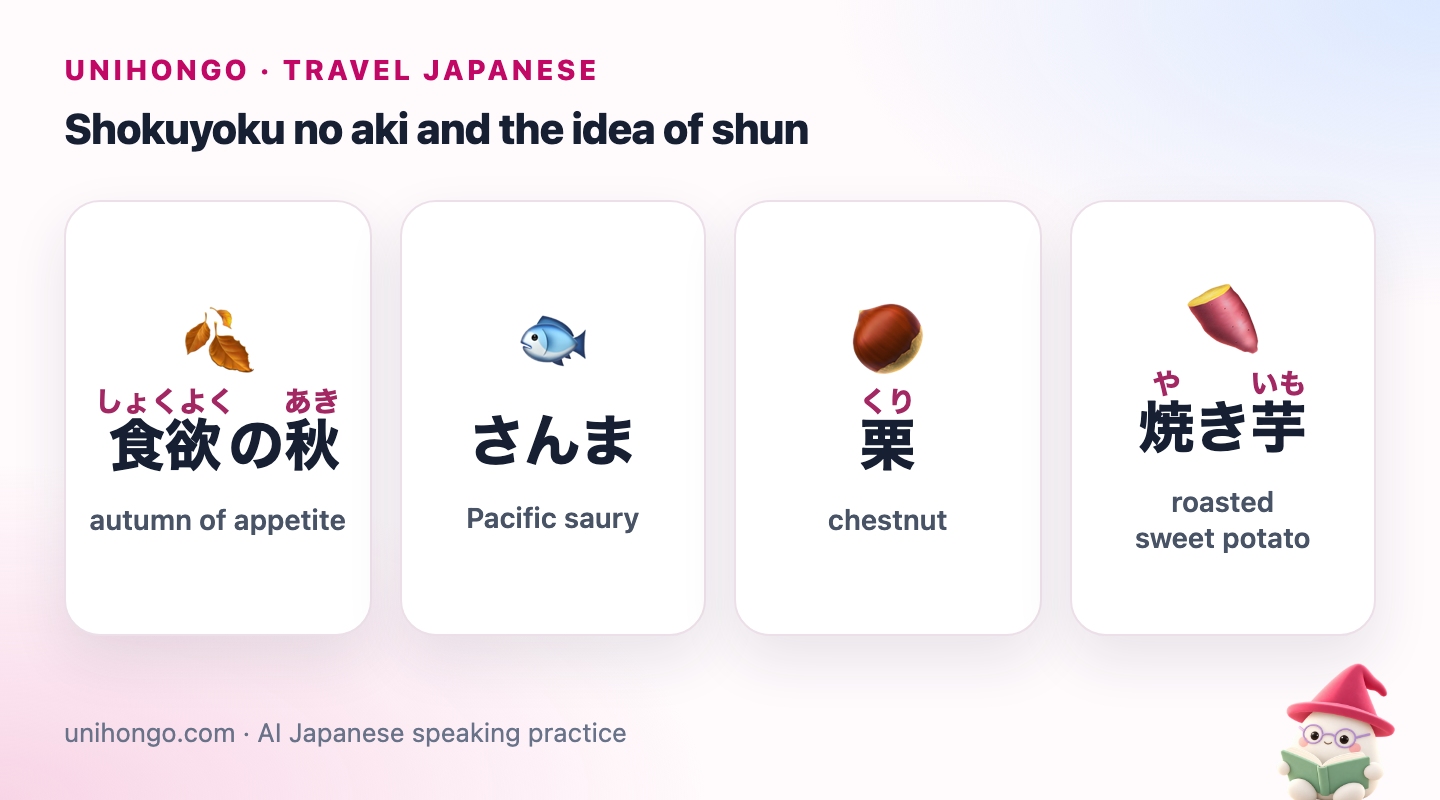
| Japanese | Romaji | Meaning |
|---|---|---|
| 食欲の秋 | shokuyoku no aki | autumn of appetite |
| さんま | sanma | Pacific saury |
| 栗 | kuri | chestnut |
| 焼き芋 | yakiimo | roasted sweet potato |
| 旬 | shun | peak season |
| 秋の味覚 | aki no mikaku | the tastes of autumn |
Sanma: the autumn sword fish
Sanma is written 秋刀魚: autumn, sword, fish. It is long, slim and silver, and autumn is when it is fattest. The classic dish is sanma no shioyaki, a whole fish salted and grilled, served with a mound of grated daikon and a wedge of citrus. You add a little soy sauce to the daikon and eat it with the fish.
Catches have been poor in recent years, and the price of sanma is a regular topic on the autumn news. The other fish of the season is akizake (秋鮭), salmon caught in autumn as it returns to the rivers.
| Japanese | Romaji | Meaning |
|---|---|---|
| 秋刀魚 | sanma | saury, written autumn sword fish |
| さんまの塩焼き | sanma no shioyaki | salt-grilled saury |
| 大根おろし | daikon oroshi | grated daikon radish |
| 秋鮭 | akizake | autumn salmon |
| さんまの塩焼きを一つお願いします。 | Sanma no shioyaki o hitotsu onegai shimasu. | One salt-grilled saury, please. |
From the hills: kuri, matsutake and kinoko
Kuri (栗) are chestnuts. At home they go into kurigohan, rice cooked with whole chestnuts. In cafés they become the Mont Blanc, monburan, a cake topped with strands of chestnut cream, and autumn menus are full of chestnut sweets.
Matsutake (松茸) is the luxury of the season, a mushroom prized for its scent, and Japanese-grown ones are very expensive. It is served simply, in rice or in dobinmushi, a clear soup steamed in a small teapot. A well-known saying compares it with a cheaper mushroom: for aroma, matsutake; for taste, shimeji. Kinoko (きのこ) is the general word for mushrooms, and shiitake, maitake and shimeji all peak in autumn.
| Japanese | Romaji | Meaning |
|---|---|---|
| 栗ご飯 | kurigohan | chestnut rice |
| モンブラン | monburan | Mont Blanc chestnut cake |
| 松茸 | matsutake | matsutake mushroom |
| 土瓶蒸し | dobinmushi | soup steamed in a teapot |
| きのこ | kinoko | mushrooms |
| 香り松茸、味しめじ | kaori matsutake, aji shimeji | matsutake for aroma, shimeji for taste |
Sweet potato season and the yakiimo truck
The sweet potato is satsumaimo (さつまいも), named after Satsuma, the old name for the Kagoshima area. Roasted whole it is yakiimo (焼き芋), and roasted on hot stones it is ishiyakiimo (石焼き芋). On cold evenings a small truck drives slowly through residential streets playing a long, sung call of ishiyakiimo, and people come out with coins. Supermarkets and convenience stores now keep a heated case of yakiimo near the door as well.
Two texture words appear on the labels. Hokuhoku is hot, soft and floury. Nettori is dense, moist and very sweet. Choose by the word, not by the look.
| Japanese | Romaji | Meaning |
|---|---|---|
| さつまいも | satsumaimo | sweet potato |
| 石焼き芋 | ishiyakiimo | stone-roasted sweet potato |
| ほくほく | hokuhoku | hot, soft and floury |
| ねっとり | nettori | dense, moist and sweet |
| 焼き芋を一本ください。 | Yakiimo o ippon kudasai. | One roasted sweet potato, please. |
Fruit, pumpkin and the new rice
Kaki (柿), the persimmon, is the fruit of late autumn, eaten crisp or dried as hoshigaki. Be careful on menus: the oyster is also kaki (牡蠣), written with different kanji and said with a different pitch. Kaki furai is fried oysters, not fruit. Nashi (梨) is the round, crisp Japanese pear, and kabocha (かぼちゃ) is a sweet, dense pumpkin that is simmered or fried as tempura.
Shinmai (新米) is the new rice, this year's harvest, sold from autumn with a sticker that says so. It is softer and more fragrant than older rice. The same word means a newcomer at work, so shinmai desu can also mean I'm new here.
| Japanese | Romaji | Meaning |
|---|---|---|
| 柿 | kaki | persimmon |
| 干し柿 | hoshigaki | dried persimmon |
| 梨 | nashi | Japanese pear |
| かぼちゃ | kabocha | Japanese pumpkin |
| 新米 | shinmai | new-harvest rice; also a newcomer |
Reading seasonal labels on menus and shelves
Gentei (限定) means limited, and the word in front tells you how. Cafés, bakeries and convenience stores bring out chestnut, sweet potato and pumpkin flavours every autumn under these labels, and they vanish when the season ends.
| Japanese | Romaji | Meaning |
|---|---|---|
| 期間限定 | kikan gentei | for a limited time only |
| 秋限定 | aki gentei | autumn only |
| 季節限定 | kisetsu gentei | seasonal only |
| 地域限定 | chiiki gentei | sold in this region only |
| 旬の魚 | shun no sakana | fish in season |
| 本日のおすすめ | honjitsu no osusume | today's recommendation |
Saying what is in season and ordering it
| Japanese | Romaji | Meaning |
|---|---|---|
| 今が旬です。 | Ima ga shun desu. | It's in season now. |
| 秋といえば、さんまですね。 | Aki to ieba, sanma desu ne. | Speaking of autumn, it has to be saury. |
| 旬の魚は何ですか。 | Shun no sakana wa nan desu ka. | What fish is in season? |
| 秋限定のメニューはありますか。 | Aki gentei no menyū wa arimasu ka. | Do you have an autumn-only menu? |
| 栗のデザートはありますか。 | Kuri no dezāto wa arimasu ka. | Do you have a chestnut dessert? |
| 新米はおいしいですね。 | Shinmai wa oishii desu ne. | New rice is delicious, isn't it? |
| 食欲の秋ですから。 | Shokuyoku no aki desu kara. | Well, it is the autumn of appetite. |
The pattern a season plus to ieba, speaking of, is how Japanese people open any conversation about seasonal things, and desu ne at the end invites agreement. Shokuyoku no aki desu kara is the standard smiling excuse for a second helping.