
Twenty weeks is enough, if you speak from the start
Count forward from today. Week one begins on Sunday 18 October 2026; week twenty ends on Saturday 6 March 2027. A departure in the last week of March leaves two or three weeks of buffer for review, packing and the inevitable busy week at work. The plan assumes twenty to thirty minutes most days, with a longer rehearsal once a week in the final block.
The single most important rule: say everything aloud from week one. A phrase you have read looks familiar in the moment you need it and then refuses to come out. A phrase you have said twenty times comes out on its own.
| Japanese | Romaji | Meaning |
|---|---|---|
| 春の日本で話したい。 | Haru no Nihon de hanashitai. | I want to speak in Japan in spring. |
| 三月の終わりに日本に行きます。 | Sangatsu no owari ni Nihon ni ikimasu. | I'm going to Japan at the end of March. |
| 桜を見るのが楽しみです。 | Sakura o miru no ga tanoshimi desu. | I'm looking forward to seeing the cherry blossoms. |
The four lines of cherry blossom season
If you learn nothing else for the season, learn these four. The first asks whether the blossoms are out, which is the small talk of late March. The second gets you a table in a booked-up city. The third is what everyone says to everyone in a crowd, and agreeing with it makes friends. The fourth is how you join a hanami.
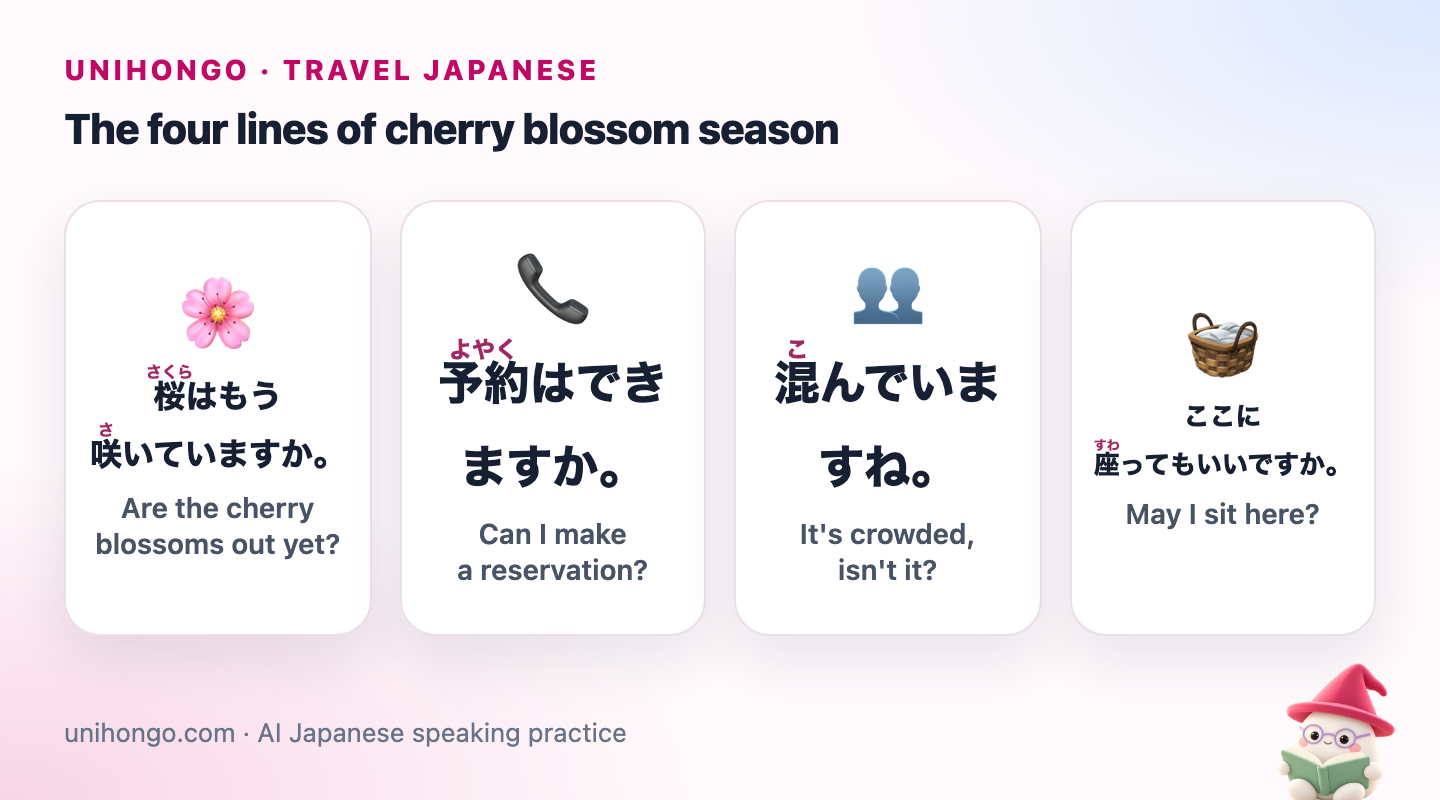
| Japanese | Romaji | Meaning |
|---|---|---|
| 桜はもう咲いていますか。 | Sakura wa mō saite imasu ka. | Are the cherry blossoms out yet? |
| 予約はできますか。 | Yoyaku wa dekimasu ka. | Can I make a reservation? |
| 混んでいますね。 | Konde imasu ne. | It's crowded, isn't it? |
| ここに座ってもいいですか。 | Koko ni suwatte mo ii desu ka. | May I sit here? |
| 今、満開ですよ。 | Ima, mankai desu yo. | Local: They're in full bloom right now. |
The plan, block by block
Each block has a theme and a rehearsal. The rehearsal is a roleplay, with a partner or an AI tutor, of the real situations in that theme. If you can do the rehearsal without reading, the block is done; if not, repeat it before moving on, even if it costs a week of buffer.
| Block | Dates | Theme | You can, by the end |
|---|---|---|---|
| 1 | 18 Oct to 14 Nov | Hiragana, katakana, greetings, numbers, money, time | Read a menu's katakana, say prices and times, greet and thank |
| 2 | 15 Nov to 12 Dec | Convenience stores, cafés, restaurants, counters | Order a meal and drinks, pay, ask for the bill, refuse a bag |
| 3 | 13 Dec to 9 Jan | Trains, buses, directions, tickets, IC cards | Ask the way, confirm a platform, buy a ticket, ask whether a train stops |
| 4 | 10 Jan to 6 Feb | Hotels, reservations by phone, problems, the clinic | Check in, report a problem, reserve a table, describe a symptom |
| 5 | 7 Feb to 6 Mar | Hanami, small talk, polite requests, full travel-day rehearsals | Join a picnic, ask about the blossoms, handle a whole day in Japanese |
From 7 March to departure: review your mistake notebook, repeat the two weakest rehearsals, and learn the names of the places on your itinerary with their correct pronunciation.
Blocks two and three: food, shops and trains
These are the phrases you will use most often on the trip, several times a day. Learn them as whole exchanges, with the clerk's lines, because knowing what you will be asked is half the comfort. Convenience store clerks ask about bags and heating; café staff ask about size and for here or to take away; station staff answer in numbers of platforms and minutes.
| Japanese | Romaji | Meaning |
|---|---|---|
| これとこれをください。 | Kore to kore o kudasai. | This and this, please. |
| 温めますか。 | Atatamemasu ka. | Clerk: Shall I heat it up? |
| お願いします。 | Onegai shimasu. | You: Yes, please. |
| おすすめは何ですか。 | Osusume wa nan desu ka. | What do you recommend? |
| お会計をお願いします。 | Okaikei o onegai shimasu. | The bill, please. |
| 京都駅に行きたいんですが。 | Kyōto eki ni ikitai n desu ga. | I'd like to get to Kyoto Station. |
| この電車は奈良に止まりますか。 | Kono densha wa Nara ni tomarimasu ka. | Does this train stop at Nara? |
| 何番線ですか。 | Nanbansen desu ka. | Which platform is it? |
Block four: reserving by phone and fixing problems
Reservations are the season's real challenge, because the best small restaurants near the blossoms take them by phone, in Japanese, and the phone removes gestures and pointing. The good news is that a restaurant reservation is a short, predictable script: date, time, number of people, name, phone number. Practise it until the numbers come out without thinking. Hotels are easier, with English often available, but a problem with the room is still quicker to solve in Japanese.
| Japanese | Romaji | Meaning |
|---|---|---|
| 明日の夜七時に、二人で予約したいんですが。 | Ashita no yoru shichiji ni, futari de yoyaku shitai n desu ga. | You: I'd like to reserve for two at seven tomorrow evening. |
| お名前と電話番号をお願いします。 | Onamae to denwa bangō o onegai shimasu. | Restaurant: Your name and phone number, please. |
| アンナです。電話番号は〇九〇の… | Anna desu. Denwa bangō wa zero kyū zero no... | You: Anna. The number is 090... |
| 満席です。申し訳ありません。 | Manseki desu. Mōshiwake arimasen. | Restaurant: We're fully booked. I'm very sorry. |
| 八時なら空いていますか。 | Hachiji nara aite imasu ka. | You: Is eight o'clock free, then? |
| 部屋の暖房がつきません。 | Heya no danbō ga tsukimasen. | The heating in the room doesn't work. |
| 荷物を預かってもらえますか。 | Nimotsu o azukatte moraemasu ka. | Could you keep my luggage for me? |
Nara, if, is the traveller's best friend on the phone: hachiji nara, roku ji nara, ashita nara. It lets you negotiate a time without a new sentence each try.
Block five: hanami, the season's own vocabulary
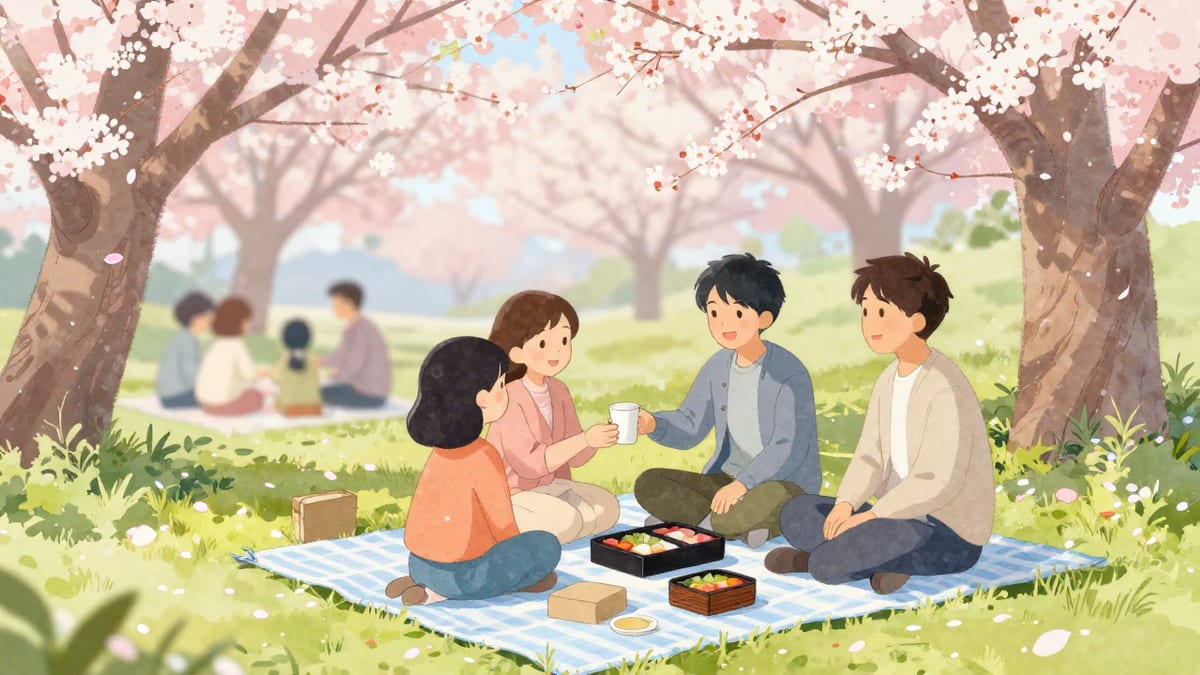
Hanami means looking at flowers, and in practice it means a picnic under cherry trees with food, drinks and conversation. The season has its own words. Kaika is the first blossoms opening; mankai is full bloom, which lasts only about a week in any one place; migoro is the best time to see them; the sakura zensen, the blossom front, is the line of bloom moving north across the country on the weather news. Yozakura is blossom viewing at night, when some parks hang lanterns in the trees.
Etiquette is mostly common sense: keep to your patch, take your rubbish away, do not touch the trees. Many groups spread a mat early to hold a place, called basho tori, and a polite question before sitting close to someone is appreciated. If a neighbouring group offers you a cup or a snack, accept it with a smile; it is one of the easiest conversations you will ever have.
| Japanese | Romaji | Meaning |
|---|---|---|
| 開花 | kaika | first bloom |
| 満開 | mankai | full bloom |
| 見頃 | migoro | best time to see them |
| 夜桜 | yozakura | blossoms at night |
| 花見 | hanami | blossom-viewing picnic |
| きれいですね。 | Kirei desu ne. | You: Beautiful, aren't they? |
| よかったら、一杯どうですか。 | Yokattara, ippai dō desu ka. | Neighbour: If you like, how about a drink? |
| ありがとうございます。いただきます。 | Arigatō gozaimasu. Itadakimasu. | You: Thank you. I'll have one. |
| どこから来たんですか。 | Doko kara kita n desu ka. | Neighbour: Where have you come from? |
| カナダから来ました。桜は初めてです。 | Kanada kara kimashita. Sakura wa hajimete desu. | You: From Canada. It's my first cherry blossom season. |
Mistakes travellers make in cherry blossom season
- Planning around a fixed bloom date. Blossoms follow the weather; watch the forecasts from February and build in flexible days.
- Not reserving dinner. In Kyoto, Tokyo and other popular cities the good small places near the blossoms fill up; learn the phone script.
- Arriving at famous spots at midday. Go at opening time or in the evening for yozakura; mid-afternoon is shoulder to shoulder.
- Reading phrases instead of saying them. The season's conversations are quick; only spoken rehearsal makes the lines available in time.
- Switching to English at the first pause. Ask mō ichido onegai shimasu first; most people will slow down and try again.
- Forgetting that it is still cold. Late March evenings under the trees are chilly, and so is a wait for a train; samui desu ne is small talk you will use.