

Why Sanrio Puroland is worth the trip to Tama
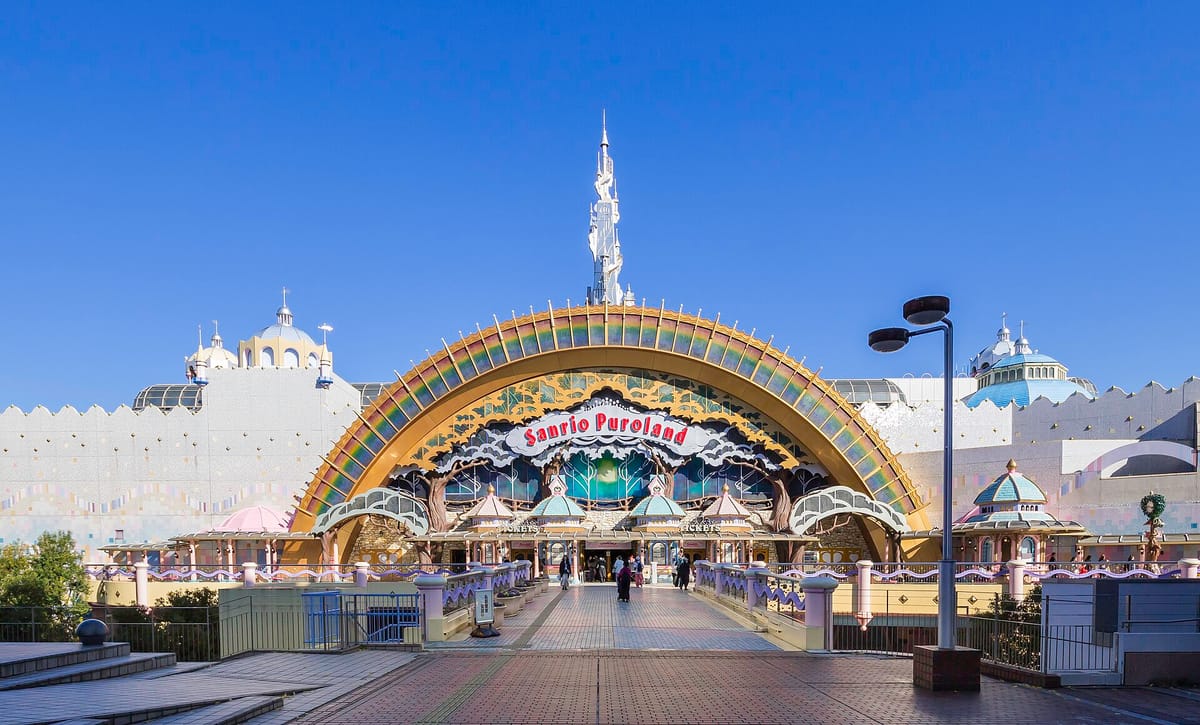
Sanrio Puroland, サンリオピューロランド, is a theme park run by Sanrio, the company behind Hello Kitty, My Melody, Kuromi, Cinnamoroll, Pompompurin, Gudetama and dozens of other characters. It opened on 7 December 1990 and marked its thirty-fifth anniversary with a new main parade. Unlike most theme parks, it sits entirely inside one large building, so the weather outside hardly matters. You walk in at the top of a hill, through a rainbow arch, and descend through the floors to a great open hall at the bottom.
What makes it special is density. In one building you find two dark rides, several theatres, walk-through character houses, photo spots, restaurants shaped around characters and shops selling goods you will not find elsewhere. Many shows run several times a day, and characters appear for greetings on different floors, so a well-planned day feels full without long walks.
It is also a surprisingly good place to practise Japanese. Staff speak in the bright, formal style of Japanese hospitality, signs are short and repeated, and almost everything you want, from the parade time to the wait for a ride, is a question you can ask in one sentence. The name itself is a coinage: Puro comes from mixing the English pure with pierrot, a clown.
Getting there: Tama Center Station and the walk up
Three lines meet at Tama Center, Tama Sentā: the Keiō Sagamihara Line at Keiō-Tama-Center Station, the Odakyū Tama Line at Odakyū-Tama-Center Station and the Tama Toshi Monorail. The park says all three are about five minutes on foot from the entrance. From Shinjuku, the simplest route is the Keiō Line limited express, tokkyū, bound for Hashimoto, which reaches Keiō-Tama-Center in about thirty minutes; leave by the central ticket gate, chūō kaisatsu, and turn left. From Shin-Yurigaoka on the Odakyū Line, the ride is about twelve minutes; leave by the west gate, nishi kaisatsu, and turn left.
From the station, walk straight up the pedestrian street towards the hill. After you pass the building called Oka no Ue Plaza, turn left at the crossroads and the rainbow arch appears ahead. The entrance is on the third floor of the building, which is why you arrive at the top rather than at ground level. The park recommends the separate walkway for pushchairs and wheelchairs, which has a ramp beside the steps.
| Japanese | Romaji | Meaning |
|---|---|---|
| 多摩センターまで行きたいんですが、この電車は止まりますか。 | Tama Sentā made ikitai n desu ga, kono densha wa tomarimasu ka. | I want to go to Tama Center. Does this train stop there? |
| 橋本行きの特急は何番線ですか。 | Hashimoto-yuki no tokkyū wa nanbansen desu ka. | Which platform is the limited express for Hashimoto? |
| 中央改札はどちらですか。 | Chūō kaisatsu wa dochira desu ka. | Which way is the central ticket gate? |
| ピューロランドはこの道でいいですか。 | Pyūrorando wa kono michi de ii desu ka. | Is this the right way to Puroland? |
| この近くにコインロッカーはありますか。 | Kono chikaku ni koin rokkā wa arimasu ka. | Are there coin lockers near here? |
Inside the park: rides, parades and the Tree of Wisdom
The heart of the park is Puro Village, a hall that rises through two floors, dressed as a storybook European town. In the middle stands the Tree of Wisdom, Chie no Ki, a giant artificial tree with a stage in front of it. The main parade moves around the tree, and shorter shows and birthday events are held on the stage, so this is where to be at parade time.
The rides are gentle. The Sanrio Character Boat Ride floats around the upper level of Puro Village, and it has occasionally been rethemed for seasonal versions. My Melody and Kuromi's Mymeroad Drive takes you by car through My Melody's homeland, and Cinnamoroll has his own attraction, Shinamorōru no Chiisana Dai-bōken, Cinnamoroll's little big adventure. On the second floor of Sanrio Town, Lady Kitty House is a walk-through of Hello Kitty's grand home that ends with a photo opportunity. Theatre shows include KAWAII KABUKI, a kabuki-style Momotarō performed by Hello Kitty's troupe, and the show Beyond Words, whose Japanese title is Byonwā.
Some attractions give out numbered tickets, seiriken, which book you a return time, and the park sells a paid pass called PUROPASS that shortens waits for eligible rides and shows. Wait times and any suspended attractions are shown on the official site and on screens inside.
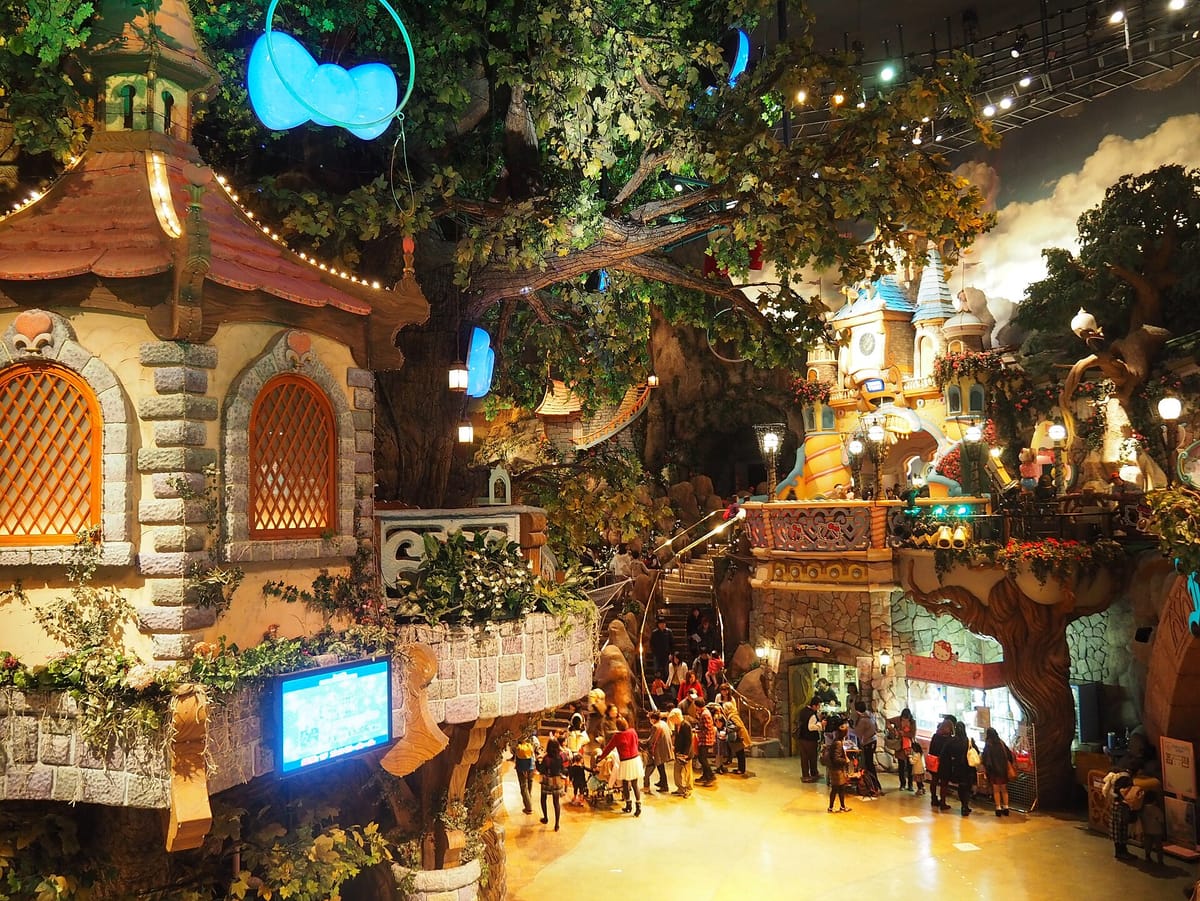
- The Quest of Wonders Parade: the main parade around the Tree of Wisdom, introduced for the thirty-fifth anniversary.
- Sanrio Character Boat Ride: the classic slow boat ride above Puro Village.
- Mymeroad Drive: a car ride with My Melody and Kuromi.
- Lady Kitty House: Hello Kitty's grand residence, ending with a photo opportunity.
- KAWAII KABUKI: a kabuki-style musical of the Momotarō folk tale.
- Character Food Court and the restaurants on the top floor: dishes and sweets shaped like the characters.
- The Entrance Shop on the third floor: the largest shop, with Puroland-only goods.
Words on the signs at Puroland
Most of the Japanese you read at Puroland is practical: where to enter, which ticket you have, how long the wait is. The same few kanji repeat everywhere. 場 means place, so 入場 is entering the venue and 来場 is coming to the venue. 券 means ticket, and it turns up in 当日券, a ticket for today, and 整理券, a numbered ticket that holds your place.
Katakana does much of the rest. パスポート is the passport ticket, パレード the parade, グリーティング a character greeting and グッズ merchandise. Sound them out slowly and most become English words you already know.
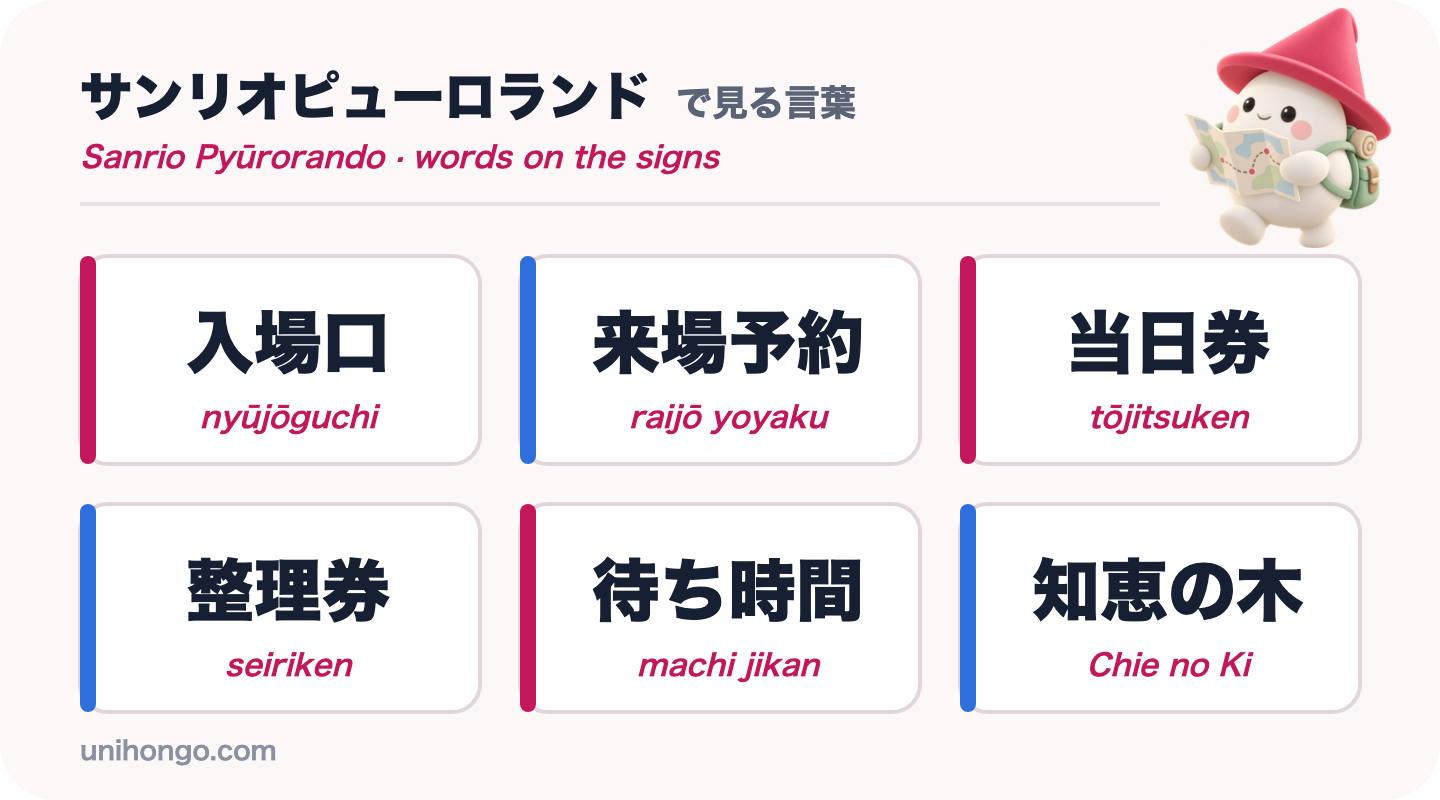
| Word | Reading | Meaning |
|---|---|---|
| 入場口 | nyūjōguchi | Entrance gate |
| 来場予約 | raijō yoyaku | Visit reservation, required with your passport |
| 当日券 | tōjitsuken | Ticket sold on the day |
| パスポート | pasupōto | Passport, the park's name for an admission ticket |
| 整理券 | seiriken | Numbered ticket that books a return time |
| 待ち時間 | machi jikan | Waiting time |
| 休止 | kyūshi | Suspended, for an attraction not running today |
| 休館日 | kyūkanbi | Closed day |
| 知恵の木 | Chie no Ki | The Tree of Wisdom in Puro Village |
Japanese for passports, queues and photos with Hello Kitty
The busiest conversations of the day happen at the ticket counter, at the start of a queue and at a greeting spot. Staff use very polite forms such as irasshaimase, welcome, and shōshō o-machi kudasai, please wait a moment. You can answer in simple desu and masu Japanese and be perfectly polite.
If you already have an e-passport and a reservation, you go straight to the entrance gate. If you are buying on the day, the counter opens thirty minutes before the park and stops selling ninety minutes before closing. Hello Kitty is Kiti-chan in Japanese, with the friendly chan that fans use, and the same goes for most characters, such as Kuromi-chan.
| Japanese | Romaji | Meaning |
|---|---|---|
| 大人二枚、当日券をお願いします。 | Otona nimai, tōjitsuken o onegai shimasu. | Two adult tickets for today, please. |
| 来場予約はしてあります。 | Raijō yoyaku wa shite arimasu. | I have already made a visit reservation. |
| 今日のスケジュール表はありますか。 | Kyō no sukejūru-hyō wa arimasu ka. | Is there a schedule for today? |
| ボートライドの待ち時間はどのくらいですか。 | Bōto raido no machi jikan wa dono kurai desu ka. | How long is the wait for the boat ride? |
| この整理券は何時に戻ればいいですか。 | Kono seiriken wa nanji ni modoreba ii desu ka. | What time should I come back with this numbered ticket? |
| キティちゃんと写真を撮りたいんですが。 | Kiti-chan to shashin o toritai n desu ga. | I would like a photo with Hello Kitty. |
| このグッズはここでしか買えませんか。 | Kono guzzu wa koko de shika kaemasen ka. | Is this item only sold here? |
Tips for a smooth day at Puroland
Puroland is small enough to cover in a day, but show times, closed days and prices all change with the calendar. A little planning makes the difference between seeing the parade from the front and watching it over a crowd.
- Make the visit reservation before you travel, even if you plan to buy the passport at the counter.
- Check the official calendar for closed days and the price for your date; the park closes on some weekdays, especially outside holiday seasons.
- Look at the schedule as soon as you enter and plan around the main parade and one theatre show.
- Wait for the parade near the Tree of Wisdom; places fill up well before it starts on busy days.
- Children under school age must be accompanied by someone of junior high school age or older on the attractions.
- Ask staff about priority services and the parade viewing space if you use a wheelchair; places are limited and given first come, first served.
- Leave shopping for last: the Entrance Shop is on the way out, and bags are easier to carry after the rides.
Practise the park before you go
The two questions you are most likely to ask on the day are about getting in and about timing. Staff answers will be fast and friendly, and the key information comes in a few words: aki ga areba, if there is space, and the hour with ji. Practise the four lines below until you can say them without reading, and listen hard for the time in the reply.
Then practise with a partner who answers back. In Unihongo, choose the Shopping topic or the Sightseeing topic and ask your AI Sensei to play a cast member at Puroland who answers at natural speed. Ask about tickets, waiting times and the parade, then change one detail each time, such as the number of people or the show you want to see.
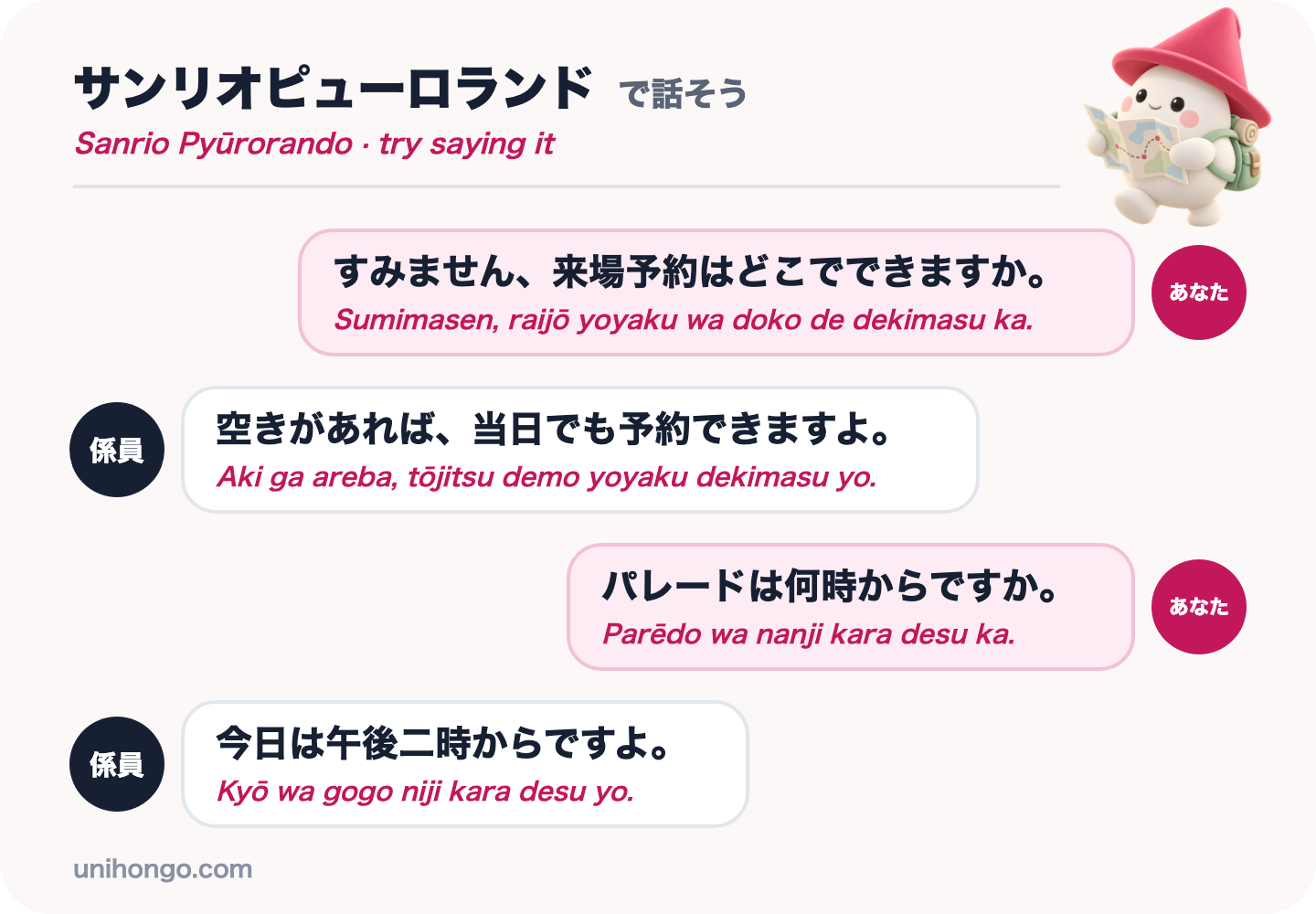
| Japanese | Romaji | Meaning |
|---|---|---|
| すみません、来場予約はどこでできますか。 | Sumimasen, raijō yoyaku wa doko de dekimasu ka. | Excuse me, where can I make a visit reservation? |
| 空きがあれば、当日でも予約できますよ。 | Aki ga areba, tōjitsu demo yoyaku dekimasu yo. | If there is space, you can reserve even on the day. |
| パレードは何時からですか。 | Parēdo wa nanji kara desu ka. | What time does the parade start? |
| 今日は午後二時からですよ。 | Kyō wa gogo niji kara desu yo. | Today it starts at two in the afternoon. |
Official information
Passport prices, closed days, show schedules and suspended attractions change often, so check the official site shortly before your visit. The English overseas page covers access and ticket basics; the Japanese passport page has the calendar with each day's price.