

The tray and tongs system
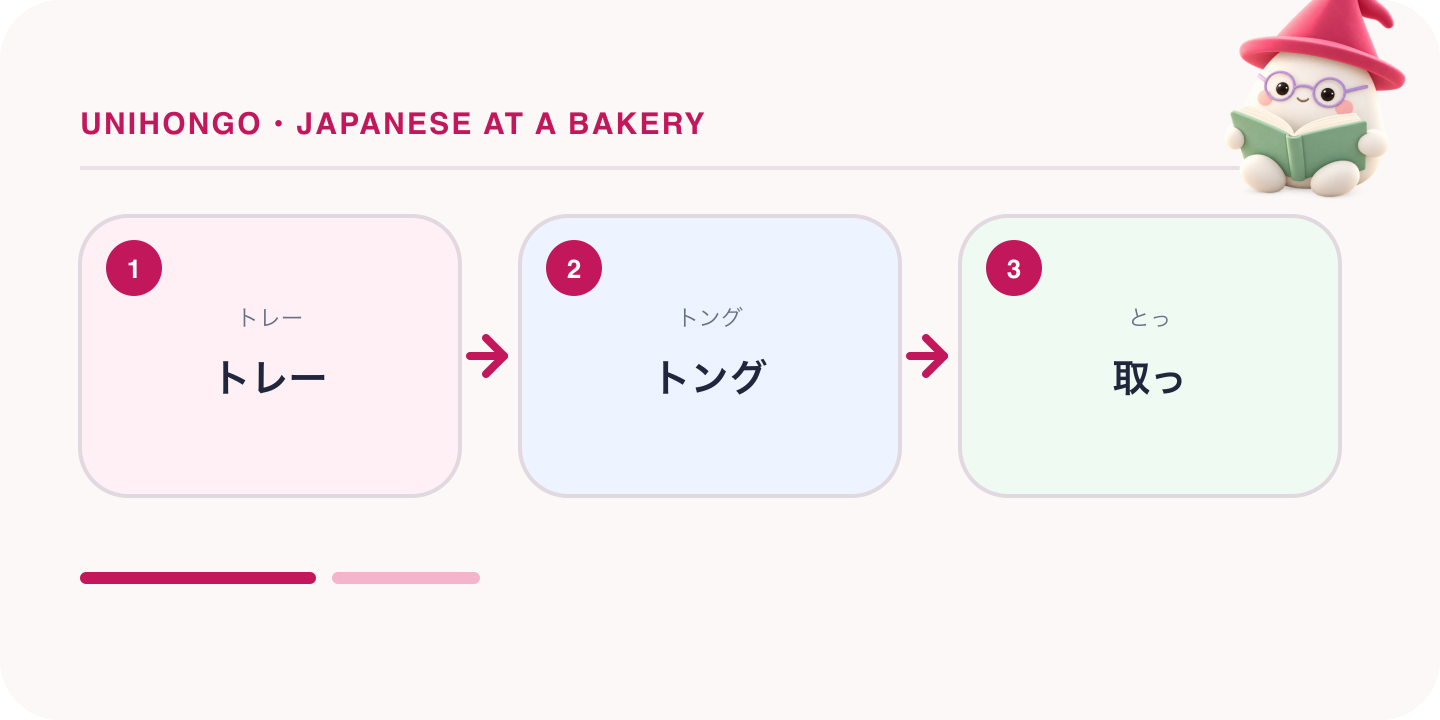
Near the entrance of most bakeries you will find a stack of trays, torei, and a holder of tongs, tongu. Take one of each before you start browsing. The bread sits on open shelves, and you pick items up with the tongs and place them on your tray. Pre-packed items such as sandwiches or sliced loaves can be picked up by hand, since they are already wrapped.
A few habits mark you as a considerate customer. Do not touch unwrapped bread with your fingers, even to test how soft it is. Try to decide before you pick something up, because putting bread back after it has been handled is generally frowned upon. Clicking the tongs together while you browse is a small thing that many Japanese people find mildly irritating, so keep them quiet.
When your tray is full, bring it to the reji, the register. Staff will count the items, wrap or bag each one, and hand you the bag. If there is a queue, it usually forms along a marked line, so look for a sign that says o-narabi kudasai, please queue here.
| Japanese | Romaji | Meaning |
|---|---|---|
| トレーとトングはどこですか。 | Torei to tongu wa doko desu ka. | Where are the trays and tongs? |
| これは手で取ってもいいですか。 | Kore wa te de totte mo ii desu ka. | Is it all right to pick this up by hand? |
| すみません、トングを落としてしまいました。 | Sumimasen, tongu o otoshite shimaimashita. | Sorry, I dropped the tongs. |
| お会計お願いします。 | O-kaikei onegai shimasu. | I'd like to pay, please. |
Asking what is inside
Japanese bakeries love fillings, and a plain-looking bun can hold custard, red bean paste, curry, cheese or a whole sausage. Labels often list the main filling, but if you cannot read it or want details, the standard question is naka ni nani ga haitte imasu ka, what is inside it?
You may also hear -iri, meaning containing, on labels and in answers: an-iri is with red bean paste, chīzu-iri is with cheese. If you have allergies, arerugī, bakeries often list the major allergens on the label or on a sheet at the till, and staff can check for you. Be aware that shared equipment means they may not be able to guarantee anything.
| Japanese | Romaji | Meaning |
|---|---|---|
| これは中に何が入っていますか。 | Kore wa naka ni nani ga haitte imasu ka. | What's inside this one? |
| 甘いパンですか、しょっぱいパンですか。 | Amai pan desu ka, shoppai pan desu ka. | Is it sweet or savoury? |
| 辛いですか。 | Karai desu ka. | Is it spicy? |
| 卵のアレルギーがあります。 | Tamago no arerugī ga arimasu. | I'm allergic to egg. |
| これには乳製品が入っていますか。 | Kore ni wa nyūseihin ga haitte imasu ka. | Does this contain dairy? |
| おすすめはどれですか。 | Osusume wa dore desu ka. | Which do you recommend? |
Signs and labels on the shelves
Every bread has a small card, puraisu kādo, with its name and price, and the busiest bakeries add signs about freshness and limited items. These words turn up again and again, so they are worth learning to read.
| Sign | Reading | Meaning |
|---|---|---|
| 焼きたて | yakitate | Freshly baked |
| 次の焼き上がり | tsugi no yakiagari | Next batch ready at (a time) |
| 新商品 | shin shōhin | New item |
| 期間限定 | kikan gentei | Limited-time item |
| 季節限定 | kisetsu gentei | Seasonal item |
| 数量限定 | sūryō gentei | Limited quantity |
| 本日のおすすめ | honjitsu no osusume | Today's recommendation |
| 人気 | ninki | Popular |
| 売り切れ | urikire | Sold out |
| 税込 | zeikomi | Tax included |
| 税抜 | zeinuki | Tax not included |
| おひとり様一点まで | o-hitori-sama itten made | Limit one per customer |
Whether the price card shows tax included or not varies by shop, so the total at the till can be a little higher than the numbers you added up. If a favourite is urikire, ask tsugi wa nanji ni yakiagarimasu ka, when is the next batch ready?
Bread names every visitor should know
Japanese bakery bread, often called kashi-pan for sweet buns and sōzai-pan for savoury ones, has its own classics. Names are almost always in katakana, and many combine pan with a filling. Melon pan is a sweet bun with a crisp cookie crust; kare pan is curry wrapped in dough, crumbed and usually deep-fried; an-pan holds sweet red bean paste.
Savoury favourites include yakisoba pan, a hot-dog roll stuffed with fried noodles, and korokke pan, a roll with a croquette. Shio pan, a buttery salted roll, has become a staple in many bakeries. Regional breads are common too, so it is always worth asking what the local speciality is.
| Bread | Reading | What it is |
|---|---|---|
| メロンパン | meron pan | Sweet bun with a crisp cookie crust |
| カレーパン | karē pan | Curry-filled bun, usually fried |
| あんパン | an pan | Bun filled with sweet red bean paste |
| クリームパン | kurīmu pan | Bun filled with custard cream |
| チョココロネ | choko korone | Spiral bun filled with chocolate cream |
| 焼きそばパン | yakisoba pan | Roll filled with fried noodles |
| コロッケパン | korokke pan | Roll with a croquette and sauce |
| 塩パン | shio pan | Buttery roll topped with salt |
| 明太フランス | mentai furansu | Baguette with spicy cod roe butter |
| 食パン | shokupan | Soft white sandwich loaf |
Buying shokupan and asking for slicing
Shokupan, the soft, fluffy white loaf, is sold by the loaf rather than by weight. The traditional unit is the kin: ikkin is one loaf, hankin is half, and nikin is a double-length loaf. Some specialist shokupan shops sell nothing else and may ask you to reserve in advance for popular loaves.
Slicing is described by the number of slices per loaf with -mai-giri. Rokumai-giri, six slices, is a common everyday thickness; yonmai-giri and gomai-giri give thick toast slices; hachimai-giri gives thin sandwich slices. Not every bakery slices loaves, and some sell only pre-sliced bags, so check before you rely on it.
| Japanese | Romaji | Meaning |
|---|---|---|
| 食パンを一斤ください。 | Shokupan o ikkin kudasai. | One loaf of shokupan, please. |
| 半斤でも買えますか。 | Hankin demo kaemasu ka. | Can I buy half a loaf? |
| スライスできますか。 | Suraisu dekimasu ka. | Can you slice it? |
| 何枚切りにしますか。 | Nanmai-giri ni shimasu ka. | How many slices would you like? |
| 六枚切りでお願いします。 | Rokumai-giri de onegai shimasu. | Six slices, please. |
| 切らずにそのままで大丈夫です。 | Kirazu ni sono mama de daijōbu desu. | It's fine unsliced. |
Questions you hear at the till
The register is where most of the Japanese happens, and the questions come quickly. The first is often tennai de o-meshiagari desu ka, will you be eating in? The honorific o-meshiagari can sound intimidating, but you only need to answer tennai de or mochikaeri de.
Some bakeries offer to warm certain items, especially kare pan and savoury breads, with atatamemasu ka. You may be asked whether you need a bag, fukuro, since plastic bags are generally charged for in Japan, and whether to wrap items separately, betsu ni. Finally, you may be asked about a point card, pointo kādo. A simple daijōbu desu politely declines any of these.
| Japanese | Romaji | Meaning |
|---|---|---|
| 店内でお召し上がりですか。 | Tennai de o-meshiagari desu ka. | Will you be eating in? |
| 持ち帰りで。 | Mochikaeri de. | To take away. |
| 温めますか。 | Atatamemasu ka. | Shall I warm it up? |
| はい、お願いします。 | Hai, onegai shimasu. | Yes, please. |
| 袋はご利用ですか。 | Fukuro wa go-riyō desu ka. | Will you need a bag? |
| 袋はいりません。 | Fukuro wa irimasen. | I don't need a bag. |
| 別々に包んでもらえますか。 | Betsubetsu ni tsutsunde moraemasu ka. | Could you wrap them separately? |
| ポイントカードはお持ちですか。 | Pointo kādo wa o-mochi desu ka. | Do you have a point card? |
When you pay in cash, you will usually see a small tray, karuton, on the counter. Put your money in the tray rather than handing it over, and your change will come back the same way.
Eating in and taking bread home
Bakeries with eat-in seating often have a coffee menu and sometimes free water or tea. If you ordered a drink, you may be given a number or asked to wait at the counter. Tidy your tray away when you leave, following any sign that says o-sage kudasai or henkyaku-guchi, return point.
If you are taking bread home, especially items with cream or custard, staff may ask how long it will take you to get home and add a cold pack, horeizai. Filled breads are best eaten the same day, and many shops mark this with a note such as honjitsu-chū ni o-meshiagari kudasai, please eat today.
| Japanese | Romaji | Meaning |
|---|---|---|
| ここで食べてもいいですか。 | Koko de tabete mo ii desu ka. | Is it all right to eat here? |
| ホットコーヒーもお願いします。 | Hotto kōhī mo onegai shimasu. | A hot coffee too, please. |
| 保冷剤をつけてもらえますか。 | Horeizai o tsukete moraemasu ka. | Could you add a cold pack? |
| トレーはどこに返せばいいですか。 | Torei wa doko ni kaeseba ii desu ka. | Where should I return the tray? |
When something goes wrong
Accidents happen, particularly with soft bread and small tongs. If you drop something on the floor, do not put it back on the shelf; tell the staff, and offer to pay for it. Most shops will simply thank you for saying so.
If you notice at home that something is missing from your bag or that you were charged for the wrong item, keep the receipt, reshīto, and go back with it. A calm explanation is all that is needed.
| Japanese | Romaji | Meaning |
|---|---|---|
| すみません、パンを落としてしまいました。 | Sumimasen, pan o otoshite shimaimashita. | Sorry, I dropped a piece of bread. |
| これも一緒にお会計します。 | Kore mo issho ni o-kaikei shimasu. | I'll pay for this one as well. |
| 一つ入っていなかったみたいです。 | Hitotsu haitte inakatta mitai desu. | I think one item wasn't in the bag. |
| これはレシートです。 | Kore wa reshīto desu. | Here is the receipt. |
| もう売り切れですか。 | Mō urikire desu ka. | Is it already sold out? |