

Why the Manga Museum is a learner's dream
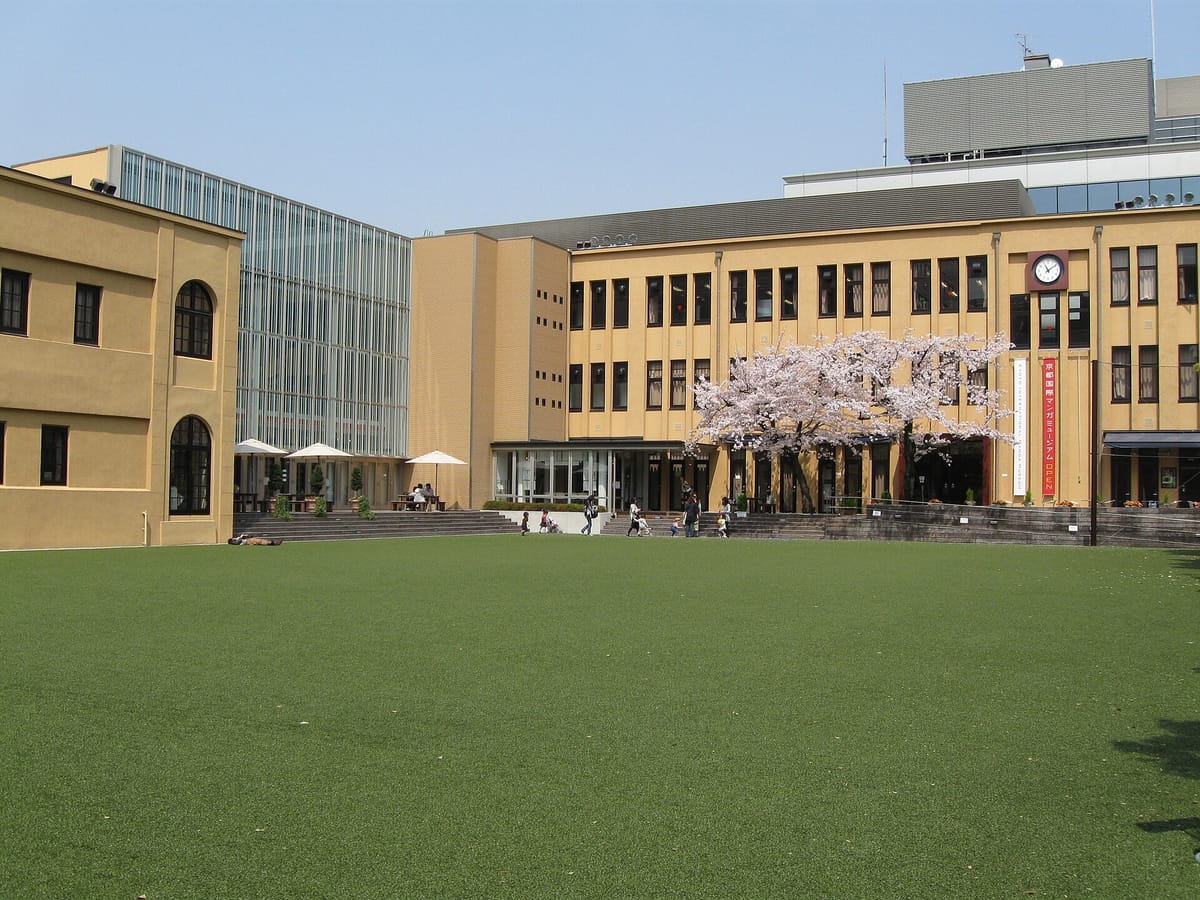
The museum is housed in the old Tatsuike Primary School, one of the schools that Kyoto's own neighbourhoods founded in 1869, before Japan had a national school system. The school closed in 1995, and its early Shōwa buildings, from the late 1920s and 1930s, were converted into the museum with a glass extension, keeping the wooden floors, staircases and classroom feel. The old schoolyard is now a lawn.
The museum works as both a museum and a library. The permanent exhibition explains what manga is and how Japanese comics developed, from Edo-period comic prints to modern magazines, and temporary exhibitions change through the year. The library side is the Wall of Manga, where about 50,000 books from the collection are shelved in the open for anyone to read, with about 250,000 more items kept in the archive for researchers.
For a learner, it is hard to imagine a better setting. Manga pair short, spoken Japanese with pictures that tell you what is going on, and many older titles print furigana, small kana readings, beside the kanji. You can sit in a quiet corner with a volume you already know in translation and read the original at your own pace.
Getting there: Karasuma Oike Station
The museum stands on the corner of Karasuma-dōri and Oike-dōri, two of central Kyoto's main streets. Karasuma Oike Station, where the Karasuma and Tōzai subway lines cross, is right beside it: the museum's access page says to take Exit 2, turn right, turn left at the Karasuma Oike crossing and walk about two minutes.
From JR Kyoto Station, take the Karasuma Line towards Kokusaikaikan for three stops, about six minutes. From Keihan Sanjō Station, take the Tōzai Line two stops towards Uzumasa Tenjingawa. City buses 15, 51 and 65 stop at the Karasuma Oike bus stop. The museum is also an easy walk from Nishiki Market and the Sanjō shopping streets.
| Japanese | Romaji | Meaning |
|---|---|---|
| 烏丸御池駅は何番出口が近いですか。 | Karasuma Oike-eki wa nanban deguchi ga chikai desu ka. | Which exit of Karasuma Oike Station is closest? |
| 京都国際マンガミュージアムはどちらですか。 | Kyōto Kokusai Manga Myūjiamu wa dochira desu ka. | Which way is the Kyoto International Manga Museum? |
| 国際会館行きに乗ればいいですか。 | Kokusaikaikan-yuki ni noreba ii desu ka. | Should I take the train bound for Kokusaikaikan? |
| 京都駅から何駅目ですか。 | Kyōto-eki kara nan-eki-me desu ka. | How many stops is it from Kyoto Station? |
| ここから歩いて何分くらいですか。 | Koko kara aruite nanpun kurai desu ka. | About how many minutes on foot from here? |
The Wall of Manga and what else to see
The Wall of Manga is divided by readership: shōnen manga, aimed at boys, on the first floor, shōjo manga, aimed at girls, on the second, and seinen manga, for young adults, on the third. Within each floor, books are shelved by the author's name in Japanese syllabary order, a-i-u-e-o, so it helps to know how an author's name is read. Touch-screen search panels around the building show you where a title is.
Around the shelves are the exhibitions, a manga studio corner where artists work and demonstrate, and a room kept as it was in the school days, the Tatsuike Memorial Room. The shop stocks about three thousand items, and the walls are covered with drawings left by manga artists who have visited.
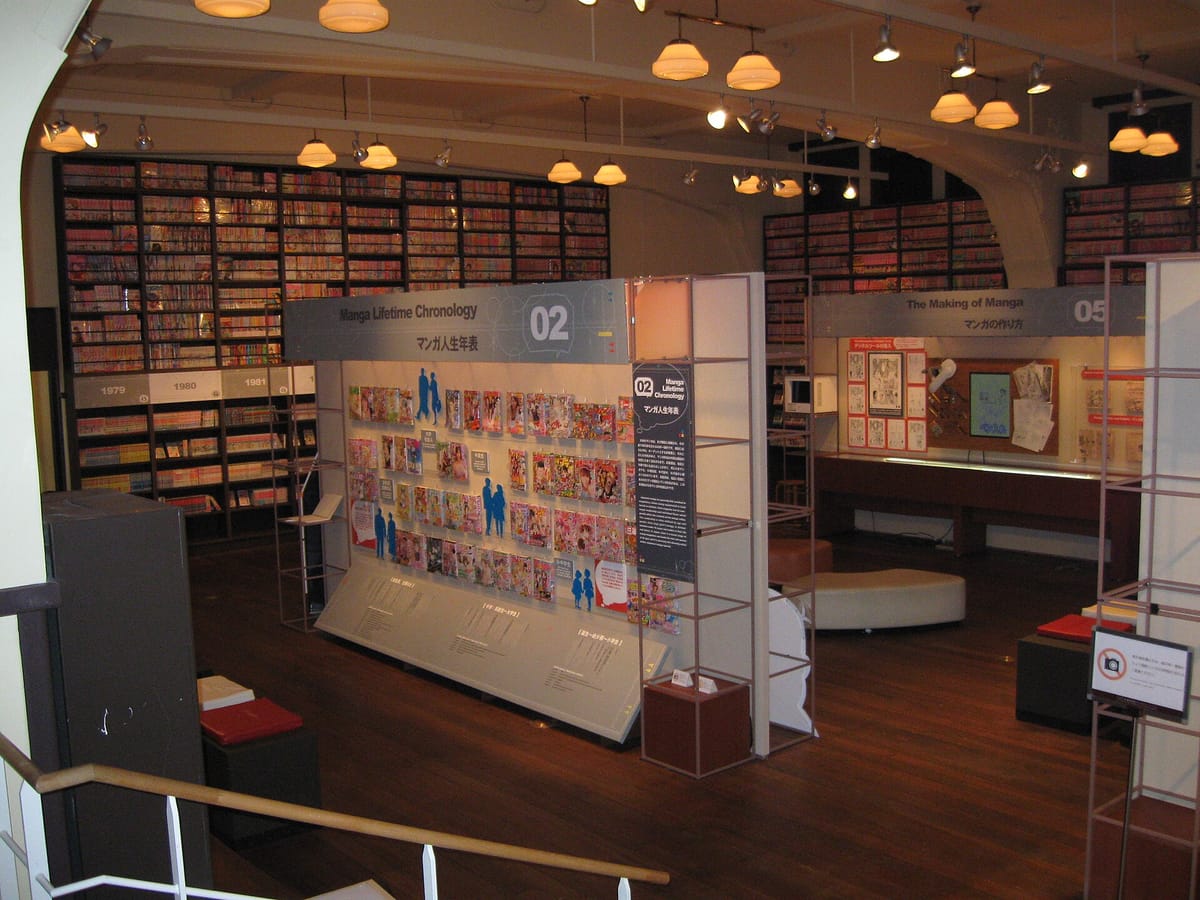
- Manga no Kabe: the Wall of Manga, about 50,000 books on open shelves.
- Permanent exhibition: an introduction to what manga is and how it developed.
- Special exhibitions: changing shows on artists, series and themes.
- Kamishibai playhouse: picture-story shows on the second floor.
- Portrait corner: artists who draw you in manga or anime style, for a fee.
- Tatsuike Memorial Room: a reminder of the building's school days.
- The lawn: the old schoolyard, where you can read outside in good weather.
Words on the signs
The museum writes manga in katakana, マンガ, as many publishers now do, although you will also see the kanji 漫画 on older books and in the exhibitions. The exhibition rooms are split into the permanent exhibition, 常設展, and special exhibitions, 企画展, which change during the year and sometimes carry an extra charge.
Two words are worth knowing for the events: 似顔絵, nigaoe, a portrait or likeness, and 紙芝居, kamishibai, paper theatre. The table below covers the words you will meet as you walk round.
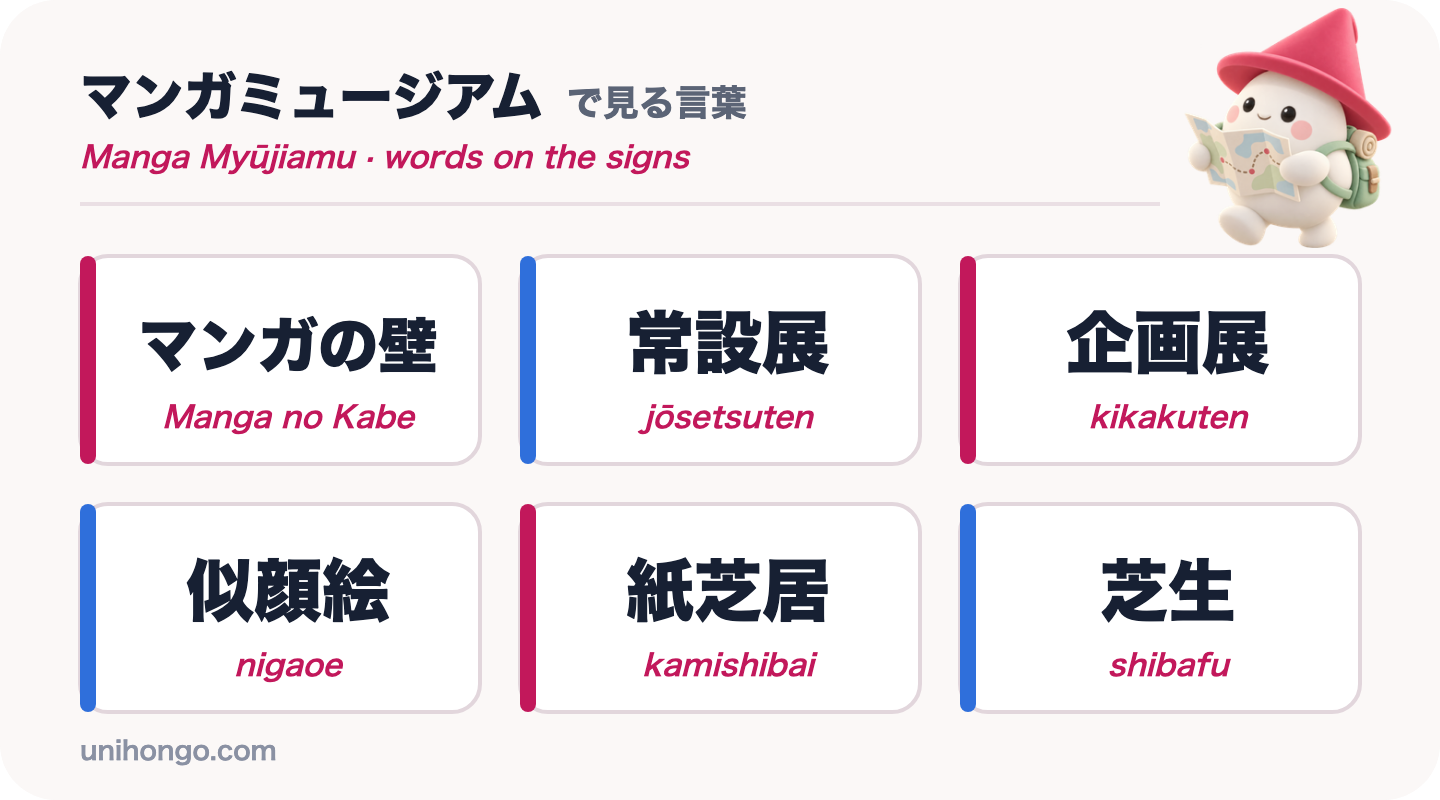
| Word | Reading | Meaning |
|---|---|---|
| マンガの壁 | Manga no Kabe | The Wall of Manga, the open shelves |
| 常設展 | jōsetsuten | Permanent exhibition |
| 企画展 | kikakuten | Special or temporary exhibition |
| 似顔絵 | nigaoe | Portrait drawing |
| 紙芝居 | kamishibai | Paper theatre, picture-story show |
| 芝生 | shibafu | The lawn |
| 少年マンガ | shōnen manga | Manga aimed at boys |
| 少女マンガ | shōjo manga | Manga aimed at girls |
| 青年マンガ | seinen manga | Manga for young adults |
Japanese for books, shows and portraits
Staff at the reception and around the shelves are used to visitors looking for a particular series. The most useful sentence is the title plus wa doko ni arimasu ka, where is it. If you know the author's name in Japanese, give that too, because the shelves are arranged by author.
Kamishibai shows and portrait sessions run to a schedule posted in the museum and on the website, and the portrait artists, who change month by month, chat with you while they draw. The phrases below cover the shelves, the shows and the portrait corner.
| Japanese | Romaji | Meaning |
|---|---|---|
| 少女マンガは何階ですか。 | Shōjo manga wa nankai desu ka. | Which floor are the shōjo manga on? |
| この作品はどこにありますか。 | Kono sakuhin wa doko ni arimasu ka. | Where is this title? |
| ふりがなのあるマンガはありますか。 | Furigana no aru manga wa arimasu ka. | Are there manga with furigana? |
| 似顔絵をお願いしたいんですが。 | Nigaoe o onegai shitai n desu ga. | I would like a portrait drawn. |
| どのくらい時間がかかりますか。 | Dono kurai jikan ga kakarimasu ka. | How long does it take? |
| 読み終わった本はどこに返せばいいですか。 | Yomiowatta hon wa doko ni kaeseba ii desu ka. | Where should I return the books I have finished? |
Manners and practical tips
The museum is a library as well as a museum, and a few habits keep it pleasant for everyone.
- Keep your voice low near the shelves; people are reading.
- Do not eat or drink inside the building. Food and drink are allowed on the lawn, and there is a café.
- Take your rubbish home with you from the lawn.
- Return books to the shelves or the return points as staff ask; do not take them off the premises.
- Keep your admission ticket if you plan to go out for lunch and come back in the same day.
- Check the calendar for Wednesday closures and the schedule for kamishibai and portrait artists before you go.
Practise the museum before you go
The two questions visitors ask most are where they may read and when the shows are. Practise the four lines below until you can say them without looking, and listen for shibafu, the lawn, and annai, the notice, in the replies.
Then practise with a partner who answers back. In Unihongo, choose the Sightseeing topic and ask your AI Sensei to play a member of museum staff, or choose the Café topic to rehearse the museum café. Saying the lines once before you arrive is what makes them easy at the desk.
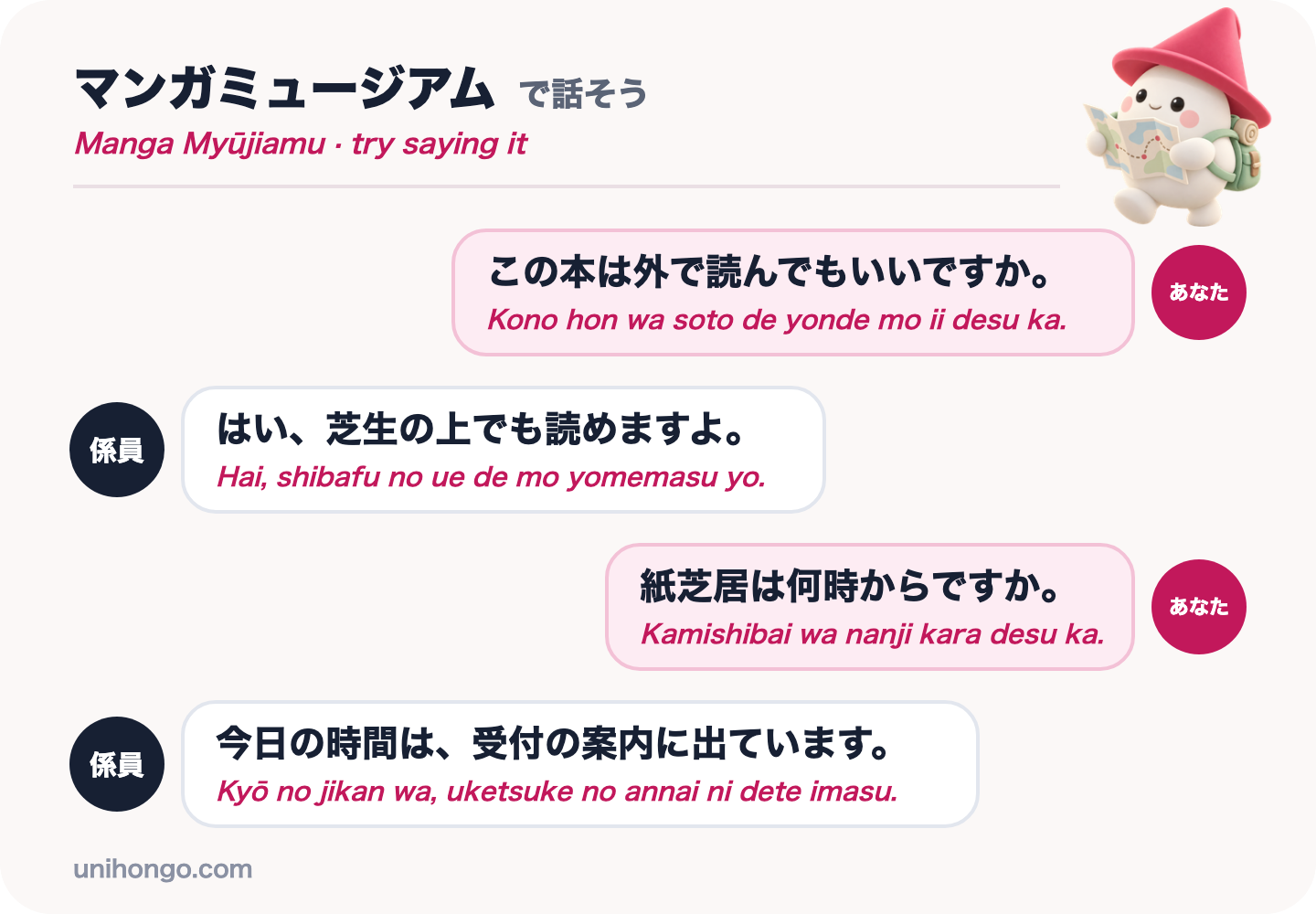
| Japanese | Romaji | Meaning |
|---|---|---|
| この本は外で読んでもいいですか。 | Kono hon wa soto de yonde mo ii desu ka. | May I read this book outside? |
| はい、芝生の上でも読めますよ。 | Hai, shibafu no ue de mo yomemasu yo. | Yes, you can read it on the lawn too. |
| 紙芝居は何時からですか。 | Kamishibai wa nanji kara desu ka. | What time does the kamishibai start? |
| 今日の時間は、受付の案内に出ています。 | Kyō no jikan wa, uketsuke no annai ni dete imasu. | Today's times are on the notice at reception. |
Official information
The museum publishes its opening calendar, admission, online tickets, exhibitions and the monthly schedules for kamishibai performers and portrait artists on its English website. The FAQ explains re-entry and the rules for reading and eating.