

Why Kasuga Taisha is Nara's most atmospheric walk
Kasuga Taisha was founded in 768, when Nara was the capital, to protect the city and the nation. Its main deity, Takemikazuchi-no-mikoto, is said to have come from Kashima Shrine in the east to the peak of Mount Mikasa, riding a white deer. That legend is why the deer of Nara Park are regarded as the god's messengers, and why you will meet them all along the shrine's approaches.
The shrine was the tutelary shrine of the Fujiwara, the most powerful family at court, and centuries of donations from nobles, warriors and ordinary worshippers have left it with three thousand lanterns. Its buildings are painted vermilion and kept in their original form through the Shikinen Zōtai, a renewal of the shrine carried out every twenty years. The shrine, together with the primeval forest of Kasugayama behind it, is part of the Historic Monuments of Ancient Nara World Heritage Site.
For a learner, the lanterns are a reading lesson. Almost every one is carved with 奉納, hōnō, offered, and many with 春日社 or the name of the donor, so by the time you reach the main gate you will have read the same kanji dozens of times.
Getting there: through the park or by bus
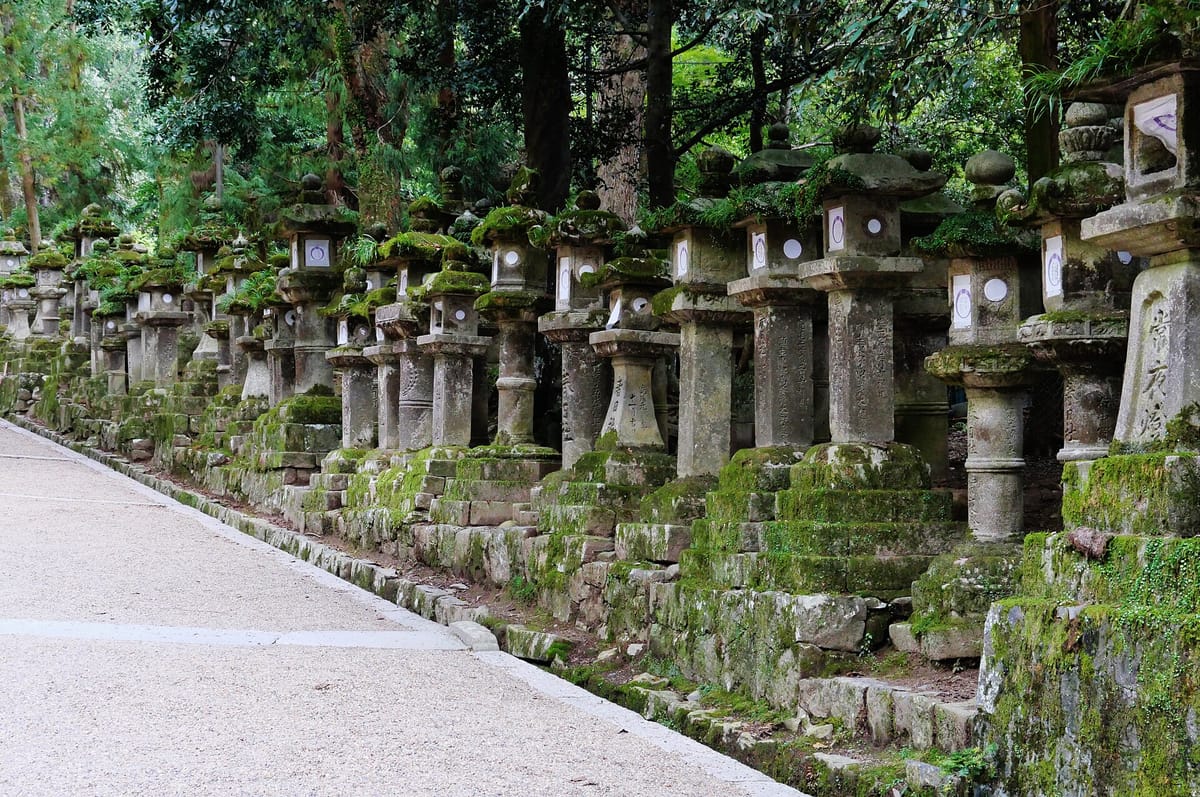
The shrine gives the walk from Kintetsu Nara Station, Kintetsu Nara-eki, as about 25 minutes. The nicest route runs east along Noboriōji and across the Tobihino lawn, then under the great torii and along the lantern-lined approach, the sandō, which climbs gently through the forest to the shrine buildings. From JR Nara Station the walk is longer, so many visitors take a bus.
Buses from both JR Nara and Kintetsu Nara stations run to the Kasuga Taisha Honden stop, a short walk from the shrine, and loop buses also stop near the approach. Combine the visit with Tōdai-ji, about twenty minutes' walk to the north through the woods and lawns, and you have a good half day in Nara Park.
| Japanese | Romaji | Meaning |
|---|---|---|
| 春日大社へ行くバスはどれですか。 | Kasuga Taisha e iku basu wa dore desu ka. | Which bus goes to Kasuga Taisha? |
| 春日大社本殿で降りたいです。 | Kasuga Taisha Honden de oritai desu. | I want to get off at Kasuga Taisha Honden. |
| 参道はこちらですか。 | Sandō wa kochira desu ka. | Is this the approach to the shrine? |
| 本殿まで歩いてどのくらいですか。 | Honden made aruite dono kurai desu ka. | How long is it on foot to the main sanctuary? |
| 東大寺へはこの道で行けますか。 | Tōdai-ji e wa kono michi de ikemasu ka. | Can I get to Tōdai-ji along this path? |
What you will see: the approach, the cloister and Fujinami-no-ya
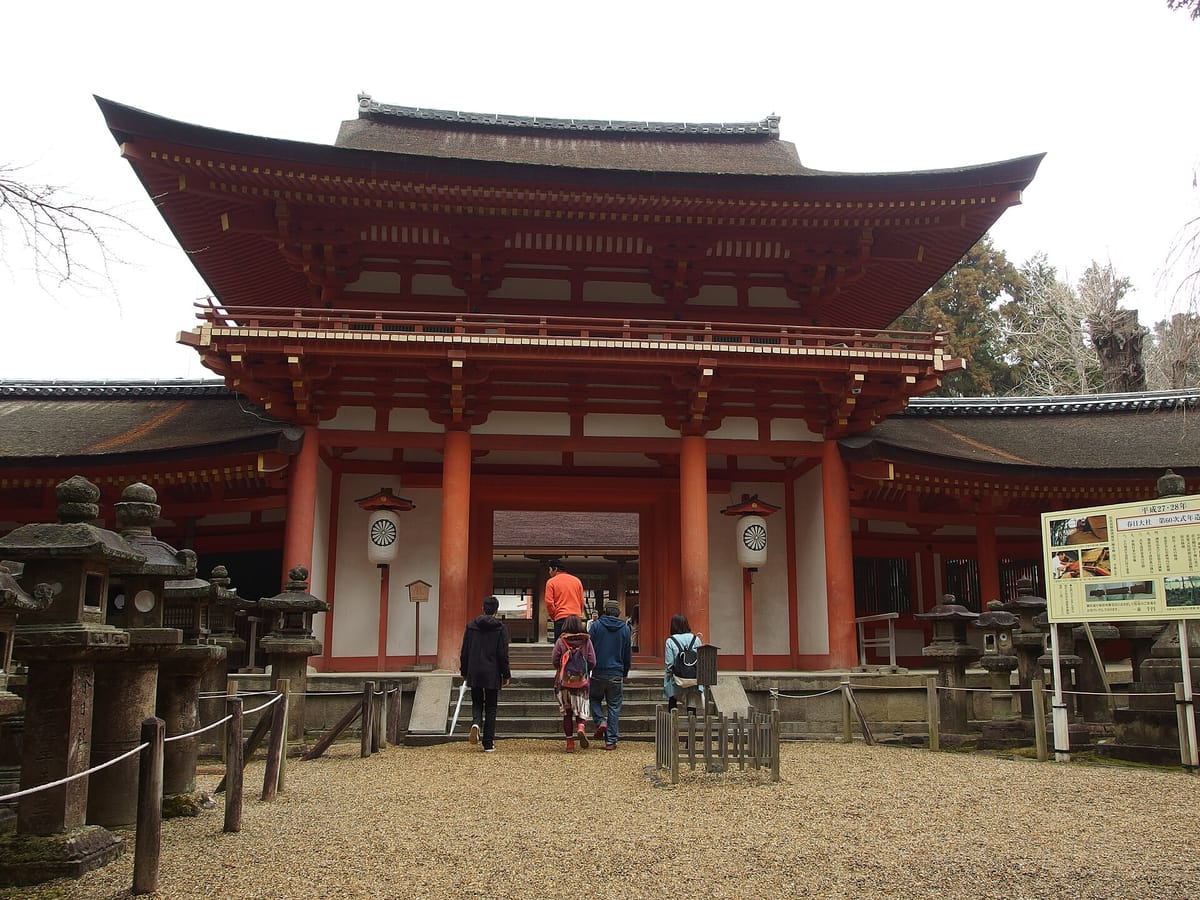
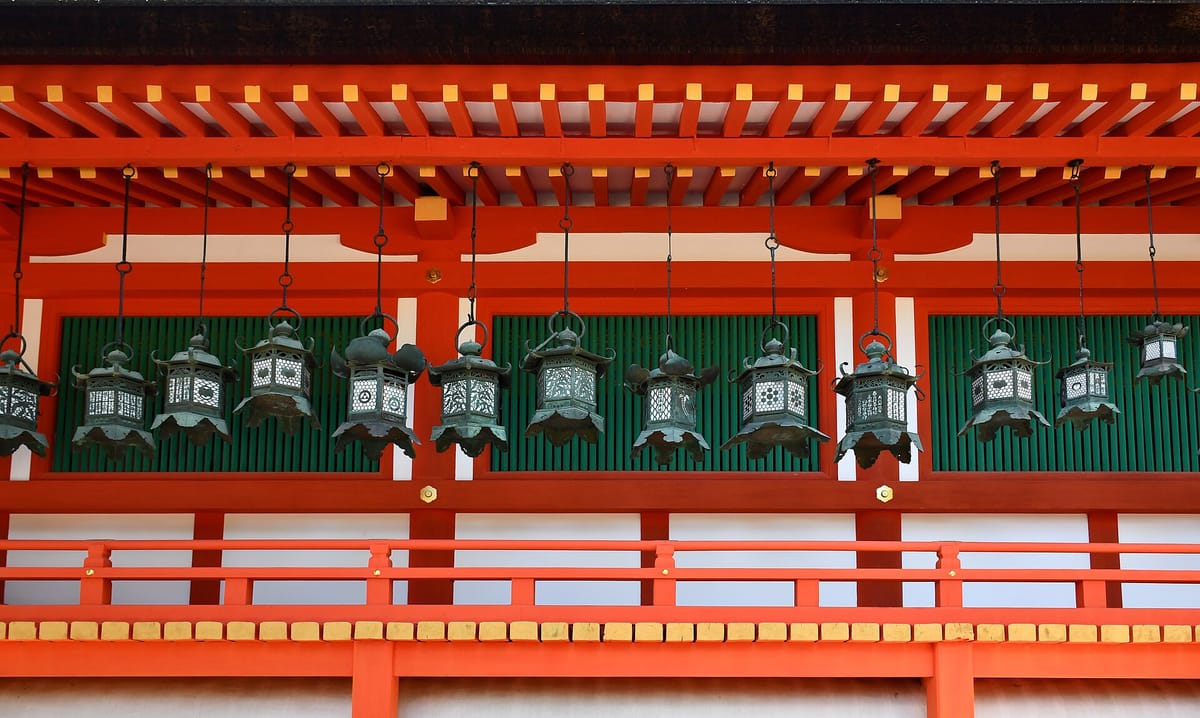
The visit follows the sandō uphill through the trees, past rows of stone lanterns and resting deer, to the Nanmon, the vermilion south gate. Beyond it is the Heiden and the outer area, where anyone can pray for free and see the bronze lanterns hanging along the cloister.
For a closer look, join the special inner visit, the tokubetsu sanpai. It takes you along the cloister lined with hanging lanterns to the front of the Chūmon, the two-storey middle gate about ten metres tall that stands just before the main sanctuary, and into Fujinami-no-ya, a darkened hall where lit lanterns recreate the glow of the festival nights. Admission may be restricted during ceremonies.
- Sandō: the forest approach lined with stone lanterns.
- Nanmon: the vermilion south gate, the main entrance to the shrine buildings.
- Kairō: the cloister around the shrine buildings, hung with bronze lanterns donated over the centuries.
- Chūmon: the middle gate in front of the main sanctuary, seen on the special visit.
- Fujinami-no-ya: the lantern room, where lanterns are lit all year.
- Sunazuri-no-Fuji: the ancient wisteria near the sanctuary, over seven hundred years old.
- Wakamiya: a group of smaller shrines along a path to the south, quieter and wooded.
- Man'yō Botanical Garden: plants from Japan's oldest poetry anthology, and around two hundred wisteria trees.
Lanterns and the words on the signs
The lanterns come in two families. Ishidōrō, stone lanterns, stand in long rows along the paths, often furred with moss. Tsuridōrō, hanging lanterns, are made of bronze or iron and hang from the eaves of the cloister, each one cast with a pattern and the name of the person who gave it.
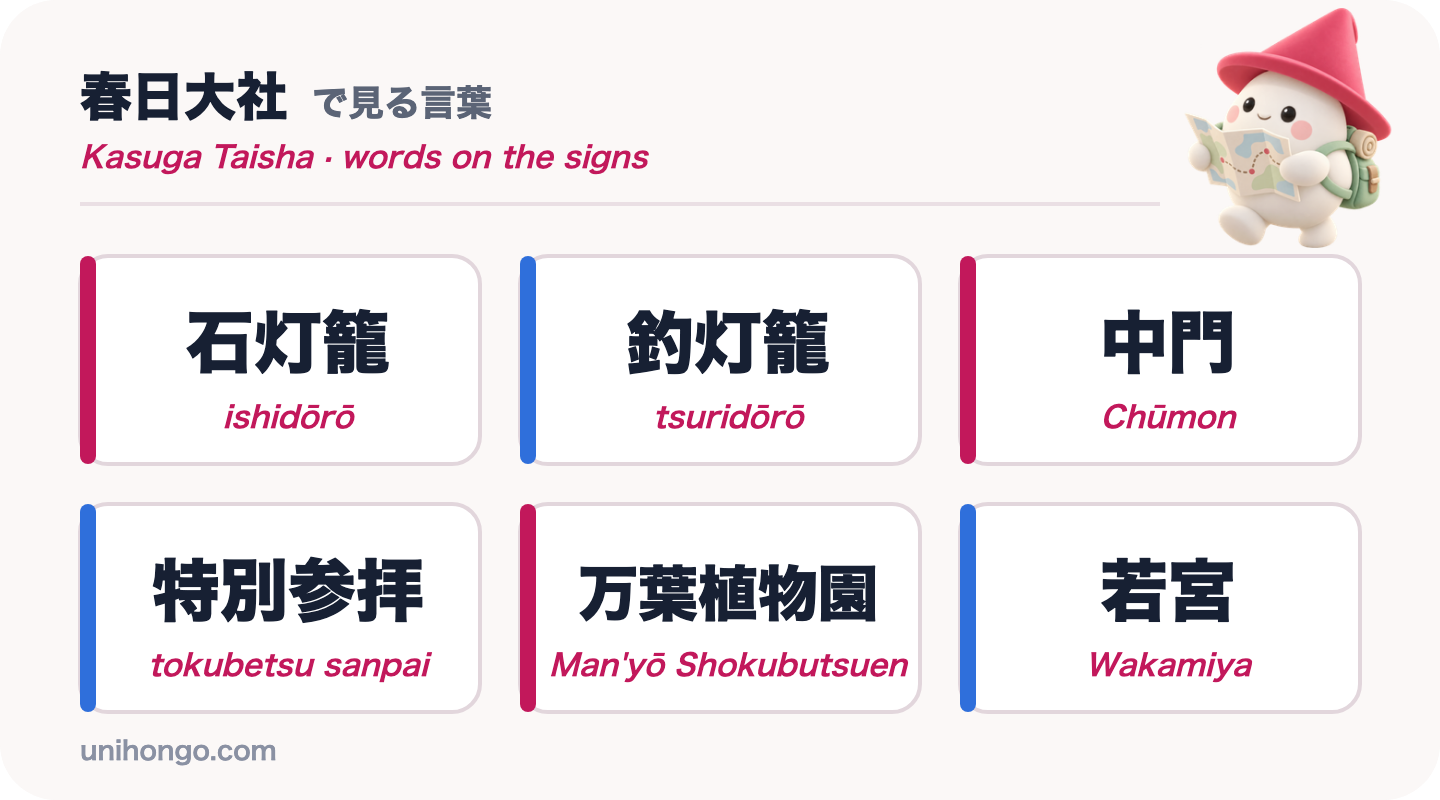
The signposts use a handful of words for the parts of a shrine and the areas you can visit. The ones below cover nearly everything you will read between the torii and the inner cloister.
| Word | Reading | Meaning |
|---|---|---|
| 石灯籠 | ishidōrō | Stone lantern |
| 釣灯籠 | tsuridōrō | Hanging bronze lantern |
| 万燈籠 | Mantōrō | The lantern festival when all the lanterns are lit |
| 中門 | Chūmon | The middle gate in front of the main sanctuary |
| 本殿 | honden | Main sanctuary |
| 特別参拝 | tokubetsu sanpai | Special inner visit, with a fee |
| 万葉植物園 | Man'yō Shokubutsuen | The Man'yō Botanical Garden |
| 若宮 | Wakamiya | The Wakamiya shrine to the south |
| 奉納 | hōnō | Offered, carved on donated lanterns |
Japanese for the inner visit, charms and goshuin
The special inner visit has its own reception inside the shrine grounds. You pay, receive a ticket, and walk the cloister at your own pace. The shrine office sells omamori charms, including deer-shaped fortunes, and writes goshuin, the calligraphy stamp collected in a special book.
The shrine publishes photography guidelines, and some areas ask you not to take pictures, so it is worth asking before you raise your camera. Shrine attendants are used to the question and will answer it simply.
| Japanese | Romaji | Meaning |
|---|---|---|
| 特別参拝をお願いします。 | Tokubetsu sanpai o onegai shimasu. | The special inner visit, please. |
| 藤浪之屋はどこですか。 | Fujinami-no-ya wa doko desu ka. | Where is Fujinami-no-ya? |
| ここで写真を撮ってもいいですか。 | Koko de shashin o totte mo ii desu ka. | May I take photos here? |
| 鹿のおみくじをください。 | Shika no omikuji o kudasai. | A deer fortune, please. |
| 御朱印をお願いできますか。 | Goshuin o onegai dekimasu ka. | Could I ask for a goshuin? |
| 藤の花はいつごろ咲きますか。 | Fuji no hana wa itsu goro sakimasu ka. | Around when does the wisteria bloom? |
Etiquette, festivals and practical tips
Kasuga Taisha holds more than two thousand ceremonies a year, and morning and evening prayers continue every day. The shrine asks visitors to follow a few simple rules.
- Rinse your hands at the temizuya before praying, then bow twice, clap twice, pray and bow once more.
- Stay on the paths: the forest is protected, and you should not walk in among the trees.
- Do not touch, climb or lean on the stone lanterns.
- Pets, drones and smoking are not allowed in the grounds.
- Come for Setsubun Mantōrō in early February or Chūgen Mantōrō in mid-August to see every lantern lit, and expect crowds.
- Visit in late April or early May for the wisteria, or in December for the Kasuga Wakamiya On-matsuri festival.
Practise the visit before you go
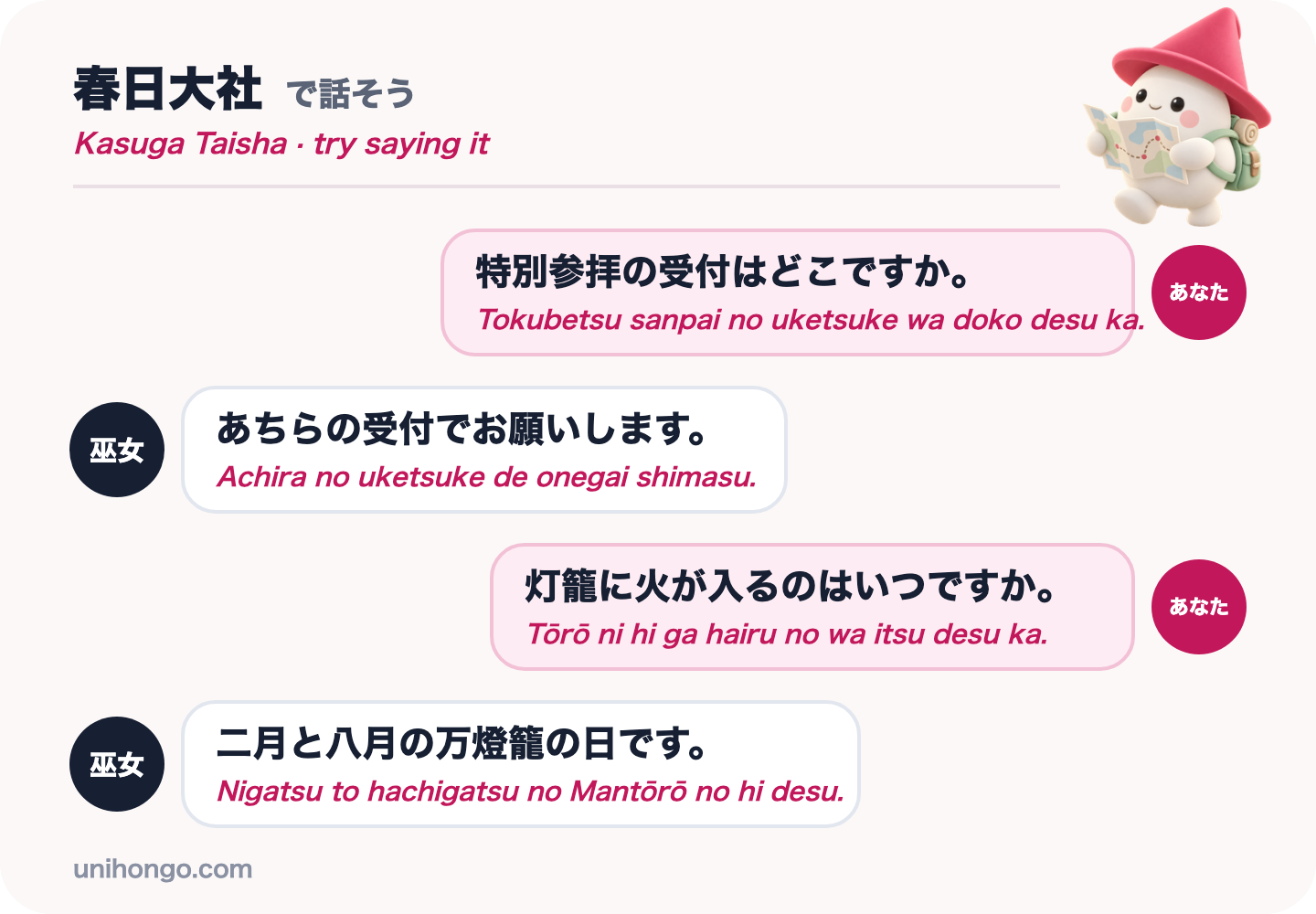
At the shrine you are most likely to talk to a miko, a shrine attendant, at the reception or the charm counter. Her replies will be short and polite, often pointing you somewhere with achira. Practise the four lines below until you can say them without reading, and listen for the months in the answer.
Then practise with a partner who answers back. In Unihongo, choose the Shrine Visit topic and ask your AI Sensei to play a shrine attendant at Kasuga Taisha, then ask about the wisteria and the lantern festivals in Seasonal Events.
| Japanese | Romaji | Meaning |
|---|---|---|
| 特別参拝の受付はどこですか。 | Tokubetsu sanpai no uketsuke wa doko desu ka. | Where is the reception for the special visit? |
| あちらの受付でお願いします。 | Achira no uketsuke de onegai shimasu. | Please go to the reception over there. |
| 灯籠に火が入るのはいつですか。 | Tōrō ni hi ga hairu no wa itsu desu ka. | When are the lanterns lit? |
| 二月と八月の万燈籠の日です。 | Nigatsu to hachigatsu no Mantōrō no hi desu. | On the Mantōrō days in February and August. |
Official information
Kasuga Taisha publishes its hours, the reception times for the special visit, fees for the museum and botanical garden, and dates for festivals on its English site. Hours differ between summer and winter, so check before you go.