

Why Ishigaki is the gateway to Okinawa's far south
Ishigaki lies about 400 kilometres south-west of Okinawa Island and much closer to Taiwan than to Tokyo. It is the most populated of the Yaeyama Islands and their transport hub: the airport has direct flights from the mainland and abroad, and the port sends ferries to the outer islands all day. Much of the island is covered in subtropical forest and is part of Iriomote-Ishigaki National Park.
The island has a strong musical tradition. Ishigaki has long been called a land of poets, songs and dance, and its most famous folk song, Tubarama, is sung as a love duet; you may hear it with the three-stringed sanshin in restaurants in the evening. Ishigaki-yaki pottery, with its deep blue-green glazes, is the local craft.
The night sky is another draw. Iriomote-Ishigaki National Park is an International Dark Sky Park, and the official Okinawa tourism site says 84 of the 88 constellations can be seen from Ishigaki. For a Japanese learner, the island offers a relaxed mix of standard Japanese in shops and tours and glimpses of Yaeyama words, starting with ōri tōri, welcome.
Getting there and getting around
New Ishigaki Airport, nicknamed Painushima Ishigaki Airport, is on the east coast. Direct flights from Naha take about an hour, and there are direct flights from Tokyo, Osaka, Nagoya and Fukuoka, as well as from Taiwan and Hong Kong. Airport buses and taxis run to the city centre and the port.
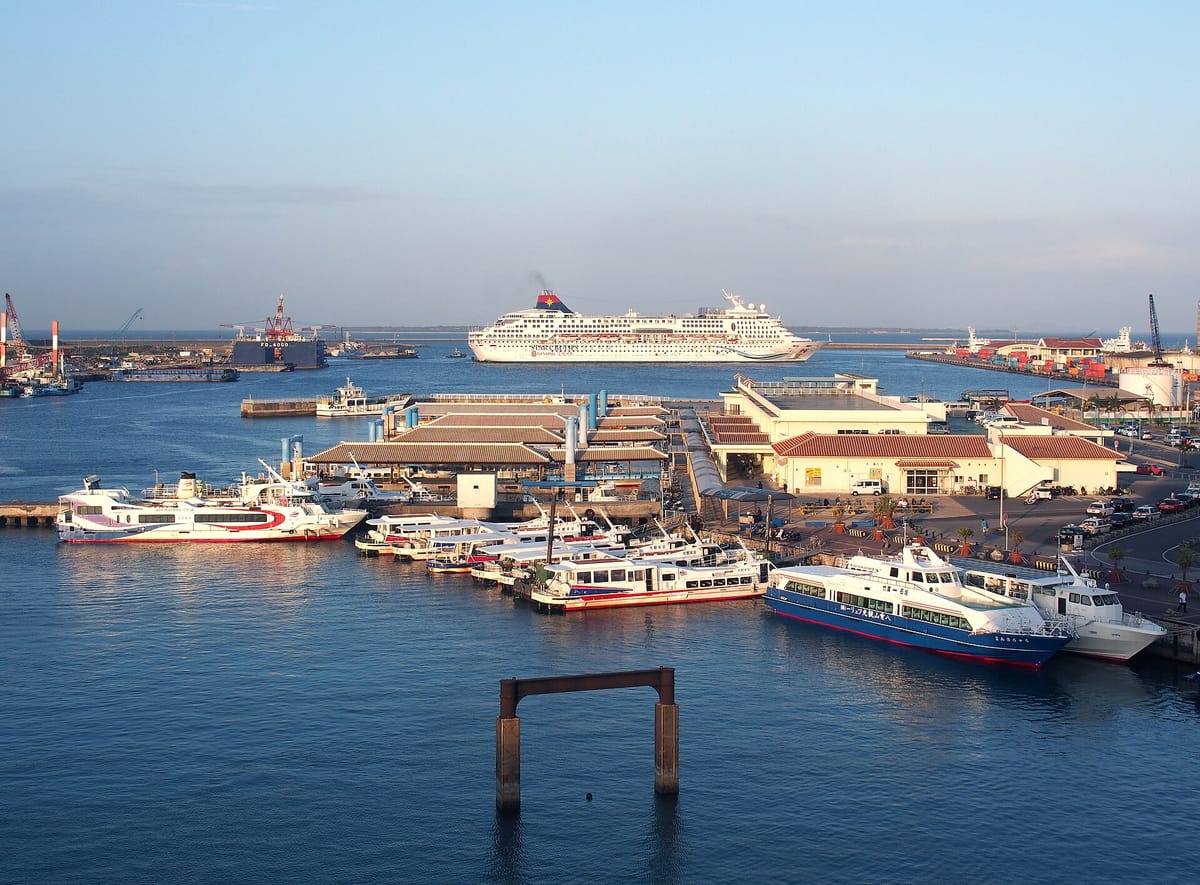
Most hotels are in Ishigaki city at the southern end of the island or around the port. From there, the Ishigaki Port Remote Islands Terminal, Ritō Tāminaru, is the departure point for high-speed ferries to Taketomi, Iriomote, Kohama and other islands. To explore Ishigaki itself, rent a car; the coast road is about 160 kilometres round, and seeing the whole island takes a full day. Buses reach Kabira Bay and other sights but are infrequent.
| Japanese | Romaji | Meaning |
|---|---|---|
| 市内行きのバスはどこから乗りますか。 | Shinai-yuki no basu wa doko kara norimasu ka. | Where do I catch the bus to the city centre? |
| 離島ターミナルまでお願いします。 | Ritō tāminaru made onegai shimasu. | To the remote islands terminal, please. |
| 竹富島行きの船は何時ですか。 | Taketomi-jima-yuki no fune wa nanji desu ka. | What time is the boat to Taketomi Island? |
| 往復のチケットをください。 | Ōfuku no chiketto o kudasai. | A return ticket, please. |
| 今日は船は全部出ていますか。 | Kyō wa fune wa zenbu dete imasu ka. | Are all the boats running today? |
Kabira Bay, capes, beaches and the reef
A drive round Ishigaki takes you from the bays of the west coast to the long peninsula in the north and the reef in the south-east. Allow a full day with stops, or split the island over two days between ferry trips.
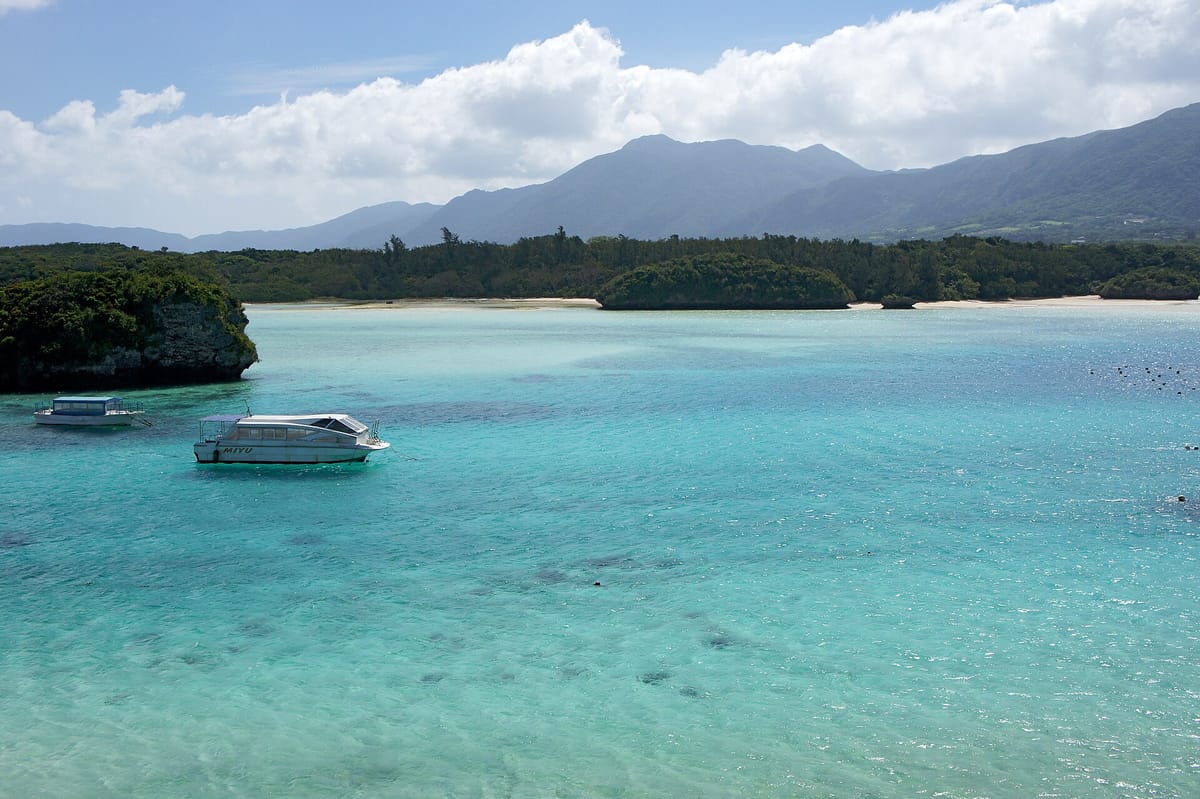
- Kabira Bay: the island's best-known view, white sand, islets and turquoise water. Swimming is not allowed; see the coral from a glass-bottom boat.
- Shiraho Reef: on the south-east coast, home to what the official Okinawa tourism site calls the largest community of blue coral in the Northern Hemisphere, with glass-bottom boat tours.
- Tamatorizaki Observatory: a viewpoint over the east coast and the narrow north of the island.
- Hirakubozaki Lighthouse: at the northern tip, with wide ocean views.
- Ishigaki Sunset Beach and Oganzaki Lighthouse: popular places for the sunset.
- Maesato Beach: a beach with lifeguards and facilities, close to the port and the city.
- Manta dive sites: reef mantas visit year-round, and the best chances are from July to mid-October.
Words on the signs on Ishigaki
At the port, the boards above each pier show the destination followed by yuki, bound for: 竹富島行き, Taketomi-jima-yuki. Ferry company counters are side by side in the terminal, and both the sailing times and any cancellations, kekkō, are posted on screens.
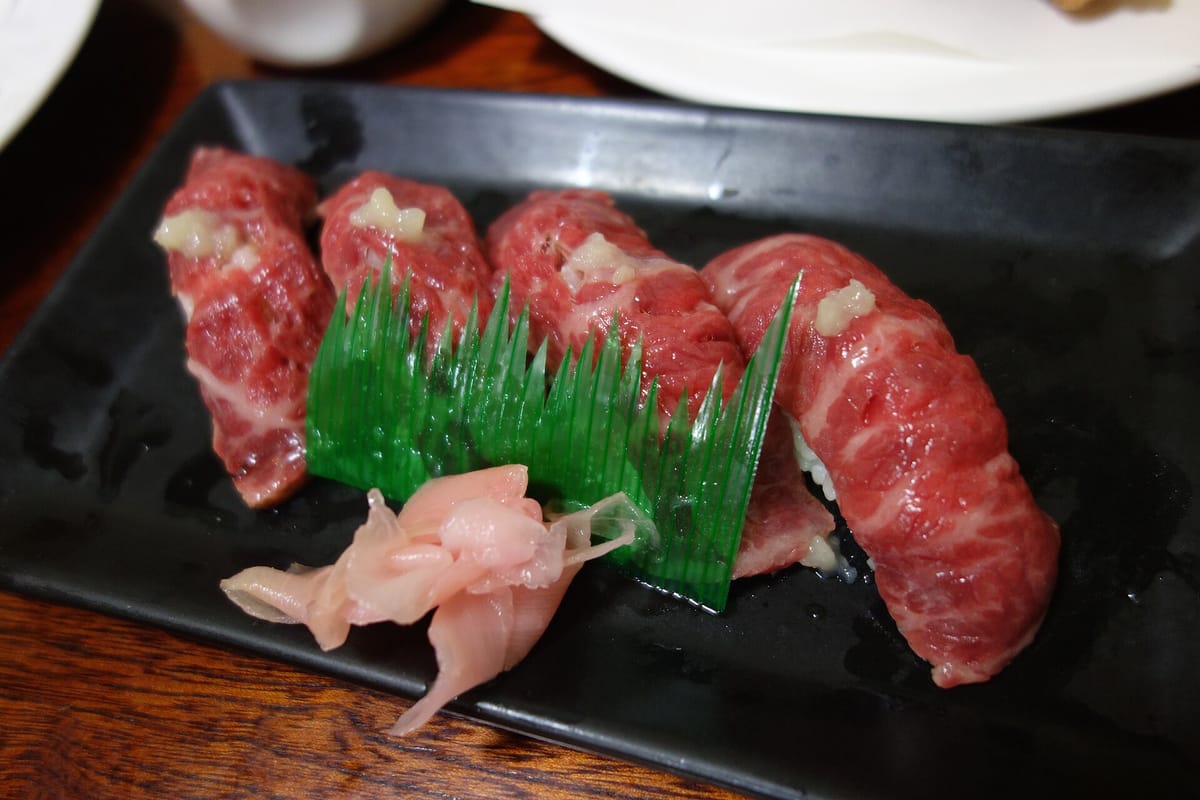
On menus, look for Ishigaki-gyū, Ishigaki beef, and Yaeyama soba, the local noodle soup with thin round noodles. Island fish and pork dishes are written much as in Naha.
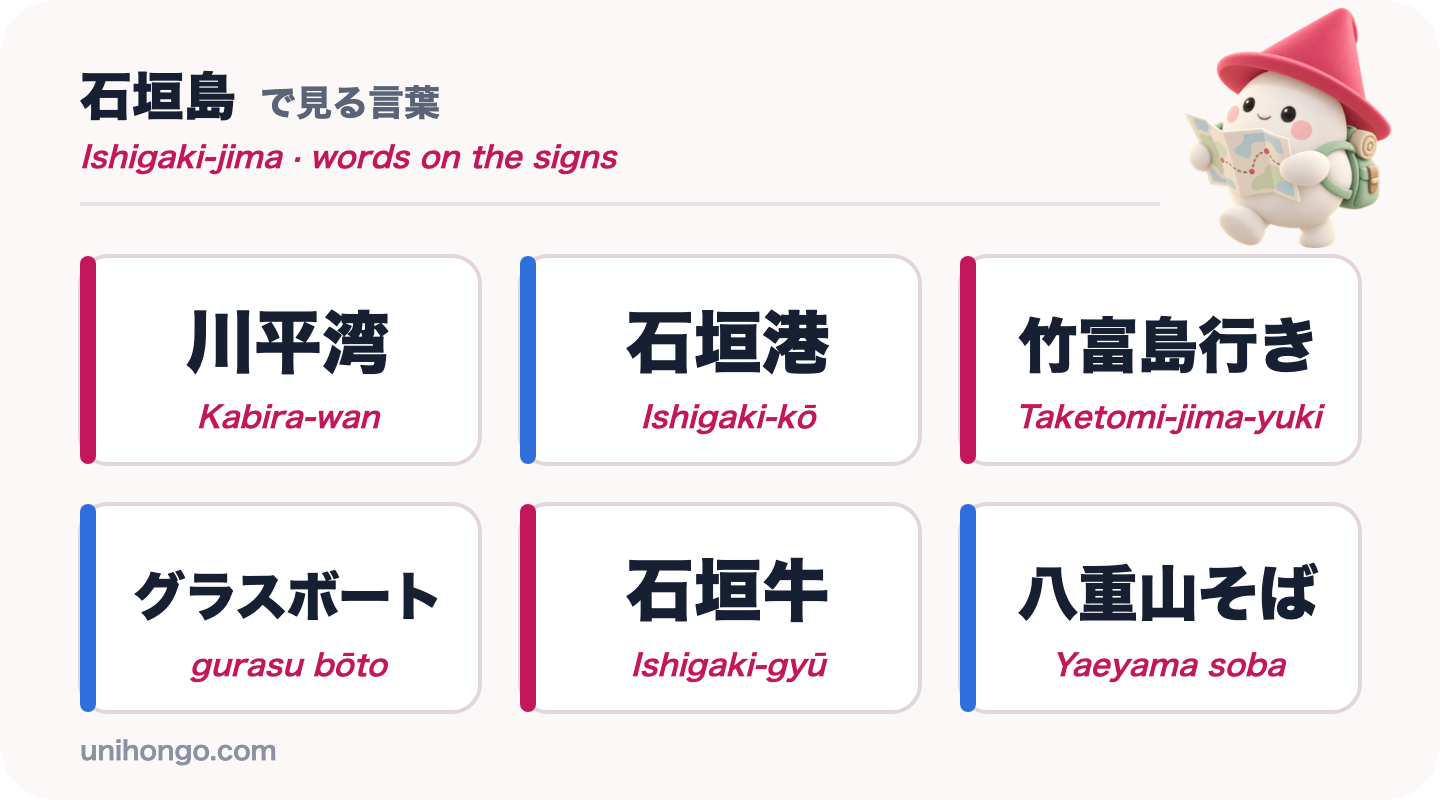
| Word | Reading | Meaning |
|---|---|---|
| 川平湾 | Kabira-wan | Kabira Bay |
| 石垣港 | Ishigaki-kō | Ishigaki Port |
| 竹富島行き | Taketomi-jima-yuki | Bound for Taketomi Island |
| グラスボート | gurasu bōto | Glass-bottom boat |
| 石垣牛 | Ishigaki-gyū | Ishigaki beef |
| 八重山そば | Yaeyama soba | Yaeyama-style noodle soup |
| 離島ターミナル | ritō tāminaru | The remote islands ferry terminal |
| 遊泳禁止 | yūei kinshi | No swimming |
| 欠航 | kekkō | Sailing cancelled |
Japanese for boat tours and island food
Most of what you book on Ishigaki is a boat: a glass-bottom boat in Kabira Bay, a snorkelling or diving trip to the reef, or a ferry to another island. The glass-bottom boats in Kabira Bay leave from the beach throughout the day, and you buy tickets at the counters nearby; dive and snorkel tours are usually booked the day before.
In the evening, the city has plenty of izakaya and yakiniku restaurants serving Ishigaki beef, along with Yaeyama soba and island fish. Small places are friendly and happy to recommend dishes.
| Japanese | Romaji | Meaning |
|---|---|---|
| グラスボートは何分くらいですか。 | Gurasu bōto wa nanpun kurai desu ka. | About how many minutes is the glass-bottom boat trip? |
| マンタを見るツアーはありますか。 | Manta o miru tsuā wa arimasu ka. | Is there a tour to see manta rays? |
| 初心者でも大丈夫ですか。 | Shoshinsha demo daijōbu desu ka. | Is it all right for beginners? |
| 石垣牛のおすすめはどれですか。 | Ishigaki-gyū no osusume wa dore desu ka. | Which Ishigaki beef dish do you recommend? |
| 八重山そばを一つお願いします。 | Yaeyama soba o hitotsu onegai shimasu. | One Yaeyama soba, please. |
| 予約なしで入れますか。 | Yoyaku nashi de hairemasu ka. | Can we get in without a reservation? |
Island customs, safety and practical tips
Ishigaki is easy-going, but the sea, the sun and the typhoon season deserve respect. A few habits also make you a welcome visitor in the smaller communities.
| Japanese | Romaji | Meaning |
|---|---|---|
| おーりとーり | Ōri tōri | Welcome (Yaeyama language; standard Japanese: yōkoso) |
| めんそーれ | Mensōre | Welcome (Uchināguchi, the language of Okinawa Island; for comparison) |
- Swim only where it is allowed, ideally at beaches with lifeguards, and never in Kabira Bay.
- Do not touch or stand on coral, and wear a rash guard against the strong sun.
- Typhoons can cancel flights and ferries from summer to autumn; build a spare day into your plans.
- Book popular tours and rental cars early in holiday seasons, when the island fills up.
- Drive carefully on the coast road, where wildlife and slow farm vehicles are common.
- On a night stargazing tour, keep lights off and follow the guide's instructions so everyone's eyes adjust.
Practise the Kabira Bay conversation before you go
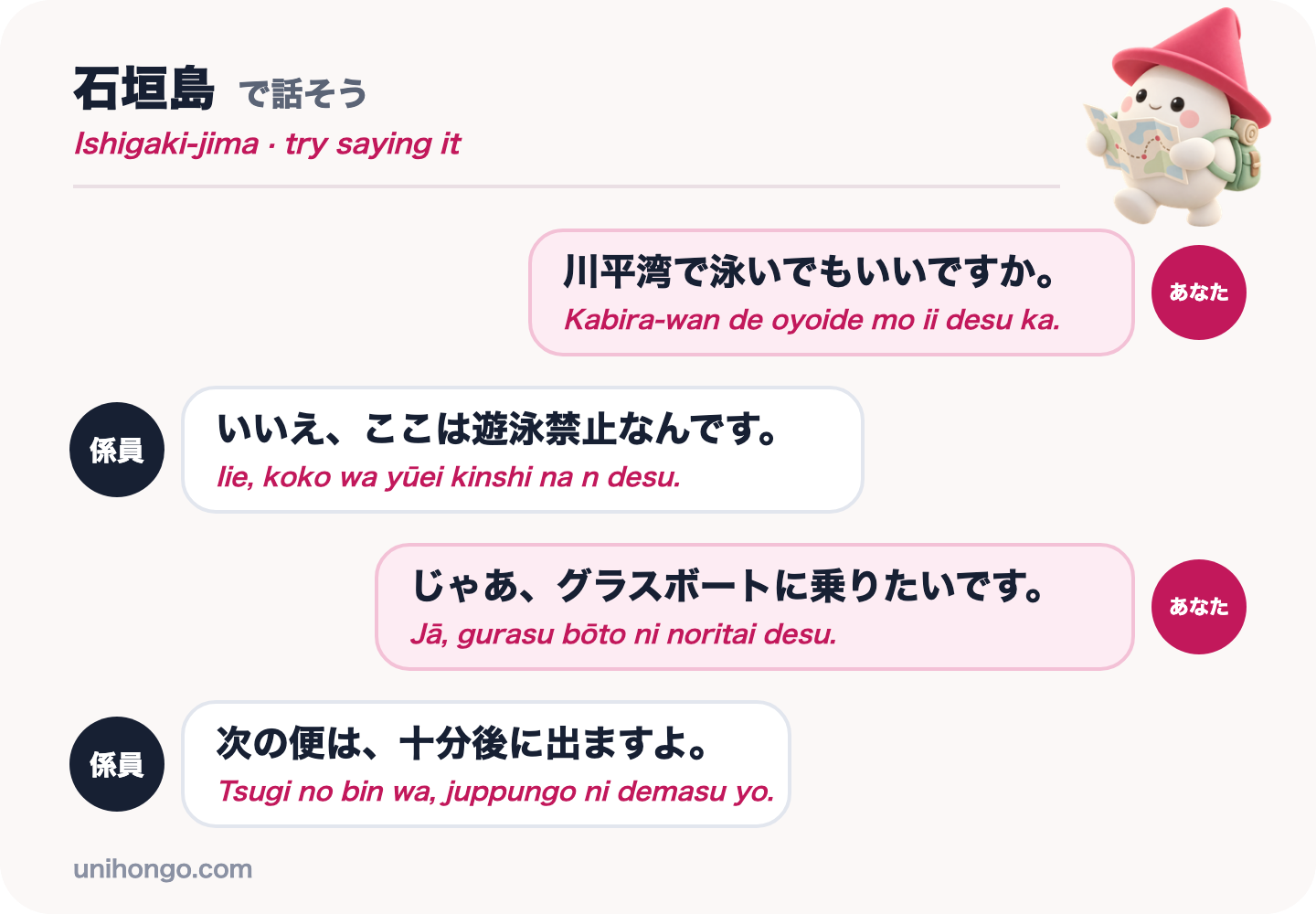
Many visitors arrive at Kabira Bay with a swimsuit, which is exactly the situation in this dialogue. Practise the four lines below until you can say them without reading, and listen for yūei kinshi, no swimming, and the number of minutes in the reply.
Then practise with someone who answers back. In Unihongo, choose the Sightseeing topic and ask your AI Sensei to play the boat staff at Kabira Bay, or try the Directions topic to ask the way to the ferry terminal. Saying the lines once before you arrive is what makes them come out on the beach.
| Japanese | Romaji | Meaning |
|---|---|---|
| 川平湾で泳いでもいいですか。 | Kabira-wan de oyoide mo ii desu ka. | May I swim in Kabira Bay? |
| いいえ、ここは遊泳禁止なんです。 | Iie, koko wa yūei kinshi na n desu. | No, swimming is not allowed here. |
| じゃあ、グラスボートに乗りたいです。 | Jā, gurasu bōto ni noritai desu. | In that case, I would like to ride the glass-bottom boat. |
| 次の便は、十分後に出ますよ。 | Tsugi no bin wa, juppungo ni demasu yo. | The next one leaves in ten minutes. |
Official information
Ishigaki City's official tourism site, OORITOORI, and the official Okinawa tourism site cover sights, transport and events. Check ferry and flight times, and any typhoon notices, before you travel.