

Reading the showtime board
Cinemas show a schedule, jōei sukejūru, on screens in the lobby and on their websites. Each film is listed with its screen number and start times, and next to each time you often see a small mark showing how many seats are left. A circle usually means plenty, a triangle means few, and a cross or the word manseki means sold out.
Formats matter too. The same film may be shown in 2D and 3D, in a premium large-screen format, or in a motion-seat format with moving seats and effects, and these usually cost extra. The start time listed is normally when trailers and announcements begin, not the film itself, so you have a few minutes of slack.
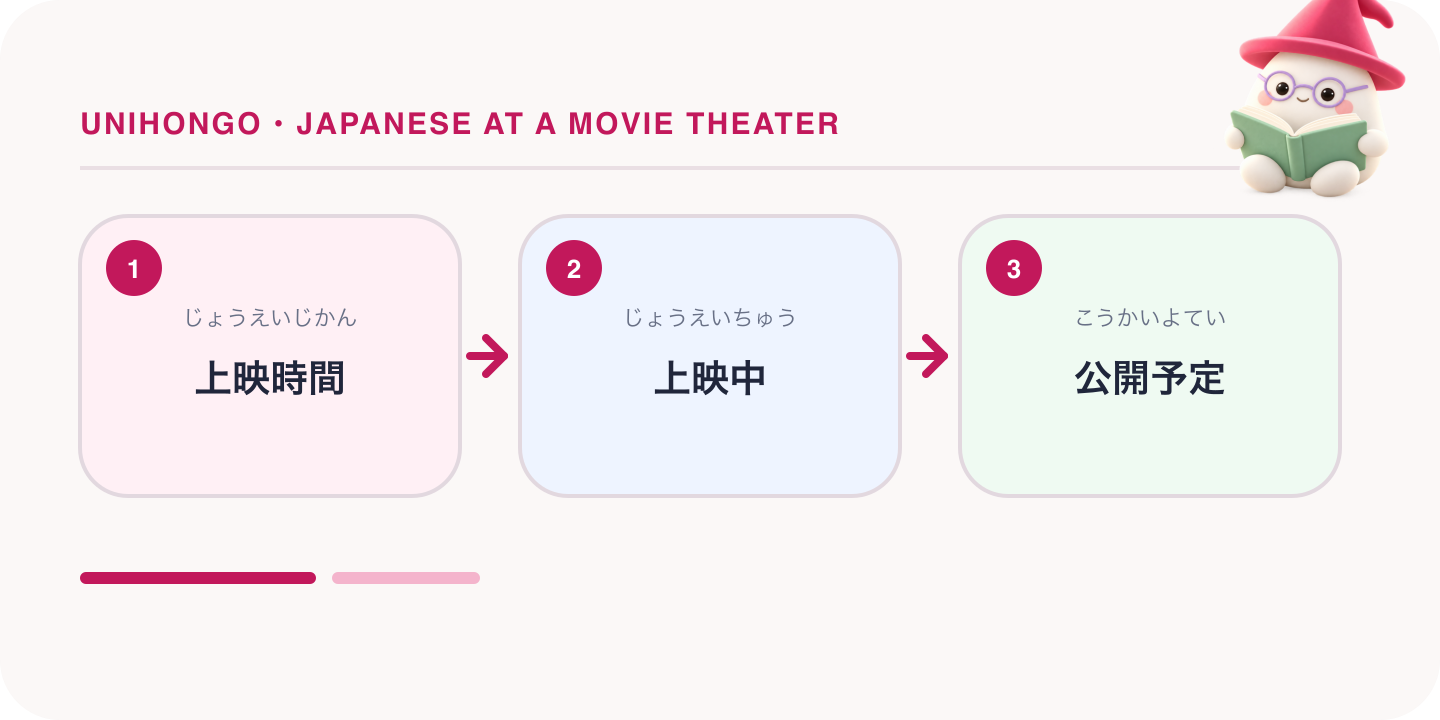
| Japanese | Reading | Meaning |
|---|---|---|
| 上映時間 | jōei jikan | Screening time |
| 上映中 | jōeichū | Now showing |
| 公開予定 | kōkai yotei | Coming soon |
| 字幕版 | jimakuban | Subtitled version |
| 吹替版 | fukikaeban | Dubbed version |
| 満席 | manseki | Sold out, all seats taken |
| 残りわずか | nokori wazuka | Only a few seats left |
| 終映 | shūei | End time of the screening |
Buying tickets at the counter
At the ticket counter, chiketto kauntā, you say the film title, the time and the number of people. Staff then turn a screen towards you showing the seat map, zasekihyō, and ask you to choose. Point at the seats or say the row letter and number, such as ei no jūgo, row A seat 15.
Ticket categories are listed by type of customer: ippan for general adults, and separate prices for students, children and seniors where offered. Many cinemas also have discount days or times, but these vary by chain and location, so read the price board or the website. You may be asked to show ID for student or senior prices.
| Japanese | Romaji | Meaning |
|---|---|---|
| 7時の回を大人二枚お願いします。 | Shichiji no kai o otona nimai onegai shimasu. | Two adults for the 7 o'clock showing, please. |
| 字幕版はありますか。 | Jimakuban wa arimasu ka. | Is there a subtitled version? |
| 吹替版じゃなくて字幕版でお願いします。 | Fukikaeban ja nakute jimakuban de onegai shimasu. | The subtitled one, not the dubbed one, please. |
| お席はどちらになさいますか。 | Oseki wa dochira ni nasaimasu ka. | Which seats would you like? |
| 真ん中あたりがいいです。 | Mannaka atari ga ii desu. | Somewhere around the middle, please. |
| 二人並んで座れる席はありますか。 | Futari narande suwareru seki wa arimasu ka. | Are there two seats together? |
| 通路側の席をお願いします。 | Tsūrogawa no seki o onegai shimasu. | An aisle seat, please. |
Using the ticket machine
Most multiplexes have touch-screen ticket machines, kenbaiki or jidō hakkenki, and they are often quicker than the counter. Some offer an English option, but many do not, and the Japanese screens follow the same sequence: choose the film, choose the time, choose ticket types and numbers, pick seats on a map and pay.
If you booked online, the same machines usually print your tickets from a booking number or QR code, or you may be able to enter with the code on your phone. The words below cover almost every button you will need.
| Button | Reading | Meaning |
|---|---|---|
| 作品を選択 | sakuhin o sentaku | Choose a film |
| 上映回を選択 | jōeikai o sentaku | Choose a screening |
| 券種 | kenshu | Ticket type |
| 一般 | ippan | General adult |
| 座席指定 | zaseki shitei | Seat selection |
| 発券 | hakken | Print tickets |
| 予約済みの方 | yoyakuzumi no kata | For customers with a booking |
| 購入番号 | kōnyū bangō | Purchase or booking number |
| 確定 | kakutei | Confirm |
| 戻る | modoru | Back |
Popcorn and the concession stand
The concession stand is often called the baiten or simply the food counter. Popcorn usually comes in more than one flavour, commonly salt, shio, and caramel, kyarameru, and some cinemas offer a half-and-half option, hāfu ando hāfu. Sizes are given as S, M and L, read esu, emu and eru, and sets with a drink are called setto or konbo.
Staff often ask whether you want your drink with ice, and whether the order is for eating in the theatre. You then carry your tray into the screen, where seats have cup holders.
| Japanese | Romaji | Meaning |
|---|---|---|
| ポップコーンのMサイズ、塩でお願いします。 | Poppukōn no emu saizu, shio de onegai shimasu. | A medium popcorn, salted, please. |
| ハーフアンドハーフにできますか。 | Hāfu ando hāfu ni dekimasu ka. | Can I have half and half? |
| コーラのセットをお願いします。 | Kōra no setto o onegai shimasu. | The set with a cola, please. |
| 氷少なめでお願いします。 | Kōri sukuname de onegai shimasu. | Light on the ice, please. |
| お飲み物は何になさいますか。 | Onomimono wa nani ni nasaimasu ka. | What would you like to drink? |
| 持ち込みはできますか。 | Mochikomi wa dekimasu ka. | Can I bring in outside food? |
Entering the screen
Entry, nyūjō, usually starts a short time before the screening. Staff at the entrance check your ticket or the code on your phone and tell you the screen number. Screens are called by number, such as sanban sukurīn, screen 3, or sometimes shiatā.
Your seat is shown on the ticket as a row letter and a seat number. If someone is already in your seat, show them the ticket politely; it is usually an honest mistake.
| Japanese | Romaji | Meaning |
|---|---|---|
| ただいまより入場を開始いたします。 | Tadaima yori nyūjō o kaishi itashimasu. | Entry now begins. |
| 3番スクリーンは右手奥です。 | Sanban sukurīn wa migite oku desu. | Screen 3 is at the back on the right. |
| すみません、そこは私の席だと思うんですが。 | Sumimasen, soko wa watashi no seki da to omou n desu ga. | Excuse me, I think that's my seat. |
| E列の12番はどこですか。 | Ī retsu no jūniban wa doko desu ka. | Where is row E, seat 12? |
| 前を失礼します。 | Mae o shitsurei shimasu. | Excuse me for passing in front of you. |
Manners and the pre-film announcements
Before the film, cinemas show manners reminders and an anti-piracy clip, and they cover the same points almost everywhere: turn off your phone, do not talk, do not kick the seat in front, do not record the screen, and take your rubbish with you. Recording in cinemas is illegal in Japan, and staff take it seriously.
Japanese audiences are generally quiet. Laughing at a comedy is normal, but commentary and checking your phone are frowned on, since even a dim screen is noticeable in the dark. If you arrive late, move to your seat quickly and keep low.
| Sign or announcement | Reading | Meaning |
|---|---|---|
| 上映中の撮影・録音は禁止です | jōeichū no satsuei rokuon wa kinshi desu | Filming and recording are prohibited |
| 携帯電話の電源はお切りください | keitai denwa no dengen wa okiri kudasai | Please turn off your mobile phone |
| 前の座席を蹴らないでください | mae no zaseki o keranaide kudasai | Please do not kick the seat in front |
| ゴミはお持ち帰りいただくか出口のゴミ箱へ | gomi wa omochikaeri itadaku ka deguchi no gomibako e | Take rubbish home or use the bins by the exit |
- Switch your phone off or to silent, and keep the screen dark
- Do not talk during the film
- Do not kick or push the seat in front
- Do not film or photograph the screen
- Remove tall hats and keep your head down if you lean forward
- Take your cups and rubbish out with you after the film
Credits and leaving the screen
The end credits are the endo rōru, and in Japan many people stay seated until they have finished and the lights come on. Some viewers see it as respect for everyone who worked on the film; others simply want to catch any scene after the credits. It is not a rule, and some people do leave, but they tend to do so quietly and bent low.
After the film, take your tray and rubbish to the bins or staff at the exit. Staff often stand at the door and say arigatō gozaimashita as you leave.
| Japanese | Romaji | Meaning |
|---|---|---|
| エンドロール | endo rōru | End credits |
| エンドロールの後にもシーンがあります。 | Endo rōru no ato ni mo shīn ga arimasu. | There's a scene after the credits too. |
| 出口はこちらです。 | Deguchi wa kochira desu. | The exit is this way. |
| 本日はご来場ありがとうございました。 | Honjitsu wa goraijō arigatō gozaimashita. | Thank you for coming today. |
When something goes wrong
The most common problems are booking the wrong version or time, turning up late and losing a ticket. Whether you can change or refund a ticket depends on the cinema, and many do not refund tickets once bought, so it is best to ask at the counter as early as possible and explain simply.
If there is a problem during the film, such as sound issues or a disruptive neighbour, step out and speak to the staff rather than confronting anyone in the dark.
| Japanese | Romaji | Meaning |
|---|---|---|
| 間違えて吹替版を買ってしまいました。 | Machigaete fukikaeban o katte shimaimashita. | I bought the dubbed version by mistake. |
| 別の回に変更できますか。 | Betsu no kai ni henkō dekimasu ka. | Can I change to another showing? |
| 払い戻しはできますか。 | Haraimodoshi wa dekimasu ka. | Can I get a refund? |
| チケットをなくしてしまいました。 | Chiketto o nakushite shimaimashita. | I've lost my ticket. |
| 音が聞こえにくいんですが。 | Oto ga kikoenikui n desu ga. | The sound is hard to hear. |
| 遅れてしまったんですが、まだ入れますか。 | Okurete shimatta n desu ga, mada hairemasu ka. | I'm late. Can I still go in? |