

Why the Nebuta Matsuri is worth planning a trip around
Nebuta are lantern floats, and in Aomori they are huge: roughly nine metres wide, seven deep and five tall, pushed and turned by teams of pullers. Each shows a scene from history, legend or kabuki, full of warriors, gods and monsters caught mid-battle, painted onto Japanese paper stretched over a frame of wire and wood and lit from within. The designers, the nebutashi, are masters of a craft that takes most of the year, and the floats compete for prizes.
The festival grew out of a local form of Tanabata, the summer star festival, mixed with Tsugaru-region traditions of carrying lanterns through the streets. Today it draws huge crowds, but it has kept one rule that makes it unusual: the dancers are not a closed troupe. Anyone who puts on the haneto costume can join the dance.
For a learner, it is a festival of sound as much as sight. You will hear the drums, the flutes and the hand cymbals, the call of the float leaders, and the crowd's chant, and you can shout it back. Few places make it so easy to join in with Japanese on the spot.
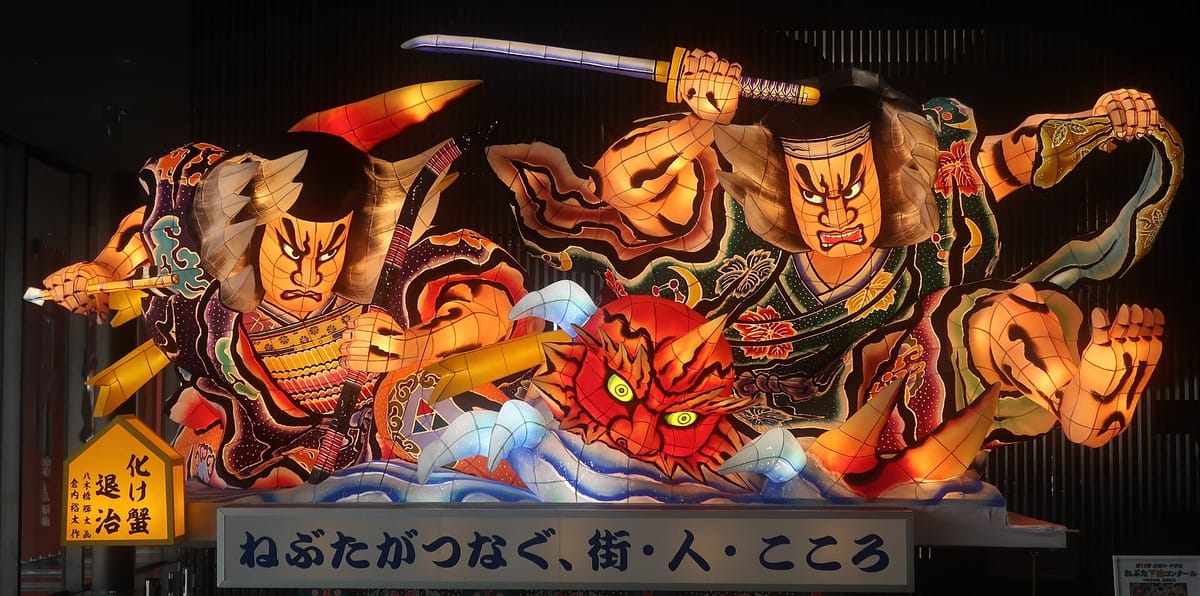
Getting there: Shin-Aomori, Aomori Station and the parade route
The Tōhoku Shinkansen ends at Shin-Aomori Station, on the edge of the city. From there, a short ride on the JR Ōu Line brings you to Aomori Station, in the city centre by the port; a taxi takes around twenty minutes. The parade route is a loop of about three kilometres through downtown streets a few minutes' walk from Aomori Station, so once you are in the centre you do not need transport.
Hotels in Aomori fill up long before festival week, and prices rise. Book as early as you can, or stay in a nearby city and come in by train, checking the last train back before the parade starts. Roads along the route close to traffic during the parade, and buses divert, so walking is the easiest way around in the evenings.
| Japanese | Romaji | Meaning |
|---|---|---|
| 青森駅に行く電車は何番線ですか。 | Aomori-eki ni iku densha wa nanbansen desu ka. | Which platform is the train to Aomori Station? |
| ねぶたの運行は何時からですか。 | Nebuta no unkō wa nanji kara desu ka. | What time does the nebuta parade start? |
| 運行コースはどの辺ですか。 | Unkō kōsu wa dono hen desu ka. | Whereabouts is the parade route? |
| この辺で見てもいいですか。 | Kono hen de mite mo ii desu ka. | Is it all right to watch from around here? |
| 最終電車は何時ですか。 | Saishū densha wa nanji desu ka. | What time is the last train? |
The six days, the floats and the Wa Rasse museum
The festival builds over its six days. The first two evenings are lighter, with children's nebuta and part of the large floats. From 4 to 6 August the full line-up of large floats parades each evening, with drummers, flute players and crowds of haneto around each one, and this is when the atmosphere is at its peak. On 7 August the floats parade in daylight, and in the evening some sail on boats in the harbour before a fireworks display over Aomori Bay.
If you cannot come in August, or want to see the floats up close before the parade, visit the Nebuta Museum Wa Rasse on the waterfront beside Aomori Station. It displays prize-winning floats in a dark hall, lit as they are on the night, and explains how they are designed and built.
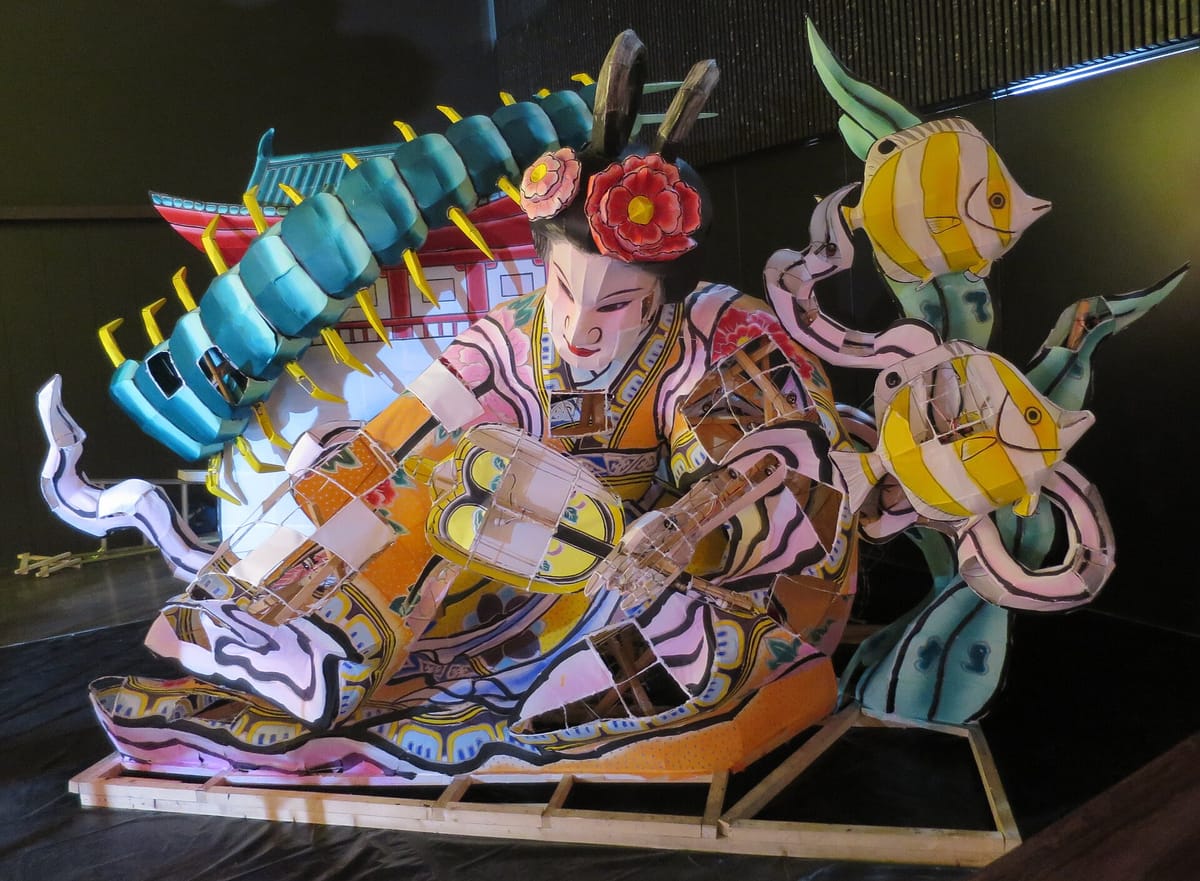
- 1 August: the eve event before the parades begin.
- 2 and 3 August: evening parades with children's nebuta and part of the large floats.
- 4 to 6 August: evening parades with all the large floats, the busiest nights.
- 7 August: a daytime parade, then floats on the water and fireworks at Aomori Port in the evening.
- All year: the Nebuta Museum Wa Rasse by Aomori Station, with floats on display.
Words on the signs at the Nebuta Matsuri
The festival's own vocabulary is short and memorable. ねぶた is usually written in hiragana. The dancers are 跳人, haneto: 跳 is to jump and 人 is person, though here 人 is read to rather than hito. The chant is written in katakana, often as ラッセラー.
Around the route you will also see practical signs: paid seating, road closures and costume rental. The table covers the words that matter in festival week.
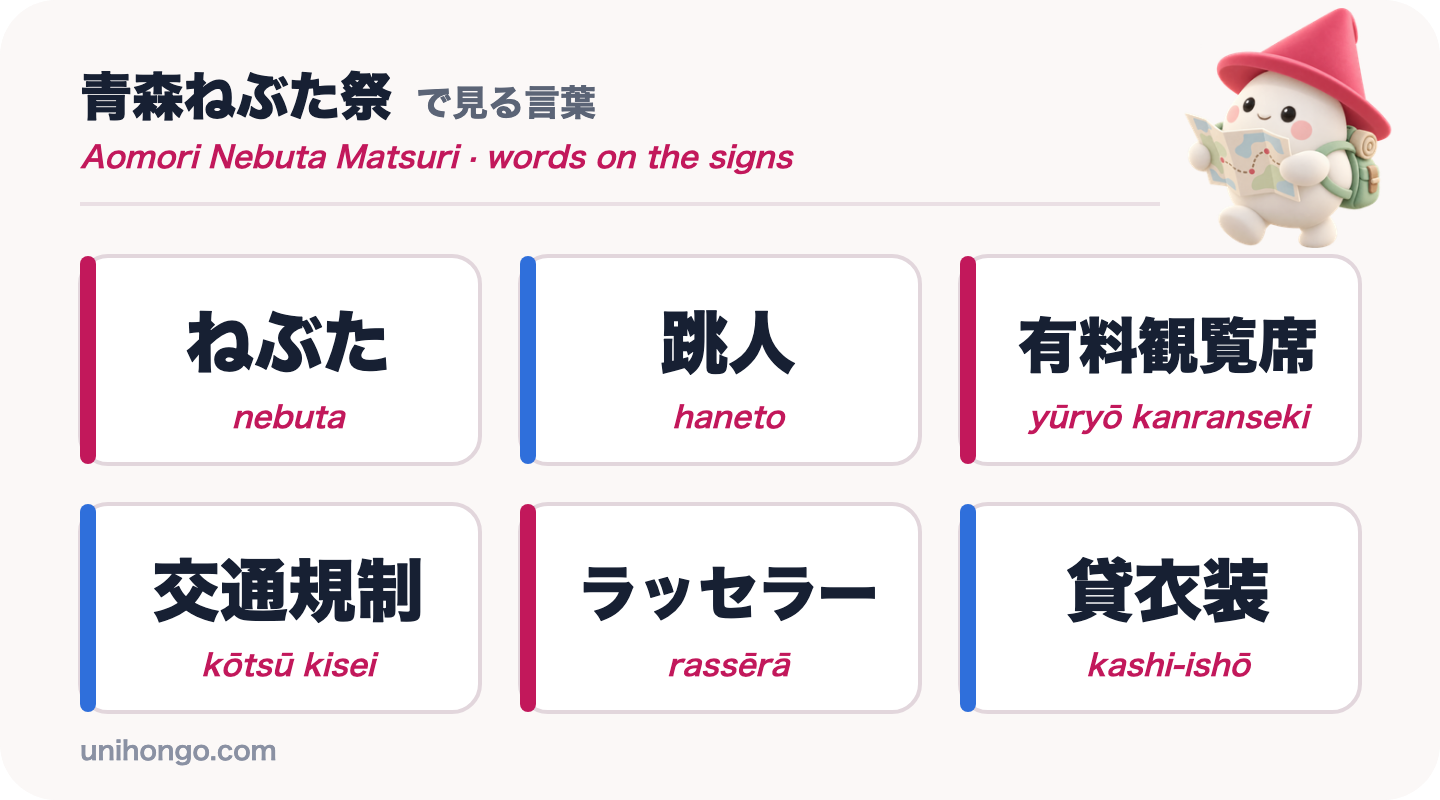
| Word | Reading | Meaning |
|---|---|---|
| ねぶた | nebuta | The giant lantern floats |
| 跳人 | haneto | The jumping dancers |
| ラッセラー | rassērā | The dancers' chant |
| 有料観覧席 | yūryō kanranseki | Paid reserved seating |
| 交通規制 | kōtsū kisei | Traffic restrictions, road closures |
| 貸衣装 | kashi-ishō | Costume rental |
| 運行 | unkō | The parade of the floats |
| 囃子 | hayashi | Festival music of drums, flutes and cymbals |
| 花笠 | hanagasa | The flowered hat of the haneto costume |
Japanese for renting a costume and joining the haneto
Joining the dance is the highlight of a Nebuta trip. You need the full costume: the flowered hanagasa hat, a haneto yukata, a coloured shoulder sash, a waist cord, tabi socks and zōri sandals. Department stores and other shops in Aomori sell sets, and some rent them and help you dress. In festival week, arrange a rental early.
On the night, go to the starting area of the parade shortly before it begins and fall in behind a float's group. The step is a light hop from one foot to the other, repeated for the whole route, with the chant shouted in time with the drums. Follow the dancers around you; nobody expects perfection, only energy.
| Japanese | Romaji | Meaning |
|---|---|---|
| 跳人の衣装を借りたいんですが。 | Haneto no ishō o karitai n desu ga. | I'd like to rent a haneto costume. |
| 一式でお願いします。 | Isshiki de onegai shimasu. | The full set, please. |
| 明日の分を予約できますか。 | Ashita no bun o yoyaku dekimasu ka. | Can I reserve one for tomorrow? |
| 着付けを手伝っていただけますか。 | Kitsuke o tetsudatte itadakemasu ka. | Could you help me put it on? |
| どこから跳人に入れますか。 | Doko kara haneto ni hairemasu ka. | Where can I join the dancers? |
| ラッセラー、ラッセラー! | Rassērā, rassērā! | Rassera, rassera! (the dancers' chant) |
Festival manners, heat and crowds
The Nebuta Matsuri is joyful and loud, but it is also crowded, hot and full of families, and a few habits keep it safe and fun.
- If you dance, wear the complete costume. Joining in ordinary clothes is not allowed.
- Stay behind the rope or kerb when watching; the floats swing and turn suddenly, and the pullers need space.
- If you plan to dance, go easy on the beer beforehand: the route is long, the step is tiring and you will be dancing among children and families.
- Carry water and a small towel. Early August evenings in Aomori are warm, and the dance is hard work.
- Take your rubbish with you rather than leaving it on the route.
- The festival runs in light rain; floats are covered with plastic sheeting. Bring a rain poncho rather than an umbrella, which blocks others' view.
Practise the costume shop before you go
The one conversation that makes the difference between watching and dancing happens at the costume shop. Practise the four lines below until you can say them without reading, and listen for the shop's questions: which night, kon'ya, tonight, and your size, saizu.
Then practise with a partner who answers back. In Unihongo, ask your AI Sensei to play the costume rental shop in Aomori, or try the Find a Friend at a Festival mission to rehearse meeting up in a crowd. Speaking the lines once is what makes them come out on the night.
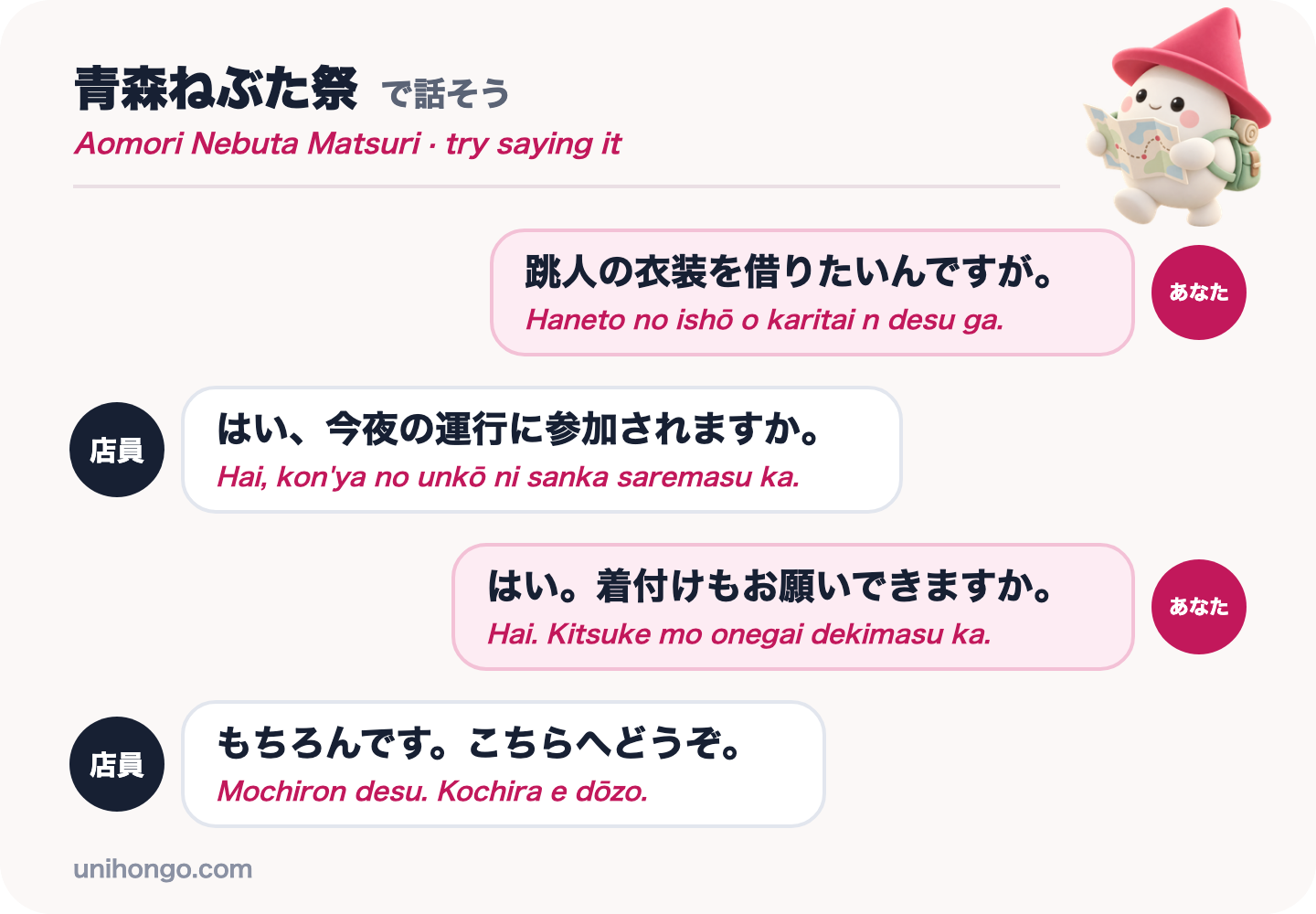
| Japanese | Romaji | Meaning |
|---|---|---|
| 跳人の衣装を借りたいんですが。 | Haneto no ishō o karitai n desu ga. | I'd like to rent a haneto costume. |
| はい、今夜の運行に参加されますか。 | Hai, kon'ya no unkō ni sanka saremasu ka. | Certainly. Will you be joining tonight's parade? |
| はい。着付けもお願いできますか。 | Hai. Kitsuke mo onegai dekimasu ka. | Yes. Could you also help me put it on? |
| もちろんです。こちらへどうぞ。 | Mochiron desu. Kochira e dōzo. | Of course. This way, please. |
Official information
The festival's official site publishes each year's schedule, parade times, seating information and rules for haneto, and the museum's site has its hours and exhibits. Check both before you book.