

Why Obuse is worth a detour from Nagano
Obuse is one of Nagano's smallest towns, and one of its most rewarding. In the late Edo period it was a busy market town, and its wealthy families supported artists and scholars. The most generous was Takai Kōzan, a merchant who became the patron of Katsushika Hokusai, the artist behind the Great Wave. Hokusai first came to Obuse around 1842, at the age of eighty-three, and returned several times, painting ceilings for the town's festival floats and for a local temple.
Today the town centre has been restored with care: old storehouses turned into shops and cafés, gardens that residents open to visitors, and lanes paved with blocks of chestnut wood that are soft and quiet underfoot. It is compact enough to walk in a morning and pleasant enough to linger all day.
For a learner, Obuse is ideal. Almost every shop is small and family-run, the menus are short and illustrated, and staff are used to visitors who are trying their Japanese. You will order, ask for recommendations and say thank you a dozen times in a day.
Getting there: Nagaden from Nagano Station
Obuse is on the Nagano Dentetsu line, a private railway known as Nagaden, whose Nagano terminal is underground just beside the Zenkōji exit of JR Nagano Station. Limited express trains reach Obuse in around twenty-five minutes and need a small extra express fee; local trains take a little longer. The same line continues to Yudanaka, for the snow monkeys, so Obuse makes an easy stop on that trip.
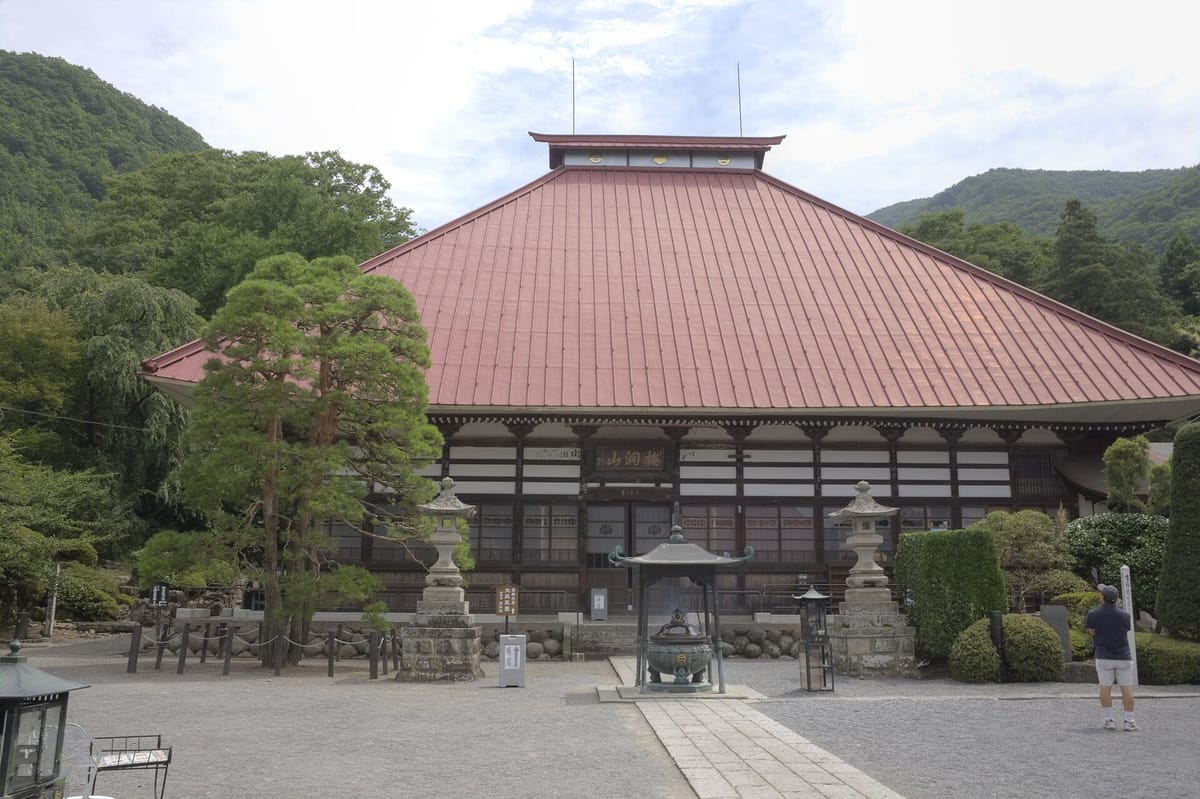
From Obuse Station, the town centre is about ten minutes on foot. The tourism association, based at the station, runs bicycle rentals and has maps. Ganshōin, on the eastern edge of town, is best reached by bicycle.
| Japanese | Romaji | Meaning |
|---|---|---|
| 長野電鉄の乗り場はどこですか。 | Nagano Dentetsu no noriba wa doko desu ka. | Where is the Nagano Dentetsu platform? |
| 小布施まで一枚お願いします。 | Obuse made ichimai onegai shimasu. | One ticket to Obuse, please. |
| この電車は小布施に止まりますか。 | Kono densha wa Obuse ni tomarimasu ka. | Does this train stop at Obuse? |
| 特急券は必要ですか。 | Tokkyūken wa hitsuyō desu ka. | Do I need a limited express ticket? |
| 自転車を借りたいんですが。 | Jitensha o karitai n desu ga. | I would like to rent a bicycle. |
| 岩松院まで自転車で何分くらいですか。 | Ganshōin made jitensha de nanpun kurai desu ka. | About how many minutes to Ganshōin by bike? |
Hokusai, Ganshōin and chestnut lanes: what you will see
Start at Hokusai-kan, the museum at the centre of town. Its highlights are two festival floats with ceilings Hokusai painted in 1844 and 1845: a dragon and a phoenix on one, and a pair of swirling waves, the male and female waves, on the other. The waves are one of the last and wildest versions of the theme that made him famous. The museum also shows paintings from his late years and changing exhibitions of prints.
Then walk through the lanes to the Takai Kōzan memorial museum, the house where the patron received Hokusai, and on through the chestnut-wood paths between the old storehouses, which the town calls kuri no komichi. Ganshōin, the temple with Hokusai's phoenix, is on the eastern edge of town, about a ten- to fifteen-minute cycle away.
- Hokusai-kan: the museum of Hokusai's Obuse works, including two festival floats.
- Takai Kōzan Kinenkan: the home of Hokusai's patron, with his own paintings and writings.
- Kuri no komichi: narrow lanes paved with chestnut-wood blocks between old buildings.
- Ganshōin: the temple with the great phoenix ceiling, an Issa haiku pond and a warlord's mausoleum.
- Chestnut confectioners: long-established shops in the town centre with cafés and restaurants attached.
- Sake breweries and apple orchards, for tastings and seasonal fruit.
Words on the signs and menus in Obuse
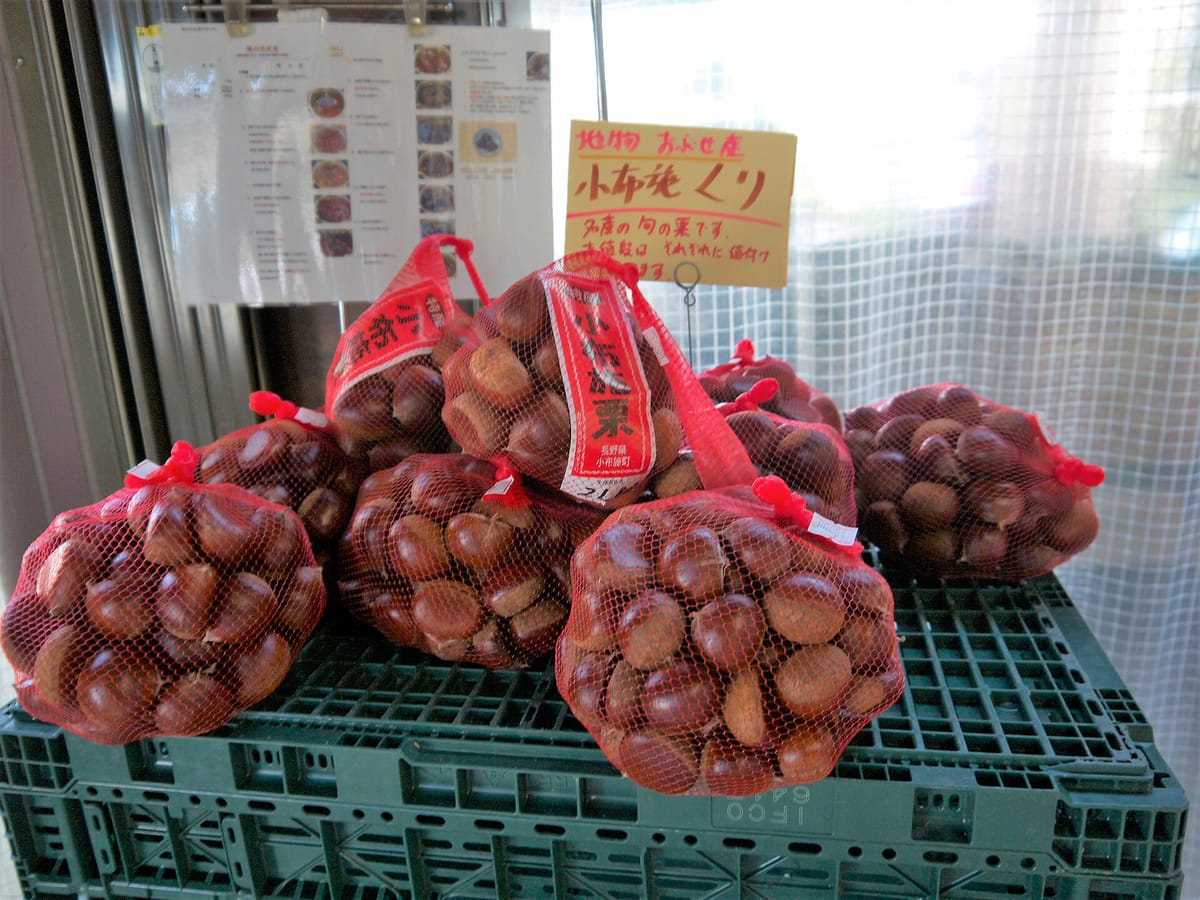
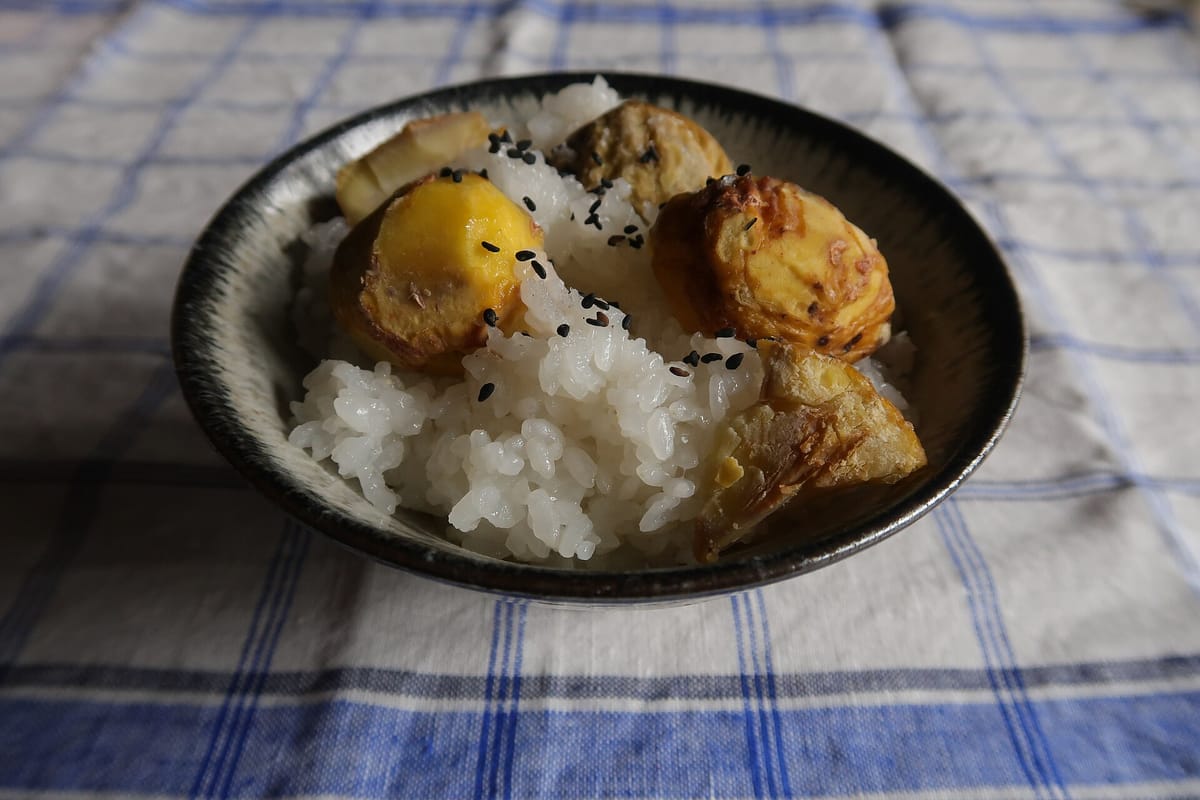
The kanji you will see most in Obuse is 栗, kuri, chestnut. It appears on shop curtains, menus and signs, and in words like 栗菓子, kurigashi, chestnut sweets, where kashi changes to gashi after another word. 栗おこわ, kuri okowa, is on every lunch menu.
For getting around, look for 貸自転車, kashi jitensha, bicycles for rent, and the signposts to 北斎館 and 岩松院. The 館 in Hokusai-kan means hall or building, and appears in the names of museums and libraries across Japan.
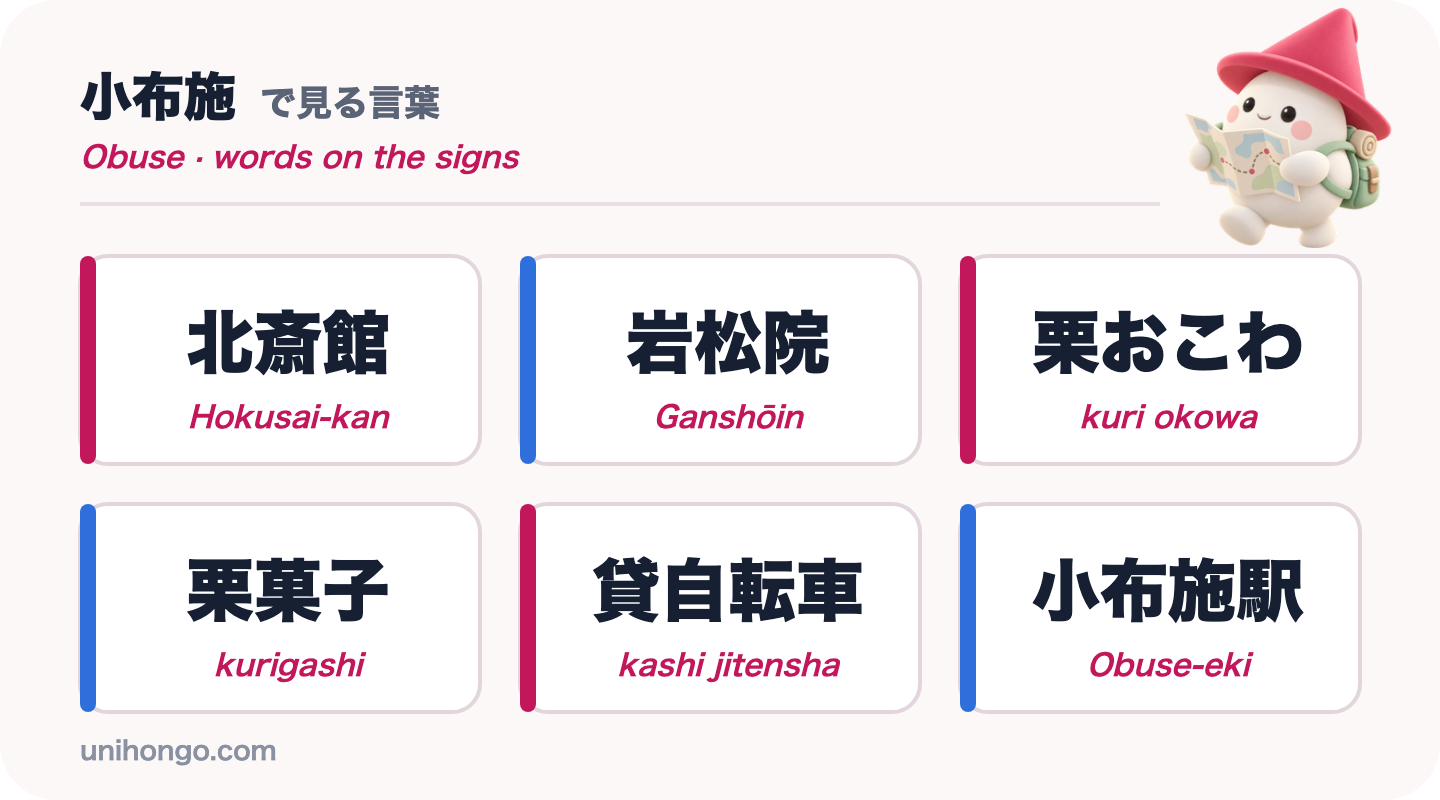
| Word | Reading | Meaning |
|---|---|---|
| 小布施駅 | Obuse-eki | Obuse Station |
| 北斎館 | Hokusai-kan | The Hokusai museum |
| 岩松院 | Ganshōin | The temple with the phoenix ceiling |
| 八方睨み鳳凰図 | happō nirami hōō zu | Phoenix staring in eight directions, the ceiling painting |
| 栗おこわ | kuri okowa | Sticky rice steamed with chestnuts |
| 栗菓子 | kurigashi | Chestnut sweets |
| 栗かのこ | kuri kanoko | Sweet of whole chestnuts in chestnut paste |
| 貸自転車 | kashi jitensha | Bicycles for rent |
| 新栗 | shinguri | New-season chestnuts, in autumn |
Japanese for chestnut rice, sweets and cafés
The chestnut shops in Obuse combine a sweet counter, a café and often a restaurant. At lunchtime, kuri okowa comes as a set with soup and pickles; in the afternoon, people sit down for chestnut sweets and green tea. Many shops ask whether you will eat in or take away, and some have a waiting list at busy times.
Seasonal items are worth asking about. In autumn, sweets made with new-crop chestnuts, shinguri, appear for a limited time, and menus change with the harvest.
| Japanese | Romaji | Meaning |
|---|---|---|
| 栗おこわのセットをお願いします。 | Kuri okowa no setto o onegai shimasu. | The chestnut rice set, please. |
| 店内で食べます。 | Tennai de tabemasu. | I will eat in. |
| 持ち帰りでお願いします。 | Mochikaeri de onegai shimasu. | To take away, please. |
| 季節限定のお菓子はありますか。 | Kisetsu gentei no o-kashi wa arimasu ka. | Do you have any seasonal sweets? |
| 日持ちはどのくらいですか。 | Himochi wa dono kurai desu ka. | How long does it keep? |
| 試食してもいいですか。 | Shishoku shite mo ii desu ka. | May I try a sample? |
| お土産用に箱に入れてもらえますか。 | O-miyage-yō ni hako ni irete moraemasu ka. | Could you box it as a gift? |
Timing and practical tips
Obuse is at its best early in the day, before the tour buses arrive and while the lanes are quiet.
- Arrive by mid-morning, visit Hokusai-kan first, and eat lunch before the chestnut restaurants get busy.
- Rent a bicycle at the station if you want to include Ganshōin and the orchards.
- Autumn chestnut season is the most popular time; expect queues at the best-known shops on weekends.
- Some gardens are private homes opened to visitors; stay on the paths and keep your voice down.
- Combine Obuse with Nagano's Zenkō-ji, or with the snow monkeys at Jigokudani further down the same line.
- Carry some cash for small shops and the temple, even though many places take cards.
Practise ordering before you go
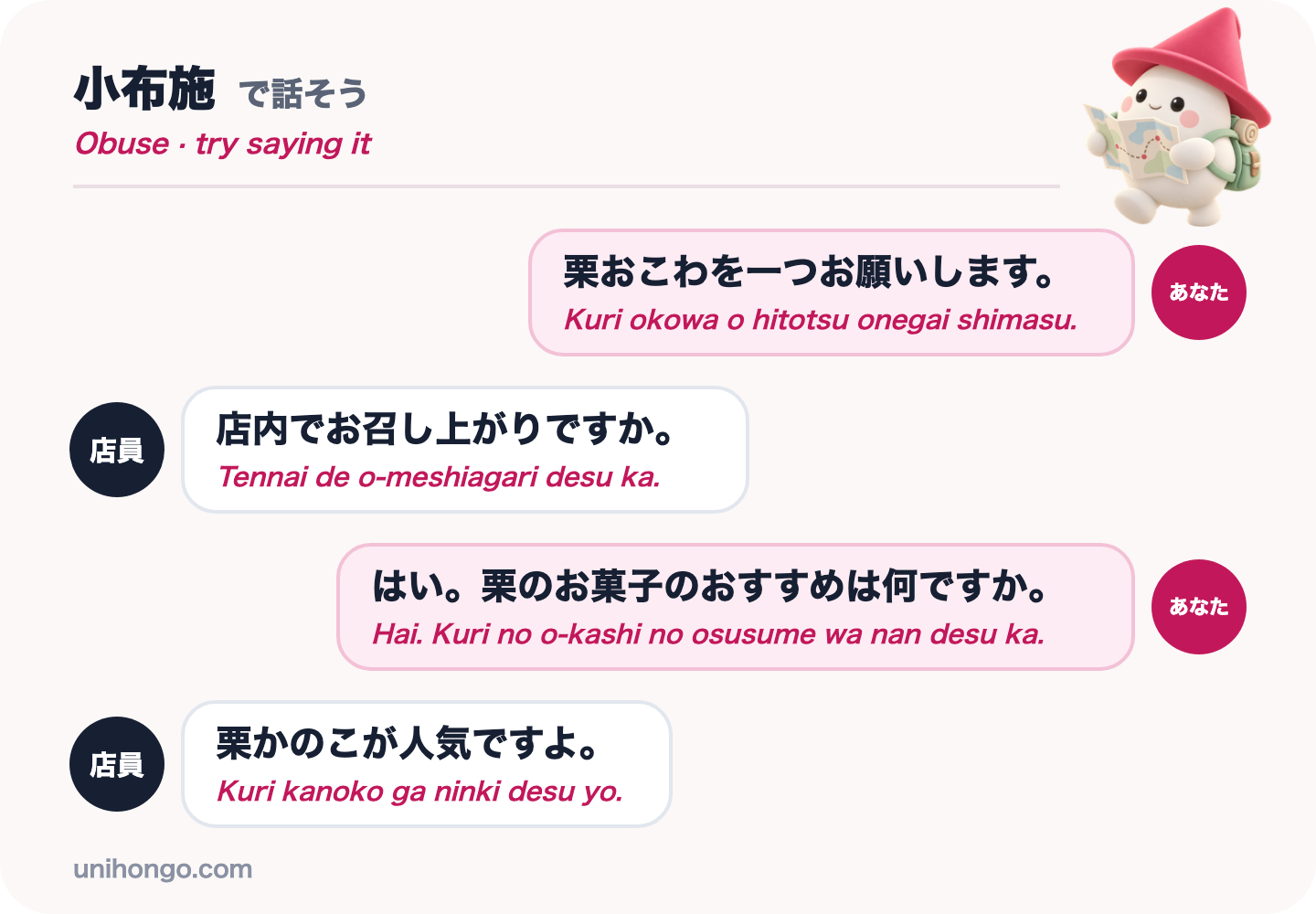
The server's question, tennai de o-meshiagari desu ka, uses the honorific o-meshiagari, eating, and you will hear it at every café and fast food counter in Japan. A simple hai, or mochikaeri de, to take away, is all you need in reply. Practise the four lines below until you can say them without reading.
Then practise with a partner. In Unihongo, choose the Café topic and ask your AI Sensei to play the server at a chestnut shop in Obuse, or run the Order at a Café mission for the full exchange. Saying it once before you go makes the real order feel easy.
| Japanese | Romaji | Meaning |
|---|---|---|
| 栗おこわを一つお願いします。 | Kuri okowa o hitotsu onegai shimasu. | One chestnut rice, please. |
| 店内でお召し上がりですか。 | Tennai de o-meshiagari desu ka. | Will you be eating in? |
| はい。栗のお菓子のおすすめは何ですか。 | Hai. Kuri no o-kashi no osusume wa nan desu ka. | Yes. Which chestnut sweet do you recommend? |
| 栗かのこが人気ですよ。 | Kuri kanoko ga ninki desu yo. | Kuri kanoko is popular. |
Official information
The Obuse tourism association publishes maps, access details, bicycle rental information and events, with machine translation into English. Hokusai-kan and Ganshōin list their own hours and fees; check them before you go.