

Why Ine's boathouses are worth the journey
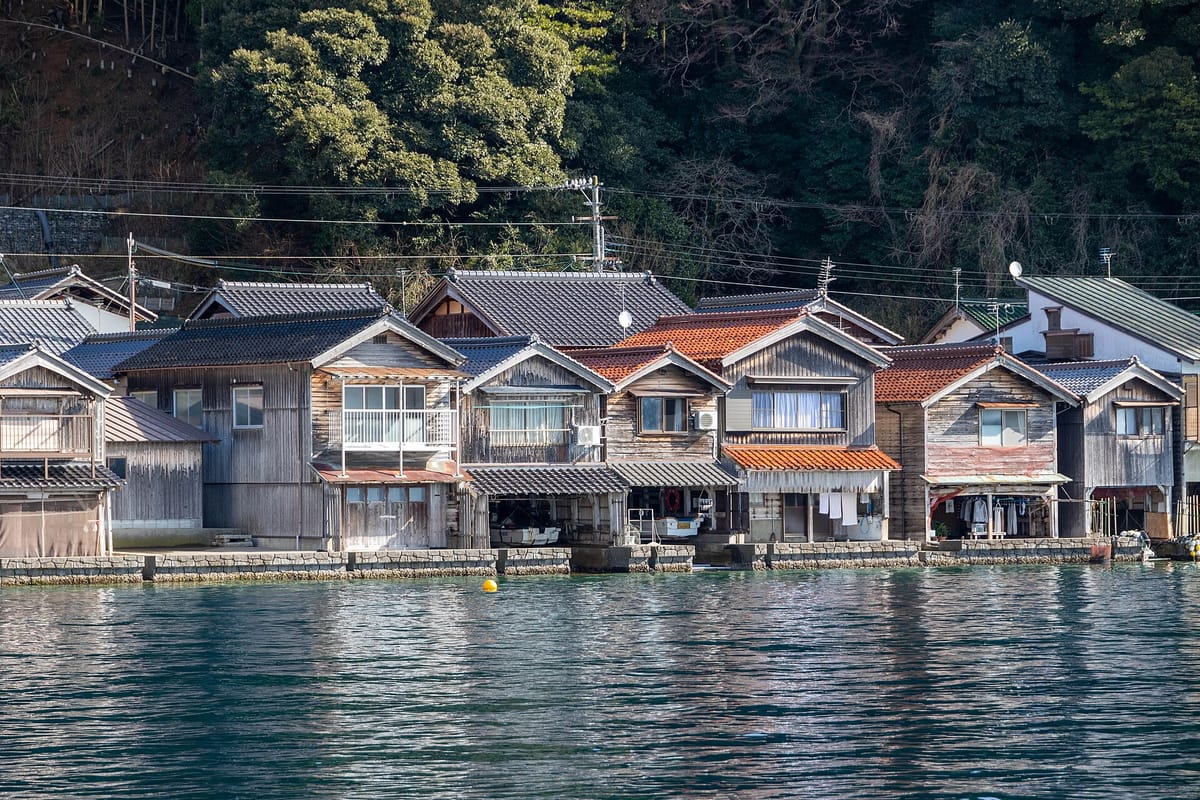
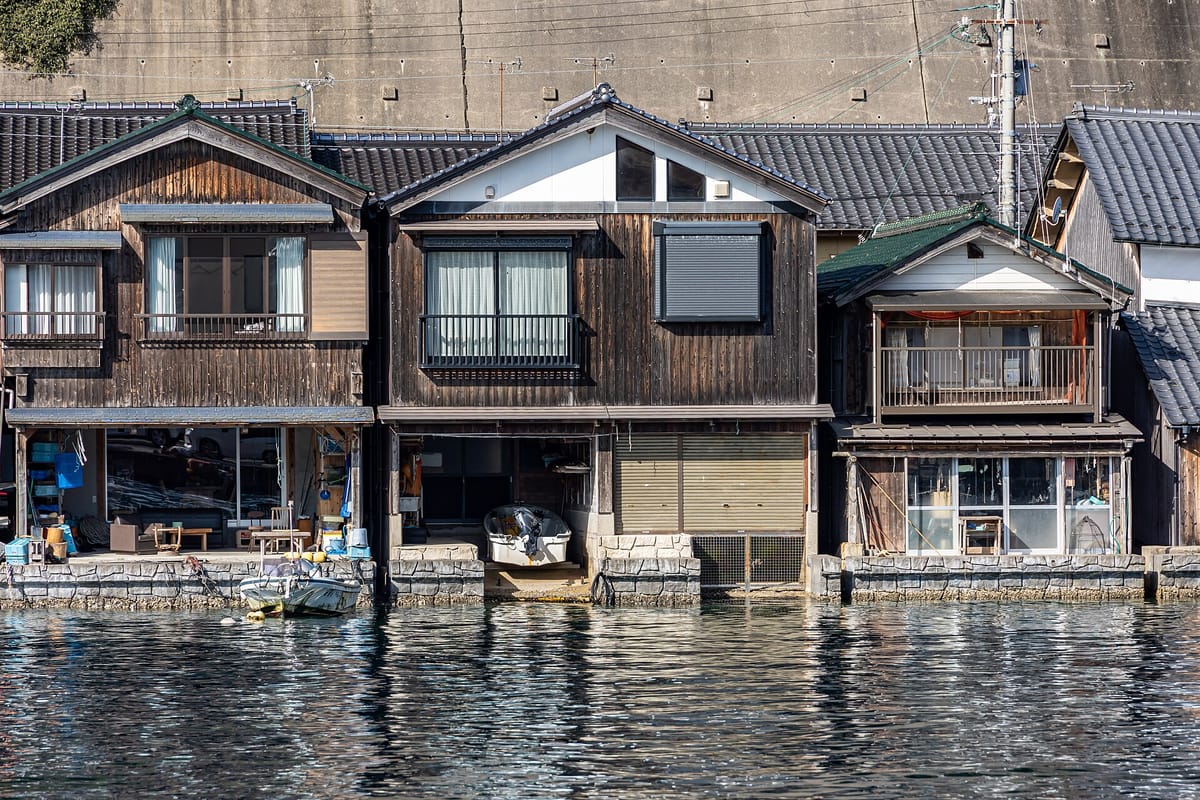
Ine is a fishing town on the Tango Peninsula, in the far north of Kyoto Prefecture. Its bay is deep and sheltered by an island at its mouth, and the tides here rise and fall very little, which allowed people to build right on the shoreline. The result is the funaya: long rows of wooden buildings with a sloping boat garage at the water and a room above, stretching around the bay.
There are about 230 funaya, and in 2005 the townscape was designated an Important Preservation District for Groups of Traditional Buildings. It is still a working fishing community: boats go out in the morning, nets dry on the slipways and the main houses of the families who own the funaya stand across the narrow road behind them.
That is the heart of visiting Ine. You are a guest in someone's village, and a quiet konnichiwa to the people you pass means much more here than in a city.
Getting there: the bus from Amanohashidate Station
Ine has no railway. The usual route is to take the train to Amanohashidate Station, about two hours from Kyoto, and then a local bus run by Tango Kairiku Kōtsū, often shortened to Tankai. Buses bound for Ine run along the coast of Miyazu Bay; get off at the stop called Ine-wan Meguri Hide, in front of the cruise pier, about 50 minutes from Amanohashidate Station, or continue to Ine for the centre of the village.
Buses run only every hour or so, and less often on some routes, so take a photo of the return timetable at the bus stop. Direct highway buses from Kyoto Station to Amanohashidate and Ine have also been run on some dates; check the operator, Tango Kairiku Kōtsū, and reserve ahead. By car, Ine is about two hours from Kyoto.
| Japanese | Romaji | Meaning |
|---|---|---|
| 伊根行きのバスはどこから乗れますか。 | Ine-yuki no basu wa doko kara noremasu ka. | Where can I get the bus to Ine? |
| 伊根湾めぐり・日出で降りたいです。 | Ine-wan Meguri Hide de oritai desu. | I want to get off at Ine-wan Meguri Hide. |
| 着いたら教えてもらえますか。 | Tsuitara oshiete moraemasu ka. | Could you tell me when we arrive? |
| 帰りのバスは何時ですか。 | Kaeri no basu wa nanji desu ka. | What time is the bus back? |
| このバスは天橋立駅に行きますか。 | Kono basu wa Amanohashidate-eki ni ikimasu ka. | Does this bus go to Amanohashidate Station? |
Three ways to see the funaya: by boat, from the hill, on foot
The funaya were built to be approached from the sea, and that is still the best view. The Ine Bay cruise, the Ine-wan Meguri Yūransen, leaves from the Hide pier and circles the bay in about 25 minutes, usually on the hour and half hour, more often in busy seasons. Seagulls follow the boat, and passengers can feed them. For a closer look, several small water taxis, kaijō takushī, take a handful of people along the front of the houses.
For the view from above, walk or drive up to the Michi no Eki Funaya no Sato Ine, a roadside station on the hill with a restaurant, a shop and a wide view over the bay. Then walk the road behind the funaya, where you can see into the lanes between the houses and the boats pulled up inside.
- Ine Bay cruise: about 25 minutes around the bay, with seagulls following.
- Water taxis: small boats that run close along the funaya.
- Michi no Eki Funaya no Sato Ine: the roadside station with a view over the bay.
- The village road: the narrow road running behind the funaya.
- Funaya cafés and guesthouses: a few funaya where you can eat, drink or stay.
- Urashima Shrine: a shrine north of Ine linked with the legend of Urashima Tarō.
Words on the signs in Ine
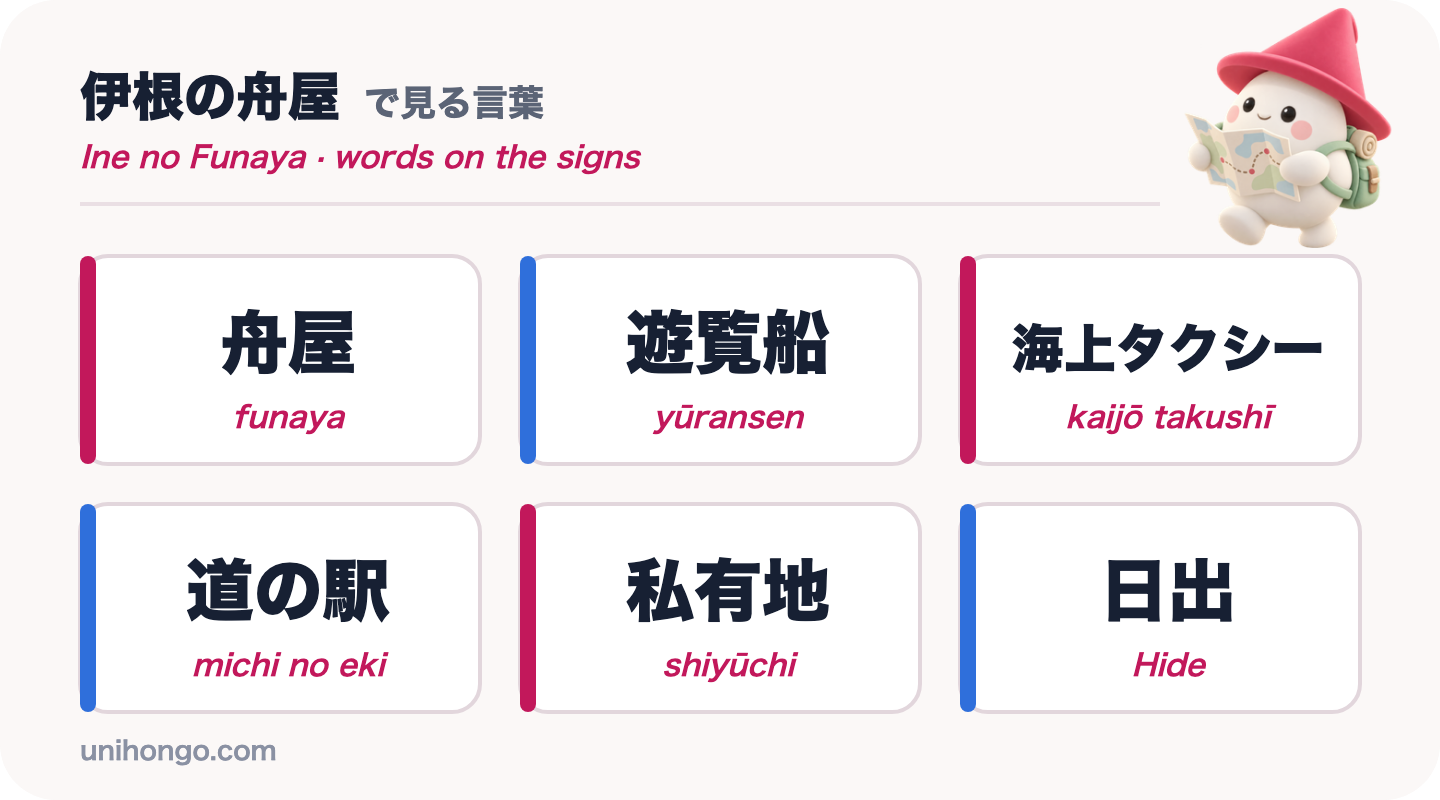
The signs in Ine are few but important. The one to respect is 私有地, shiyūchi, private property, often with 立入禁止, no entry, written below it. Many funaya slipways and lanes are marked this way, and you should not walk past these signs even if the view is tempting.
The rest are transport words. 遊覧船 is a sightseeing boat, 海上タクシー a water taxi, literally a taxi on the sea, and 道の駅 a roadside station, a rest stop for drivers with a shop and local produce.
| Word | Reading | Meaning |
|---|---|---|
| 舟屋 | funaya | Boathouse with a room above |
| 遊覧船 | yūransen | Sightseeing boat |
| 海上タクシー | kaijō takushī | Water taxi |
| 道の駅 | michi no eki | Roadside station with a shop and view |
| 私有地 | shiyūchi | Private property |
| 立入禁止 | tachiiri kinshi | No entry |
| 日出 | Hide | The bus stop and pier for the bay cruise |
| 乗り場 | noriba | Boarding point |
| 伊根湾 | Ine-wan | Ine Bay |
Japanese for the bay cruise and a water taxi
The bay cruise needs no booking for individual visitors: buy a ticket at the pier and board the next boat. Water taxis are run by local operators, and you may need to phone ahead or ask at the tourist information centre. Both run less in bad weather, and the tourist association posts the day's operating status online.
On the cruise, the crew may explain the funaya over a loudspeaker in Japanese. Listen for the words funaya, sakana, fish, and umi, sea, and for numbers such as nihyaku sanjū, 230.
| Japanese | Romaji | Meaning |
|---|---|---|
| 遊覧船の乗り場はどこですか。 | Yūransen no noriba wa doko desu ka. | Where is the boarding point for the cruise? |
| 大人二枚ください。 | Otona nimai kudasai. | Two adults, please. |
| 今日は船が出ていますか。 | Kyō wa fune ga dete imasu ka. | Are the boats running today? |
| 海上タクシーは予約が必要ですか。 | Kaijō takushī wa yoyaku ga hitsuyō desu ka. | Do I need to book a water taxi? |
| 舟屋の近くまで行けますか。 | Funaya no chikaku made ikemasu ka. | Can we go close to the boathouses? |
| カモメのえさはどこで買えますか。 | Kamome no esa wa doko de kaemasu ka. | Where can I buy food for the seagulls? |
Etiquette, timing and practical tips
Ine is small, quiet and lived in. The townspeople have welcomed visitors, and a few habits keep it that way.
- Do not enter funaya, slipways or lanes marked private, and never step onto a moored boat.
- Do not fly drones or photograph people inside their homes.
- Keep your voice down on the village road, especially in the early morning and evening.
- Check the bus times back to Amanohashidate before you start exploring.
- Book funaya guesthouses early; there are only a few of them.
- Come in calm weather: boats may not run when the sea is rough.
Practise the visit before you go
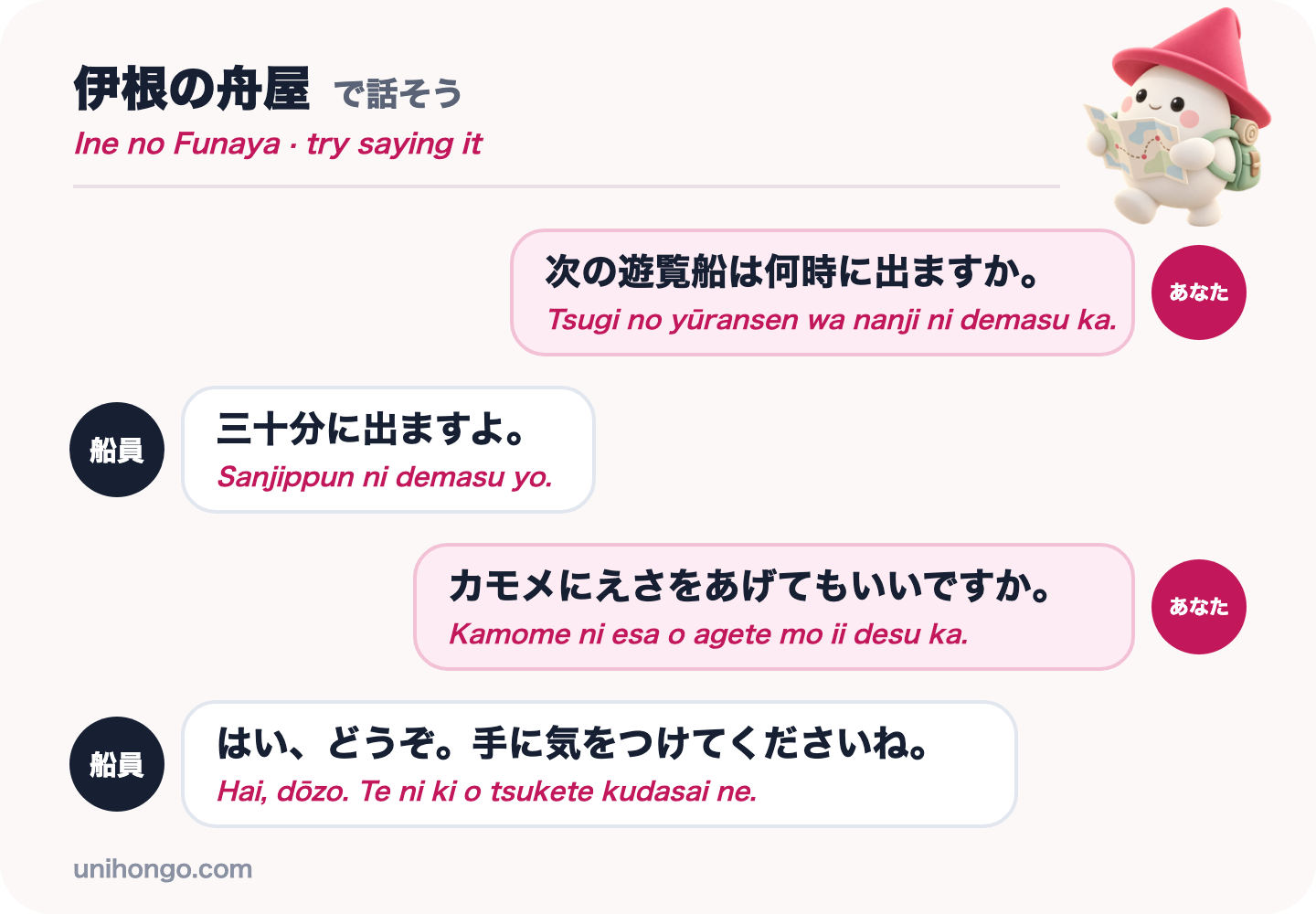
At the pier, your conversation will be short: a time and a permission. Listen for the minutes in the answer, since boats leave on the hour and the half hour, and for dōzo, go ahead. Practise the four lines below until you can say them without reading.
Then practise with a partner who answers back. In Unihongo, choose the Sightseeing topic and ask your AI Sensei to play a crew member on the Ine Bay cruise, then a guesthouse owner in a funaya using the Ryokan Stay topic.
| Japanese | Romaji | Meaning |
|---|---|---|
| 次の遊覧船は何時に出ますか。 | Tsugi no yūransen wa nanji ni demasu ka. | What time does the next cruise leave? |
| 三十分に出ますよ。 | Sanjippun ni demasu yo. | It leaves at half past. |
| カモメにえさをあげてもいいですか。 | Kamome ni esa o agete mo ii desu ka. | May I feed the seagulls? |
| はい、どうぞ。手に気をつけてくださいね。 | Hai, dōzo. Te ni ki o tsukete kudasai ne. | Go ahead. Watch your hands. |
Official information
The Ine town tourist association publishes guides to the funaya, the cruise and the water taxis, and posts whether boats are running each day. Check before you travel, especially in winter or in stormy weather.