

Why the Imperial Palace East Gardens are worth a morning
Edo Castle was the seat of the Tokugawa shogunate from 1603 to 1867 and, in its day, the largest castle in Japan. After the Meiji Restoration the emperor moved in, and the modern Imperial Palace stands on its western part. The eastern part, where the shogun's own palace stood, was laid out as a garden and has been open to the public since 1968.
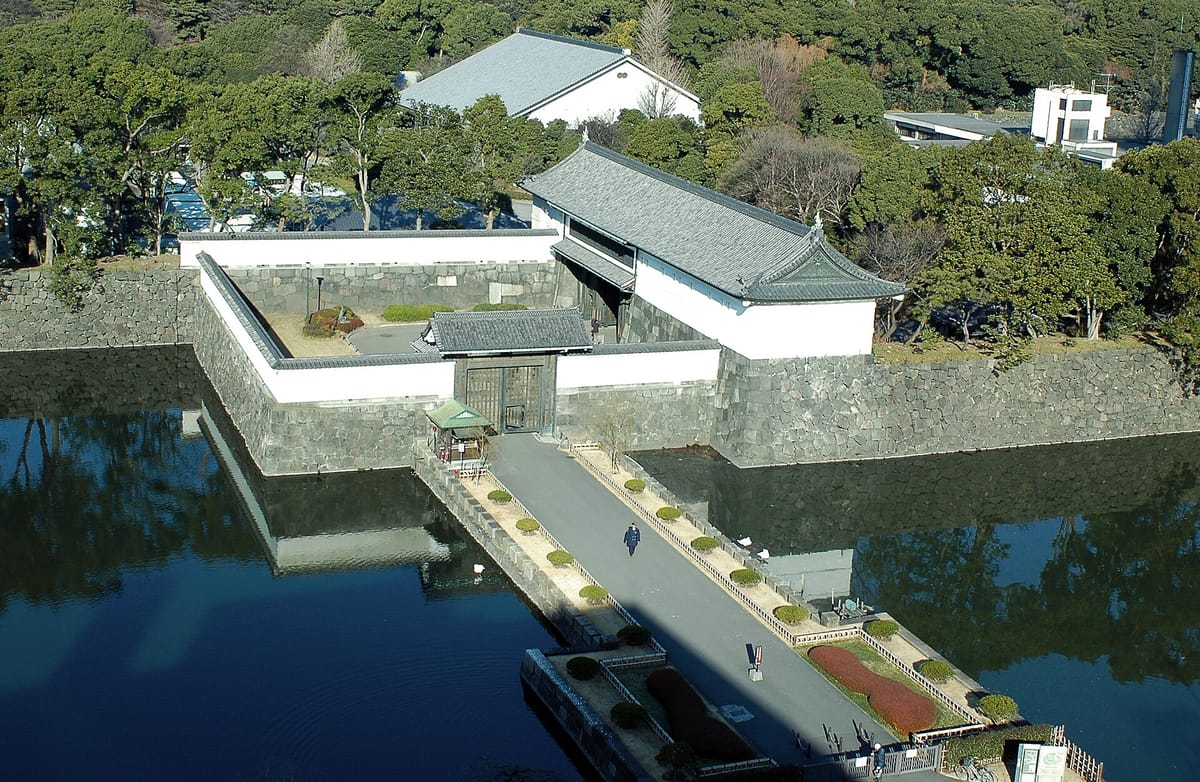
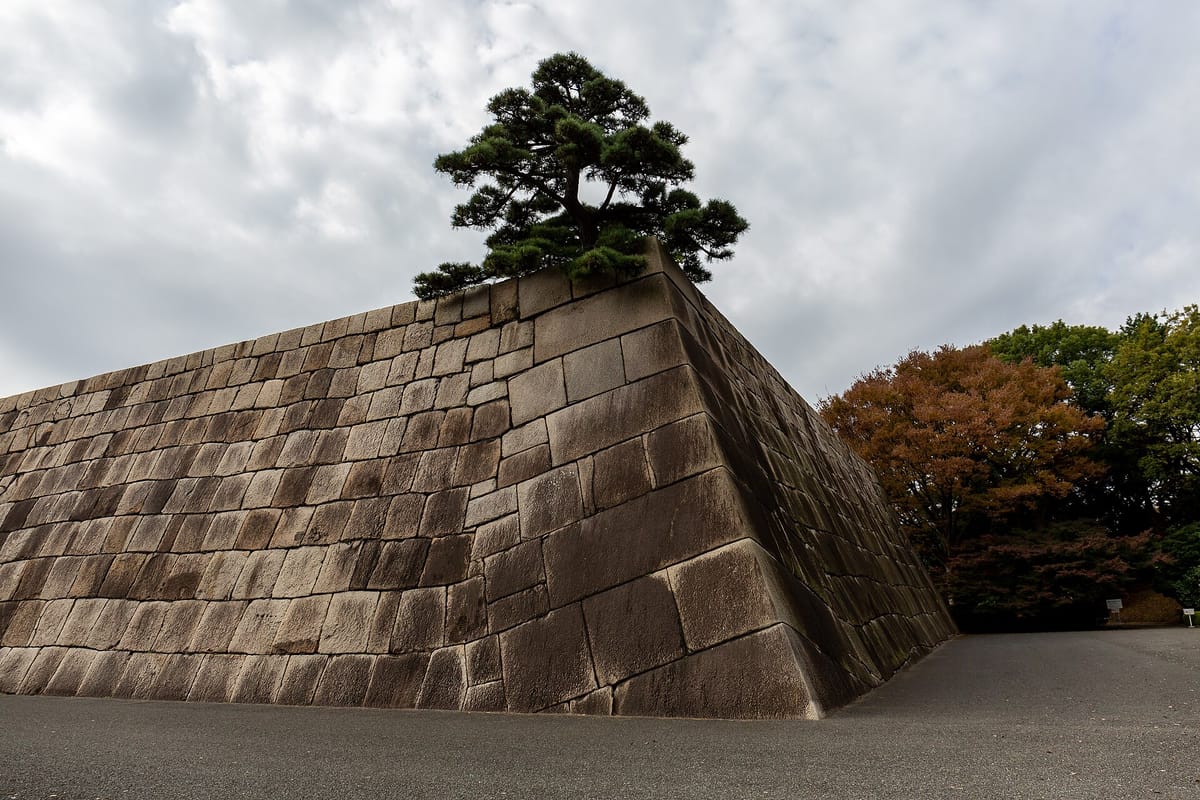
None of the shogun's halls survive: fires destroyed them again and again, and the great keep burned in 1657 and was never rebuilt. What remains is the scale of the place. The stone walls, the moats, the gates with their right-angled courtyards and the long wooden guardhouses show how a castle was built to stop an army, even though you now walk through it with office towers behind the pines.
It is also a place where Japan's most formal language is everywhere. The palace is the 皇居, kōkyo, literally the emperor's residence, and signs, announcements and staff use polite, careful Japanese. It is a good place to notice honorific forms without needing to use them yourself.
Getting there: Ōtemachi, Takebashi and Tokyo stations
The East Gardens have three gates. The Ōte-mon, the old main gate of the castle, is the one most people use: it is about five minutes on foot from exit C13a of Ōtemachi Station, served by five subway lines, about ten minutes from exit 6 of Nijūbashimae Station on the Chiyoda Line, and about fifteen minutes from the Marunouchi North Exit of JR Tokyo Station. The Hirakawa-mon and the Kita-hanebashi-mon, on the north side, are each about five minutes from exit 1a of Takebashi Station on the Tōzai Line.
You can leave by any gate, so a good route is to enter at the Ōte-mon, climb to the Tenshudai, and leave by the Kita-hanebashi-mon for the Kitanomaru Park side, or go back out of the Ōte-mon and walk south along the moat to the palace plaza. The plaza itself is a ten-minute walk from Tokyo Station's Marunouchi side along the broad Gyōkō-dōri avenue, and it stays open when the East Gardens are closed.
| Japanese | Romaji | Meaning |
|---|---|---|
| 大手門はどちらですか。 | Ōte-mon wa dochira desu ka. | Which way is the Ōte-mon Gate? |
| 皇居東御苑に行きたいんですが、何番出口ですか。 | Kōkyo Higashi Gyoen ni ikitai n desu ga, nanban deguchi desu ka. | I want to go to the East Gardens. Which exit number is it? |
| 今日は東御苑は開いていますか。 | Kyō wa Higashi Gyoen wa aite imasu ka. | Are the East Gardens open today? |
| 二重橋までどのくらいかかりますか。 | Nijūbashi made dono kurai kakarimasu ka. | How long does it take to Nijūbashi? |
| 東京駅へはどう戻ればいいですか。 | Tōkyō-eki e wa dō modoreba ii desu ka. | How do I get back to Tokyo Station? |
What you will see: from the Ōte-mon to the Tenshudai
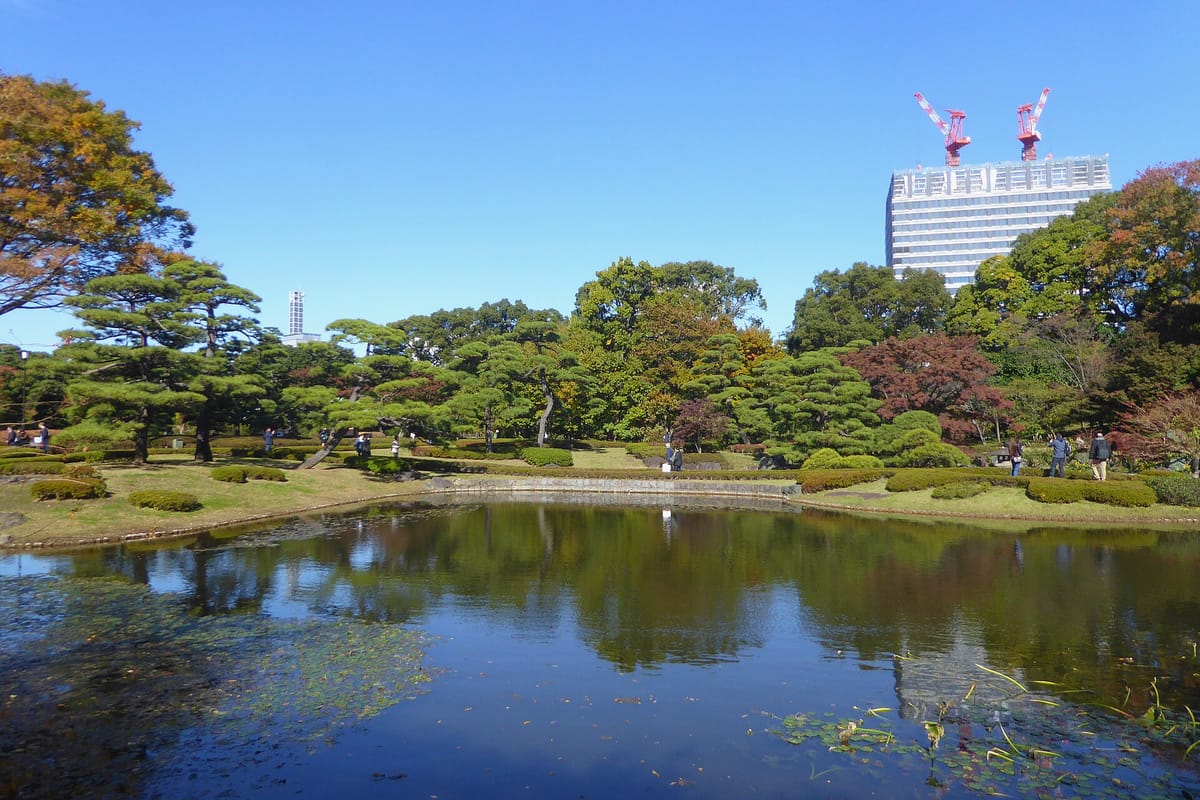
The gardens are laid out on three levels that follow the castle's rings of defence: the Sannomaru, third compound, by the Ōte-mon; the Ninomaru, second compound, with the Japanese garden; and the Honmaru, the main compound, on the hill above, where the shogun lived. A loop through all three takes about an hour.
- Ōte-mon, 大手門: the massive main gate, with a square courtyard designed to trap attackers between two gates.
- Hyakunin-bansho, 百人番所: a long wooden guardhouse where a hundred samurai stood watch in shifts.
- Tenshudai, 天守台: the stone base of the castle keep, completed in 1638 as the tallest in Japan's history and lost to fire in 1657; you can climb it for the view across the lawn.
- Fujimi-yagura, 富士見櫓: a three-storey watchtower whose name means Fuji-viewing turret, one of the few surviving castle buildings.
- Ninomaru teien, 二の丸庭園: a Japanese garden with a pond, carp and an iris bed that flowers in early summer.
- Suwa no Chaya, 諏訪の茶屋: a tea house in the Ninomaru garden area, seen from outside.
- Trees of the prefectures: a grove with a tree representing each of Japan's prefectures.
- Sannomaru Shōzōkan, the Museum of the Imperial Collections: closed for rebuilding and scheduled to reopen on 3 November 2026; check its own site for tickets.
Gates, guardhouses and the words on the signs
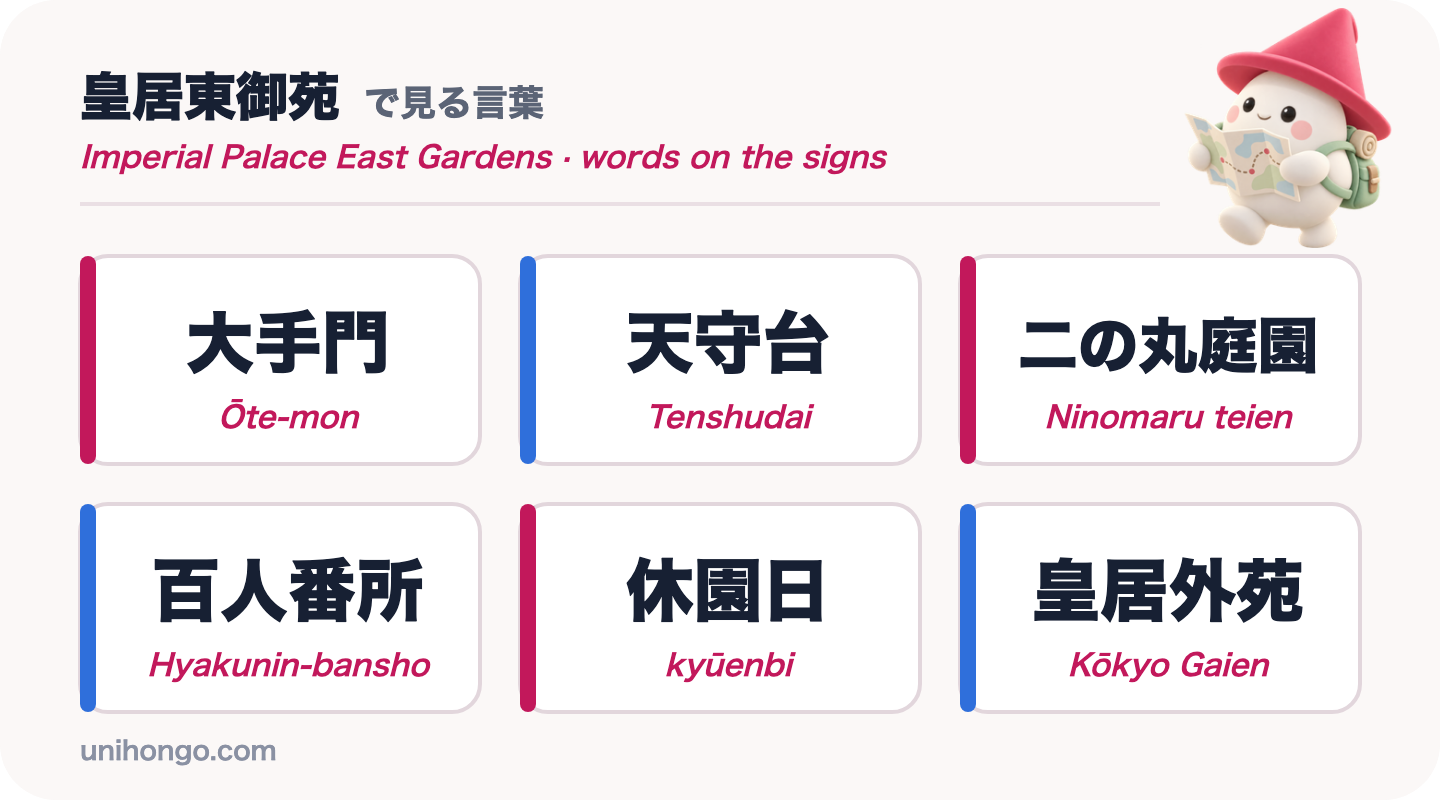
The information boards in the East Gardens explain each structure in Japanese and English, and most names are built from a small set of castle words: 門, mon, gate; 櫓, yagura, turret; 番所, bansho, guardhouse; 丸, maru, compound. Once you know these, a castle map reads itself.
Before you set off, look for 休園日, kyūenbi, closing days, on the calendar at the gate or online. The outer garden where the palace plaza lies is 皇居外苑, Kōkyo Gaien, and its signs belong to a different office, the Ministry of the Environment, which is why the plaza is open on days when the East Gardens are shut.
| Word | Reading | Meaning |
|---|---|---|
| 大手門 | Ōte-mon | The main gate of Edo Castle, main entrance to the gardens |
| 平川門 | Hirakawa-mon | North-east gate near Takebashi Station |
| 北桔橋門 | Kita-hanebashi-mon | North gate, once reached by a drawbridge |
| 百人番所 | Hyakunin-bansho | Guardhouse of the hundred samurai |
| 天守台 | Tenshudai | Stone base of the castle keep |
| 二の丸庭園 | Ninomaru teien | Garden of the second compound |
| 休園日 | kyūenbi | Days the garden is closed |
| 皇居外苑 | Kōkyo Gaien | The outer palace garden, including the plaza |
| 二重橋 | Nijūbashi | The double bridge at the Main Gate |
| 桔梗門 | Kikyō-mon | Gate where palace tour visitors gather |
Japanese for the bag check, the palace tour and the plaza
Every visitor goes through a baggage inspection at the gate. It is quick and friendly, but staff will ask you to open your bag, and the Imperial Household Agency asks visitors to bring as little as possible and use a station coin locker for large luggage. You will hear o-nimotsu o haiken shimasu, we will look at your bag, or simply kaban o akete kudasai, please open your bag.
If you want to see the inner palace grounds, apply for the free palace tour. Advance applications open online on the first day of the month before your visit, and same-day places are given out as numbered tickets at the Kikyō-mon Gate. Bring a passport or other original photo ID: photocopies are not accepted. The tour walks about 2.2 kilometres in an hour with little shade, past the palace buildings, and runs in the morning and, outside midsummer, the afternoon.
On the palace plaza you can simply wander. The classic photograph is taken from the edge of the plaza, looking across the moat at the stone bridge, the Main Gate and the iron Nijūbashi, with the Fushimi-yagura turret beyond. At the south-east of the plaza stands the bronze statue of the samurai Kusunoki Masashige, presented in 1900, and to the north-east is Wadakura Fountain Park, built in 1961 for the wedding of the emperor now called Emperor Emeritus.
| Japanese | Romaji | Meaning |
|---|---|---|
| かばんを開けましょうか。 | Kaban o akemashō ka. | Shall I open my bag? |
| 大きい荷物を預けられる場所はありますか。 | Ōkii nimotsu o azukerareru basho wa arimasu ka. | Is there somewhere to leave large luggage? |
| 皇居の参観はここで申し込めますか。 | Kōkyo no sankan wa koko de mōshikomemasu ka. | Can I apply for the palace tour here? |
| 当日の整理券はまだありますか。 | Tōjitsu no seiriken wa mada arimasu ka. | Are there still same-day numbered tickets? |
| 身分証明書はパスポートでいいですか。 | Mibun shōmeisho wa pasupōto de ii desu ka. | Is a passport all right as ID? |
| 二重橋がよく見える場所はどこですか。 | Nijūbashi ga yoku mieru basho wa doko desu ka. | Where can I get a good view of Nijūbashi? |
Etiquette, timing and practical tips
The palace is a working royal residence and the gardens are run with quiet formality. A few habits keep your visit smooth.
- Check the closing days: Mondays and Fridays, most of the New Year period, and occasional days for court functions.
- Travel light. Large bags slow the security check; leave them in a station coin locker.
- Keep to the paths and lawns that are open, and do not climb the stone walls or lean over the moats.
- Keep your voice down near the palace buildings and follow staff instructions at once; guards may direct visitors away from some areas.
- Come in the morning for the calmest gardens and softer light on the walls; last entry is thirty minutes before closing.
- Wear comfortable shoes: the paths are gravel and there is a steady slope up to the Honmaru.
- On 2 January and the Emperor's Birthday, 23 February, the Main Gate opens for the public greeting, and the plaza is very crowded.
Practise the visit before you go
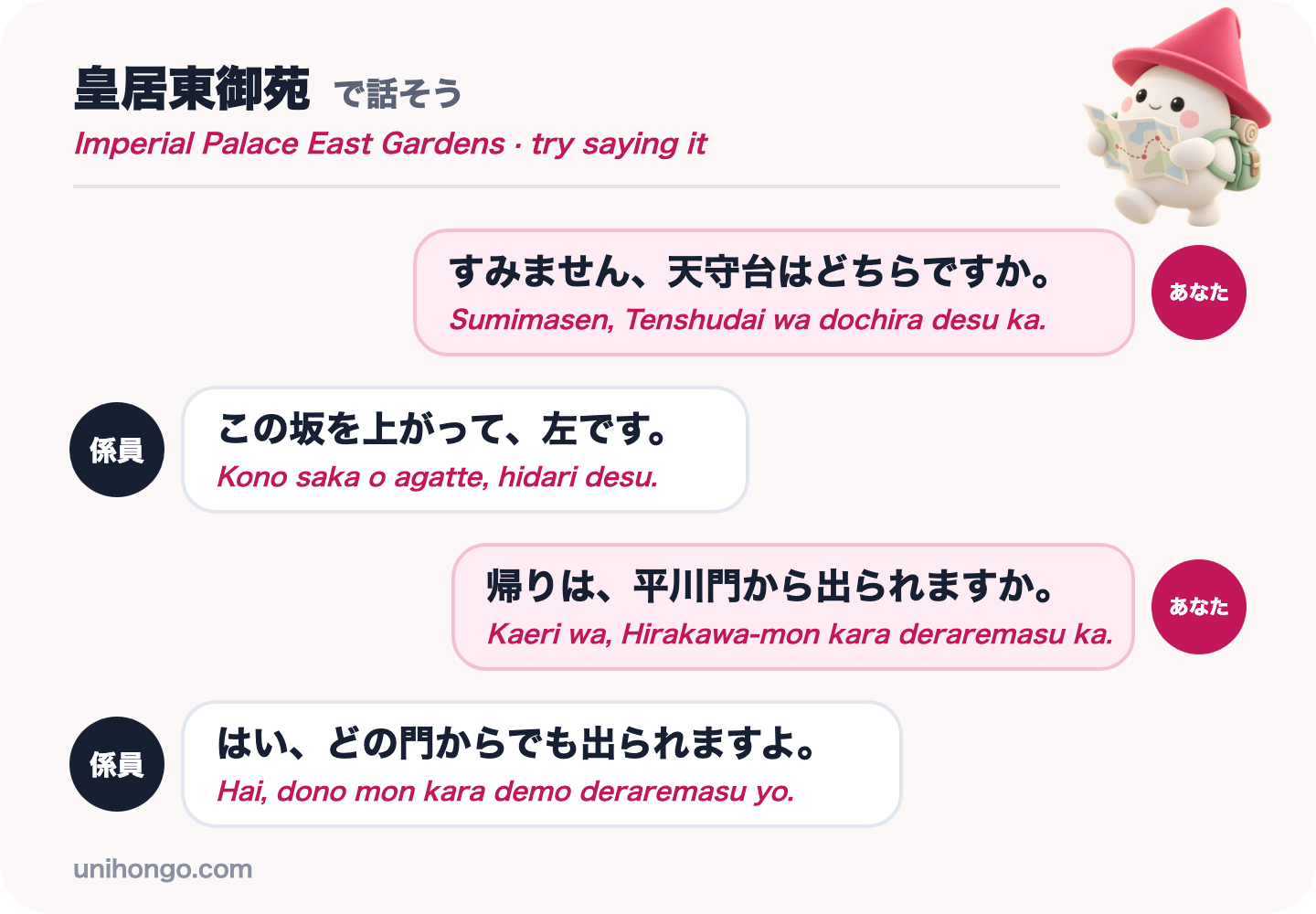
Inside the gardens, the questions you will ask are about direction and exits. The answers are short, full of saka, slope, hidari, left, and mon, gate, and the useful grammar is the potential form: deraremasu ka, can I go out?
Then practise with a partner who answers back. In Unihongo, choose the Sightseeing topic and ask your AI Sensei to play a guide at the Ōte-mon, or choose the Cultural Etiquette topic to rehearse how to behave around the palace and its staff. Saying the lines aloud once before you go makes them come out naturally at the gate.
| Japanese | Romaji | Meaning |
|---|---|---|
| すみません、天守台はどちらですか。 | Sumimasen, Tenshudai wa dochira desu ka. | Excuse me, which way is the Tenshudai? |
| この坂を上がって、左です。 | Kono saka o agatte, hidari desu. | Go up this slope, and it's on the left. |
| 帰りは、平川門から出られますか。 | Kaeri wa, Hirakawa-mon kara deraremasu ka. | On the way back, can I leave by the Hirakawa-mon Gate? |
| はい、どの門からでも出られますよ。 | Hai, dono mon kara demo deraremasu yo. | Yes, you can leave by any gate. |
Official information
The Imperial Household Agency publishes the East Gardens' opening days and seasonal hours, and runs the palace tour application site. The palace plaza, Nijūbashi view and Wadakura Fountain Park belong to Kōkyo Gaien National Garden, run by the Ministry of the Environment.