

Why Asakusa and Sensō-ji belong on every Tokyo trip
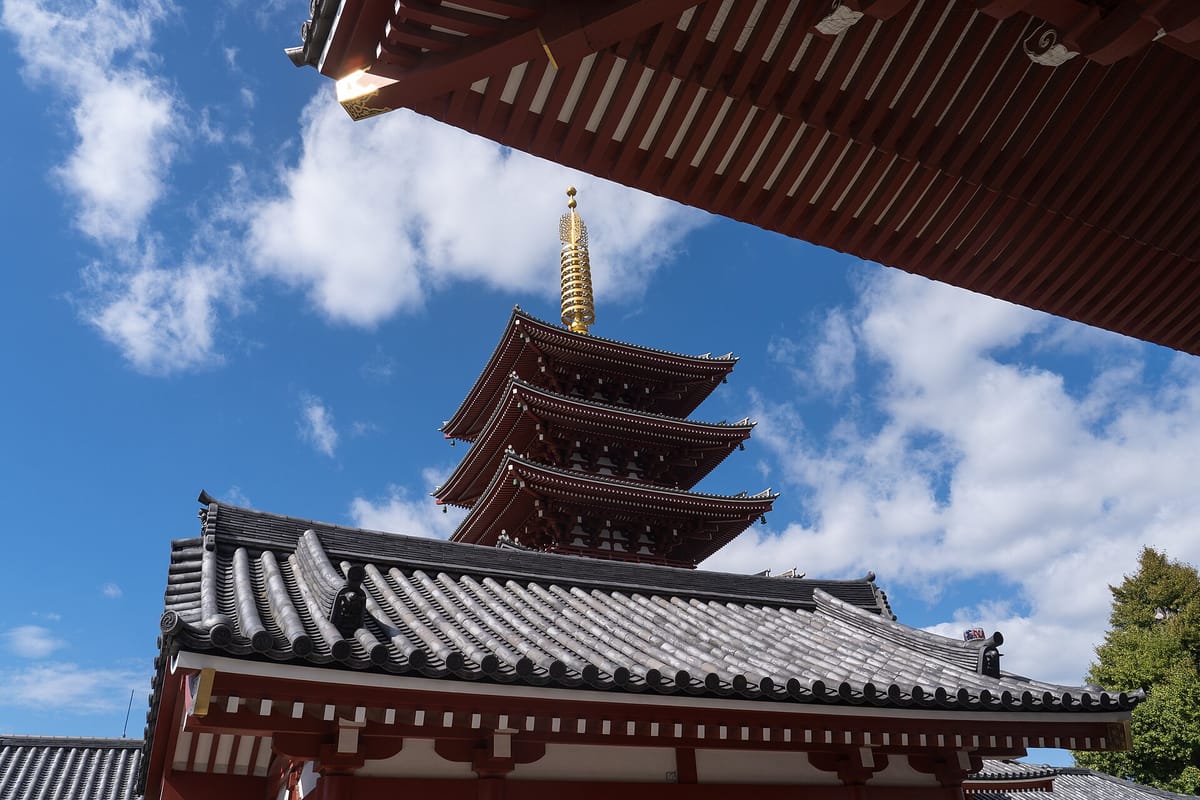
Sensō-ji, also called Asakusa Kannon, is Tokyo's oldest temple. According to the temple, two fishermen found a statue of the Bodhisattva Kannon in their net in the Sumida River in 628, and the village headman turned his house into a place to worship it. The temple grew with the city, survived the rise of Edo, and was almost completely destroyed in the air raids of 1945. The main hall, the Hōzōmon and the five-storey pagoda you see today are post-war reconstructions, rebuilt between the late 1950s and the 1970s, but they sit on the same ground and still draw crowds of worshippers every day.
What makes Asakusa special is the mix. You pass under a gate first built in 942, walk a street of snack stalls that has served pilgrims for centuries, pray at an active temple, and step out into lanes of kimono rental shops, rickshaw pullers and old-fashioned eateries. From the riverside a few minutes away, Tokyo Skytree rises across the Sumida.
For a learner, Asakusa is gentle practice. Shopkeepers on Nakamise are used to visitors, prices are on the goods, the signs are short, and the omikuji fortunes come with English translations, so you can compare the Japanese with the meaning on the spot.
Getting there: Asakusa Station and the right exit
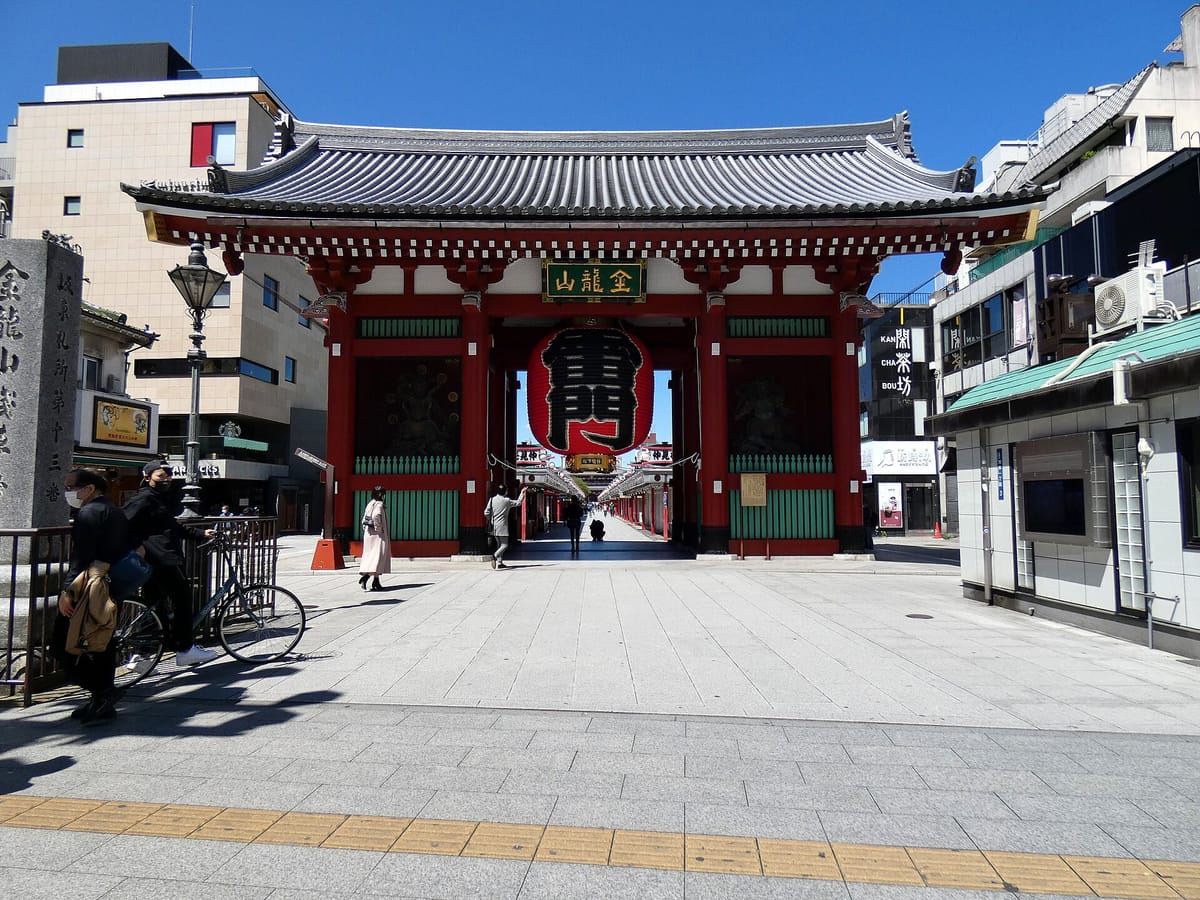
Three lines meet at Asakusa Station: the Tokyo Metro Ginza Line, the Toei Asakusa Line and the Tobu Skytree Line. The Ginza Line is the most useful for visitors because it runs through Ueno, Kanda and Ginza, and its exits come up a minute or two from Kaminarimon. From the Toei Asakusa Line and the Tobu station, it is a similar short walk. Follow the signs for 雷門, Kaminarimon, and you will come out on Kaminarimon-dōri, the avenue in front of the gate.
Two things catch people out. First, the Tsukuba Express has its own Asakusa Station, several blocks west of the temple, so a route planner may send you there; it still works but the walk is longer. Second, Asakusa is also a stop on the Tobu line towards Nikkō and Tokyo Skytree, which makes it an easy place to combine with the tower: Tokyo Skytree Station is one stop away, or about twenty minutes on foot across the river.
| Japanese | Romaji | Meaning |
|---|---|---|
| 浅草駅に行きたいんですが、何線に乗ればいいですか。 | Asakusa-eki ni ikitai n desu ga, nanisen ni noreba ii desu ka. | I want to go to Asakusa Station. Which line should I take? |
| 雷門に近い出口はどれですか。 | Kaminarimon ni chikai deguchi wa dore desu ka. | Which exit is closest to Kaminarimon? |
| 浅草寺はどちらですか。 | Sensō-ji wa dochira desu ka. | Which way is Sensō-ji? |
| ここから歩いて何分くらいですか。 | Koko kara aruite nanpun kurai desu ka. | About how many minutes on foot from here? |
| スカイツリーまで歩いて行けますか。 | Sukaitsurī made aruite ikemasu ka. | Can I walk to the Skytree? |
From Kaminarimon to the main hall: what you will see
The visit is a straight line north. The Kaminarimon, with Fūjin and Raijin in its side bays and the great lantern in the middle, opens onto Nakamise-dōri, a shopping street of roughly 250 metres lined with small stalls. At its end the Hōzōmon, a two-storey gate guarded by Niō statues, has a pair of enormous straw sandals hanging on its back wall. Beyond it is the incense burner, the jōkōro, and the steps up to the main hall, where the hidden Kannon statue is enshrined.
Turn left before the main hall for the five-storey pagoda, and walk behind and to the right of the hall for Asakusa Shrine, a Shinto shrine that dates from 1649 and survived the war. The streets around the precinct are worth a slow loop too: Denbōin-dōri with its Edo-style shop fronts, the covered arcades, and the Asakusa Culture Tourist Information Center opposite Kaminarimon, whose top-floor terrace looks straight down Nakamise.
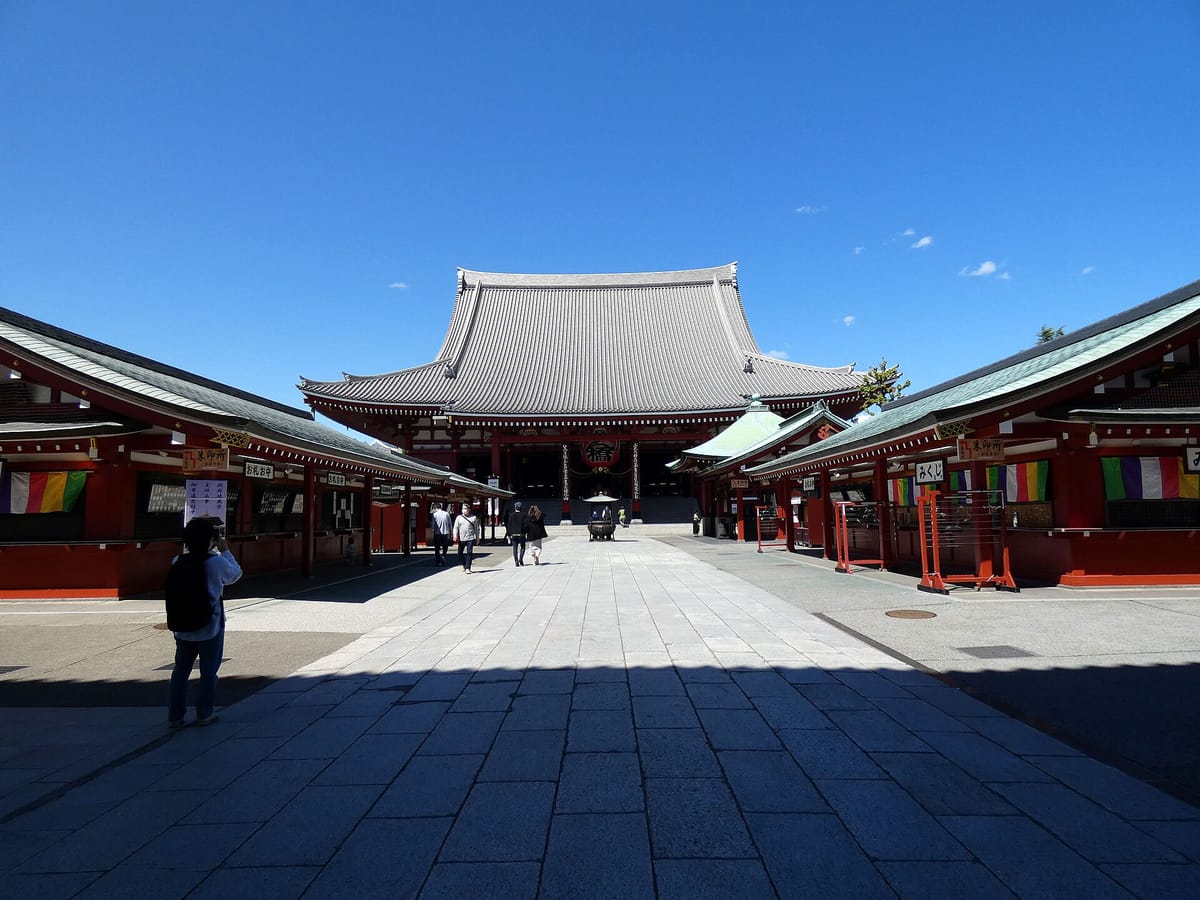
- Kaminarimon (雷門): the Thunder Gate and its lantern, the classic photo.
- Nakamise-dōri (仲見世通り): snack and souvenir stalls between the two gates.
- Hōzōmon (宝蔵門): the inner gate, with the giant straw sandals on the back.
- Jōkōro (常香炉): the incense burner; people waft the smoke over themselves.
- Hondō (本堂): the main hall, where you make your prayer to Kannon.
- Gojū no tō (五重塔): the five-storey pagoda to the left of the main hall.
- Asakusa Jinja (浅草神社): the shrine behind the hall, home of the Sanja Matsuri.
The words on the gates and signs
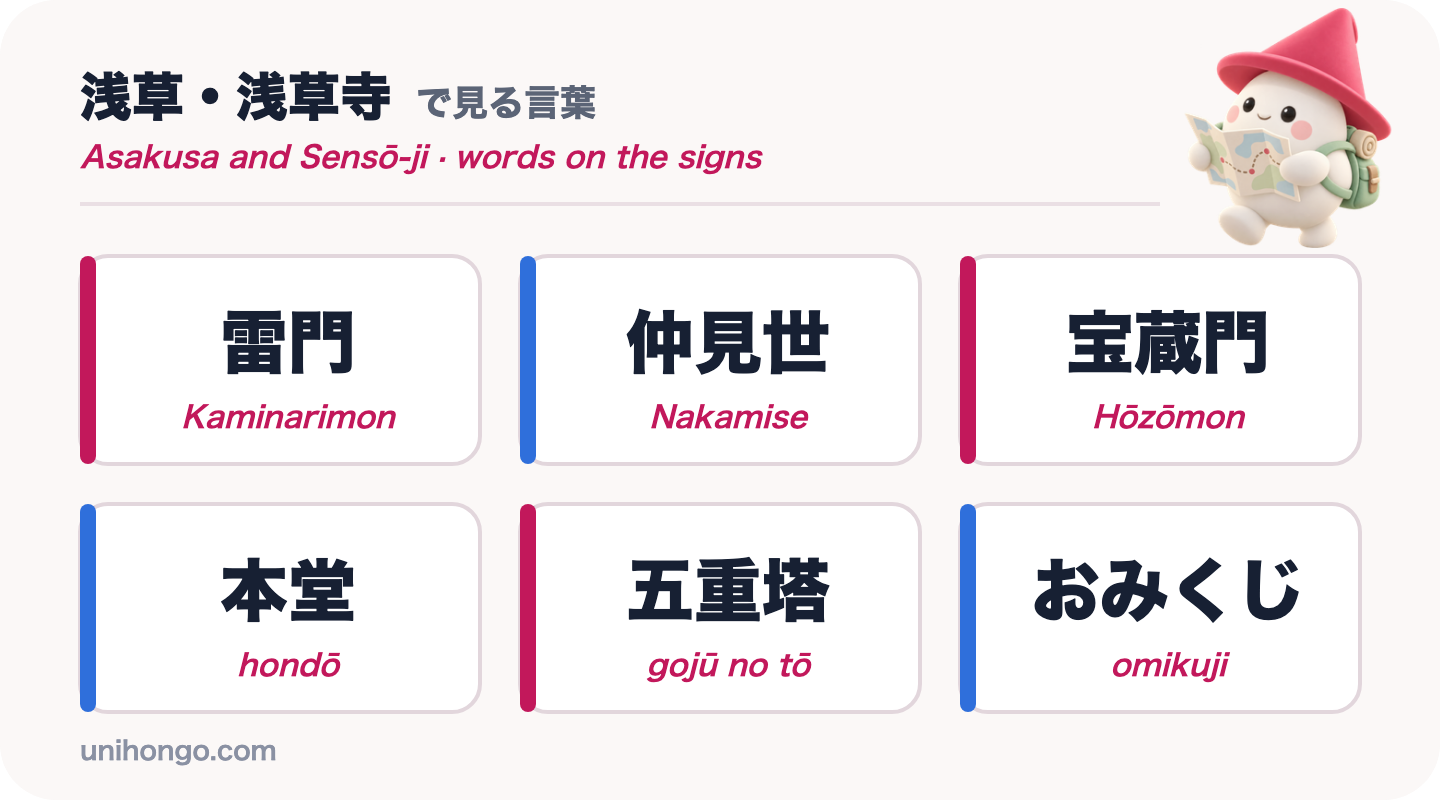
Most of the signs in the precinct name buildings, and they share a few characters you will meet at every temple in Japan: 門, gate; 堂, hall; 塔, tower or pagoda; 寺, temple. Once you can read those, a map of any temple starts to make sense.
Two readings are worth learning early. The temple's own name uses 寺 read as ji, while the word for temple on its own is tera, often heard politely as o-tera. And Asakusa's shrine uses 神社, jinja, which tells you straight away that it is Shinto rather than Buddhist.
| Word | Reading | Meaning |
|---|---|---|
| 雷門 | Kaminarimon | Thunder Gate, the outer gate |
| 仲見世 | Nakamise | The shopping street between the gates |
| 宝蔵門 | Hōzōmon | Treasure House Gate, the inner gate |
| 本堂 | hondō | Main hall of a temple |
| 五重塔 | gojū no tō | Five-storey pagoda |
| 常香炉 | jōkōro | Incense burner in front of the hall |
| おみくじ | omikuji | Paper fortune |
| 御朱印 | goshuin | Temple stamp and calligraphy |
| 浅草神社 | Asakusa Jinja | Asakusa Shrine, beside the temple |
Japanese on Nakamise and at the omikuji stand
Nakamise is where you will do most of your talking. The classic snacks are ningyōyaki, small sponge cakes shaped like figures and often filled with sweet bean paste, kibi dango, soft millet dumplings on a stick, and age-manjū, deep-fried buns. Many stalls ask you to eat in front of the shop rather than while walking through the crowd, which is also the easiest way to ask your question in Japanese: kore wa koko de tabete mo ii desu ka?
The omikuji stands are in the main hall. You shake a metal box until a thin stick slides out, read the number on it, open the small drawer with the same number and take one sheet. The sheets are printed in Japanese with an English translation. Payment is a coin dropped into the box, and staff are nearby if you are unsure.
| Japanese | Romaji | Meaning |
|---|---|---|
| 人形焼を一袋ください。 | Ningyōyaki o hitofukuro kudasai. | One bag of ningyōyaki, please. |
| あんこ入りはどれですか。 | Anko-iri wa dore desu ka. | Which ones have bean paste inside? |
| これはここで食べてもいいですか。 | Kore wa koko de tabete mo ii desu ka. | May I eat this here? |
| おみくじはどこで引けますか。 | Omikuji wa doko de hikemasu ka. | Where can I draw a fortune? |
| 凶が出たら、どうすればいいですか。 | Kyō ga detara, dō sureba ii desu ka. | If I get bad luck, what should I do? |
| 御朱印はどこでいただけますか。 | Goshuin wa doko de itadakemasu ka. | Where can I receive a goshuin? |
| 雷門の前で写真を撮っていただけますか。 | Kaminarimon no mae de shashin o totte itadakemasu ka. | Could you take a photo of me in front of Kaminarimon? |
Temple etiquette, timing and practical tips
Sensō-ji is a Buddhist temple, so the routine is a little different from a Shinto shrine such as Meiji Jingū, and it is a working place of worship with services every day.
- At the main hall, drop a coin in the offering box, put your hands together and pray quietly with a bow. There is no clapping at a temple.
- Waft a little incense smoke from the jōkōro over yourself if you like; it is believed to bring good health. Buy a bundle of incense first if you want to add your own.
- Photos of the buildings and grounds are fine, but do not photograph inside the main hall's inner sanctuary, and keep the path clear on the steps.
- Eat snacks at the stall where you bought them, and carry your rubbish until you find a bin.
- Come early in the morning or after dark for space and good light; the main hall itself keeps daytime hours, so check the official site if you want to go in.
- The Sanja Matsuri in May, the hōzuki market in July and the hagoita market in December bring special stalls and big crowds.
Practise the visit before you go
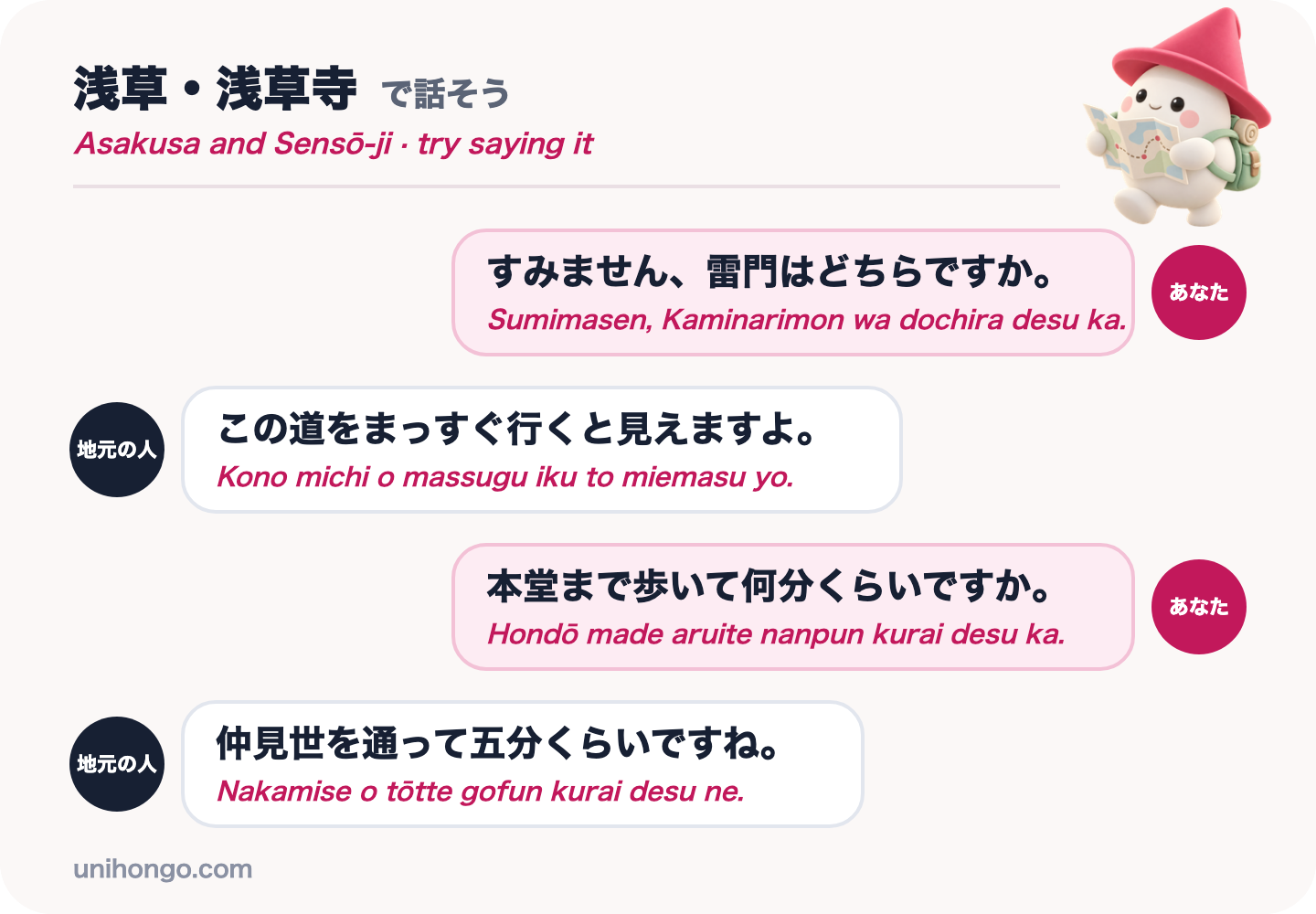
Your first conversation in Asakusa will probably happen at the top of the station steps. Dochira is the polite way to ask which way, and the answer usually includes massugu, straight ahead, and a time with kurai, about. Practise the four lines below until they come out without reading.
Then practise with someone who answers back. In Unihongo, choose the Sightseeing topic and ask your AI Sensei to play a local in Asakusa, or choose Shopping to rehearse buying snacks on Nakamise. Hearing the replies at natural speed once before you arrive makes them much easier to catch on the day.
| Japanese | Romaji | Meaning |
|---|---|---|
| すみません、雷門はどちらですか。 | Sumimasen, Kaminarimon wa dochira desu ka. | Excuse me, which way is Kaminarimon? |
| この道をまっすぐ行くと見えますよ。 | Kono michi o massugu iku to miemasu yo. | Go straight along this street and you will see it. |
| 本堂まで歩いて何分くらいですか。 | Hondō made aruite nanpun kurai desu ka. | About how many minutes' walk is it to the main hall? |
| 仲見世を通って五分くらいですね。 | Nakamise o tōtte gofun kurai desu ne. | About five minutes, through Nakamise. |
Official information
The temple publishes its history, the hours of the main hall and the dates of its annual events, and the Tokyo tourism board covers the wider Asakusa area. Check both before you go, especially around New Year and festival days.