

Why Naramachi is Nara's best place to wander
Naramachi grew up on the grounds of Gangō-ji, one of the seven great temples of ancient Nara. As the temple declined after the Nara period, merchants and craftspeople built homes on its land, and from around the fifteenth century the area developed into a busy merchant town. Many of the houses you see today date from the Edo period to the early twentieth century.
The typical house is a machiya: narrow at the front, with a latticed shop window, and stretching far back from the street through a series of rooms, a small courtyard and a storehouse. The narrow fronts are often explained by taxes, which were calculated on the width of a building's street frontage. Walking the lanes, you pass sweet shops, craft studios, guesthouses and cafés in houses built exactly this way.
Naramachi is also the calmer side of Nara. The deer rarely come this far south, the tour groups mostly stay in the park, and the shops are run by people who have time to talk. It is a very good place to have your first unhurried conversation in Japanese.
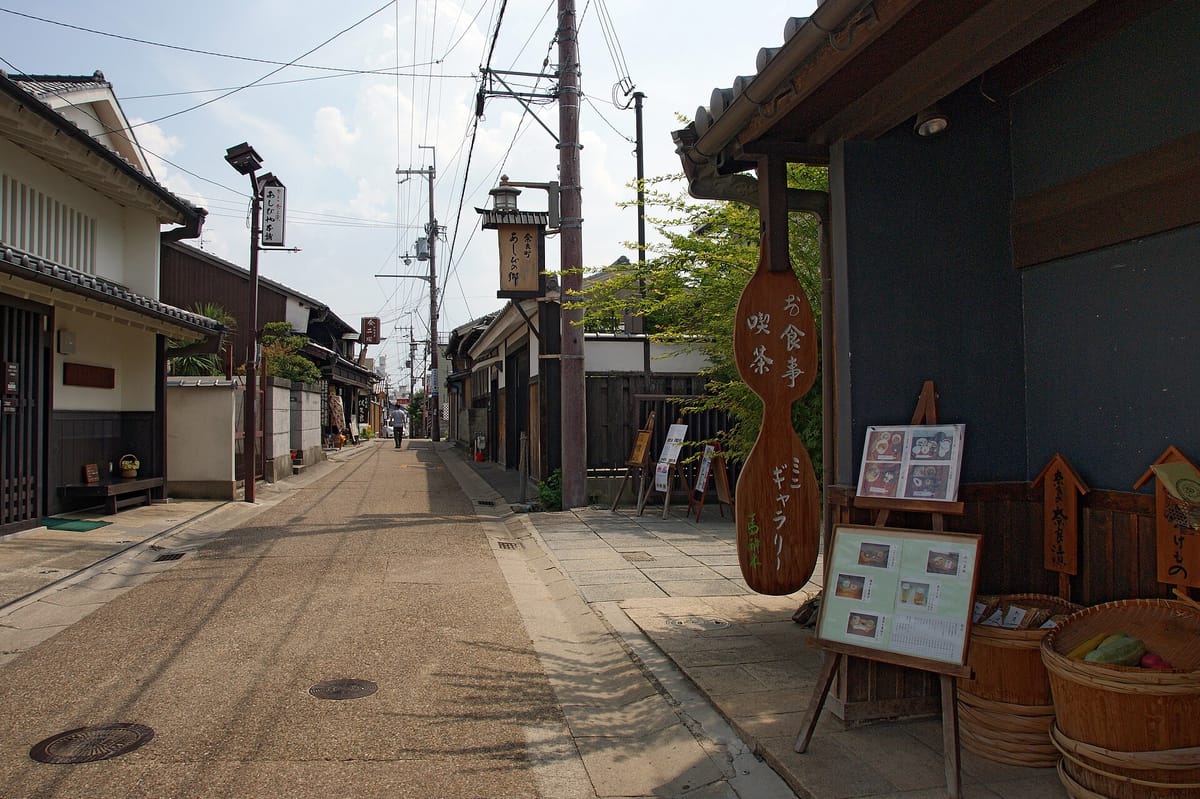
Getting there: a short walk from Kintetsu Nara
From Kintetsu Nara Station, Kintetsu Nara-eki, walk south along the covered Higashimuki shopping street, cross Sanjō-dōri, and continue past Sarusawa-ike pond. The lanes of Naramachi start just beyond the pond, about 10 to 15 minutes from the station. From JR Nara Station, follow Sanjō-dōri east for around 15 minutes and turn south before the pond.
The area is small but its lanes twist, so it is easy to lose your bearings. Look for the free maps at the Kōshi no Ie and at the tourist information points, and use the pond and Kōfuku-ji's roofs as landmarks to the north.
| Japanese | Romaji | Meaning |
|---|---|---|
| ならまちはどちらですか。 | Naramachi wa dochira desu ka. | Which way is Naramachi? |
| 格子の家はこの近くですか。 | Kōshi no Ie wa kono chikaku desu ka. | Is Kōshi no Ie near here? |
| 元興寺まで歩いて何分くらいですか。 | Gangō-ji made aruite nanpun kurai desu ka. | About how many minutes to Gangō-ji on foot? |
| 地図をもらえますか。 | Chizu o moraemasu ka. | Could I have a map? |
| 近鉄奈良駅に戻りたいです。 | Kintetsu Nara-eki ni modoritai desu. | I want to go back to Kintetsu Nara Station. |
What you will see: townhouses, a World Heritage temple and monkey charms
Start at Naramachi Kōshi no Ie, the lattice house, a reconstruction of a traditional Nara townhouse run by the city and free to enter. You can walk through the shop room at the front, the middle and back rooms, the earthen passage that runs the length of the house, the small attic and the storehouse at the back. It is closed on Mondays.
A few minutes away is Gangō-ji, a World Heritage temple that was founded as one of Japan's first Buddhist temples before moving to Nara. The roof of its Gokurakubō hall, a National Treasure, still includes tiles from the Asuka period, among the oldest roof tiles in Japan. The grounds are small and peaceful, with rows of old stone Buddhas.
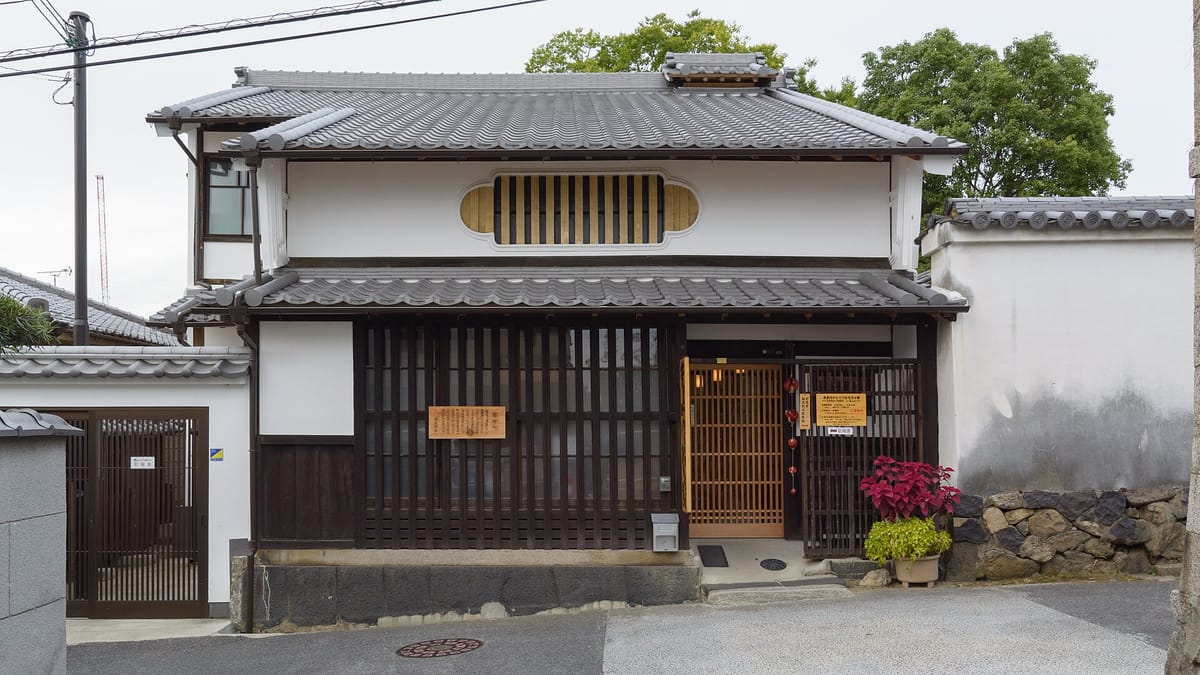
- Naramachi Kōshi no Ie: a free restored townhouse you can explore inside.
- Gangō-ji: a World Heritage temple with Asuka-period roof tiles.
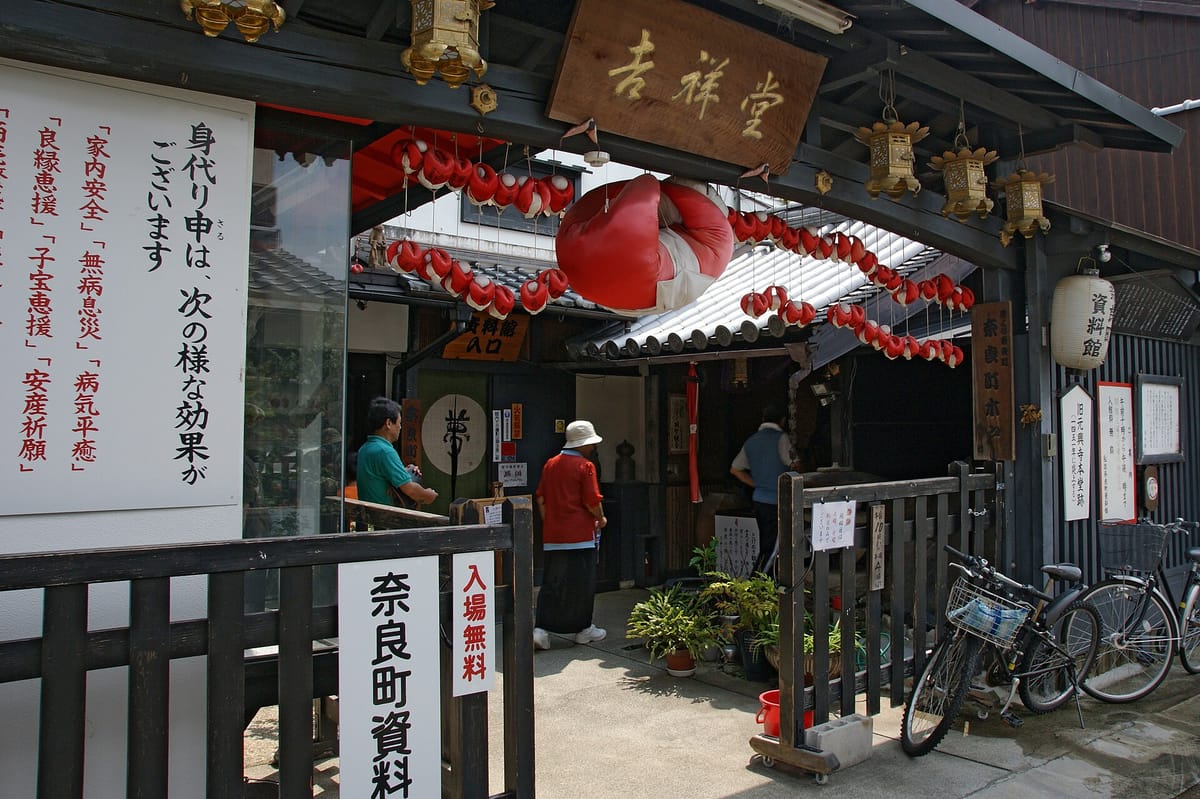
- Naramachi Kōshin-dō: the small hall of the Kōshin faith, hung with migawari-zaru.
- Naramachi Shiryōkan: a small museum of old tools and signboards, with a wall of red monkey charms.
- Naramachi Karakuri Omocha-kan: a free museum of traditional mechanical toys you can play with.
- Harushika brewery: a sake brewery in a traditional building, with paid tastings.
- Craft shops: Nara brushes, ink, fabrics and pottery sold in old townhouses.
Words on the signs in Naramachi
The word to spot first is 格子, kōshi, lattice: the slatted wooden fronts of the houses, and the name of the free townhouse. Next is the charm on the eaves, written 身代り申. Here 身代り means substitute, and 申 is used in place of the usual 猿 for monkey, because 申 is the monkey of the Chinese zodiac and is linked to the Kōshin faith.
Free facilities put 入館無料, free admission, on a board by the door. Breweries hang a ball of cedar leaves under the eaves and write 酒蔵, sakagura, on their signs.
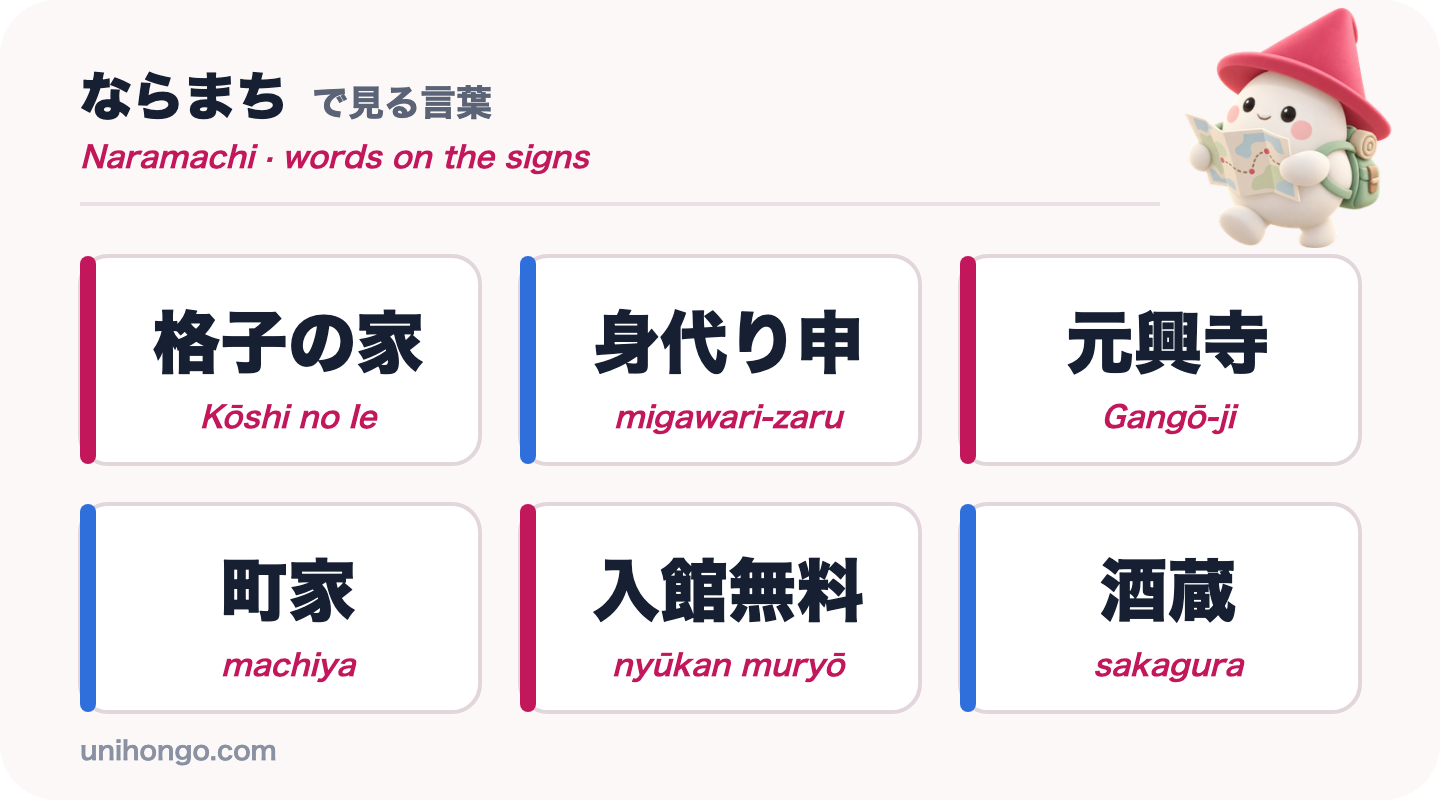
| Word | Reading | Meaning |
|---|---|---|
| 格子の家 | Kōshi no Ie | The lattice house, a free restored townhouse |
| 身代り申 | migawari-zaru | Substitute monkey charm |
| 元興寺 | Gangō-ji | World Heritage temple in Naramachi |
| 町家 | machiya | Traditional townhouse |
| 入館無料 | nyūkan muryō | Free admission |
| 酒蔵 | sakagura | Sake brewery |
| 庚申 | kōshin | The Kōshin faith, linked to the monkey charms |
| 営業中 | eigyōchū | Open for business |
| 定休日 | teikyūbi | Regular closing day |
Japanese for a machiya café or sweet shop
Many of Naramachi's cafés are in converted townhouses, and some ask you to take your shoes off at the step inside the door. Tables are often in the back rooms or overlooking a tiny garden, so when staff say oku e dōzo, please go through to the back, follow them in.
Menus change with the seasons, and the set of the day, often matcha with a seasonal wagashi, is usually the best choice. If there is no English menu, asking for a recommendation is the easiest way to order.
| Japanese | Romaji | Meaning |
|---|---|---|
| 二人ですが、入れますか。 | Futari desu ga, hairemasu ka. | There are two of us. Can we come in? |
| 靴を脱ぎますか。 | Kutsu o nugimasu ka. | Do I take my shoes off? |
| おすすめは何ですか。 | Osusume wa nan desu ka. | What do you recommend? |
| 抹茶と和菓子のセットをお願いします。 | Matcha to wagashi no setto o onegai shimasu. | The matcha and wagashi set, please. |
| このお菓子の名前は何ですか。 | Kono o-kashi no namae wa nan desu ka. | What is this sweet called? |
| お会計をお願いします。 | O-kaikei o onegai shimasu. | The bill, please. |
Etiquette, timing and practical tips
Naramachi is a residential neighbourhood as well as a sight, and people still live in many of the houses you are photographing.
- Keep your voice down in the lanes and do not block doorways or peer into private homes.
- Take shoes off where asked, and wear socks that you are happy to show.
- Check closing days: the Kōshi no Ie and many small shops close on Mondays or midweek.
- Visit in the late morning or afternoon; many cafés open around mid-morning and close early in the evening.
- Carry some cash, as small shops and cafés may not take cards.
- Combine Naramachi with Nara Park: walk south after Kōfuku-ji and finish with tea in a machiya.
Practise the visit before you go
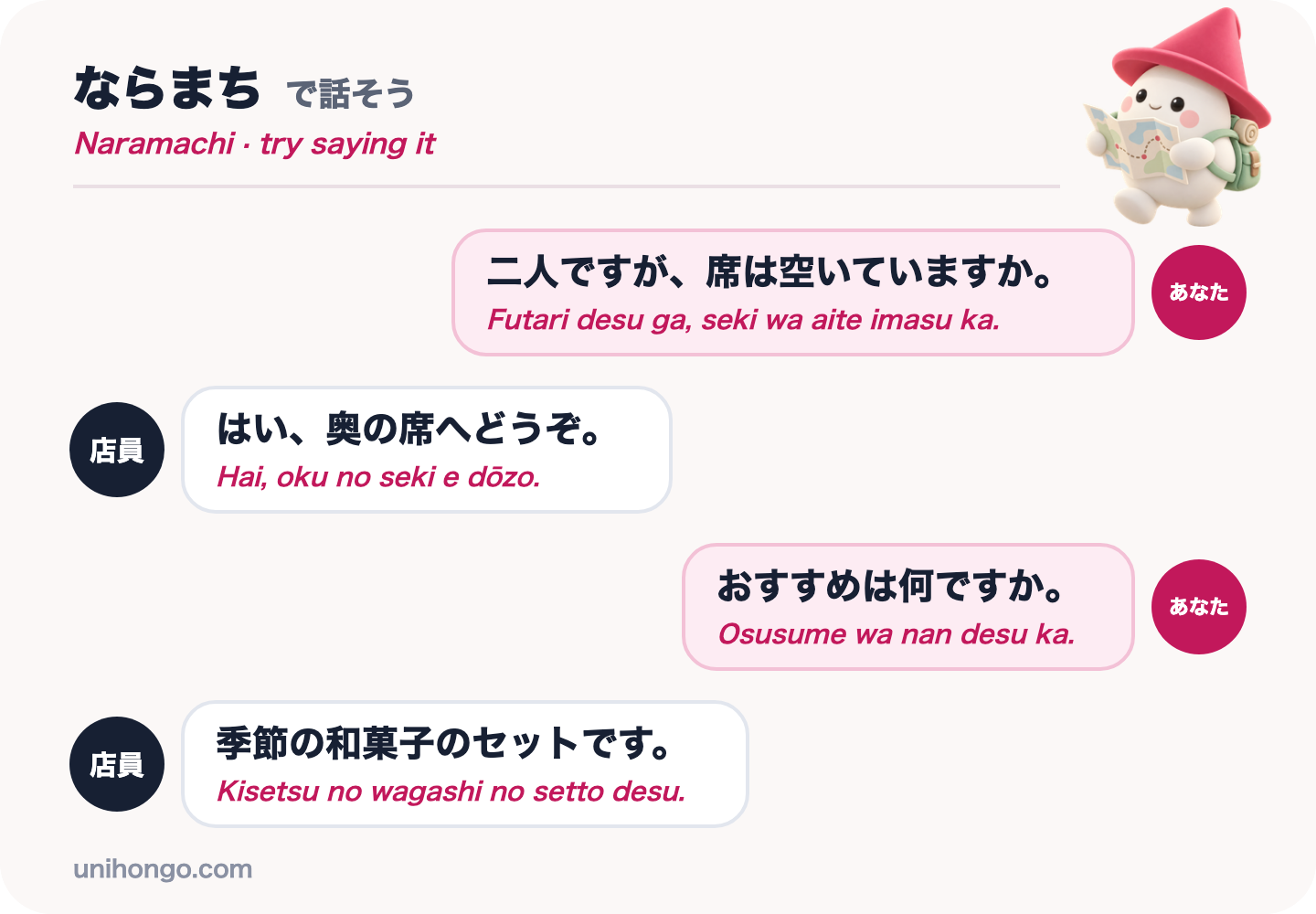
Walking into a small café is where many learners freeze. The exchange is short and predictable: you say how many people, staff show you where to sit, and you ask what is good. Practise the four lines below until you can say them without reading.
Then practise with a partner who answers back. In Unihongo, the Order at a Café mission is built for exactly this, and you can ask your AI Sensei to play the owner of a machiya café in Naramachi who describes the seasonal sweets.
| Japanese | Romaji | Meaning |
|---|---|---|
| 二人ですが、席は空いていますか。 | Futari desu ga, seki wa aite imasu ka. | There are two of us. Do you have a table? |
| はい、奥の席へどうぞ。 | Hai, oku no seki e dōzo. | Yes, please take a seat at the back. |
| おすすめは何ですか。 | Osusume wa nan desu ka. | What do you recommend? |
| 季節の和菓子のセットです。 | Kisetsu no wagashi no setto desu. | The set with a seasonal sweet. |
Official information
The Nara city tourism association publishes a guide to Naramachi's sights, and the city lists the opening days of the Kōshi no Ie. Check them before you go, as small facilities close on weekdays and over New Year.