

Why Beppu's hells are worth seeing
Beppu sits on a line of volcanoes, and hot water comes up everywhere: under hotels, public baths, homes and roadside drains. The town has more hot spring sources than anywhere else in Japan. In Kannawa, the old onsen district on the hill above the sea, steam pours out of pipes and vents along the streets, and has done for centuries.
Some of the springs were too hot and too wild for bathing. Their boiling water, coloured by minerals and clay, looked to early visitors like the hells described in Buddhist teaching, and the name stuck. The hells were developed as sights in the early twentieth century, and the jigoku meguri, the hell tour, became one of Japan's classic sightseeing routes.
For a Japanese learner, the tour is ideal: the names of the hells are short, descriptive words you can read on the signs, and the ticket and food counters give you plenty of low-pressure chances to speak.
Getting there: buses from Beppu Station
Beppu Station is on the JR Nippō Line, about two hours from Hakata by the Limited Express Sonic. From the station, local buses run up the hill to Kannawa, the stop for the five main hells, in around fifteen to twenty minutes. From Kannawa, another short bus ride takes you to Chinoike and Tatsumaki, the two hells in the Shibaseki area; walking between the two areas takes around half an hour.
The tourist information centre at Beppu Station can help with bus routes and sells some passes. If you are staying in Kannawa, you can walk to the five main hells.
| Japanese | Romaji | Meaning |
|---|---|---|
| 鉄輪行きのバスはどこから出ますか。 | Kannawa-yuki no basu wa doko kara demasu ka. | Where does the bus for Kannawa leave from? |
| 海地獄へはどのバスに乗ればいいですか。 | Umi Jigoku e wa dono basu ni noreba ii desu ka. | Which bus should I take for Umi Jigoku? |
| このバスは鉄輪に止まりますか。 | Kono basu wa Kannawa ni tomarimasu ka. | Does this bus stop at Kannawa? |
| 血の池地獄はどこで降りますか。 | Chinoike Jigoku wa doko de orimasu ka. | Where do I get off for Chinoike Jigoku? |
| 観光案内所はどこですか。 | Kankō annaijo wa doko desu ka. | Where is the tourist information centre? |
The seven hells
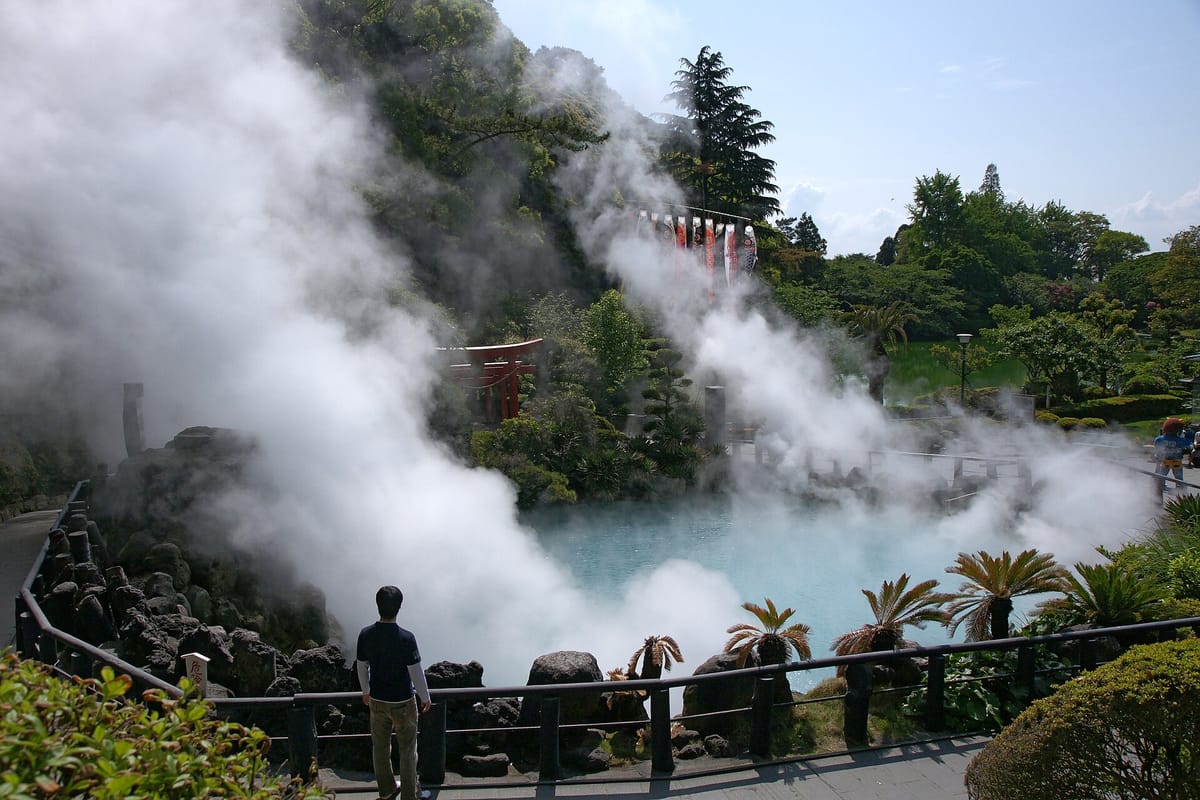
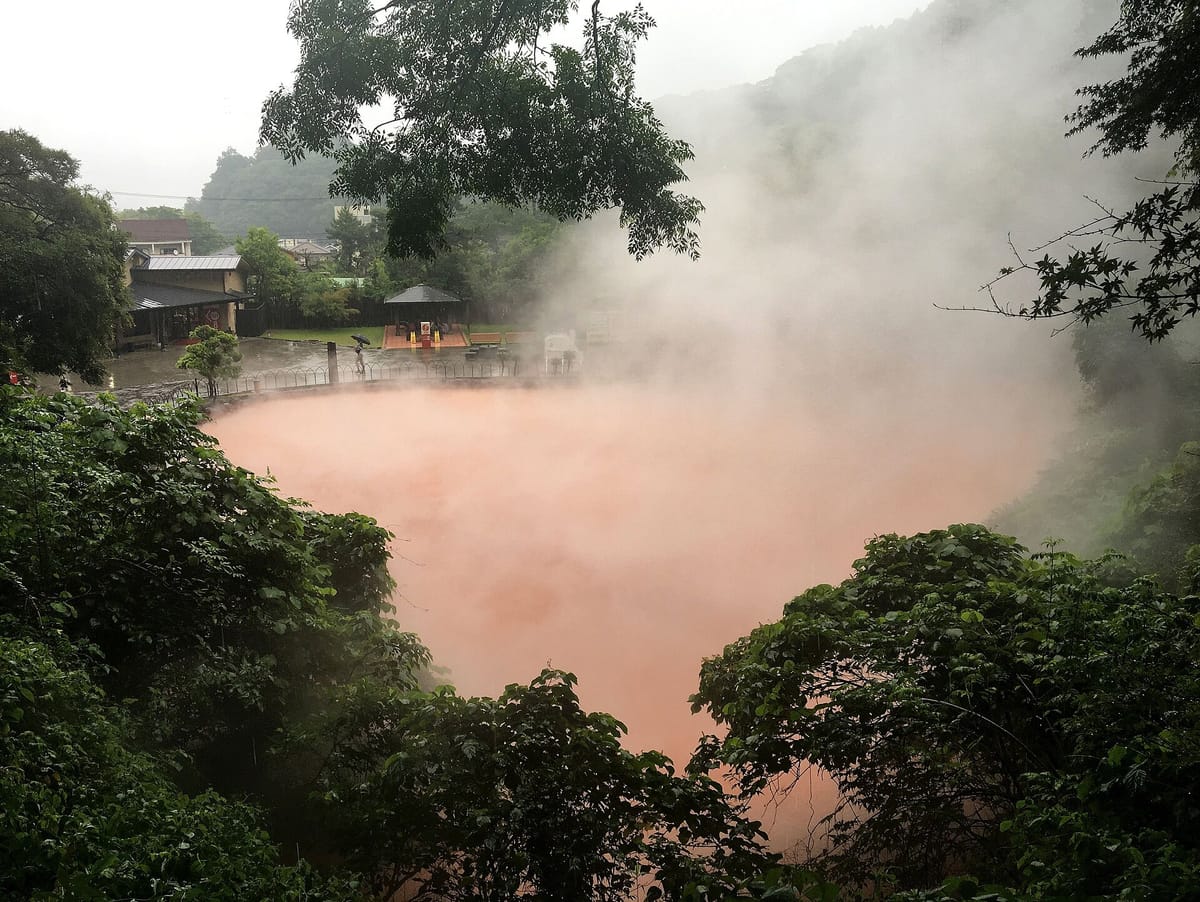
Each hell has its own character, and each is run as a small attraction with a gate, a shop and often a café. Umi Jigoku, Chinoike Jigoku, Tatsumaki Jigoku and Shiraike Jigoku are designated national Places of Scenic Beauty for their colours and forms.
- Umi Jigoku, the sea hell: a large cobalt-blue pond, with gardens, a small shrine and eggs boiled in the spring. Kannawa.
- Oniishi Bōzu Jigoku, the shaven-head hell: grey mud bubbles that swell like monks' heads, with a foot bath. Kannawa.
- Kamado Jigoku, the cooking-pot hell: several ponds of different colours, with staff demonstrations and snacks steamed in the spring. Kannawa.
- Oniyama Jigoku, the demon mountain hell: known for the crocodiles kept in its warm water. Kannawa.
- Shiraike Jigoku, the white pond hell: milky pale water in a Japanese garden. Kannawa.
- Chinoike Jigoku, the blood pond hell: a steaming red pond, the most photographed of all. Shibaseki.
- Tatsumaki Jigoku, the waterspout hell: a geyser that erupts regularly, every half an hour or so. Shibaseki.
Words on the signs and tickets
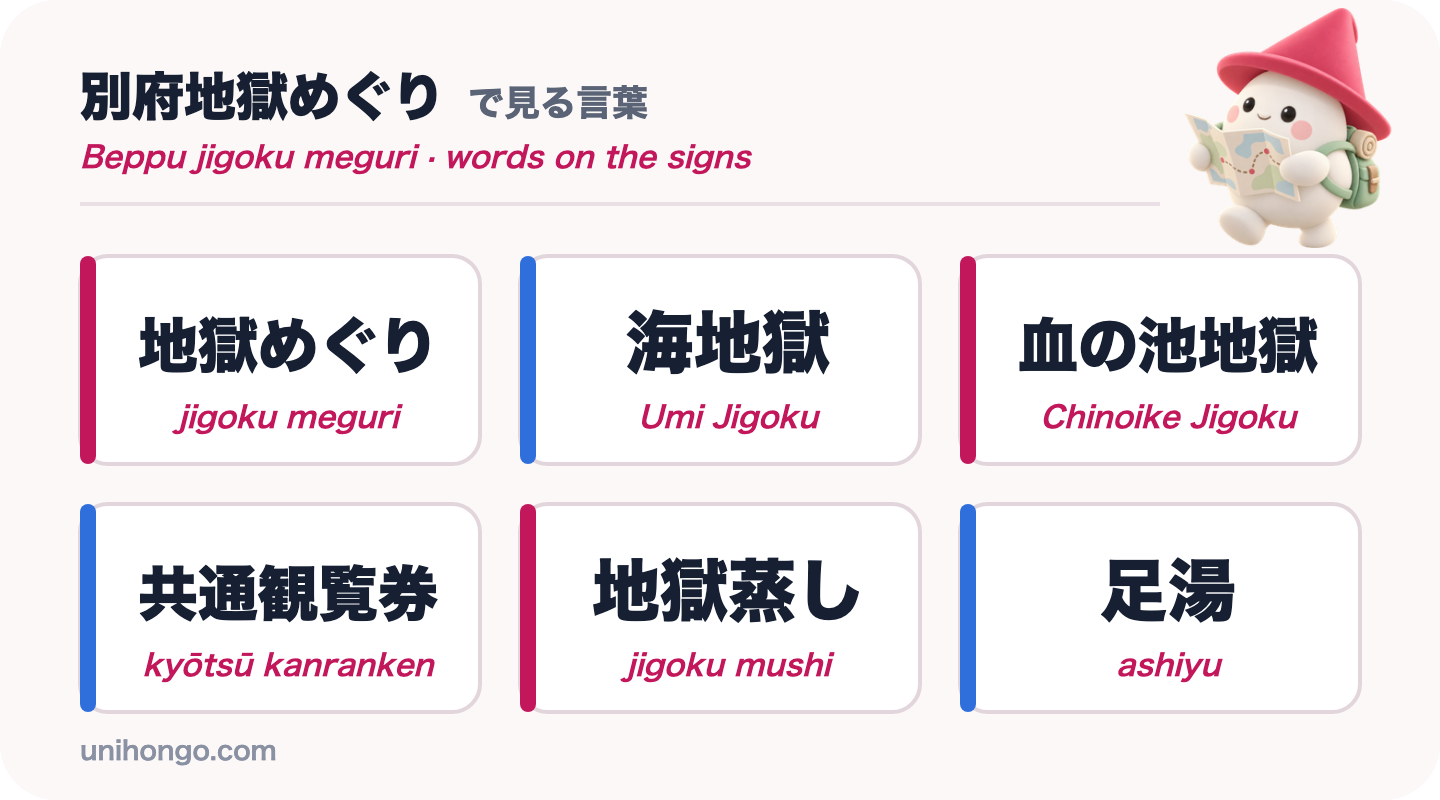
Once you know that 地獄 is jigoku, the hell names are easy to read: each one adds a word in front. 海 is sea, 血の池 is pool of blood, 白池 is white pond and 龍巻 is waterspout.
| Word | Reading | Meaning |
|---|---|---|
| 地獄めぐり | jigoku meguri | Tour of the hells |
| 海地獄 | Umi Jigoku | Sea hell, the blue pond |
| 血の池地獄 | Chinoike Jigoku | Blood pond hell, the red pond |
| 共通観覧券 | kyōtsū kanranken | Combined viewing ticket |
| 地獄蒸し | jigoku mushi | Food steamed over hot spring vents |
| 足湯 | ashiyu | Foot bath |
| 龍巻地獄 | Tatsumaki Jigoku | Waterspout hell, the geyser |
| 白池地獄 | Shiraike Jigoku | White pond hell |
| 温泉たまご | onsen tamago | Egg cooked in hot spring water |
Japanese for tickets and jigoku-mushi steam cooking
The combined ticket is sold at the gate of every hell. Hand it over at each gate to have it checked. After the tour, try jigoku mushi, food steamed over the natural vents. Several restaurants in Kannawa serve it, and a public steam kitchen, Jigoku Mushi Kōbō Kannawa, lets you buy ingredients or bring your own, rent a steaming basket and cook them yourself over the vents.
Staff at the steam kitchen will tell you how long each ingredient needs and which oven to use. Listen for the numbers followed by fun, minutes.
| Japanese | Romaji | Meaning |
|---|---|---|
| 共通観覧券を二枚ください。 | Kyōtsū kanranken o nimai kudasai. | Two combined tickets, please. |
| この券は明日も使えますか。 | Kono ken wa ashita mo tsukaemasu ka. | Can I use this ticket tomorrow too? |
| 地獄蒸しを食べたいんですが。 | Jigoku mushi o tabetai n desu ga. | I would like to try jigoku-mushi. |
| これは何分くらい蒸しますか。 | Kore wa nanpun kurai mushimasu ka. | About how many minutes should I steam this? |
| 温泉たまごを二つください。 | Onsen tamago o futatsu kudasai. | Two hot spring eggs, please. |
| 足湯は無料ですか。 | Ashiyu wa muryō desu ka. | Is the foot bath free? |
Etiquette, timing and onsen tips
The hells are easy to visit, but a few tips make the day smoother, and you will want to bathe somewhere afterwards.
- Start at the Kannawa hells in the morning, then take the bus to Chinoike and Tatsumaki.
- Ask at Tatsumaki Jigoku when the next eruption is expected, so you are not waiting too long.
- Keep behind the barriers: the water in the hells is close to boiling.
- Bring a small towel for the foot baths; some hells have one.
- For bathing, choose one of Beppu's public baths or a ryokan; wash before entering the bath and keep your towel out of the water.
- Tattoos can be a problem at some baths; ask first or choose a private bath, kashikiri-buro.
Practise the hell tour before you go
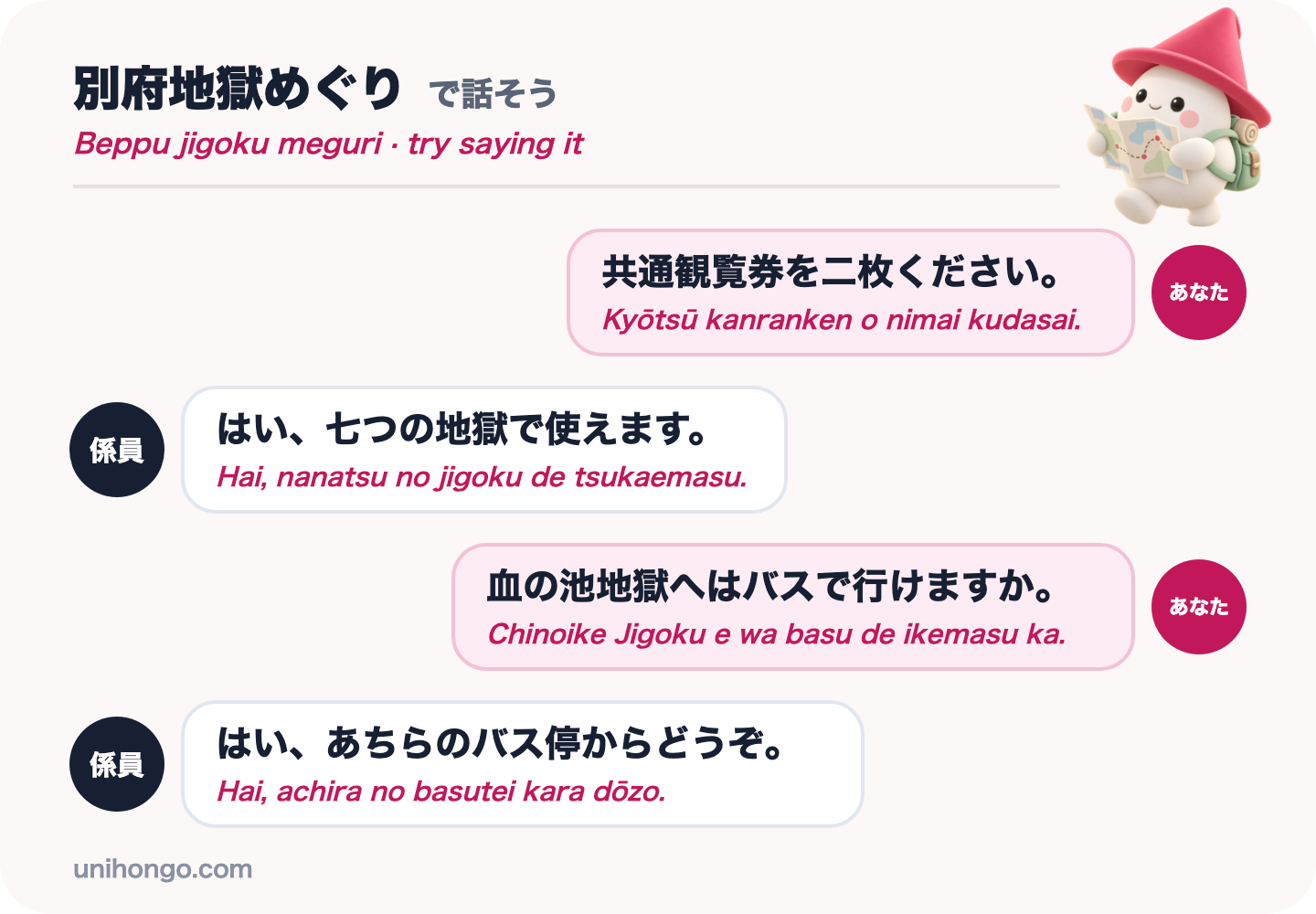
The ticket window is where the tour starts, and the conversation is short. Practise the four lines below until you can say them without reading, and listen for the counter nanatsu, seven, and the word basutei, bus stop, in the replies.
Then practise with a partner who answers back. In Unihongo, choose the Onsen topic and ask your AI Sensei to play the ticket seller at Umi Jigoku, or choose Japanese Cuisine to rehearse ordering at a jigoku-mushi kitchen.
| Japanese | Romaji | Meaning |
|---|---|---|
| 共通観覧券を二枚ください。 | Kyōtsū kanranken o nimai kudasai. | Two combined tickets, please. |
| はい、七つの地獄で使えます。 | Hai, nanatsu no jigoku de tsukaemasu. | Here you are. They can be used at all seven hells. |
| 血の池地獄へはバスで行けますか。 | Chinoike Jigoku e wa basu de ikemasu ka. | Can I get to Chinoike Jigoku by bus? |
| はい、あちらのバス停からどうぞ。 | Hai, achira no basutei kara dōzo. | Yes, from the bus stop over there. |
Official information
The Beppu Jigoku Association lists the seven hells, the combined ticket and any closures. Check it before you go for current prices and hours.