

Why Matsushima is one of the Three Views of Japan
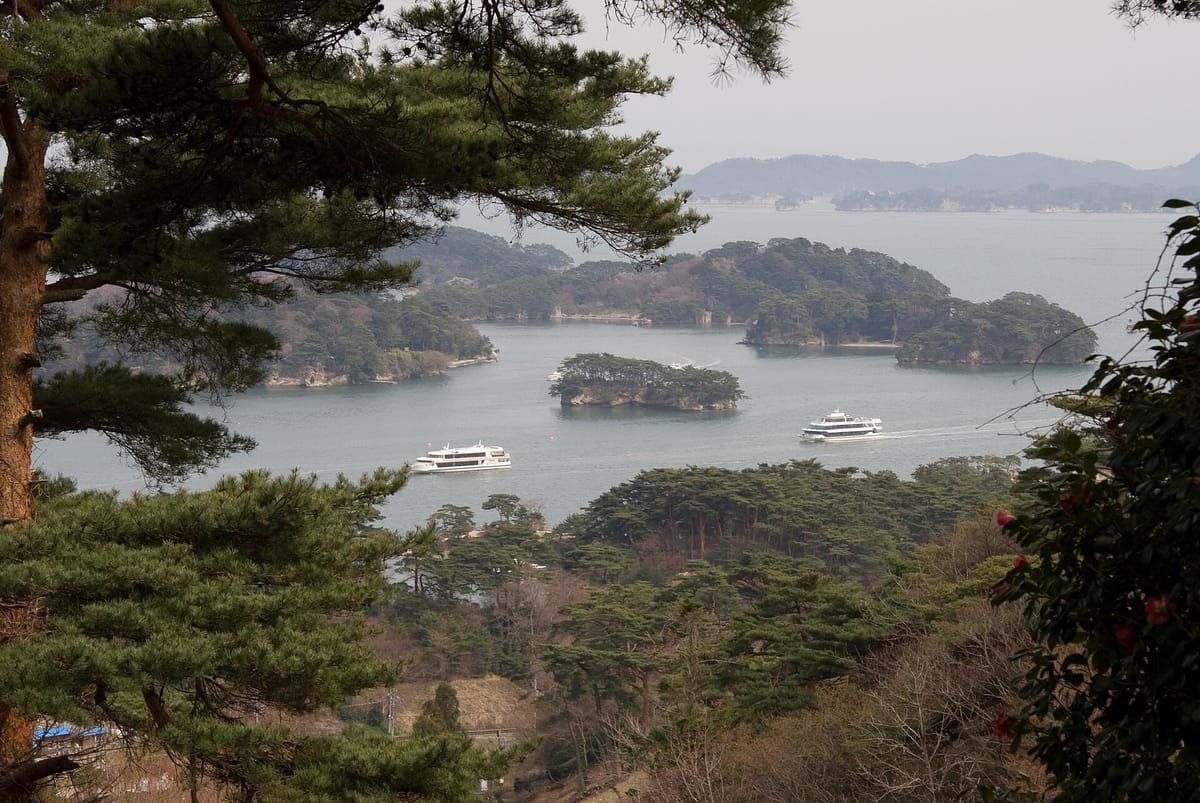
The Nihon Sankei, the Three Views of Japan, is a list of scenic places that goes back to the seventeenth century, and Matsushima has been on it ever since. What earns it the place is the number and shape of the islands: around 260 of them, some no bigger than a house, carved by the sea into arches, pillars and overhangs, each crowned with pines bent by the wind. From a boat or a hillside they overlap in layers, and the view changes with every bend of the coast.
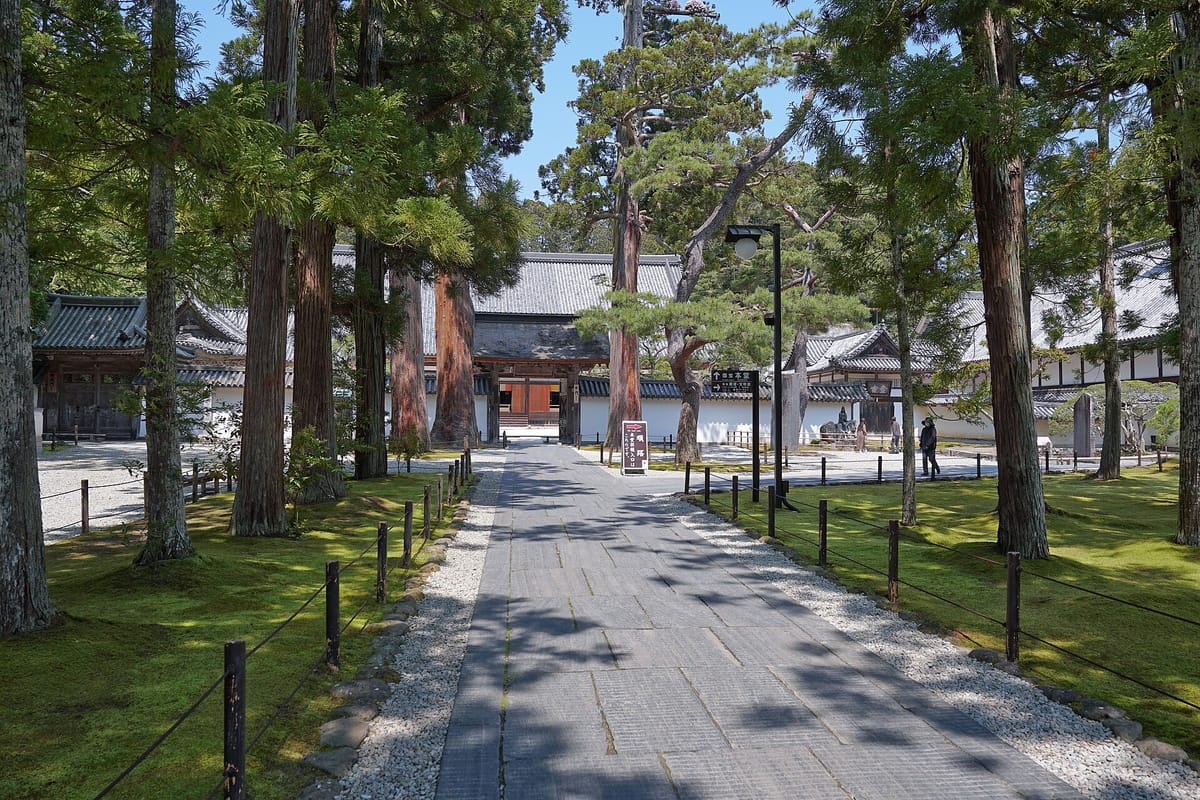
The town on the shore grew up around Zuigan-ji, a Zen temple that the first lord of Sendai, Date Masamune, rebuilt as the family temple of his clan at the start of the seventeenth century. The same lord built Godaidō, the small hall on an islet that has become the symbol of the town. When the great earthquake and tsunami struck the Tōhoku coast in March 2011, the islands helped shield the bay, and Matsushima suffered relatively little damage compared with neighbouring towns.
For a learner, Matsushima is a gentle introduction to reading Japan outside the big cities. Everything is on one short waterfront, the signs repeat the same handful of words, and the pier is a real place to practise asking times and buying a ticket from someone who is used to answering.
Getting there: Matsushima-Kaigan or Matsushima Station
Two JR stations carry the Matsushima name, and they are not in the same place. The one you want is usually Matsushima-Kaigan, Matsushima seaside, on the JR Senseki Line from Sendai Station. The ride takes around forty minutes and the station is a few minutes' walk from the sightseeing pier, Zuigan-ji and Godaidō. The Senseki Line platforms are underground at Sendai Station, separate from the main JR lines, so follow the signs for 仙石線.
Matsushima Station, on the JR Tōhoku Line, is reached faster from Sendai, in about twenty-five minutes, but it lies inland, and the walk to the waterfront takes fifteen to twenty minutes. It is a sensible choice only if you are coming from the north or combining the trip with somewhere else on that line. Both lines accept IC cards, and the tourism association also mentions a Sendai-Matsushima day pass.
| Japanese | Romaji | Meaning |
|---|---|---|
| 松島海岸駅に行きたいんですが、何番線ですか。 | Matsushima-Kaigan-eki ni ikitai n desu ga, nanbansen desu ka. | I want to go to Matsushima-Kaigan Station. Which platform is it? |
| 仙石線の乗り場はどこですか。 | Senseki-sen no noriba wa doko desu ka. | Where do I board the Senseki Line? |
| この電車は松島海岸に止まりますか。 | Kono densha wa Matsushima-Kaigan ni tomarimasu ka. | Does this train stop at Matsushima-Kaigan? |
| 遊覧船の乗り場はどちらですか。 | Yūransen no noriba wa dochira desu ka. | Which way is the pier for the sightseeing boats? |
| 瑞巌寺まで歩いて何分くらいですか。 | Zuigan-ji made aruite nanpun kurai desu ka. | About how many minutes on foot to Zuigan-ji? |
On the water and along the shore: what you will see
Start with the boat. The Niōmaru course of the Matsushima Shimameguri Kankōsen, the island tour boat company, runs a loop of about seventeen kilometres in roughly fifty minutes, passing named islands such as Niō-jima, the guardian king island, Kane-jima, bell island, with its wave-cut arches, Senkan-jima and the twin islands, Futago-jima. Learn those names before you board and listen for them on deck: island names ending in -jima are an easy first listening exercise.
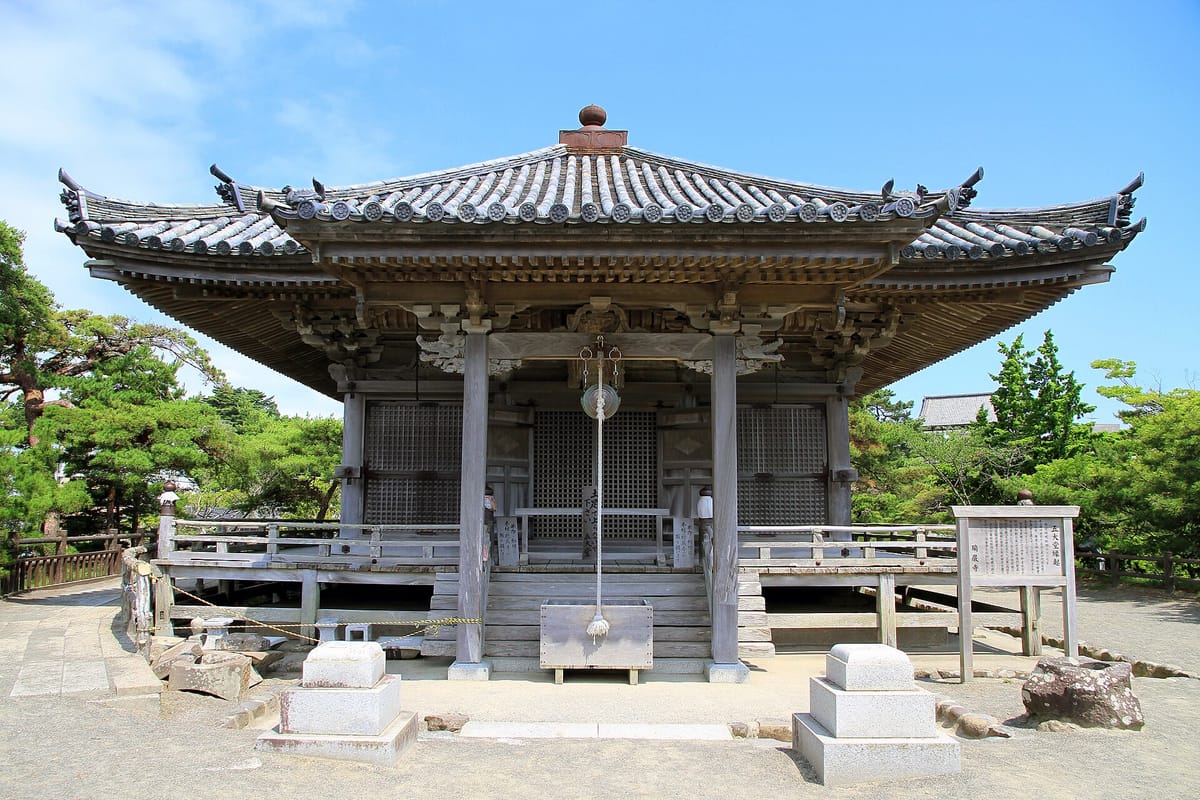
Back on shore, everything is within a twenty-minute walk. Godaidō stands on a tiny islet joined to the shore by short red bridges whose planks have gaps between them, the sukashibashi, said to make you watch your step and your thoughts. Built in 1604, it is the oldest example of Momoyama-period architecture in Tōhoku, and its eaves carry carvings of the twelve zodiac animals. A few minutes away, the red Fukuura-bashi bridge, about 250 metres long, crosses to the wooded island of Fukuura-jima.
- Island cruise: about fifty minutes among the outer islands, from the pier by Matsushima-Kaigan.
- Zuigan-ji: the Date clan's Zen temple, with a National Treasure main hall and kitchen hall and the Seiryūden treasure museum.
- Godaidō: the small hall on its islet, reached by the sukashibashi bridges.
- Entsū-in: a temple next to Zuigan-ji with the mausoleum of a Date lord's son and quiet gardens.
- Kanrantei: a tea house on the shore, once used by the Date lords for moon viewing.
- Fukuura-jima: the island at the end of the long red bridge, with walking paths through the trees.
- Oshima: another small island reached on foot by a bridge, quieter than the main waterfront.
Words on the signs at Matsushima
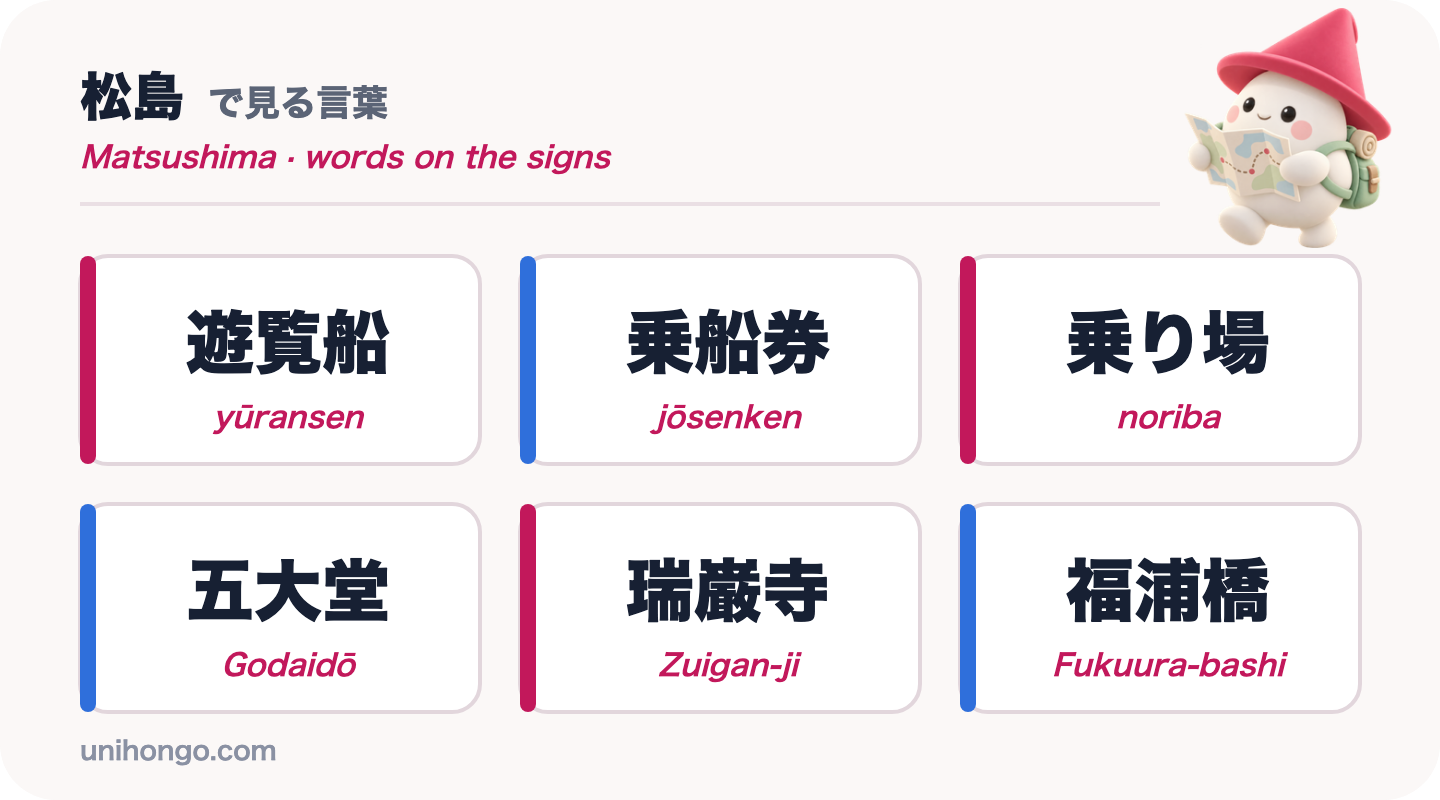
The words around the pier are the most useful. 遊覧船, yūransen, is a sightseeing boat: 遊 is play, 覧 is view and 船 is ship. The ticket is 乗船券, jōsenken, literally a board-the-ship ticket, and the place you board is 乗り場, noriba, the same word you see at bus and taxi stands everywhere in Japan.
Along the shore, the names of the temples and islands are written in fairly hard kanji, but they appear so often on signposts and maps that you will recognise the shapes within an hour. The table covers the words you are most likely to meet.
| Word | Reading | Meaning |
|---|---|---|
| 遊覧船 | yūransen | Sightseeing boat |
| 乗船券 | jōsenken | Boat ticket |
| 乗り場 | noriba | Boarding place, pier |
| 五大堂 | Godaidō | The small hall on its islet |
| 瑞巌寺 | Zuigan-ji | The Date clan's Zen temple |
| 福浦橋 | Fukuura-bashi | The long red bridge to Fukuura-jima |
| 円通院 | Entsū-in | Temple and mausoleum next to Zuigan-ji |
| 観瀾亭 | Kanrantei | Tea house on the shore |
| 日本三景 | Nihon Sankei | The Three Views of Japan |
Japanese for the boat, the temple and the oyster counter
At the pier, the ticket counter is where you use most of your Japanese: which course, what time, how many people. Staff are used to visitors, but the questions below get you a quicker and clearer answer, and you will understand the reply if you know that isshū means one full circuit and shuppatsu means departure.
Zuigan-ji has an entry fee, paid at the gate, and its buildings are entered in socks, so wear shoes you can slip off. After the temples, food is the other reason to linger. Matsushima is known for oysters in winter, kaki, served grilled, fried or in rice, and for anago, conger eel, in summer. The fish-paste snack sasakamaboko, shaped like a bamboo leaf, is sold grilled on the spot.
| Japanese | Romaji | Meaning |
|---|---|---|
| 島巡りの船は、どのコースがおすすめですか。 | Shimameguri no fune wa, dono kōsu ga osusume desu ka. | Which island cruise course do you recommend? |
| 一周何分くらいかかりますか。 | Isshū nanpun kurai kakarimasu ka. | About how long is one circuit? |
| 大人二枚お願いします。 | Otona nimai onegai shimasu. | Two adult tickets, please. |
| 瑞巌寺の拝観券はここで買えますか。 | Zuigan-ji no haikanken wa koko de kaemasu ka. | Can I buy a Zuigan-ji ticket here? |
| 今、牡蠣は旬ですか。 | Ima, kaki wa shun desu ka. | Are oysters in season now? |
| 焼き牡蠣を一皿ください。 | Yaki-gaki o hitosara kudasai. | One plate of grilled oysters, please. |
| 笹かまを一本焼いてください。 | Sasakama o ippon yaite kudasai. | Please grill one sasakamaboko for me. |
Etiquette, weather and timing
Matsushima is small and relaxed, but it is also a working temple town and a busy day-trip spot from Sendai.
- Take the cruise first, in the morning, when the water is usually calmer and the boats less full; then walk the shore.
- Boats can be suspended in strong wind or high waves. Check with the counter on the day before you plan around a particular sailing.
- Watch your step on the sukashibashi bridges to Godaidō: the gaps between the planks are real, and the wood can be slippery after rain.
- Zuigan-ji is an active temple. Speak quietly in the halls, take off your shoes where asked, and follow the signs about photography inside.
- Oysters are a winter food here. If you come in summer, ask for anago instead.
- Weekends and holidays bring crowds from Sendai. A weekday gives you the bridges and the tea house almost to yourself.
Practise the pier before you go
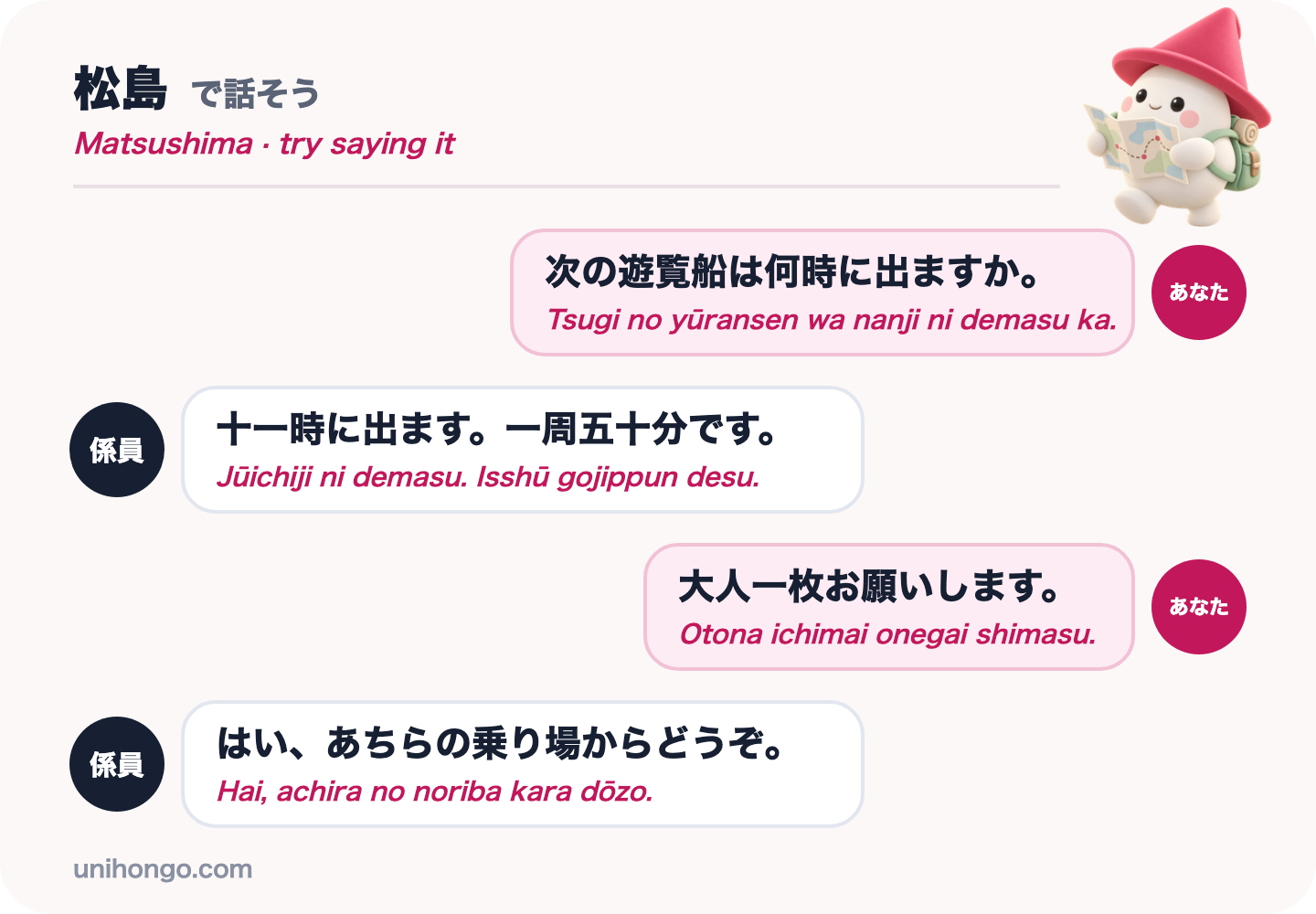
The conversation you are most likely to have in Matsushima is at the ticket counter, and it is almost entirely about times and numbers. Practise the four lines below until you can say them without reading, and listen in the reply for the hour, ~ji, and the length of the cruise, ~fun.
Then practise with someone who answers back. In Unihongo, choose the Sightseeing topic and ask your AI Sensei to play the ticket seller at the pier, including an answer that the next boat is full or cancelled. Saying the lines aloud once is what makes them come out at the counter.
| Japanese | Romaji | Meaning |
|---|---|---|
| 次の遊覧船は何時に出ますか。 | Tsugi no yūransen wa nanji ni demasu ka. | What time does the next sightseeing boat leave? |
| 十一時に出ます。一周五十分です。 | Jūichiji ni demasu. Isshū gojippun desu. | It leaves at eleven. The circuit takes fifty minutes. |
| 大人一枚お願いします。 | Otona ichimai onegai shimasu. | One adult ticket, please. |
| はい、あちらの乗り場からどうぞ。 | Hai, achira no noriba kara dōzo. | Here you are. Please board over there. |
Official information
Cruise timetables, temple hours and fees, and seasonal events change through the year. The tourism association, the cruise operator and Zuigan-ji publish them on their own sites; check them before you go, especially on a windy day.